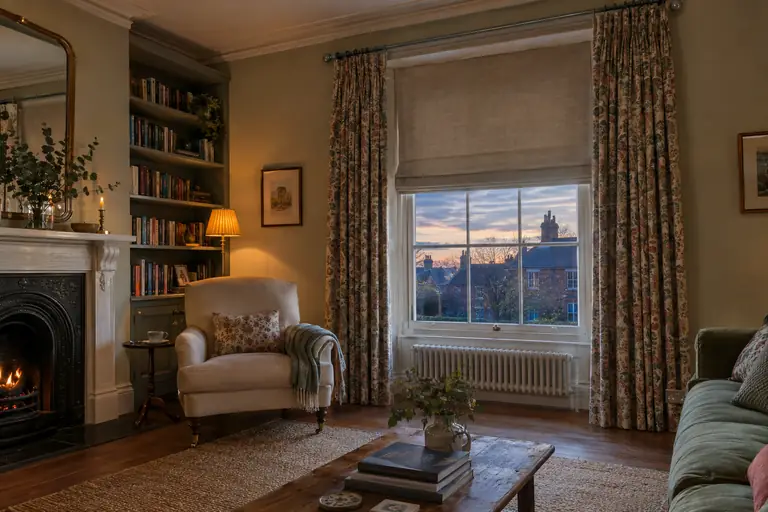
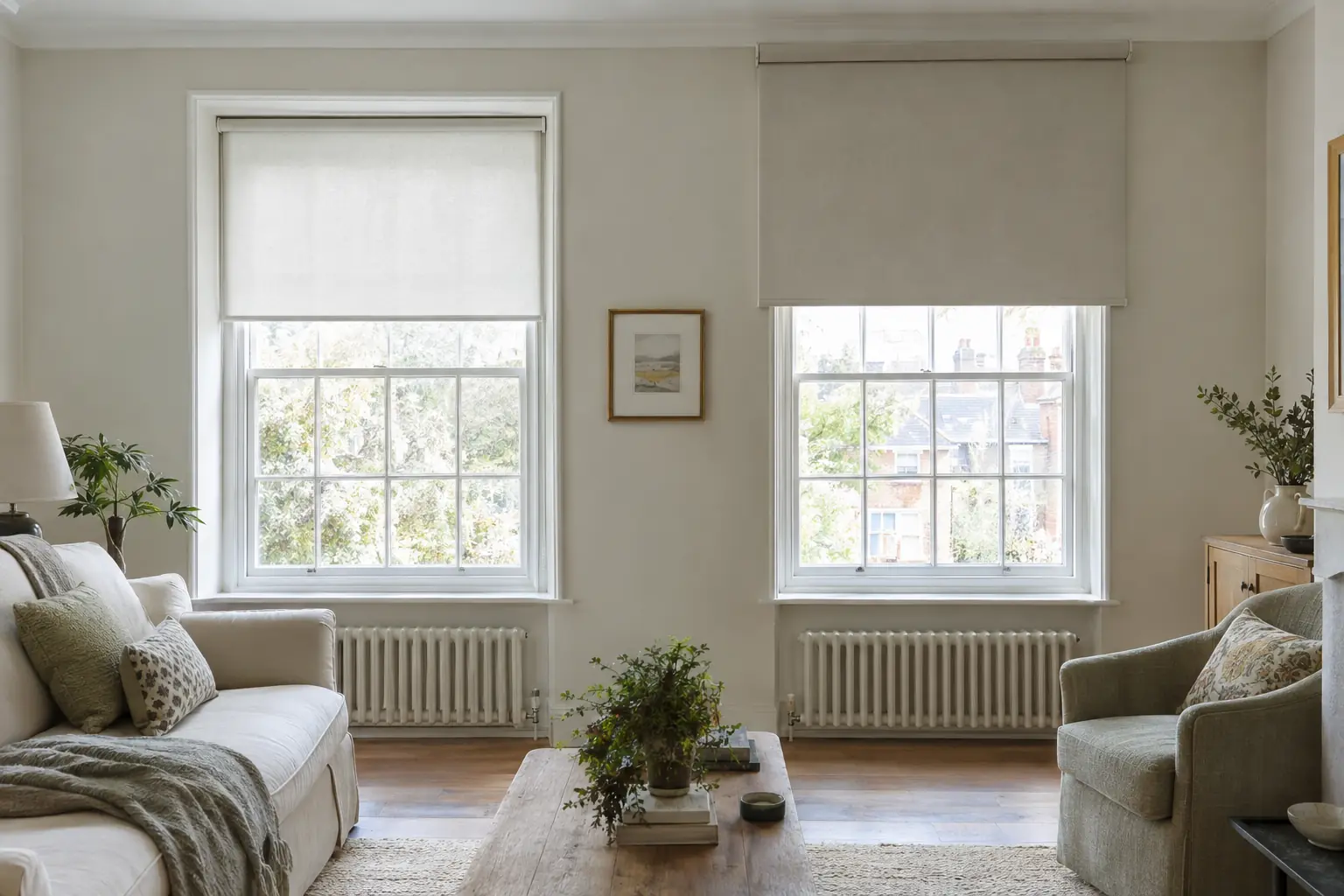
The short answer
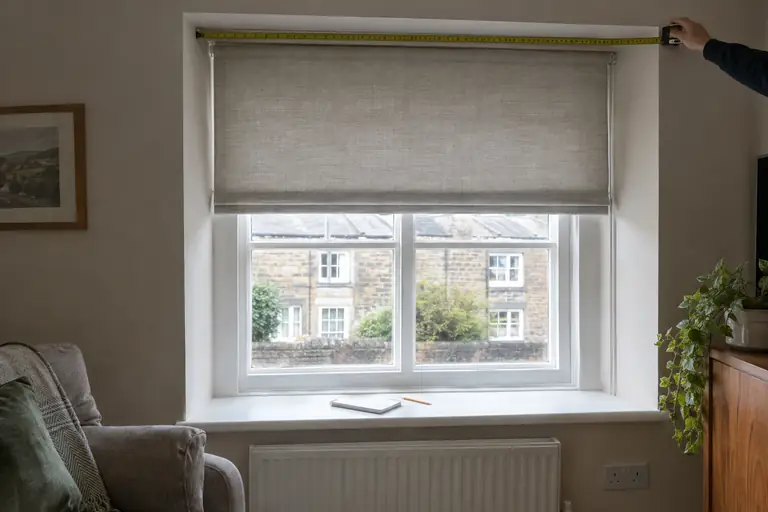
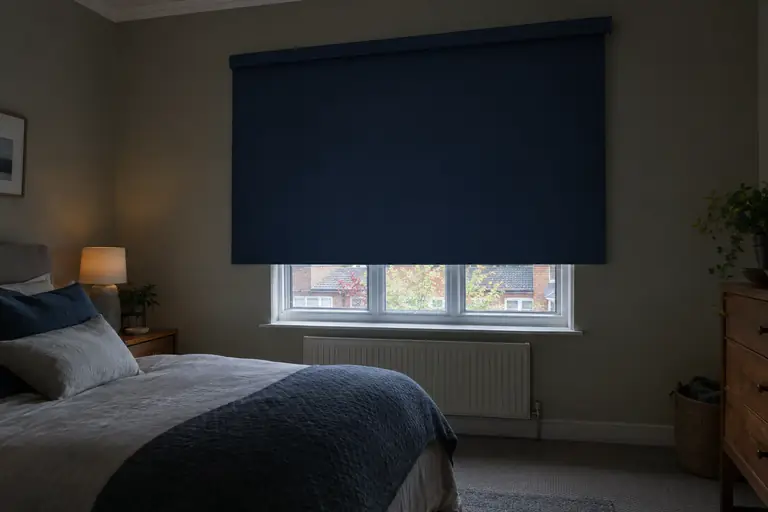
A recess fit sits inside the window opening, so the frame and reveal stay visible and the blind looks built in. An exact fit, also called a face fit, is mounted on the wall or frame outside the opening. It covers the frame completely, blocks more light at the edges and suits shallow reveals. If you want a properly dark room, or the reveal is shallow or crowded with handles, lean towards an exact fit.
- Recess fit sits inside the opening and shows off the frame and reveal.
- Exact fit covers the whole opening and cuts the light leak at the sides.
- Shallow reveals, protruding handles and tiled sills usually point to an exact fit.
- Bedrooms and nurseries that need to be dark usually suit an exact fit.
- Your advisor measures and can hold both options against the window on the day.
Recess fit and exact fit
Swipe to see the whole diagram
A recess blind sits inside the opening and needs a little clearance at each side; an exact fit overlaps the opening, so less light gets round the edges.
Step by step
- 1
Check the depth of the reveal
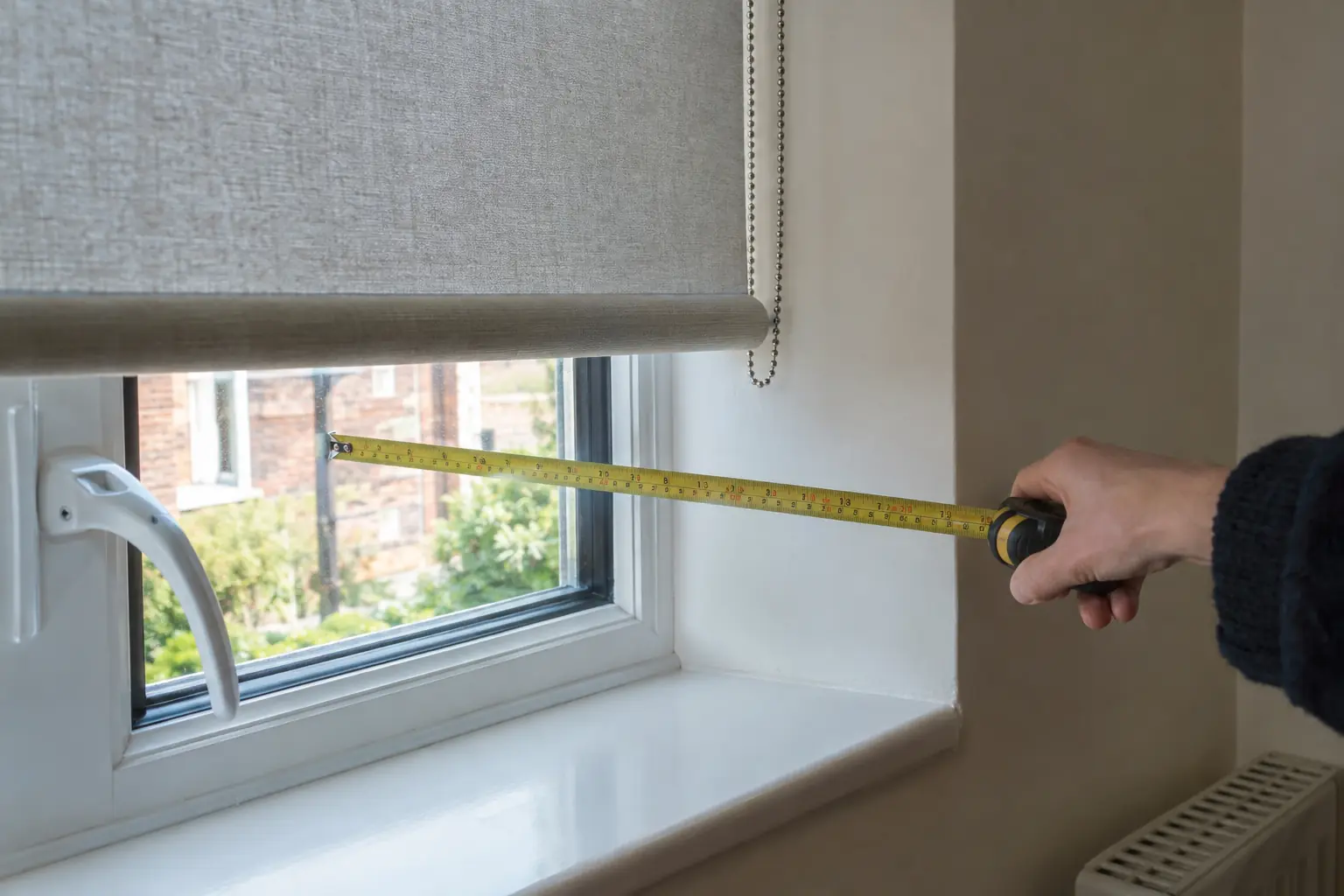
Measure from the glass or frame to the front edge of the reveal in three places. If it is shallow, or handles stick out into it, an exact fit is the safer choice.
- 2
Look at the handles and locks
Open and close the window and note anything that projects: handles, stays, locks and trickle vents. A recess blind has to clear every one of them when it is down.
- 3
Decide how dark the room needs to be
For a bedroom or nursery that needs to be dark, an exact fit overlaps the opening and cuts the light that runs down the sides of a recess blind.
- 4
Check the sill, tiles and radiator
Note a deep window board, tiled sill or a radiator under the window. They affect how far a blind can drop and whether an exact fit needs to stop short.
- 5
Think about the rest of the room
If several windows share a wall, aim for the same fit on each so the scheme looks deliberate rather than mixed.
- 6
Let the advisor confirm it
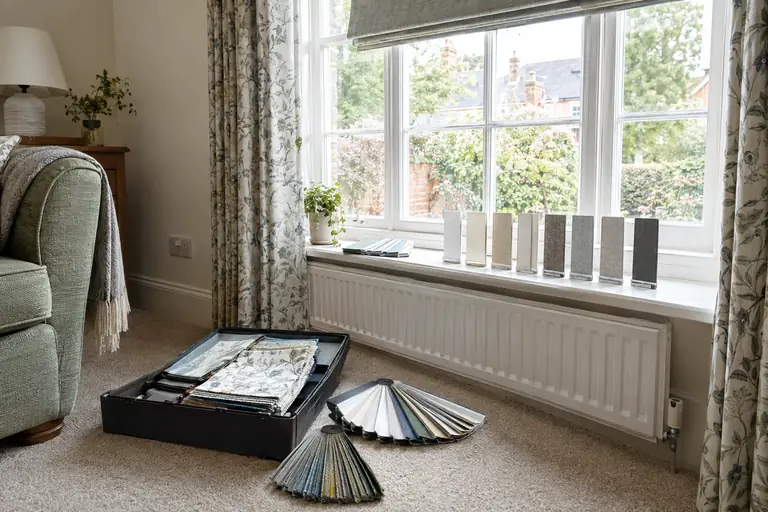
At a home appointment your advisor measures every opening and can hold both options against the window, so you can see the difference before you choose.
What the two fits actually are
A recess fit puts the blind inside the window opening. The brackets fix to the top of the reveal, the blind hangs between the side walls and, when it is down, the fabric or slats fill the opening like a panel. The window frame and the plaster round it stay on show, and the sill stays clear for plants or photographs.
An exact fit, which you will also hear called a face fit, puts the blind outside the opening. The brackets fix to the wall above the window or to the frame itself, and the blind is made wider and longer than the glass so it overlaps the opening on every side. When it is down, you see blind rather than window.
Neither is the correct answer on its own. The same roller fabric can look crisp and architectural in a recess, or soft and generous across the face of a wall. The right one depends on the room, the window and what you want the blind to do.
Light: why an exact fit gets a room darker
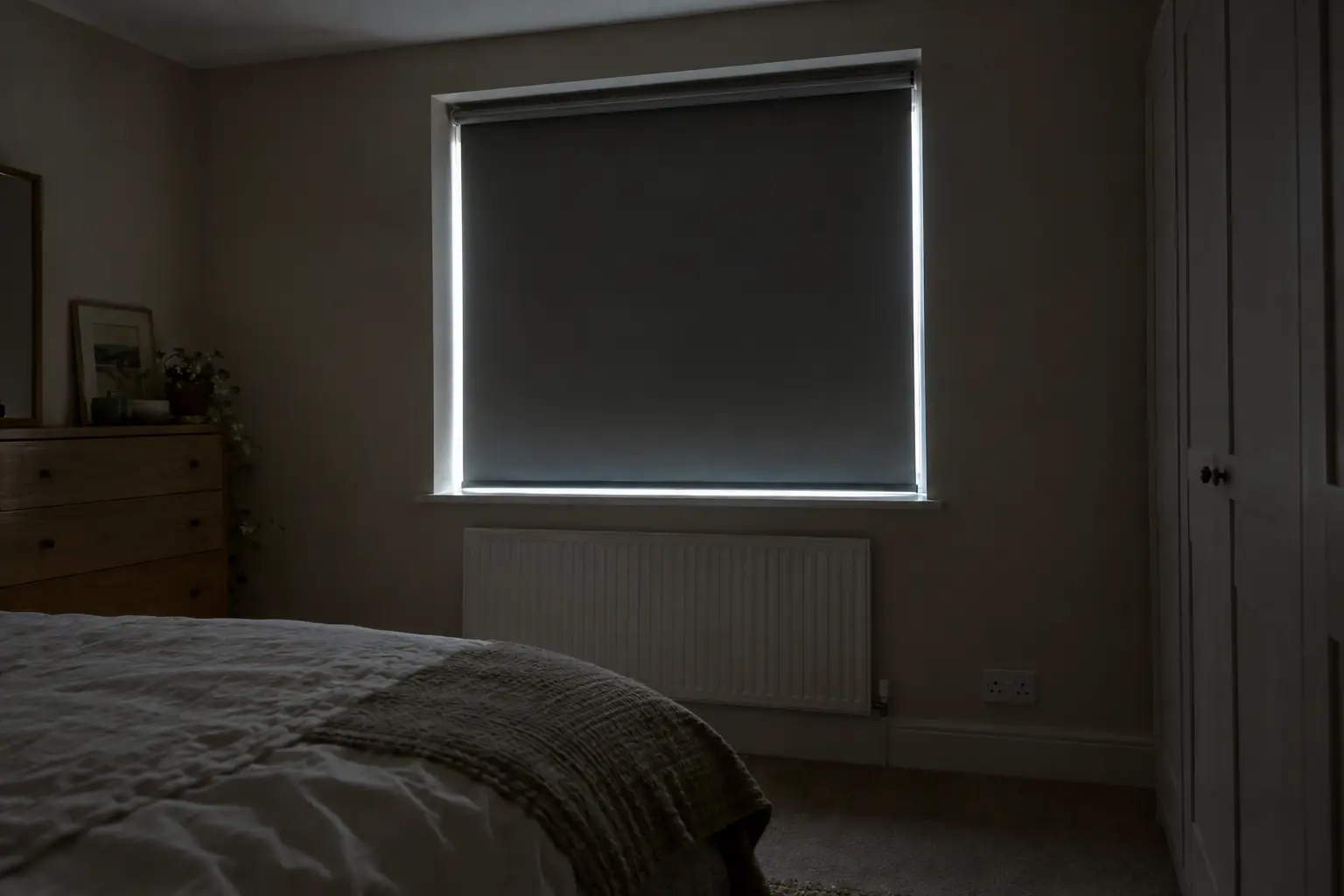
A blind inside a recess can never quite touch the side walls. It needs a small clearance so it can roll, fold or tilt without scraping, and that clearance is where light gets in. With a sheer or dimout fabric you will not notice it. With a blackout fabric in a bedroom at five in the morning in June, you will: a thin bright line down each side of an otherwise dark window.
An exact fit overlaps the opening, so light coming past the edge of the fabric hits wall rather than the room. That is why it is usually the choice for nurseries, shift workers and anyone who wants a room genuinely dark. It is also why blackout blinds are so often paired with curtains: a slim blind in the recess for privacy, and lined curtains across the face of the wall to close the gap.
If you prefer the look of a recess fit but still want the darkest room you can get, ask your advisor whether your window can take a side channel, which closes the gap down each side, rather than assuming one fit will do everything.
Looks: built in or dressed
A recess fit is the tidier, more architectural look. It works best where the reveal is deep and square, the frame is worth seeing, and the window is part of the character of the room: sash windows in period homes, deep stone reveals in cottages, or a run of modern windows where you want the wall to stay clean.
An exact fit is the dressed look. It can make a small window feel larger, because the blind covers more wall than the glass, and it hides a frame that is tired, patched or simply not attractive. Hung a little above the opening, it can also make a low ceiling feel taller.
In a room with several windows, keep the fit consistent where you can. A mixture of recess and exact fits on the same wall tends to look accidental. If one window needs an exact fit because of a handle, it is often worth doing the same on the others so the room reads as one scheme.
Depth, handles and sills: the practical tests
Before looks come into it, the window has to be able to take the blind. A recess fit needs enough depth for the blind's headrail and for the fabric or slats to hang without catching. Measure from the glass or the frame to the front edge of the reveal. If the window handles, locks or a trickle vent stick out into that space, the blind has to clear them as well, and a shallow reveal quickly runs out of room.
Tiled or stone sills and window boards can also get in the way, particularly for blinds that stack at the bottom, and a radiator directly under the window matters too. Warm air rising behind a long blind, or fabric resting on a hot radiator, is worth avoiding.
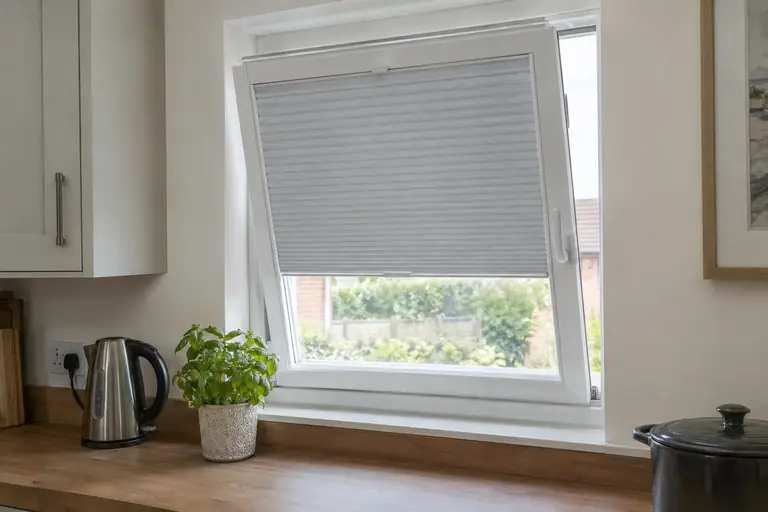
When the depth is not there, an exact fit solves most of these problems at once, because the blind sits in front of everything. For uPVC windows and doors where you want to open the window with the blind down, perfect fit blinds that clip into the frame are another option.
Old and out-of-square windows
Plenty of British windows are not square. Stone terraces, cottages and older Victorian houses often have reveals that taper from top to bottom, and frames that have settled over the years. A recess blind made to a single width can look fine at the top and leave a visible gap lower down, or rub at one side.
Made to measure means measuring the opening you actually have, at several points, and making the blind to suit. On a badly out-of-square reveal, an exact fit is often the better-looking answer, because the overlap hides the taper that a recess fit would frame. Your advisor measures each opening on its own and will tell you on the day whether a recess fit will look right.
Which fit suits which blind
Roller blinds work well either way. In a recess they look clean and simple; across the face of the wall they give the best blackout. Roman blinds fold into a stack at the top, so an exact fit mounted a little above the opening lets the stack sit on the wall rather than across the glass, which keeps more daylight when the blind is up.
Venetian and wooden blinds suit a recess where the reveal is deep enough, because the slats read as part of the window. Vertical blinds are nearly always fitted to the wall or ceiling across patio doors and wide spans. Perfect fit blinds are their own category: they sit in the frame of a uPVC window, so they move with the sash when you open it.
If you are unsure, look at the room when the sun is low and think about what bothers you most: glare, privacy, light at dawn, or a frame you would rather not see.