The short answer
Perfect fit blinds are made to the size of each pane and held in a slim frame that clips into the bead and rubber gasket around the glass of a uPVC or aluminium window. Because the blind is part of the sash, you can tilt or open the window with the blind down, and there is no loose cord. The bead has to be deep enough for the clips, which timber and older frames usually are not, so your advisor checks every window first.
- The blind sits in its own frame, clipped into the window's bead and gasket, with no screws into the window.
- It moves with the sash, so tilt and turn windows and doors open with the blind down.
- It needs a uPVC or aluminium frame with a deep enough bead; timber sashes usually cannot take it.
- Venetian and pleated styles are the usual perfect fit blinds; ask your advisor about other styles.
- Each opening pane gets its own blind, and your advisor checks every one on the day.
Blinds on doors with handles
Swipe to see the whole diagram
A blind hanging in front of a door has to clear the handle. Frame-fitted blinds sit on the glass side of the handle and move with the door.
How a perfect fit blind is held
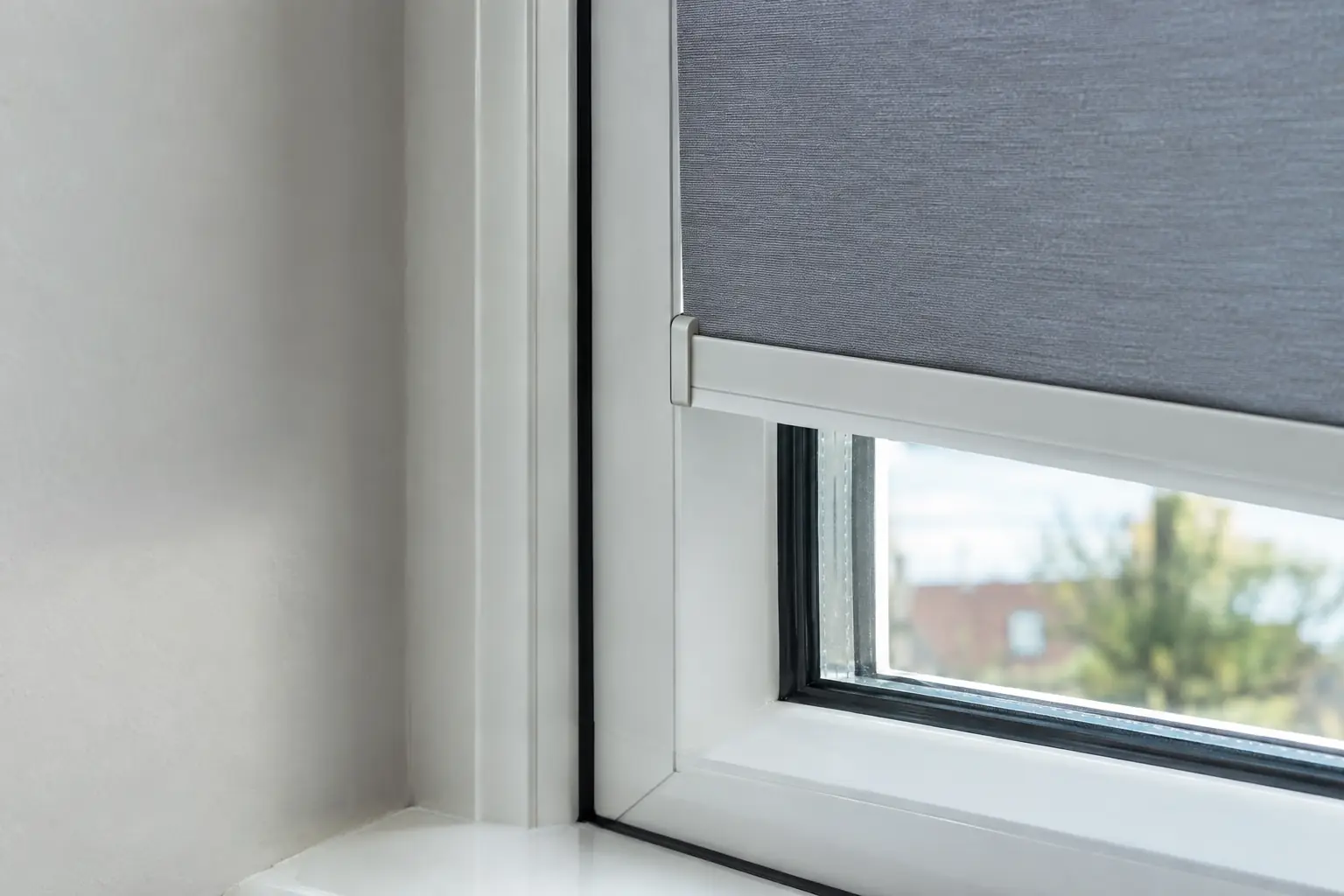
Most blinds hang from brackets screwed into the wall, the top of the recess or the window frame. A perfect fit blind works differently: it comes in its own slim frame, made to the size of a single pane, and that frame clips into the window itself.
On a uPVC or aluminium window, the glass is held in place by a bead, a strip that runs round the inside edge of each pane, sealed with a rubber gasket. The perfect fit frame has small brackets that push into the gap there, so the blind sits in front of the glass, inside the window's own frame, without a single screw going into the window. The blind then works within that frame: venetian slats tilt, and a pleated blind slides up and down between its rails.
Three things follow. The blind is part of the sash, so when you open the window the blind goes with it. There are no loose cords or chains hanging at the window, because everything is held within the frame. And because nothing is drilled, the window frame is left as it was, which matters on new windows and in a rented home where the frames are not yours to put holes in.
Will your windows take it?
Perfect fit blinds need the right kind of window, and not every window qualifies, so this is the first thing your advisor checks.
The window needs a uPVC or aluminium frame with a bead and gasket deep enough for the brackets to grip. Most modern double-glazed windows have one, but not all. Some beads are shallow, some are sculpted or angled so the brackets have nothing square to hold, and some older frames were never made with the gap in the first place. Timber sash windows and older frames usually cannot take a perfect fit blind at all.
The blind also has to live alongside whatever is on the sash. Handles sit on the frame rather than the glass, so they are rarely a problem, but restrictors, trickle vents and the way a sash closes against the outer frame all affect whether a blind can sit on every pane.
Each pane is measured on its own. A window with a fixed pane and an opening sash beside it needs two blinds, and the two panes are rarely quite the same size. Measuring the glass is not enough: the advisor looks at the bead on every pane, checks its depth and shape, and tells you on the day which windows will take perfect fit and which would be better with something else.
Tilt and turn windows and doors
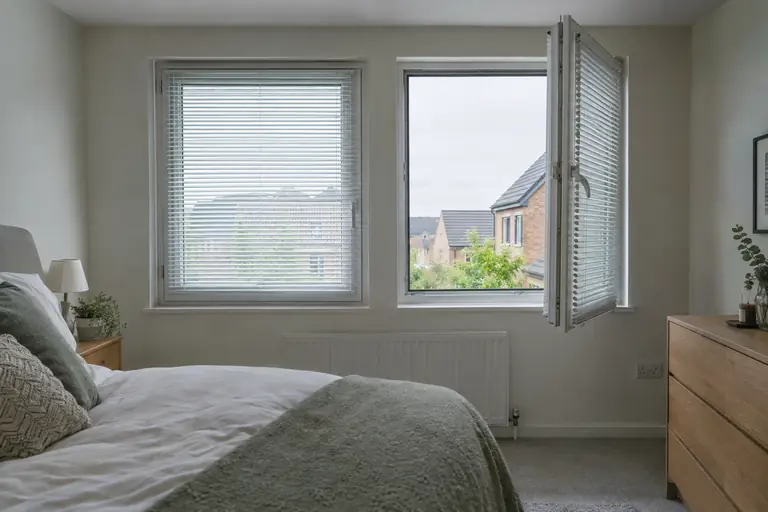
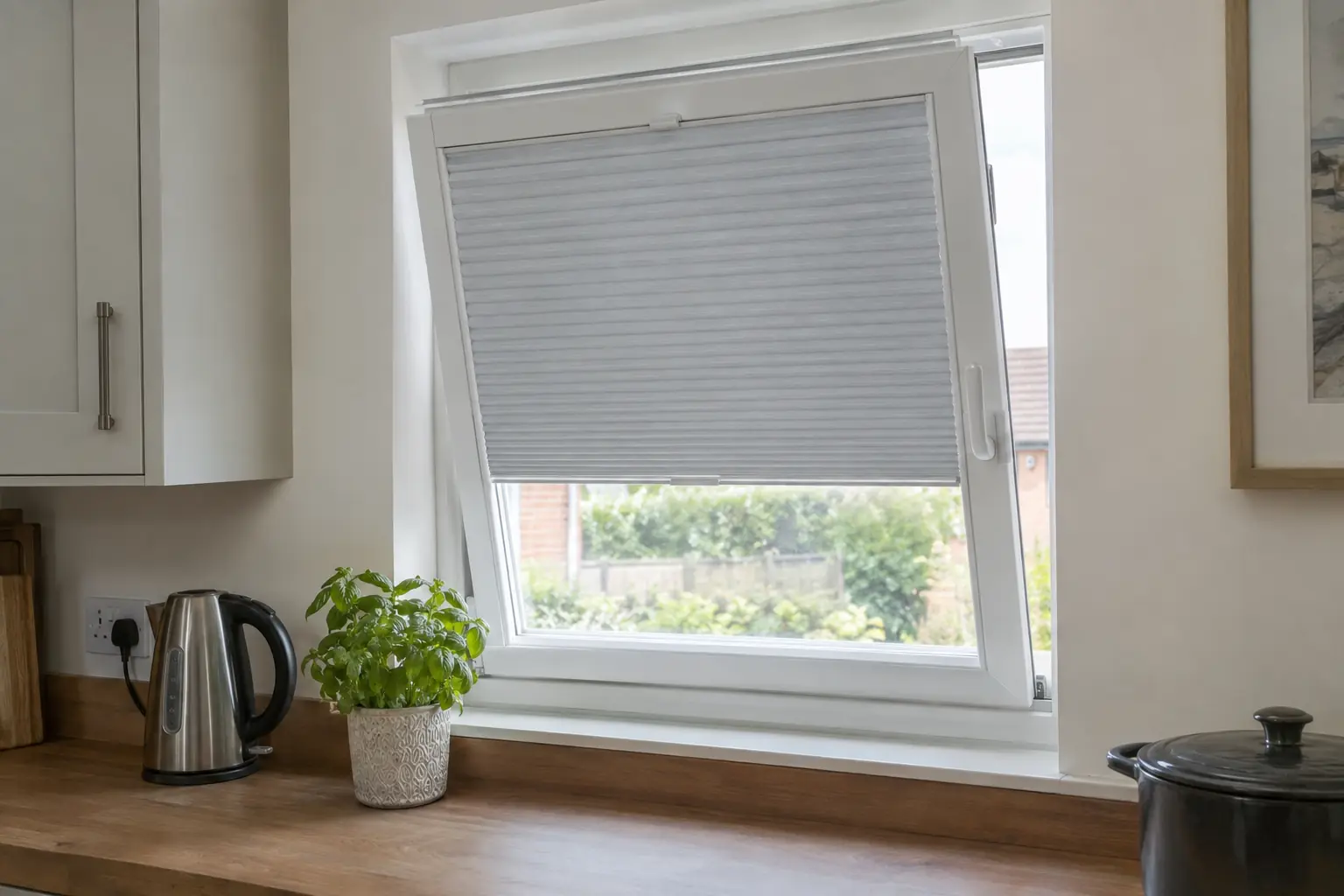
The main reason people choose perfect fit is a window that opens inwards. A tilt and turn window tips in at the top for air or swings into the room like a door, and an ordinary blind hanging in the recess is in the way of both: you have to raise it first, or it catches on the sash and the handle.
A perfect fit blind avoids the problem because it is attached to the sash. Tilt the window and the blind tilts with it. Turn it open and the blind swings into the room with the glass. You can air a bedroom overnight with the blind still down, which is what most people want from a tilt and turn window in the first place.
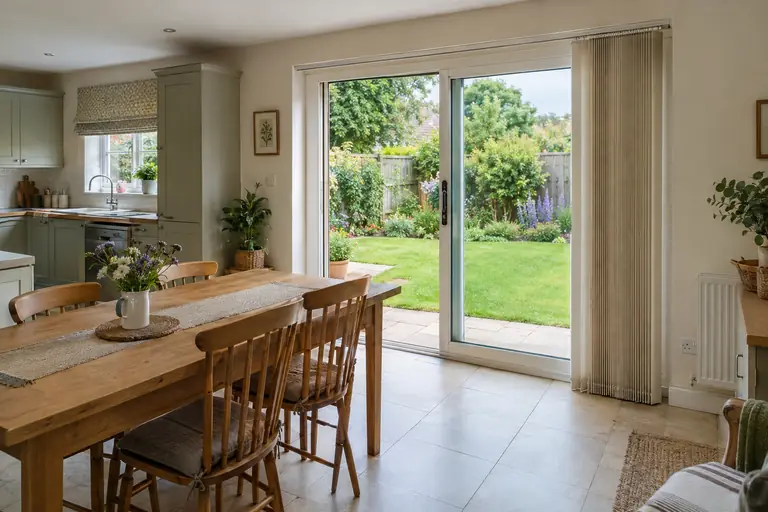
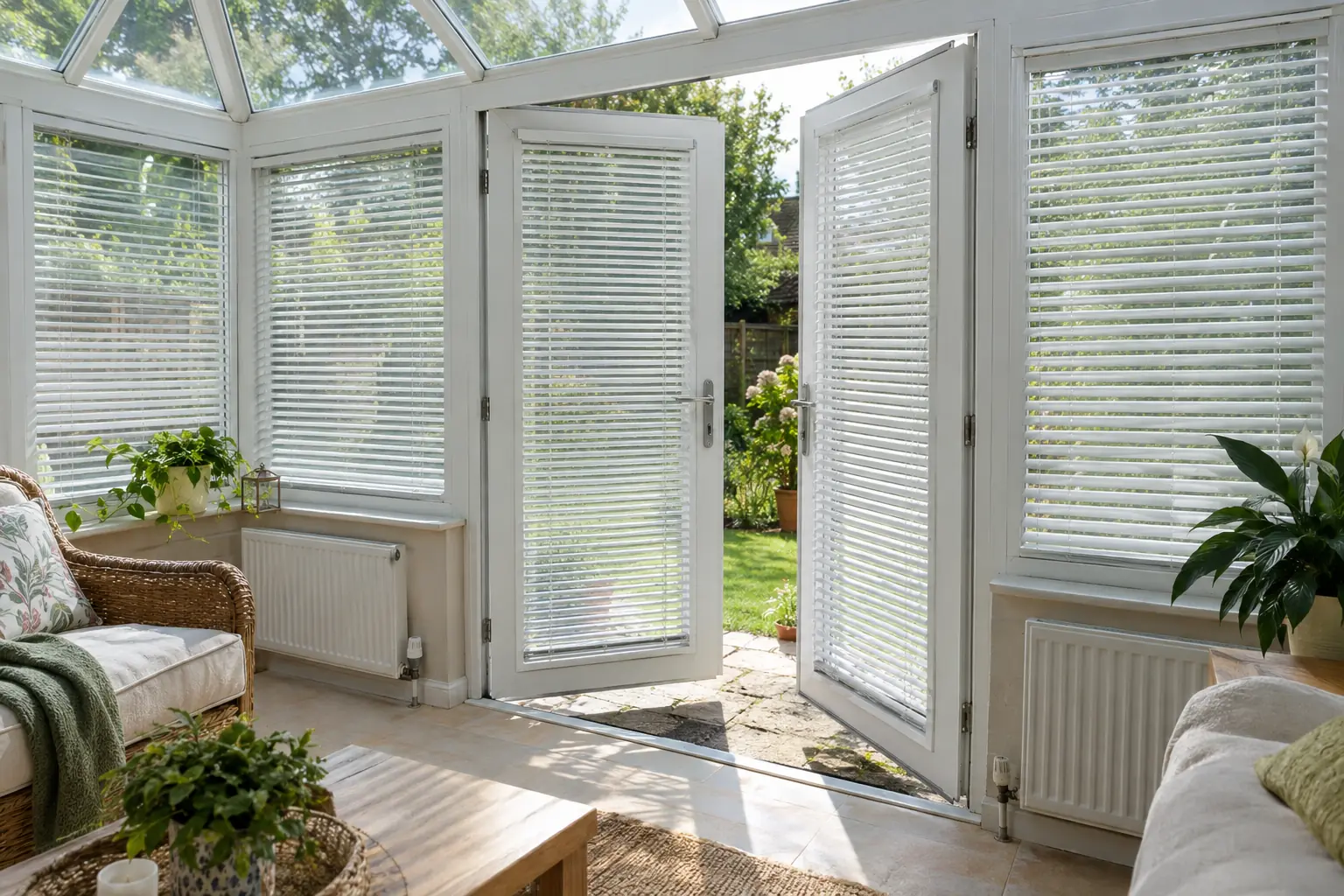
The same applies to French doors and the opening leaves of uPVC patio doors. A blind hanging in front of a door has to stop above the handle or clear it, and it swings and taps as the door moves. A perfect fit blind sits behind the handle, on the glass, and stays put as the door opens and closes. On a run of doors each leaf gets its own blind, so you can close the ones you are not using and leave the one you walk through open.
Our guide to tilt and turn windows covers the measuring side in more detail.
Venetian, pleated and other styles
Perfect fit is a way of fixing a blind rather than a type of blind, and it comes in several styles. The choice between them is mostly about how you want to control the light.
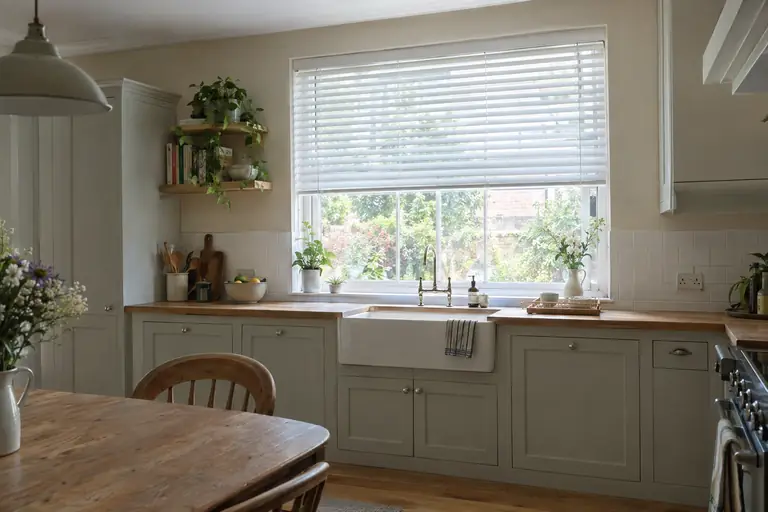
Perfect fit venetians have metal slats, or slats in a wood finish, held in the frame. You tilt them to angle the light and the view, from open to closed, which suits a kitchen or a home office where glare is the problem. Because the slats are held within the frame, perfect fit venetians are generally tilt-only, so the slats stay over the glass; if you want a blind you can clear from the window completely, say so and your advisor will steer you to one that raises.
Perfect fit pleated blinds slide up and down between their rails and stay taut on opening or sloping glass. They include thermal and blackout versions, which makes them a common choice for conservatory side windows and for bedrooms with tilt and turn windows.
If you would rather have a roller or a honeycomb blind held in the frame, ask your advisor whether one is available for your windows before you set your heart on it.
Which styles your windows can take depends on the depth of the bead and the size of each pane, so your advisor will show you what fits on the day.
Conservatories and awkward runs of glass
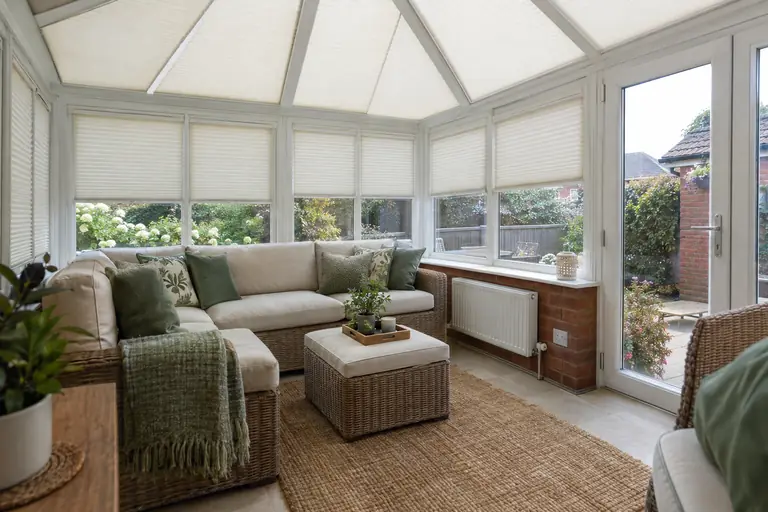
A uPVC conservatory is where perfect fit blinds are at their most useful. The side walls are usually a row of separate panes, some fixed and some opening, with top vents and a door or two. Each pane gets its own blind in its own frame, so the vents and doors open with the blinds down and the whole run looks consistent from inside and out.
Heat is the conservatory's real problem, and a pleated perfect fit blind with a thermal or reflective fabric sitting close to the glass helps with it. The roof is a different job. Roof panes are measured and quoted after the advisor has seen the frames, because the price depends on the fixing points and exact pane shapes, and our conservatory guide covers them.
The same logic applies to a kitchen window with a narrow opening vent beside a wide fixed pane, or a landing window with a top opener. Where an ordinary blind would have to cover several panes at once and get in the way of the opening one, a set of perfect fit blinds treats each pane separately. The trade-off is that the window's bars stay on show, so the look is a neat grid of blinds rather than one piece of fabric across the whole window.
When a perfect fit is not the answer
Perfect fit solves a particular problem, and where you do not have that problem, another blind may suit better.
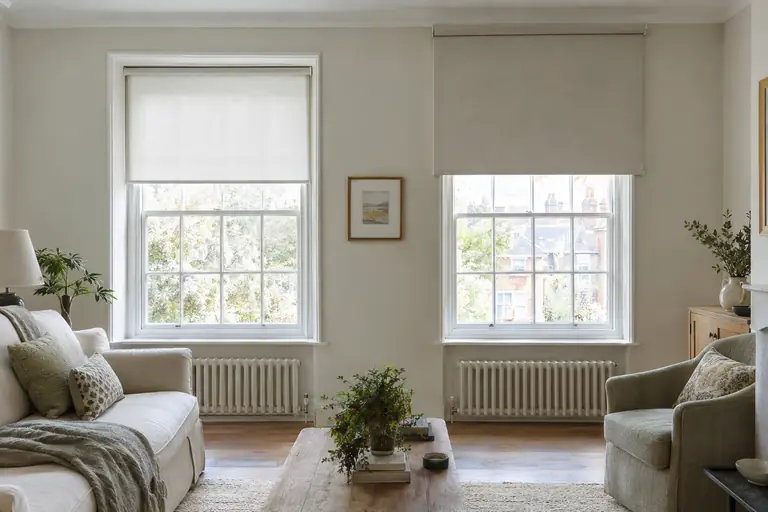
Timber windows are the obvious case. Sash windows in period houses rarely have a bead the frame can grip, and the recess is usually deep and handsome enough to show off with a roller, a roman, a wooden blind or shutters instead.
If you want the darkest possible bedroom, a blind fitted over the whole recess and overlapping it, or a blind with lined curtains, covers the frame and its edges in a way that a blind within each pane does not. Ask your advisor to show you both if darkness is the priority.
If you want one continuous piece of fabric across a wide window, perfect fit is the wrong look, because each pane has its own blind and the frame shows between them. And if the reveal is deep and the windows open outwards, the main advantage of perfect fit disappears: a recess blind will not catch on a sash that opens away from it.
None of that is a mark against perfect fit. It simply means the answer depends on the window, which is why every opening is looked at on its own.
Pros and cons
In its favour
- Nothing is drilled into the window frame
- Moves with the sash, so tilt and turn windows and doors open with the blind down
- No loose cords or chains hanging at the window
- Sits on the glass behind the handle, so nothing catches or taps
- Each pane is dressed the same, which looks tidy from inside and out
Worth knowing
- Needs a uPVC or aluminium frame with a deep enough bead and gasket
- Not suitable for timber sash windows or most older frames
- Each pane needs its own blind, so the window's bars stay on show
- Perfect fit venetians generally tilt rather than raise clear of the glass
Room by room
- Conservatory side windowsA great fitVents and doors open with the blinds down, and each pane gets its own neat blind close to the glass.
- KitchenA great fitNothing hangs over the sink or catches the handle, and the window still opens to let the steam out.
- Bedroom with tilt and turn windowsWorks wellThe window tilts open for air with the blind down; ask your advisor how dark the blackout versions get.
- Rented homeA great fitNo holes in the window frame, which matters when the windows are not yours to drill.
- French or patio doorsWorks wellThe blind moves with the opening door and sits on the glass, clear of the handle.
- Timber sash windowsThink twiceTimber sashes rarely have a bead the frame can grip; a recess blind or shutters usually suit better.