The short answer
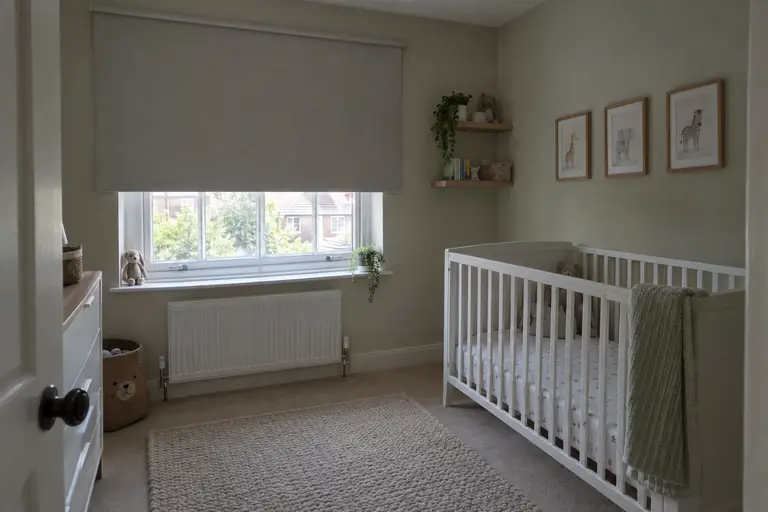
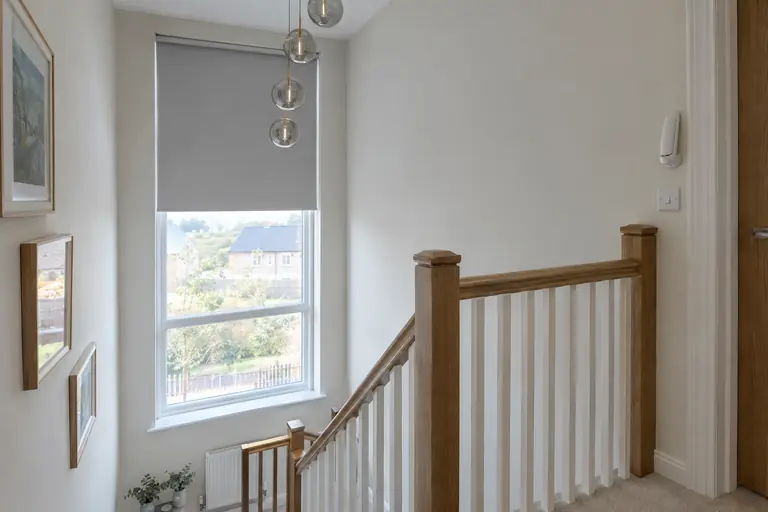
Any blind with a looped cord or chain needs a child-safety device fitted at the right height, and professional installers must fit it and explain how it works. Every corded blind we supply comes with the devices UK regulations require, and our fitter installs them and shows you how they work. For a nursery, or any room where small children sleep or play, we usually recommend a cordless or motorised blind, so there is no loop at all.
- A looped cord or chain can strangle a toddler in minutes, so every loop needs a safety device or should not be there.
- The standard covers premises where children aged 0 to 42 months are likely to be present, and installers must fit the devices in every home.
- Cleats and tensioners go at least 1.5 metres from the floor; breakaway devices at least 0.6 metres.
- Every corded blind we supply comes with its safety devices, and our fitter installs them and shows you how they work.
- Cordless, wand-operated and motorised blinds are safe by design, which is why we usually suggest them for children's rooms.
- Keep the handset of a motorised blind out of reach: small remotes can run on button batteries.
Why a looped cord is dangerous
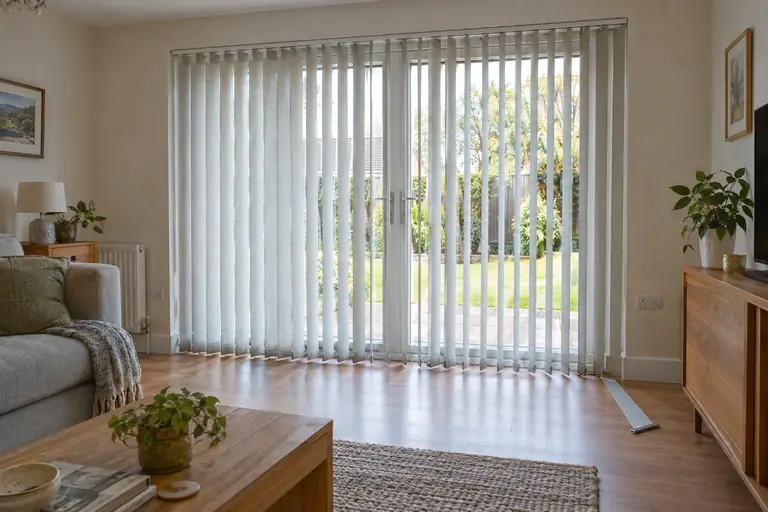
A blind cord becomes dangerous when it forms a loop. The continuous chain on a roller or vertical blind, the pull cords on an older venetian knotted together at the bottom, and the cords that gather up the back of a Roman blind can all hang at the height of a small child's head, particularly once the child has climbed onto a bed, a sofa or a window seat to look out.
It happens quickly. The Child Accident Prevention Trust says it can take just 15 seconds for a toddler to lose consciousness if a blind cord is caught around their neck, and that they can die in two to three minutes.
RoSPA reports that nine children died from blind cord strangulation between April 2019 and March 2022, and that it is aware of at least 33 UK deaths in the 20 years before that. Everything below is about the same two ideas: either there is no loop at all, or the loop is held out of reach by a device designed to stop it catching a child.
What the standards require
The requirements for internal blinds sit in a British Standard, BS EN 13120, with two companion standards: one for the child-safety devices themselves, and one for the test methods used to check that a blind protects against strangulation. According to the British Blind and Shutter Association (BBSA), since 28 February 2014 all homes, publicly accessible buildings and some commercial buildings where young children are likely to be present must comply with those requirements. The standard covers premises where children aged 0 to 42 months are likely to have access or be present.
The scope is wide. BSI lists venetian, roller, vertical, pleated and honeycomb blinds, Roman shades, Austrian and festoon blinds, panel blinds, plantation shutters and roll-up blinds, and the standard applies whether a blind is worked by hand, with springs or by an electric motor. Curtains are outside it.
The device standard names the types a blind might use: tensioning devices, breakaway devices, accumulation devices, non-tangling devices and inner cord stops. The BBSA summarises the height rule simply. All safety devices must be securely fitted at least 1.5 metres from the floor, except breakaway devices, which must be at least 0.6 metres from the floor.
What our fitters do on every corded blind
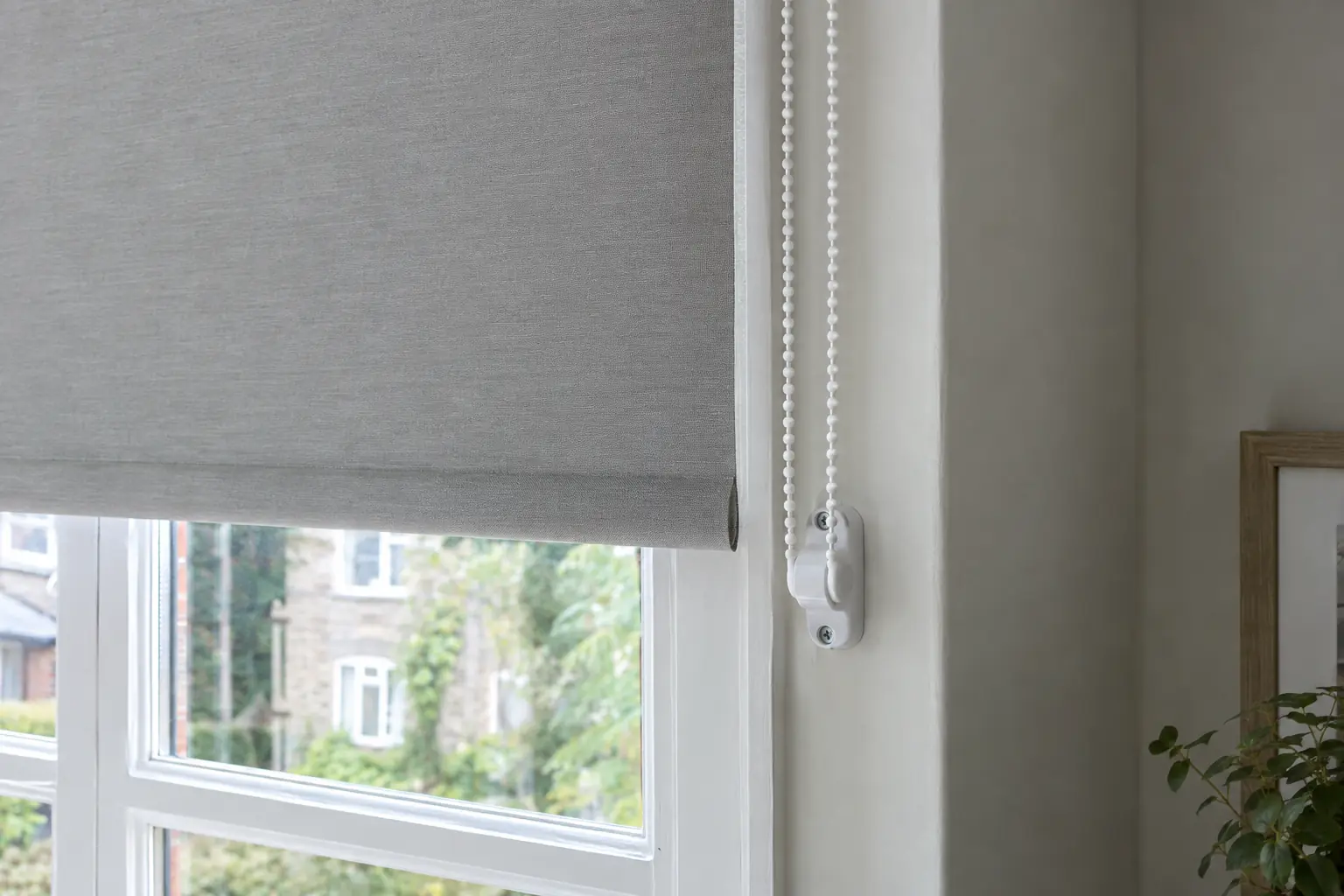
Every corded blind we supply comes with the child-safety devices that UK regulations require, and our fitter installs them rather than leaving them in the box for you. That matters more than it sounds. The BBSA is clear that professional installers must fit safety devices and explain their use, with no exceptions in homes, and a tensioner still in its packet protects nobody.
On fitting day, the fitter puts the devices in, checks the operation of the blind with you and shows you how each one works. A chain tensioner, for example, has to stay fixed to the wall or frame so the loop cannot be pulled away and wrapped; if it is ever unscrewed so the reveal can be painted, it needs to go back exactly where it was.
If there are cots or small children in the house, tell your advisor at the appointment. We will usually recommend a cordless or motorised blind for those rooms, so there is no loop to manage at all, and the advisor can show you which of the ranges you like come that way. It costs nothing to ask, and the appointment is the easiest moment to change the specification.
Cordless and motorised blinds: safe by design
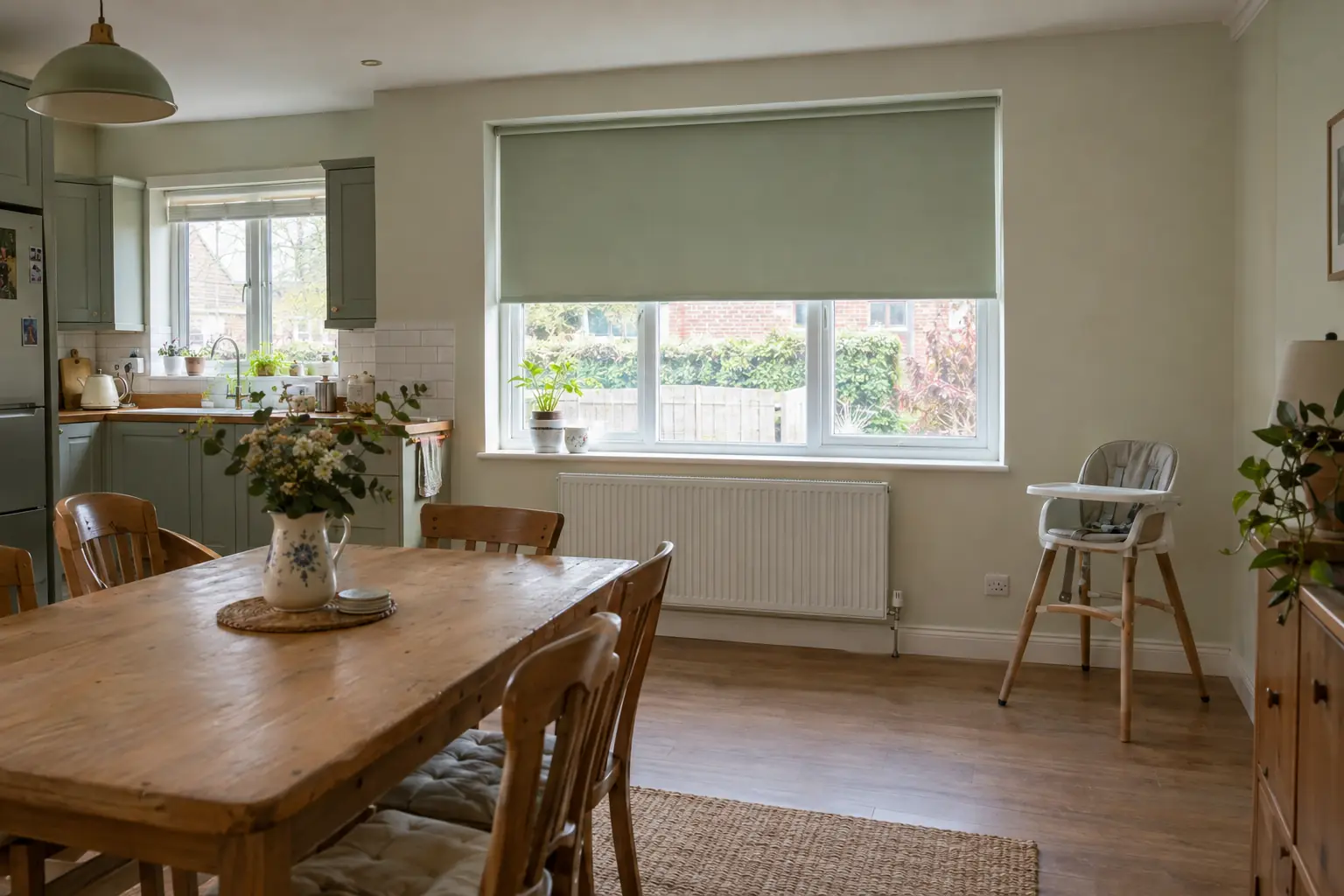
The simplest way to deal with a cord is not to have one. The BBSA describes a blind as safe by design when it is cordless or its cords are concealed or tensioned, and gives examples: spring-operated blinds, blinds you push or pull into position, motorised blinds, wand-operated blinds, and styles that are lowered or tilted by hand.
Each has its own feel. A cordless blind is raised and lowered by its bottom rail, which suits a window you can reach comfortably. A wand turns venetian slats without a hanging loop. A motorised blind moves from a handset or an app, which is the usual answer for high windows, glass behind furniture and anything a child might climb to reach. Motorised blinds are still inside the scope of the internal-blinds standard, which is written for blinds worked by hand, with springs or by an electric motor.
Shutters avoid the question in a different way: they need no cords at all, and the louvres are tilted by hand. For a fuller comparison of the running options, including what a motor changes about day-to-day use, see our guide to motorised and manual blinds.
Checking older blinds, Roman blinds and curtain tracks
RoSPA says that if you buy a new blind with a looped cord or chain today, it will have a safety device already installed or included for you to install yourself. The problem is the blinds that went up before the 2014 changes. RoSPA points to the millions of blinds installed before then that may have no life-saving safety features, and says that if they cannot be made safe by adding safety devices, they should be replaced.
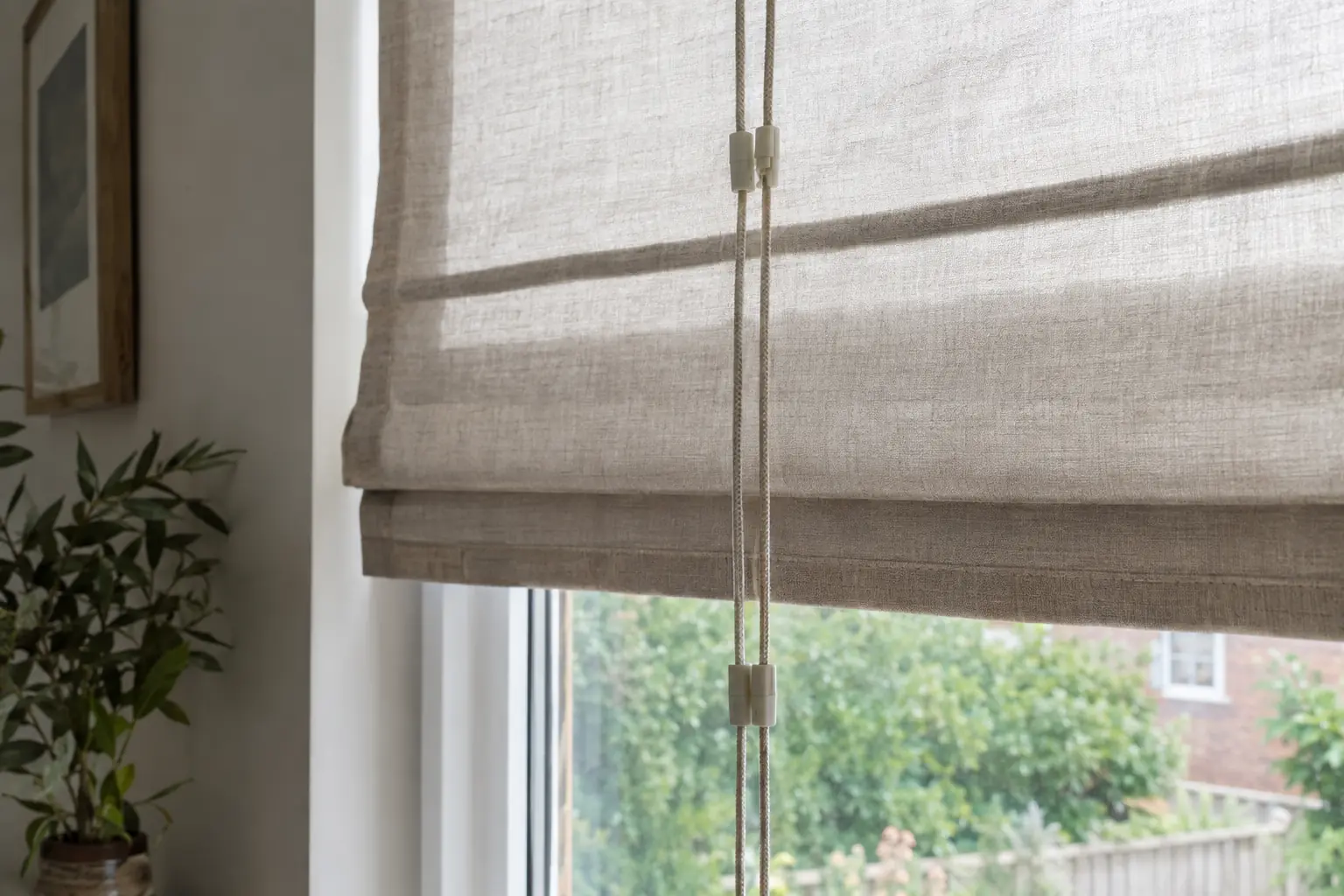
Walk round with fresh eyes. On a venetian, look for long pull cords hanging loose or knotted into a loop. On a roller or vertical, look for a continuous chain with nothing holding the bottom of it. On a Roman blind, turn it round: the Child Accident Prevention Trust advises checking that the cords on the back are connected with a safety device that will break under pressure. Where there is only a cleat, RoSPA's advice is to wind the cord round it in a figure of eight, with the cleat at least 1.5 metres from the floor.
Curtains are outside the blind standard, but RoSPA reminds parents that corded curtain tracks can pose the same risks as blinds, so a loop of track cord needs the same treatment.
Then look at the furniture. CAPT advises moving cots, beds, highchairs and playpens away from looped blind cords, and other furniture too if there is space, because young children love to climb.
Button batteries in remote controls
Taking the cord away does not take every hazard away. Small handsets and remote controls often run on button or coin batteries, and the Office for Product Safety and Standards records several recent UK child deaths from swallowing them, including a two-year-old girl who died in May 2021 after swallowing batteries from a remote control.
The danger is chemical rather than choking. If a battery lodges in the throat it can react with saliva to create caustic soda, which can burn and lead to internal bleeding and possibly death. CAPT says children aged 6 months to 4½ years are most at risk.
If you choose a motorised blind, treat its handset like any other remote in the house. Check that the battery compartment closes securely, keep the handset somewhere a child cannot reach rather than on a low sill or a bedside table, and store spare batteries up high and out of reach. If you ever think a child may have swallowed a button battery, CAPT's advice is to go straight to A&E or call an ambulance.
Checklist
- Walk each room and note every blind with a looped cord or chain, including the cords on the back of Roman blinds.
- Check each loop is held by a tensioner fixed to the wall or frame, or wound in a figure of eight round a cleat at least 1.5 metres up.
- Move cots, beds, highchairs and playpens away from any window with a looped cord.
- Look for furniture a toddler could climb to reach a cord: sofas, window seats, toy boxes.
- Keep the handset for a motorised blind, and any spare batteries, up high and out of reach.
- Replace any blind that cannot be made safe, and choose cordless or motorised for a child's bedroom.