
The short answer
Motorised blinds come in two kinds: battery motors, which need no wiring and are recharged every so often, and mains motors, which need a power supply at the window. Both can be run from a remote or an app and grouped so several blinds move together. They make most sense on roof windows, tall glass, windows behind furniture and in children's rooms, where having no cord is the point. The motor carries the same 1-year guarantee as the blind.
- Battery motors need no wiring and are recharged every few months; mains motors need a power supply at the window.
- Use a remote, a wall switch or an app, and group blinds so a run of windows moves together.
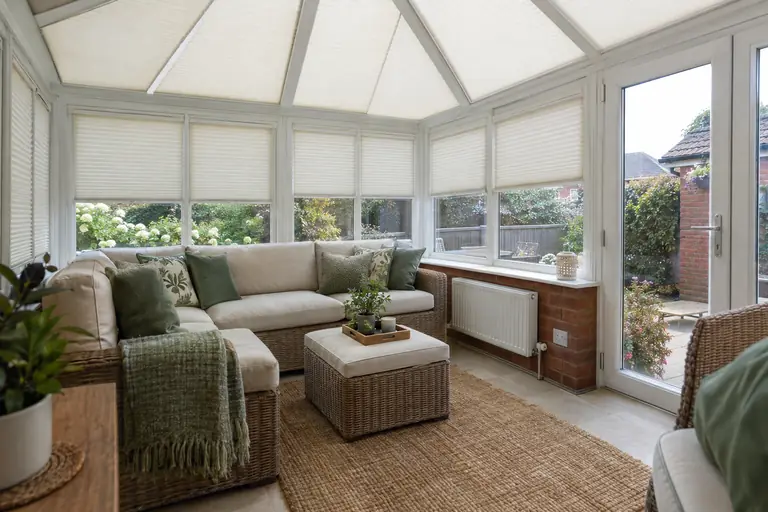
- Motors earn their keep on roof windows, tall glass, conservatory roofs and windows behind furniture.
- No cord or chain makes a motor a strong choice for children's rooms; keep handset batteries out of reach.
- We do not do electrical work: a new mains supply is a job for a registered electrician.
Why people motorise a blind
Motorising a blind is rarely about the gadget. It is about the windows you cannot comfortably reach, and the blinds that stop being used as a result.
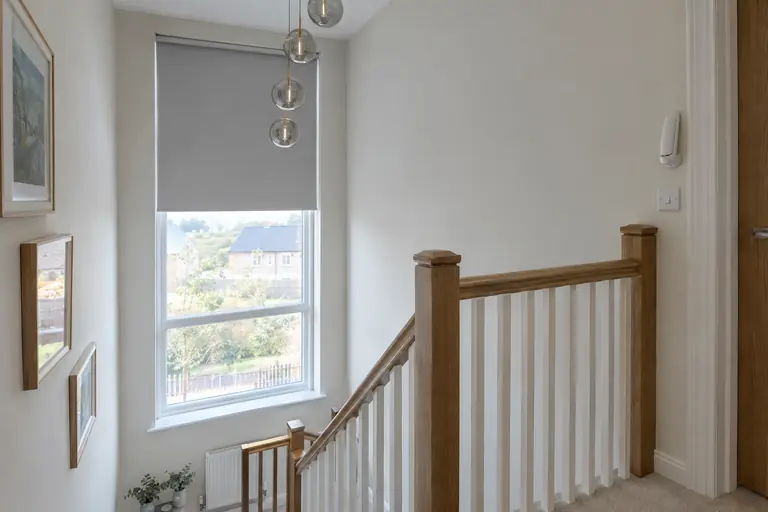
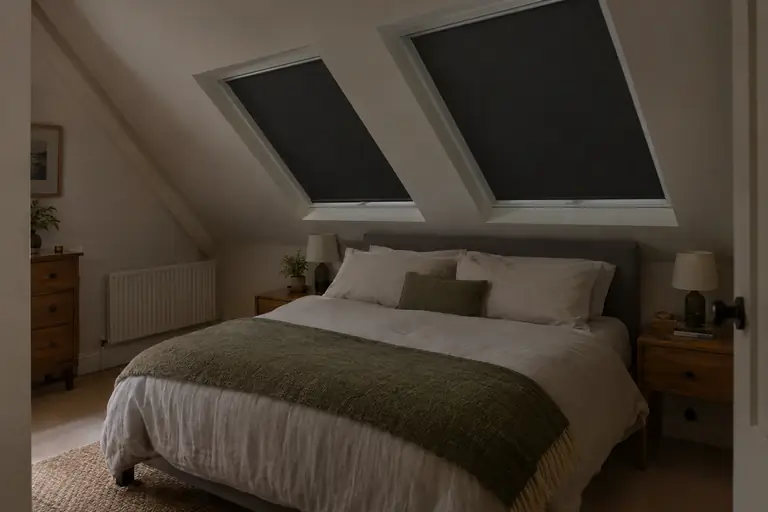
A roof window in a loft bedroom, a gable end in a barn conversion, the tall pane over a stairwell, the window behind a sofa or on the far side of a kitchen island: these are the blinds that get set once and left, because moving them means a pole, a stepladder or leaning over something. Put a motor in and they go up in the morning and down at night like any other blind.
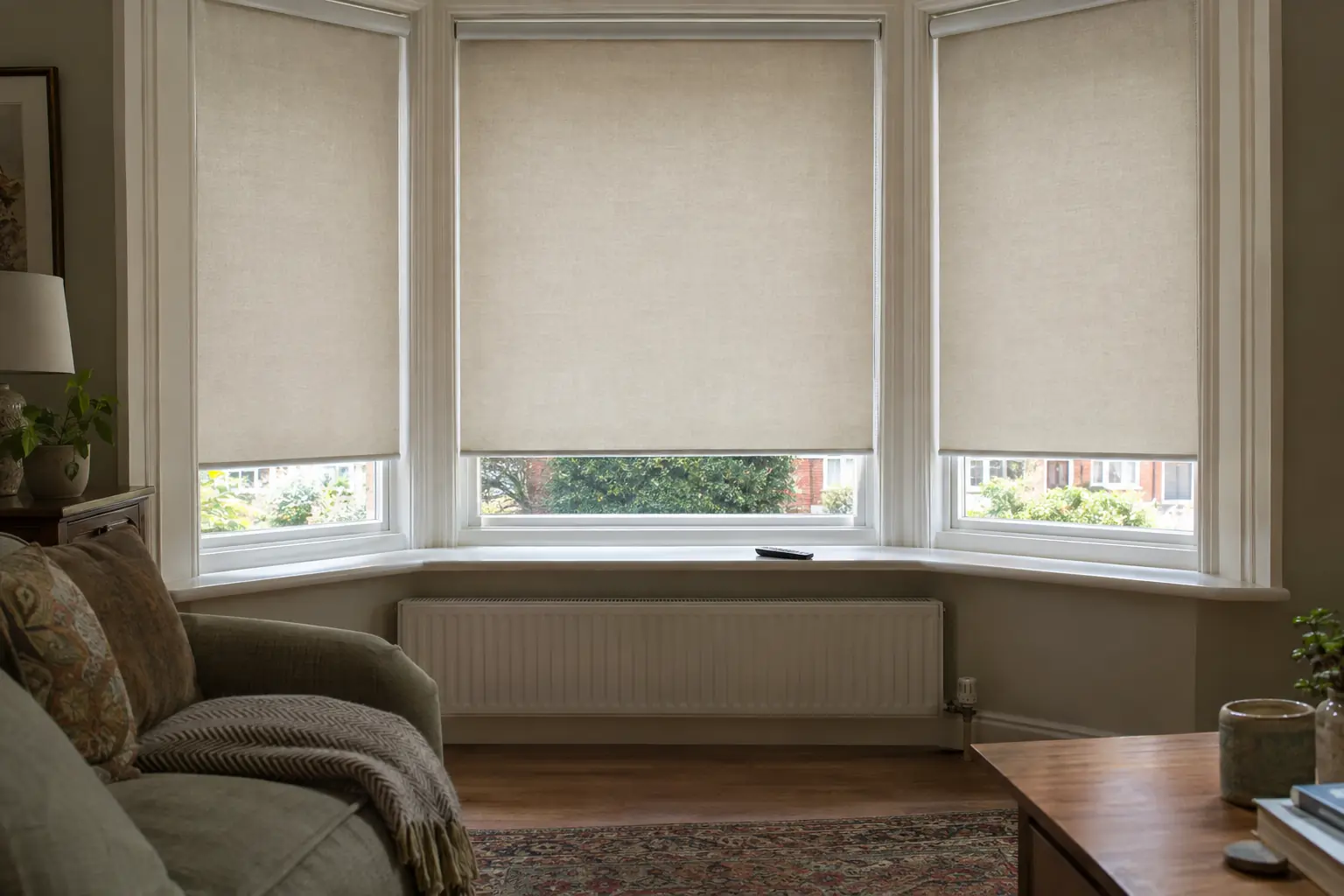
The second reason is a run of windows. A bay of three, or a wall of glass lowered one chain at a time, never quite ends at the same height. Grouped motors move together, so a whole room closes on one button and the blinds finish level.
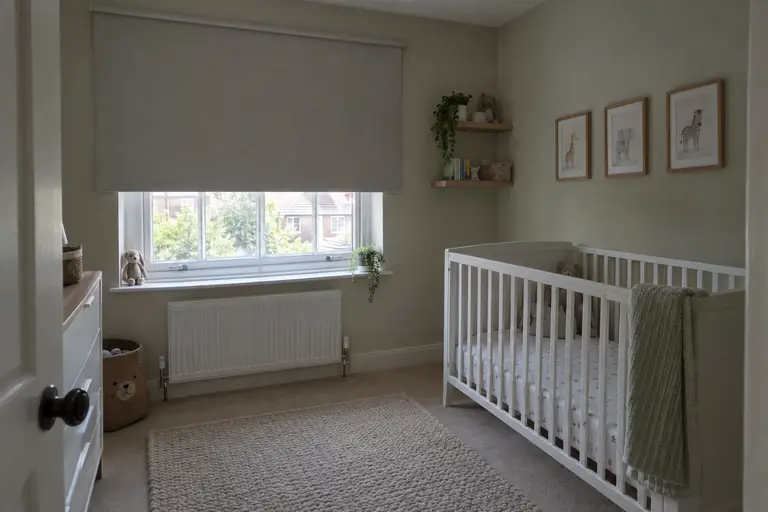
The third is children. A motorised blind has no cord or chain at the window, which is why the British Blind and Shutter Association lists motorised blinds among the designs it calls safe by design, alongside cordless and wand-operated ones. In a nursery or a child's bedroom that is often the deciding reason.
Motors are not only for awkward windows, but that is where the case is strongest, and where your advisor is most likely to suggest one.
Battery or mains: the real difference
There are two ways to power a blind motor, and the choice is mostly about where the blind is and how often it moves.
A battery motor carries its own power, so no cable has to reach the window and nothing has to be chased into the plaster. Most of our motorised ranges run on a rechargeable battery in the blind, topped up with a charging lead every few months; how often depends on how much the blind moves. It suits almost any window, including rented homes and freshly decorated rooms where you do not want wiring.
A mains motor never needs charging, but it does need a power supply at the window. It is worth considering where a blind runs several times a day, or where it sits somewhere you would not want to reach to charge it, such as a conservatory roof or the top of a double-height window.
In practice, battery motors suit most homes. Mains makes sense in a new build or a renovation where the walls are open anyway, or on a window that is genuinely hard to get to. Your advisor will ask how you use each room and tell you what each blind would need, before anything is ordered.
Who does the wiring
We make, measure and fit blinds; we do not do electrical work. If a mains motor needs a new supply at the window, that is a job for a registered electrician, and your advisor will tell you what the motor needs so the electrician knows what to provide.
It helps to know roughly how the rules work, at least in England. Under Part P of the Building Regulations, some electrical work is notifiable: installing a new circuit, replacing a consumer unit, or adding to or altering circuits in a special location. A special location includes the space around a bath or shower, up to 2.25 metres high and 0.6 metres out from the edge of the bath or shower tray, which matters if the blind you want motorised is in a bathroom. Other additions and alterations to existing circuits, outside those locations, are not notifiable, though they still need doing properly.
Whether a supply for a particular blind falls into either group is for the electrician to say, not us, and if you live outside England, ask your electrician which rules apply.
If none of that appeals, a battery motor sidesteps the question entirely, which is one reason most people choose one.
Remotes, apps and grouping
A motorised blind can be worked from a handset, a wall switch or an app on your phone, and you can mix them: a switch by the bedroom door, a handset on the bedside table and the app for when you are out.
Grouping is where motors earn their keep across a room. Blinds can be set up so a run of windows moves together, a bay of three lowers as one, or every blind on the sunny side of the house closes on a single command. Some people use a timer as well, so the bedroom blinds open at the same time each morning.
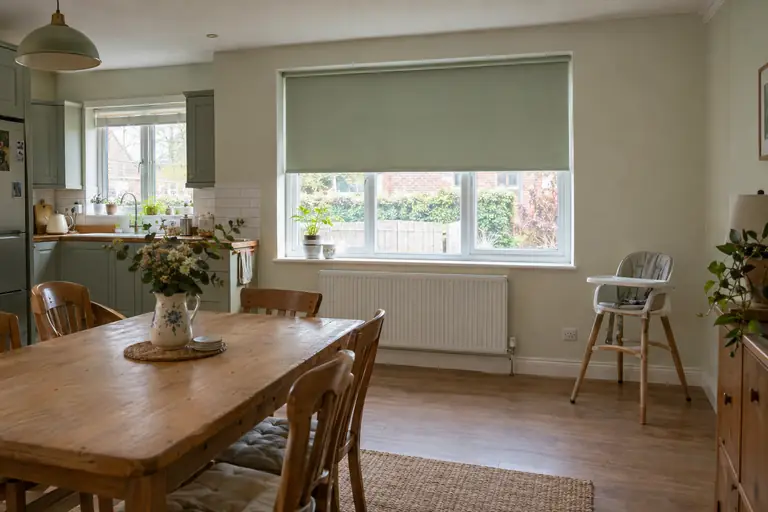
Plan the groups around how you use the house rather than around the windows. A kitchen-diner might want the kitchen window on its own, because it goes up first thing, and the two dining windows together. A child's room might want its blind on its own wall switch in that room, rather than on a whole-house group that someone downstairs can lower at bedtime.
If you already have a smart-home system and want the blinds to join it, ask your advisor which ranges and motors can do that. It varies, and we would rather tell you on the day than promise it in a guide.
Child safety: no cords, but mind the batteries
Taking the cord away removes the strangulation risk that looped cords and chains carry. It does bring in one thing to think about instead: small batteries.
Many remote handsets, like other small remotes around the house, run on a coin or button battery. If yours does, treat it with care. The Office for Product Safety and Standards warns that a swallowed button or coin battery lodged in the throat can react with saliva to form caustic soda, which can burn and lead to internal bleeding and possibly death. The Child Accident Prevention Trust says children aged 6 months to 4½ years are most at risk, advises storing button batteries up high and out of reach, and says that if you think a child may have swallowed one, go straight to A&E or call an ambulance.
In practice that means keeping the handset somewhere a toddler cannot reach, checking its battery cover is secure, and putting spare and used batteries away rather than leaving them on the windowsill. In a child's bedroom, a wall switch or the app avoids a handset in the room altogether.
Living with a motorised blind
A motorised blind asks very little of you. Keep the battery topped up if it has one, and clean the blind as you would any other: dust with a soft brush or a dry cloth, and for a roller fabric, a light sponge on a mark rather than a soak.
If a battery runs low, the blind simply stops where it is until you charge it. A mains motor stops during a power cut for the same reason and carries on when the power comes back. If the idea of a bedroom blind stuck down on a dark winter morning bothers you, say so at the appointment, and your advisor will talk through what suits that window.
On fitting day, the fitter hangs everything, checks the operation with you and takes the packaging away. It is worth trying each group and each handset while they are still there, so any change is made before they leave.
The motor carries the same 1-year guarantee as the blind it drives, and because we supply and fit both, there is no separate manufacturer to chase. After that, parts such as motors, brackets and chains can usually be replaced without remaking the blind: ring the office with the reference on your paperwork.
Pros and cons
In its favour
- No cord or chain at the window for a child to reach
- Blinds on roof windows and tall glass actually get used
- Grouping moves a whole run of windows together and they finish level
- Battery motors need no wiring and no channels cut into the plaster
- The motor has the same 1-year guarantee as the blind, and can usually be replaced without remaking it
Worth knowing
- Battery motors need charging every so often
- Mains motors need a power supply at the window, which may mean an electrician
- Costs more than the same blind with a chain
- Handsets can take small batteries that need storing safely around young children
Room by room
- Loft bedroom with roof windowsA great fitRoof windows are out of reach, so a motor turns a blind you leave alone into one you use every day.
- ConservatoryA great fitRoof panes are too high to reach, and grouping lets the whole roof close together on a hot afternoon.
- Child's bedroomA great fitNo cord or chain at the window at all; keep the handset, or its batteries, out of reach.
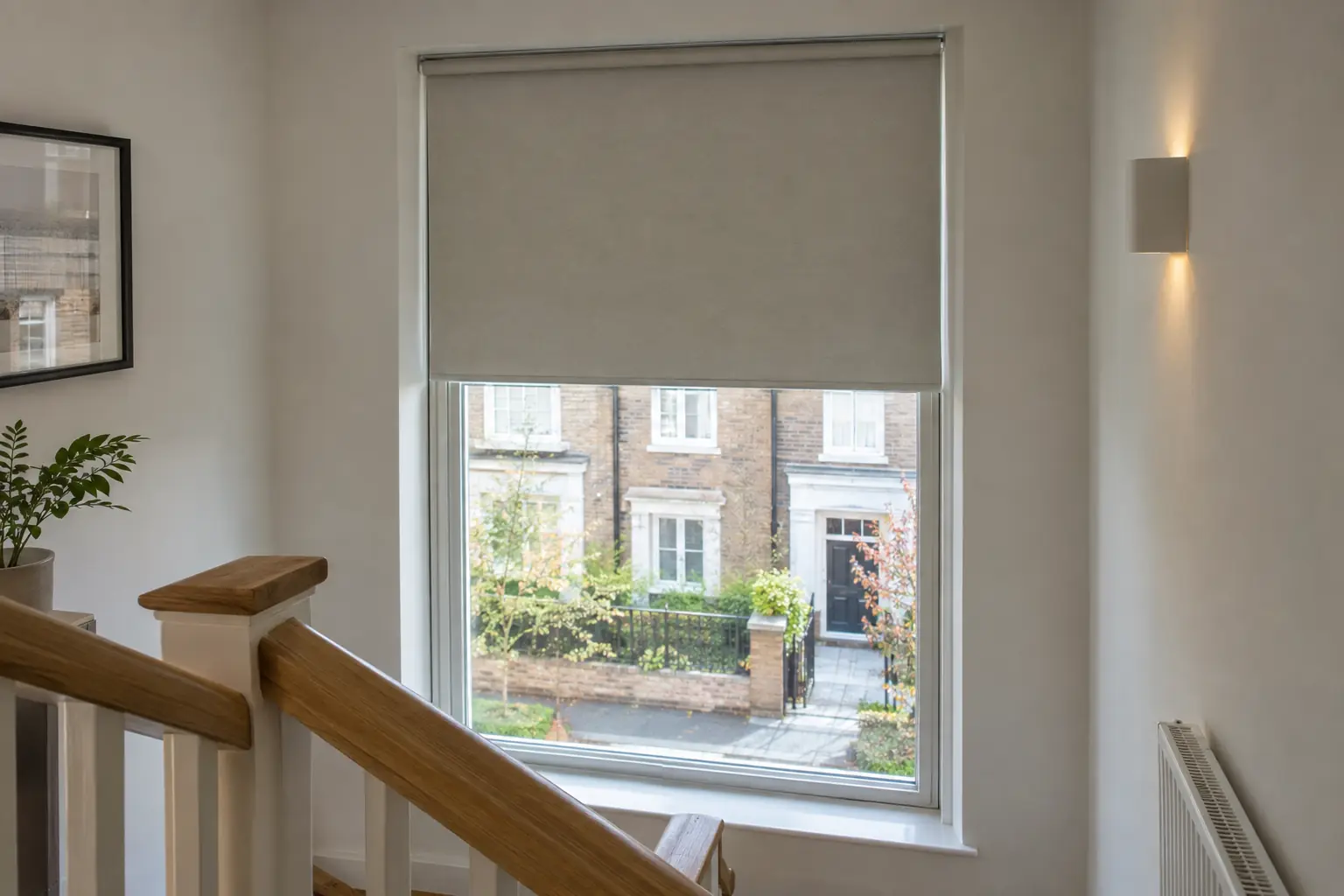
- Stairwell or tall glassA great fitTall windows over stairs are awkward and unsafe to reach; a motor removes the problem entirely.
- Living room with a bay or several windowsWorks wellGrouping lowers a bay or a row of windows together, so they always finish at the same height.
- Small bathroom windowThink twiceA window you can reach easily rarely needs a motor, and a mains supply near a bath needs an electrician's view.