The short answer
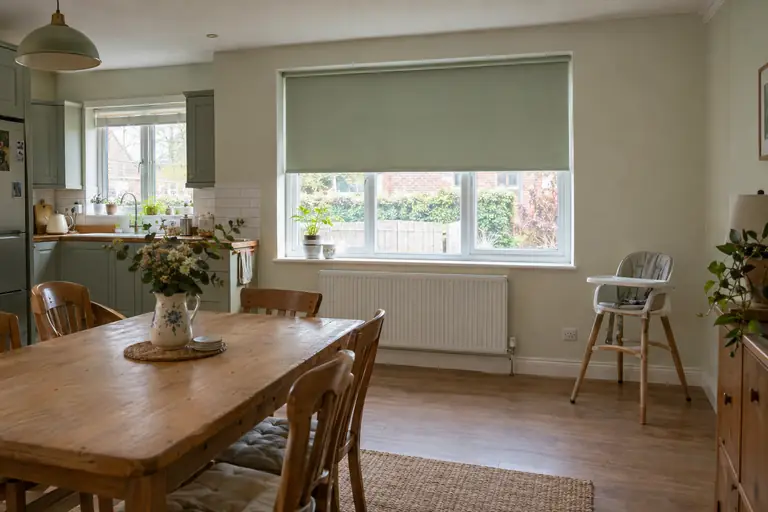
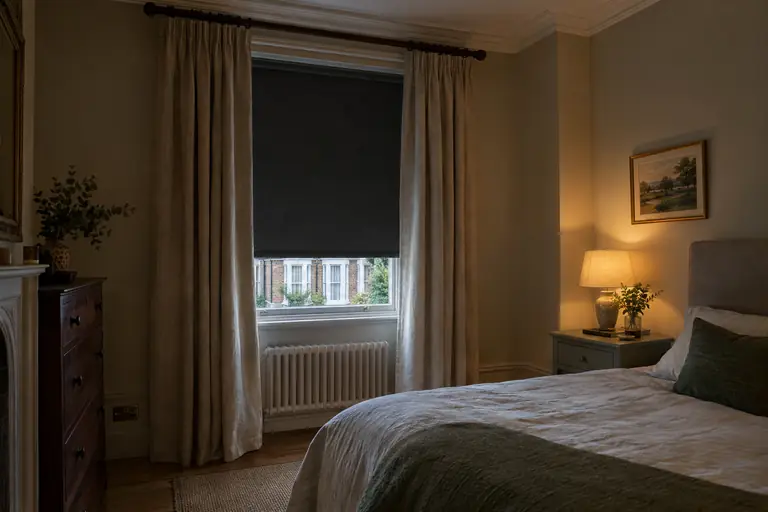
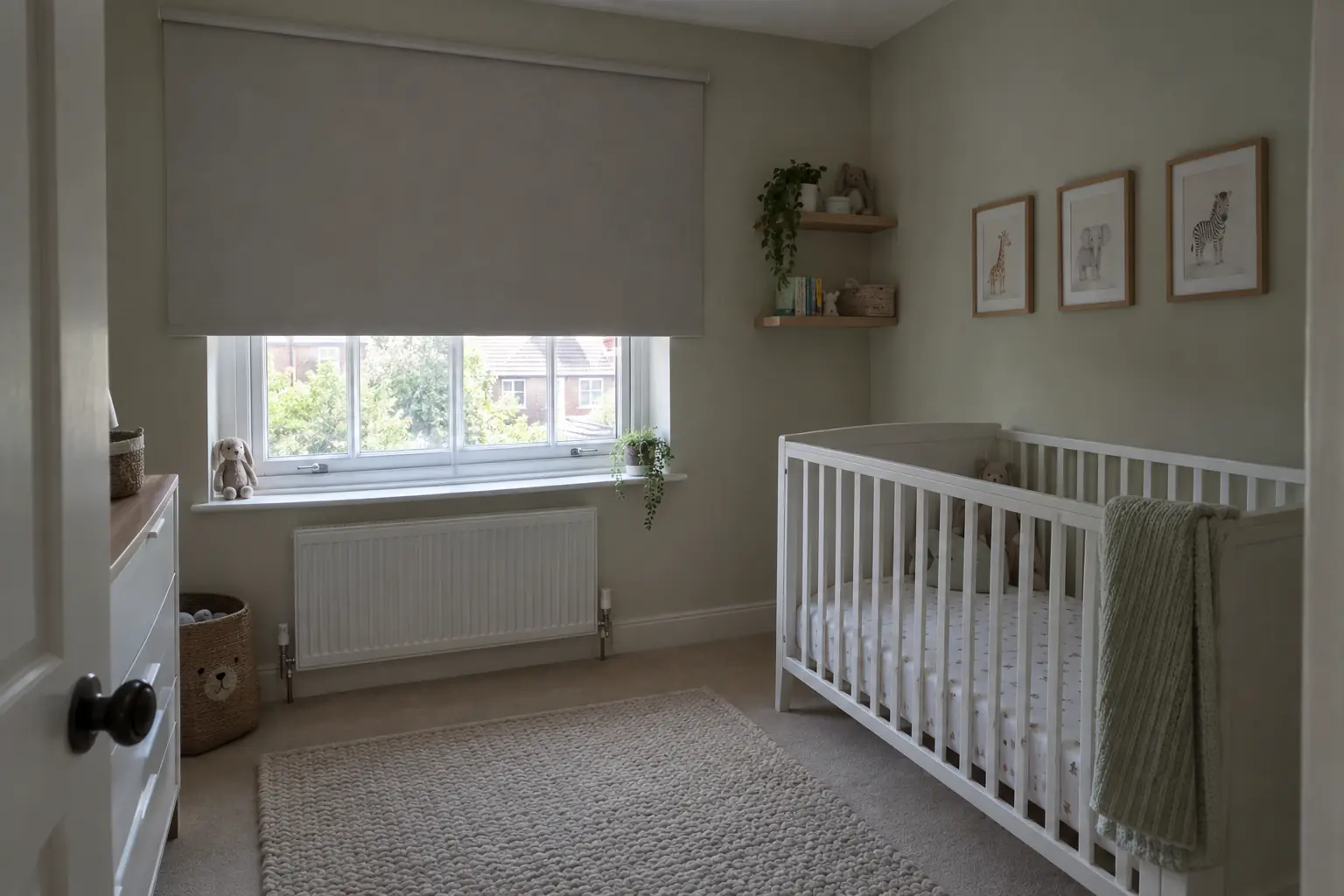
Choose a cordless or motorised blind, so there is no cord or chain in the room at all, and keep the cot or bed away from the window. For sleep, a blackout roller or roman fitted outside the recess gives the darkest result, and curtains on a pole add another layer. Pick a wipeable fabric in a design the child will not outgrow in a year.
- No looped cords or chains in a child's bedroom: choose cordless or motorised.
- Keep cots, beds and anything a child can climb away from the window.
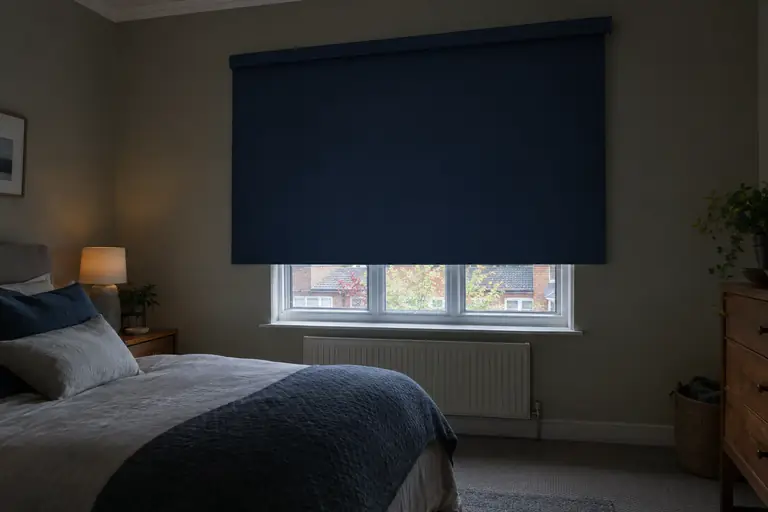
- Blackout fabric fitted outside the recess gives the darkest room for naps.
- Check the older blinds elsewhere in the house, not just the new one in the nursery.
- A plain, wipeable blind outlasts the nursery years; put the character into things easier to change.
How much light gets through
Swipe to see the whole diagram
The fabric decides how much light comes through the blind itself; the fit decides how much comes round the edges.
Why cords matter more here than anywhere
Blind cords are a hazard in any room a young child can reach, but a child's bedroom is where they spend long stretches on their own, at naptime and at night. The Child Accident Prevention Trust's figures are stark: a toddler can lose consciousness within 15 seconds of a blind cord catching round the neck, and can die within two to three minutes.
RoSPA's advice follows from that: never fit a blind with a looped cord or chain in your child's bedroom. It is the starting point for everything else in this guide.
We supply every corded blind with the child-safety devices UK regulations require, and our fitter installs them and explains how each one works; our blind cord safety guide sets out what those devices are and the rules behind them. In a nursery or a young child's room, though, we would usually recommend going further than the minimum, and choosing a blind with no cord or chain to worry about at all.
Cordless and motorised: the two safe routes
Two kinds of blind take the cord out of a child's room altogether: ones you move by hand at the blind itself, and ones you move with a motor. The British Blind and Shutter Association counts both as safe by design.
With a cordless blind, nothing hangs at the side of the window: you raise and lower it by the bottom rail. They suit a window you can comfortably reach, and they tidy the room up too: no cleat on the wall, no chain gathering on the sill. Your advisor will show you how each cordless range works, because they do not all operate in the same way.
Motorised blinds are the other route, and often the better one where the window is behind the cot, high up or awkward to reach. They run on battery or mains power and work from a remote or an app, so the control is in your hand rather than at the window. Set on a timer, a nursery blind can close at bedtime without anyone crossing a room with a sleeping baby in it.
A motor brings one thing to think about: the remote. If it takes a button or coin battery, the Child Accident Prevention Trust advises storing button batteries up high and out of reach. It says children aged six months to four and a half are most at risk from swallowing them.
Where the cot goes, and what comes next
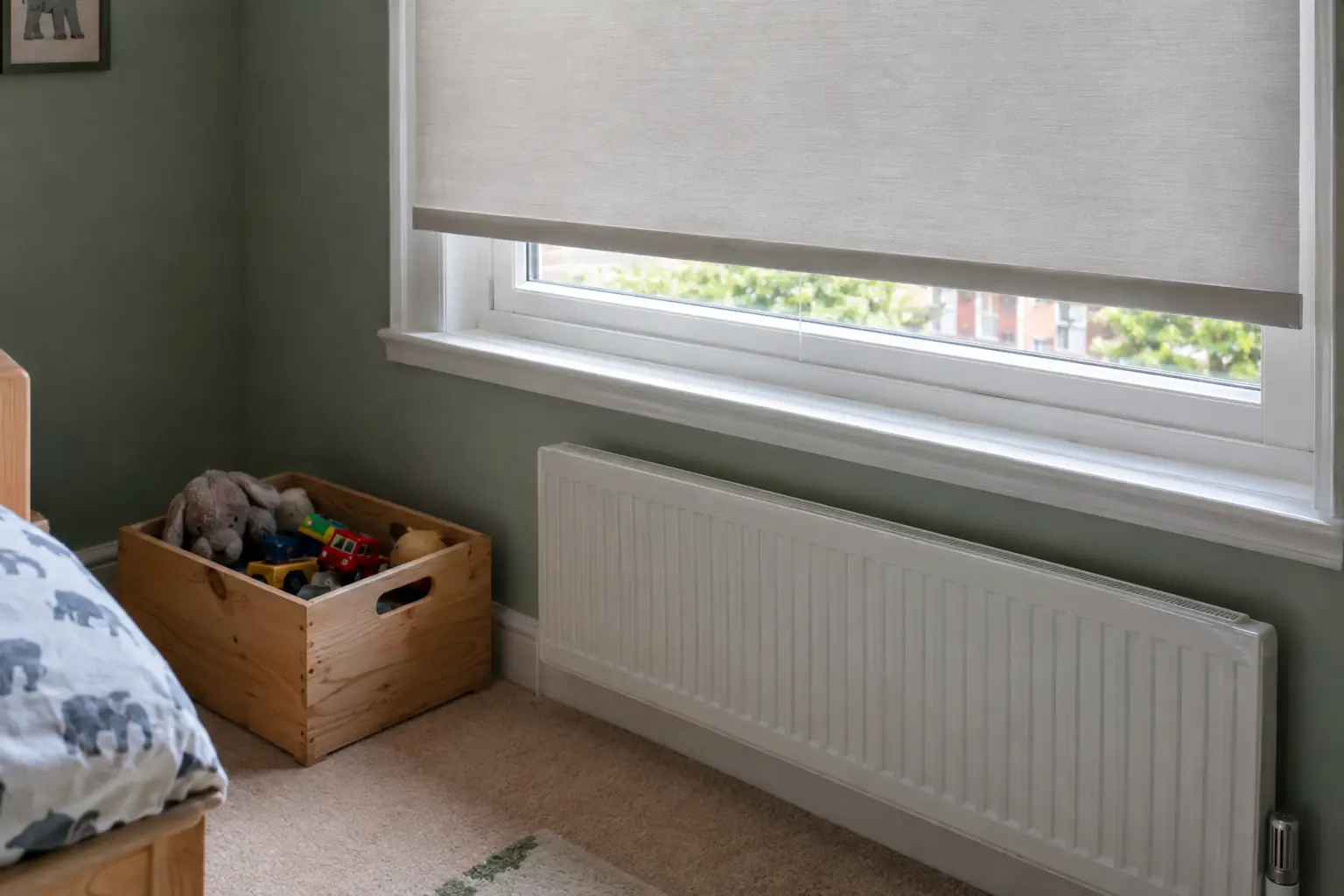
The furniture matters as much as the blind. The Child Accident Prevention Trust's advice is to keep cots, beds, highchairs and playpens clear of looped blind cords, and to move other furniture away too where the room allows, since young children climb. In a small nursery that is harder than it sounds. Box rooms often have one clear wall, and it is the one under the window.
Plan for the child who climbs, not only the baby who lies still. Within a few years the cot becomes a bed, a toy box appears under the sill, and a desk or a bookcase arrives. Any of them can become a step up to the window. A blind with no cord removes that risk whatever the furniture does later; a corded blind depends on the furniture staying where you put it.
Curtains need the same thought. RoSPA points out that corded curtain tracks can pose the same risks as blinds and should be included in any check of cords and chains. Curtains drawn by hand on a pole have no cord at all, which makes a pole the simpler choice for a nursery.
Dark enough for naps and light evenings
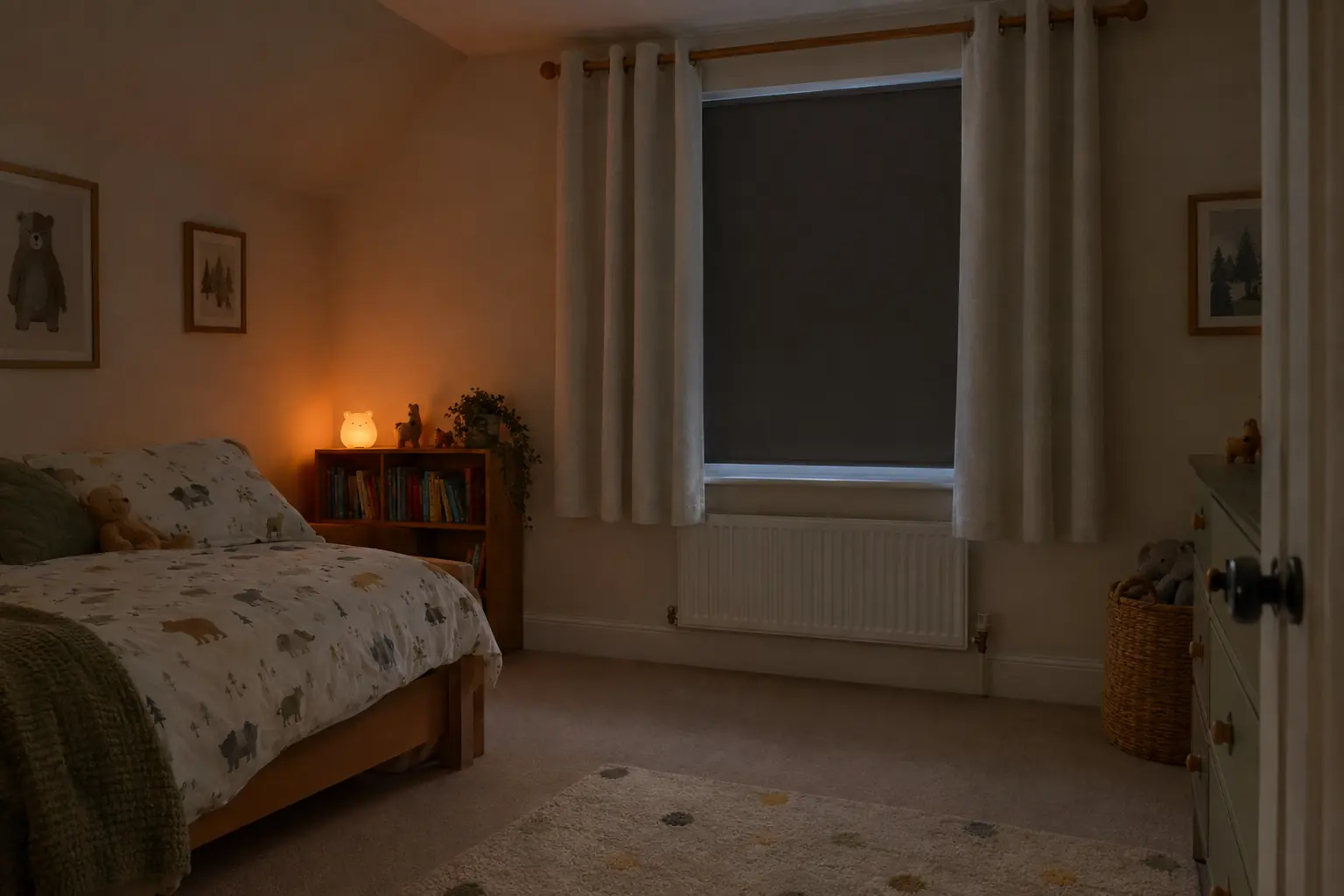
Babies and young children often need to sleep while it is light outside: naps all year round, and a seven o'clock bedtime in June. NHS advice for children's sleep suggests making the bedroom dark for sleep, for example with blackout blinds, and says a night light is fine for children afraid of the dark, recommending a red or orange one.
Blackout fabric stops light passing through the weave, but a blind in the recess still lets light round its edges. In a nursery that matters more than in an adult's room, because the gaps are brightest exactly when you want the room darkest: mid-afternoon and summer evenings. Mounting the blind on the wall outside the recess, overlapping the opening on every side, cuts most of that stray light. Blackout-lined curtains on a pole outside the blind close it further. If you prefer the look of a recess fit, ask your advisor whether your window can take a side channel to close the gap at the edges.
A roman blind with a blackout lining is a softer alternative to a roller, and suits a nursery that is meant to look warm rather than practical. If you choose a roman with cords, the Child Accident Prevention Trust advises checking that the cords on the back are connected with a safety device designed to break under pressure.
Keeping the room at a comfortable temperature
The NHS advises keeping a baby's room between 16°C and 20°C to lower the risk of sudden infant death syndrome. It does not say how, and a blind is no substitute for a room thermometer, but window dressings are one of the few things in a nursery you can adjust through the day.
In summer, a south- or west-facing nursery can warm up quickly through an afternoon. Hot-weather advice from the UK Health Security Agency is to keep blinds and curtains closed during the day on any window the sun shines on directly, and a blind already down for a nap is doing that job anyway. Thermal fabrics reflect heat rather than absorbing it, so they help most on the sunny side of the house.
In winter the problem reverses. Lined curtains help hold warmth in at night, and a thermal lining helps most on a cold outside wall. Keep curtains and blinds clear of any heater or radiator, and keep the cot away from the cold glass as well as the cords.
Fabrics and designs that last
Nursery blinds get handled more than most. Small hands pull at the bottom bar, sticky fingers find the fabric, and at some point a crayon will too. A wipeable roller fabric copes with that best: sponge a mark lightly and never soak the fabric. Slatted blinds are less forgiving in a young child's room, because slats get bent by curious hands and are fiddly to clean.
Think about how long the design needs to last. A nursery print can feel young by the time a child starts school. A sensible approach is to keep the blind plain, in a blackout fabric that will suit the room for years, and put the character into curtains, bedding and walls that are easier to change. If you do want a patterned blind, order free samples first and look at them in the room in daylight and lamplight.
The same thinking applies to colour. Very pale fabrics show marks first; mid-tones forgive more. At the appointment your advisor holds the options against the window, so you can see how each one looks with the light behind it.
Blinds elsewhere in the house
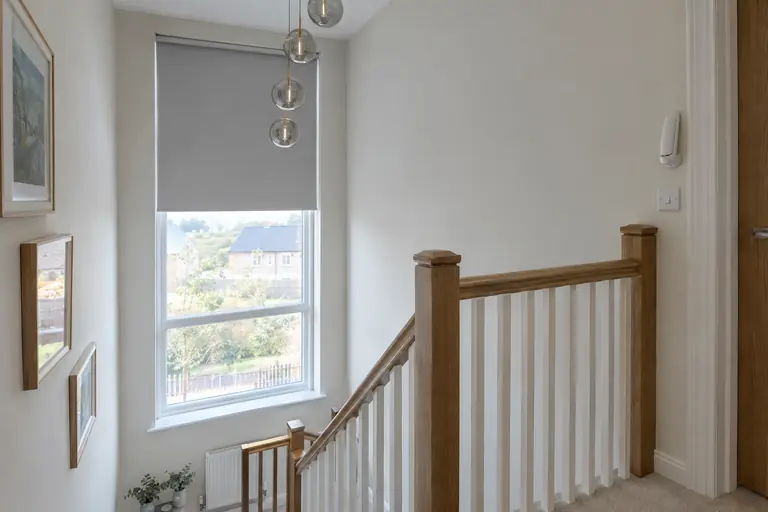
A nursery is usually the first room parents think about, but young children do not stay in one room. RoSPA notes that millions of blinds installed before 2014 may have no safety features at all, and says any that cannot be made safe by adding safety devices should be replaced. If you have moved into a house with older blinds, walk round every room with a child's eye: the living room, the kitchen, the landing and the spare room where grandparents stay.
Look for looped cords or chains hanging free, and for cords left loose instead of wound away. RoSPA advises securing cords around cleats in a figure of eight, with the cleats fitted at least 1.5 metres from the floor. Our blind cord safety guide covers the checks in detail. If other rooms need new blinds anyway, an advisor can measure them at the same visit as the nursery.
Checklist
- Choose cordless or motorised for every room a young child sleeps or plays in.
- Move the cot or bed, and anything climbable, away from the window.
- Ask for blackout fabric, fitted outside the recess where the window allows.
- Pick a wipeable fabric and keep the pattern in things that are easier to change.
- Store remotes and spare batteries up high.
- Check every existing blind in the house for loops and missing safety devices.
- Ask the fitter to show you how each safety device works.