The short answer
Choose a blind when you want a slim, tidy covering that controls light closely and goes up out of the way. Choose curtains for softness, warmth and a room that feels dressed. Choose shutters for fixed joinery with tilting louvres, no cords and adjustable privacy, accepting a larger outlay. For bedrooms and cold rooms, a blind in the reveal with curtains outside it often beats either on its own.
- Blinds give the closest control of light and the tidiest look for the outlay.
- Curtains bring warmth and softness, and the lining does most of the work.
- Shutters are fixed joinery: no cords, tilting louvres and a larger outlay.
- For darkness, the fabric and the fit matter more than the type of dressing.
- Two layers often beat one: a blind in the reveal, curtains outside it.
Start with what the window has to do
Most people choose between blinds, curtains and shutters on looks, and only later find that what they bought does not do the one job the window needed. It is better to start with the job.
Stand in the room and ask a few questions. Does it need to be dark at dawn in midsummer? Does the street see in, and at what height? Is it cold by the window in January? Does sun fall on a screen, a sofa or a wooden floor at some point in the day? Is there a radiator under the sill, a door you walk through, or handles that stick out?
Each dressing answers those questions differently. Blinds are best at precise light control in a small space. Curtains are best at warmth and softness. Shutters are best at privacy you can adjust by degrees, with nothing hanging down. Many windows need two of those at once, which is why so many end up with both a blind and curtains. The rest of this guide takes the jobs one at a time.
Light and privacy through the day
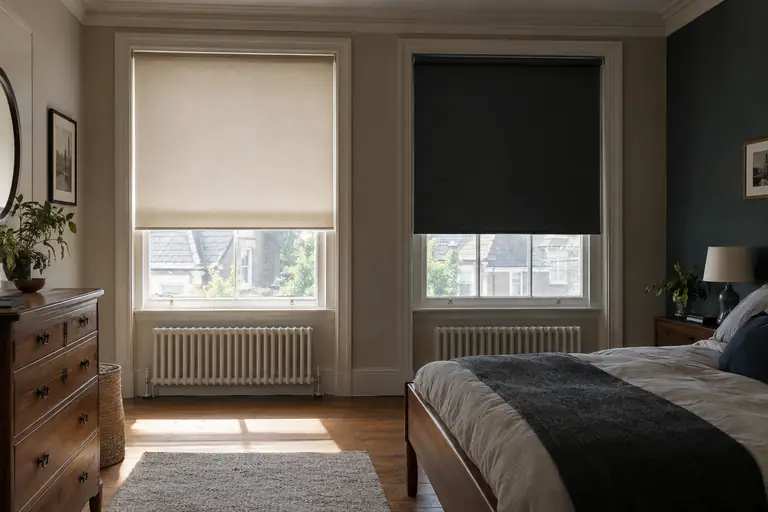
Blinds give the most ways to control daylight. With a roller or a roman, the fabric sets the level: sheer, dimout or blackout. Venetian and wooden blinds tilt, so you can angle light up at the ceiling and keep it off a screen. Day and night blinds slide two banded layers past each other to trade privacy for light, and top down bottom up blinds open at the top while the bottom stays covered.
Curtains are simpler: open or closed. For daytime privacy they need help, usually a voile or a sheer blind behind them, so the curtains can stay dressed open while the street sees only a soft glow.
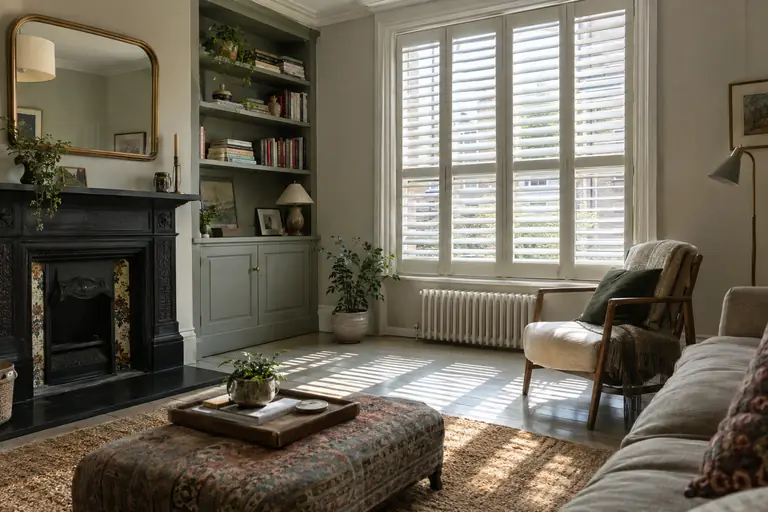
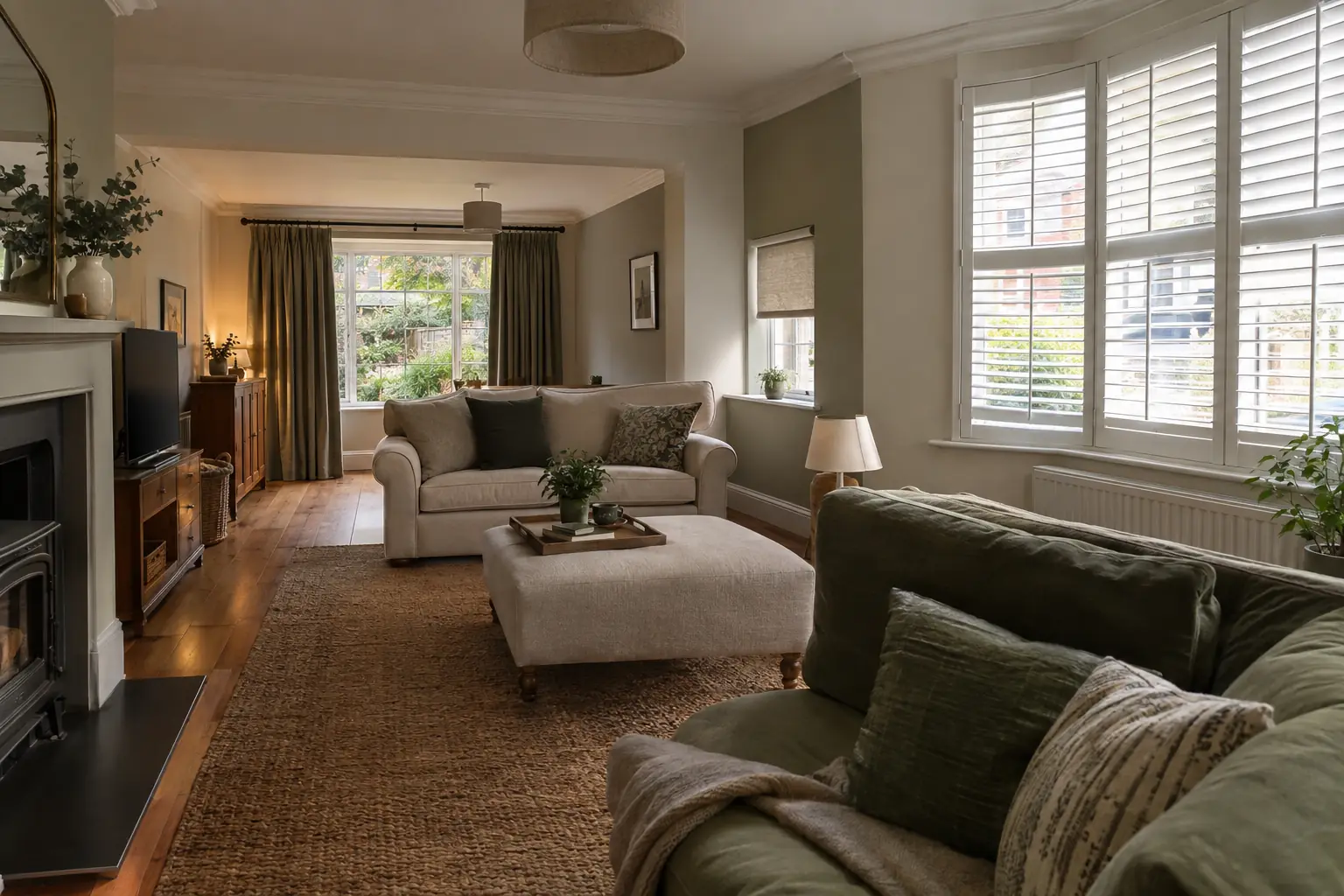
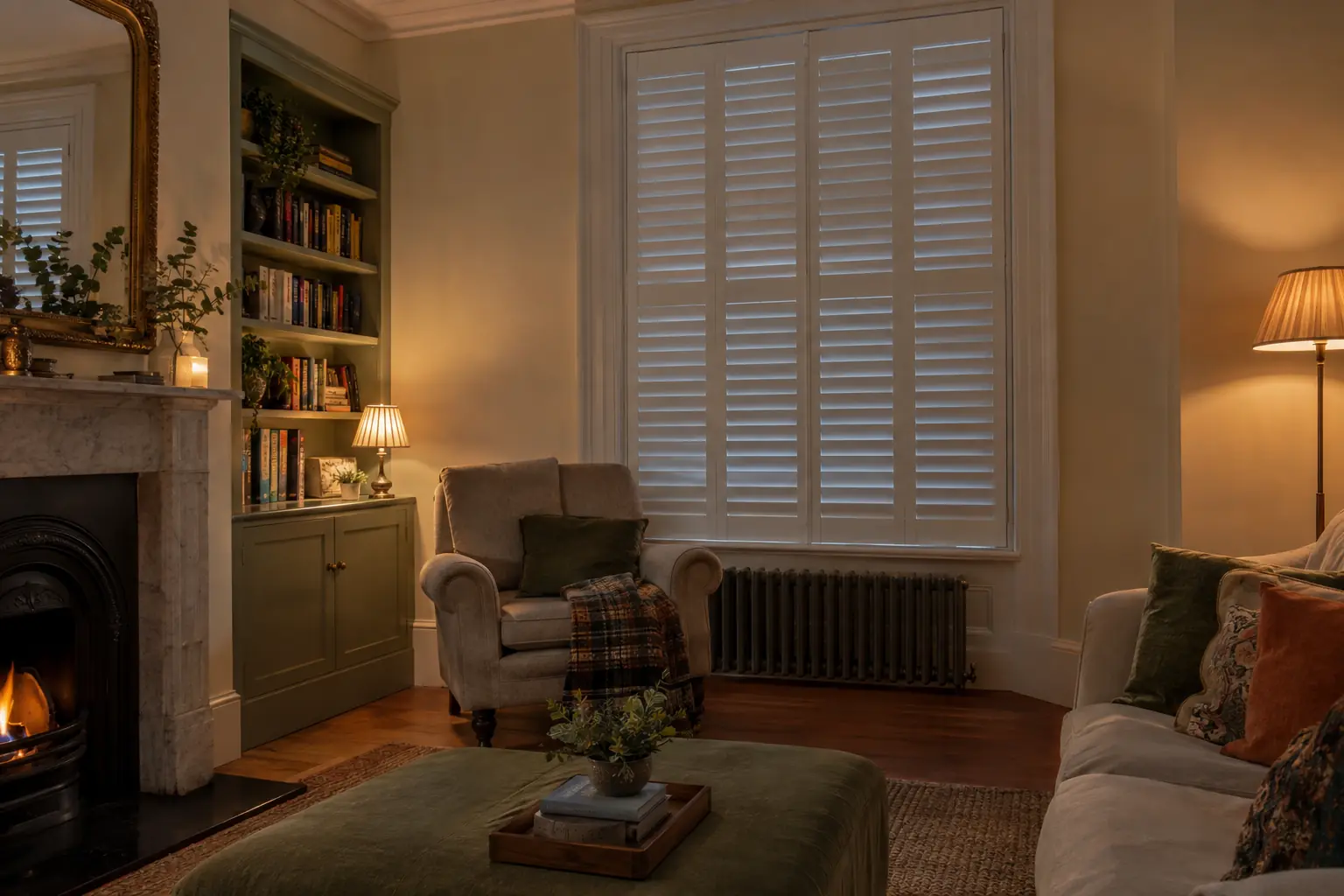
Shutters control light and privacy together. Tilt the louvres part-closed and daylight comes in while the view in is broken up; choose tier-on-tier and you can fold the top open for sky while the bottom stays shut. Nothing is raised or lowered, so the window looks the same all day.
If privacy by day is your main problem, shutters or a privacy blind will usually serve you better than curtains alone.
How dark each one gets
Darkness depends less on whether you choose a blind, a curtain or a shutter than on two details: the material, and how the edges are handled.
A blackout roller or roman stops light through the fabric completely, but a blind fitted inside the recess leaves a small gap at each side. Fitted outside the recess, overlapping the opening, it gets a room much darker. Blackout-lined curtains block light through the fabric too, and the light that does get in comes over the top and round the sides, so a pole set higher and wider than the window, with curtains that overlap the frame, makes the real difference.
Louvred shutters dim a room well with the louvres closed, but light still finds its way round the blade edges and between the panels, so they are not blackout. Solid panels, with no louvres at all, are the darkest kind of shutter, though a little light can still show round the edges of the frame.
For a nursery, a shift worker or a loft room at midsummer, the most reliable answer is often two layers: a blackout blind in the reveal and lined curtains outside it.
Warmth: what the evidence says
All three help a room feel warmer, because each puts a layer between you and cold glass. How much varies, and there is less hard evidence than you might think.
In a laboratory test by Historic Scotland on a traditional single-glazed sash window, timber shutters reduced heat loss through the window by 51%, a modern roller blind by 22% and curtains by 14%. That was one test on one kind of window. It is not a prediction for your house or your bills, and it tells you nothing about double glazing, but it does show shutters and close-fitting blinds doing more than many people expect.
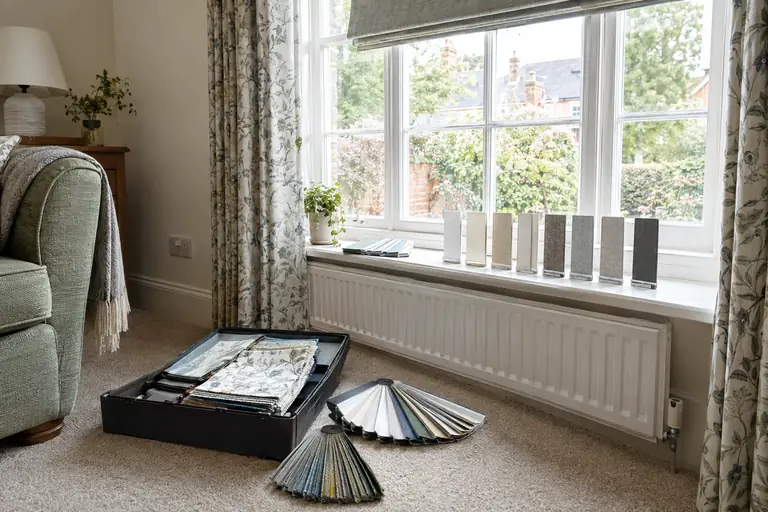
Government energy advice says curtains in a heavy material can reduce the warmth lost through the glass after dark, and with curtains most of that weight comes from the lining: thermal lining and interlining add body and warmth. Among blinds, honeycomb blinds trap air in their cells, and thermal fabrics are made to hold heat in.
For a cold room, layering is again the strongest answer: a blind close to the glass and heavy lined curtains outside it, both closed at dusk.
How each one looks in a room
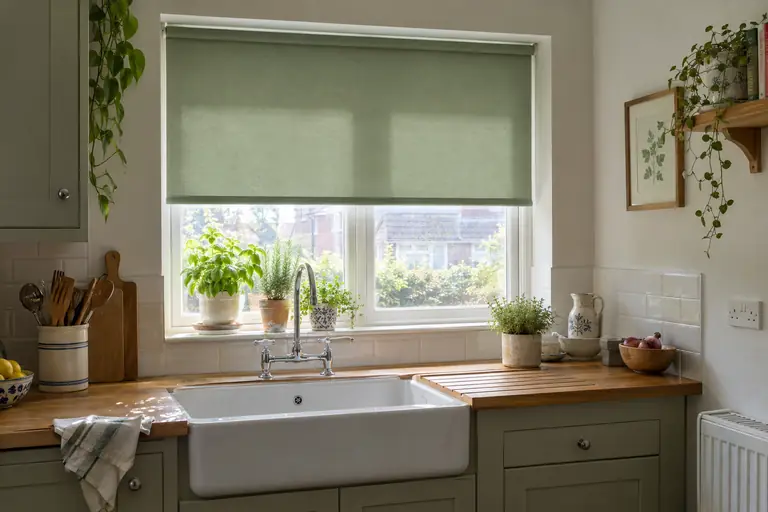
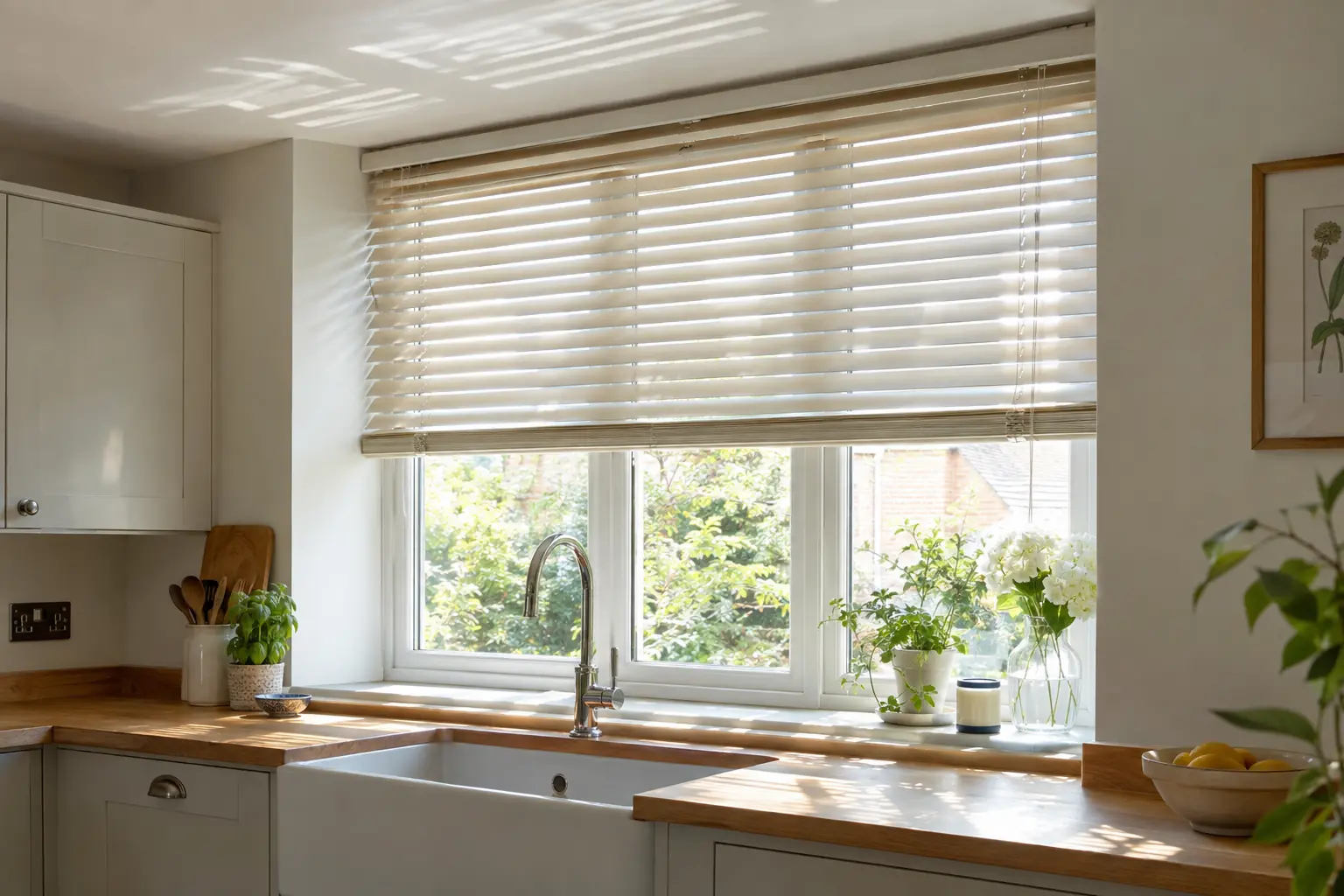
Blinds are the tidiest option. They sit in or just over the window, leave the frame and reveal on show, and take up no floor or wall space, which suits small rooms, kitchens, bathrooms and windows with furniture in front of them. A roman blind in a good fabric is the softest of them and can do much of what a curtain does.
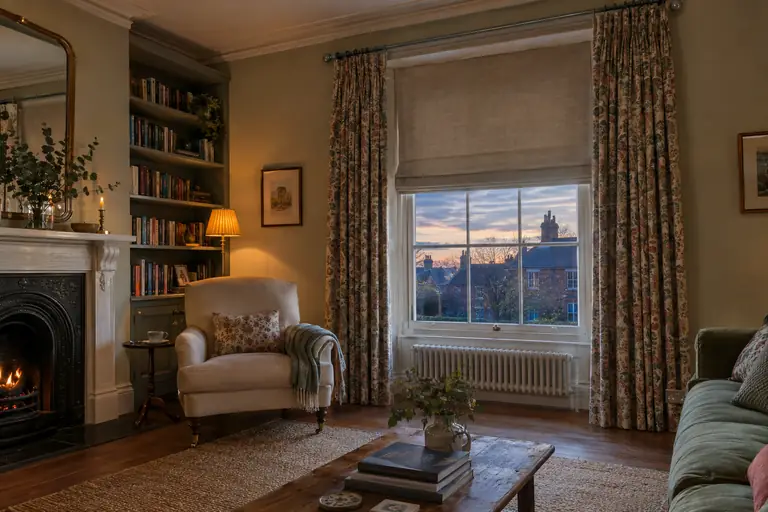
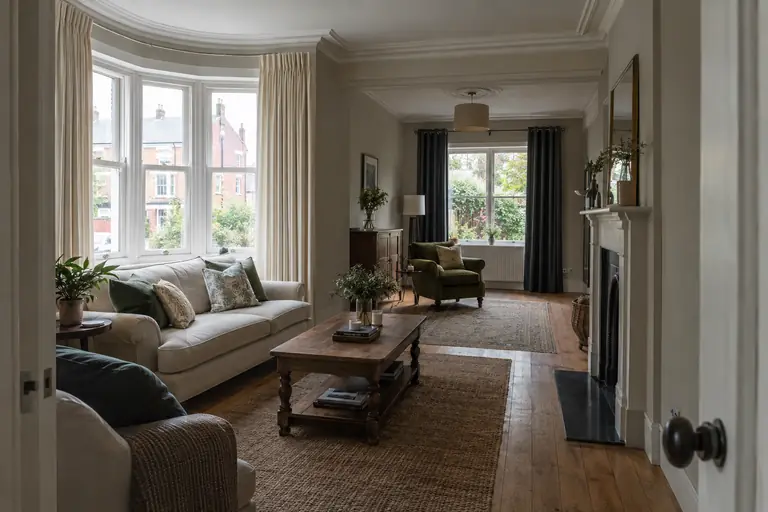
Curtains dress a room. They bring colour, pattern and texture over a large area, frame the window, and can make it look taller and wider than it is when the pole is set high and wide. They need space either side to stack back and somewhere for the drop to fall, so a radiator or a window seat under the sill may rule out a full length.
Shutters become part of the architecture. In a period house they can look as if they have always been there; in a modern one they give a crisp, ordered look to the whole frontage. They suit rooms where you want the window to stay clean and uncluttered, and they look as considered from the street as they do from inside.
Cords, cleaning and everyday living
Shutters never have cords, which is one reason people choose them for children's rooms. Blinds depend on how they are operated. A corded blind is supplied with the child-safety devices UK regulations require, and our fitter installs them; cordless and motorised blinds have no cord to worry about, and they are what we suggest for rooms with a cot or young children. Curtains are not automatically safe either, because corded curtain tracks can pose the same risk as blind cords and belong in the same check.
Cleaning is simplest with hard surfaces. Shutter louvres and faux wood or PVC slats need a dust with a soft brush and an occasional wipe with a damp cloth. Roller fabric wants a gentle sponge on a mark and never a soaking. Most curtains are dry cleaned rather than washed, because the lining and the face fabric shrink at different rates.
In steamy rooms, fabric suffers most. Bathrooms and kitchens usually suit waterproof shutters, PVC or faux wood venetians, or wipeable roller fabrics better than curtains or romans.
What moves the cost
There are no list prices for any of the three, because everything is made to your windows. What moves the figure is different for each.
For blinds, it is the size of the window, the type of blind, the fabric or slat, the operating mechanism and any motorisation. For curtains, it is the size, the fabric, the heading, the lining and the pole or track, which we supply and fit. For shutters, it is the material, the shape of the opening and how the panels open.
As a rule, shutters are the larger outlay per window, because each one is a built frame fitted to one opening, while blinds are the lower-cost option and curtains cover a wide range depending on the fabric and lining. The only fair comparison is a written price for your own windows. Your advisor measures every opening at the free home appointment and itemises the quote per window, with fitting included and our 1-year guarantee on every blind and shutter, so you can compare options side by side and mix them room by room.
Side by side
Light control
- Blinds
- Close control: the fabric sets the level, slats tilt, banded blinds shift
- Curtains
- Open or closed; a voile or sheer layer filters by day
- Shutters
- Tilting louvres give fine control without opening anything
Darkness
- Blinds
- Blackout roller or roman, darkest fitted outside the recess
- Curtains
- Blackout lining, darkest with the pole set high and wide
- Shutters
- Dim with the louvres closed; solid panels are the darkest
Privacy by day
- Blinds
- Day and night, top down bottom up, or tilted slats
- Curtains
- Needs a voile or sheer blind behind
- Shutters
- Café or tier-on-tier keeps the bottom closed and the top open
Warmth
- Blinds
- Thermal fabrics and honeycomb cells help most
- Curtains
- Heavy lined curtains help, especially at night
- Shutters
- Add insulation; did best of the three in one lab test
Look
- Blinds
- Slim and tidy, with the frame on show
- Curtains
- Soft, dressed and generous
- Shutters
- Architectural; part of the window
Awkward windows
- Blinds
- Types made for bays, roof windows, doors and some shapes
- Curtains
- Bay poles and tracks; need wall space to stack
- Shutters
- Templated to bays, arches and gable ends
Cords
- Blinds
- Corded blinds come with safety devices; cordless and motorised options
- Curtains
- Corded tracks can pose the same risk as blind cords
- Shutters
- No cords at all
Cleaning
- Blinds
- Dust or sponge; PVC and faux wood wipe clean
- Curtains
- Most are dry cleaned rather than washed
- Shutters
- Dust the louvres; waterproof ones wipe clean
What moves the price
- Blinds
- Size, type, fabric, mechanism, motorisation
- Curtains
- Size, fabric, heading, lining, pole or track
- Shutters
- Material, shape of the opening, how it opens