The short answer
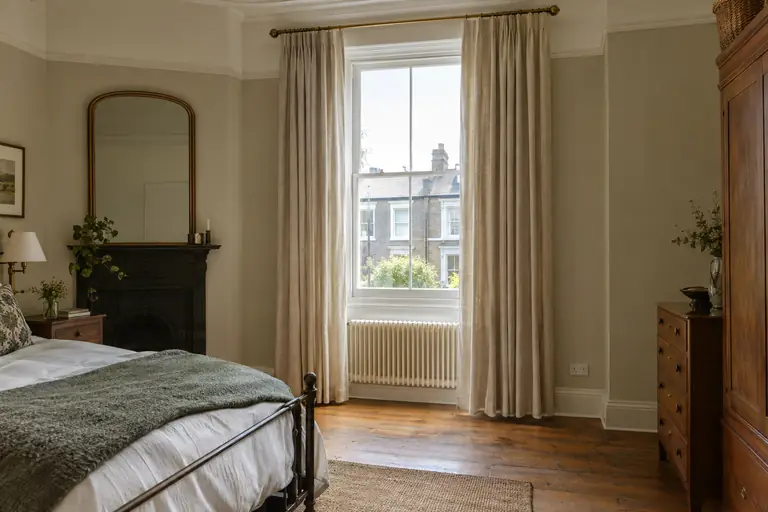
Eyelet curtains thread straight onto a pole and fall in deep, even waves; they are the easiest to draw. Pencil pleat is a gathered tape that hangs from a pole or a track, which makes it the most adaptable. Pinch pleat is formed by hand into stitched groups of folds: the most tailored look and the tightest stack. Wave hangs from a track in a continuous S-curve and suits wide, modern windows. Choose by the room, the window and the wall around it.
- Eyelet needs a pole, wave needs a track, and pencil pleat is happy on either.
- Pinch pleat is the most tailored heading and stacks back into the least wall space.
- Eyelet and wave give the most regular folds; pencil pleat is softer and more relaxed.
- The heading changes how much fabric and making go into a pair, so it affects the price as well as the look.
- Choose the heading before the final measure, because the drop is taken from the pole or track it hangs on.
Four curtain headings, seen from above
Swipe to see the whole diagram
The heading decides how the folds form and how tightly the curtain stacks when it is open.
What a heading does
The heading is the top of the curtain, and everything about how a curtain behaves starts there. It fixes the curtain to its pole or track, it decides whether the fabric gathers, pleats or folds, and it sets how the curtain looks both drawn across the window and pulled back to the sides.
It also decides how much fabric the curtain needs. A heading that gathers the fabric up tightly needs more width than one where rings hold it in loose folds, and more fabric means more making. That is why the same fabric can be priced differently in two headings, and why the heading is one of the first things your advisor asks about.
There is no best heading. There is the one that suits the room, the window, the wall around it and the way you use the curtains. A pair drawn twice a day in a child's bedroom has a different job from a pair in a dining room that is closed a handful of evenings a week, and the right heading for one can be the wrong one for the other.
Eyelet: rings on a pole
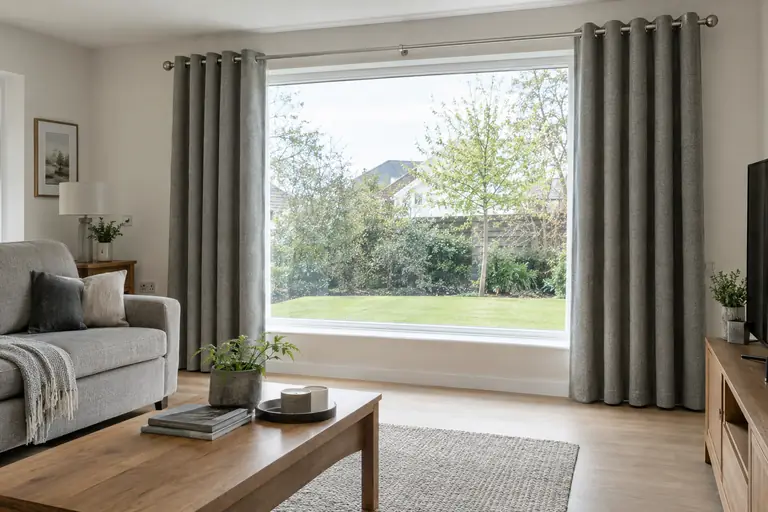
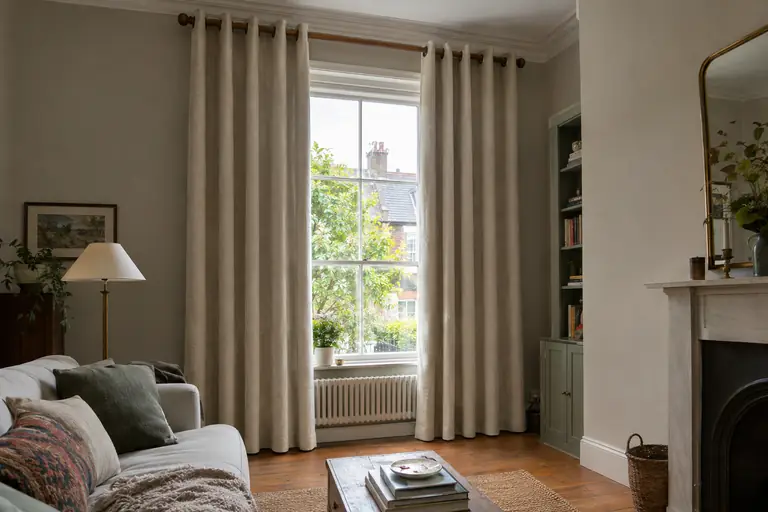
Eyelet curtains have metal rings set into a stiffened heading, and the pole runs straight through them. The fabric passes behind the pole at one ring and in front of it at the next, which is what gives eyelets their deep, regular waves. With no hooks or gliders in between, there is very little to catch, and a pair draws open with one pull on the leading edge.
The trade-offs are practical. Eyelets only work on a pole, and the pole is on show all the way along, so its finish becomes part of the look. The heading stands up a little above the pole, so it needs clear wall above it before the ceiling or coving. And the folds are deep, which means the curtains take up more wall when they are open than a pleated heading made from the same fabric.
Eyelets suit modern rooms, bedrooms and doors that are opened every day. Our eyelet curtains guide goes into the detail, including what happens at the brackets.
Pencil pleat: the adaptable one
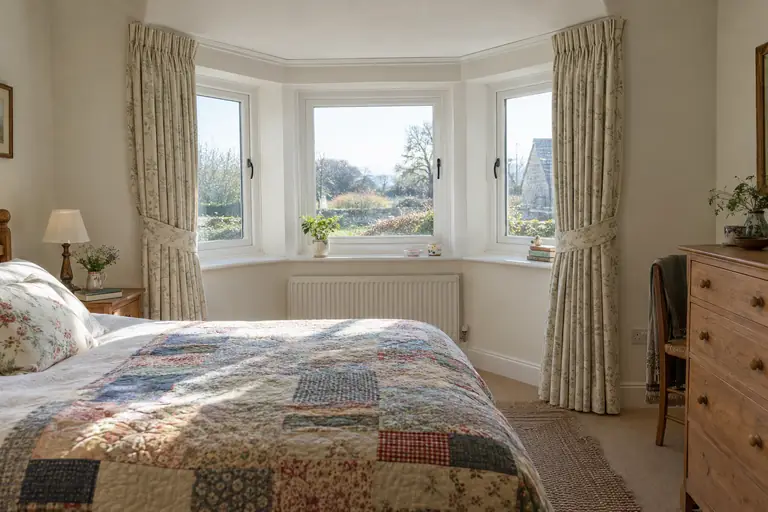
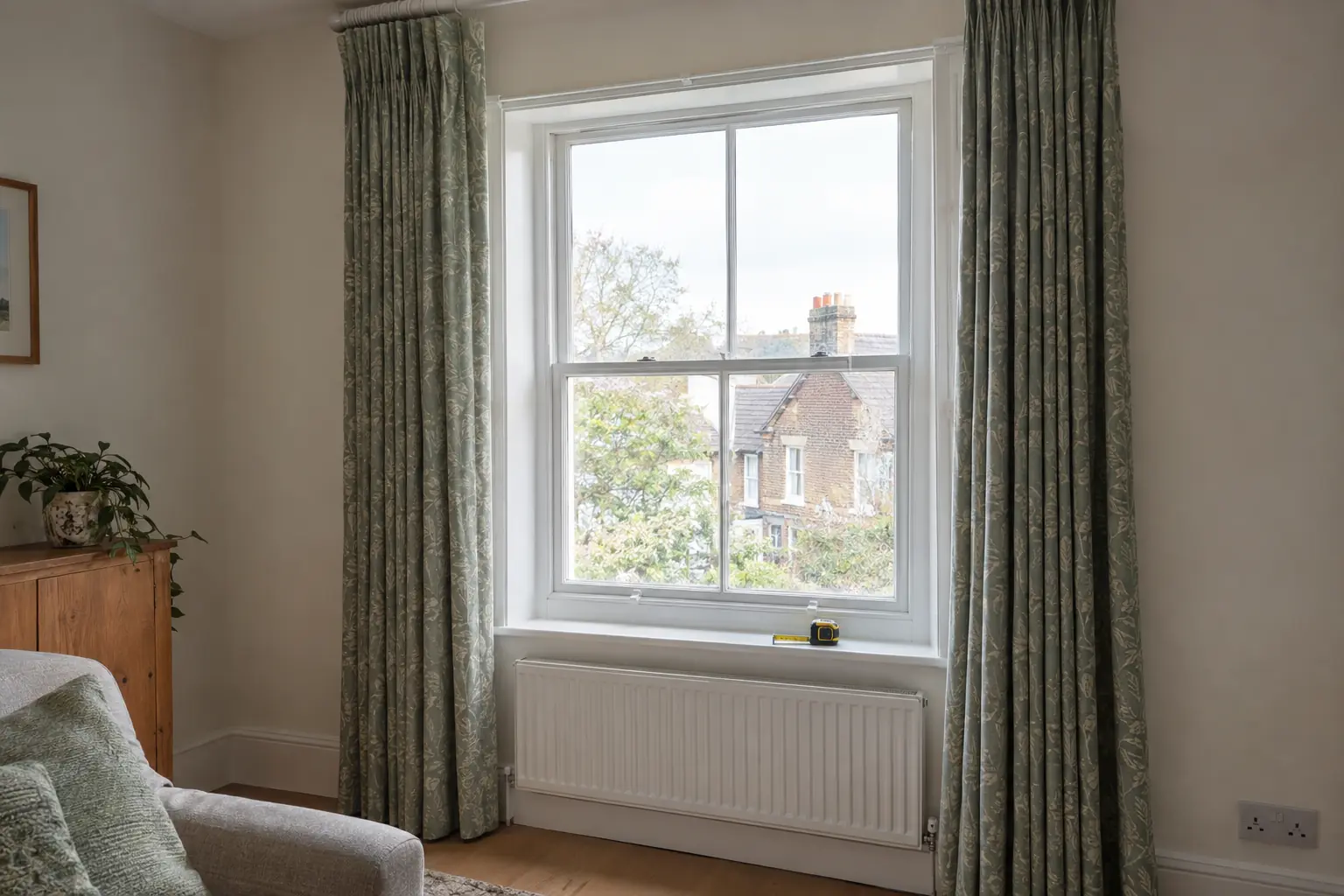
Pencil pleat curtains have a tape sewn across the back of the heading with cords running through it. Draw up the cords and the fabric gathers into narrow, upright folds that look a little like a row of pencils. Hooks slot into pockets in the tape and hang from rings on a pole or gliders on a track.
That makes pencil pleat the most adaptable heading we make. It goes on a pole or a track, straight or bent round a bay, and the gathers can be eased tighter or looser once the curtain is up, so it sits right on the window it is actually hanging at. It is also the softest, most relaxed look of the four, which is why it sits so comfortably in cottages, bedrooms and family rooms.
The one thing pencil pleat cannot do without is width. Gathered too thinly, the heading looks flat and the curtain looks mean when it is drawn. The detail is in our pencil pleat curtains guide.
Pinch pleat: tailored and tight
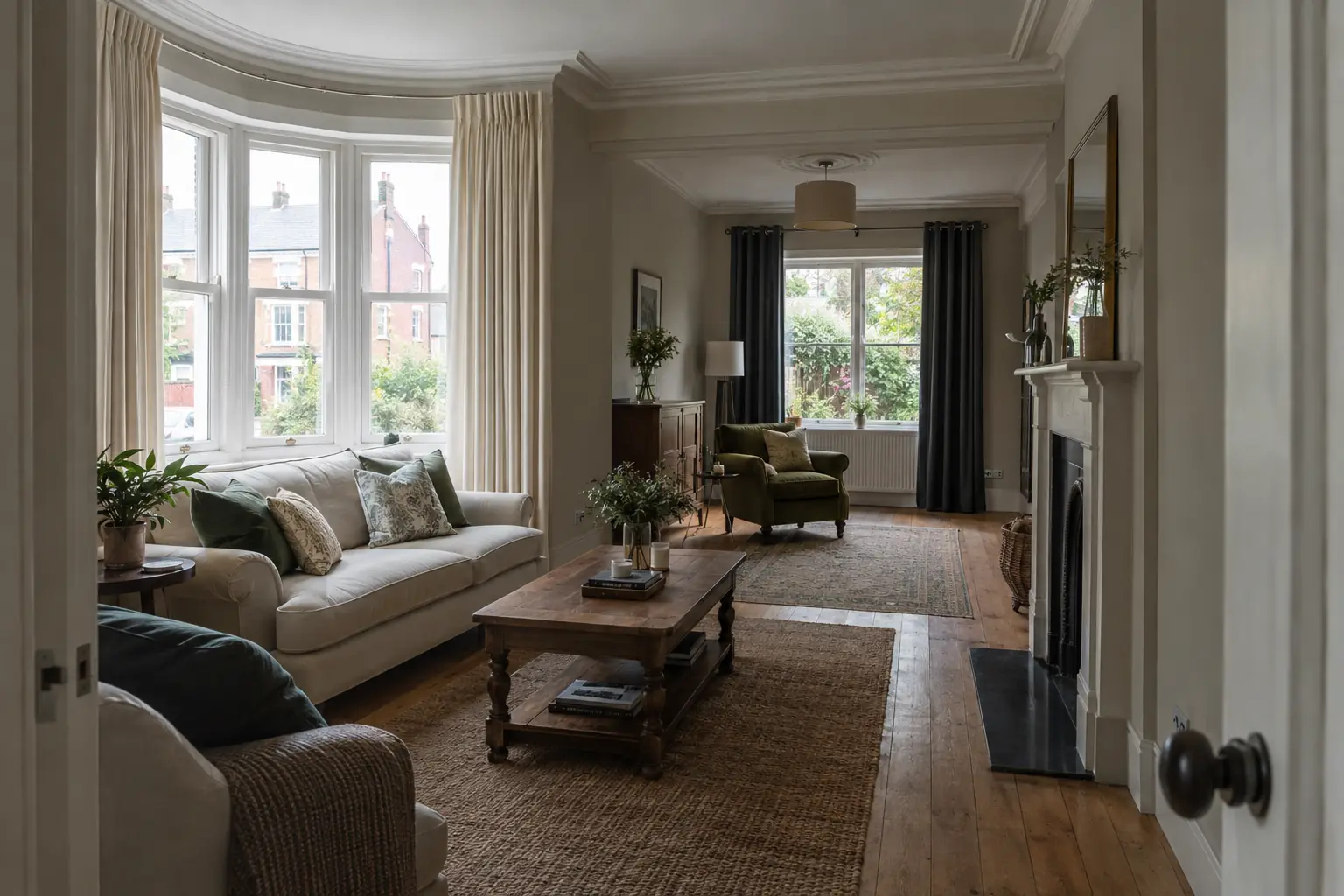
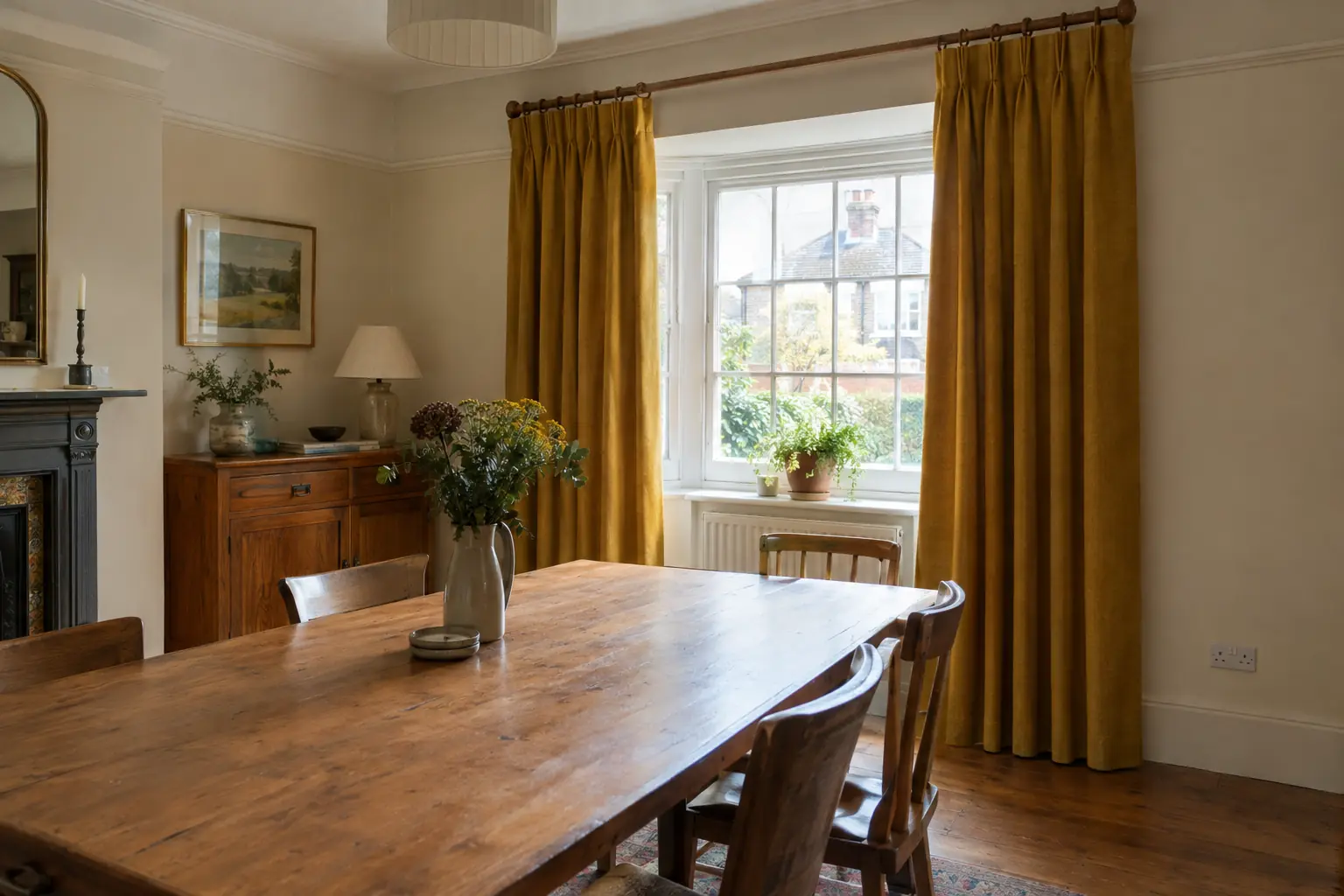
Pinch pleat curtains are pleated by hand. The fabric is folded into small groups, usually of two or three folds, and stitched together at the base so the pleats stand up in neat columns, with flat spaces of fabric in between. The heading is stiffened behind, so the pleats keep their shape rather than slumping.
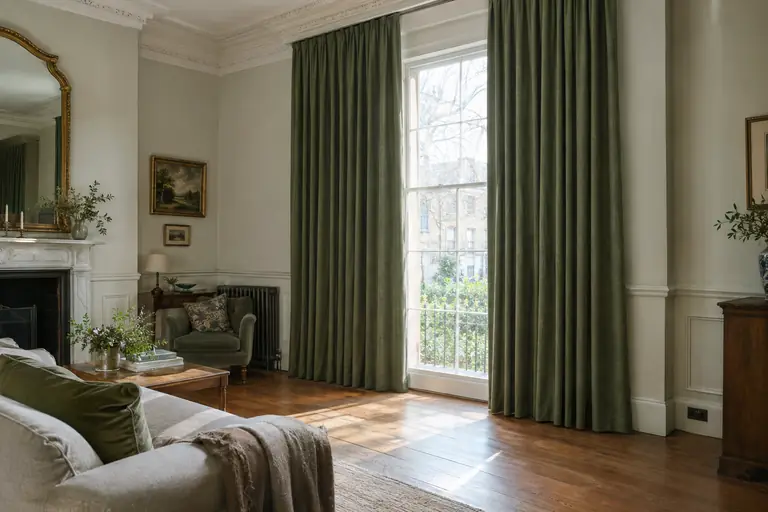
The result is the most tailored of the four headings. The folds run from each pleat down to the hem in straight, even columns, and when the curtains are open they stack back into a tighter bundle than any other heading, which leaves more of the glass clear. Pinch pleat curtains hang on hooks, from a track or from rings on a pole, and your advisor will tell you which suits the window and the weight of the fabric.
Because the pleats are sewn in, the finished width is fixed, so accurate measuring matters more with pinch pleat than with any other heading. Our pinch pleat curtains guide covers pleat styles and linings.
Wave: the continuous S-fold
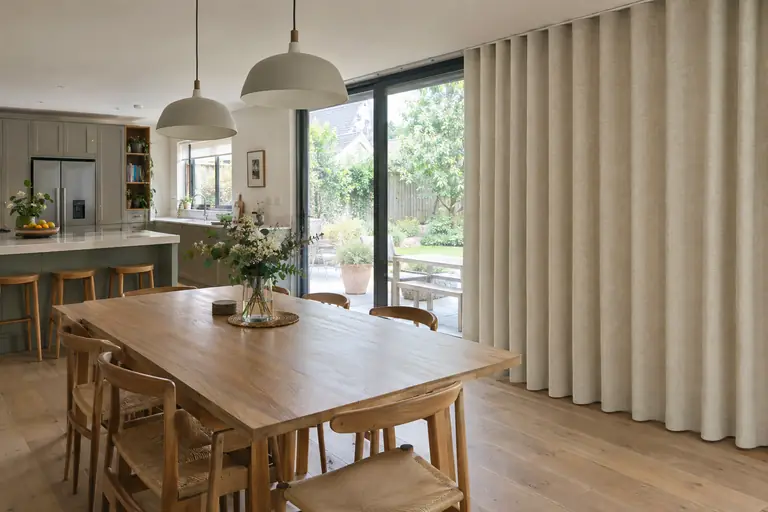
Wave curtains hang from a track fitted with small carriers linked at an even spacing. The heading attaches to the carriers, and the fabric folds alternately in front of and behind the track in a continuous, regular S-curve. Because the spacing is fixed, the folds stay the same depth whether the curtains are drawn, half open or fully back.
It is the cleanest, most contemporary look of the four, and it comes into its own on wide windows, patio and bi-fold doors and floor-to-ceiling glass, where a long run of even folds looks deliberate rather than busy. It needs a track, never a pole, and the track sits mostly hidden behind the fabric.
Wave curtains still need somewhere to go when they are open: a proper run of wall at the side of the window to stack onto. On a window tucked tight against a corner, that wall may not be there. Our wave curtains guide covers tracks, stacking and ceiling fixing.
Stack back: where the curtains go when they are open
Stack back is the width a pair of curtains takes up when it is fully open. It is easy to forget when choosing a heading, and it is the thing people most often wish they had thought about.
A curtain that stacks back onto the glass cuts the daylight all day long, even when it is open. To keep the glass clear, the pole or track has to run past the window on each side, far enough for the folded curtain to sit on the wall instead. How far depends on the heading and the fabric. Pinch pleat stacks the tightest. Eyelets, with their deep folds, generally need the most room. Pencil pleat and wave fall between the two, depending on the fabric. Heavy fabrics and thick linings widen all of them.
That wall has to exist. A window close to a corner, a built-in wardrobe beside it, a door or a chimney breast can all stop a pole or track short. When there is room on only one side, a single curtain drawing to that side, or a tighter heading, can be the answer. Your advisor looks at the wall as well as the window.
Choosing a heading for your room and window
Start with the window. A bay usually wants a track shaped to follow its angles, which points to pencil pleat or pinch pleat. Eyelets can dress a bay too, but the rings cannot slide past the brackets at each corner, so each section gets its own curtains. Wide glass and doors suit wave or eyelet, because both draw easily across a long run. A small window in a low room suits a heading that hangs below its fixing rather than standing up above it.
Then think about the room. Formal living and dining rooms, and period rooms with tall windows, are where pinch pleat earns its keep. Bedrooms and children's rooms, where curtains are drawn every morning and night, suit eyelet or pencil pleat. Open-plan and modern rooms suit wave, whose regular folds sit well against clean lines and plain walls.
Last, think about what sits behind the curtains and who lives with them. If you want a blind in the recess as well, the curtains need to hang clear of it, which your advisor checks when they measure. And if the curtains would be drawn by a cord on a track and there are young children at home, say so: RoSPA points out that corded curtain tracks can pose the same risks as blind cords.
Side by side
Hangs from
- Eyelet
- A pole, threaded through the rings
- Pencil pleat
- A pole or a track, on hooks
- Pinch pleat
- Hooks on a track, or rings on a pole
- Wave
- A track, on evenly spaced carriers
How the folds look
- Eyelet
- Deep, even waves
- Pencil pleat
- Narrow gathers, soft and relaxed
- Pinch pleat
- Stitched groups with flat fabric between
- Wave
- A continuous, regular S-curve
When fully open
- Eyelet
- The widest stack; needs wall either side
- Pencil pleat
- A medium stack that varies with the fabric
- Pinch pleat
- The tightest stack of the four
- Wave
- A neat stack that needs a clear run of wall
Overall look
- Eyelet
- Modern and casual
- Pencil pleat
- Traditional and easy-going
- Pinch pleat
- Tailored and formal
- Wave
- Clean and contemporary
Drawing
- Eyelet
- Slides open with a single pull
- Pencil pleat
- Drawn by hand from the leading edge
- Pinch pleat
- Drawn by hand from the leading edge
- Wave
- Glides on its carriers along the track
Bay windows
- Eyelet
- Split into separate curtains at each corner
- Pencil pleat
- Works well on a track shaped to the bay
- Pinch pleat
- Works well on a track shaped to the bay
- Wave
- Only where the track can follow the bay; ask your advisor
Space above the window
- Eyelet
- Needs clear wall for the pole and heading
- Pencil pleat
- The heading can stand up to hide a track
- Pinch pleat
- The heading can stand up to hide a track
- Wave
- The track can often go on the ceiling
Best for
- Eyelet
- Bedrooms, family rooms, doors used daily
- Pencil pleat
- Cottages, bedrooms and bays
- Pinch pleat
- Living and dining rooms, period homes
- Wave
- Wide glass, bi-folds and modern rooms