The short answer
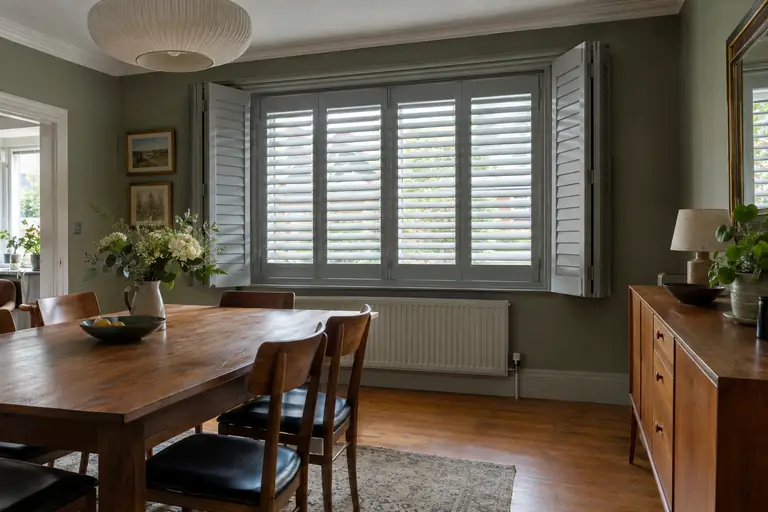
Plantation shutters are hinged panels of tilting louvres, hung from a frame built to fit your window. Choose the material for the room (hardwood for living rooms and bays, waterproof ABS or vinyl for bathrooms), the louvre width for the view, and the style for how you want the window to open. They cost more than a blind because each one is built and fitted to a single opening.
- A shutter is a frame, hinged panels and tilting louvres, built to your opening and fixed in place.
- Hardwood suits living rooms and bays; waterproof ABS or vinyl is the choice for bathrooms and wet rooms.
- Wider louvres give more view when open; narrower ones look finer and more traditional.
- Material, the shape of the opening and how the panels open move the price most.
- A typical room is a morning's work for our fitter, and fitting is included in the price.
What you are actually buying
A plantation shutter is three things working together. The frame is fixed to the window opening and squared to it. The panels hang from the frame on hinges and fold back when you want the whole window clear. The louvres, the horizontal blades set into each panel, tilt together so you can let in as much or as little light as you like without opening anything.
That makes a shutter closer to fitted furniture than to a blind. A roller or a roman is a soft covering that hangs in front of the glass and goes up out of the way. A shutter stays at the window all the time, and most days you adjust it rather than move it: louvres open in the morning, tilted part-closed when the sun swings round, shut at night.
It is also a more permanent decision. A shutter is made for one opening, it is fixed to the building, and it becomes part of how the room looks from inside and from the street. That is why the choices below are worth taking slowly, and why seeing the materials at full size against your own window matters more than it does for almost anything else we make.
Choosing the material
There are three families of shutter material, and the right one depends mostly on the room.
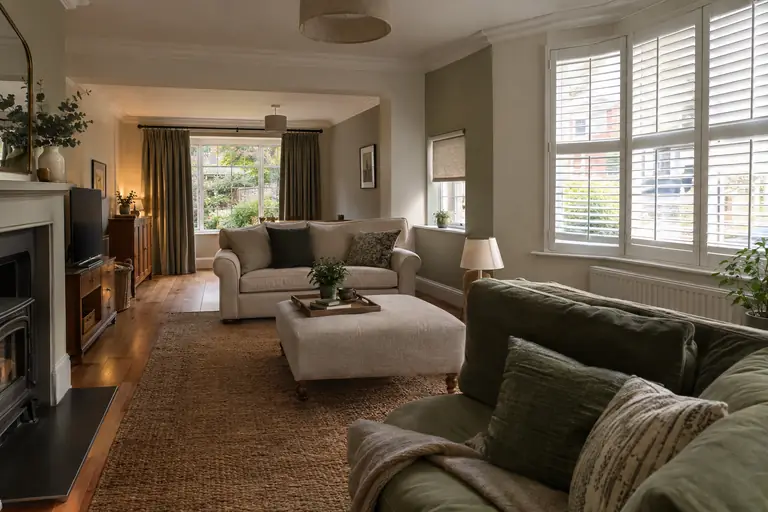
Hardwood has the finest grain and takes the finest paint finish. It also allows the largest panels, so a wide window can be covered without a mid-rail across the middle of the view. It is the natural choice for living rooms, dining rooms and bays, and it costs the most.
Engineered wood is a manufactured timber product rather than solid boards, which makes it stable and brings the cost down. It suits most dry rooms well, particularly where the panels are not especially large.
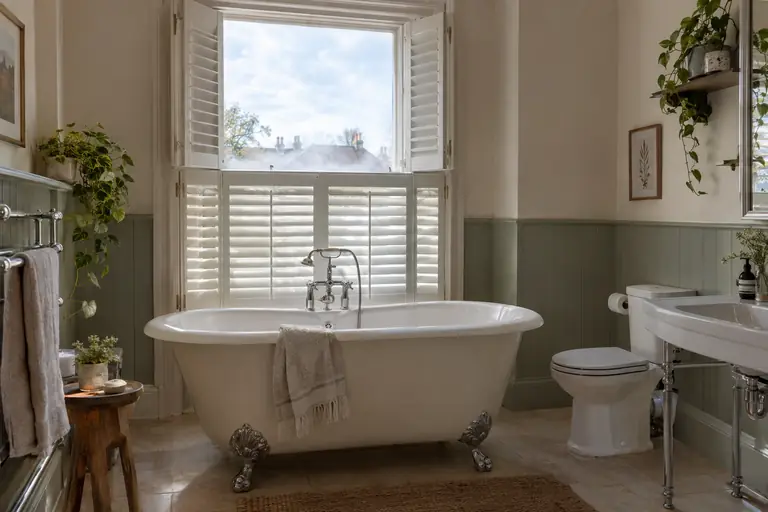
Waterproof ABS or vinyl is the answer for bathrooms, en-suites and wet rooms. Steam is hard on real timber: it moves the wood and, over time, lifts a painted finish. A waterproof shutter takes daily steam in its stride and wipes clean.
In a house with several rooms to do, it is normal to mix them: hardwood downstairs, waterproof in the bathroom, keeping the louvre width and colour consistent where the ranges allow. Your advisor brings samples of each and will match the material to the room and the span.
Louvre width and the view
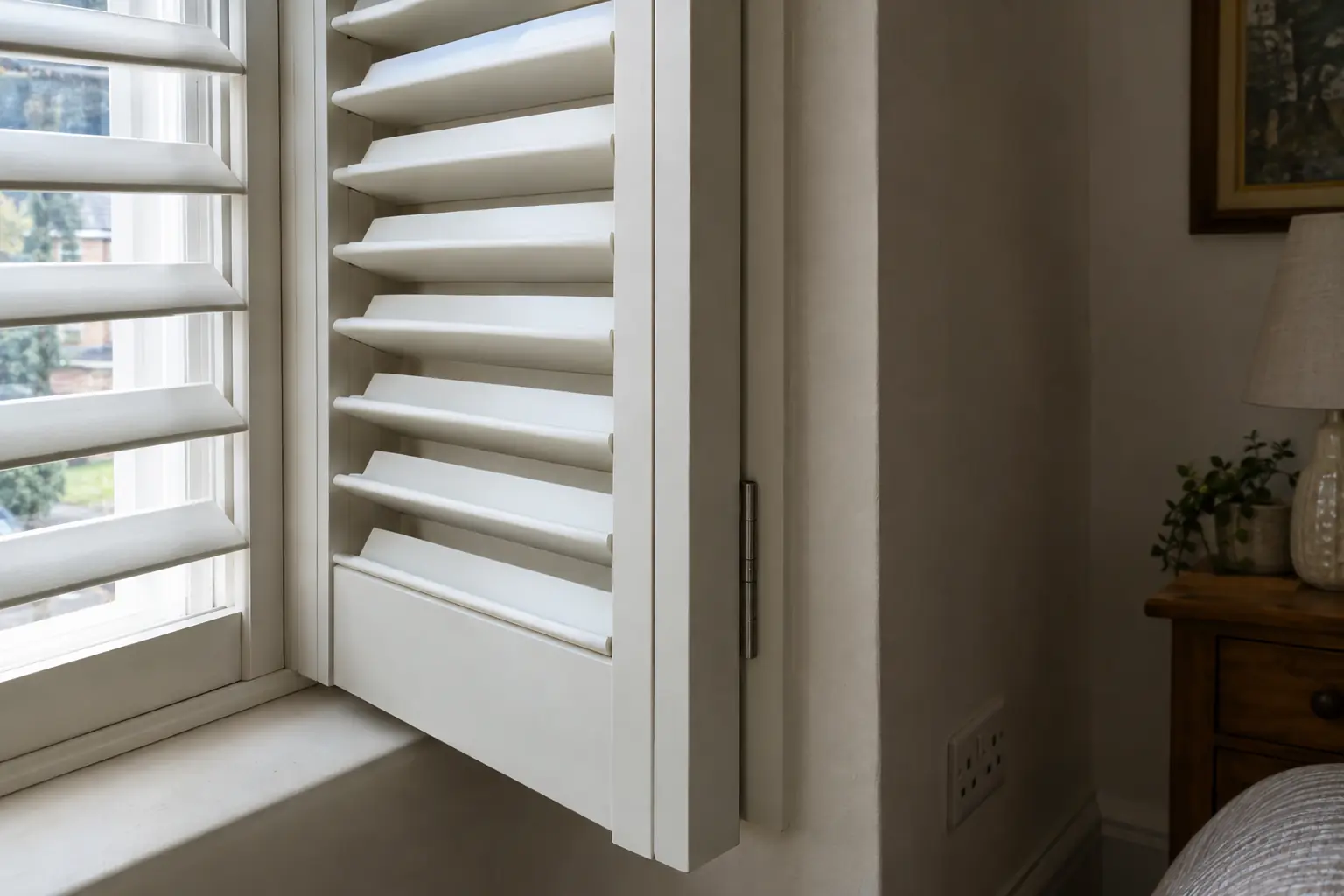
Louvres come in different widths, and the width changes the character of the window more than most people expect. A wider louvre means fewer blades across the glass, so when they are open you see more of the view and less of the shutter. It suits big windows, tall rooms and modern houses. A narrower louvre reads finer and more traditional, with more blades and more lines, and can suit a small cottage window or a period room where a wide blade would look heavy.
Width also decides how much space the louvres need. A louvre tilted open stands out from the face of the panel, front and back, so on a shallow reveal or a window with a projecting handle, the width you like has to be one the window can take. Your advisor checks that on the day.
The other detail to look at is the mid-rail, a horizontal bar across a tall panel that adds strength and divides the louvres into an upper and a lower set. Where the window has a transom or a sash meeting rail, lining the mid-rail up with it makes the shutter look as if it was always there. Ask to see the widths at full size against the window: a louvre that looks generous in a photograph can feel heavy in a small room.
The frame and how it meets your window
The frame is what makes a shutter fit, and it is the piece people think about least. Windows in British houses are rarely square: reveals taper, sills slope and frames settle. A shutter frame has to sit square in an opening that often is not, so we survey the window properly, record where it runs out and build the frame to the opening you actually have.
Where the frame goes depends on the window. On a deep, sound reveal it can sit inside the opening, with the panels closing flush and the window frame out of sight behind them. Where the reveal is shallow, or handles, stays or the sill get in the way, the frame may need to come forward. Your advisor will tell you on the day which your window allows.
Think too about where the panels go when they are open. Hinged panels fold back against the reveal or the wall, so anything close to the window, such as a wardrobe, a bed head, a radiator or a pair of curtains, needs to leave them room. If you mostly want light rather than the full view, you may rarely open the panels at all and simply tilt the louvres, which is how many people end up living with them.
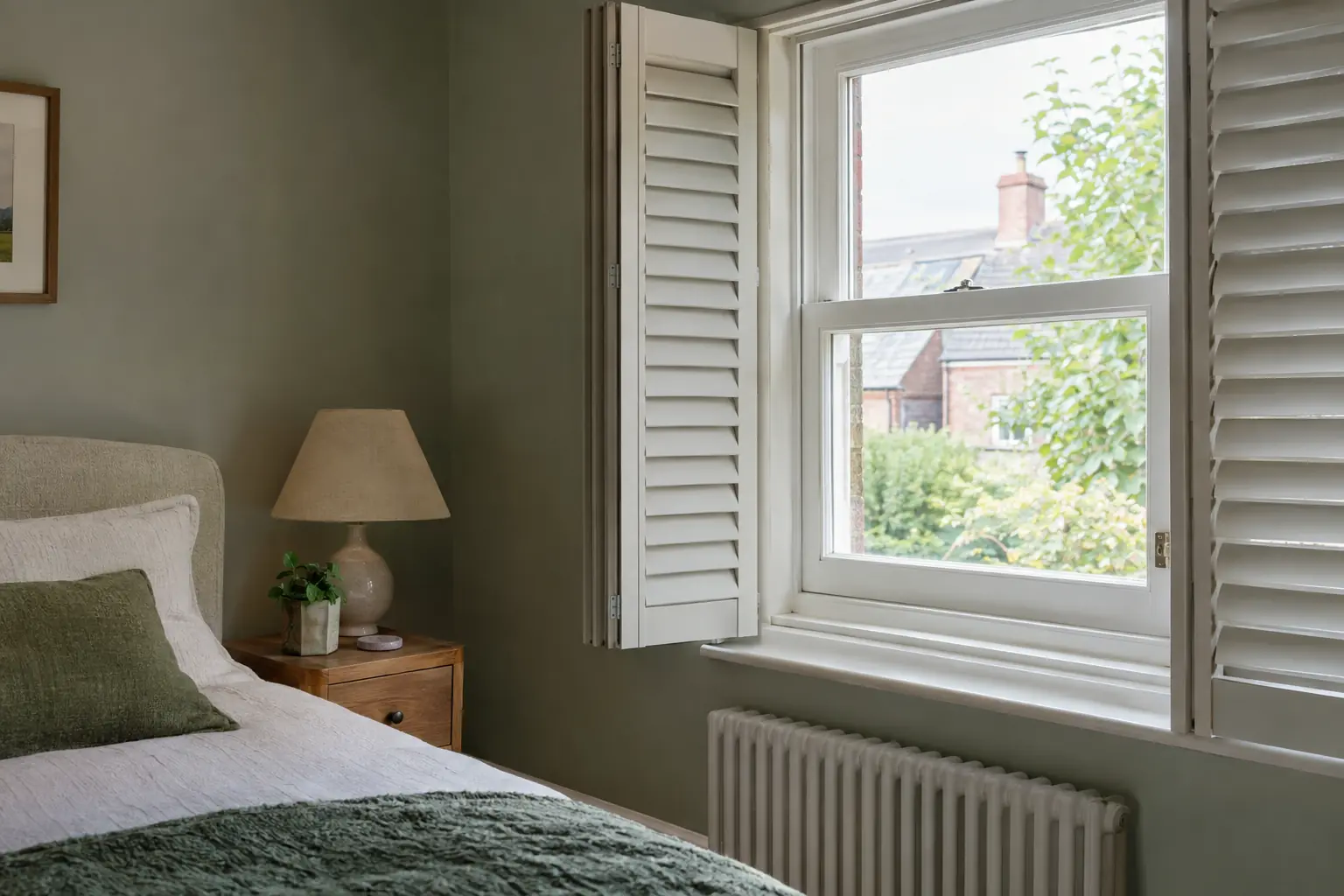
Colour and finish
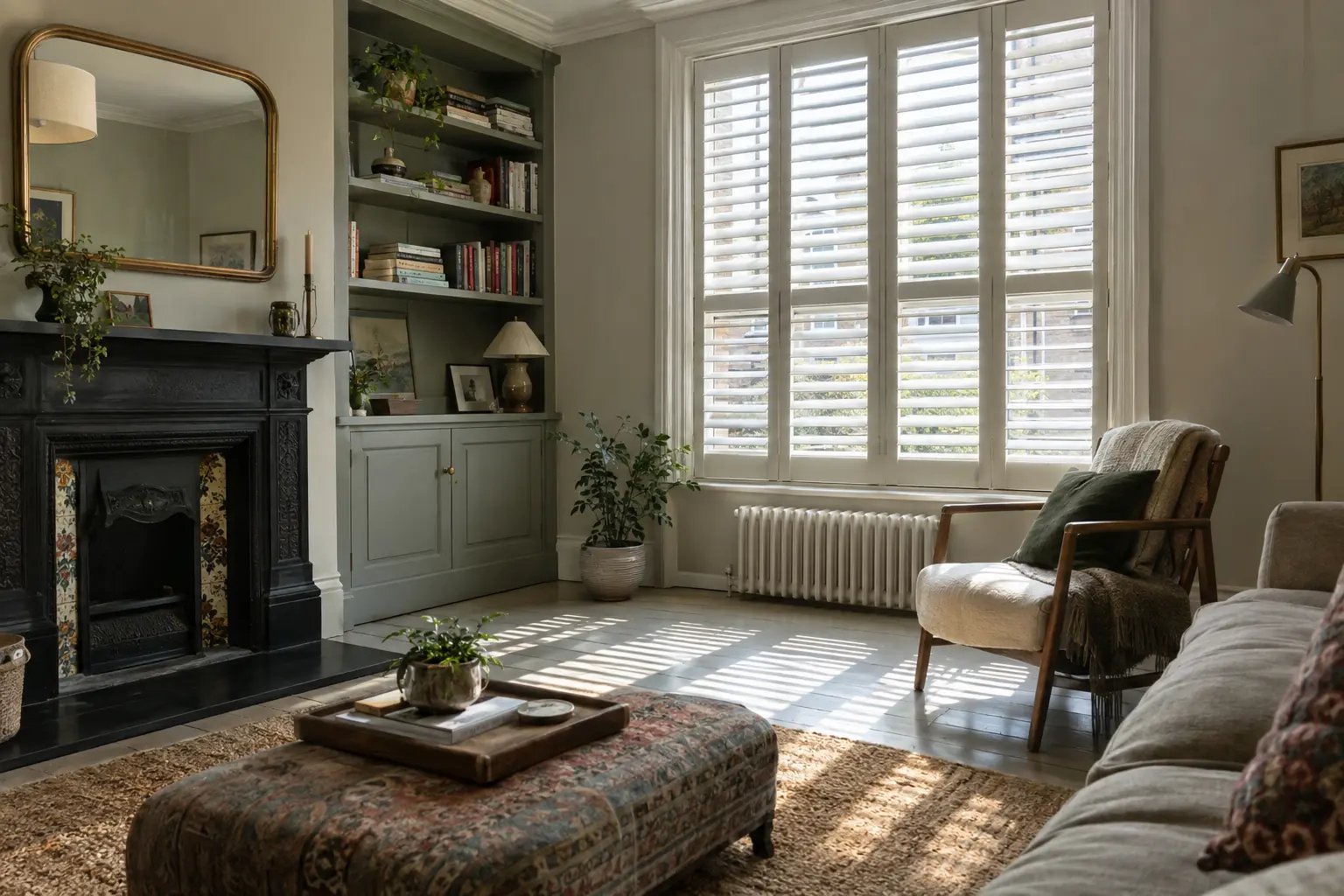
Most shutters are chosen in whites and creams, and there is a good reason. A pale shutter bounces light back into the room when the louvres are tilted, and it sits quietly against a painted window frame and plaster. There is also a choice of colours for rooms where the shutter is meant to be noticed, and a deeper finish can look striking in a panelled room or against a strong wall colour.
Whites are not all the same. A bright white can look blue beside an older, creamier window frame or a skirting painted years ago, and a soft white can look grubby next to new uPVC. The fairest test is to hold the sample against the window frame itself, in daylight, rather than against the wall.
Remember that the street sees your shutters as well. Front windows usually look best in one finish across the house, even if a back bedroom or a study goes darker. Your advisor brings the finishes to the appointment, so you can compare them in your own light before anything is ordered.
What moves the price
There is no list price for a shutter, because each one is built to an opening. Three things move the figure far more than anything else.
The first is the material. Engineered wood is the more accessible of the timber options; hardwood costs more, and repays it in finish and panel size. The second is the shape of the opening. A square reveal is straightforward, while a splayed bay, an arch or a gable end has to be templated on site and built as a set. The third is how the shutter opens. Full-height panels are the simplest build. Tier-on-tier doubles the number of hinged panels, and a tracked run adds a track and carriers, so both sit above a like-for-like full-height shutter.
At the free home appointment your advisor measures each window and writes the quote out window by window, with the shutters, fitting and guarantee all in the one figure. Nothing is paid on the day and there is no rush to decide. Finance options are available on larger orders, and our price promise matches the same product with the same service if you find it for less.
What happens on fitting day
Shutters take longer to fit than blinds, because each frame is fixed and levelled to its opening before a panel goes near it. A typical room is a morning's work.
Our own fitter fixes the frame, hangs the panels and sets the tension on the louvres so they hold whatever angle you leave them at rather than drifting shut. Then they check that every panel opens, closes and clears the handles, show you how it all works, and take the packaging away with them. The shutters are hand-finished in our West Yorkshire workshop, so the people who made them and the people who fit them work for the same business.
Every shutter we supply and fit carries our 1-year guarantee. If something needs putting right within that year, ring the office and we come back out. Day to day, shutters ask very little: a soft brush or a dry cloth along the louvres keeps the dust down, and there are no cords to tangle, tidy or worry about.
Pros and cons
In its favour
- No cords at all, which makes them a straightforward choice in children's rooms.
- Tilting louvres give fine control of light and privacy without opening anything.
- Built to the opening, so bays, arches and out-of-square windows are covered properly.
- They add insulation at the window and stay in place all year.
- Easy to keep clean: a soft brush or a dry cloth along the louvres.
Worth knowing
- A larger outlay than a blind, because each shutter is built and fitted to one opening.
- Hinged panels need room to fold back, clear of furniture and radiators.
- Light still gets round the louvre edges, so a louvred shutter is not blackout.
- Hardwood is not for steamy rooms; bathrooms need a waterproof material.
- Fixed to the building, so they stay with the house if you move.
Room by room
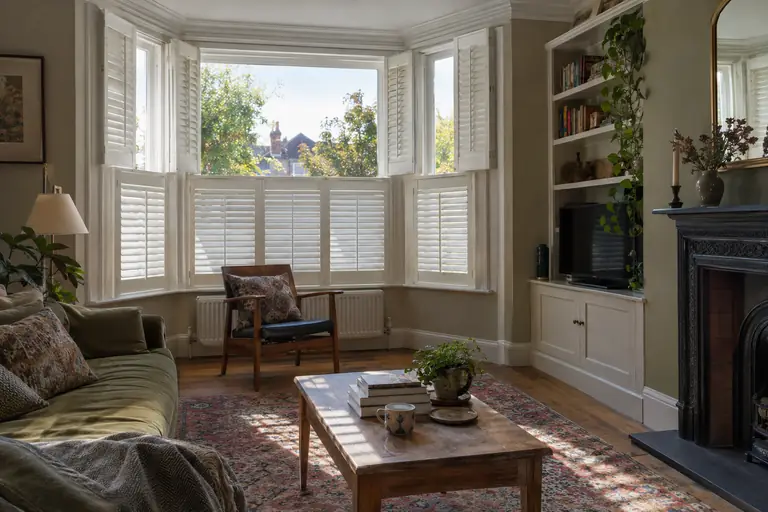
- Living roomA great fitTilt the louvres against glare and passing eyes by day and close them at night. Hardwood suits the room and allows larger panels.
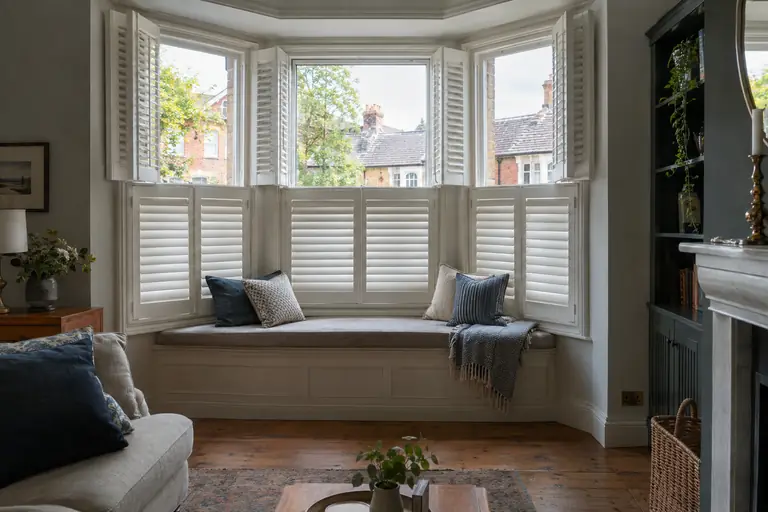
- Bay windowA great fitBuilt as a set to the angles of the bay, so every face lines up; tier-on-tier keeps privacy low and light high.
- BedroomWorks wellClosed louvres dim the room well and there are no cords, but light gets in round the blade edges. Solid panels are darker.
- BathroomWorks wellWaterproof ABS or vinyl copes with daily steam and wipes clean. Keep hardwood out of this room.
- KitchenWorks wellCafé style gives privacy over the sink with light above. Choose a waterproof material anywhere near the hob or the washing up.
- NurseryWorks wellNo cords to think about, which matters in a child's room. For summer daytime naps, ask about solid panels.
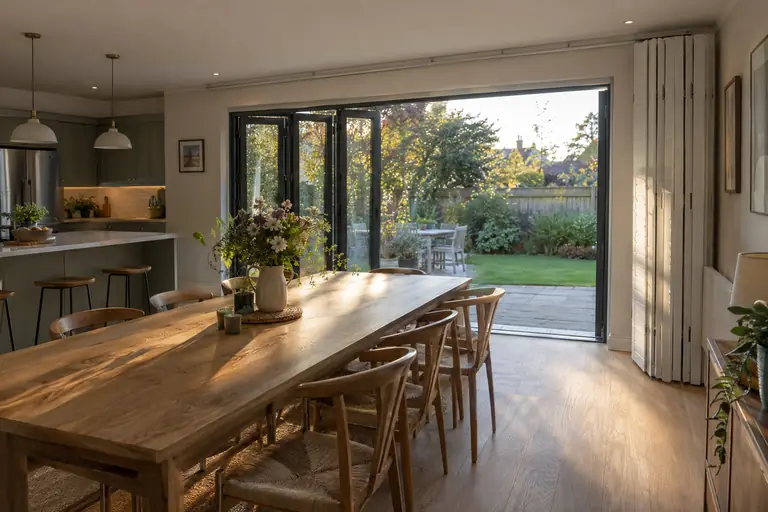
- Patio doorsWorks wellTracked panels slide and stack to one side so the doors stay usable, rather than hinged panels swinging into the room.
- Conservatory roofThink twiceShutters handle the side glass of a conservatory but not the roof panes, which need blinds made for them.