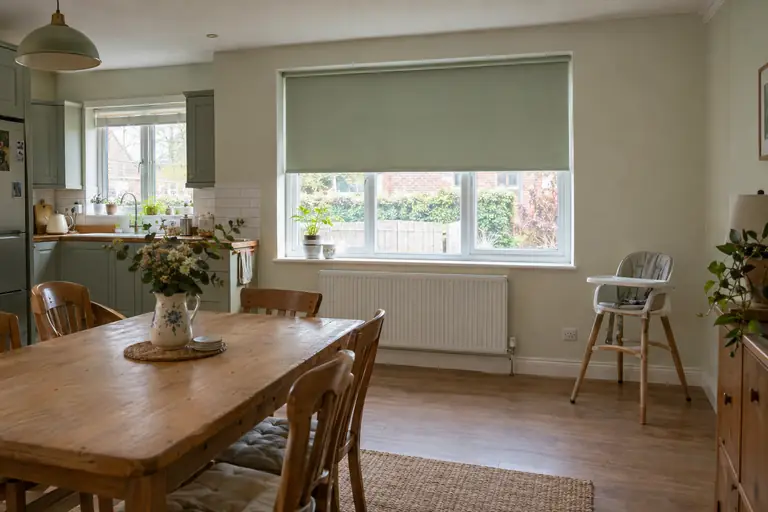
The short answer
Choose the fabric first: a light-filtering weave to soften glare and keep the view, a dimout to take a room well down, a blackout fabric for bedrooms, and a wipeable or PVC fabric for kitchens and bathrooms. Then choose the control, a side chain or a motor, and the fit: inside the recess for a built-in look, or on the wall over it for the darkest room. Your advisor brings the fabrics so you can judge them against your own window.
- The fabric decides almost everything: how much light comes through, how it cleans and what the street sees at night.
- Wipeable and PVC fabrics are the usual answer over a sink, a bath or a hob.
- Inside a recess, the fabric stops a little short of the reveal at each side, so some light always gets round.
- Chains come with the child-safety devices UK regulations require; cordless or motorised suits children's rooms.
- A roller winds into a slim roll at the top, so it keeps more of the glass clear than a roman.
How much light gets through
Swipe to see the whole diagram
The fabric decides how much light comes through the blind itself; the fit decides how much comes round the edges.
How a roller blind works
A roller blind is a single length of fabric wound round a tube that sits between two brackets at the top of the window. Turn the tube and the fabric winds up or lets down. On most manual rollers that is done with a looped chain at one side; on a motorised roller the motor sits inside the tube and the chain disappears altogether. A bar along the bottom edge keeps the fabric hanging straight and gives you something to hold.
Because there is only one flat surface, there is very little to go wrong: no slats to twist, no cords threading through folds, no stack of fabric to fall out of line. That simplicity is why rollers end up in so many kitchens and bathrooms, and why they are usually the easiest blind to look after.
It also explains the roller's one real limitation. It controls light in a single way, up or down. A venetian can tilt to throw light at the ceiling, and a day and night blind can shift between sheer and solid, but at any given height a roller gives you either fabric or glass. So the choice of fabric matters more on a roller than on almost any other blind, because the fabric is doing all of the work.
Light-filtering, dimout or blackout: choosing the fabric
Roller fabrics fall into three broad families, and it is worth deciding which one you need before you look at a single colour.
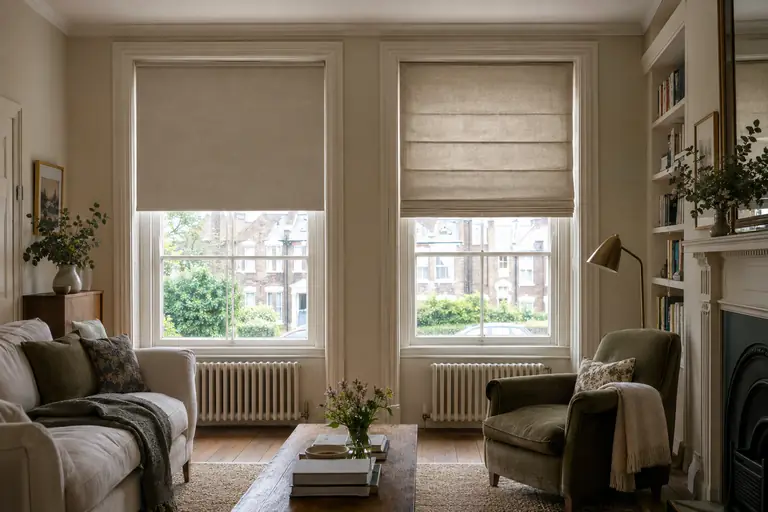
Light-filtering and open weaves let daylight through and soften it. Some keep a view of the garden or street through the weave; others simply glow. They are the choice for rooms you use by day, where glare is the problem rather than privacy. Worth knowing: a weave that hides the room by day works the other way after dark. With the lamps on inside, a passer-by sees shapes and movement through it.
Dimout fabrics take a room down several stops. You can still tell whether it is sunny outside, but the television is watchable and the room is private at night. For a living room or a spare room, dimout is often all anyone needs.
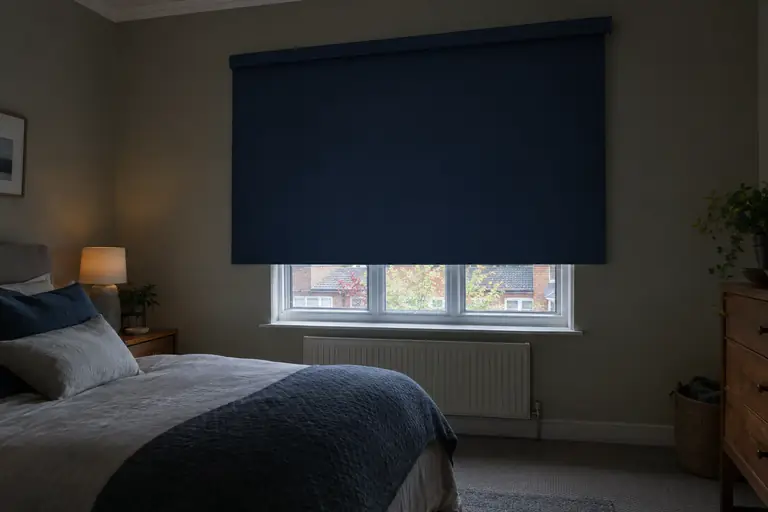
Blackout fabrics are coated or backed so that no light passes through the weave at all, and they are what most bedrooms and nurseries end up with. Our blackout guide covers how to get the edges dark as well, which is the harder half.
With open weaves, colour changes the result. A pale weave catches the sun and glows, while a darker one of the same openness is usually easier to see out through. That is the kind of thing you can only really judge against your own window.
Rollers in kitchens and bathrooms
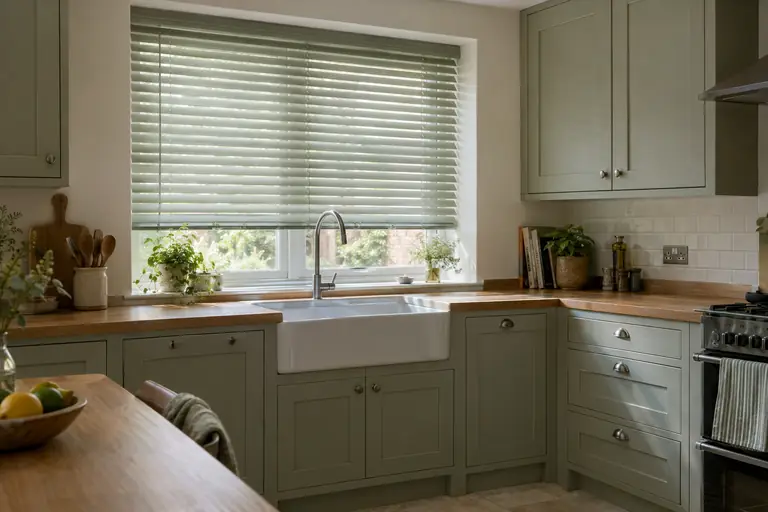
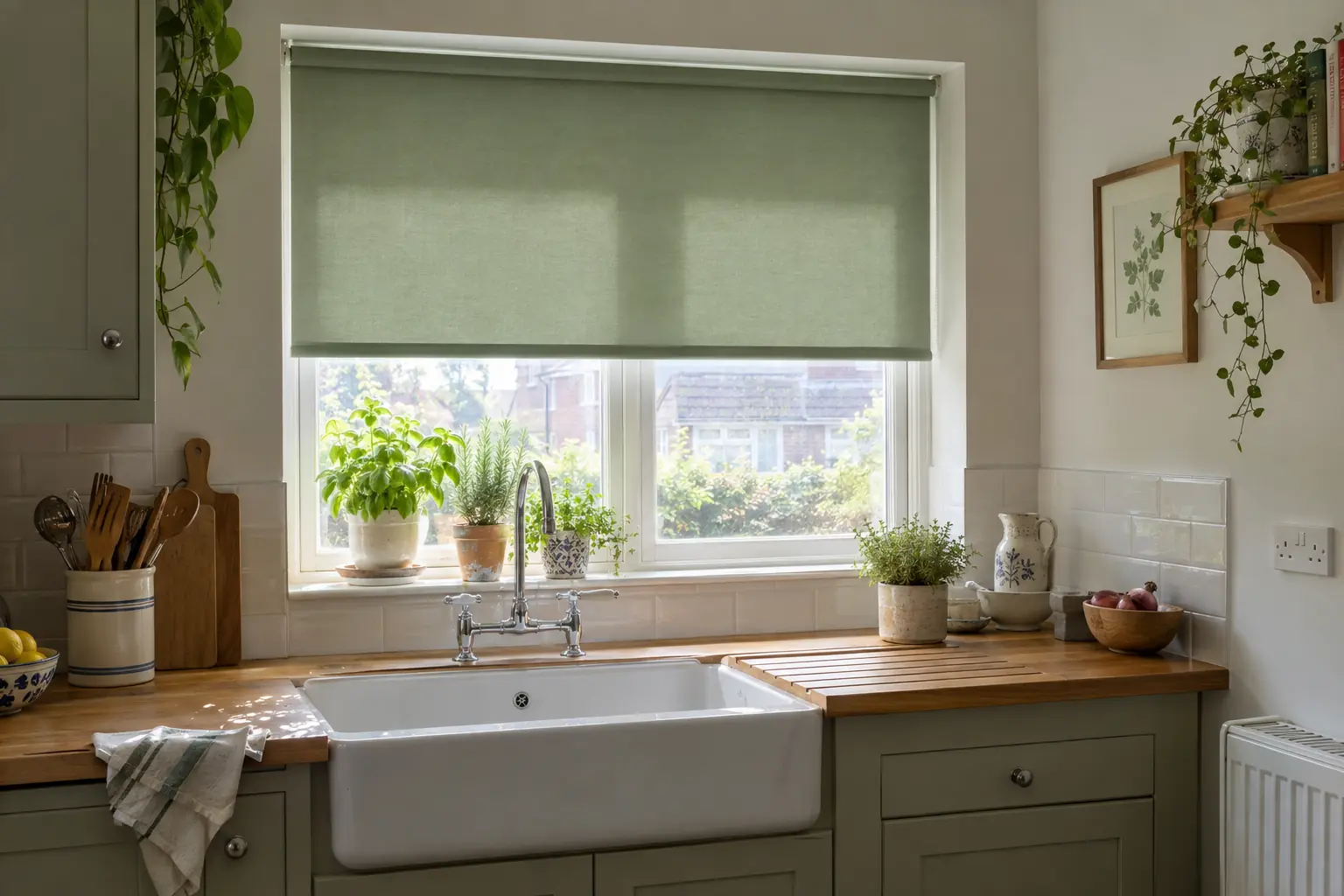
A roller is the usual answer for a kitchen or bathroom window, and the reasons are practical. One flat sheet has no folds for grease to settle in and no slats to wipe one by one, and when it is raised it rolls away above the glass instead of hanging over the sink.
The fabric still has to suit the room. Over a sink, near a hob or beside a shower, choose a PVC-coated or moisture-hardy fabric rather than a soft furnishing weave. These take a wipe with a damp cloth and cope with steam. A soft fabric in the same spot will mark, and once a water stain has dried into a weave it rarely comes out.
Two habits help any roller in a wet room. Let the blind down fully to dry if it has been splashed or steamed, because fabric rolled up damp stays damp. And open the window, or run the extractor, after a shower or a pan of pasta: the blind copes with steam far better when the room is not holding on to it.
If a bathroom window is frosted and privacy is already covered, a roller there is mostly about softening the light and finishing the window. In a kitchen that faces the sun, a light-filtering wipeable fabric takes the glare off the worktop without making you put the lights on.
Chains, motors and child safety
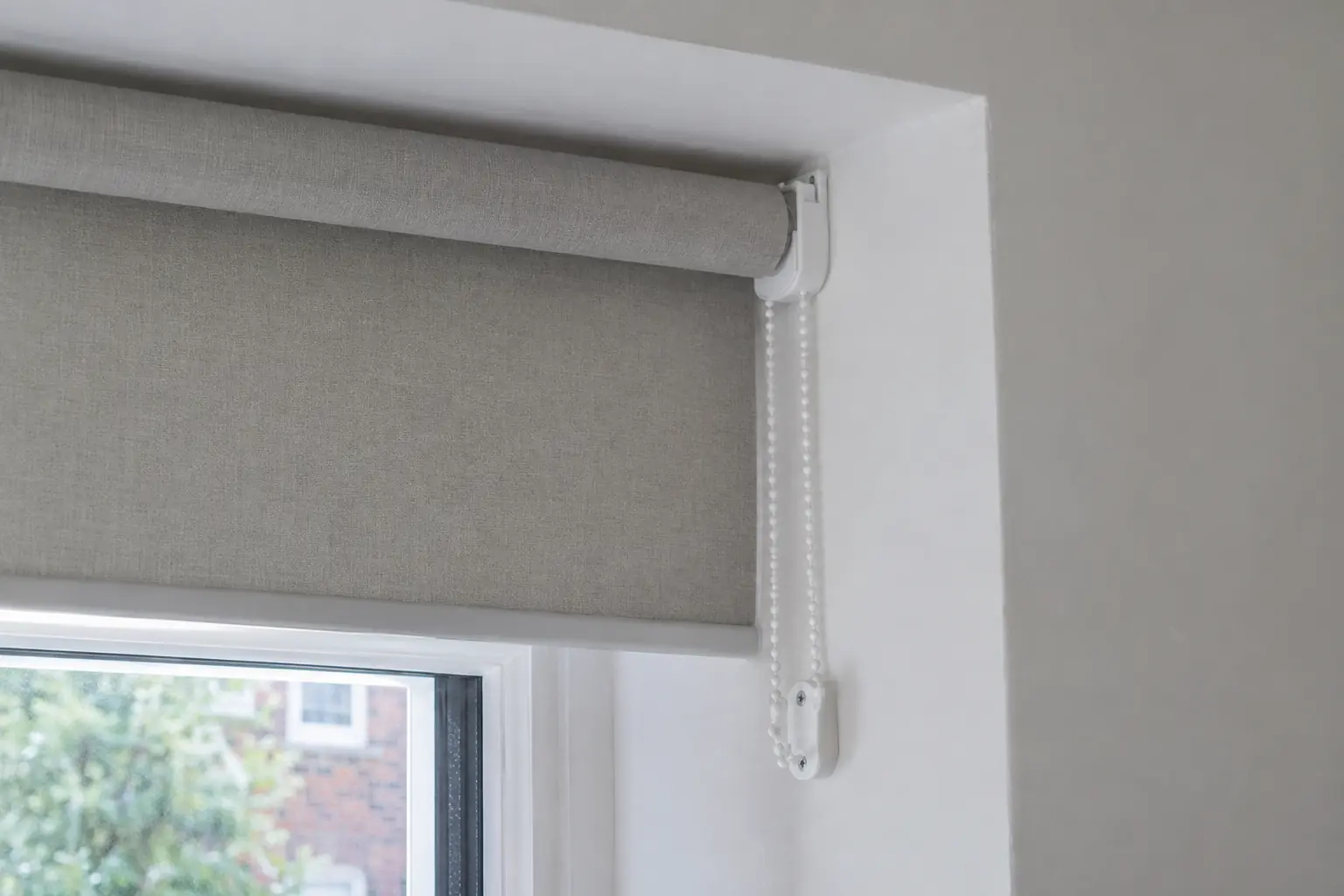
Most manual rollers are worked with a looped chain at one side. Decide which side before the appointment: the side you can reach without leaning across a sofa, a sink or a radiator, and on a pair of windows usually the outer edges, so the chains do not hang together in the middle.
A looped chain is a strangulation risk for young children, and every corded or chained blind we supply comes with the child-safety devices UK regulations require. Our fitter installs them and shows you how they work. For a chain, that usually means a device fixed to the wall that holds the loop taut rather than letting it hang loose. The British Blind and Shutter Association's summary of the rules says safety devices must be fitted at least 1.5m from the floor, except breakaway devices, which must be at least 0.6m up, and that professional installers must fit them and explain their use, with no exceptions in homes.
RoSPA's advice for children's rooms is simpler still: never fit a blind with a looped cord or chain in a child's bedroom. That is why, in nurseries and children's rooms, we usually recommend a cordless or motorised roller instead.
A motor also solves the high window, the window behind the sofa and the run of three you want to lower together. It can run on battery or mains, from a remote or an app, and it carries the same 1-year guarantee as the blind.
Inside the recess or across the wall
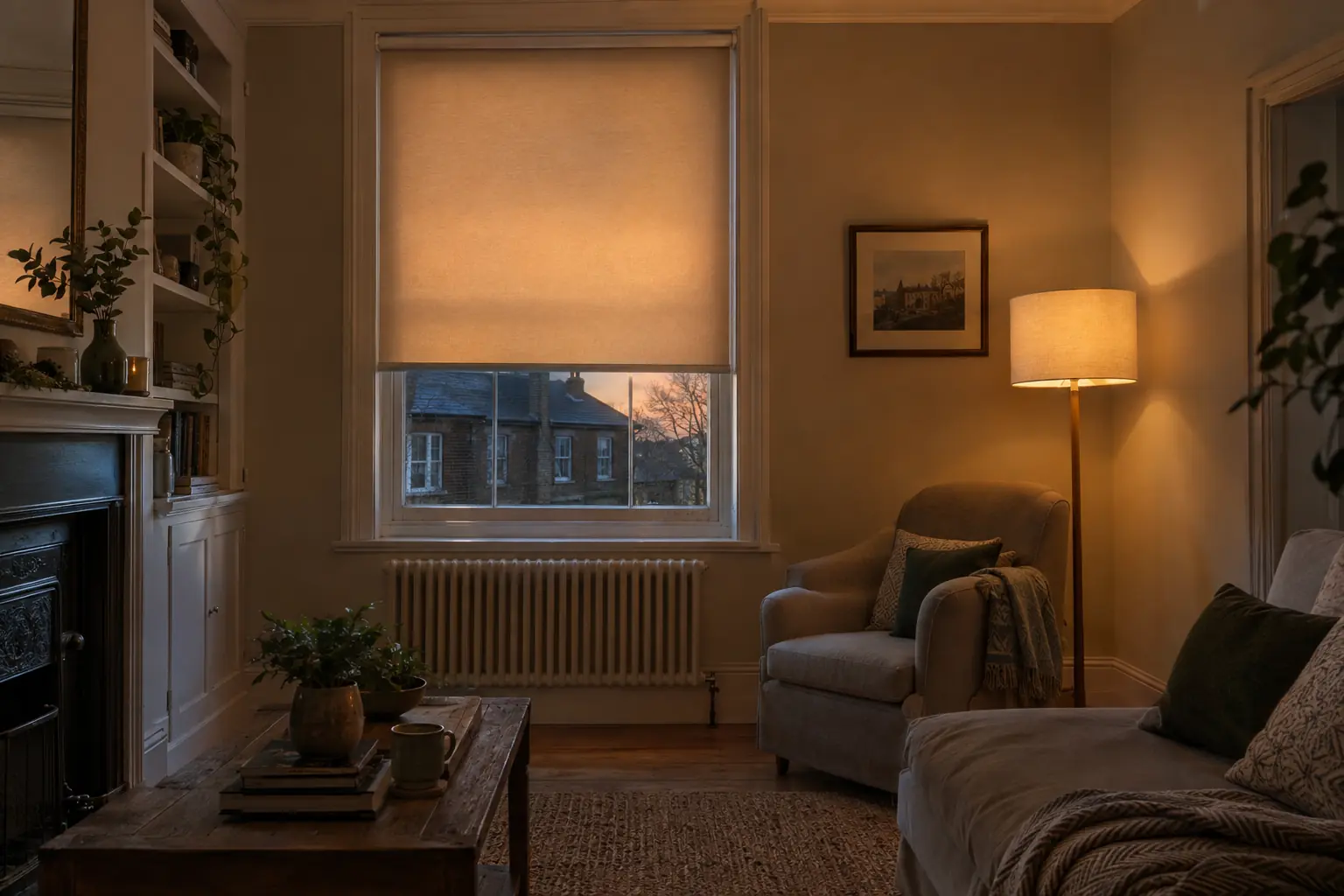
A roller can hang inside the window recess or on the wall above it, and each has a trade-off that comes from the way a roller is built.
The fabric on a roller can never be quite as wide as the blind. The brackets at each end, and the chain mechanism on one side, take up a little of the width, so the fabric itself stops short of the tube's full length. In a recess, that leaves a narrow strip at each side where the fabric does not reach the plaster. With a light-filtering fabric you will never notice. With blackout, those strips are where the morning comes in.
Fitted outside the recess, the blind is made wider and longer than the opening so it overlaps it. The side strips land on the wall instead of in the room, and the frame disappears behind the fabric. The roll sits on the wall above the window, so when the blind is up the whole of the glass is clear.
The recess fit is the neater look where the reveal is deep enough to take the tube and the chain without the fabric catching a handle. Our guide to recess and exact fit goes through the tests in detail, and your advisor measures every opening and can show you both on the day.
When another blind would suit better
Rollers suit most rooms, but not every window, and it is worth knowing where they fall short before you settle.
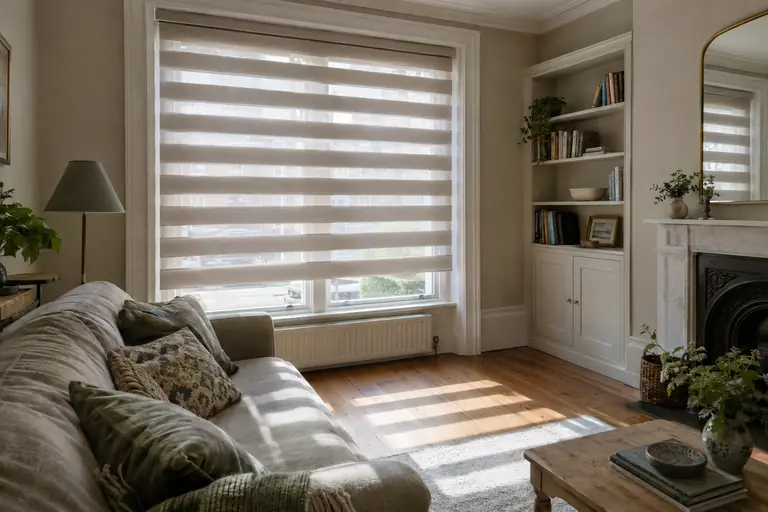
If you want to keep daylight while stopping glare on a screen, a venetian does something a roller cannot: tilt the slats and the light goes to the ceiling instead of the monitor. If you want privacy at street level and sky above, a top down bottom up blind covers the lower half of the window and leaves the top open. If you want the look of a curtain without the width of one, a roman gives soft folds and takes linings. And if you like the simplicity of a roller but want to move between a view and privacy through the day, a day and night blind puts both on one roller.
Wide patio doors are the other case. A single roller across a door you walk through has to be raised completely every time you go out, and a very wide roll is heavy work on a chain. Verticals, or perfect fit blinds on each door, usually make more sense.
None of this rules a roller out. Plenty of homes have rollers in the kitchen, bathroom and bedrooms and something different in the living room, all measured and quoted at the same appointment.
Seeing the fabric in your own light
A roller fabric looks different on every window. The same oatmeal weave can look warm in a south-facing kitchen and flat and grey in a north-facing bedroom, and a swatch under shop lighting tells you little about either.
The simplest test is to hold the fabric against the glass at two times of day. In daylight, you see how much light comes through and what it does to the room. After dark with the lamps on, you see what it looks like from inside and, if someone will stand outside for a minute, from the street. Hold a blackout sample up to a bright window too, and check that nothing at all comes through it.
You can order up to five free samples, posted first class, to try at home. Or book a free home appointment: an advisor comes to you with the full sample range, holds fabrics against your own windows in your own light, measures every opening and leaves a written quote, itemised per window. Fitting is included in the price, there is nothing to pay on the day, and you can take the quote away and think about it.
Pros and cons
In its favour
- The simplest mechanism we fit, with very little to wear out or go wrong
- Takes light-filtering, dimout, blackout and wipeable PVC fabrics, so one type covers most rooms
- Winds into a slim roll, leaving almost all of the glass clear when it is up
- A flat surface that is quick to dust and easy to sponge
- Works inside a recess or across the wall, and can be motorised
Worth knowing
- Fitted in a recess, even a blackout roller lets a thin line of light in at each side
- Controls light only by going up or down; it cannot angle the light like slats
- A chain-operated roller needs its child-safety device fitted and kept in use
- The fabric ripples if it is soaked, so it needs a gentle clean
Room by room
- BedroomA great fitBlackout fabric fitted over the recess gives a properly dark room; in the recess it still dims it well.
- KitchenA great fitOne flat, wipeable surface with nothing to trap grease; choose a PVC or moisture-hardy fabric near the sink.
- BathroomA great fitPVC and wipeable fabrics cope with steam, and a raised roller leaves the window clear to open.
- Living roomWorks wellDimout or light-filtering fabric cuts glare on the television; add curtains if you want a softer look.
- Nursery or child's bedroomWorks wellBlackout helps daytime naps, but choose cordless or motorised control rather than a looped chain.
- Home officeWorks wellA dimout or open weave takes glare off a screen, though a venetian gives finer control of the angle.
- Patio doorsThink twiceA wide roller over a door you use every day has to be raised fully each time; verticals or perfect fit usually suit better.