The short answer
There are four usual lengths: sill length, just clearing the sill; below sill, dropping past it and stopping above a radiator or furniture; floor length, finishing just off the floor; and pooled, made longer so the hem breaks on the floor. Floor length is the most versatile and the warmest. Fullness is how much fabric goes across the width compared with the pole or track, and it keeps the folds deep even when the curtains are closed. Your advisor measures once you have chosen the heading.
- Sill, below sill, floor and pooled are the four usual lengths; floor length suits most rooms.
- A radiator, window seat or worktop under the window usually decides the length for you.
- The drop is measured from the pole or track, so choose the heading and fixing before the final measure.
- Fullness, not the weight of the fabric, is what stops a curtain looking thin.
- Old floors are rarely level, so a floor-length drop is measured at more than one point.
Curtain widths and drops
Swipe to see the whole diagram
The pole or track runs past the window each side so the curtains can stack off the glass. The drop is measured from the pole or track to where you want the curtain to finish.
Step by step
- 1
Look at what is under the window
Note anything below the sill: a radiator, a window seat, a worktop, a desk or a deep window board. Any of them can rule out a full drop and point you to sill or below-sill length.
- 2
Decide how the curtains will be used
Curtains drawn every morning and night want to finish just off the floor or above the sill. Curtains that stay dressed open most of the time can be longer, even pooled.
- 3
Choose the length
Pick sill, below sill, floor or pooled. Where nothing is in the way, floor length usually looks best and keeps the most warmth in. Keep windows in the same room to the same length where you can.
- 4
Choose the heading
Eyelet, pencil pleat, pinch pleat or wave each sit differently on their pole or track, and the drop is measured from that fixing. Settle the heading before the final measurements are taken.
- 5
Check the wall above and beside the window
Look at the space between the frame and the ceiling or coving, and the wall either side. The pole or track needs room above the window and past it, so the curtains stack clear of the glass.
- 6
Note the floor
If the floor is uneven, or you are planning new carpet or flooring, make a note. A floor-length curtain has to allow for the floor it will actually hang above.
- 7
Let your advisor measure
Our online measuring tool gives you a rough idea of sizes first. For the order itself, your advisor measures every window at the home appointment, so the fit is our responsibility rather than yours.
The four lengths
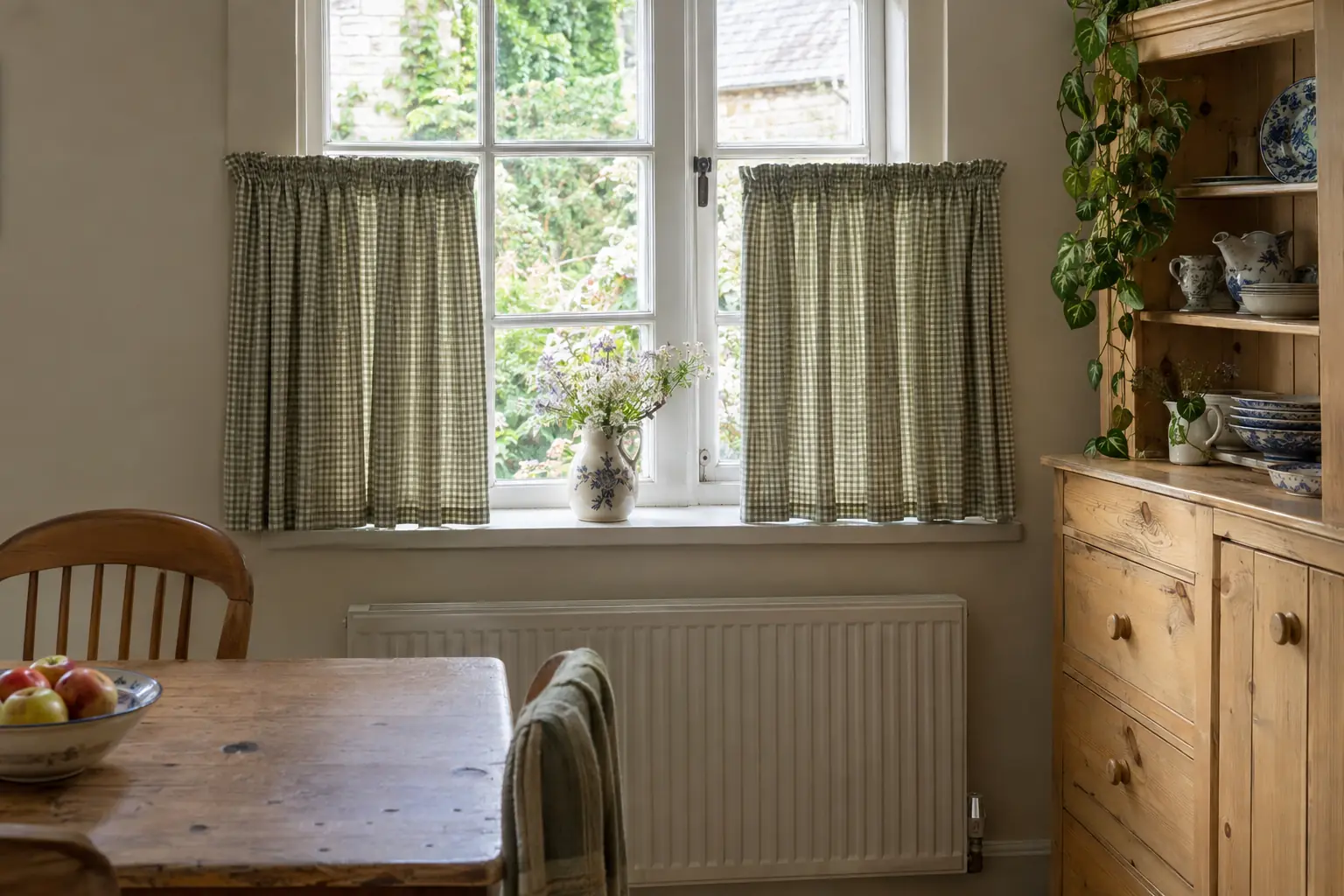
Sill length curtains finish just above the window sill, clearing it so they do not rest on it or catch on it. They are neat and practical on small windows, in cottage rooms, and anywhere there is something standing under the window.
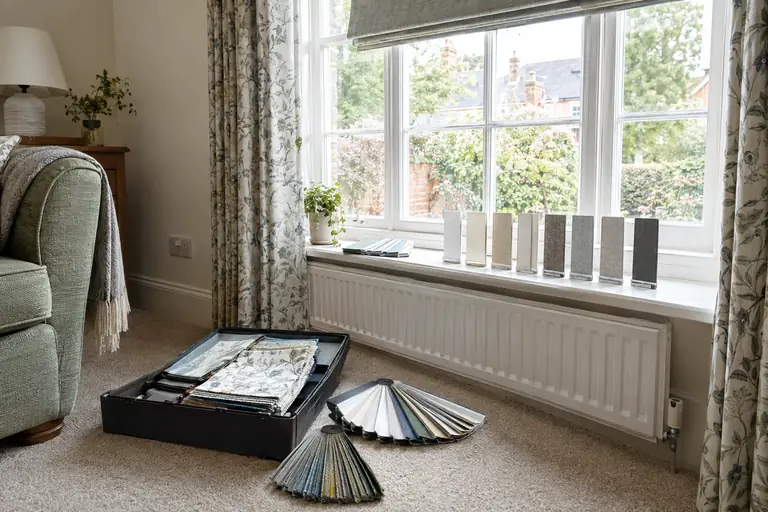
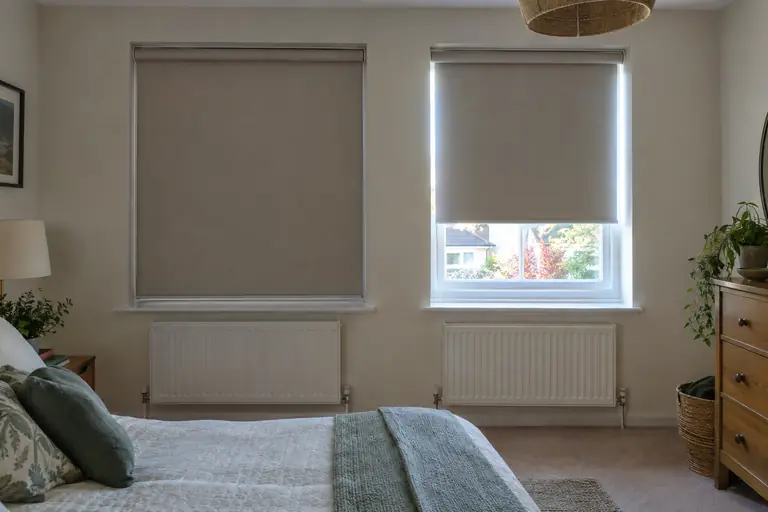
Below-sill curtains drop past the sill and stop partway down the wall, usually just above a radiator or a low piece of furniture. They cover the cold edges of the window better than sill length, while leaving what sits under the window clear.
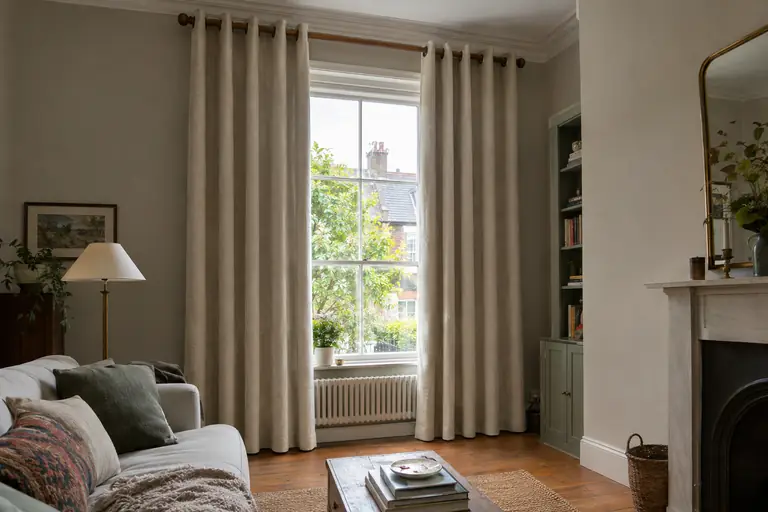
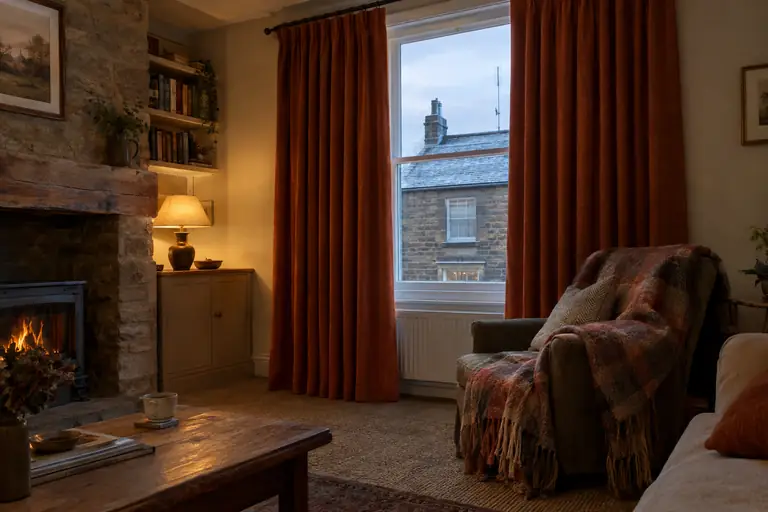
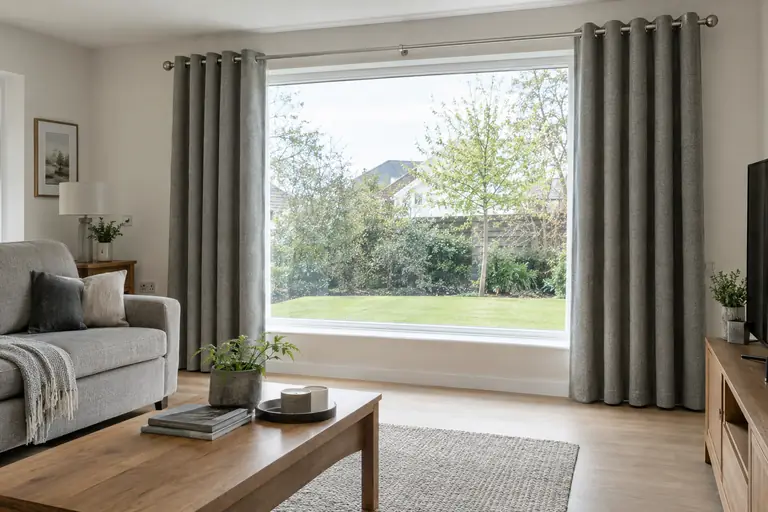
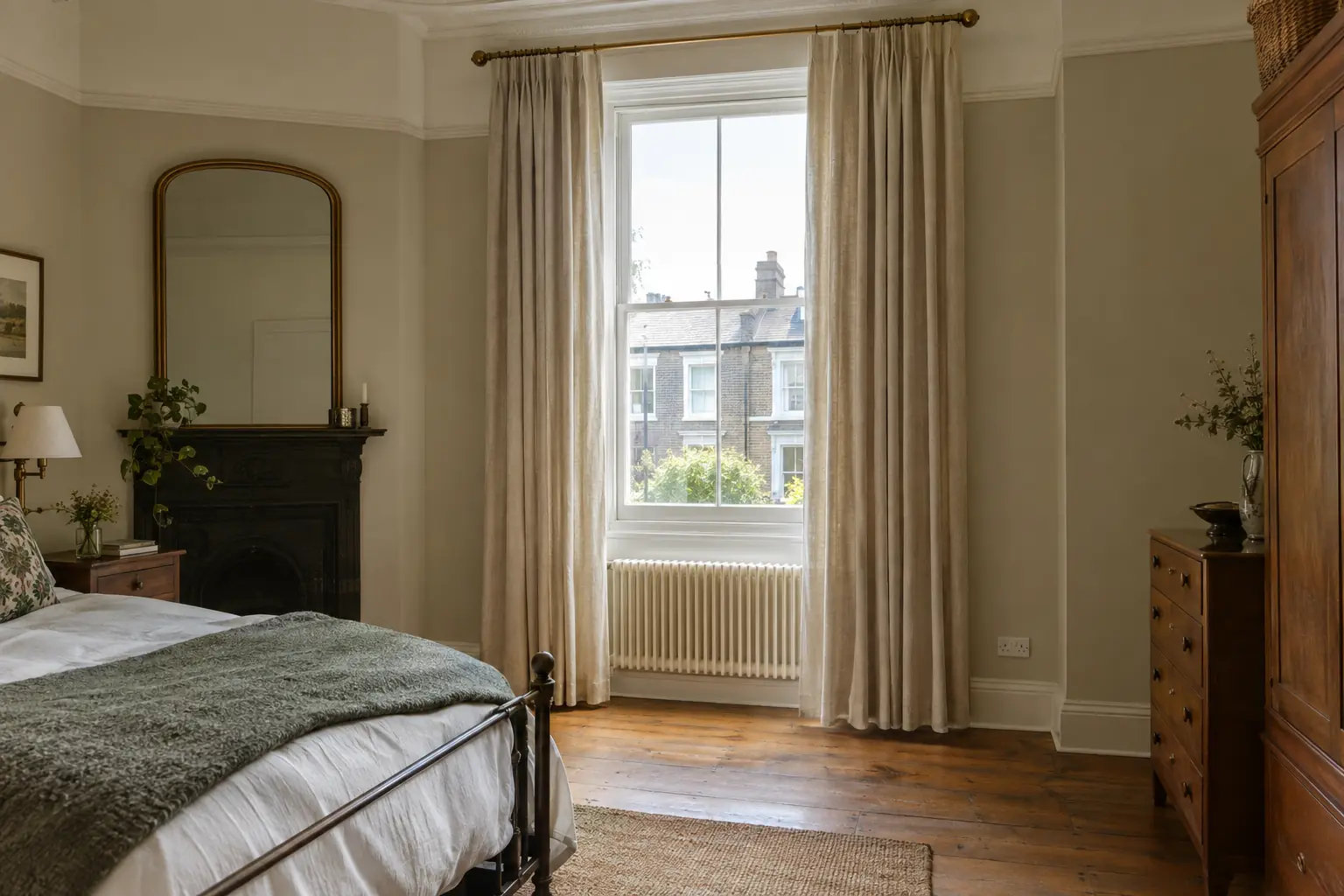
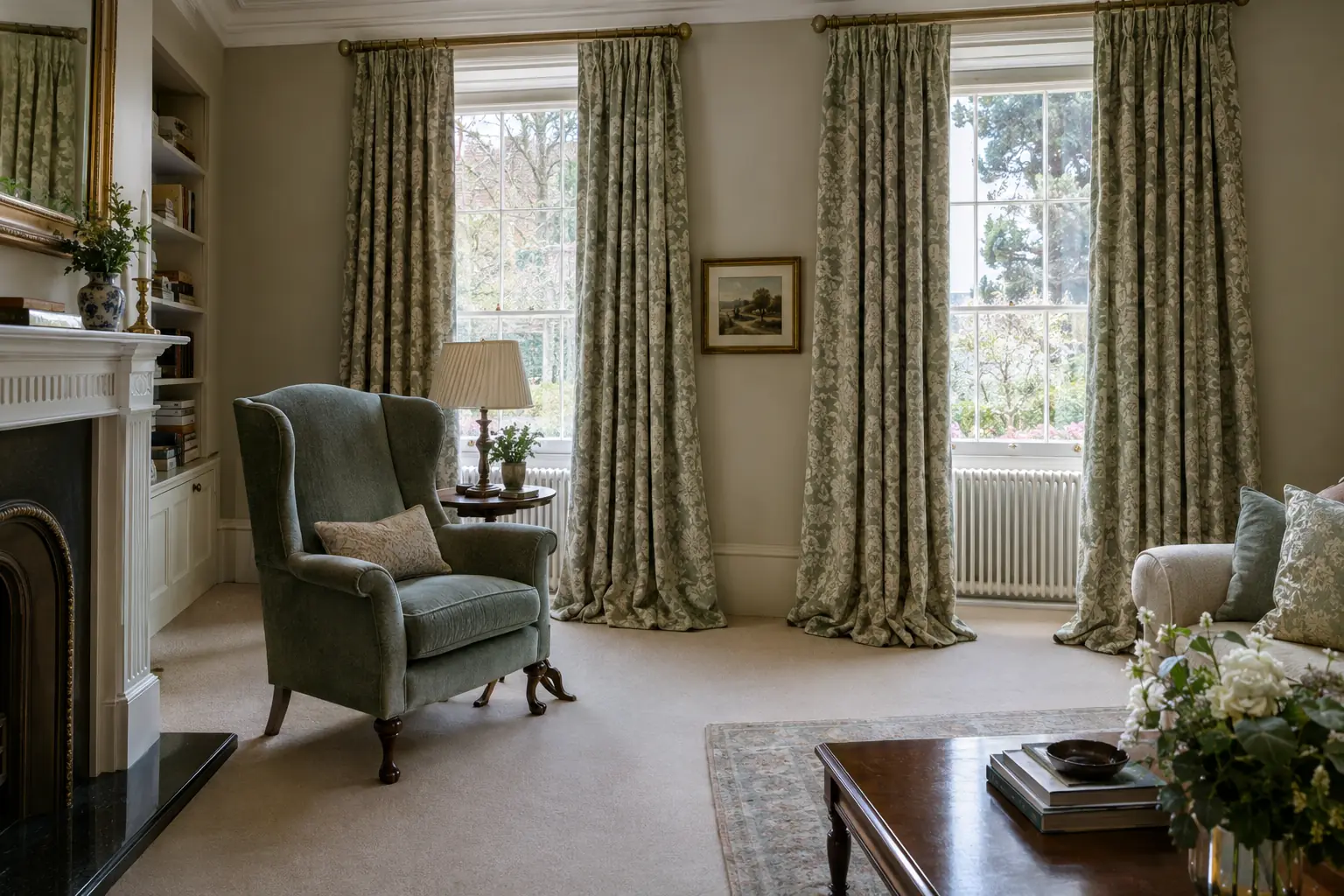
Floor-length curtains finish just off the floor, clearing it by a small margin so the hem does not drag or gather dust. They are the most versatile length: they make a window look taller, suit every heading and most rooms, and close off the bottom of the window best on a cold night.
Pooled curtains are made longer than the drop, so the hem breaks on the floor or settles into a soft puddle of fabric. They are a deliberate, romantic look for a formal room or a bedroom where the curtains are mostly left dressed. They are impractical where curtains are drawn every day, and in homes with pets, crawling babies or a busy vacuum cleaner.
Which length suits which window
The window often makes the decision before you do. A radiator directly beneath it, a built-in window seat, a kitchen worktop or a desk pushed against the wall all rule out a full drop, and sill or below-sill length is the answer. A pair of French doors or a patio door needs curtains to the floor, or the curtain is left hanging in mid-air halfway down the glass.
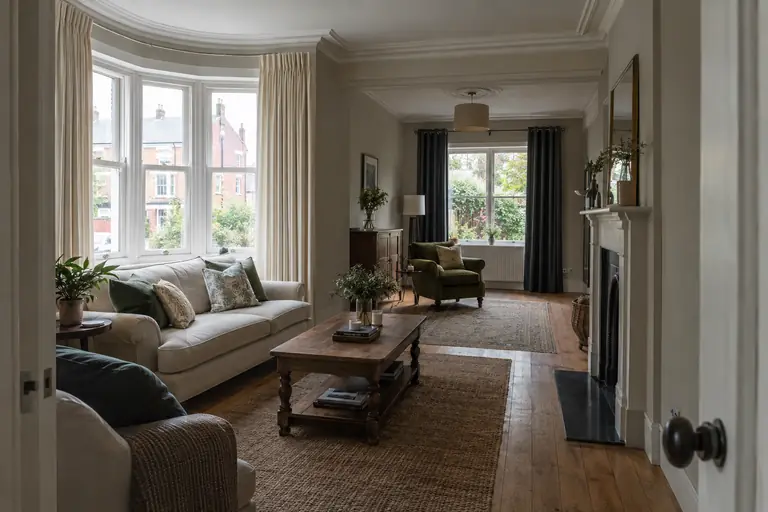
Where nothing stands in the way, floor length is nearly always the better-looking choice. It draws the eye upward, makes a modest window look larger and gives a room a finished, deliberate feel. Short curtains on a large window tend to look as though they have shrunk in the wash.
Mixing lengths in one room tends to look accidental. If one window has a radiator under it and the other does not, it can be better to choose one length for both, or to put a blind in the recess of the awkward window with full-length curtains dressed either side of it that never cover the radiator. Your advisor looks at every window in the room together, not one at a time.
Radiators, window seats and deep sills
A radiator under the window is the most common reason to rethink the length. What matters is where the hem sits in relation to the top of the radiator. A sill-length curtain clears it; a below-sill curtain can stop just above it; a floor-length curtain covers it whenever the curtains are drawn, and sends much of its heat up behind the fabric. If you love the look of long curtains, they can hang either side of the window and never be drawn across it, with a blind in the recess to do the closing. Our thermal curtains guide explains the heat side of it.
A window seat causes a different problem. Curtains that fall in front of a seat have to be pushed aside every time someone sits down, and they end up creased against the cushion. A roman blind in the recess suits a window seat far better, because it folds up out of the way entirely, and curtains either side of the seat can still frame it.
Deep sills and window boards matter too. A curtain hanging outside the recess has to clear the front edge of the sill. If the sill projects a long way, the pole or track may need to sit further forward from the wall so the curtain falls clear of it. Your advisor measures sills, radiators and anything else under the window on the day.
Where the pole or track goes
The length of a curtain starts at its pole or track, so the height and width of the fixing matter as much as the hem.
Height changes the proportions of the window. Setting the pole or track well above the frame, rather than tight to the top of it, makes a window look taller and lets more of the glass show when the curtains are open. In rooms with a picture rail or coving, the fixing often sits just below it, so the curtains run in one clean line down to the floor. The limit is the heading: eyelets stand up above their pole, so they need a little more clear wall above them than a heading that hangs below its track.
Width decides how much of the glass is covered when the curtains are open. A pole or track that stops at the edges of the window leaves the curtains stacked across the glass all day. Running it past the window on each side lets them stack on the wall instead. How far depends on the heading and the fabric.
The drop is then taken from the pole or track down to where you want the hem, which is why the heading and fixing are settled before the final measurements.
What fullness means
Fullness is the amount of fabric across the width of a curtain compared with the length of the pole or track it hangs from. A flat panel of fabric exactly as wide as the pole has no fullness at all. Gather it, pleat it or fold it, and it needs more fabric to cover the same width, with the extra forming the folds.
As a general rule in curtain making, gathered and pleated headings use somewhere around twice the width of the pole or track in fabric, sometimes a little more for a fine fabric and a little less for a very heavy one. Eyelet and wave headings are made to a fullness that suits the spacing of the rings or the carriers. These are rules of thumb rather than a formula: the right fullness depends on the heading, the weight of the fabric and its lining, and the look you want.
Fullness is the difference between a curtain that looks generous and one that looks thin. Without enough of it, a curtain looks stretched when it is drawn, the folds flatten out, and in a pale fabric the light shows through the thin places. We work to a proper fullness for the heading you choose, so the folds stay deep even with the curtains closed. You do not need to work it out yourself.
Floors, hems and the last few millimetres
Floor-length curtains live or die by the last few millimetres. A hem that drags on the floor wears, collects dust and pulls the folds out of line. A hem that stops too short, showing a sliver of skirting board beneath the curtain, looks like a mistake.
British floors make this harder than it sounds. Floorboards in older houses dip and rise, carpets and rugs change the height across a room, and a room that has had a new floor laid since the pole went up may have a different drop at each end of the window. A floor-length curtain made to a single measurement can clear the floor at one edge and touch it at the other.
That is one reason made to measure matters most for floor-length curtains. Your advisor measures the drop at more than one point across the window and allows for the floor as it is. If you are planning new carpet or flooring, say so at the appointment, because it changes the drop. Pooled curtains are more forgiving here, since the extra length hides a floor that is not quite level.