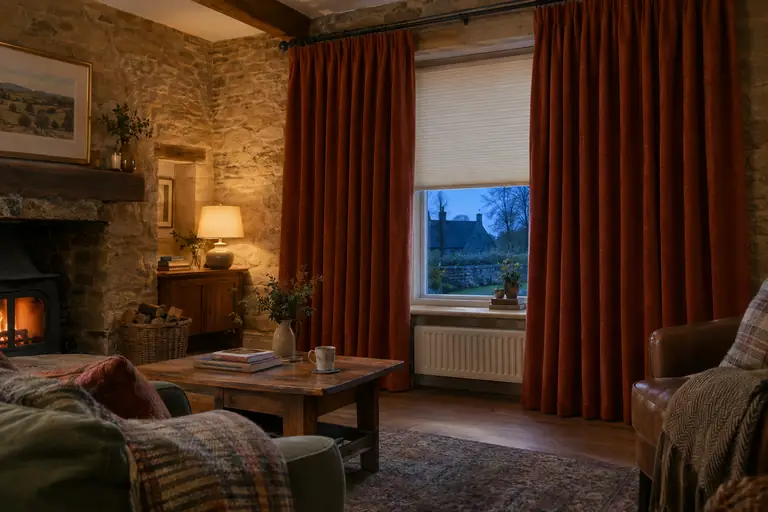
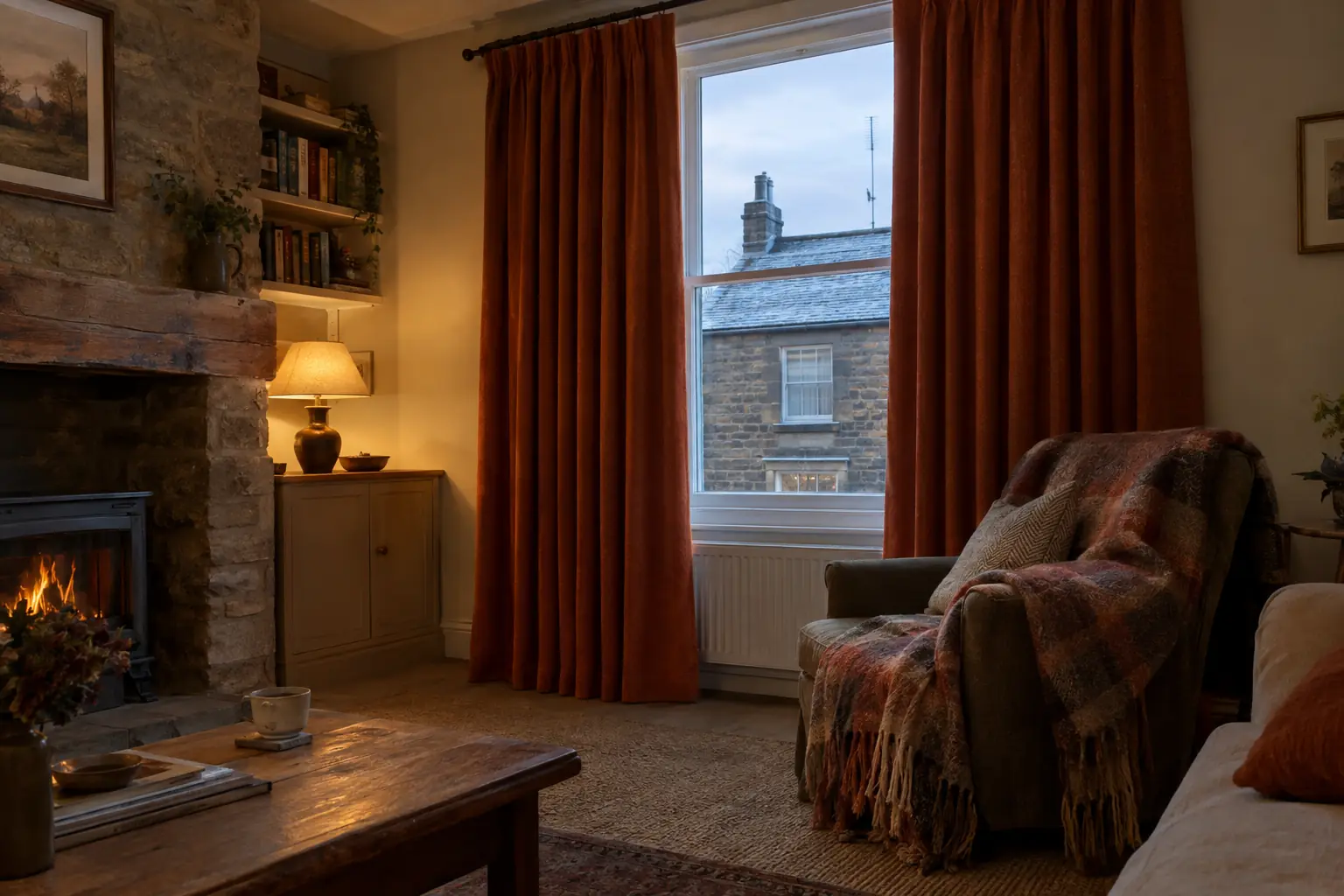
The short answer
Thermal curtains have a lining designed to help keep warmth in. They work by holding a layer of still air between the curtain and the window, so they do most when they are drawn at dusk, hang to the floor and run past the window on each side. Interlining, a soft layer between the face fabric and the lining, adds weight and body. They help most on single-glazed and draughty windows. If there is a radiator under the window, stop the curtains at the sill or use a blind in the recess.
- A thermal lining adds an insulating layer; interlining adds weight and body on top.
- Draw them at dusk: GOV.UK advice is that heavy curtains can reduce heat loss through a window at night.
- Hang them past the window and to the floor, so warm air cannot slip round them.
- A long curtain drawn over a radiator sends its heat up the glass; stop at the sill instead.
- They help most on single-glazed sashes, draughty casements and big bays.
How curtains keep a room warm
A curtain does not make heat; it slows the rate at which a room loses it. When a pair of curtains is drawn across a cold window, the air between the fabric and the glass is held still, and still air is a good insulator. The side of the curtain facing the room stays close to room temperature, while most of the cold stays in the gap behind it.
The better the curtain closes off that gap, the better it works. If warm room air can flow in over the top of the curtain, sink down behind it as it cools against the glass and pour out under the hem, the curtain turns into a kind of chimney and the room keeps losing heat through the window. That is why the way a thermal curtain is hung matters almost as much as what it is made of.
Research backs up what people have long known. Historic England's research into the thermal performance of traditional windows found that heat loss can be significantly reduced by using curtains, interior shutters and blinds, and that adding an insulating liner to curtains helps even more.
Thermal lining, interlining or both
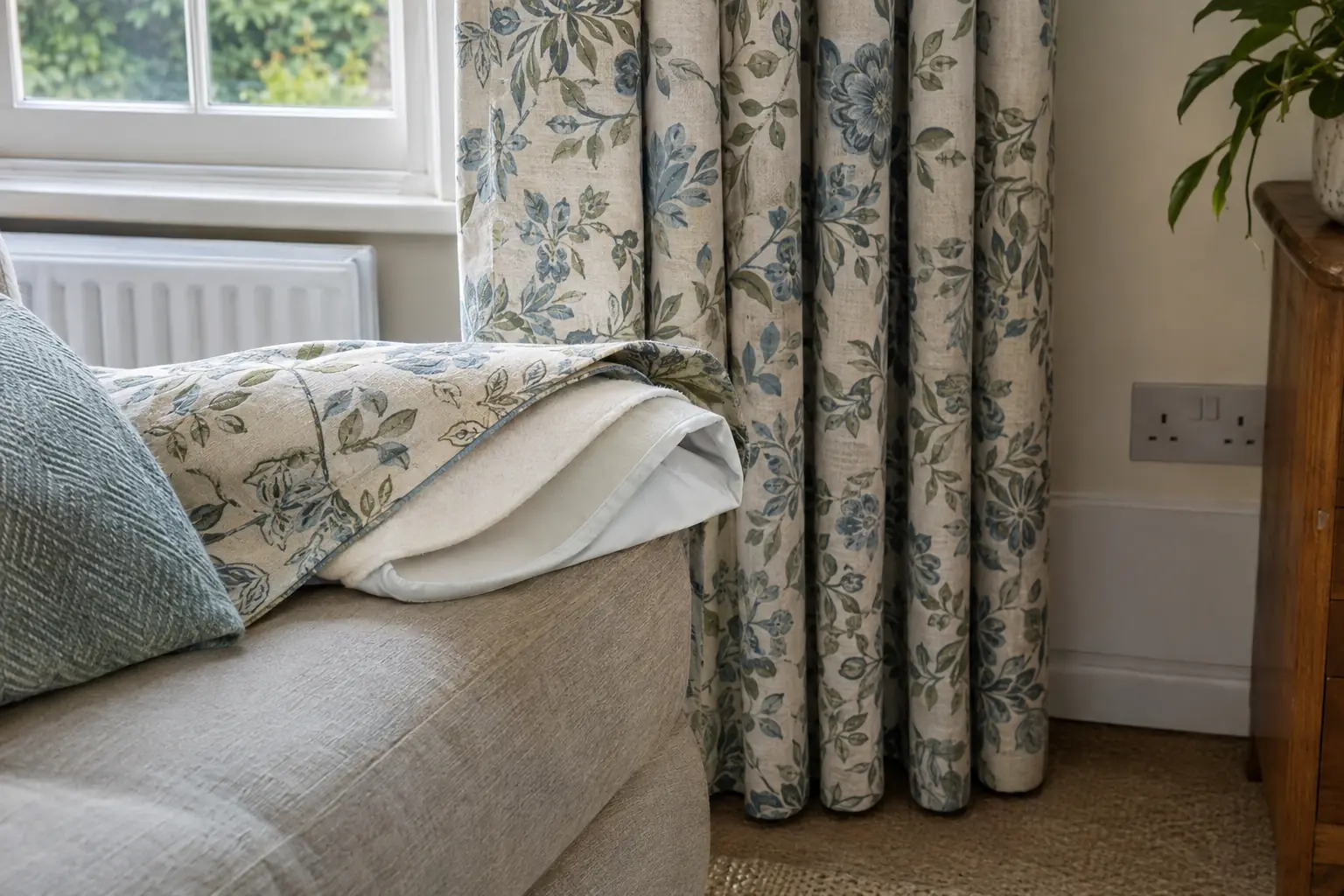
A standard lining protects the face fabric and helps it hang. A thermal lining is made to do more: it adds an insulating layer to the back of the curtain and helps a cold or draughty room. It is the most direct way to make a curtain warmer without changing the fabric you have chosen for the front.
Interlining is a separate layer: a soft, thick fabric sewn between the face fabric and the lining. It makes the curtain heavier and fuller, gives the folds more body and turns a light fabric into a substantial one. Weight counts at night; GOV.UK advice is that fitting curtains made with heavy material can reduce heat loss through a window at night.
Which you choose depends on the room and the look. A thermal lining suits a bedroom or a cold north-facing room where you want warmth without a heavy, formal curtain. Interlining suits a large room with tall windows, where the extra weight also makes the curtains look generous. The Energy Saving Trust lists heavy thermal curtains among the ways to reduce the heat lost through windows, alongside bigger jobs such as double glazing. Your advisor will tell you which combinations are available with the fabric you like.
Draw them at dusk, open them to the sun
Thermal curtains only work when they are closed, and the time that matters most is the evening, when the temperature outside drops and the heating is on. Drawing them as it gets dark, rather than when you go to bed, keeps that still layer of air in place through the hours the room is in use.
In the daytime, the opposite is usually true. On a bright winter day, open the curtains fully and let the low sun into the room; a curtain that stacks clear of the glass lets all of it in. Opening them each morning also lets the glass and the sill dry out, which matters for the reason covered at the end of this guide.
In summer the logic flips again. On hot days, the UK Health Security Agency advises closing blinds and curtains on windows that are exposed to direct sunlight during the day, to help keep a home cool. Our guide to keeping rooms cool in summer covers that in more detail.
Hang them for warmth
The way a thermal curtain is hung decides how well it closes off the window, and three things matter.
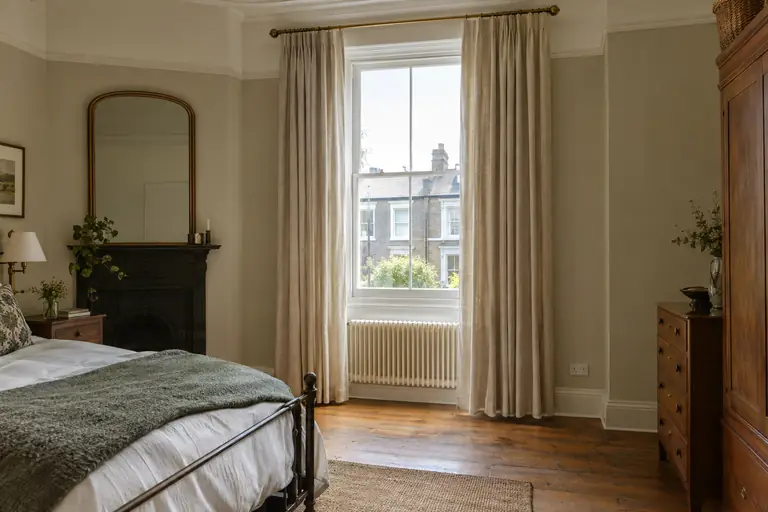
Width comes first. A pole or track that runs past the window on each side lets the closed curtains overlap the wall, so the cold air behind them has less room to escape at the edges. Curtains that turn back to meet the wall at each end close the side gaps further.
Length next. A floor-length curtain that just clears the floor stops cold air pouring out underneath and across the room, which is where a draught at ankle height often comes from. A curtain that ends at the sill leaves the bottom of the window open to the room.
Then the top. A curtain on a pole leaves a gap above it where warm air can slip in behind. A track fixed close under the ceiling, with the heading standing up in front of it, leaves much less of a gap.
Your advisor measures with all of this in mind, and will tell you on the day what your window, wall and ceiling allow. Our curtain length and fullness guide explains the options for length.
Radiators under the window
In a great many British homes, the radiator sits directly under the window. There was a reason for it: warm air rising off the radiator meets the cold air falling off the glass, and the room is kept evenly warm. It does, though, create a problem for curtains.
A floor-length curtain drawn in front of a radiator traps its heat behind the fabric. The warm air rises between the curtain and the glass, where the window cools it, and much of the heat you are paying for goes into warming the window rather than the room. The fabric also sits against a hot surface all evening, which does it no good.
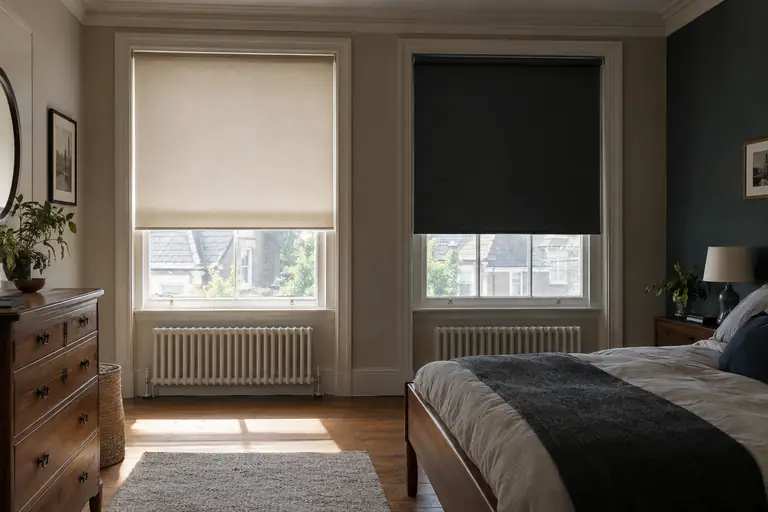
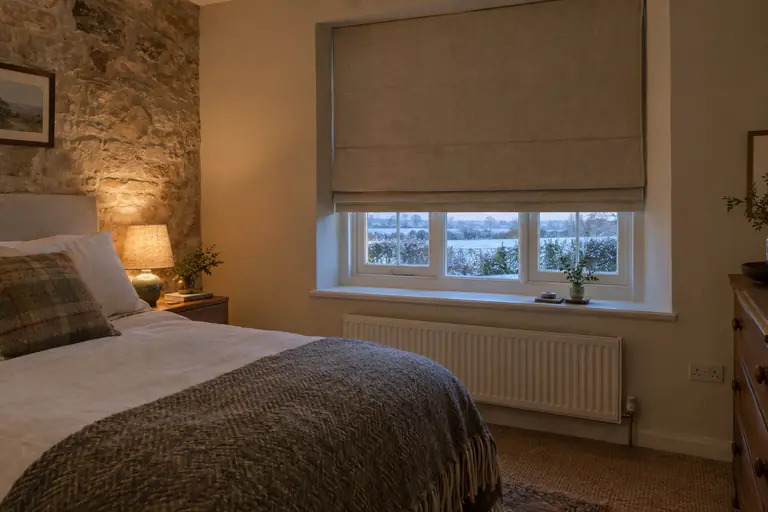
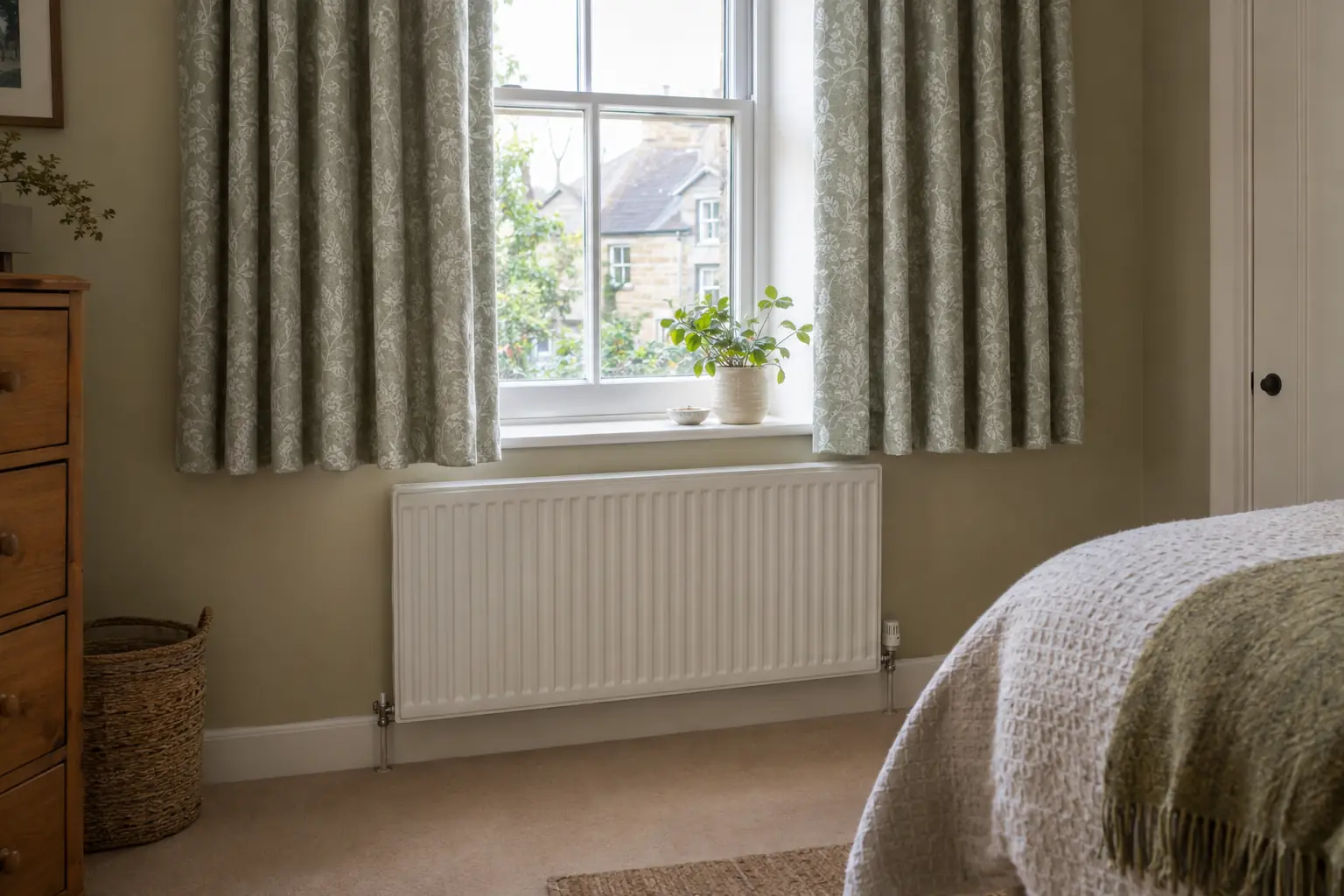
There are three good answers. Curtains that stop just above the sill leave the radiator uncovered, so its heat rises into the room. A blind fitted in the recess, with full-length curtains dressed either side of the window that are never drawn across the radiator, keeps the look of long curtains without losing the warmth. Or a thermal blind alone in the recess keeps fabric well away from the heat. Your advisor will look at the radiator, the sill and the window, and tell you on the day which will work best.
Single glazing, sash windows and older homes
Thermal curtains make the biggest difference where the window is weakest. Single-glazed windows, old timber sashes, draughty casements and big bay windows lose the most heat, and a heavy, lined curtain is one of the few changes that can be made without touching the window itself.
In a laboratory test on a traditional single-glazed sash window, published by Historic Scotland in 2008, curtains reduced heat loss through the window by 14%, a modern roller blind by 22% and timber shutters by 51%. Those figures come from one window in a test chamber. They are not a saving on anyone's heating bill or house, and they do not apply to modern double glazing, but they do show that what hangs at a window makes a measurable difference to how much heat escapes through it.
In an older house, curtains often work best as part of a combination: a blind in a deep reveal, shutters on a sash, or interlined curtains across a bay. If your home is listed, read our guide to period and listed home window dressing before fixing anything to the walls.
Condensation behind heavy curtains
A well-sealed curtain has one side effect worth knowing about. Close heavy curtains on a cold night and the glass behind them gets colder, because it no longer receives warmth from the room. Moist air that finds its way behind the curtain condenses on the cold glass and frame, and by morning the window can be running wet.
GOV.UK guidance describes condensation damp, where moisture generated inside the home condenses onto colder surfaces such as window frames, as the most common form of damp. The same guidance notes that damp affects home furnishings as well as the building, curtains included.
The practical answers are simple. Open the curtains in the morning so the window can dry, wipe standing water off the glass and sill, and keep the room ventilated, particularly bedrooms, where a lot of moisture builds up overnight. Do not leave curtains drawn for days against a wet window, and keep the hem clear of a sill where water collects. If a window streams every morning, it is usually a sign that the room needs more ventilation, not that the curtain is wrong.
Pros and cons
In its favour
- Slows heat loss through the window when drawn at dusk
- A thermal lining adds warmth without changing the face fabric you choose
- Interlining adds weight, body and fuller folds
- No change to the window itself, which suits older homes with single glazing
- Drawn by day on a sunny window, can help keep a room cooler in summer
Worth knowing
- Only work when drawn, so they need drawing every evening
- A long curtain drawn over a radiator sends its heat up the glass
- Heavy curtains take more wall space when open
- A well-sealed curtain can make condensation on cold glass worse
- No substitute for draught-proofing or better glazing
Room by room
- North-facing living roomA great fitRarely gets direct sun, so keeping evening warmth in matters more than letting daylight in.
- Room with single-glazed sashesA great fitThe draughtiest windows gain most from a heavy, lined curtain drawn at dusk.
- BedroomWorks wellA thermal lining helps keep warmth in overnight; choose blackout instead if darkness matters more to you.
- Bay windowWorks wellA large area of glass loses a lot of heat, and a curtain across the bay closes it off at night.
- Window with a radiator beneathThink twiceA floor-length curtain traps the heat behind it; sill-length curtains or a blind in the recess work better.
- ConservatoryThink twiceMuch of the heat escapes through the roof and wall glazing, which needs blinds made for it.