The short answer
Ready-made blinds and curtains come in standard widths and drops, so they fit a few windows well and most windows approximately, with gaps, overlaps or home trimming making up the difference. Made-to-measure ones are made to the opening you have, including windows that are out of square, in the fabric and heading you choose. The trade-off is commitment: goods made to your specification are not covered by the usual right to cancel, which is why the measuring matters.
- Ready-made comes in standard sizes; your window almost certainly does not, so something has to give.
- In a recess, the gap between your window and the nearest standard size shows as light down each side.
- Out-of-square windows are normal in British homes, and made to measure is made to the opening you have.
- Ready-made curtains often look thin because they have too little width for the folds to form.
- There is no statutory right to cancel goods made to your specification, so good measuring matters.
What the two actually are
A ready-made blind or curtain is made in advance, in a set of standard sizes, and sold off the shelf or online. You pick the size nearest your window. Some ready-made rollers and venetians are sold as trim to fit, meaning you cut the tube, fabric or slats down yourself. Ready-made curtains come in fixed widths and drops, usually with a limited choice of headings and linings.
A made-to-measure blind or curtain does not exist until someone has measured the window. The fabric is cut to that opening and no other, the headrail is made to that width, and the drop is made to where you want it to finish. Ours are hand-finished in our West Yorkshire workshop, and measured and fitted by our own team.
The comparison is not really about quality of fabric. Good ready-made products exist, and so do poor made-to-measure ones. It is about fit, choice and who carries the risk: a standard size either suits your window or it does not, while a made-to-measure product is only as good as the measuring behind it.
Fit: where standard sizes fall short
Windows are rarely a standard size. A house built a century ago, a replacement window fitted into an old opening, or simply two builders measuring differently all produce openings that fall between the sizes on a shelf. So with ready-made, you choose between a size slightly too small and a size slightly too big.
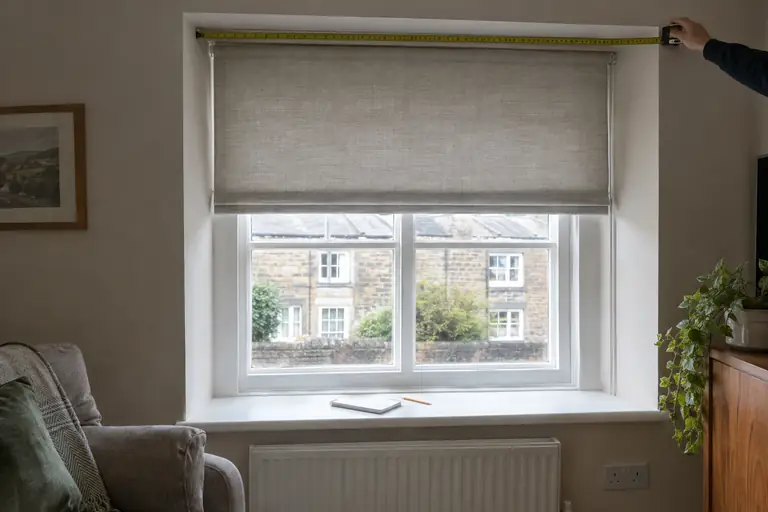
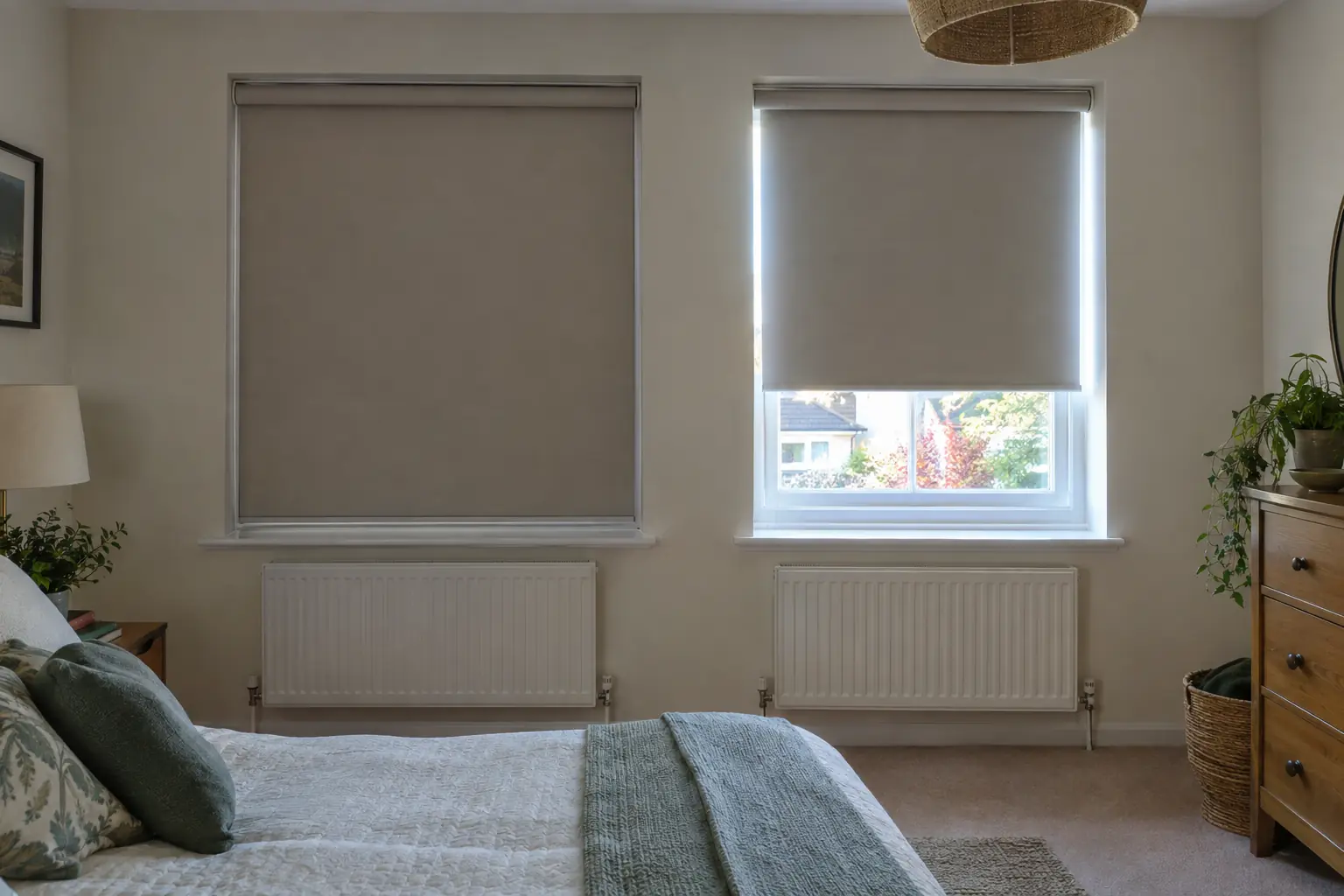
In a recess, too big will not go in, so you choose the smaller size. Any blind in a recess has to be a touch narrower than the opening so it can run without scraping; a ready-made one adds the difference between your window and the nearest size on top of that. The result is a wider gap down each side, and more of the frame on show.
The drop has its own problems. A roller that is too long simply keeps the extra fabric on the roll. A venetian that is too long rests on the sill with spare slats piled on top, and one that is too short leaves a bright band along the bottom.
Trim to fit sounds like the answer, but cutting a tube and fabric perfectly square at home is harder than it looks. A roller fabric that is not cut square to its tube tends to drift to one side as it rolls.
Windows that are not square
A standard size assumes a rectangle. A lot of British windows are not one. Plaster that was never quite plumb, frames that have settled, a lintel that dips at one end and sills that slope towards the garden are all ordinary features of older houses. They are not faults, just the shape of the opening.
In a tapering recess, a ready-made blind sized for the narrowest point leaves a growing gap towards the widest; one sized for the widest point catches at the narrowest. There is no standard size that fits a shape that is not standard.
Made to measure starts from the opening as it is, measured in several places, rather than from a size chart. Where the taper is small, a recess fit still looks right. Where it is pronounced, an exact fit mounted outside the opening usually looks better, because the overlap hides the taper instead of framing it. Your advisor sees the taper for themselves and recommends the fit window by window.
The same applies to curtains: a floor-length curtain on a sloping floor can only hang evenly if the drop is measured at more than one point.
Curtains: width, drop and fullness
Curtains show the difference between standard and made to measure more plainly than blinds do, because so much of how a curtain looks comes from its width.
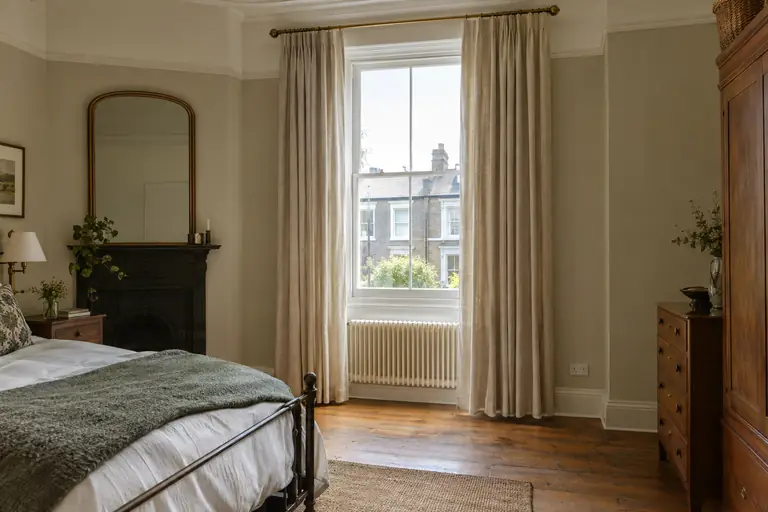
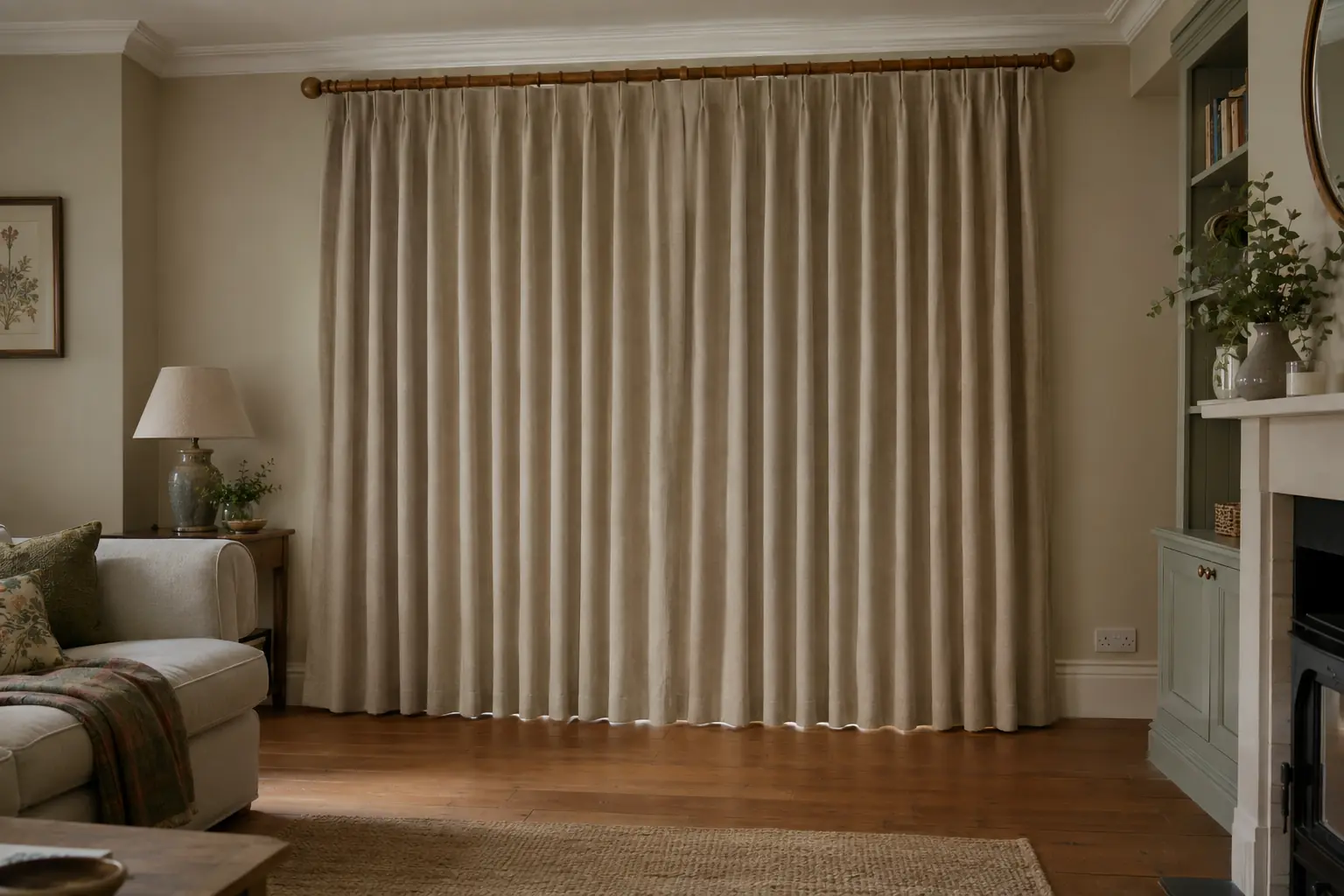
A curtain is meant to be wider than the pole it hangs from, so that it falls in folds. When a ready-made pair is a little too narrow for the pole, the folds pull out, the fabric hangs flat and thin, and the curtains have to be stretched to meet in the middle. It is the most common reason ready-made curtains look thin without anyone quite knowing why. Too wide is less common but leaves heavy bunches that never sit neatly.
The drop is the other half. Standard drops rarely match a real window, so the hem lands too high above the floor or too far down it, or needs taking up at home. With a lined curtain, that means shortening the lining and the face fabric separately.
Made-to-measure curtains are cut to the pole or track you actually have, with the width worked out from the heading you choose and a lining picked for the room: standard, thermal, blackout or interlining.
Changing your mind: your rights on made-to-measure
This is the difference people most often miss. When you buy something you have not seen in person, such as a ready-made blind bought online, Citizens Advice explains that you automatically get a 14-day cooling-off period, unless the item is bespoke or made to measure.
That exception comes from the Consumer Contracts Regulations: the right to cancel does not apply to goods made to the consumer's specifications or clearly personalised. Trading Standards guidance gives made-to-measure curtains as an example, while noting that the exemption does not cover items simply put together from stock parts.
In plain terms, a blind or curtain made to your measurements cannot be sent back just because you have changed your mind about the colour. That is exactly why it is worth seeing fabrics in your own light, living with samples for a few days if you are unsure, and having the windows measured by the people who will make and fit them.
Not being able to change your mind is not the same as having no rights. Under the Consumer Rights Act, goods must still be of satisfactory quality. Our guide to your rights when buying made to measure covers the detail.
When ready-made is good enough
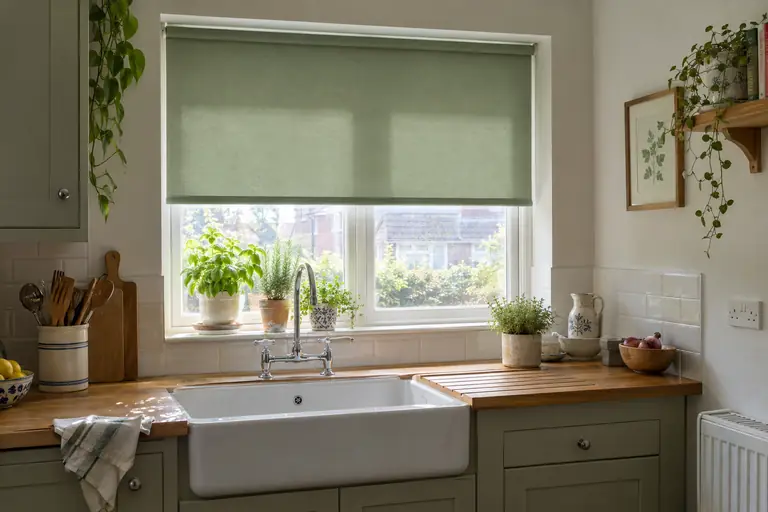
Ready-made has its place, and we would rather say so. For a room you are about to redecorate, a rented flat you are leaving next year, a spare room that is rarely used, or a window that happens to match a standard size, it is a sensible stopgap. Fitted outside the recess, a size larger than the opening, a ready-made roller hides most of its shortcomings, because the overlap covers the gaps a recess fit would show.
Made to measure earns its keep on the windows you look at every day and the ones that are hard to get right: bedrooms that need to be properly dark, bays where a set has to line through, doors and tilt and turn windows, tall or wide glazing, period windows and anything out of square.
Then there is everything around the product. RoSPA notes that, following changes to standards in 2014, a new blind with a looped cord or chain comes with a safety device either already fitted or included for you to fit yourself. With a ready-made blind, fitting it is your job. With ours, the fitter installs the devices and shows you how they work, fitting is included in the price, and every blind carries a 1-year guarantee.
Side by side
Size
- Made to measure
- Made to the opening you have, measured at several points
- Ready-made
- Standard widths and drops: the nearest size up or down, or trimmed at home
Gaps in a recess
- Made to measure
- Only the small clearance the blind needs to move freely
- Ready-made
- That clearance plus the difference between your window and the nearest size
Out-of-square windows
- Made to measure
- Made to suit the taper, or an exact fit advised where it looks better
- Ready-made
- Made for a rectangle, so it catches or gaps where the window runs out
Curtain width and drop
- Made to measure
- Drop measured from your own pole; width worked out from the heading
- Ready-made
- Fixed widths and drops; hems taken up or let down yourself
Fabric, lining and heading
- Made to measure
- Chosen from the full range, with the lining matched to the room
- Ready-made
- Whatever combinations are stocked in your size
Who measures
- Made to measure
- Our advisor, so the fit is our responsibility
- Ready-made
- You, so the fit is your responsibility
Fitting
- Made to measure
- Included in the price, by our own team
- Ready-made
- Usually your job, or arranged separately
Child-safety devices on corded blinds
- Made to measure
- Installed by our fitter, who shows you how they work
- Ready-made
- Supplied, sometimes for you to fit yourself
Changing your mind
- Made to measure
- No statutory right to cancel goods made to your specification
- Ready-made
- Bought unseen, such as online: a 14-day cooling-off period
Guarantee
- Made to measure
- 1-year guarantee on every blind, shutter and motor we fit
- Ready-made
- Depends on the retailer