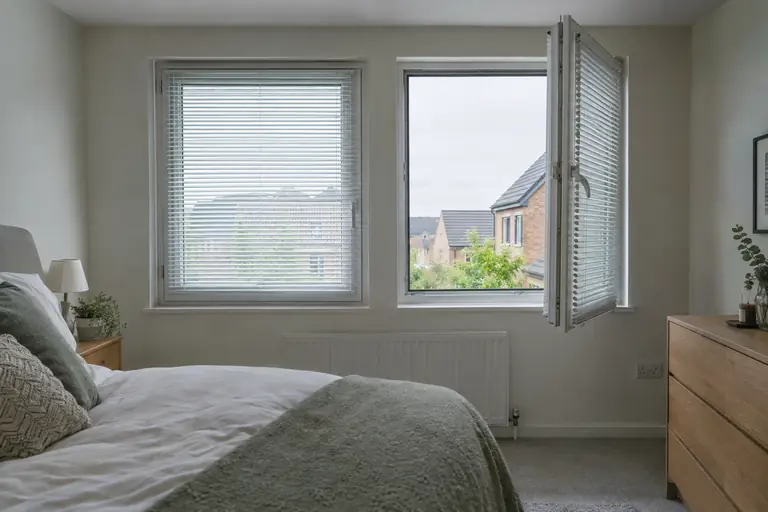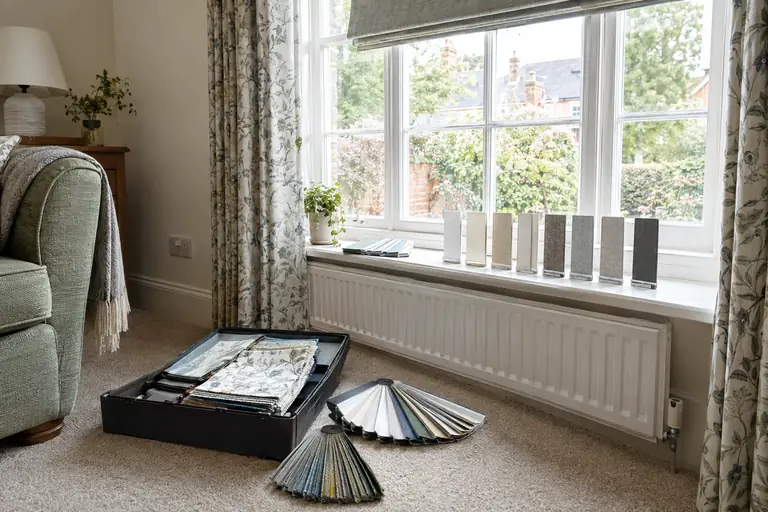
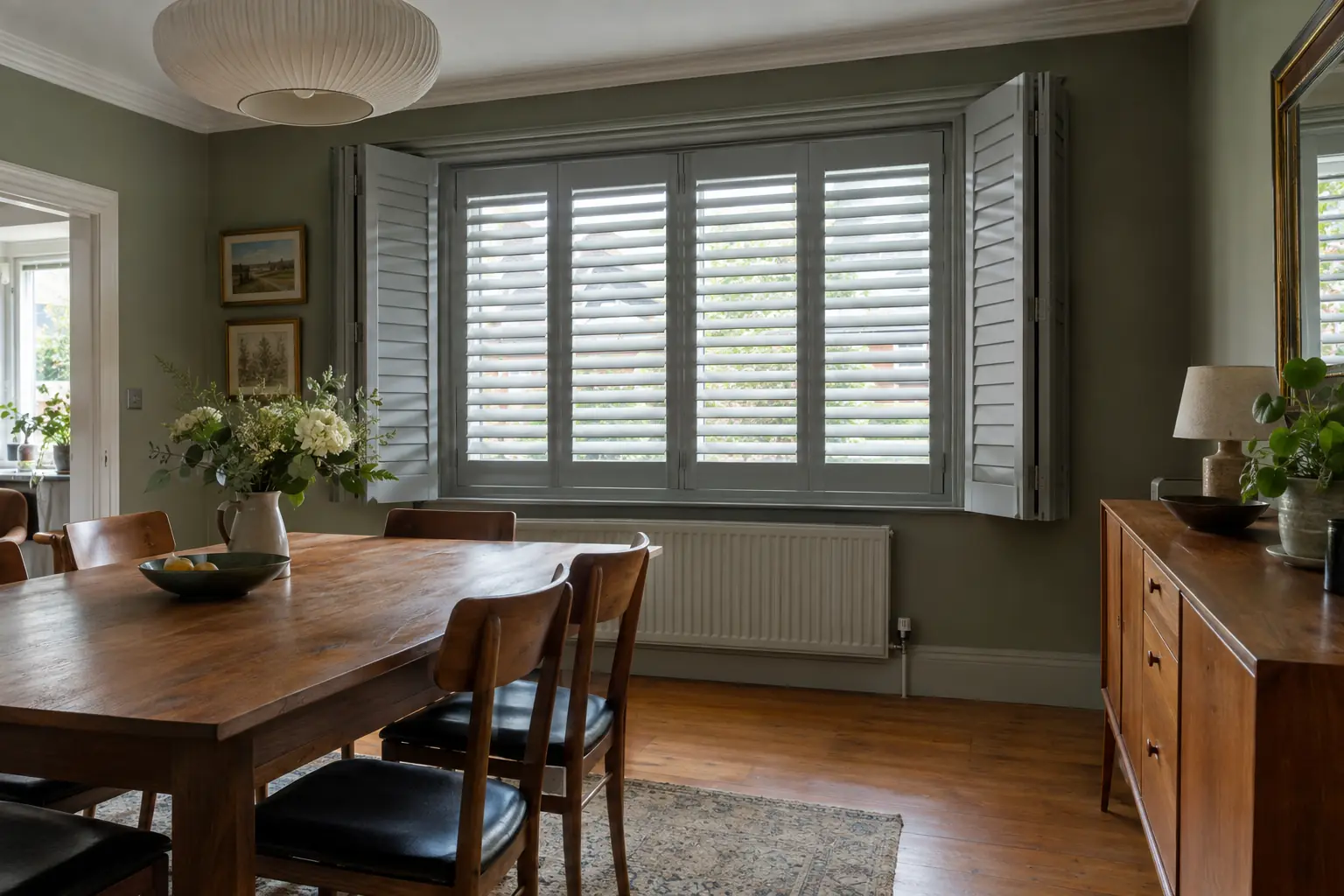
The short answer
For shutters, the advisor measures every opening for the order, and it is worth leaving that to us: a shutter is rigid, so errors a fabric blind would hide stop the panels closing properly. What decides the fit is the depth of the reveal, anything projecting from the window such as handles, how the window opens, how far the opening is out of square, and the space the panels need to fold back into. You can usefully note all of those before we visit.
- Shutters are rigid, so a few millimetres out shows as panels that will not meet or louvres that catch.
- The reveal needs enough depth for the louvres to turn without touching the glass or the handles.
- How each window opens matters: inward-opening windows and shutters compete for the same space.
- Hinged panels need clear wall or reveal to fold back onto when they are open.
- Your advisor measures every opening for the order, so the fit is our responsibility rather than yours.
Step by step
- 1
Measure the depth of each reveal
From the face of the window frame to the front edge of the reveal, at the top, middle and bottom of each side. Shallow spots matter most.
- 2
Measure three widths and three heights
Width at the top, middle and bottom; height at the left, centre and right. Write every figure down in millimetres rather than keeping only the smallest.
- 3
Check the diagonals
Measure corner to corner both ways. Equal diagonals mean a square opening; a clear difference means the opening leans, which the advisor will want to see.
- 4
Note how each window opens
Sash, outward casement, inward-opening or tilt and turn. Inward-opening windows need the most thought, because the sash swings into the shutter's space.
- 5
Measure what projects
Handles, locks, sash catches, stays and trickle vents. Note how far each stands forward of the frame, because the louvres have to clear it.
- 6
Look either side of the window
Check for radiators, switches, curtains, furniture and adjoining walls in the space where panels will fold back when they are open.
- 7
Think about which rooms are wet
Bathrooms, en-suites and wet rooms usually call for waterproof ABS or vinyl shutters rather than timber, so mark them on your list.
- 8
Book the advisor to measure
Bring your notes to the appointment. The advisor measures every opening for the order, so the fit of the finished shutters is our responsibility.
Why shutters are less forgiving than blinds
A blind hangs. Fabric and slats give a little, and a blind that is a touch narrow at the bottom of a tapering recess still looks like a blind. A shutter is different. It is a rigid frame with hinged panels and louvres that pivot, and it has to sit true in the opening. If it is a few millimetres out, you see it: panels that do not quite meet in the middle, a gap that widens down one side, a louvre that grazes the frame every time you tilt it.
That would matter less if windows were square, but in British housing they rarely are. Stone cottages, Victorian terraces and houses that have settled over a century all have openings that lean, taper or bow a little. Made to measure means built to the opening you actually have, and for shutters that measuring is most of the job.
So while it is useful to understand your windows, the measurements a shutter is made to are taken by your advisor, at every opening, on the day. The fit is then our responsibility rather than yours.
Depth: room for the louvres to turn
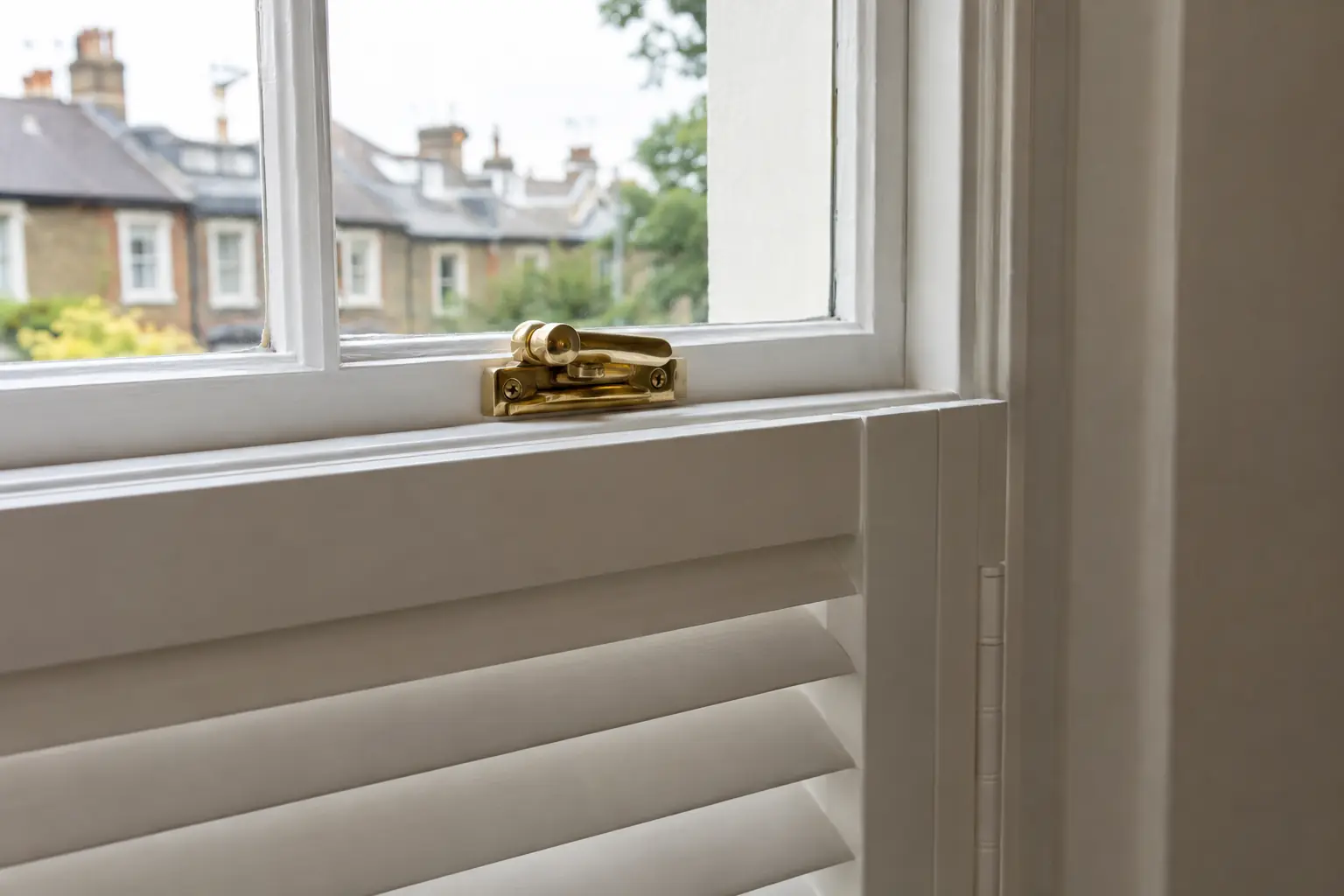
Louvres are what make a shutter useful, and they need room to move. When you tilt them open, each blade pivots, so one edge swings towards the window and the other swings into the room. Set a shutter too close to the glass and the louvres hit the window, the frame or a handle before they are fully open.
That means the depth of the reveal is one of the first things the advisor looks at. Measure it yourself from the face of the window frame to the front edge of the reveal, at the top, the middle and the bottom on each side, because plaster reveals are rarely the same depth all the way round. Then look for anything that eats into that depth: a handle, a lock, a trickle vent or a deep window board.
If the reveal is shallow, the shutter does not have to sit inside it. It can be brought forward so the louvres clear everything behind them. Which arrangement suits your window, and how it will look, is something your advisor will confirm on the day.
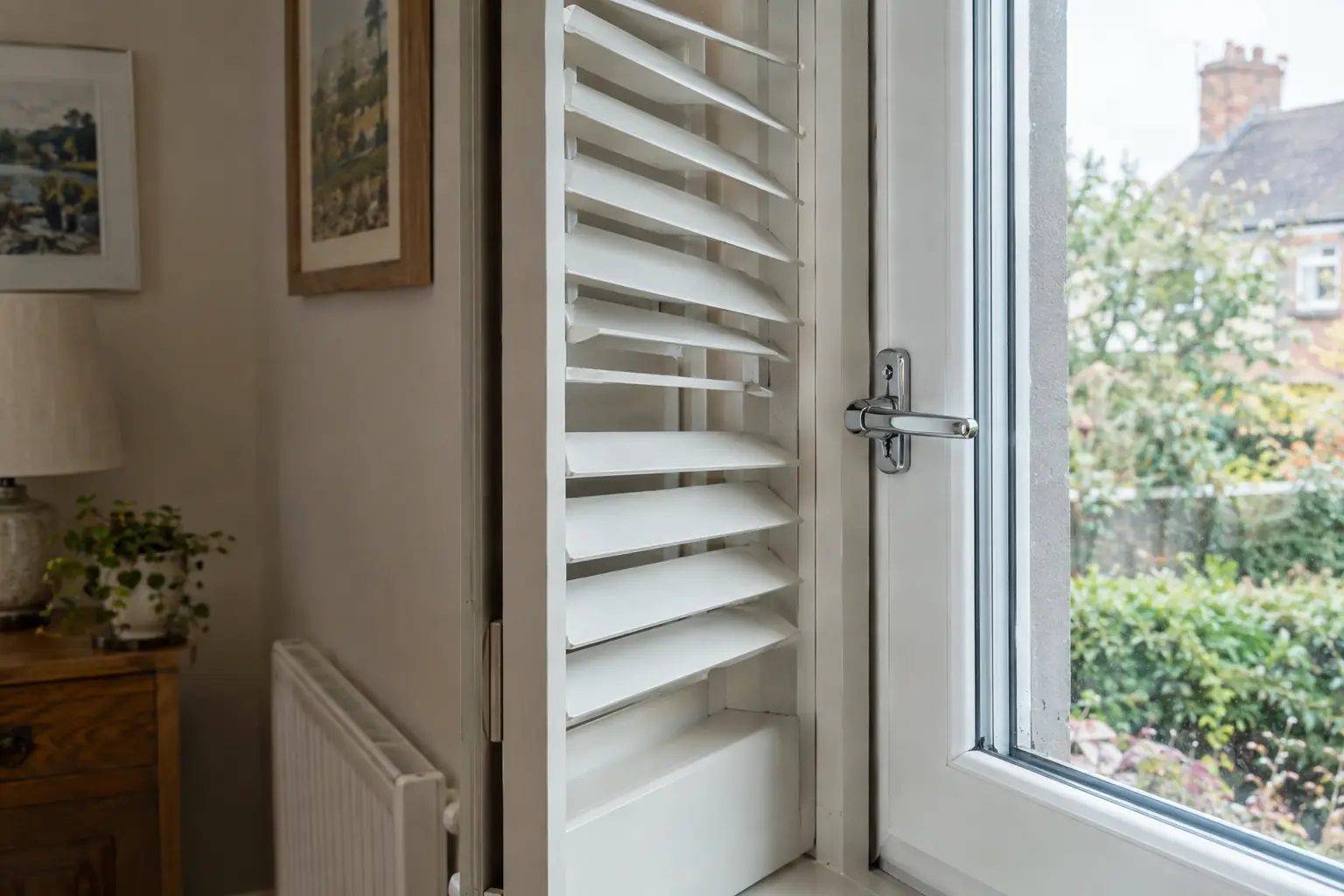
Handles, locks and how the window opens
A shutter sits in front of a window that you still want to open, so how each window opens matters as much as its size.
Sash windows slide up and down behind the shutter, which is one reason shutters are so common on them. Check the catch at the meeting rail and any lifts on the lower sash, though, because they project into the room and the louvres have to clear them.
Casement windows that open outwards are straightforward: fold the shutter panels back, then open the window as usual. Watch for tall lever handles and stays, which can stand further forward than the frame.
Windows that open inwards are the difficult ones. A tilt and turn window swings into the room, into exactly the space the shutter occupies, so the panels have to be folded right back before the window can move, and the handle has to clear the louvres even when it is closed. On some of these windows a blind that fixes to the frame and moves with the sash is the better answer, and your advisor will say so rather than sell you a shutter that gets in the way.
Out of square: how to check your own windows
You can find out how square a window is with nothing more than a tape. Measure the width of the opening at the top, the middle and the bottom, and the height at the left, the centre and the right. Then measure the two diagonals, from the top left corner to the bottom right and from the top right to the bottom left.
If the diagonals are equal, or very nearly, the opening is square even if the widths vary a little. If one diagonal is noticeably longer than the other, the opening leans. If the widths shrink towards the bottom, the reveal tapers.
None of that rules out shutters. Most shutters hang in a frame fixed in or around the opening, and it is the frame that has to be set true in an opening that may not be. What the numbers tell you is how much work that frame has to do and where any unevenness will show. Your advisor takes the same measurements and more, and will tell you on the day how the finished shutter will sit against a reveal that runs out.
Where the panels go when they are open
Hinged panels open into the room and fold back against the side of the reveal or the wall beside the window. That space has to be clear, and it is easily forgotten when you are looking at the window itself.
Walk to each window and look either side. A radiator on the side wall, a light switch in the reveal, a curtain you intend to keep, a picture, a bookcase pushed close, a wardrobe in a small bedroom or an adjoining wall in a corner can all stop a panel folding fully back. A panel that cannot open all the way leaves a strip of louvres across the glass and gets knocked every time someone passes.
Wide windows are usually split into more panels so that each one is narrower and needs less room to fold. Doors are different again: tracked shutters slide along a track and stack at one or both ends, so they need clear wall beside the door rather than room to swing.
Write down anything near each window before the appointment, including furniture you plan to move in later.
The style changes what gets measured
The style you choose decides where the shutter starts and stops, so it changes the measuring too.
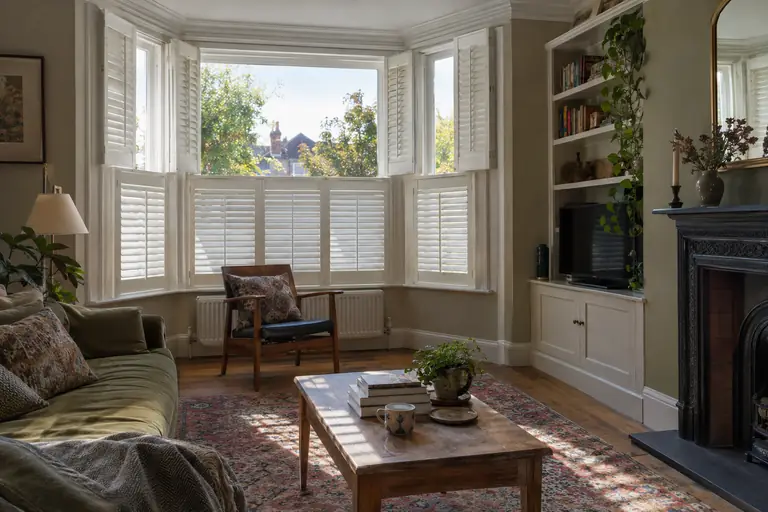
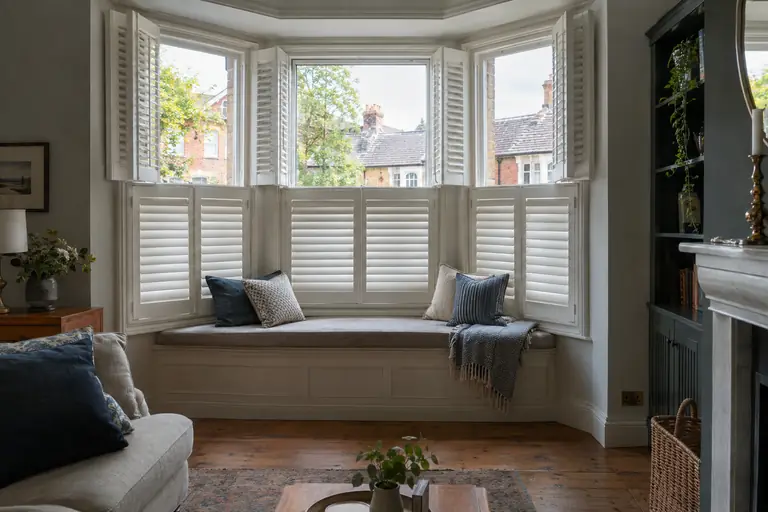
Full-height shutters cover the whole window in one run of panels, from the sill or window board to the head of the opening. Café style covers the bottom half only, and where it stops matters: it usually looks best lined up with a transom, a glazing bar or the meeting rail of a sash, so the shutter agrees with the lines of the window. Tier-on-tier splits into independent top and bottom panels, so the height of that split needs the same thought. Shaped shutters follow arched, angled and gable windows, and the shape itself has to be taken on site. Solid panels have no louvres at all.
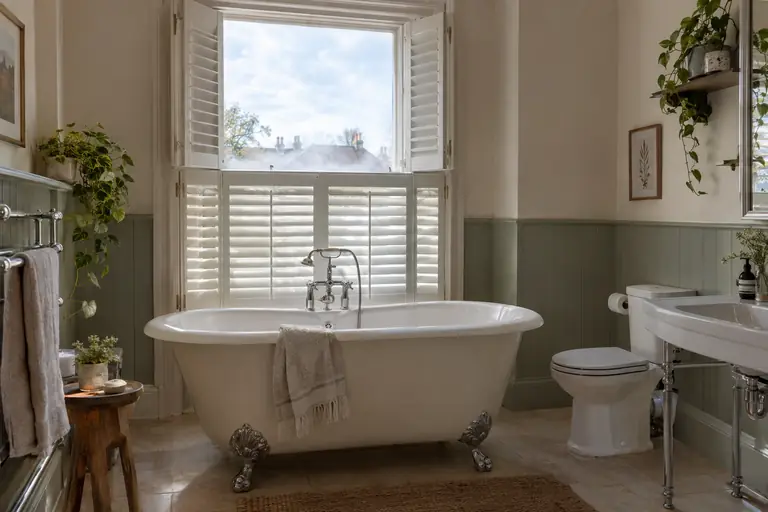
Material follows the room. Hardwood and engineered wood suit most living rooms and bedrooms, while waterproof ABS or vinyl is the choice for bathrooms and wet rooms, where steam would move real timber.
You do not need to have decided before the appointment. The advisor brings the range, and our shutter styles guide explains each option in more detail.