The short answer
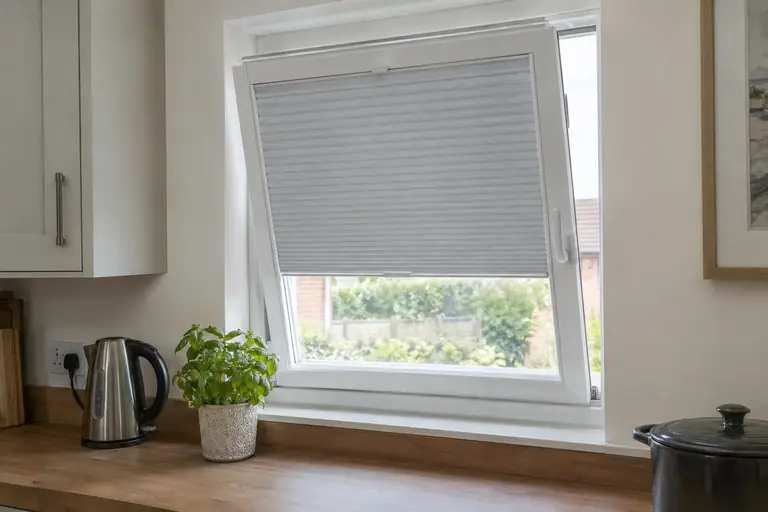
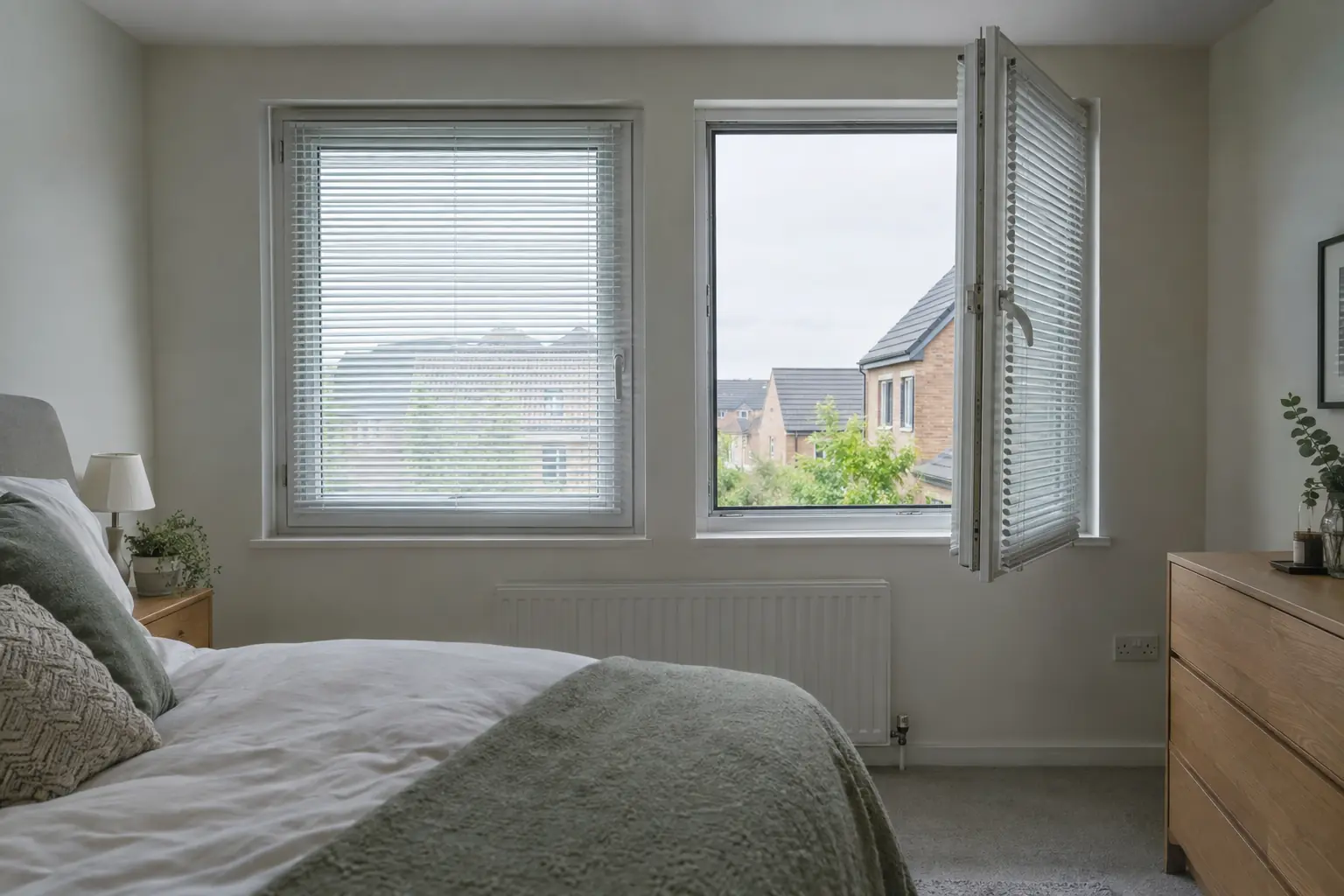
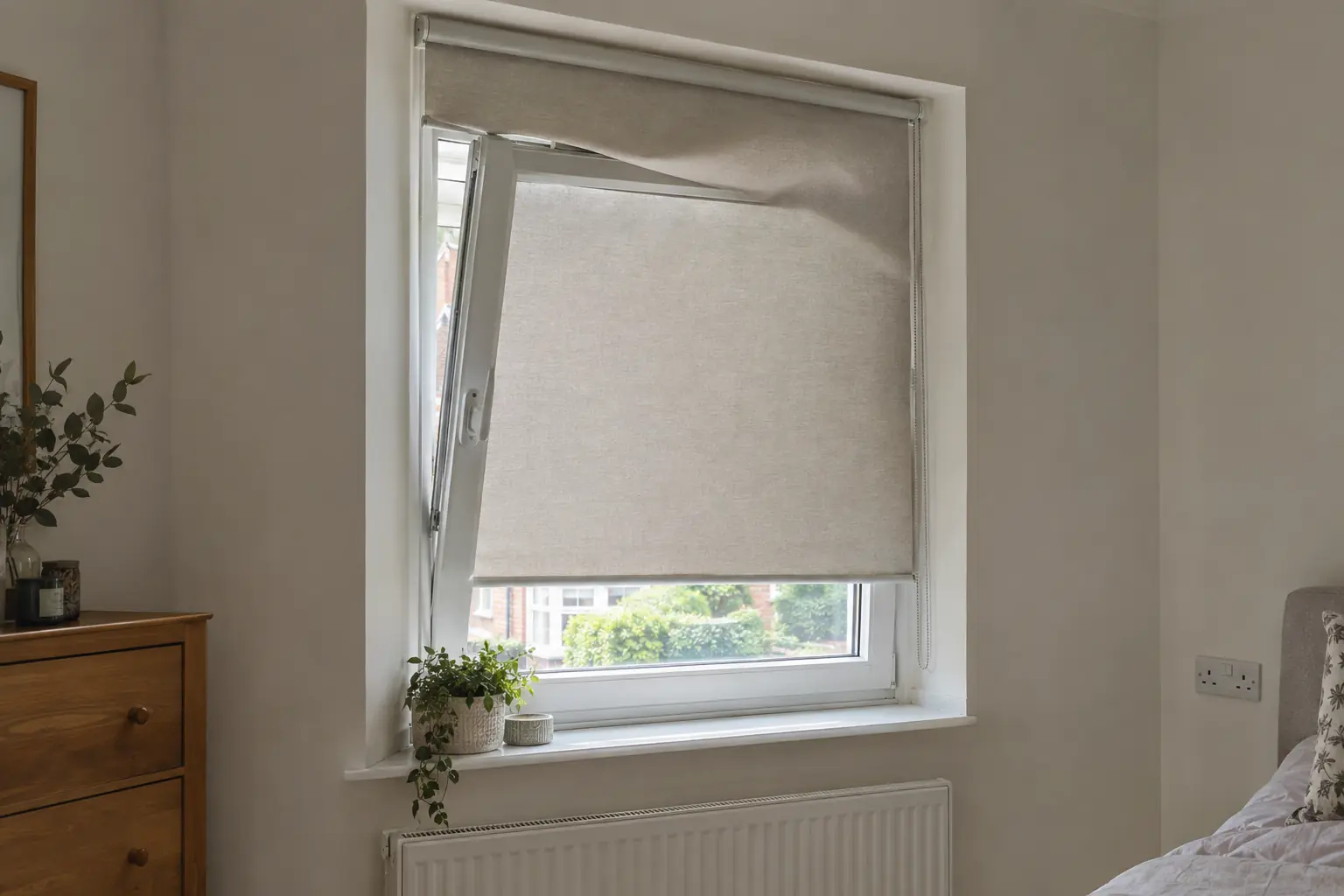
Because a tilt and turn window opens inwards, a blind in the recess or on the wall above is in the way every time you open it. The usual answer is a blind fixed to the sash, such as a perfect fit blind that clips into the rubber gasket round the glass without drilling, so it tilts and turns with the window. It is measured to the glass and beading of each sash rather than the recess. Your advisor checks the frames on the day.
- Tilt and turn windows open into the room, so a blind hanging in front of them gets in the way.
- A blind fixed to the sash moves with the window, so you can tilt it open for air with the blind down.
- Perfect fit blinds clip into the rubber gasket of uPVC or aluminium frames, with no drilling.
- Sash-fitted blinds are measured to the glass and beading of each sash, not to the recess.
- Your advisor checks the gasket on each window before quoting, because not every frame can take them.
Step by step
- 1
Check how each window opens
Turn each handle to the side and upright to see whether the window turns, tilts or both. Note which windows are fixed panes that do not open at all.
- 2
Identify the frame material
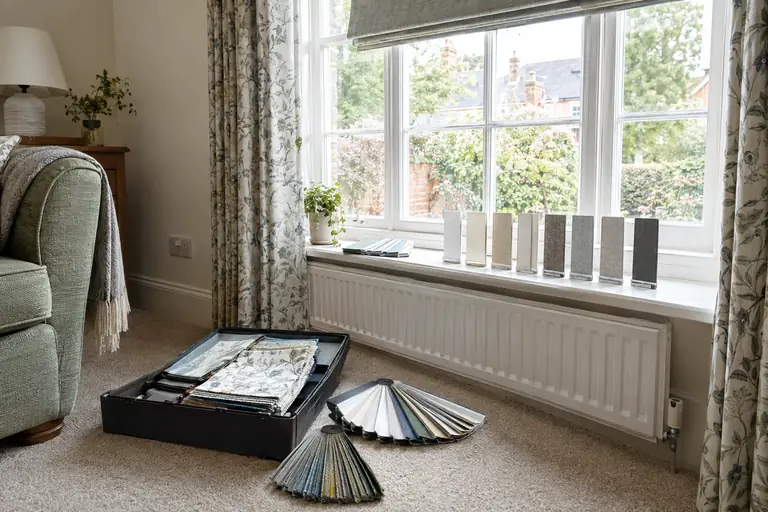
uPVC and aluminium frames can often take a clip-in blind. Timber frames usually cannot, which points towards a different fit.
- 3
Look at the gasket round the glass
Find the rubber seal where the glass meets the sash. A clip-in blind needs a gasket deep enough to hold its clips, which the advisor checks.
- 4
Measure each sash separately
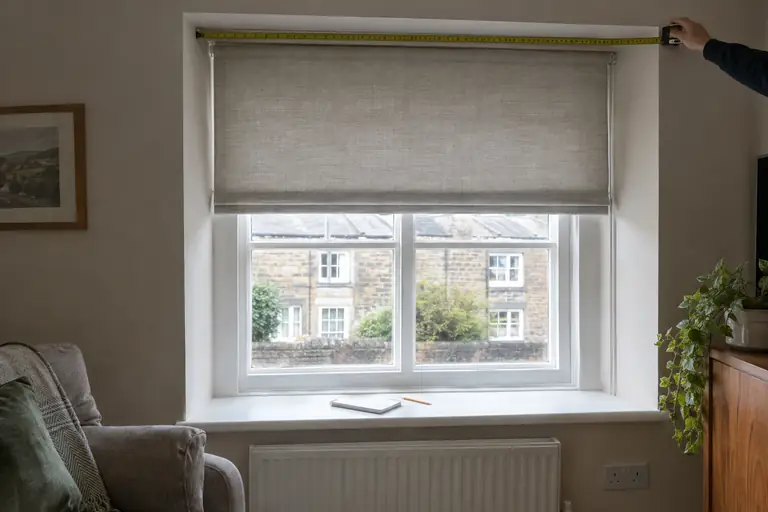
Measure the width and height of the glass with its beading on every sash, in more than one place, in millimetres.
- 5
Measure the handle
Measure how far the handle stands forward of the glass. Whatever the fit, the handle has to turn without catching on the blind.
- 6
Check the space above the window
If you are considering a blind on the wall above, measure from the top of the frame to the ceiling or coving and note how far the sash swings in.
- 7
Book the advisor to measure
Your advisor measures every sash, checks each gasket and handle, and recommends the fit that suits each window. The fit is then our responsibility.
How a tilt and turn window moves
A tilt and turn window does two different things from one handle. With the handle pointing down, the window is shut and locked. Turn the handle to the side and the whole sash swings into the room on hinges down one edge, like a door, so you can clean the outside of the glass or open the room up completely. Turn the handle upright and the sash tips inwards at the top instead, hinged along its bottom edge, leaving a gap along the top for air.
You find them on modern uPVC and aluminium windows, in new-build houses, flats and loft conversions in particular, and they are well liked for good reason. Both movements have one thing in common, though: the sash comes into the room. In turn mode it sweeps across the whole depth of the reveal and beyond. In tilt mode the top edge leans in over the sill.
That is the whole problem with dressing them. Whatever hangs in front of the window is in the space the sash wants to move through.
Why an ordinary blind gets in the way
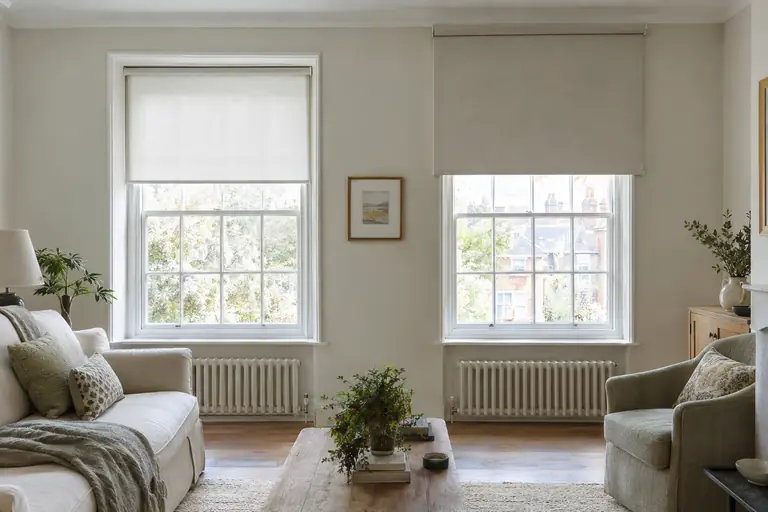
Take a roller blind fitted inside the recess. With the blind down, the window cannot turn open at all, because the sash would swing straight into the fabric. Tilting is no better: the top of the sash leans in and presses against the blind. So the blind has to go up every time you want air, and even raised, the roll sits at the top of the recess, which is just where the top edge of a tilting sash travels.
Move the blind outside the recess, onto the wall above, and things improve only if it is fixed high enough for the raised roll or stack to clear the sash as it swings in. With the blind down, you still cannot open the window.
Then there is the handle. Tilt and turn handles are chunky and stand well forward of the frame, and a blind hanging in the recess has to clear it without rubbing. In a shallow reveal, that alone can rule out a recess fit.
None of this makes an ordinary blind impossible. It just means you live with raising it every time you open the window, which on a bedroom window you open every morning quickly gets old.
Blinds that fix to the sash
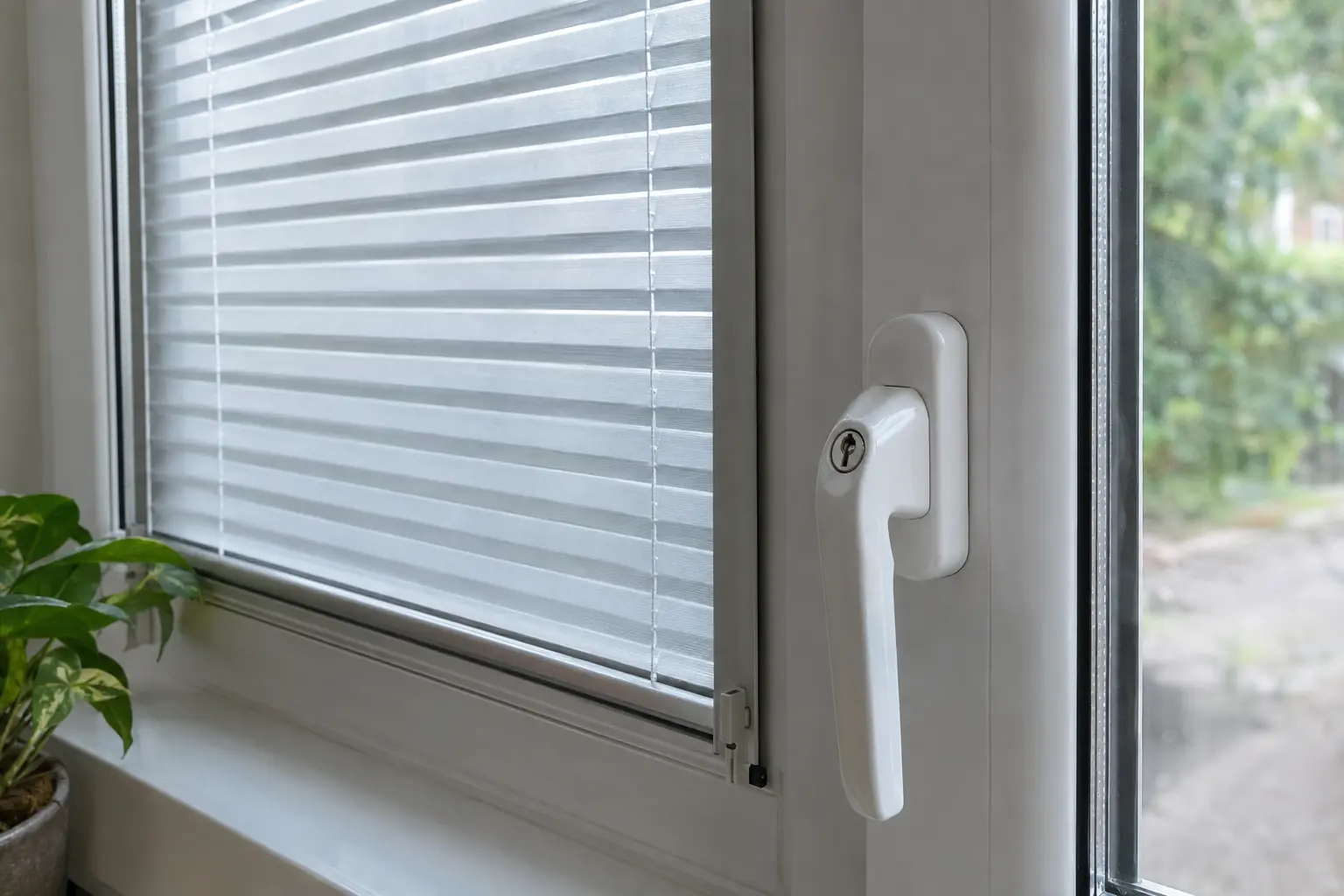
The neat solution is to fix the blind to the moving part of the window rather than the wall around it. A perfect fit blind sits in its own slim frame, and that frame clips into the rubber gasket that holds the glass in the sash. Nothing is drilled into the window. Because the blind is attached to the sash, it goes wherever the sash goes: tilt the window for air and the blind tilts with it, turn it open to clean and the blind swings open too.
That changes how you use the window. You can leave the blind down for privacy or shade and still tip the window open on a warm night. The handle stays in front of the blind and works as normal, and the recess, the sill and the wall round the window are left clear.
It does have requirements. The frame needs to be uPVC or aluminium, with a gasket deep enough to take the clips. Timber windows and older frames usually cannot take it. Your advisor looks at the gasket on each window before quoting a perfect fit blind, and will tell you on the day if another fit would suit your frames better.
How a sash-fitted blind is measured
Because a sash-fitted blind lives on the window rather than in the recess, the recess measurements that matter for an ordinary blind hardly come into it. What gets measured is each sash: the width and height of the glass and the beading round it, and the depth of the gasket the blind has to clip into.
That has a useful side effect in older or uneven houses. A plaster reveal can taper or lean, but a factory-made sash is usually far squarer than the opening around it, so a blind made to the sash sidesteps a wonky recess altogether.
Measure every sash on its own. A run of windows that look identical can differ by a few millimetres, and a clip-in frame has less room for error than a blind hanging loose in a recess. If a window has a fixed pane beside the opening sash, it is worth dressing both the same way, so the blinds line up and the window reads as one.
The handle still gets a look. The blind sits back against the glass, inside the beading, and the handle has to operate in front of it without catching. Your advisor measures every sash and checks the handle clearance for the order.
Other ways to dress a tilt and turn window
A sash-fitted blind is not the only answer, and it is not right for every room.
If you prefer the look of a roller or roman blind, or your frames cannot take a clip-in blind, an exact fit on the wall well above the opening can work. It needs enough wall above the window for the raised blind to clear the sash as it swings in, and you have to raise it before opening the window. It suits windows you open occasionally rather than every day.
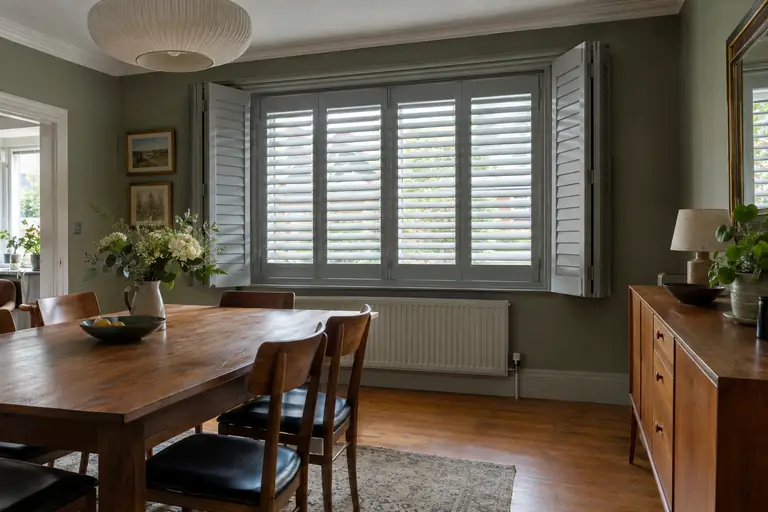
Curtains are often easier than people expect. On a pole or track that runs past the window, they draw right back off the glass, and the sash can swing in between them. Combined with a sash-fitted blind for privacy, that gives you softness and warmth without anything getting in the way.
Shutters are harder. The sash swings into the space where the panels hang, so they have to be folded fully back before the window can open, and the handle can foul the louvres. On many tilt and turn windows a frame-fitted blind simply does the job better, and your advisor will tell you plainly if that is the case for yours.
Air, privacy and cleaning day to day
The reason most people choose a sash-fitted blind is that it lets the window do what it was designed to do. On a summer night, you can tilt the window for air with the blind down, keeping the room private and shaded while the gap at the top ventilates it. In a bathroom or a ground-floor bedroom that combination of air and privacy is the whole point.
It also keeps the window easy to clean. Turn the sash fully open and both sides of the glass are within reach, with the blind swinging out of the way with it. For the blind itself, dust slats or pleats with a soft brush or a dry cloth, and wipe PVC or faux wood slats with a damp cloth.
Children's rooms need a little more thought. RoSPA advises never fitting a blind with a looped cord or chain in a child's bedroom, so ask your advisor which options for your window have none. Wherever a corded blind is the right choice elsewhere in the house, it comes with the child-safety devices UK regulations require, and the fitter puts them up and demonstrates them.