The short answer
Full height covers the whole window in one run of louvres and suits most modern windows. Café style covers the lower part only, for street-level privacy with the top left clear. Tier-on-tier splits into top and bottom panels that open separately, the usual answer for a front room. Solid panels replace louvres for the darkest result. Shaped shutters follow arches and angles, and tracked panels slide across wide doors.
- Full height is the cleanest look and the style most modern windows end up with.
- Café style covers only the lower part, so the top of the window keeps its light and view.
- Tier-on-tier lets you open the top and keep the bottom closed, which suits street-facing rooms.
- Solid panels have no louvres and are the darkest shutter we make.
- Shaped and tracked shutters cover arches, angles and wide doors that a standard panel cannot.
Shutter styles
Swipe to see the whole diagram
Full height covers the whole window; café style covers the bottom half; tier-on-tier opens top and bottom separately; tracked panels slide across doors.
Why the style matters more than the colour
Most people start with the finish. It is worth starting with the style instead, because the style decides how the shutter behaves every day: what you can open independently, what you can see out of, and how much privacy you keep while the light comes in.
A useful way to choose is to stand in the room at the times you use it. In the morning, do you want the whole window bright, or just the top? In the evening, with the lamps on, what can the street see? Is there a sash you open for air, a door you walk through, or a shape at the top of the window that a rectangle will not cover?
The six styles below answer those questions in different ways. Several can be combined in the same house, so it is less a matter of picking one than of matching each window to the style that suits it. Your advisor brings the full sample range to the appointment and can hold the options against the actual window, which is the only way to judge how much light each one keeps.
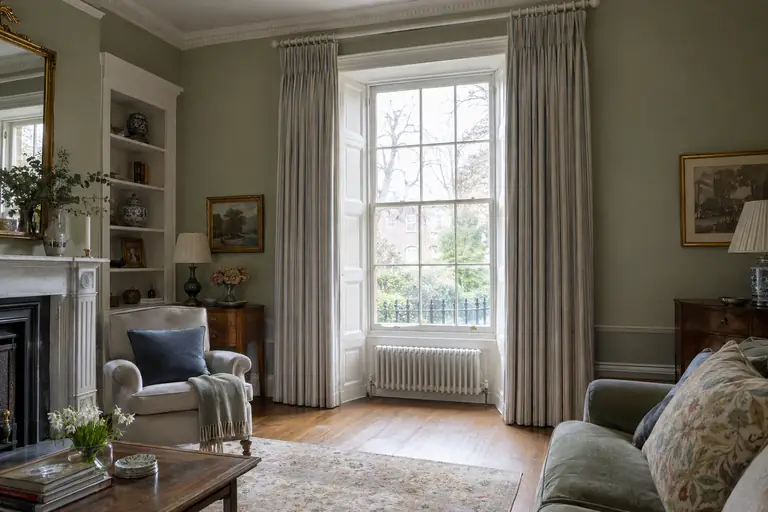
Full height: one run from sill to head
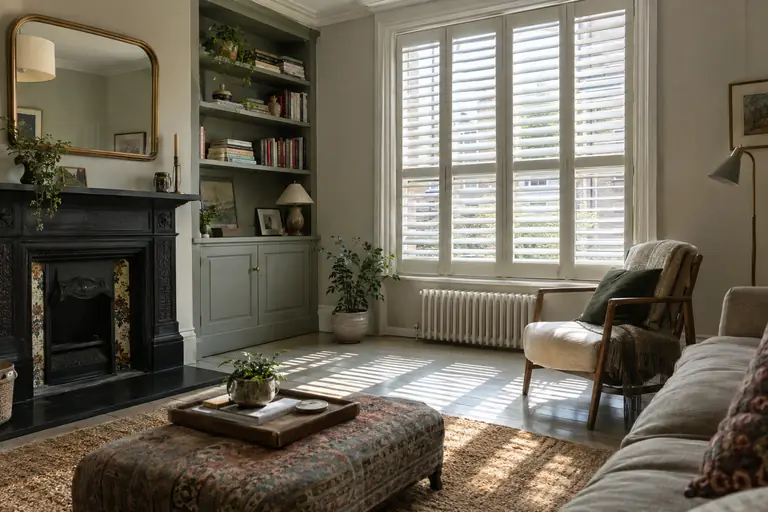
A full-height shutter covers the whole window with one run of louvres from the sill to the head. Close it and the window becomes a single, calm surface; tilt the louvres and the whole window brightens together. It is the cleanest look and the style most modern windows end up with, from a bedroom casement to a tall living-room window.
Each panel swings open as one piece, so a full-height shutter cannot give you a closed bottom half and a fully open top half at the same time. Tilting the louvres part-closed does a good job of both light and privacy, but if the window faces a pavement and you want sky at the top with the bottom shut, tier-on-tier is the better match.
Tall panels usually have a mid-rail, a horizontal bar that adds strength and divides the louvres. If the window has a transom or the meeting rail of a sash, put the mid-rail at the same height, and the shutter follows the lines of the window instead of cutting across them. Your advisor will show you where it would sit on yours.
Café style: privacy at street level
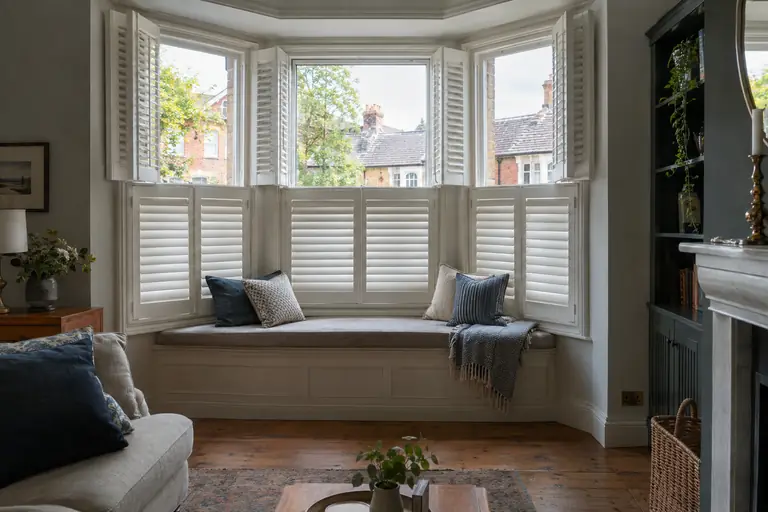
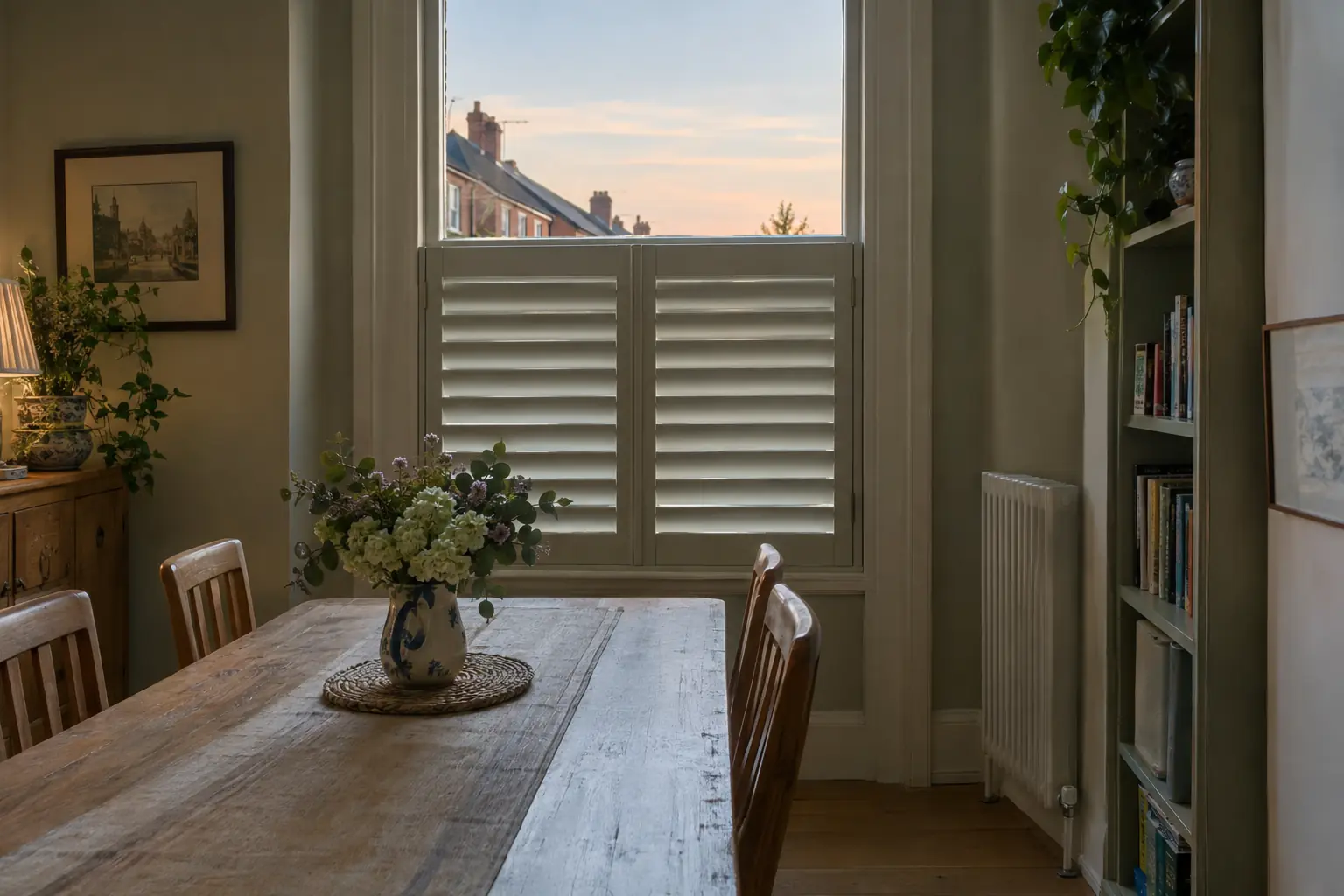
Café-style shutters cover the lower part of the window only. You get privacy where people walk past, while the top of the window carries on doing its job: letting in daylight and showing you the sky, the trees or the rooftops opposite.
They suit rooms where the problem is being overlooked from the pavement or next door's garden rather than too much light: a kitchen at the front of the house, a ground-floor bathroom, a dining room on a busy street. They are also a lighter look than a full shutter, and they keep a small window feeling open.
The thing to think about is the evening. With the lamps on and the top of the window uncovered, the upper half is on show. In a bathroom with frosted upper glass that rarely matters. In a living room it might, and the usual answer is curtains on a pole above the window, drawn at night and left open by day. Your advisor will suggest where the café panels should stop, usually in line with a sash rail or transom so the break looks deliberate.
Tier-on-tier: top and bottom open separately
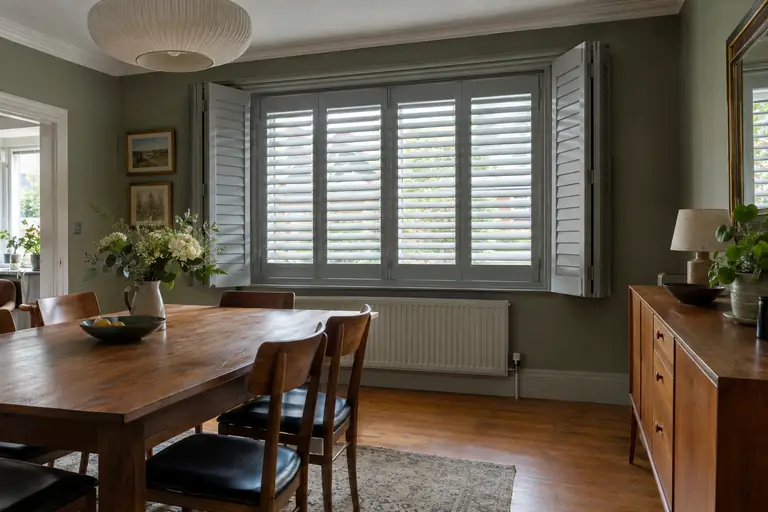
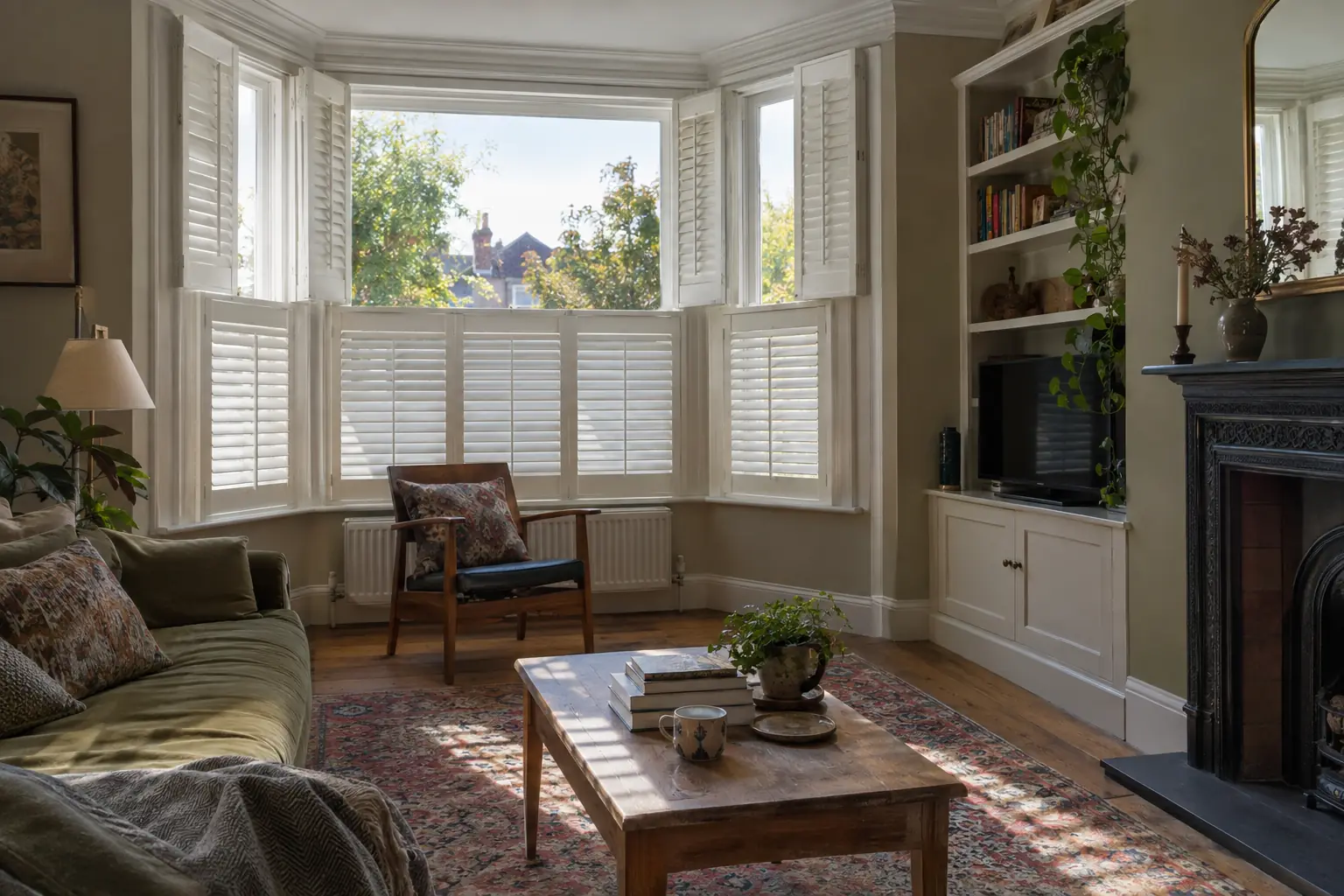
Tier-on-tier shutters split each window into two sets of panels, one above the other, each hinged and opening on its own. Fold the top tier back for daylight and sky, keep the bottom tier closed for privacy, and tilt the louvres in either tier as you like. At night, close both.
It is the usual answer for a front room on a street, and it suits sash windows particularly well, because the split can line up with the meeting rail where the two sashes meet. In a bay it lets every face do the same thing, so the whole bay can be open at the top and private below.
Because tier-on-tier has twice as many hinged panels and more frame, it costs more than a full-height shutter of the same size. Both tiers need to fold clear of handles, catches and the window board. If you only ever want the top open, café style may do the same job with less; if you want the choice from one day to the next, tier-on-tier gives it to you.
Solid panels: the darkest shutter
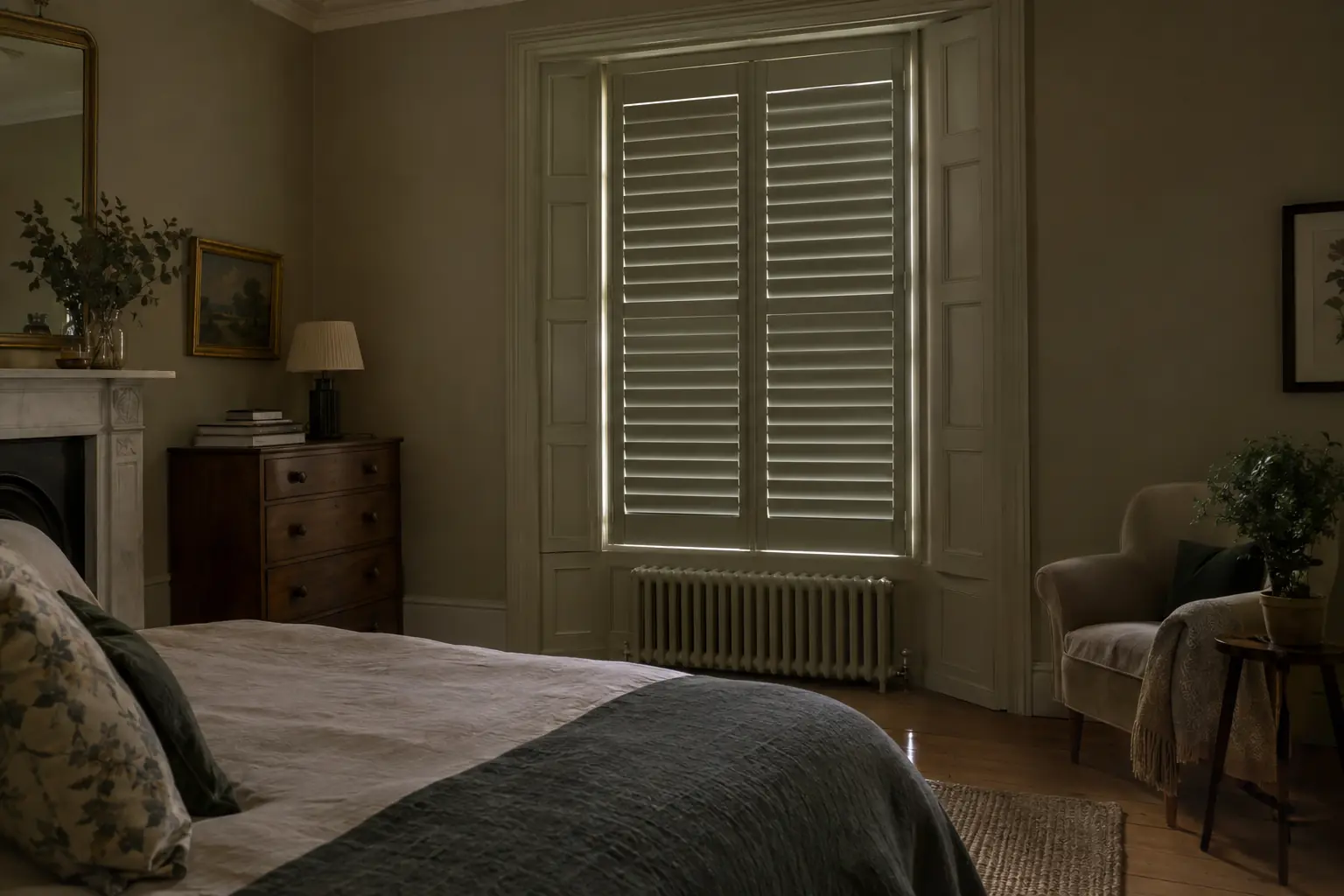
Solid shutters replace the louvres with raised panels. Closed, they cover the window completely, with no blades for light to slip past, which makes them the darkest shutter we make. Open, they fold back against the reveal or the wall like a pair of cupboard doors.
They belong in period rooms more than anywhere. Many Georgian and Victorian houses were built with solid internal shutters, and a solid panel in a box sash or a panelled room looks entirely at home. They also suit bedrooms where darkness matters more than the ability to tilt light in, and ground-floor rooms where you want the window fully closed at night.
What you give up is the setting in between. A solid shutter is open or closed, so on a bright day there is no halfway point between full sun and none. That is why solid panels are more often chosen for bedrooms than for living rooms, or for windows that also have a blind or curtains for daytime.
Shaped and tracked: for openings that are not rectangles
Two styles exist for openings that an ordinary hinged panel cannot cover.
Shaped shutters follow arches, angled tops and gable ends. The shape is templated on site rather than squeezed into a rectangle, then built as a set, so the frame fits the curve or the slope. Depending on the shape, some sections open and some may be fixed; your advisor will tell you what your window allows before you order.
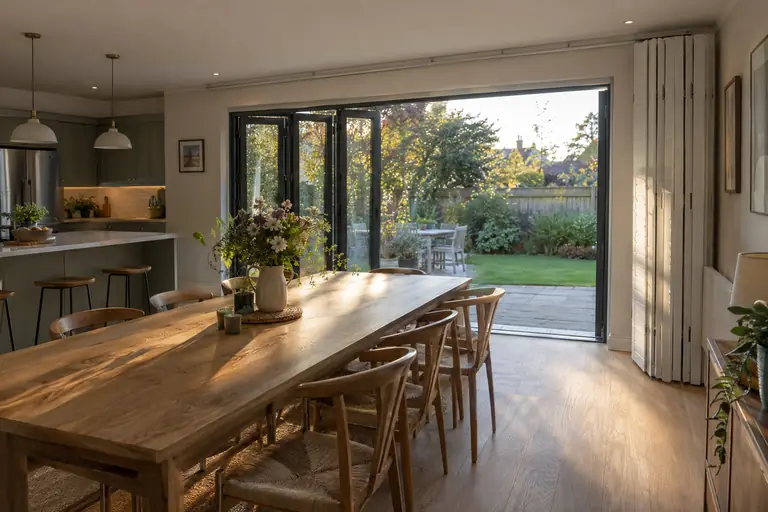
Tracked shutters run on a track overhead: the panels glide sideways and gather at one end rather than swinging out on hinges. They are made for wide patio runs and bi-fold doors, where hinged panels would be too large or would get in the way every time you walked through. The stacked panels need somewhere to sit, at one or both ends of the track, and deciding which end is one of the first questions on any door.
Both are covered in more depth in our guide to tracked and shaped shutters, including how to plan the stack around a bi-fold.
Combining styles in one house
Few houses need one style throughout. A common pattern is tier-on-tier on the street-facing ground floor, full height upstairs where nobody looks in, café style in the kitchen, solid panels in a bedroom that needs darkness, and tracked panels across the doors to the garden.
A few rules keep a mixed scheme looking deliberate. On a single wall, stick to one style so the windows read as a set. Where styles do change, keep the louvre width and the finish the same, so the difference looks intended rather than accidental. Line up the break of a tier-on-tier or café panel with the window's own bars, and keep that height consistent from window to window across the front of the house, because the street sees them side by side.
Finally, think about what else hangs at the window. Curtains over shutters add warmth and softness, and a pole set above and wider than the reveal lets them draw clear of the panels. Your advisor can go through the whole house at one appointment, window by window.
Side by side
Full height
- What it covers
- The whole window, sill to head, in one run of louvres
- Light and privacy
- Tilt the louvres for the balance you want; each panel opens as one piece
- Best for
- Most modern windows, bedrooms and living rooms
- Watch for
- Tall panels usually have a mid-rail; line it up with the window's own bars
Café style
- What it covers
- The lower part of the window only
- Light and privacy
- Privacy at street level, full daylight above
- Best for
- Kitchens, ground-floor bathrooms, rooms on a pavement
- Watch for
- The top is uncovered at night; add curtains if that matters
Tier-on-tier
- What it covers
- The whole window, in separate top and bottom panels
- Light and privacy
- Open the top for light and keep the bottom closed for privacy
- Best for
- Street-facing front rooms, sash windows and bays
- Watch for
- More panels and frame, so it sits above a full-height quote
Solid panel
- What it covers
- The whole window, with raised panels instead of louvres
- Light and privacy
- The darkest shutter, and total privacy when closed
- Best for
- Period rooms, box sashes, bedrooms that need dark
- Watch for
- No louvres to tilt, so it is either open or closed
Shaped
- What it covers
- Arches, angled tops and gable ends
- Light and privacy
- Depends on the shape; some sections may be fixed
- Best for
- Arched landings, loft gables, angled windows
- Watch for
- Templated on site and built as a set
Tracked
- What it covers
- Wide doors and spans, with panels that slide on a track
- Light and privacy
- Slide panels across the glass or stack them to one side
- Best for
- Patio doors, bi-folds and other wide doors
- Watch for
- The stack needs space at one or both ends