The short answer
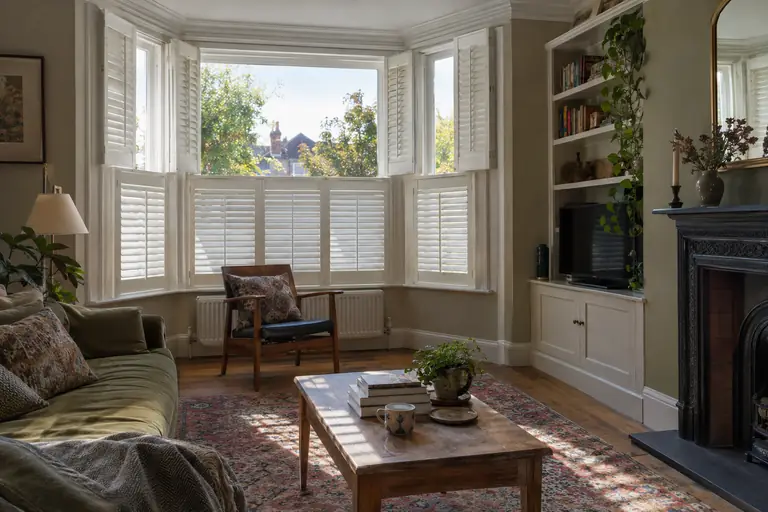
Shutters suit bays because each face gets its own frame, and the whole set is built together so the angles meet cleanly and the louvres line up all the way round. Tier-on-tier is the usual choice for a street-facing bay, with the top open for light and the bottom closed for privacy. Every face is measured on its own, because bays are rarely symmetrical, and your advisor takes the angles on site.
- Each face of a bay is measured and made on its own, then built as a set.
- How the frames meet at the corners is worked out on site, from the real angles.
- Tier-on-tier suits most street-facing bays; full height gives the calmest look.
- Plan where the panels fold back, especially over a window seat or radiator.
- Curved bow windows need careful thought, because shutter panels are flat.
Why shutters suit a bay
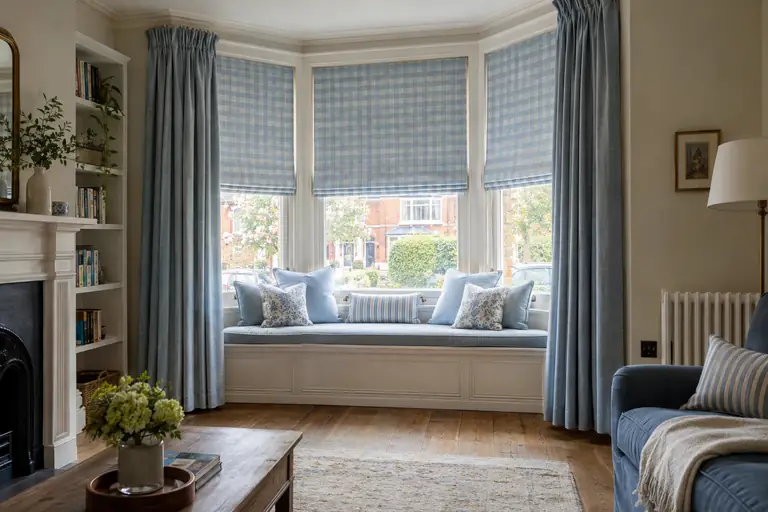
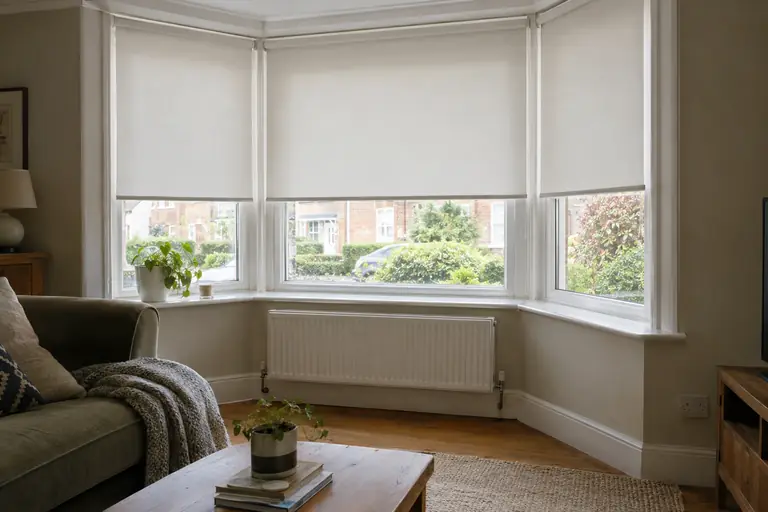
A bay is several windows that have to look like one. With blinds, each face gets its own blind, and however carefully they are made, the gaps at the corners and the separate headrails read as separate objects. Curtains need a pole or track shaped to the angles, and they take up wall and floor space when they are open.
Shutters are different, because they are fitted to the bay rather than hung in front of it. Each face has its own frame and panels, but they are made together, finished together and fitted together, so the louvres run at the same height all the way round and the corners meet as joinery rather than as gaps. Close them at night and the bay becomes a single wall; tilt the louvres by day and the light comes through evenly from every angle.
That is why a bay is often the first window people shutter, even in a house where the other rooms have blinds. It is also where the survey matters most. A splayed bay has to be templated on site and built as a set, and if the angles are wrong the frames simply will not close.
The angles, and how the frames meet
No two bays are quite the same. The side faces of a splayed bay meet the front at angles that vary from house to house, and on older bays they often differ from one side of the same bay to the other. Walls lean, sills slope, and the centre face is rarely the width you would guess from the pavement.
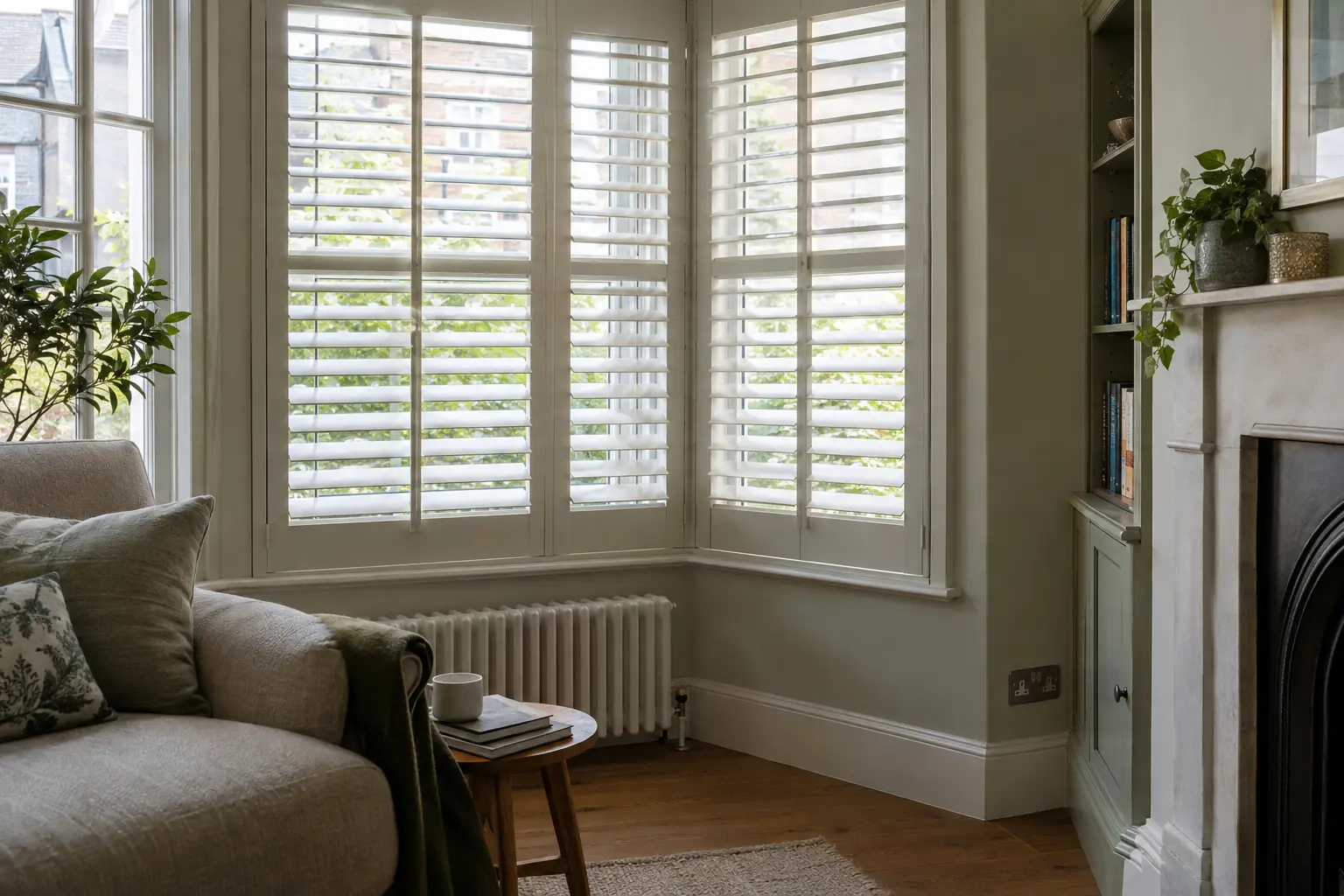
So the angles are taken on site, face by face, and the frames are made to them. Where two faces meet, the frames have to join so that the panels on either side can open without catching each other, and the corner looks finished when everything is closed. How that corner is built depends on the angle and the depth of the reveal, and your advisor will explain what they plan for your bay before anything is ordered.
It is worth asking in particular how the panels open at the corners. A panel that folds back towards its neighbour needs the louvres on both to clear, and in a tight bay that can decide the louvre width or how many panels each face is split into.
Which style suits your bay
The right style depends on what the bay looks out on.
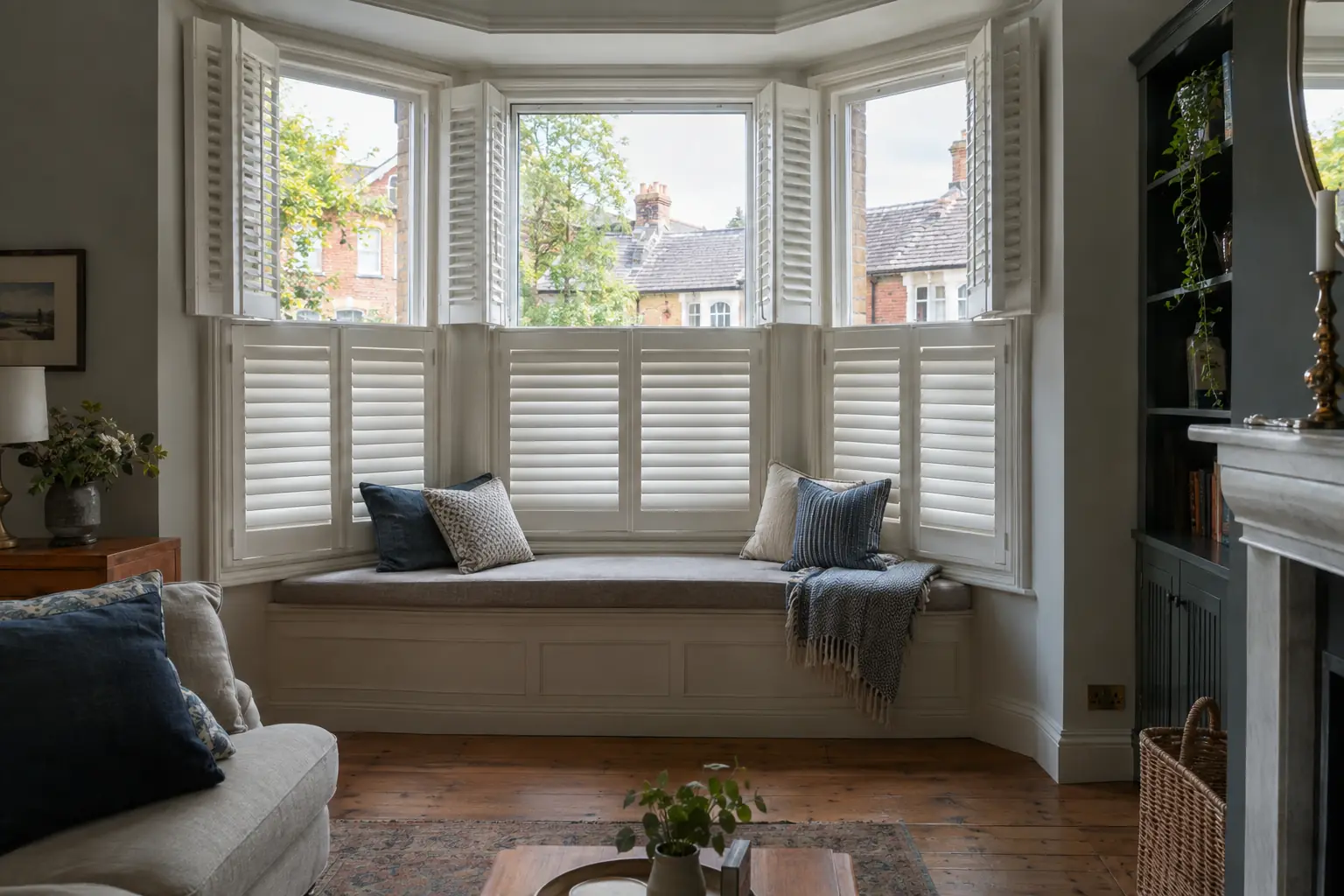
A bay facing a street or a path is the classic place for tier-on-tier. With the top tier folded open and the bottom closed, you get sky and daylight from every face while nobody on the pavement can see in. At night, closing both tiers turns the bay back into part of a private room. The split should run at the same height on every face, ideally in line with the sash meeting rails.
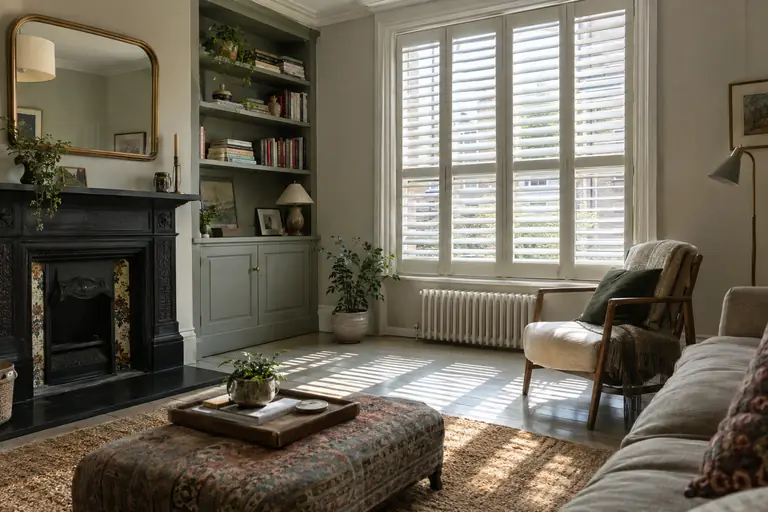
A bay facing a garden, or on an upper floor, often suits full height. It is the calmest look, and tilting the louvres gives enough privacy for most rooms. Café style works on a ground-floor bay where the only concern is the pavement, and suits a dining or kitchen bay that does not need covering at night.
Whatever you choose, use the same style, louvre width and finish on every face. A bay is read as one window from inside and from the street, and any difference between the faces shows at once.
Splayed, box and bow bays
Bays come in three broad shapes, and each asks something slightly different of a shutter.
A splayed bay, with angled sides, is the common Victorian and Edwardian shape and the one shutters are most often made for. The work is in the angles and the corners.
A box bay has square sides, like a small room pushed out from the house. The corners are right angles, which keeps the frames simpler, but the side windows are often narrow, so the panel sizes and the direction each one folds need care.
A bow window curves. Shutter panels are flat, so on a curved bay the curve has to be followed by a series of flat faces, and whether that works depends on how many panes there are and how deep the reveal is. This is the bay to talk through most carefully, and your advisor will say on the day whether shutters are the right answer or whether a set of made-to-measure blinds will sit better.
Whatever the shape, the bay is measured by the person responsible for the fit, so the risk of a frame that will not close is ours rather than yours.
Window seats, radiators and where the panels go
The space inside a bay is rarely empty. Many have a window seat, a radiator under the sill, a deep window board or a desk pushed into the light, and each affects how a shutter opens.
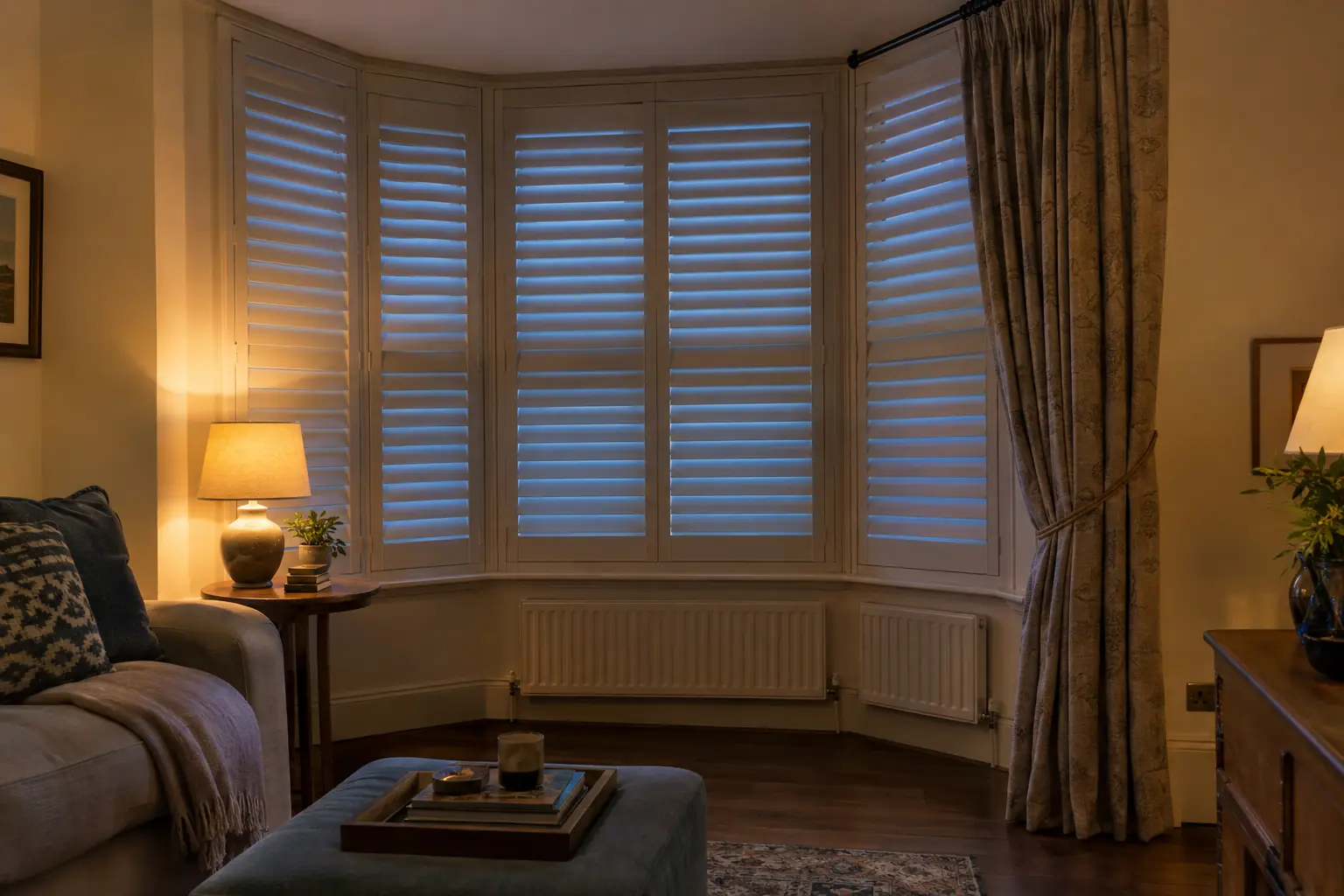
Hinged panels fold back against the reveal, the wall or the next panel. If there is a window seat with cushions, the lower panels need to clear them. If there is a radiator, the panels should not rest against it, and closed louvres over a radiator will keep some of its warmth in the bay rather than the room. A deep window board can give the frame something to sit on, or it can be in the way; your advisor will look at it.
In practice, many people find they rarely open the panels in a bay. With the louvres tilted open the light is good and the view is filtered but still there, and the panels only fold back on the brightest days or to clean the glass. If that is how you expect to use the room, it takes some of the pressure off where the panels fold.
Measuring a bay
A bay is the one window you should never measure as a single opening. Each face is measured on its own, in several places, because a bay that looks symmetrical from the pavement rarely is from inside.
You can take rough measurements yourself if you want an idea of sizes before anyone visits, and our online measuring tool will give you a range from a photograph. For an order, your advisor measures every face at the free home appointment, records the angles and the depth of each reveal, and notes everything that projects into the space: handles, catches, sash lifts and trickle vents. That makes the fit our responsibility rather than yours.
The appointment is also the time to settle the details that only show in the room itself: where the tier split falls, which panels fold which way, and how the corners will be finished. Our guide to measuring bay windows goes through what is measured and why, for blinds and curtains as well as shutters.
Warmth in a bay window
Bays have more glass and more outside wall than a flat window of the same width, which is why they are often the coldest corner of a room, especially in older houses where the glazing is original.
Shutters add insulation at the window. Closed at night, they hold a layer of still air against the glass and cut the chill that comes off the panes into the room. In a bay they do it on every face at once, without the gaps at the corners that you get with separate blinds.
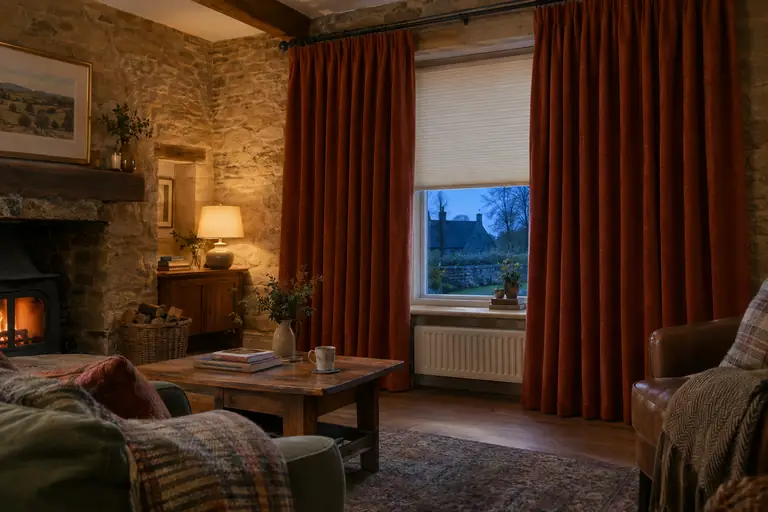
For more warmth still, curtains can hang in front of the shutters on a bay pole or track, drawn across on winter evenings and left open by day. That keeps the joinery on show most of the time and adds a heavy lined layer when it counts. Our guide to keeping your home warm with blinds and curtains looks at warmth across the whole house.
Checklist
- Note what the bay looks out on, face by face: street, garden or next door.
- Check what sits in the bay: a window seat, radiator, deep sill or desk.
- Open every window in the bay and note handles, catches and sash lifts that stick out.
- If you want the top open and the bottom closed, start with tier-on-tier.
- Use one style, louvre width and finish on every face.
- Ask your advisor how the frames will meet at each corner and which way each panel folds.
- If the bay curves, ask whether shutters or blinds will sit better.