The short answer
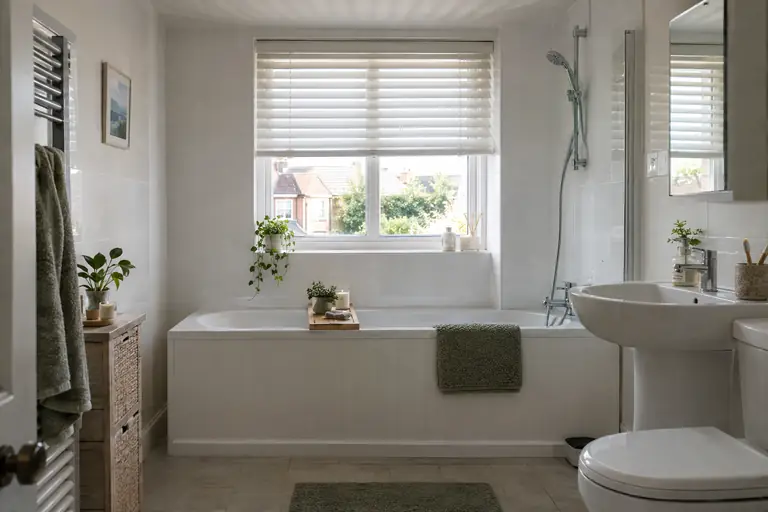
For bathrooms, en-suites and wet rooms, and any kitchen window near the sink or hob, choose shutters in waterproof ABS or vinyl, because steam moves real timber and lifts a painted finish. Café style or tier-on-tier keeps privacy low with light and air above. Make sure the panels fold clear so you can open the window to let steam out, and wipe the louvres with a damp cloth. Your advisor checks handles and clearances on the day.
- Waterproof ABS or vinyl is the material for bathrooms, en-suites and wet rooms.
- Keep hardwood shutters out of bathrooms and away from the hob and the sink.
- Café style or tier-on-tier gives privacy low down with light and air above.
- You still need to open the window, so the panels must fold clear of the handles.
- Hard louvres wipe clean, with no fabric to hold steam or grease.
Why shutters work in wet rooms
Most of what goes wrong with window dressings in bathrooms and kitchens comes down to fabric. A roman blind or a curtain soaks up steam and dries out again, over and over, and the lining and face fabric shrink at different rates. Fabric near a hob collects grease that never quite washes out. Cords and chains get damp and grubby.
A waterproof shutter avoids most of that. There is no fabric to hold moisture and no cords, and every surface is hard and wipeable. Tilt the louvres and you get privacy with daylight, which is exactly what most bathrooms need; fold the panels back and the window is clear to open.
The catch is that a shutter in a wet room has to be the right shutter. A hardwood shutter that would look good for years in a living room will suffer in a bathroom. The material is the first decision, and it matters more here than in any other room in the house.
The right material for steam and splashes
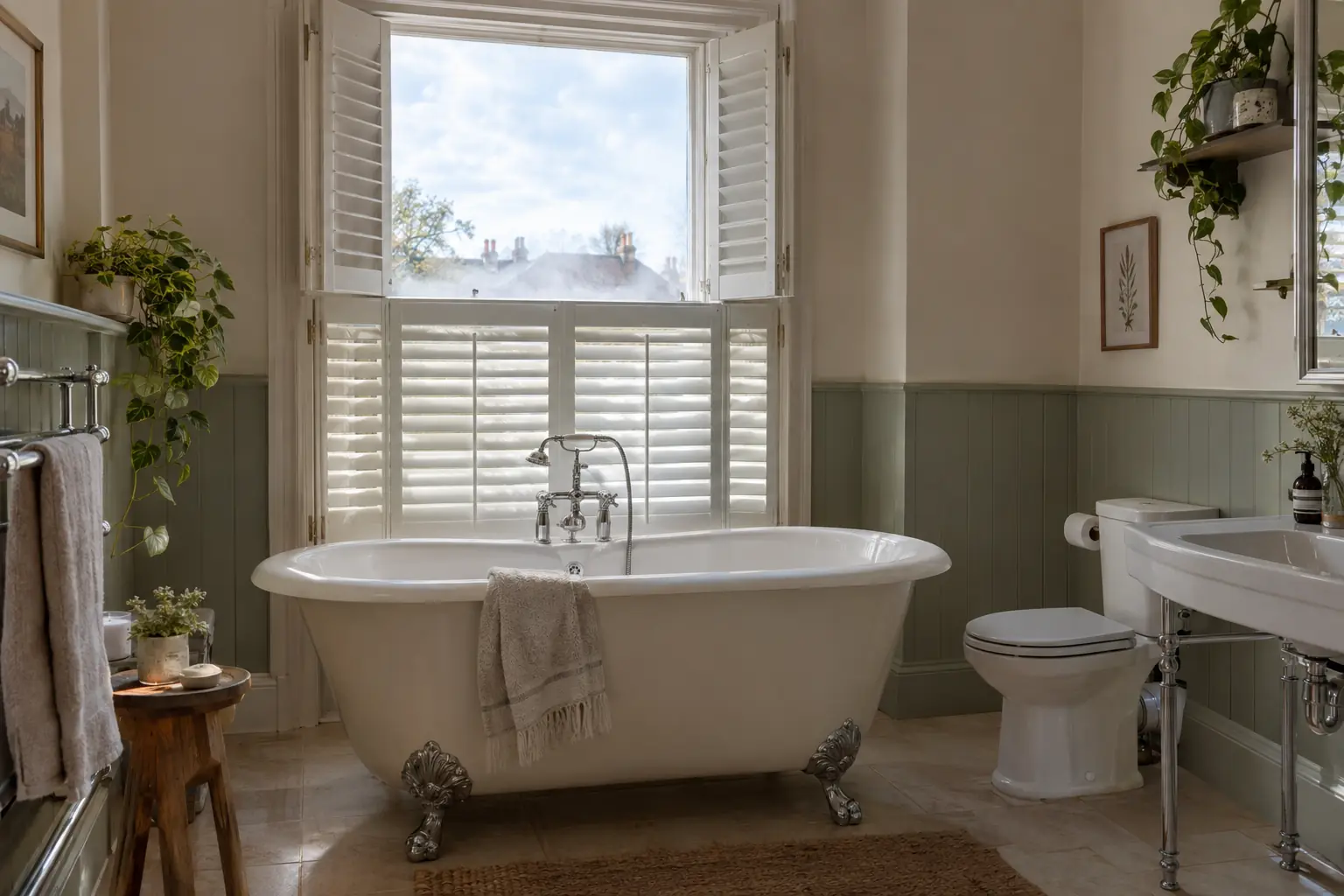
For bathrooms, en-suites and wet rooms, the answer is waterproof ABS or vinyl. Real timber takes on moisture from steam and gives it up again as the room dries, and that cycle, repeated every day, moves the wood and eventually lifts a painted finish. A waterproof shutter is made for exactly those conditions.
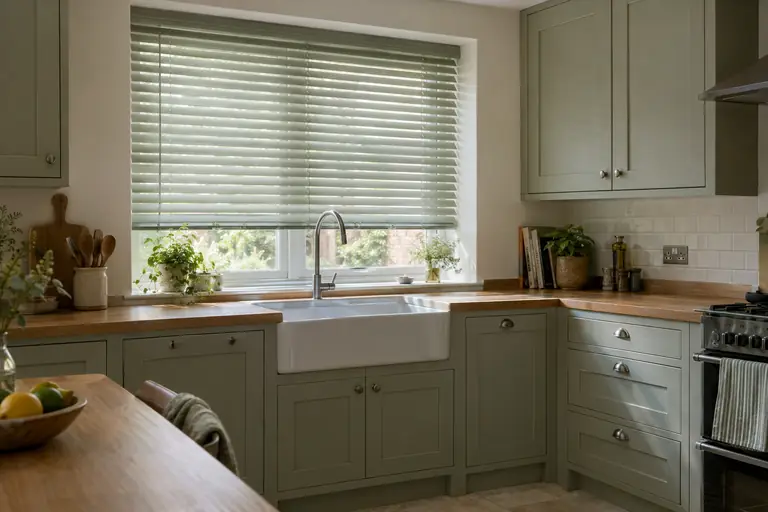
Kitchens depend on where the window is. A window over the sink or beside the hob gets splashes, steam from pans and a film of grease, and the same rule applies: real wood kept away from the hob, and a waterproof material chosen instead. A kitchen or dining-room window well away from the cooking and the washing up is a gentler place, and your advisor will say whether something else would suit it.
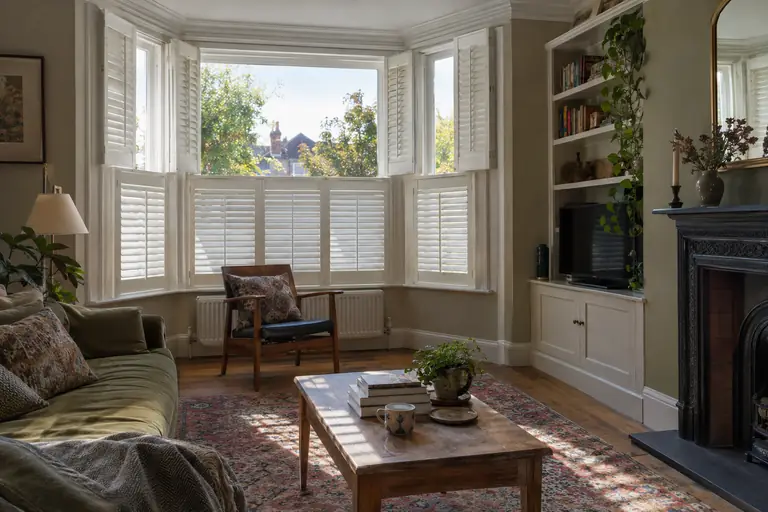
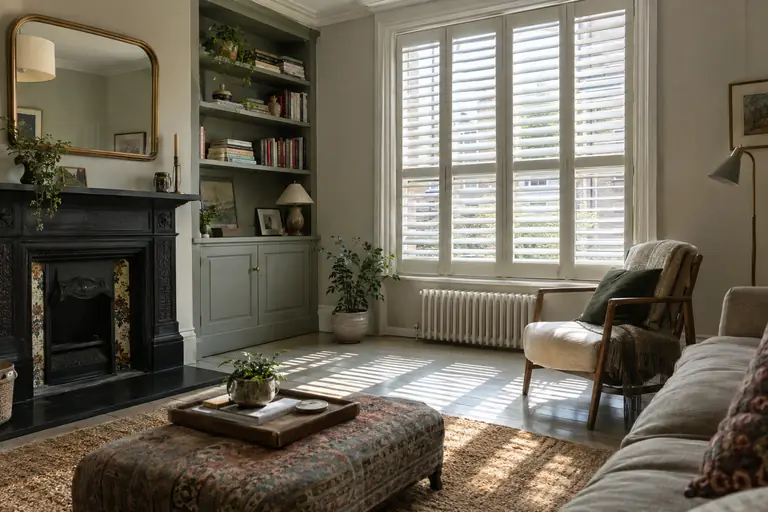
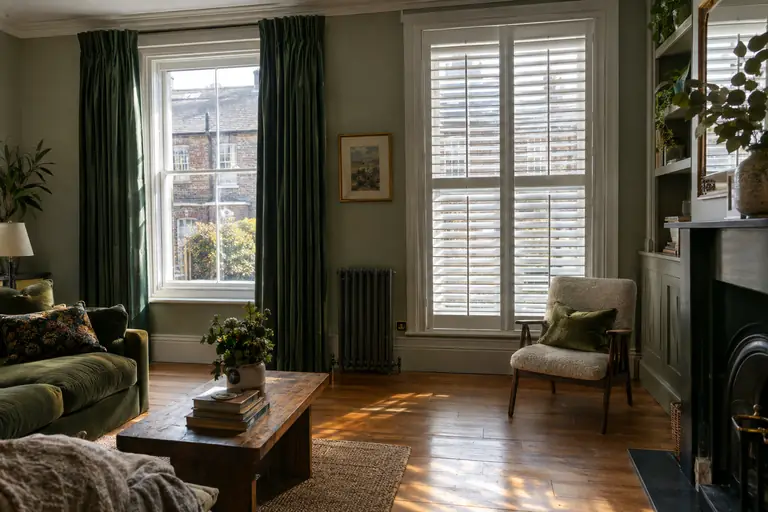
In a house where the living rooms have hardwood shutters, it is quite normal to switch to a waterproof material in the bathroom and the kitchen. Keeping the louvre width and colour consistent from room to room, where the ranges allow, helps the house feel like one scheme.
Steam, condensation and fresh air
After a shower the steam settles first on the coldest things in the room: the glass, the window frame and, if they are closed, the louvres in front of them. Government guidance on damp and mould calls condensation the most common form of damp, and picks out kitchens and bathrooms, where moisture is unavoidable, as the rooms where good ventilation matters most.
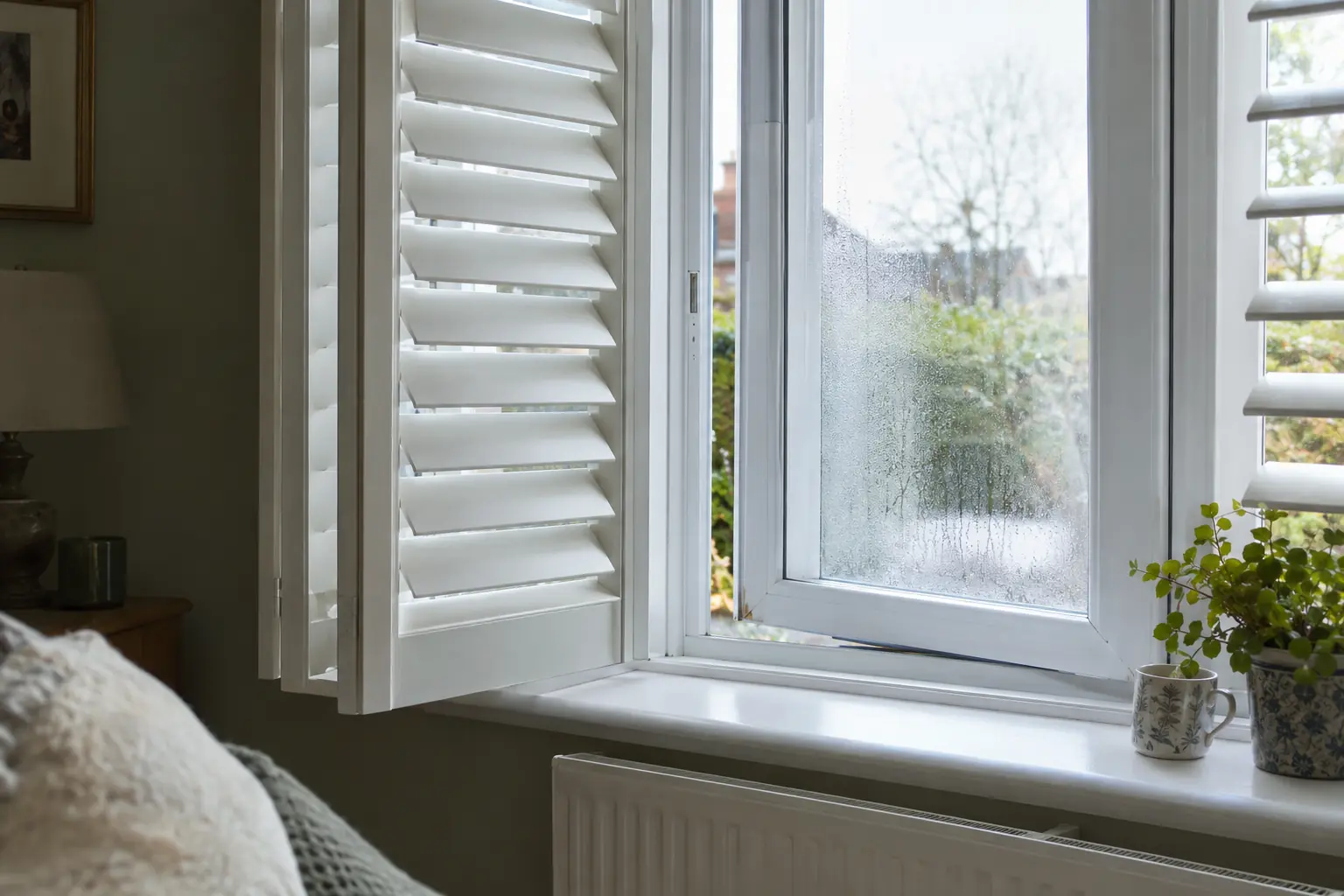
The simplest ventilation is an open window. The Centre for Sustainable Energy's advice is to open kitchen and bathroom windows so the steam from cooking, showering and bathing can leave the building. A shutter should never stop you doing that. Before your appointment, open each window as you normally would and note the handle, any stay or restrictor and how far the sash or casement swings, so your advisor can make sure the panels fold clear.
Day to day, avoid shutting the louvres tight against a window that is streaming after a shower. Tilt them open or fold a panel back, open the window or run the extractor, and let the glass clear before you close up again. Waterproof louvres will not mind the damp, but the window frame and the wall around it will.
Privacy without losing the light
Bathrooms need privacy most at the bottom of the window, and light and air at the top. Two shutter styles do that well.
Café style covers the lower part of the window only. On a ground-floor bathroom, or a window overlooked from the garden next door, it closes the sightline where it matters while the upper glass stays clear. If the upper panes are already frosted, café style may be all you need.
Tier-on-tier covers the whole window in two sets of panels that open separately. Keep the bottom tier closed and the top tier folded back by day, then close both at night, when a lit bathroom window can be seen from a long way off.
With either style, the louvres give you a setting in between. Tilted part-closed, they let daylight through while breaking up the view in. The angle that works best depends on where people might be looking from, so once they are fitted, try a few angles and check from the garden or the pavement. Your fitter will show you how the louvres move and hold their position.
Kitchens: over the sink and near the hob
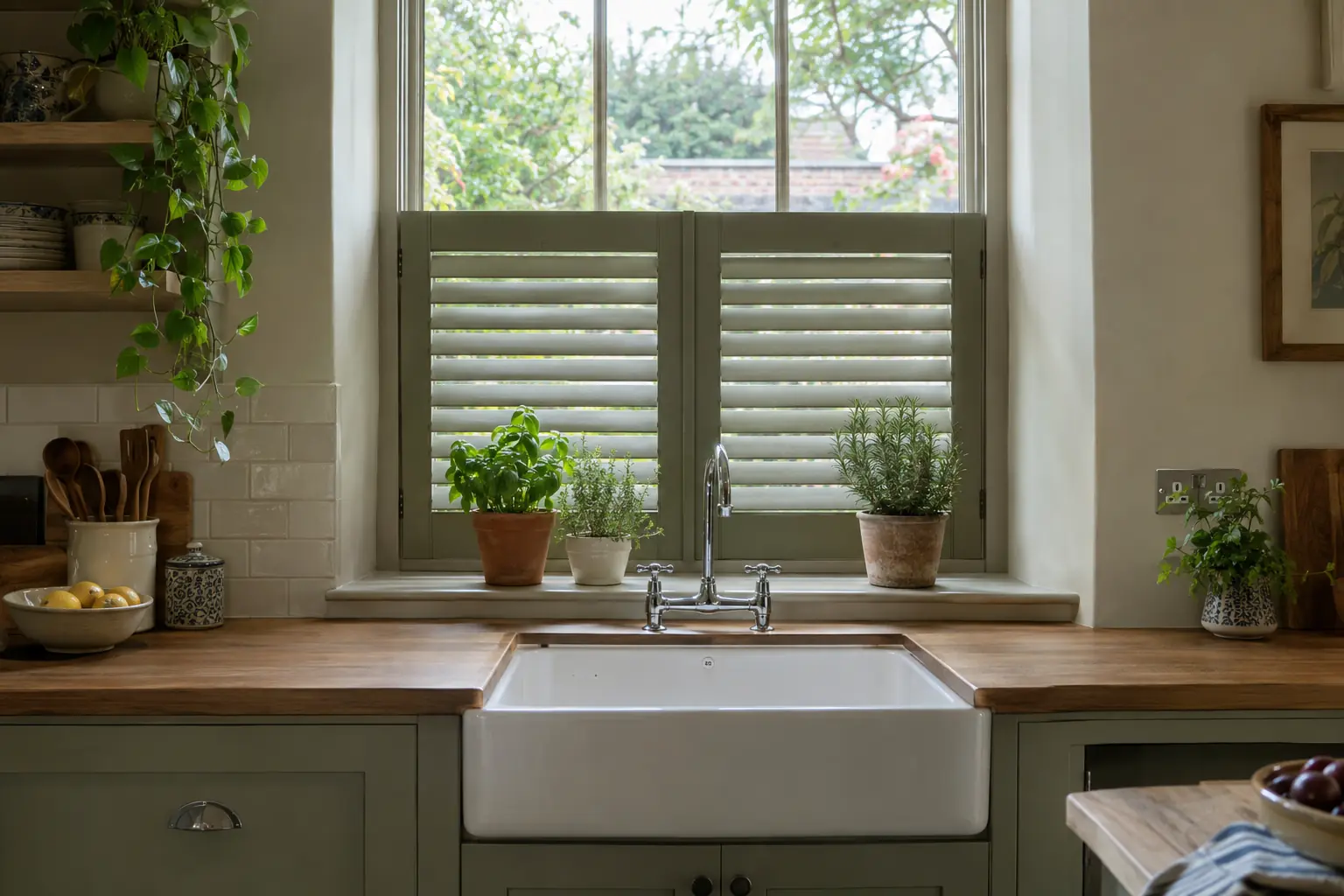
Kitchen windows are often over the sink, which means a deep sill, a tap in the way and a stretch to reach anything. Café-style shutters suit that spot well. They sit low, give privacy from the path or the neighbours while you wash up, and leave the top of the window clear for light and a view of the garden. Because the panels are short, they are also easier to reach across a worktop than a full-height shutter.
Think about what lives on the sill. Plants, soap and a washing-up bowl close to the glass can stop panels folding back, and a tall tap may sit in the way of a lower panel. Your advisor will look at the reach and the clearances on the day.
Near a hob, keep any shutter a sensible distance from the heat. A waterproof material copes with steam and a damp cloth, but no shutter is made to sit over a pan or a flame. In a kitchen-diner with doors to the garden, tracked shutters can carry the same look across the doors, so the whole room reads as one scheme.
Cleaning shutters in a wet room
Hard surfaces make cleaning simple. Run a soft brush or a dry duster along each louvre, and wipe waterproof louvres with a damp cloth when they need more than a dust. In a kitchen, a regular wipe stops the film that cooking leaves from building up; dry the louvres afterwards so no streaks are left.
Close the louvres to clean the face of the shutter, then tilt them the other way and repeat, so you reach both sides of every blade. Do the frame edges and the hinges at the same time, because that is where dust and steam collect.
Avoid scouring pads and harsh chemical cleaners, which are made for tiles and baths rather than a painted finish. If a louvre stops holding its angle, or a panel needs adjusting within the first year, ring the office: every shutter we fit carries our 1-year guarantee, and we come back out. For more on looking after shutters in every room, see our guide to caring for curtains and shutters.
Checklist
- Choose waterproof ABS or vinyl for any bathroom, en-suite or wet room.
- Keep hardwood away from the hob and the sink.
- Open each window fully and note handles, stays and restrictors for your advisor.
- Decide where you need privacy: bottom only (café) or top and bottom (tier-on-tier).
- Clear the sill of anything that would stop the panels folding back.
- After a shower or cooking, tilt the louvres open and ventilate before closing up.
- Wipe the louvres with a damp cloth and dry them; skip harsh cleaners.