The short answer
Start with how the doors open, then measure. On hinged French doors, a blind on each door, sitting on the glass side of the handle, moves with the door. On sliding patio doors, one blind above the whole opening is usual, with the headrail running past the frame so the stack clears the handle. On bi-folds, choose between a blind on each panel and one blind across the whole span. Our advisor measures every door for the order.
- Work out how each door opens before you measure anything. It decides where the blind can go.
- Measure how far every handle projects. A blind on a door has to sit between the glass and the handle.
- On sliding doors, run the headrail past the frame so the stacked blind sits clear of the handle.
- Bi-folds need either blinds that fold with each panel or one blind that stacks where the doors fold.
- Your advisor measures every door and checks the frames before recommending a fit.
Blinds on doors with handles
Swipe to see the whole diagram
A blind hanging in front of a door has to clear the handle. Frame-fitted blinds sit on the glass side of the handle and move with the door.
Step by step
- 1
Note how each door opens
Inwards, outwards, sliding or folding, and to which side. Mark it on a sketch, because it decides whether the blind goes on the door or above it.
- 2
Measure the glass on each door or panel
For blinds that fix to the door, measure the width and height of the glass with its beading on every door or panel separately, in more than one place.
- 3
Measure how far the handles stand out
Measure from the face of the glass to the back of each handle, lock and thumb-turn. A blind on the door has to fit in that space.
- 4
Measure the full opening
For a blind above the doors, measure the width of the frame plus the wall you want covered on each side, allowing room for the stack beyond the glass.
- 5
Measure the drop to the floor
From where the headrail will fix to the floor, at both ends and in the middle. Note any threshold, raised sill or doormat.
- 6
Decide which side the blind stacks to
Stack towards the fixed pane of a sliding door, or towards the side bi-folds fold to, so the way through is clear when the blind is open.
- 7
Check above and beside the doors
Note coving, the ceiling height, alarm contacts, poles, radiators and furniture near the doors. Then book the advisor to measure for the order.
A door is a window you walk through
Most of the rules for measuring a window still apply to a glazed door: work in millimetres, measure in more than one place, and note everything that sticks out. What changes is how the door is used. A window blind is raised and lowered a few times a day. A door blind has to cope with the door itself moving, with people walking through, and with a handle that is gripped and turned every time.
So before you measure, answer three questions for each door. Which way does it open: inwards, outwards, sliding or folding? Where is the handle, and how far does it stand out? And which part of the opening do you actually walk through?
The answers point you towards one of two approaches. Either the blind is fixed to the door itself and moves with it, or it is fixed to the wall or ceiling above the opening and has to be drawn clear before the door is used. Each is measured differently, and the rest of this guide takes them door by door.
French doors: a blind on each door
French doors are a pair of hinged glazed doors, and because they swing, a blind hung from the wall above them gets in the way. If they open inwards, the doors swing straight into a lowered blind. If they open outwards, the blind has to be raised every time you go out. That is why French doors usually have a blind on each door, fixed to the door so it opens and closes with it.
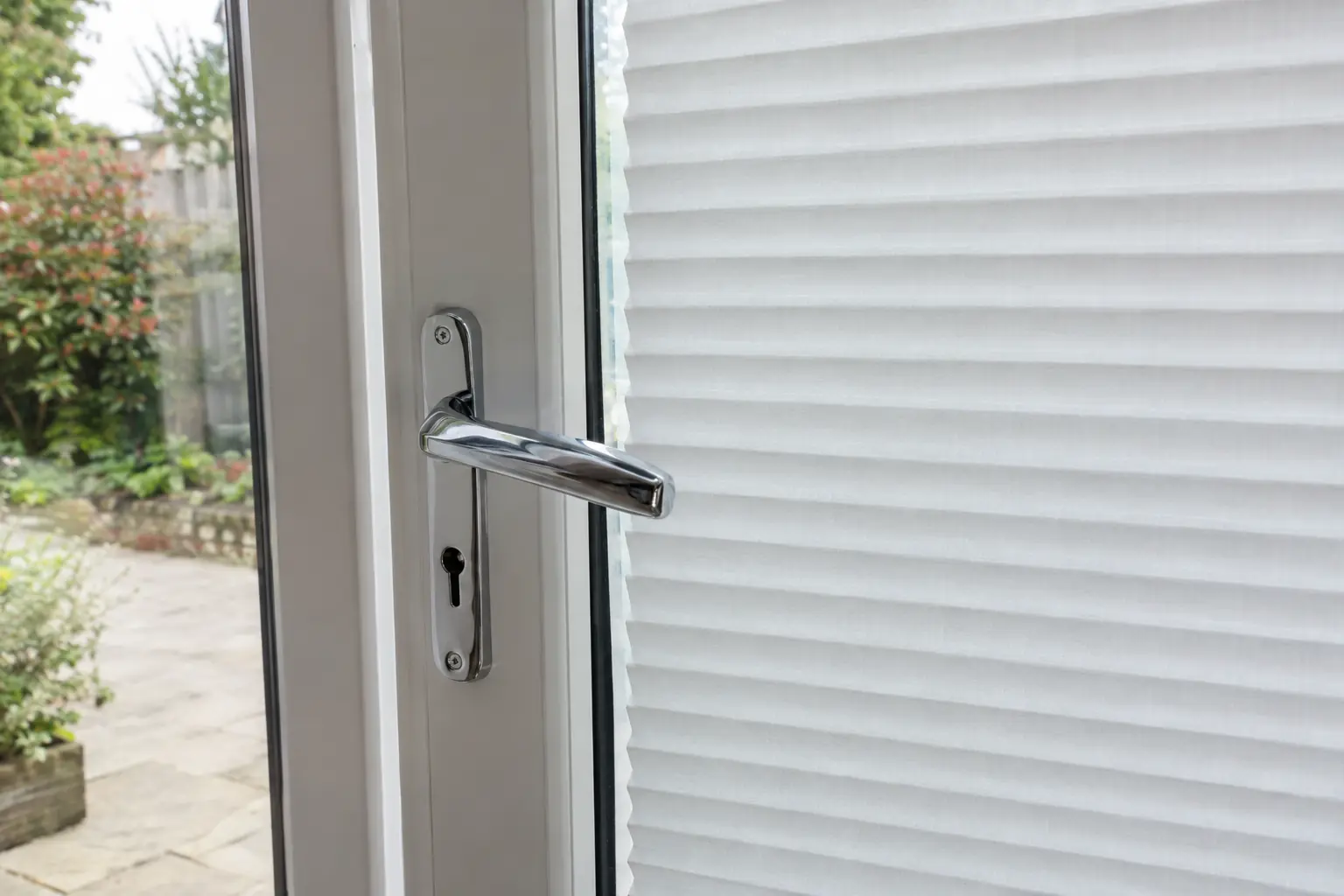
For a blind on the door, measure the glazed area of each door separately: the width and height of the glass together with the beading round it, at more than one point. Then measure how far the handle stands out from the glass, because the blind has to sit between the two without touching the handle.
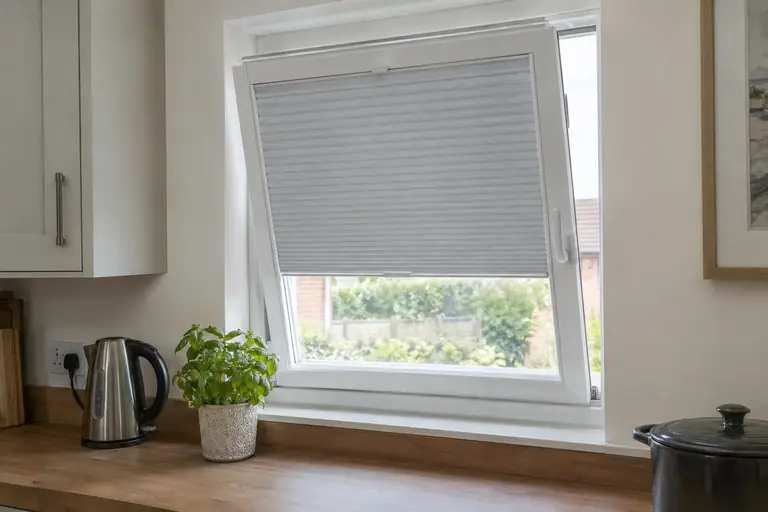
On uPVC and aluminium doors, a perfect fit blind is often the neatest answer: it clips into the frame round the glass rather than being screwed to it, and goes wherever the door goes. Not every frame can take one, and timber doors usually cannot, so your advisor looks at each door before recommending it. Our guide to tilt and turn windows explains how these clip-in blinds work in more detail.
Sliding patio doors: one blind across the opening
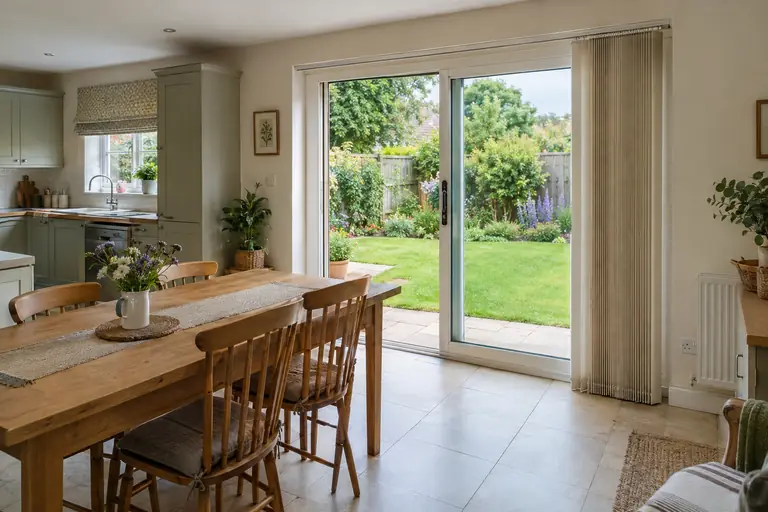
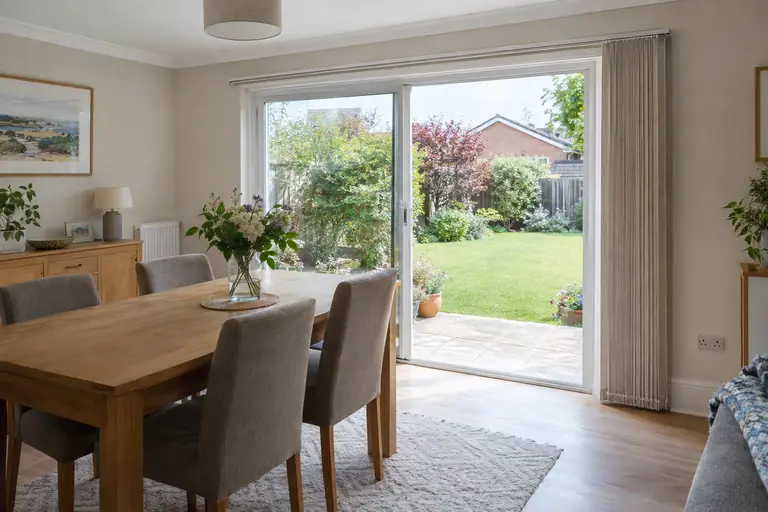
Sliding doors do not swing, so the usual answer is a single blind fixed above the whole opening, on the wall or the ceiling. Vertical blinds are the most common choice, because the louvres draw fully back off the glass and leave nothing hanging in front of the handle when they are open. They also angle against low sun.
To measure, start with the full width of the door frame, then decide how far past each side the headrail should run. Run it far enough past the frame that, when the louvres are drawn back, the stack sits beyond the glass and clear of the handle. Choose the stacking side by watching how you use the door: stack towards the fixed pane, so the half you walk through is clear.
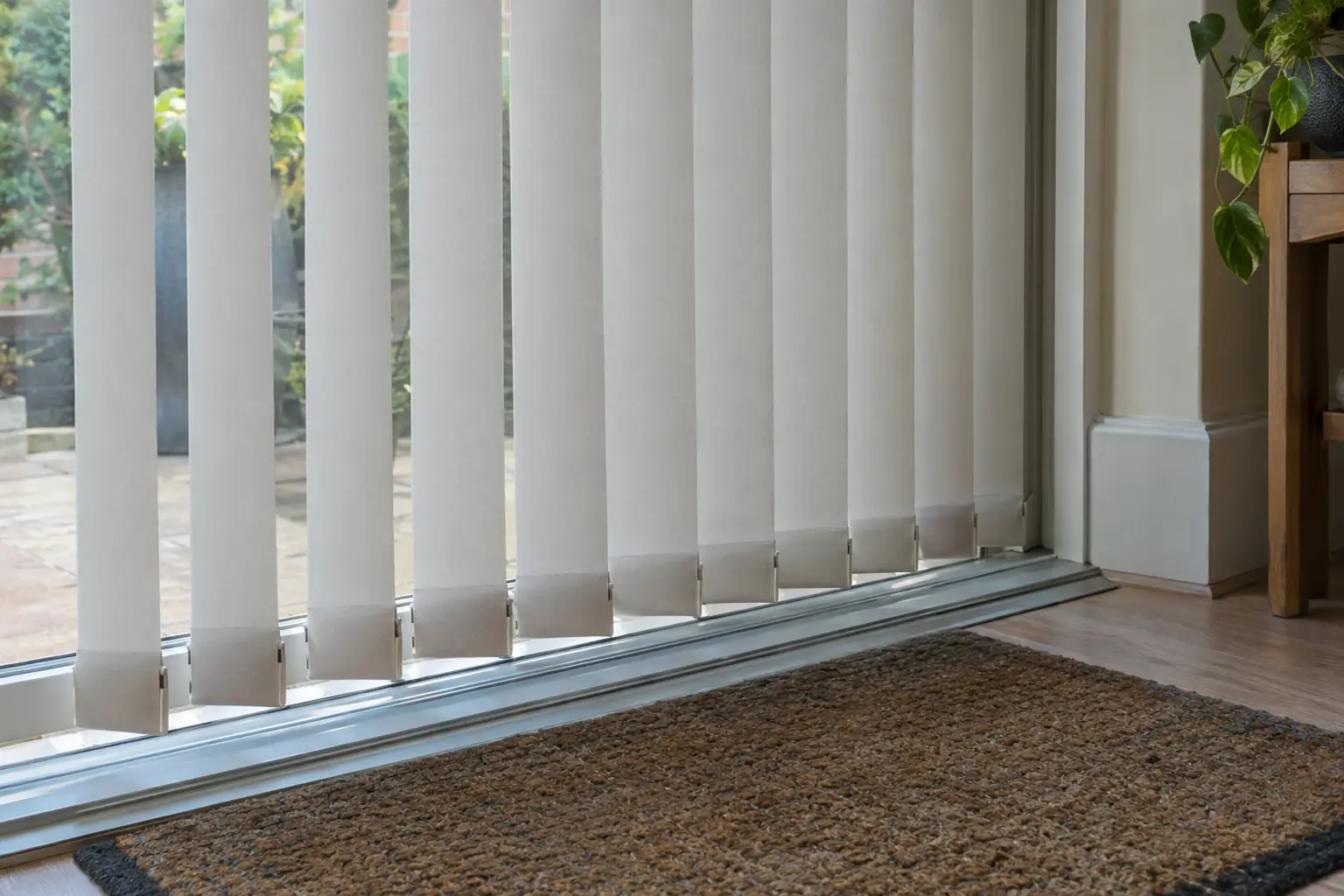
For the drop, measure from where the headrail will be fixed down to the floor, at both ends and in the middle, and plan for the blind to finish just clear of the floor and any raised threshold.
A single wide roller also works, but when it is up, the whole roll sits across the top of the glass, and you have to raise all of it to go out. Two blinds side by side, one over each half, avoid that.
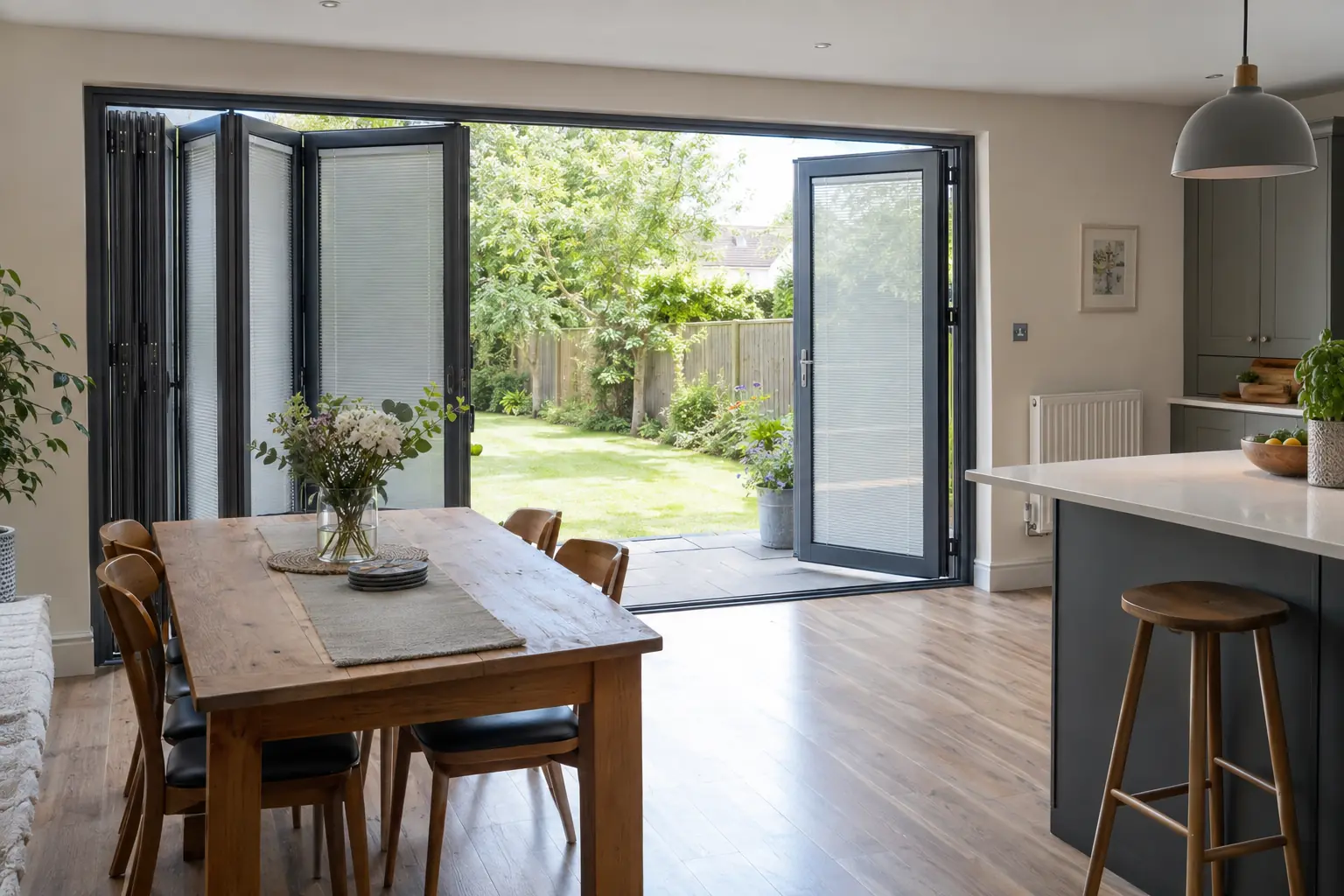
Bi-folds: blinds on the panels, or one across the span
Bi-fold doors fold into a stack at one or both ends, and that gives you two ways to dress them.
The first puts a blind on each glass panel, fitted to the frame so it folds away with the panel. Measure each panel's glazed area on its own, because panels in a set are not always identical, and measure the handle on the lead panel. The thing to check is that the panels still fold flat with a blind on each one. When bi-folds fold, the panels close up against each other, so anything that sticks out from the frame can stop them folding fully. Slim blinds that sit within each panel's frame are the usual way round it, and your advisor will check your doors before recommending them.
The second hangs one blind, usually a vertical, above the whole span. Measure the full width, including the area where the folded doors come to rest, and plan for the blind to stack on the same side the doors fold to. Then, with the doors folded back and the blind drawn, the opening is completely clear.
Note which way your bi-folds fold. If they fold inwards, into the room, a blind hung above them must be fully drawn before the doors can move.
Handles: the measurement people forget
On a window, a handle is an inconvenience. On a door it is the whole point, and it is the single measurement most often missed.
With a blind fixed to the door, the blind sits between the glass and the handle. Measure from the face of the glass to the back of the handle at its closest point. If there is not enough room, the handle presses into the blind, the slats or fabric bow outwards, and the blind wears where it rubs.
With a blind hung above the opening, the fabric or louvres fall in front of the handle when they are closed. They brush the handle every time the blind moves, and you have to draw the blind back to open the door. That is fine if you plan for it, which is why the headrail on a patio door runs past the frame: when the blind is open, the stack sits clear of the handle altogether.
Measure every handle, lock and thumb-turn, and note which side of the door it sits on. It often decides which side a blind should stack to and where its controls should hang.
Floors, thresholds and what is above the door
Doors reach the floor, and a blind hung above one usually does too, so the floor brings its own problems. A blind that drags on a threshold, a raised sill or a thick doormat wears at the bottom and catches when it moves. Measure the drop at both sides and in the middle, and note the height of any threshold and anything that sits on the floor in front of the door.
Then look up. A blind above a patio door or a set of bi-folds needs somewhere solid to fix and enough room above the frame for the headrail. A lintel close to the ceiling, coving, a curtain pole you intend to keep, a downlight, or an alarm contact on the top of the frame can all change where the blind can go. A ceiling fix is often the answer when there is little wall above the frame.
Finally, look to the sides. A radiator beside the door, a wall that the doors fold against, or a piece of furniture where the stack wants to sit are all worth writing down before the appointment.