The short answer
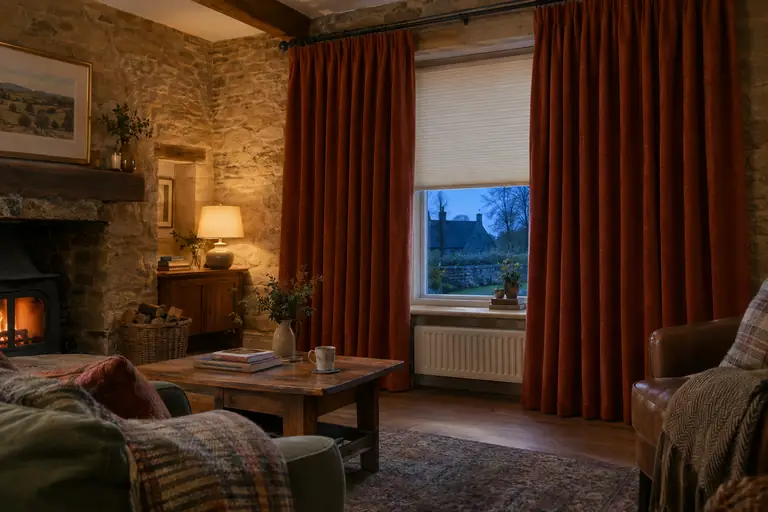
In a period home, expect every opening to be a little out of square and have each one measured on its own. Tier-on-tier or solid shutters suit sash windows, romans sit well in deep reveals, and interlined pinch pleat curtains suit tall rooms. If the house is listed, the listing covers the interior and anything fixed to it, and works that affect its character need consent, so speak to your local planning authority's conservation officer before fixing anything new.
- Out-of-square windows are normal in older houses, so everything is made to the opening as it really is.
- Tier-on-tier shutters can split at the sash meeting rail; romans suit deep stone reveals.
- Listing protects a building inside and out, including things fixed to it.
- Works that affect a listed building's character need listed building consent.
- Ask the conservation officer before fixing anything new in a listed room.
Out of square is the normal case
Few windows in a Victorian terrace, a stone cottage or a Georgian townhouse are square. Reveals taper from top to bottom, sills slope towards the room, lintels have dropped a little and frames have settled with the house. None of that is a fault. It is simply what a building does over a hundred years or more.
It does mean that nothing standard fits. A blind made to one width can sit well at the top of a tapering reveal and leave a gap at the bottom, or rub at one side. A shutter frame that assumes a square opening will not close. The answer is to work from the window itself: measure it at the top, the middle and the bottom, both ways, and make to what is there rather than to what ought to be.
Our advisors measure every opening on its own and note where it runs out. For blinds, that can mean suggesting a fit outside the recess on a badly tapered reveal, so the overlap hides what a recess fit would frame. For shutters, it means building the frame to the real shape, so the panels close properly even where the window does not. Your advisor will tell you on the day what will look right.
Sash windows
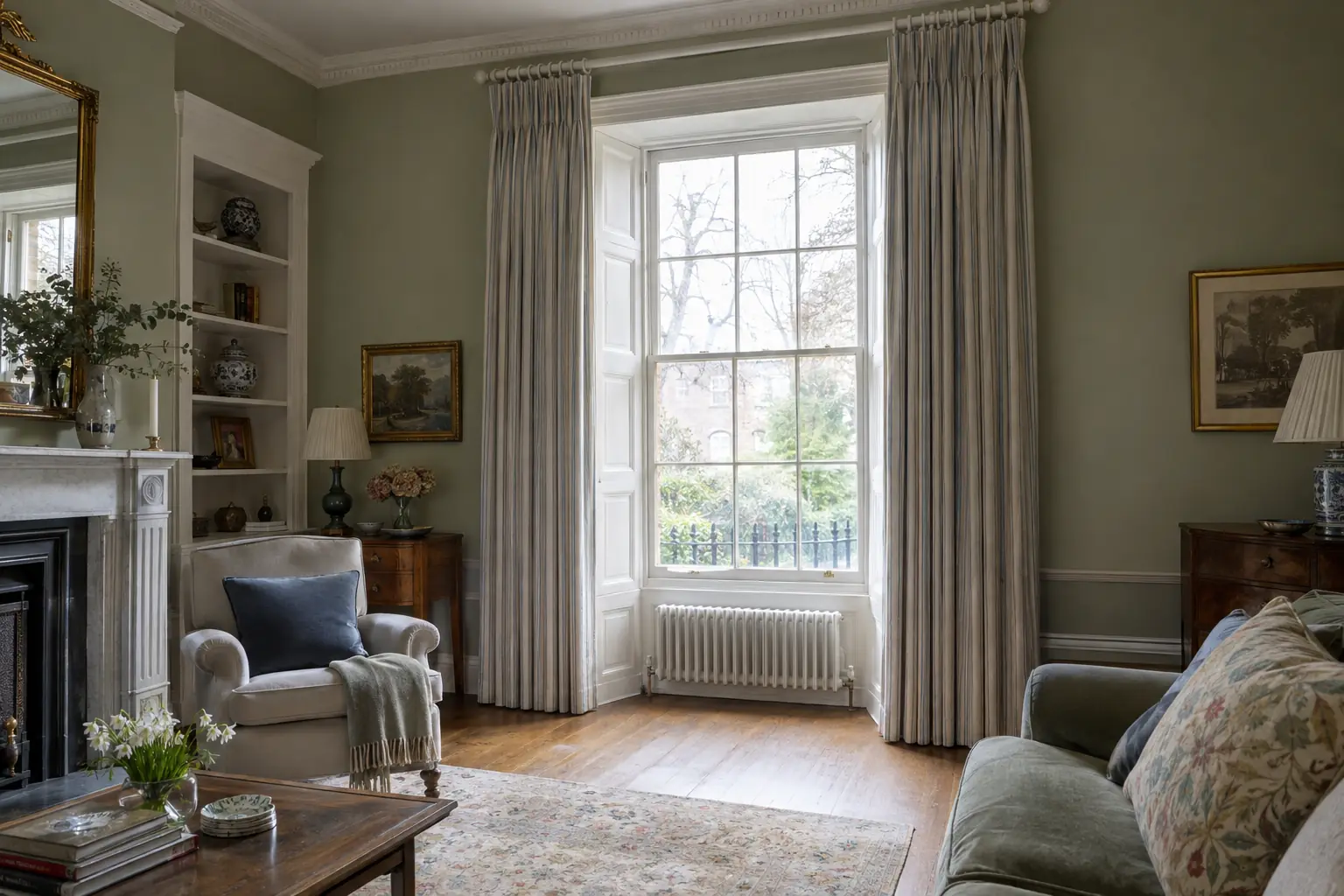
The box sash is the defining window of Georgian and Victorian houses, and it has particular needs. Two sashes slide past each other in the box, meeting at a horizontal rail across the middle, and many are tall enough that a full-length curtain makes the room.
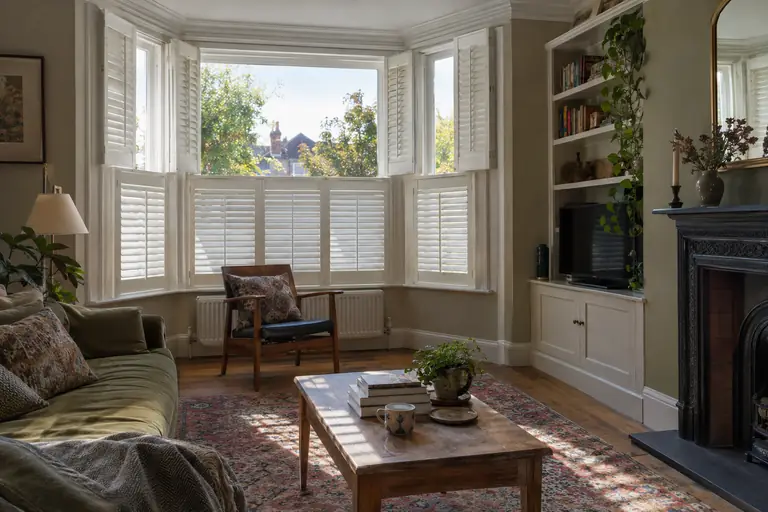
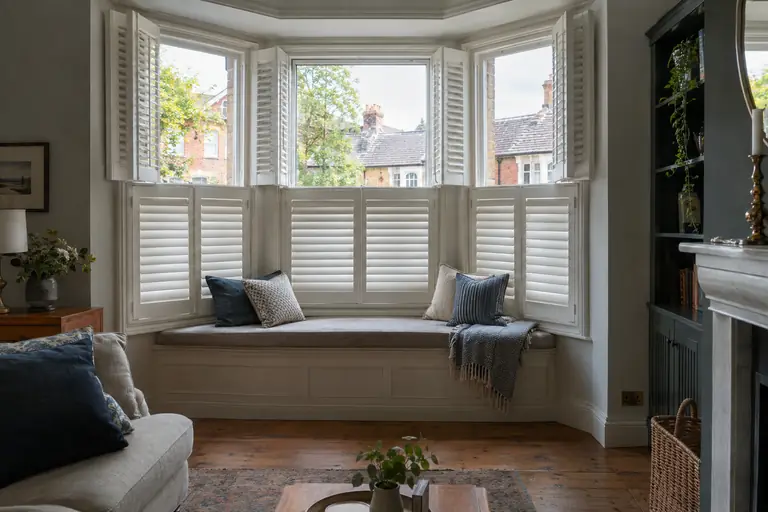
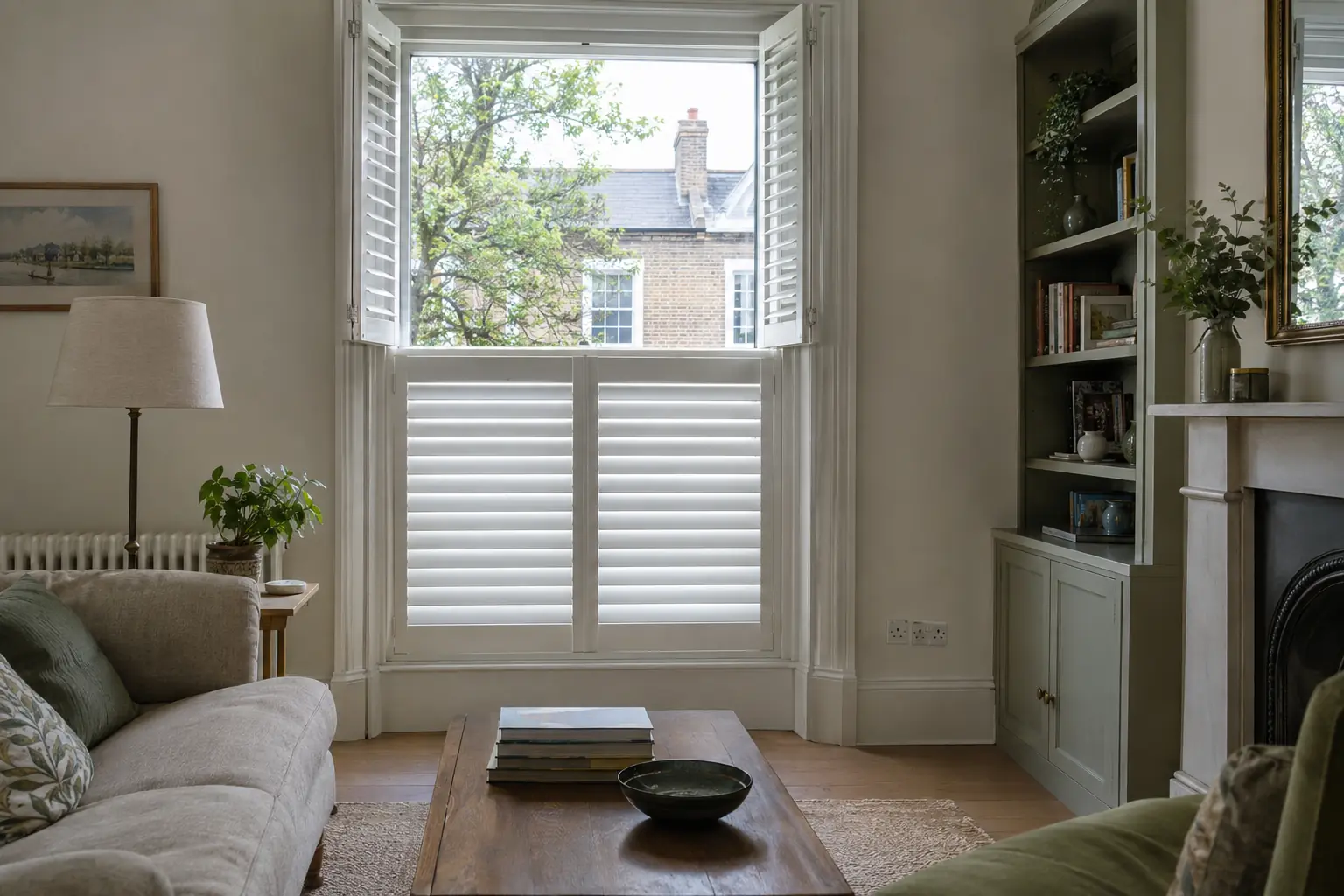
Tier-on-tier shutters suit sashes well because the split between the tiers can line up with the meeting rail, so the lower tier closes over the lower sash and the upper tier can fold open for light. Solid panels suit sashes in period rooms where darkness at night matters more than tilting light in. Either way, the frame and louvres have to clear the sash catches and lifts, and the sashes themselves still need to slide freely.
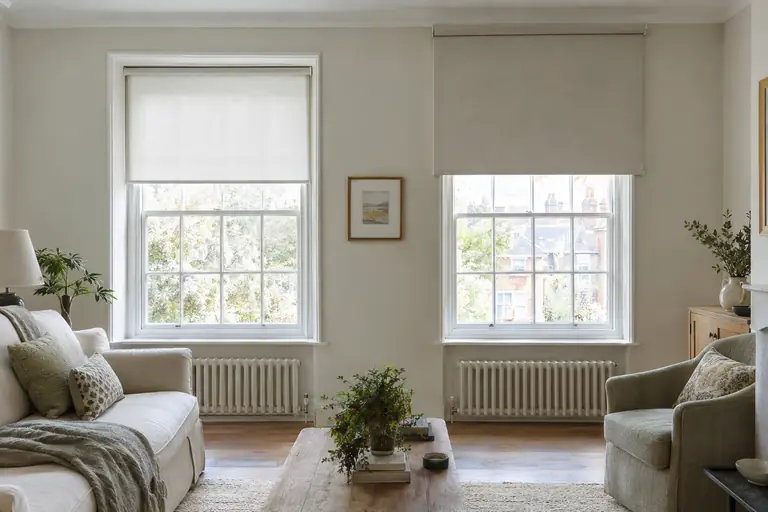
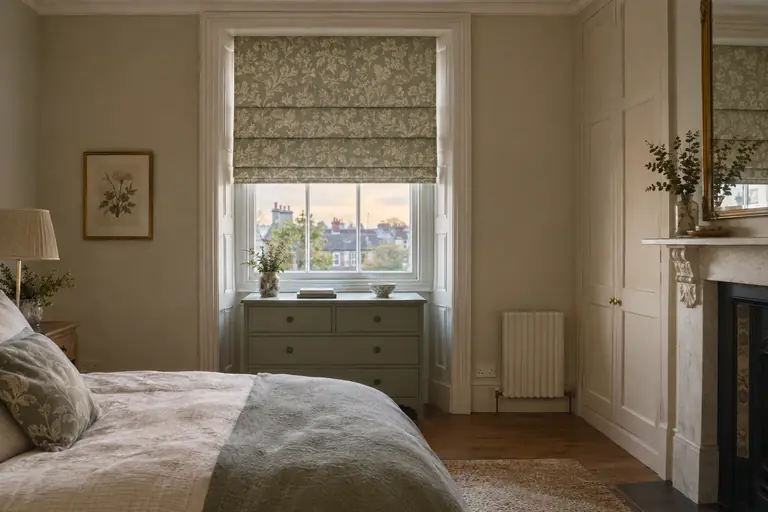
A roman blind inside the reveal suits sashes too, particularly where the reveal is deep enough for it to hang clear of the window. Where the reveal is shallow, or you want the whole sash and its glazing bars on show by day, curtains on a pole above the window may be the better answer. Plenty of sashes end up with both.
Original shutters and other fixed features
Many Georgian and Victorian houses were built with folding internal shutters that close across the window and fold back into boxes in the reveal, and more survive than people realise, sometimes painted shut or hidden behind later boarding. If your house has them, they are worth knowing about before you plan anything else.
Original shutters are part of the building. Historic England's guidance is that, broadly speaking, anything fixed to a listed building, such as wall panelling or fitted cupboards, is covered by the listing, while free-standing things inside are not. Shutter boxes, panelled reveals, built-in window seats and original architraves all sit on the fixed side of that line.
Where original shutters still work, new dressings can often be planned around them rather than replacing them, for example curtains on a pole above the window that draw clear of the shutter boxes. Where they have been lost, new solid or louvred shutters can put back something the room was designed to have. Either way, your advisor will look at what is there before suggesting what to add.
If your home is listed: what the rules say
Listing is not only about the outside. Historic England says that listing protects the building inside and out, and objects or structures fixed to it. In England, the Planning (Listed Buildings and Conservation Areas) Act 1990 says that altering a listed building in any way that would affect its character as a building of special architectural or historic interest needs listed building consent, and carrying out such work without consent is a criminal offence.
Some internal works need listed building consent even where no planning permission is required. The official guidance does not say whether fitting a blind, a curtain pole or a set of shutters needs consent. It depends on the building, on what is fixed where, and on what the work would change, which is why the general rule matters: if the work touches something that contributes to the building's character, ask first.
Historic England advises owners to seek advice from their local planning authority's conservation officer about alterations before applying for consent. That is a sensible first call before you commit to anything fixed. Your advisor can tell you where the fixings would go and what they would touch, so you have something specific to discuss.
Fixing into an old house
Older walls are not like modern ones. Reveals may be lime plaster over brick or stone, soft in places and hard in others; timber linings may be original; and the plaster round a window can hide a lintel, a shutter box or a void. Fixings need to find something sound without damaging anything worth keeping.
That is one reason we measure and fit ourselves rather than leaving it to you. Your advisor will look at where each blind, pole or shutter frame would fix and what it would fix into. In a listed house, ask them to talk you through it so you can describe exactly what is proposed to the conservation officer.
Some choices are gentler on the building than others. A pole bracketed to the wall above the window leaves the reveal and the window joinery alone. A blind fixed to the top of the reveal needs only a few fixings. A shutter frame is the most substantial, because it is fixed and levelled to the opening, so in a listed room it is the one to discuss first. None of this rules anything out; it tells you which conversations to have and in what order.
What suits which period window
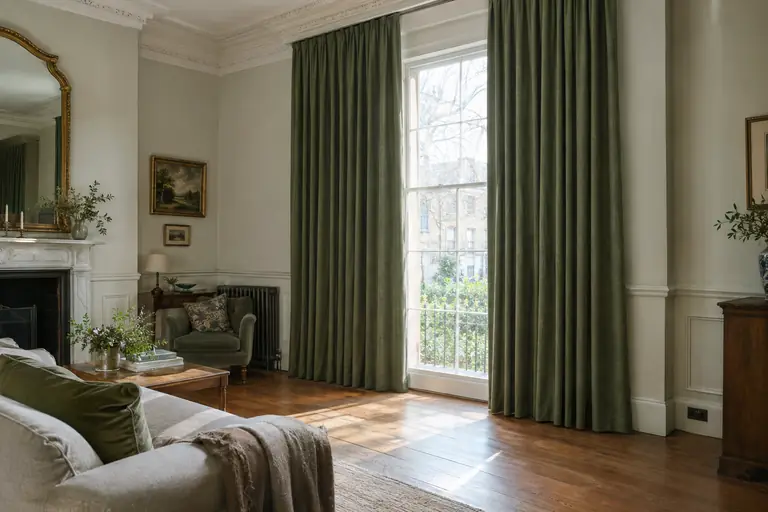
Georgian houses have tall, well-proportioned sashes and high ceilings. Full-height or tier-on-tier shutters suit them, as do interlined pinch pleat curtains on a pole set well above the window, which respect the height of the room. Romans in a plain linen or a quiet stripe sit well in the reveal of a smaller room.
Victorian and Edwardian houses often have bays and sashes downstairs and smaller windows upstairs. Tier-on-tier shutters in a street-facing bay are a classic choice; romans, or wooden blinds under a dress curtain, suit the rooms behind.
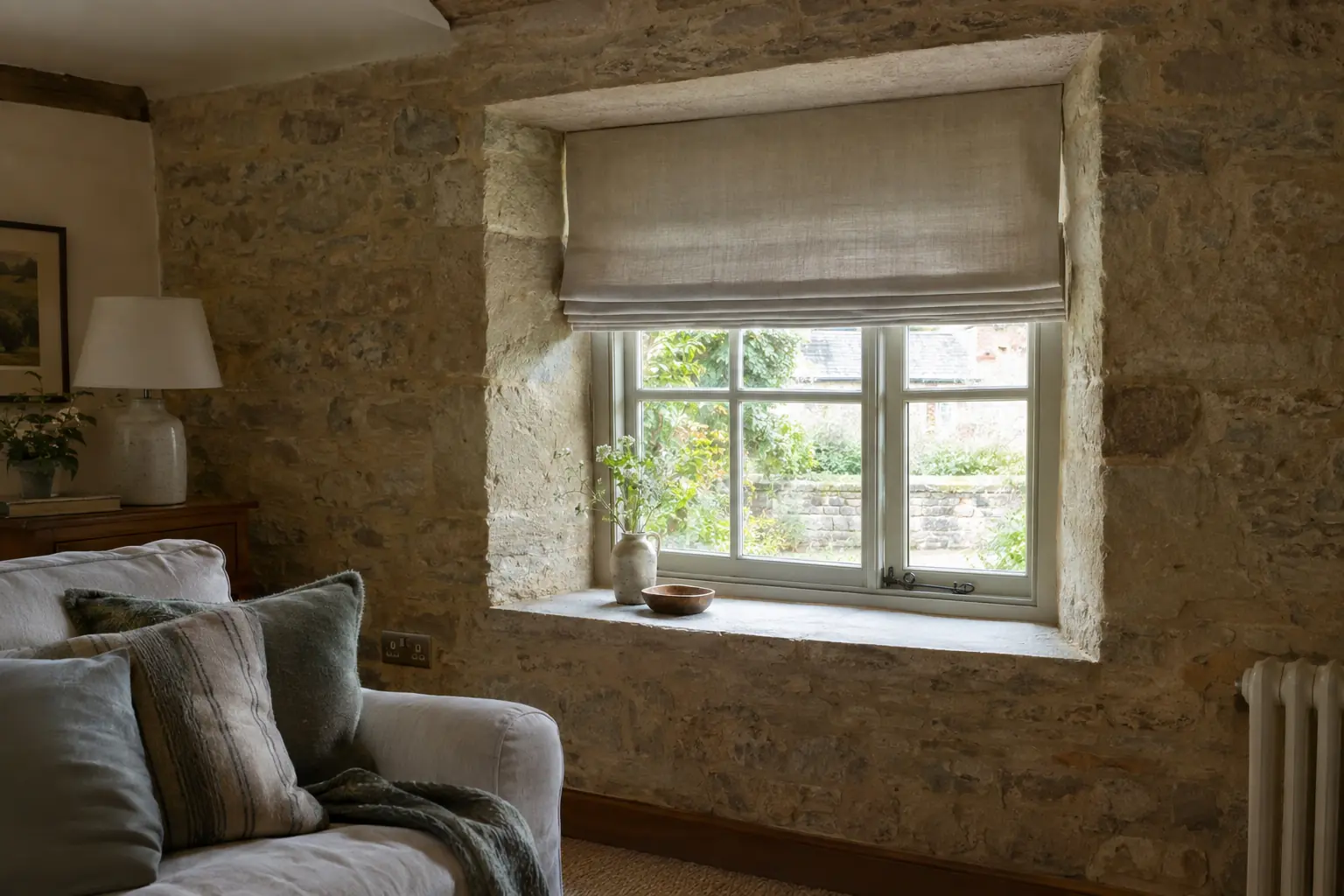
Stone cottages have small windows in thick walls, with deep reveals that often taper. A roman or a roller inside the reveal keeps the depth of the wall on show, and curtains to the sill suit the scale of the room.
Arched windows, found in Victorian villas and converted chapels, can take shaped shutters templated to the curve, or a curtain hung above and outside the arch. Museum guidance on historic buildings also suggests thinking about how blinds affect the appearance of an older building, and leaning towards calico or more natural colours, since some coloured blind fabrics fade over time.
Warmth without replacing the windows
Many period homes still have single glazing, and in a listed building replacing the windows may not be possible. Window dressings are a far smaller change than new windows, which makes them one of the first things to look at in a cold room.
When Historic England looked at how traditional windows perform, it found that curtains, interior shutters and blinds can all cut heat loss significantly, and that insulated curtain linings or cellular blinds do better still. In practice that points to interlined or thermal-lined curtains drawn at dusk, honeycomb blinds in the reveal, and shutters closed at night.
It is also a good argument for bringing original shutters back into use where they survive, since interior shutters are one of the measures the research found effective. For warmth across the rest of the house, our guide to keeping your home warm with blinds and curtains goes further.
Checklist
- Find out whether the house is listed before planning any fixed work.
- Look for original shutters, shutter boxes and panelled reveals, and plan to keep them.
- Open every sash and note the catches, lifts and how freely it slides.
- Expect tapering reveals and let your advisor measure each opening on its own.
- Ask where each fixing would go and what it would fix into.
- In a listed room, speak to the conservation officer before committing to anything fixed.
- Where windows are single glazed, choose lined or interlined curtains and cellular blinds.