The short answer
Plantation shutters are worth it when you want a window dressing that stays put for years, controls light and privacy without cords, and suits the character of the room, such as a bay, a street-facing living room or a period sash. They are less worth it where a room must be properly dark, on tilt-and-turn windows, or in a home you will leave soon. They cost more than a blind because each one is built and fitted to a single opening.
- You are paying for a frame, hinged panels and tilting louvres, built to one opening and fixed in place.
- Tilting the louvres gives privacy and daylight at the same time, with no cords at all.
- In lab tests on a single-glazed sash window, timber shutters cut heat loss by 51%.
- Louvred shutters dim a room rather than black it out, and hinged panels need room to fold back.
- Shutters stay with the house, so they make most sense in a home you plan to stay in.
What you are actually paying for
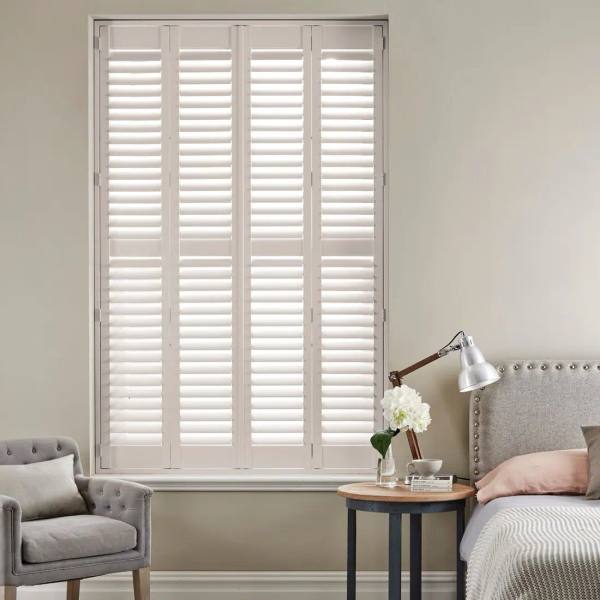
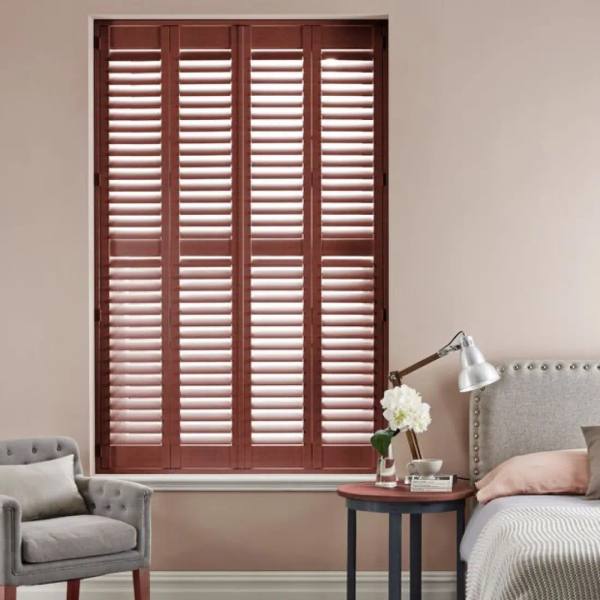
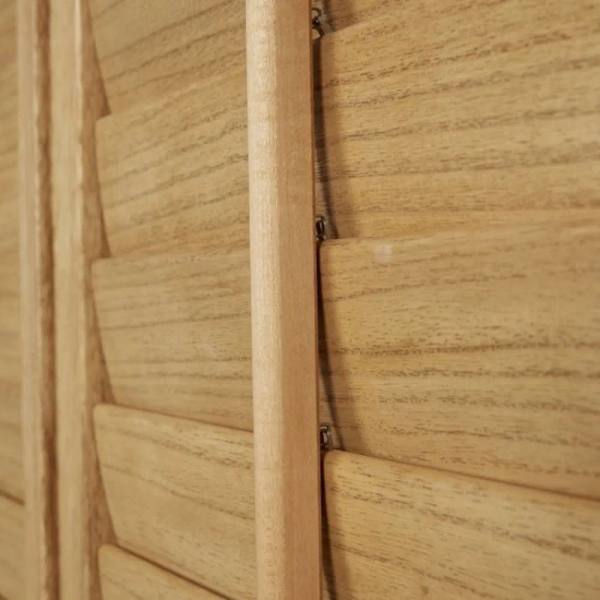
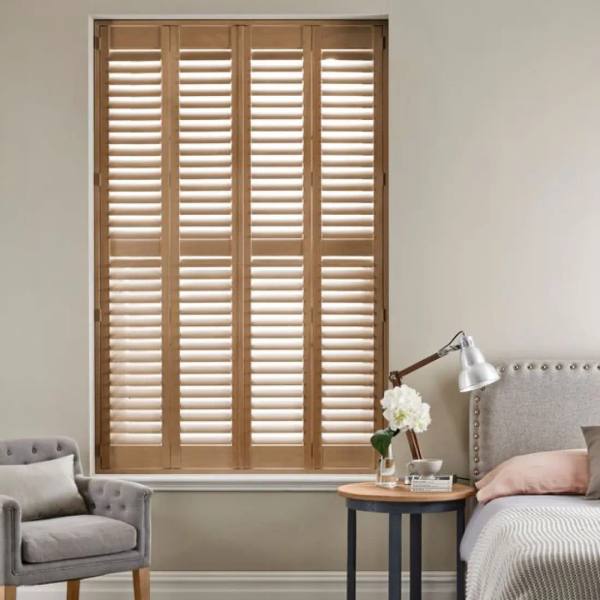
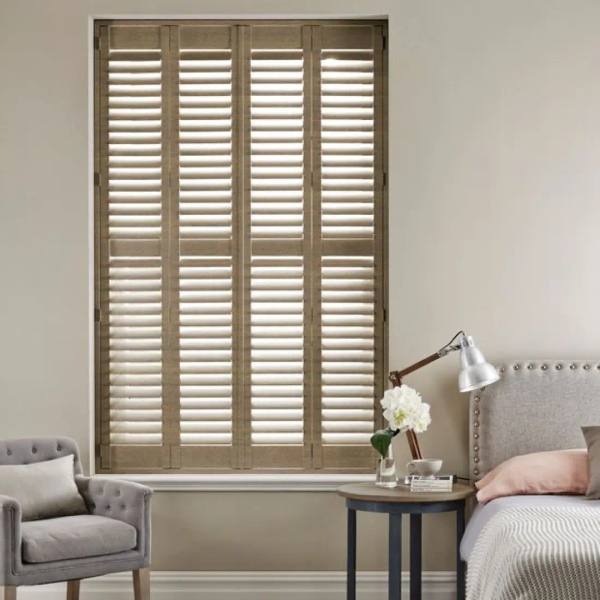
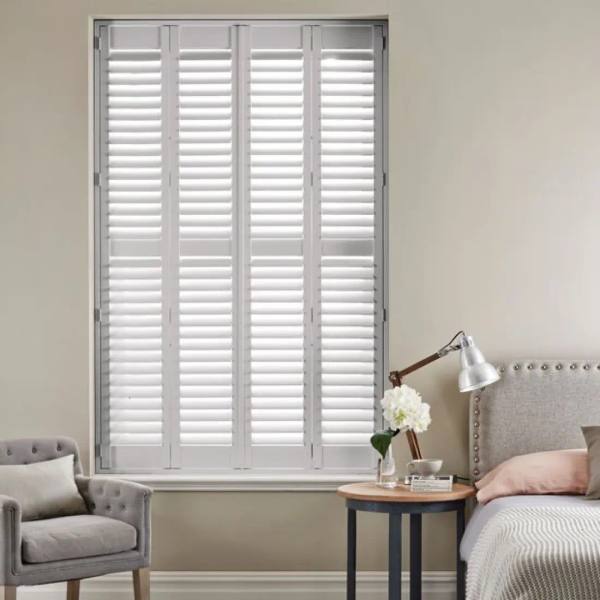
A plantation shutter is not a covering that hangs in front of the glass. It is a frame fixed to the window opening, hinged panels that hang from it, and louvres that tilt together inside each panel. Every part is made for one window, so a shutter is closer to fitted joinery than to a blind.
That is where the extra cost goes. The window has to be surveyed properly, because few British openings are square, and the frame is built to the opening you actually have rather than a standard size. The panels are then hung, levelled and tensioned on site so the louvres hold whatever angle you leave them at. A roller blind, by comparison, is one piece of fabric on a tube, made to a width and a drop.
What you get back is something that stays at the window every day of the year and needs very little from you. Most days you never open the panels at all: you tilt the louvres open in the morning, angle them when the sun swings round and close them at night. If you want the detail on materials, louvre widths and frames, our shutters buying guide goes through each choice.
Where shutters earn their keep
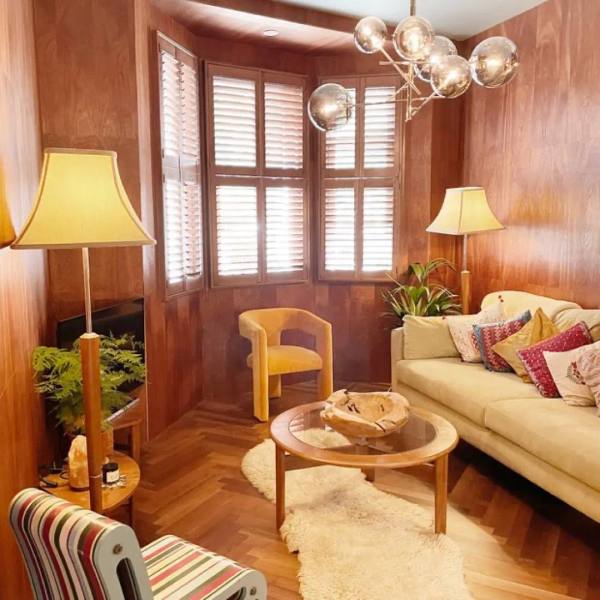
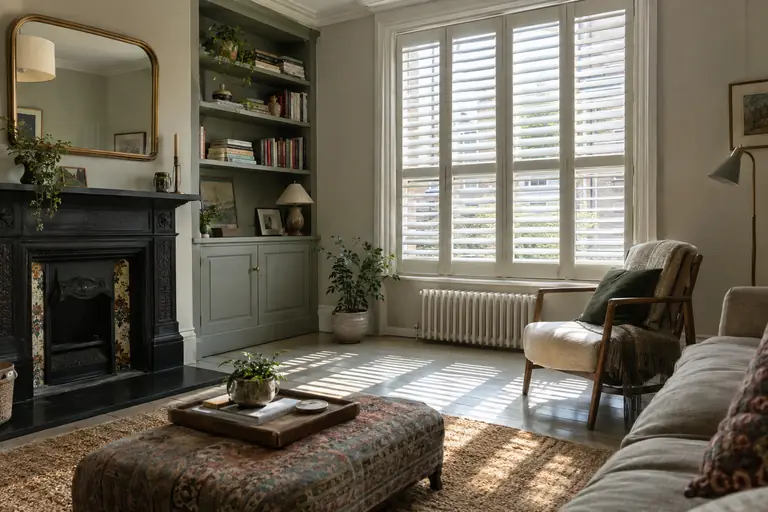
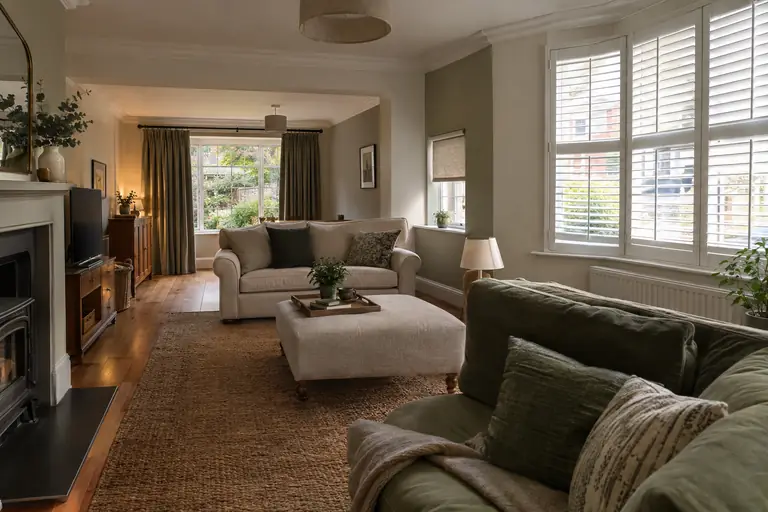
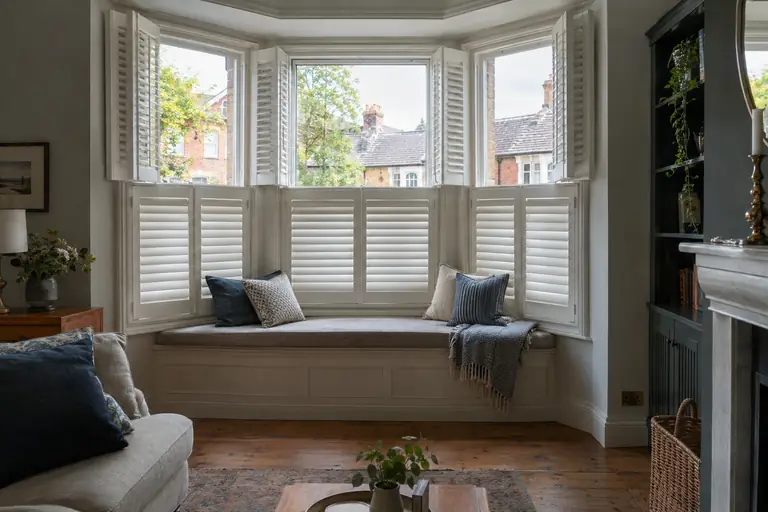
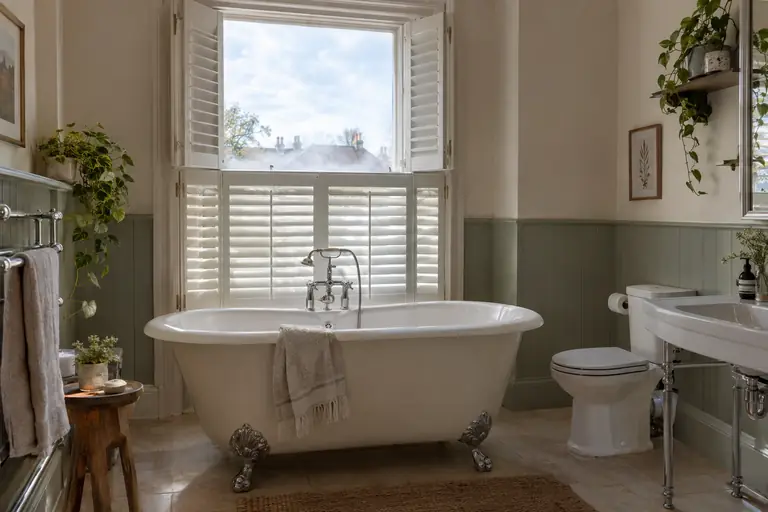
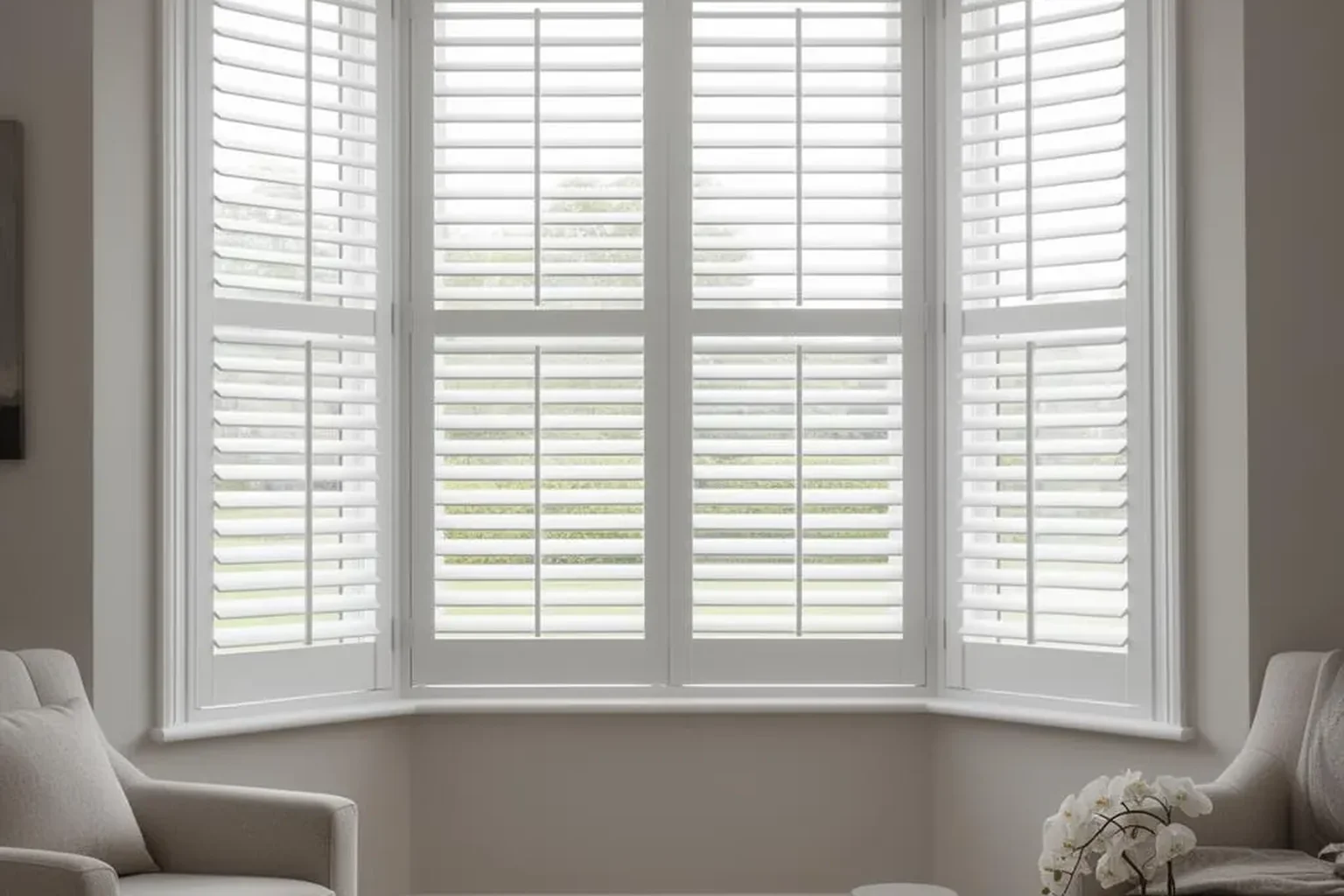
Shutters are at their best on windows where you want light and privacy at the same time. On a street-facing front room, tilting the louvres upwards lets daylight in while passers-by see only the blades. That is why bay window shutters are such a common choice on street-facing homes, where a blind would either be up, with the room on show, or down, with the daylight gone.
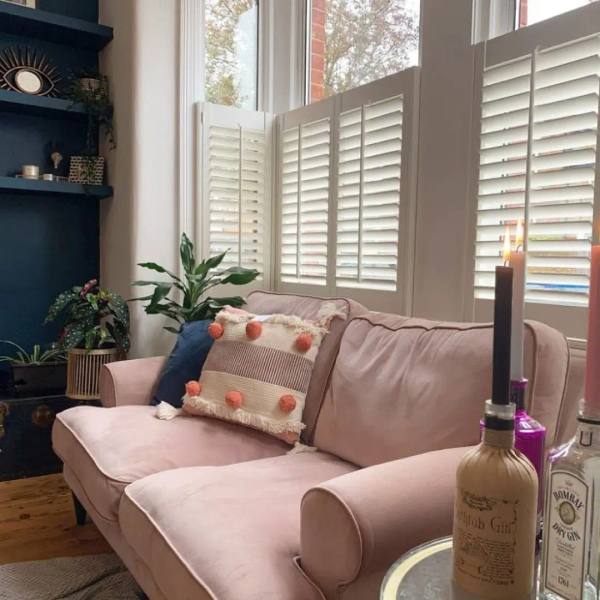
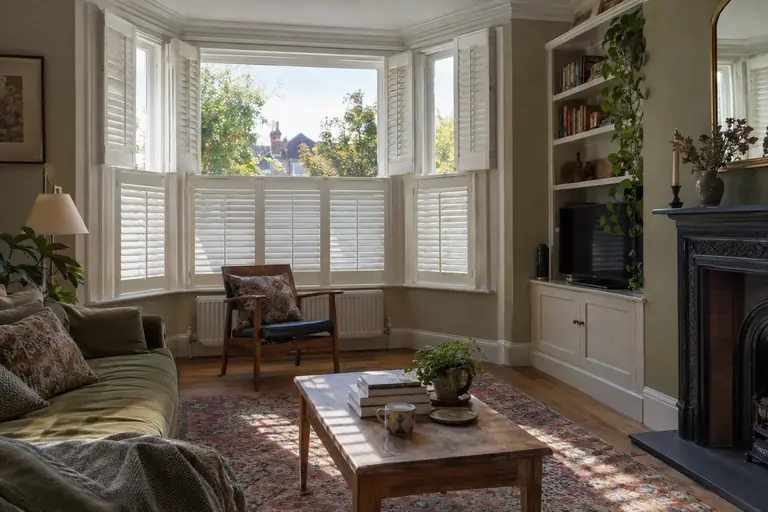
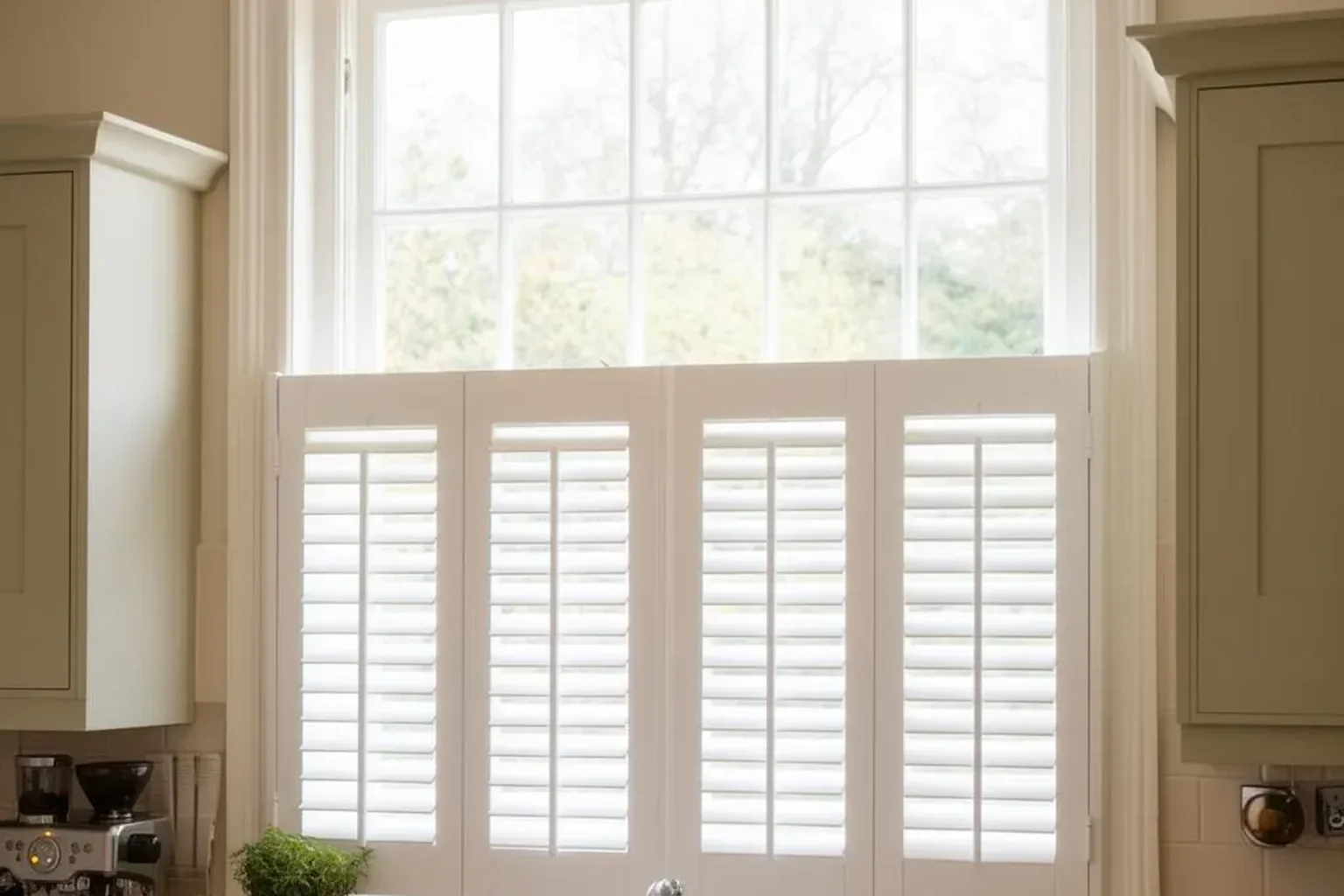
They also suit awkward openings. Because the frame is built to the window, a splayed bay, an arched top or an out-of-square reveal can be covered as one neat set rather than a row of blinds that never quite line up. On a terraced house, café style shutters cover the lower half of the window for privacy and leave the top clear for light, which suits a street where the pavement runs right past the glass.
There are practical gains too. Shutters have no cords or chains, which makes them a straightforward choice in a child's bedroom. They are dusted with a soft brush rather than taken down and washed. And in a period house they can look as if they have always been there, which is a large part of why people choose them.
Do shutters keep a room warmer and cooler?
They help, and there is real evidence behind it. In laboratory tests on a traditional single-glazed sash window, Historic Environment Scotland found that closed timber shutters cut heat loss by 51%, against 14% for curtains and 22% for a modern roller blind. On modern double glazing the gains are smaller, because the glass is already doing more of the work.
Those are test figures, not a promise about your bills, and the result depends on how well the shutter fits the opening and whether you close it at dusk. What most people notice is comfort: the chill coming off the glass on a winter evening is noticeably less with the louvres and panels shut.
In summer the same shutter works the other way. The UK Health Security Agency lists large east-, west- or south-facing windows with no shading among the things that make a home more likely to overheat. Tilting the louvres closed on the sunny side of the house during the hottest hours keeps much of that heat out while still letting some light through.
Where a shutter is not the best answer
Shutters are not the right buy for every window, and it is better to know that before the appointment than after.
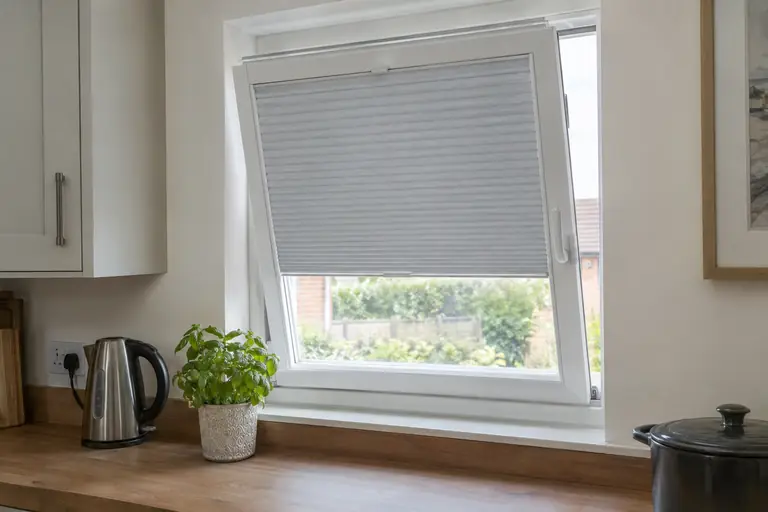
If a bedroom must be properly dark, louvred shutters will disappoint on a summer morning, because light finds its way round the edge of each blade. Solid panels are darker, or a blackout blind behind the recess may suit the room better. On a tilt-and-turn window, a shutter frame can foul the handle and stop the window opening inwards, and a perfect fit blind on the glass is often the more practical answer.
Hinged panels need somewhere to go. If a wardrobe, a bed head or a radiator sits tight against the window, the panels may not fold back fully. Steamy rooms need the right material: real timber moves in daily steam, so waterproof bathroom shutters are made from a material that takes it in its stride.
Finally, think about how long you will stay. Shutters are fixed to the building and stay with the house when you move. In a listed building, Historic England's guidance is that the listing covers anything fixed to the building, so ask your conservation officer before fitting. Your advisor will tell you plainly on the day if a window would be better with something else.
Shutters, blinds and curtains side by side
The fairest way to judge shutters is against what you would otherwise put at the window. Each option is better at something, and the table below sets out where the differences really lie.
Shutters win on control and permanence. No other window dressing lets you angle daylight away from a screen, keep the street out and still see the sky, all without touching a cord. They also cope with shapes that defeat most blinds, and they hold more warmth at the glass than a single layer of fabric.
Blinds win on flexibility and darkness. A roller or a Roman goes up out of the way when you want the whole window clear, a blackout fabric makes a bedroom properly dark, and the outlay is lower, which matters when there are a lot of windows to do. Curtains bring softness, colour and pattern, and lined or interlined pairs are warm too.
The answer is often a mix. Shutters on the front windows, where privacy and kerb appeal matter, with blinds in the kitchen and bedrooms, is a common combination. The right choice usually comes down to how you use each room: how much light you want to keep, how private it needs to be, and whether you want the window completely clear at times.
How to decide for your own windows
So, are shutters worth it for your home? Start with the rooms you use most and the windows you look at every day. Shutters make most sense where you will appreciate them daily: the front room, a bay, a bedroom where you want privacy without closing out the morning light. It is common to fit shutters to the main windows and blinds elsewhere, such as a roller in the kitchen or a perfect fit blind on a tilt-and-turn window, rather than one product throughout.
Then look at each opening. How deep is the reveal? Is there a handle, a radiator or furniture in the way? Does the window open inwards? Those details decide what fits far more than a photograph does, which is why every window is surveyed before it is quoted.
The simplest way to answer the question for your home is to see the materials against your own glass. Whether you are looking for plantation shutters in Manchester or closer to home in West Yorkshire, our advisor brings hardwood, engineered wood and waterproof samples to every visit, measures each window and leaves a written price, itemised per window, with nothing to pay on the day.
Every shutter is made to measure and fitted by our own team, and you can browse the full range from Impress Blinds before you book.
Checklist
- List the windows you look at every day; shutters pay back most there.
- Decide whether each room needs light and privacy or full darkness.
- Check for handles, radiators and furniture near each window.
- Note any tilt-and-turn windows that open inwards.
- Choose waterproof shutters for bathrooms and steamy rooms.
- If the house is listed, speak to your conservation officer first.
- See the materials against your own window before deciding.
Pros and cons
In its favour
- Daylight and privacy at the same time by tilting the louvres.
- No cords or chains, which suits children's rooms.
- Built to the opening, so bays, arches and out-of-square windows are covered neatly.
- Strong at holding warmth at the window, especially on single glazing.
- Very little upkeep: a soft brush along the louvres.
Worth knowing
- A larger outlay than a blind, because each shutter is made and fitted to one opening.
- Louvred panels dim a room rather than black it out.
- Hinged panels need space to fold back, clear of furniture and radiators.
- Not suited to most tilt-and-turn windows.
- Fixed to the building, so they stay behind if you move.
Room by room
- Street-facing living roomA great fitTilt the louvres up for daylight while passers-by see only the blades.
- Bay windowA great fitBuilt as one set to the angles of the bay, so every face lines up.
- Child's bedroomWorks wellNo cords at all; for summer naps, solid panels or a blackout blind make it darker.
- BathroomWorks wellWorth it in a waterproof material that copes with daily steam; keep real timber out.
- Tilt-and-turn windowThink twiceThe frame can foul the handle; a perfect fit blind usually works better.
- Rented home or short stayThink twiceShutters are fixed and stay with the house, so you may not see the benefit for long.
Side by side
Light and privacy
- Plantation shutters
- Tilt the louvres for daylight and privacy at once
- Blinds
- Up or down; venetians tilt, day and night blinds alternate bands
- Curtains
- Open or closed; voiles add daytime privacy
How dark it gets
- Plantation shutters
- Dim, not dark; solid panels are darker
- Blinds
- Blackout fabrics can make a room properly dark
- Curtains
- Blackout linings make a room very dark
Warmth at the window
- Plantation shutters
- Strong, especially on single glazing
- Blinds
- Good; thermal and honeycomb fabrics do more
- Curtains
- Good with thermal or interlined curtains
Cords and child safety
- Plantation shutters
- No cords at all
- Blinds
- Cordless and motorised options; corded blinds need safety devices
- Curtains
- Corded tracks need the same care as corded blinds
Odd shapes and bays
- Plantation shutters
- Built to the opening, including bays and arches
- Blinds
- One blind per face; shaped blinds for some openings
- Curtains
- A bay pole or track follows the shape
Outlay
- Plantation shutters
- Highest; built and fitted to one opening
- Blinds
- Lowest to middle, depending on type and fabric
- Curtains
- Middle to high for made-to-measure lined pairs
Moving house
- Plantation shutters
- Fixed, so they stay with the house
- Blinds
- Usually stay with the house
- Curtains
- Easy to take with you