The short answer
Blackout curtains have a dense lining that stops light passing through the fabric, so even a pale fabric can make a dark room. What the lining cannot stop is light coming round the curtain: over the top of the pole, down the sides, through the middle and under the hem. Running the pole or track wider and higher than the window, hanging the curtains to the floor and overlapping them in the middle all help. For the darkest result, add a blackout blind inside the recess.
- The blackout lining stops light through the curtain, so a pale fabric can still make a dark room.
- Most light comes round the curtain: over the pole, down the sides, through the middle and under the hem.
- Take the pole or track wider and higher than the window, and hang the curtains to the floor.
- A blackout blind in the recess with curtains over it is the darkest combination.
- NHS advice for better sleep includes a dark, quiet bedroom, using curtains or blinds if needed.
A blind and curtains on one window, from the side
Swipe to see the whole diagram
A slim blind inside the reveal gives privacy and blackout; curtains on a pole outside it add warmth and close the light gap round the edges.
What makes a curtain blackout
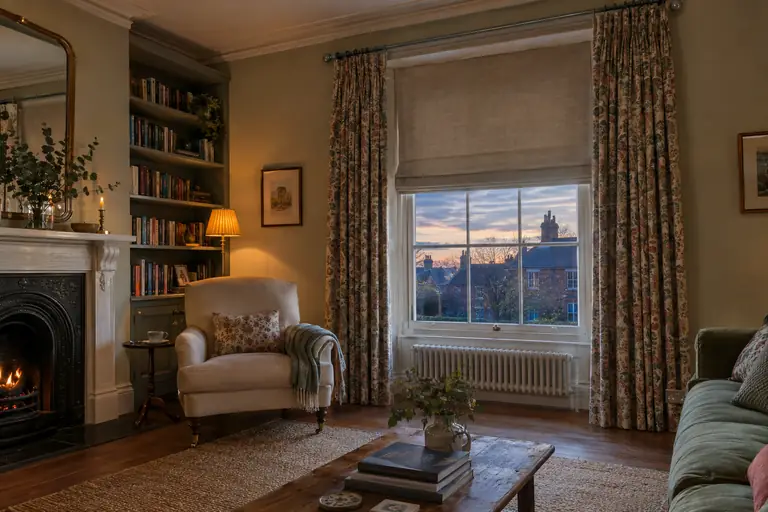
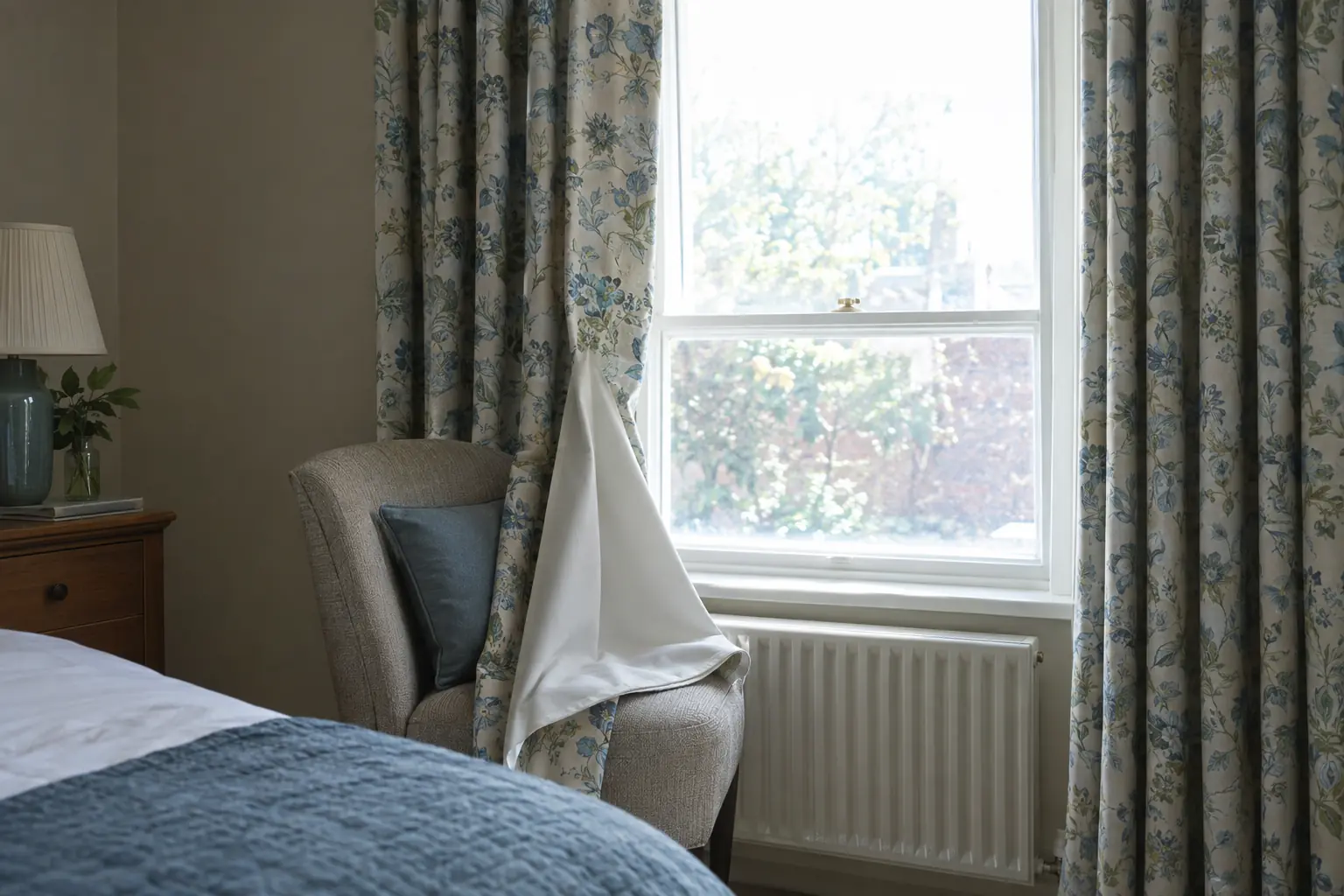
A blackout curtain is an ordinary curtain with an unusually capable lining. The face fabric, the part you see from the room, can be a plain weave, a print or a textured fabric. Behind it is a lining made to stop light altogether, so the colour and weight of the front no longer decide how dark the room gets.
That has a useful consequence: you do not have to choose a dark fabric for a dark room. A pale linen with a blackout lining keeps the light out as well as a navy one, and in a small bedroom a light colour can stop the room feeling closed in during the day. The lining also faces the street, so from outside every blackout-lined window looks much the same.
The lining is worth seeing before you choose. A blackout lining is heavier and stiffer than a standard one, so it changes how the curtain hangs: the folds are firmer and the curtain has more body. Your advisor brings the full sample range to your home, so you can see how a lined fabric falls against your own window, in your own light.
Where the light still gets in
Close a pair of blackout curtains on a bright June morning and the fabric itself will be dark. The light you notice will be coming from somewhere else, and it is nearly always one of four places.
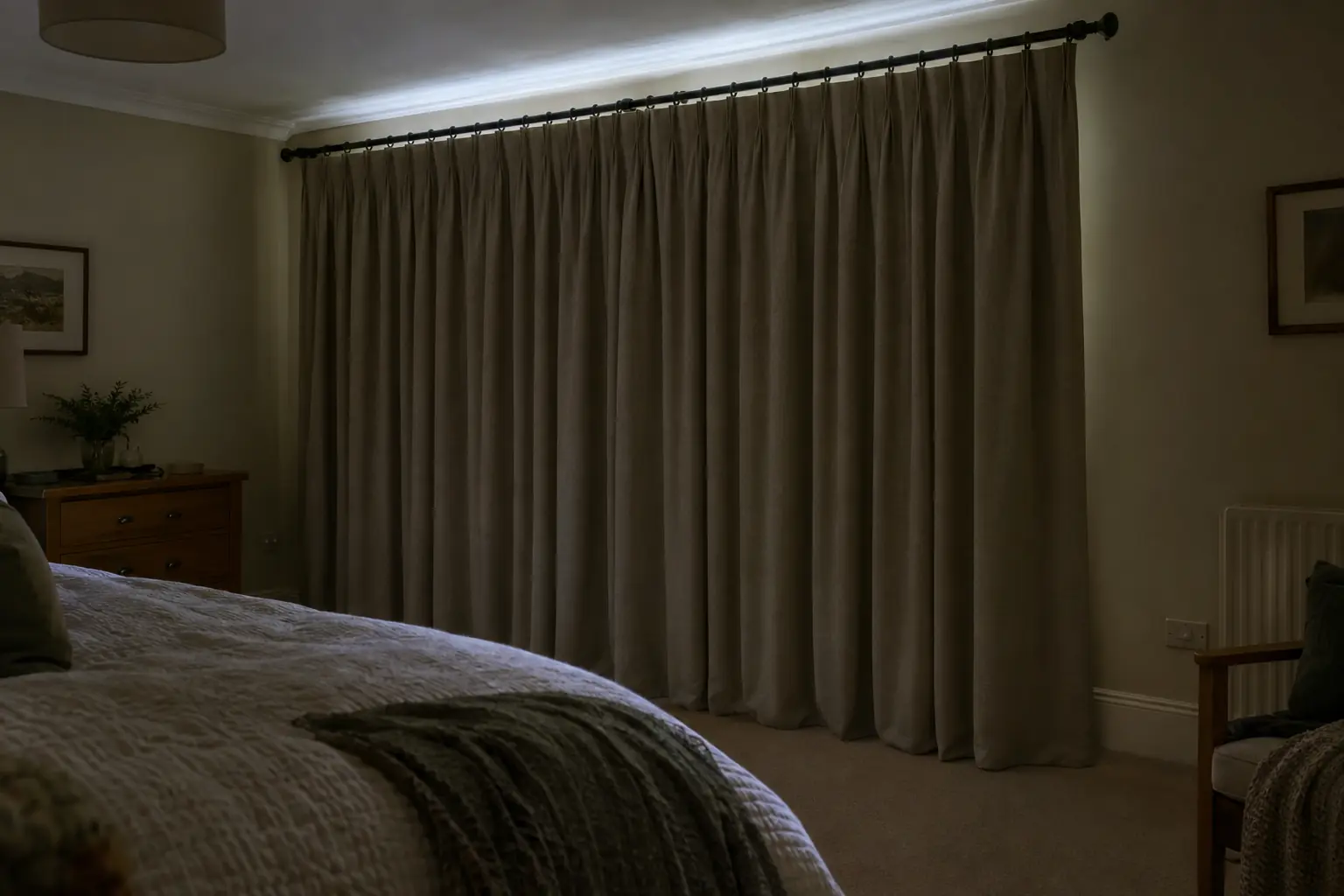
Over the top. A curtain hanging from a pole leaves a gap between the pole and the wall, and light rises through it and spreads across the ceiling. Down the sides. If the curtains stop at the edges of the window, light bounces off the reveal and round the outer edge of each curtain. Through the middle. Where the two curtains meet, a pair that only just touches will part slightly and let a vertical line through. And underneath. A sill-length curtain leaves the bottom of the window to light up the wall below it.
None of these is a fault in the curtain. They are what happens when fabric hangs in front of an opening rather than sealing it, and most of them can be designed out before anything is made. The next two sections cover how, and when a blind is the better answer.
Hanging blackout curtains for a darker room
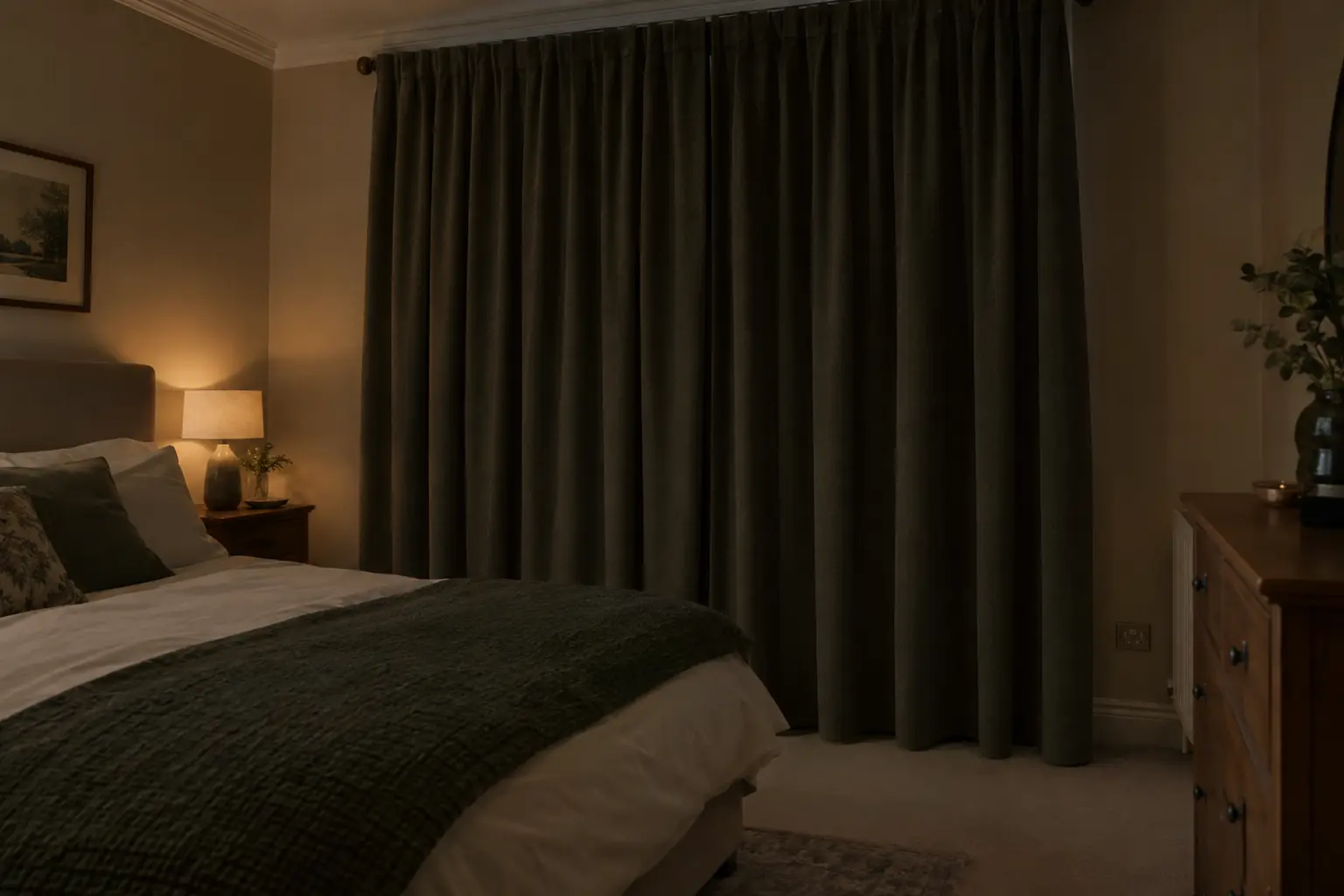
Most of the light round a curtain can be dealt with at the planning stage.
Go wider. The pole or track should run past the window on both sides, so that when the curtains are closed they overlap the wall rather than the edge of the opening. It also lets them stack clear of the glass when they are open.
Go higher. Setting the pole or track well above the frame puts the gap at the top further from the glass, and less light finds its way through. A track can be fixed close under the ceiling, and a heading that stands up in front of it, such as pencil or pinch pleat on hooks set high, covers the top of the track altogether.
Go longer. Floor-length curtains close off the bottom of the window where sill-length ones cannot. If there is a radiator under the window, read our thermal curtains guide before deciding.
Overlap in the middle. A pair made with enough width to overlap where they meet, rather than just touch, closes the line of light down the centre.
Your advisor measures with all of this in mind and will tell you on the day what your window and wall allow.
A blind and curtains together
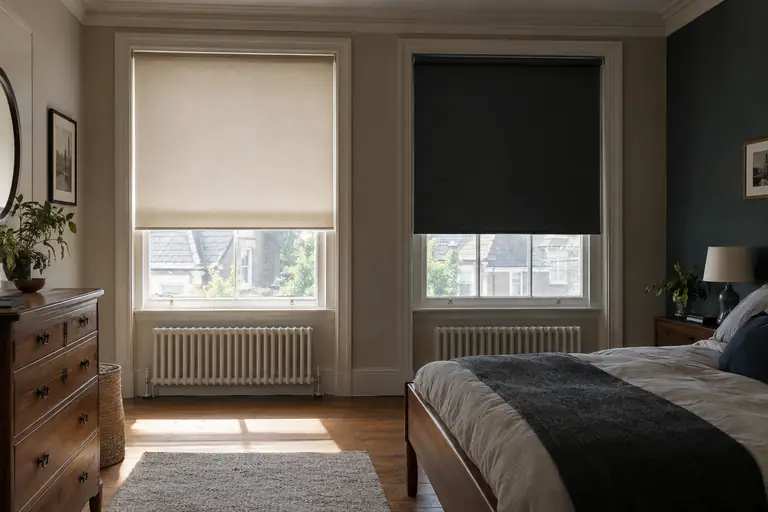
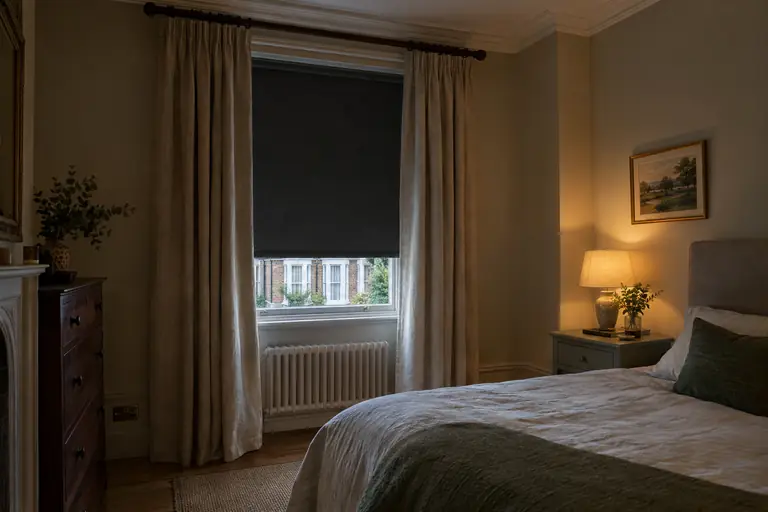
The darkest way to dress a window is to stop the light twice. A blackout blind fitted inside the recess sits close to the glass and stops most of the light at the window itself. Blackout curtains hung outside the recess, across the face of the wall, then catch what gets round the edges of the blind.
Each covers the other's weak spot. A blind in a recess needs a little clearance at each side so it can roll or fold without scraping, and that clearance lets a thin line of light through. The curtains close it off. Curtains leave light over the top and round the ends; the blind has already stopped most of that light before it gets there.
It is the combination that finally gets a bedroom properly dark, and it has a practical advantage too. On a light summer evening you can pull down the blind and leave the curtains dressed open, then draw the curtains as well on a cold winter night. The recess needs to be deep enough for the blind to work behind the curtains, which your advisor checks. Our layering blinds and curtains guide covers the combinations in more detail.
Sleep, light mornings and street lamps
Plenty of people sleep through anything. For others, the early light of a British summer, a street lamp outside the window or headlights sweeping across the ceiling is enough to wake them.
NHS advice for insomnia includes making sure the bedroom is dark and quiet, using curtains, blinds, an eye mask or ear plugs if needed. The NHS Every Mind Matters advice makes a similar point: you may find it easier to sleep in a room that is quiet, dark and cool. And NHS advice for children's sleep suggests making the bedroom dark for sleep, for example with blackout blinds.
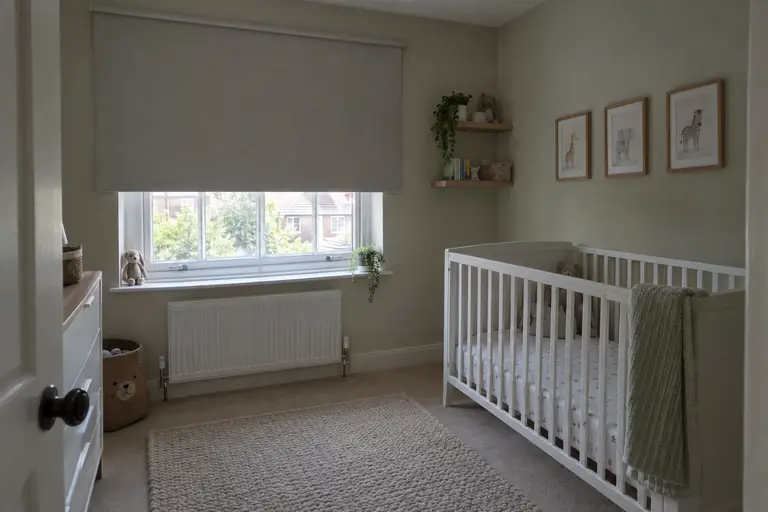
That is why the rooms that most often need blackout curtains are east-facing bedrooms that catch the sun at dawn, children's rooms where bedtime comes before sunset for half the year, bedrooms that face a street light, and the bedrooms of shift workers who sleep through the brightest part of the day. In each of them, the lining is the start and the way the curtain is hung does the rest.
Blackout curtains in children's rooms
A child's room is where blackout curtains often do the most work, and where a few extra points matter.
A curtain on a pole, drawn by hand, has no cord at all, which makes it a straightforward choice. If the curtains hang from a corded track, treat that cord with the same care as a blind cord; RoSPA points out that corded curtain tracks can pose the same risks as blinds.
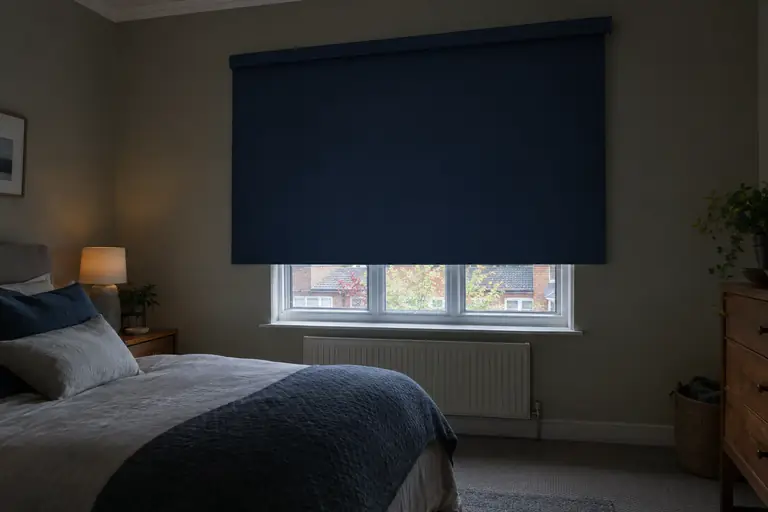
If you add a blind behind the curtains for extra darkness, the choice of blind matters more than the curtain. With cots or small children, we usually recommend a cordless or motorised blind. Every corded blind we supply comes with the child-safety devices required by UK regulations, and the fitter installs them and shows you how they work. CAPT, the Child Accident Prevention Trust, also advises moving cots, beds and highchairs away from looped blind cords, and other furniture a child could climb on.
Children's rooms are played in by day as well as slept in, so choose curtains that open fully clear of the glass, and a face fabric that will still suit the room in a few years. The lining does the same job whatever the pattern. Our nursery and children's room blinds guide has more.
Blackout or another lining
Not every room needs to be completely dark, and blackout is only one of four linings. A standard lining gives a curtain body and a better drape and cuts some light, which is plenty for most living rooms. A thermal lining is there to help keep warmth in rather than light out. Interlining makes a curtain heavier and fuller, but on its own it is not a blackout layer.
The right lining follows the room's job. Bedrooms, nurseries and rooms used for films in the afternoon usually want blackout. Cold, north-facing rooms and draughty single-glazed windows usually want thermal. Formal rooms where the curtains are mostly dressed open often suit interlining for its weight and fold. Some rooms want more than one quality, and your advisor will tell you what is available with the fabric you like.
Blackout linings are dense, and heavy curtains help at night in another way too: GOV.UK advice is that curtains made with heavy material can reduce heat loss through a window at night. For more on warmth, see our thermal curtains guide, and for the difference across blinds and curtains, our blackout, thermal and dimout guide.
Pros and cons
In its favour
- Stops light through the fabric, whatever the colour of the face fabric
- Hangs outside the recess, so it can overlap the wall on every side
- Adds weight and body, so the folds hang firmly
- Pairs well with a blackout blind in the recess for the darkest room
- On a pole, drawn by hand, there is no cord in a child's room
Worth knowing
- Light can still get in over the pole, down the sides and under a short hem
- The stiffer lining changes the drape of light fabrics
- Heavier to draw and wider to stack than a curtain with a standard lining
- On its own, rarely as dark as a blind and curtains together
Room by room
- Main bedroomA great fitFloor-length blackout curtains on a wide pole or track cut out the early light of summer mornings.
- Nursery or child's bedroomA great fitDark for daytime naps and light summer bedtimes; hang on a pole, or keep any track cord out of reach.
- Shift worker's bedroomA great fitPaired with a blackout blind in the recess, it keeps the room dark through the brightest part of the day.
- Snug or TV roomWorks wellCuts afternoon glare on a screen and makes the room feel enclosed on a winter evening.
- Living roomThink twiceA standard or thermal lining usually suits better, unless the room doubles as a place to watch films by day.
- KitchenThink twiceHeavy lined curtains near steam and a hob are hard to keep clean; a wipeable blind is simpler.