The short answer
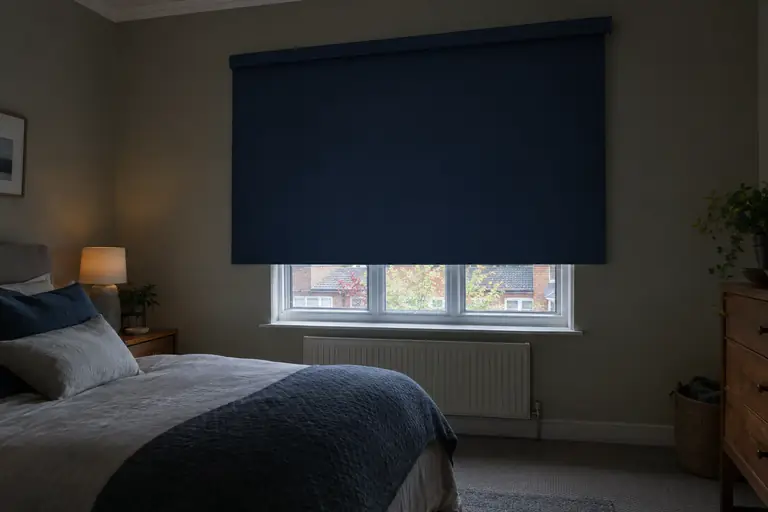
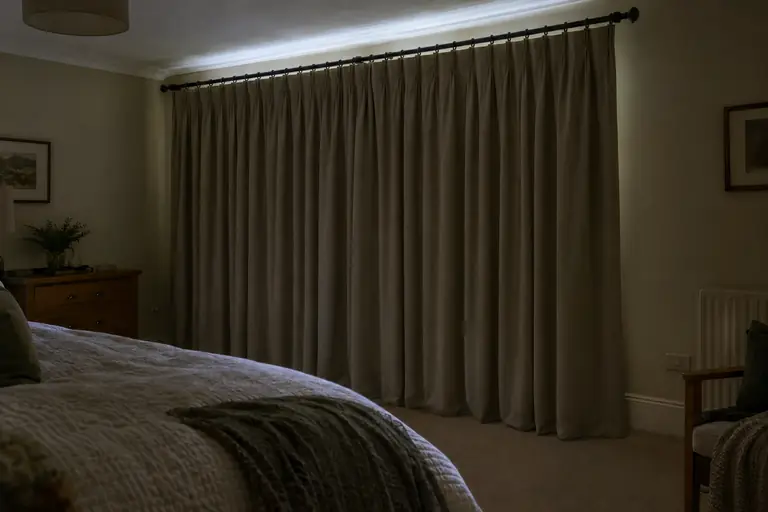
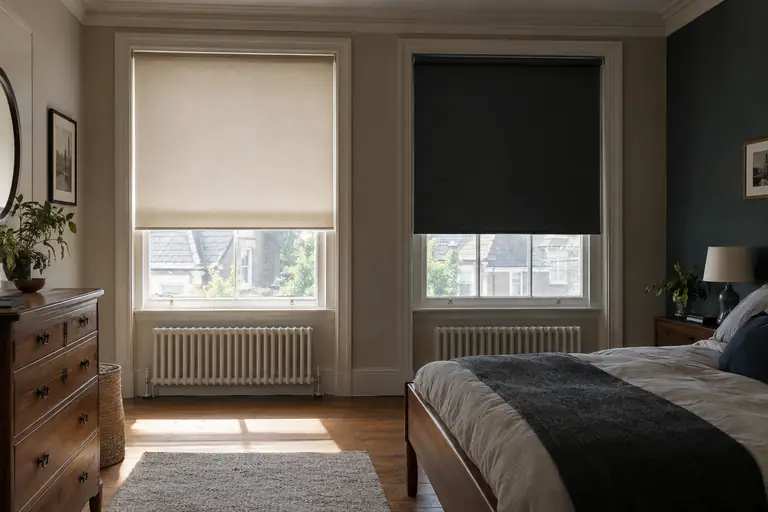
For most bedrooms the answer is a blackout blind, blackout-lined curtains, or both. A blackout roller or roman in the recess handles privacy and darkness; lined curtains on a pole outside it close the light gap at the edges and add warmth on cold nights. If you only want one layer, choose a blind fitted outside the recess, or blackout-lined curtains hung well past the frame.
- Blackout fabric stops light passing through the cloth; the fit decides how much creeps round the edges.
- A blind in the recess with lined curtains outside it is the darkest, warmest bedroom combination.
- Thermal linings and interlining help most on a cold outside wall or a single-glazed window.
- Put the control where you can reach it from beside the bed, and go cordless if children use the room.
- Judge blackout fabrics against your own window in daylight, not on a screen.
A blind and curtains on one window, from the side
Swipe to see the whole diagram
A slim blind inside the reveal gives privacy and blackout; curtains on a pole outside it add warmth and close the light gap round the edges.
What a bedroom window is asked to do
Most rooms want one thing from a window dressing. A bedroom wants several, at different times of day. In the morning you may want daylight, or you may want to sleep through it. In the evening, with the lamps on, you want the street and the house opposite kept out. Overnight you want the room dark, and in winter you want the cold glass covered.
The NHS advice on sleeping well is plain about the darkness: make sure the bedroom is dark and quiet, and use curtains, blinds, an eye mask or ear plugs if you need them. Its Every Mind Matters pages add that you may find it easier to sleep in a room that is quiet, dark and cool. A window dressing can help with two of those three.
Before choosing anything, spend a morning and an evening noticing what actually bothers you. An east-facing bedroom gets direct sun long before most alarms go off in midsummer. A front bedroom may have a street lamp outside it all night. A back bedroom facing a garden may need very little at all. Each wants a different answer, and the rest of this guide works through them.
Blackout: the fabric is only half of it
Blackout fabric has a coating on the back that stops light passing through the weave. Hold a sample up to a sunny pane and nothing comes through it. What the fabric cannot do is stop light going round it, and that is where most disappointment with bedroom blinds comes from.
A blind fitted inside the window recess needs a little clearance at each side so it can move freely. Light also finds its way over the top of the roll and, where a sill is uneven, under the bottom bar. With a street lamp outside you may never notice. At dawn in June you will. Fitting the blind outside the recess, so it overlaps the opening, sends most of that stray light onto the wall instead of into the room. Our guide to recess and exact fit explains the trade-off in detail.
Not everyone wants a pitch-black bedroom. Dimout fabrics take the room down a long way without the sealed feel, which suits people who like to wake with the light or who find total darkness disorientating in the night. Decide which you are before choosing a fabric: a blackout blind you then leave half raised is a roundabout way of getting dimout.
A blind, curtains or both
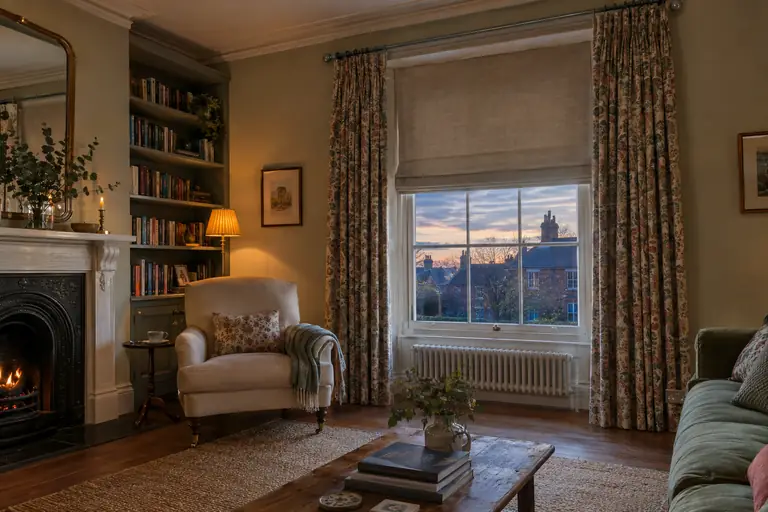
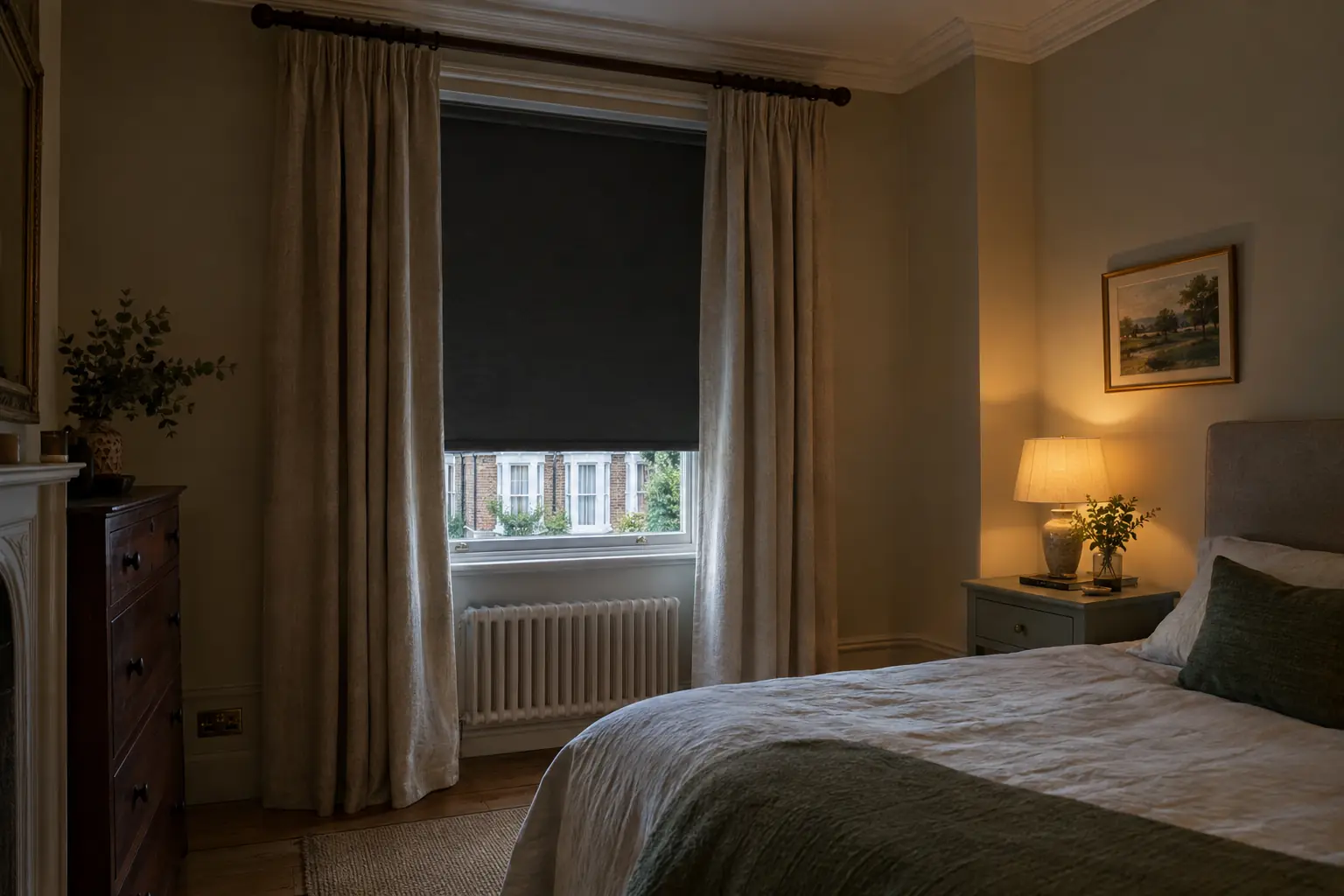
The darkest and most flexible bedroom window usually has two layers. A slim blackout roller or roman sits inside the reveal and does the daily work of privacy and darkness. Curtains hang on a pole or track on the wall outside it, overlapping the opening on every side, and close the gaps the blind leaves. The pair also gives you choices: blind down and curtains open on a warm summer night, both closed in December. Your advisor checks the reveal is deep enough for a blind to work behind curtains.
If you want just one layer, blackout-lined curtains are a forgiving choice, because they already sit outside the opening. Hang the pole wide enough for the curtains to stack back off the glass, and high enough that light cannot spill over the top.
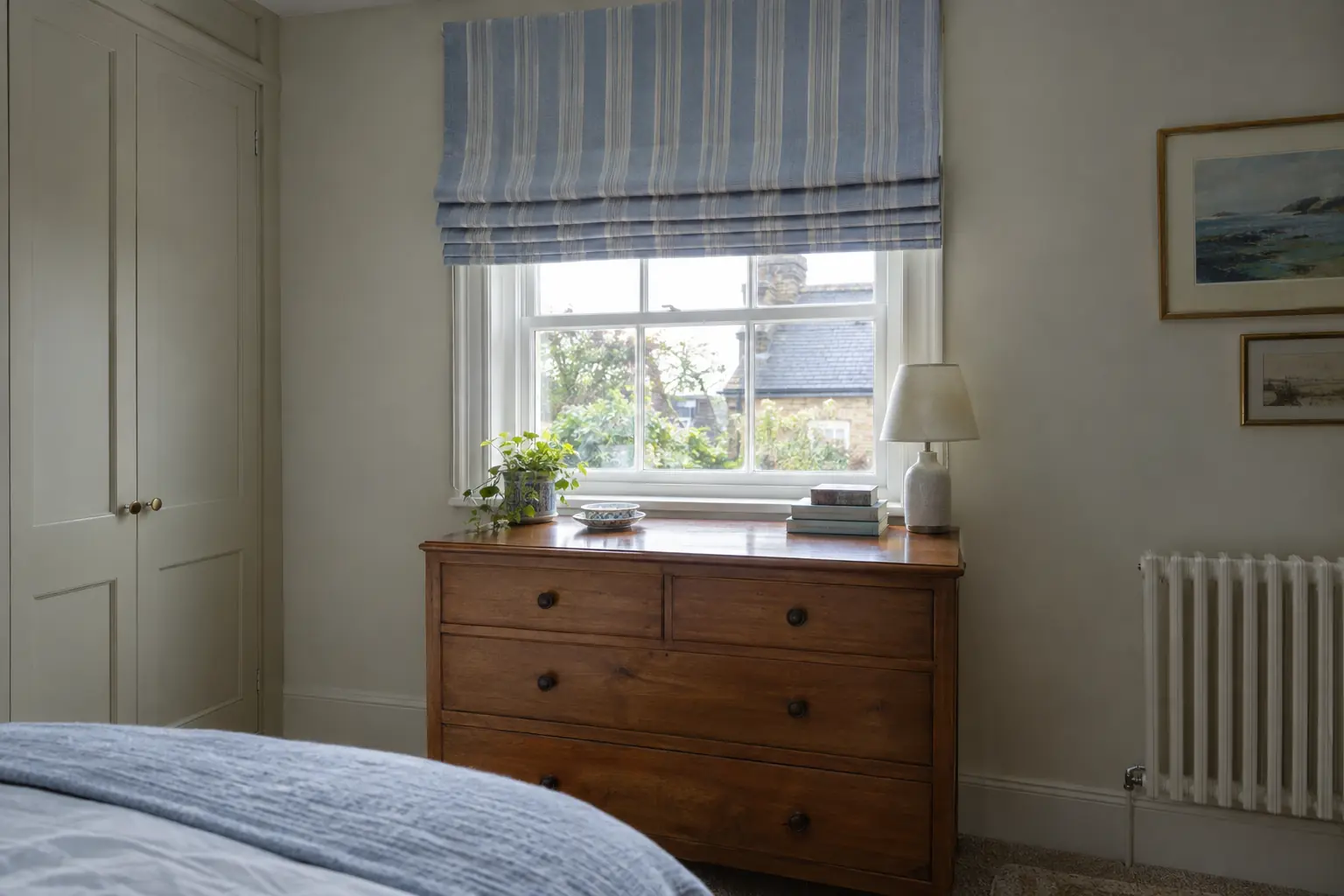
A roman blind with a blackout lining is the one-layer choice where full curtains will not work: a bed or a chest of drawers pushed under the window, a radiator below the sill, or a small room where curtains would take wall you need. A roller on its own is the most compact option of all, and the most likely to show light at the edges if it sits in the recess.
Keeping the room warm, and cool
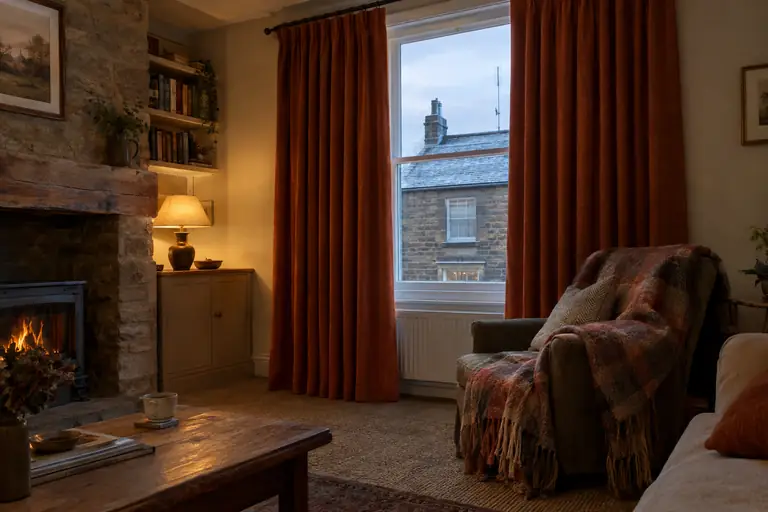
Bedrooms are often heated for an hour in the morning and an hour at night, and the window is usually the coldest surface in them. Curtains help here more than blinds. Government advice on draught-proofing notes that curtains made with heavy material can reduce heat loss through a window at night, and the Energy Saving Trust lists heavy thermal curtains among the ways to cut the heat lost through windows. Neither gives a figure, so be wary of anyone who promises one.
The lining does most of this work. A thermal lining helps a cold or draughty room, and interlining, a soft layer between the face fabric and the lining, adds weight and body. On a north-facing bedroom or a single-glazed window it is worth asking about both.
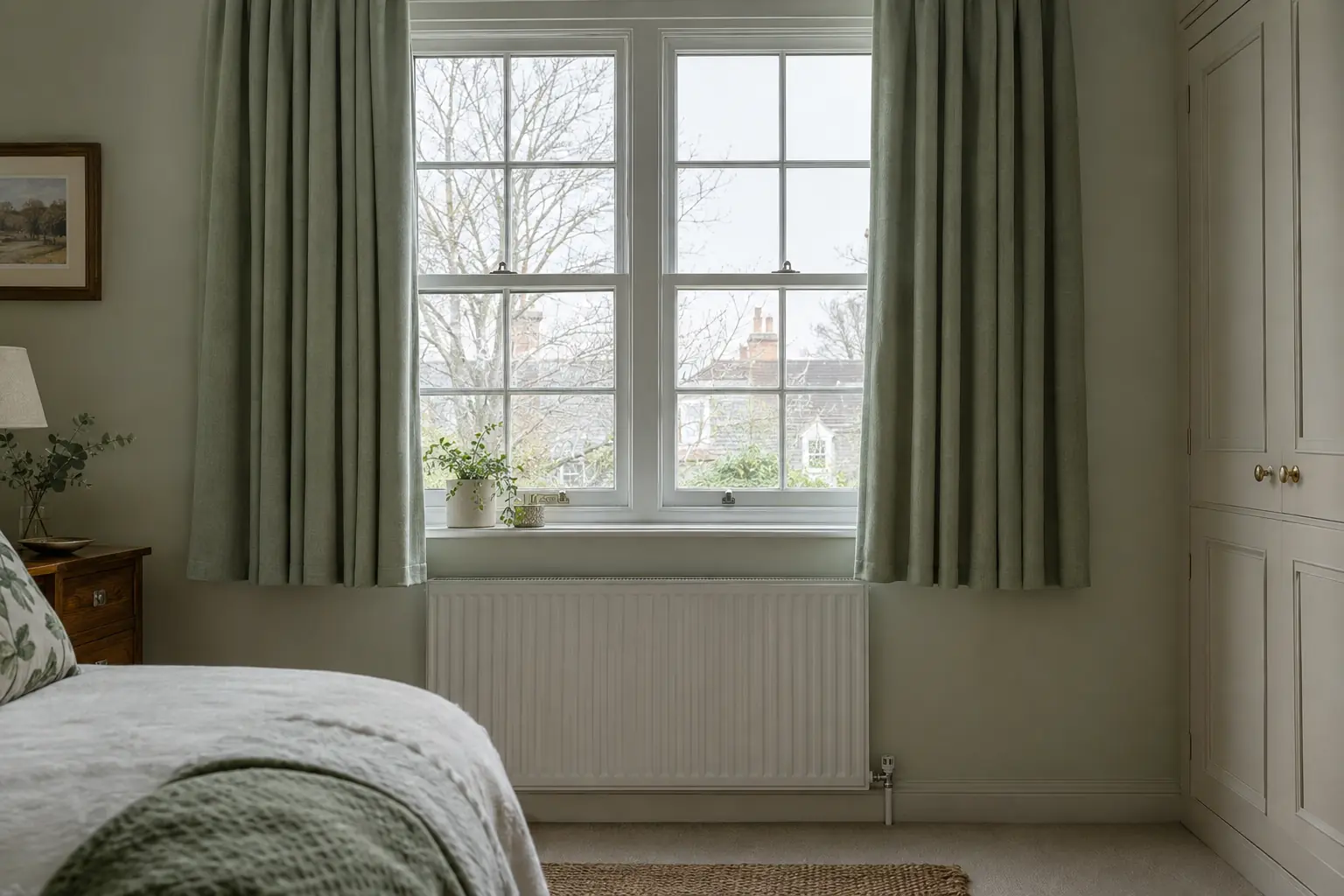
Watch the radiator. Full-length curtains drawn over a radiator under the window send its heat up behind the fabric and against the cold glass. Curtains that stop at the sill, or a blind in the recess, keep that heat in the room.
Summer is the other half. The UK Health Security Agency's hot-weather advice is to close blinds and curtains on windows in direct sunlight during the day. A bedroom kept shaded through a hot afternoon has less heat to lose before bedtime.
Privacy in a front bedroom
A bedroom that faces the street or a neighbour's windows needs privacy in the daytime as well as at night, and that is where a single blackout blind starts to feel heavy. Lowered all day, it turns the room into a cave; raised, it leaves you on show while you get dressed.
There are several ways round it. A day and night blind has banded fabric in two layers: line the sheer bands up and you get daylight with a veiled view, shift them and the solid bands close the window. It is not a blackout blind, so it pairs best with curtains for the night. A top down bottom up blind lowers from the top, covering the lower part of the window while the sky still lights the room. Voile curtains, or a voile roman behind the main curtains, give soft daytime cover in a more traditional room.
Shutters are the other answer, particularly in period houses. Tier-on-tier panels let you close the bottom half and open the top, and the louvres tilt to let light in without the view. Louvred shutters are not blackout on their own, because light passes between the blades, so in a bedroom that must be dark they are often paired with a blind, or made as solid panels.
Controls, timers and children
Think about how you will operate the window from where you actually are. A chain on the far side of a bed you have to climb across will not get used. Ask for the control on the side you can reach, or consider a motor. Motorised blinds run on battery or mains power, work from a remote or an app, and can be grouped and set to a timer, so a bedroom blind can open at the same time every weekday morning. For a high window, a window behind a headboard or a pair of windows either side of a bed, a motor is often the practical answer rather than a luxury.
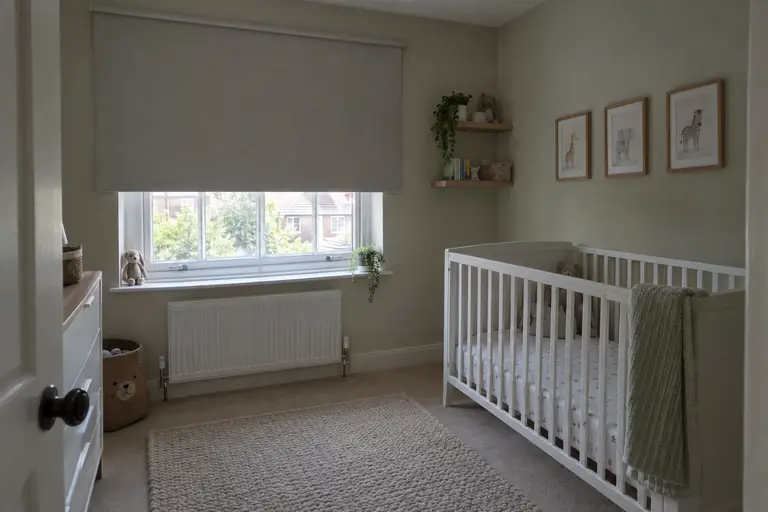
Every corded blind we supply comes with the child-safety devices required by UK regulations, and the fitter installs them and shows you how they work. If a child sleeps in the room, or plays in it, we would usually recommend a cordless or motorised blind instead. Our guide to nursery and children's room blinds covers that in detail, including where to put a cot or bed in relation to the window.
Choosing on the day
Blackout fabrics are hard to judge from a screen or a photograph. A colour that looks warm on a phone can look flat against a north-facing wall, and the coating on the back changes how the front reads with light behind it. At a free home appointment your advisor brings the full sample range, holds fabrics against your own window in your own light, and measures every opening. That is also the moment to hold a blackout sample up to the brightest part of the glass and see exactly what gets through.
If you are still narrowing down colours, you can order up to five free fabric samples first and live with them on the sill for a few days. Plenty of people do both: samples to settle the colour, then the appointment to settle the fit, the lining and whether the room needs one layer or two. There is nothing to pay on the day, and you can take the written quote away and think about it.
Checklist
- Note which way the window faces and when direct light first reaches it.
- Decide between blackout and dimout before you look at colours.
- Check what sits under the window: a radiator, the bed, a chest of drawers.
- Look at the room from the street in the evening with the lights on.
- Choose a control you can reach from beside the bed, or a motor.
- With children in the house, go cordless or motorised.
- Hold blackout samples up to the brightest pane before you decide.