The short answer
The best blinds for sash windows are Roman, wooden and roller blinds fitted inside the reveal, with enough depth to clear the sash catch and lifts. The best shutters for sash windows are tier-on-tier, with the split lined up with the meeting rail so each tier can open on its own. Café style shutters suit street-facing sashes, and full-height or solid shutters suit bedrooms and period rooms. Whatever you choose, both sashes must still slide easily.
- Measure the reveal depth first: the dressing has to clear the catch, the lifts and the staff bead.
- Tier-on-tier shutters suit sash windows because the split can line up with the meeting rail.
- Roman and wooden blinds inside the reveal keep the frame and glazing bars on show.
- Café style shutters cover the lower sash for privacy and leave the top sash clear.
- Shutters and lined blinds help keep draughty single-glazed sashes warmer at night.
What makes sash windows hard to dress?
A traditional box sash has two glazed sashes that slide up and down past each other, held in place by thin timber beads and balanced by weights or springs hidden in the frame. Where they meet in the middle is the meeting rail, usually with a catch on top. The lower sash often has lifts or a handle on its bottom rail, and many sashes have horns, the small projections at each side.
All of these stick out into the room, and anything you hang at the window has to clear them. A blind that hangs too close to the glass will catch on the fastener every time it comes down, and a shutter frame that is too shallow will not close.
Sashes also open in two directions. Many people open the top sash for air while keeping the bottom one closed for security, so the best window dressings for sashes let you do that without fighting the blind. Modern uPVC sash-style windows behave in much the same way, although some have slimmer frames and tilt inwards for cleaning.
How do you measure a sash window for blinds?
Start with the reveal depth, from the face of the wall to the staff bead, the inner strip of timber that holds the lower sash. Then measure how far the catch and lifts stand out from the glass. The difference tells you how much room a blind has inside the reveal.
Next, measure the width at the top, middle and bottom, and the drop at both sides. Older houses settle, so a sash reveal can be several millimetres narrower at one end than the other. A blind made to the widest point will rub; one made to the narrowest point will leave a gap.
If the reveal is shallow, a blind fitted outside the recess, on the wall above the window, will clear everything and cover any unevenness. Our guide to bay window ideas covers the extra angles of sash bays. In practice, your advisor measures every window at the appointment, checks the catches and notes which way each sash opens, so nothing is left to guesswork.
Which shutters suit sash windows best?
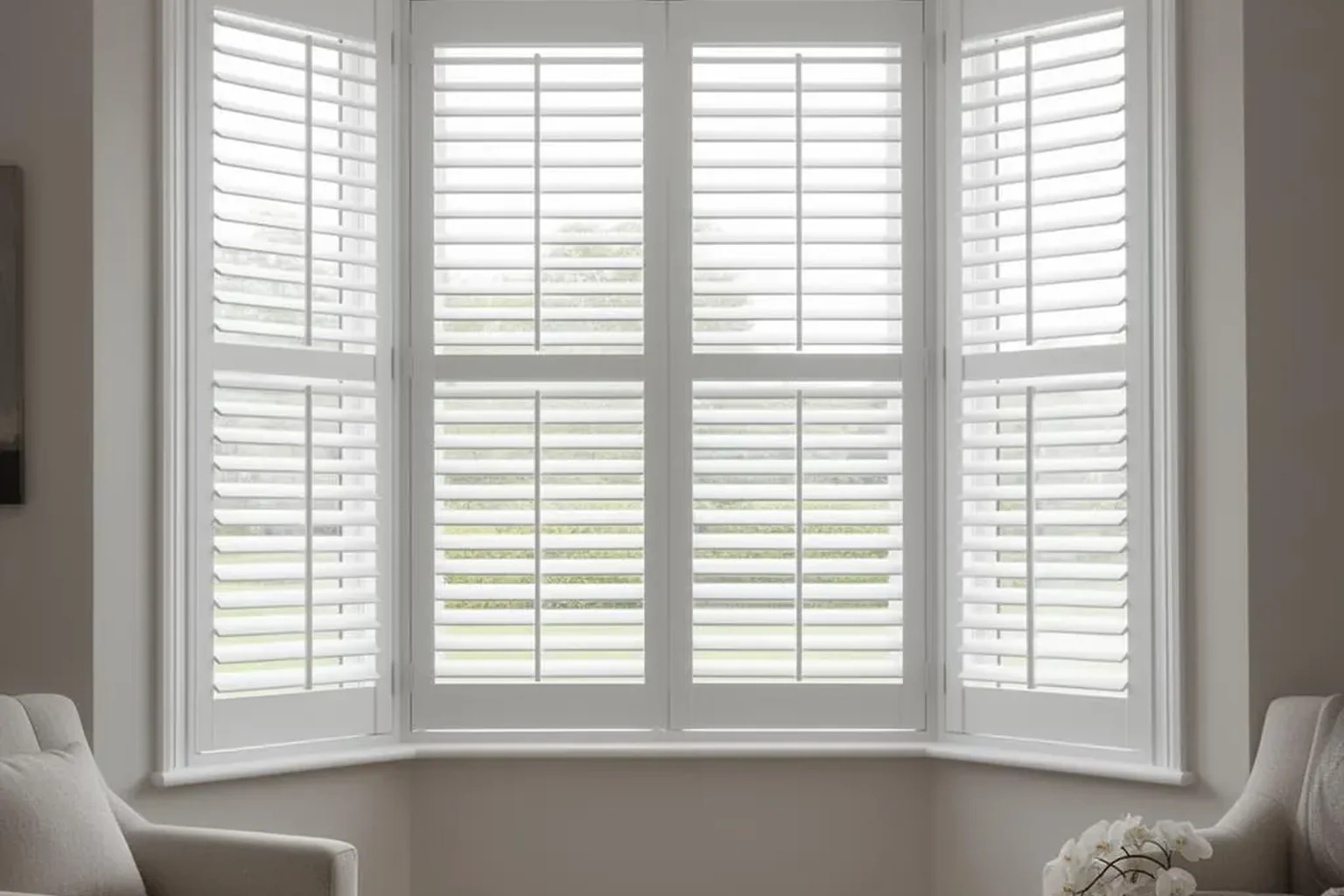
Tier-on-tier shutters are the classic choice. The panels are split into an upper and a lower tier, and the split can be lined up with the meeting rail so it disappears into the line of the window. You can fold the top tier open for light while keeping the lower tier closed for privacy, or open both fully by day.
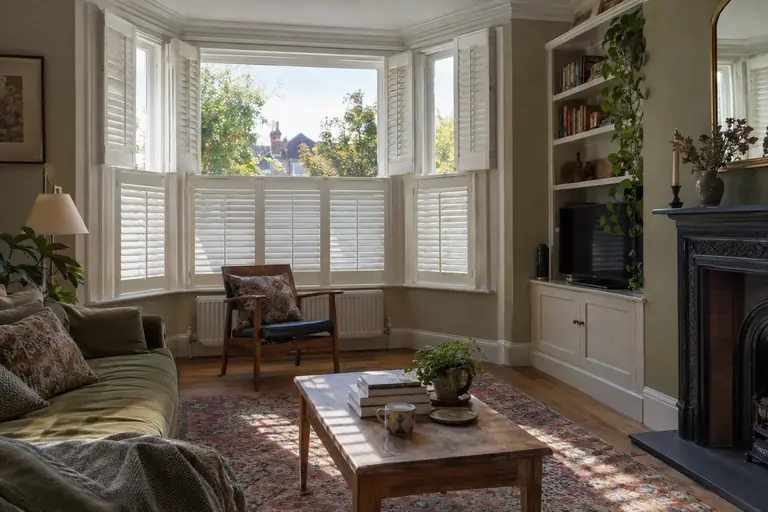
Café style shutters cover only the lower sash. They are popular on terraced streets, where the pavement runs close to the front window, because they screen the room at eye level and leave the top sash clear for light and air.
Full-height shutters run as a single panel from top to bottom. They give the cleanest look and suit tall Georgian sashes, while solid panels, with no louvres, suit bedrooms where darkness matters. Whichever style you choose, the frame is built deep enough for the louvres to tilt without touching the sash catch.
Which blinds work best on sash windows?
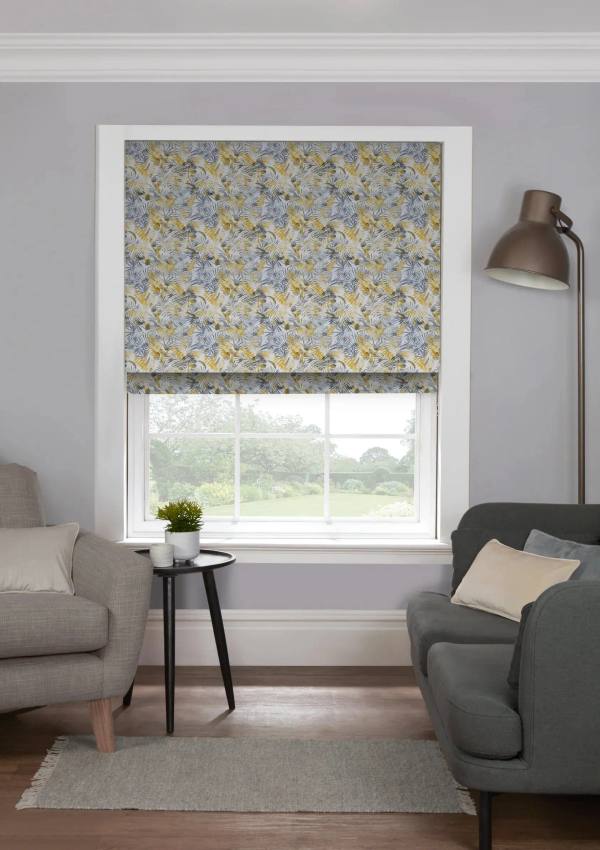
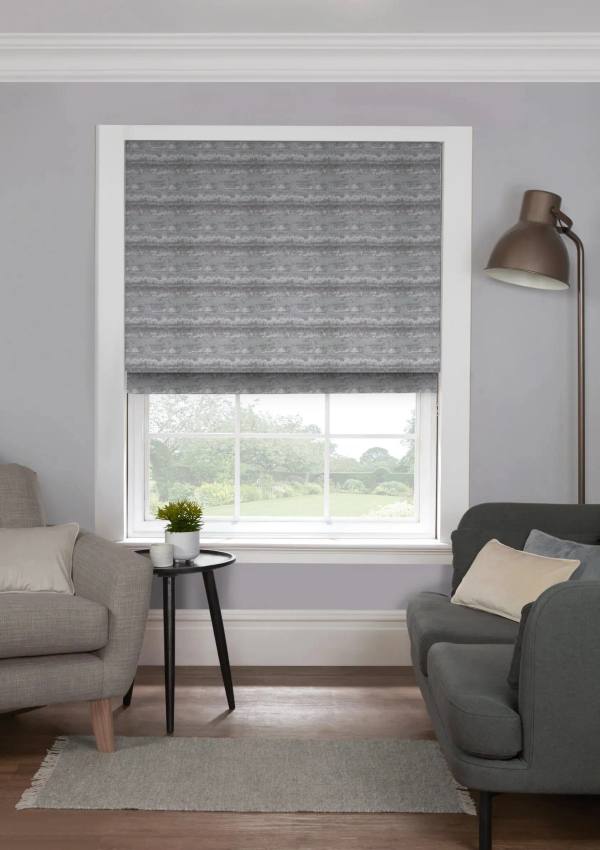
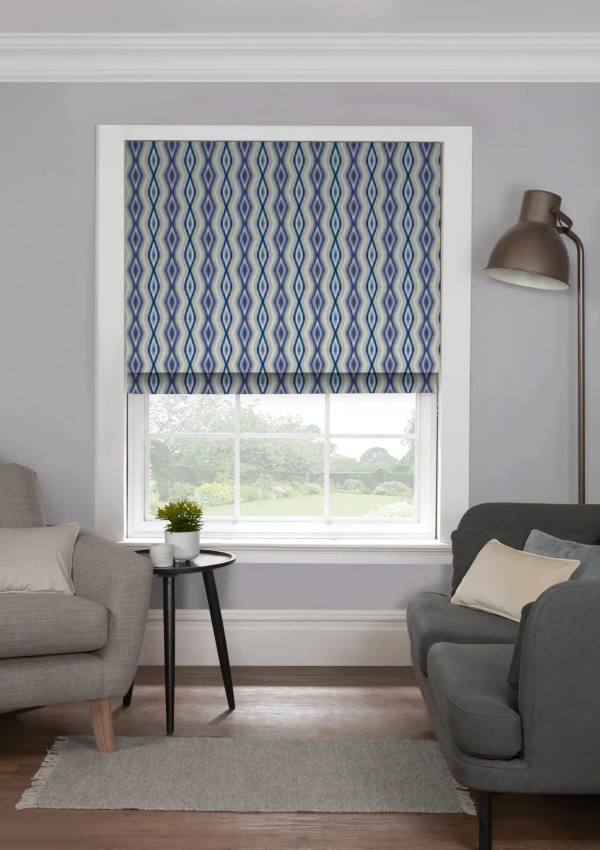
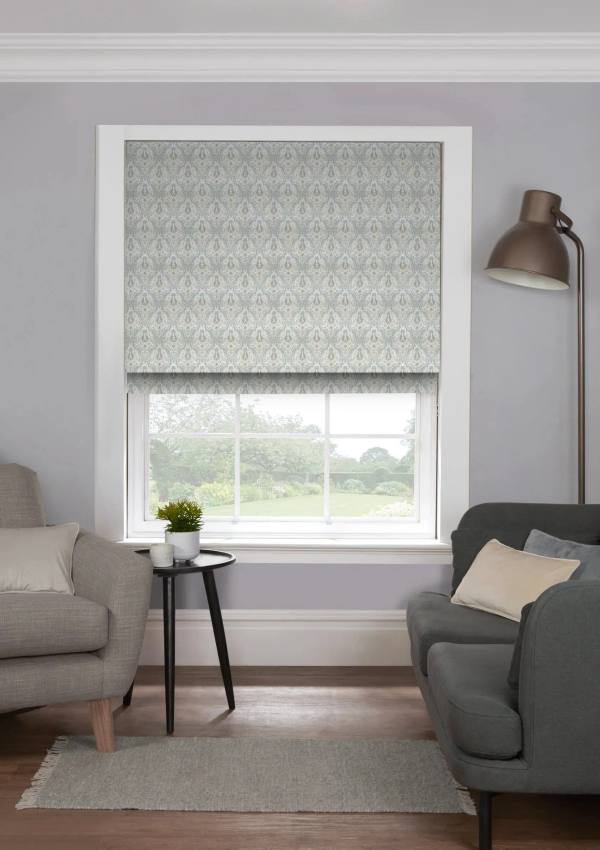
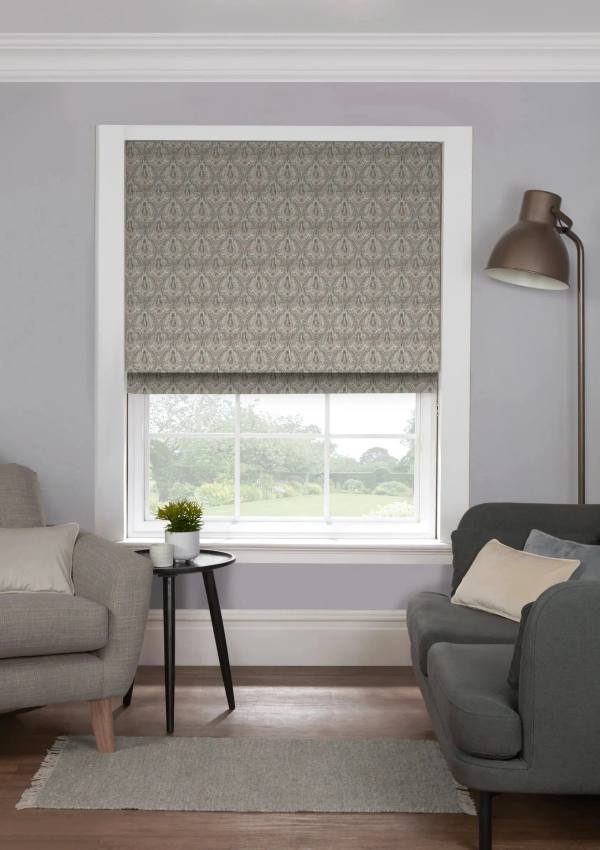
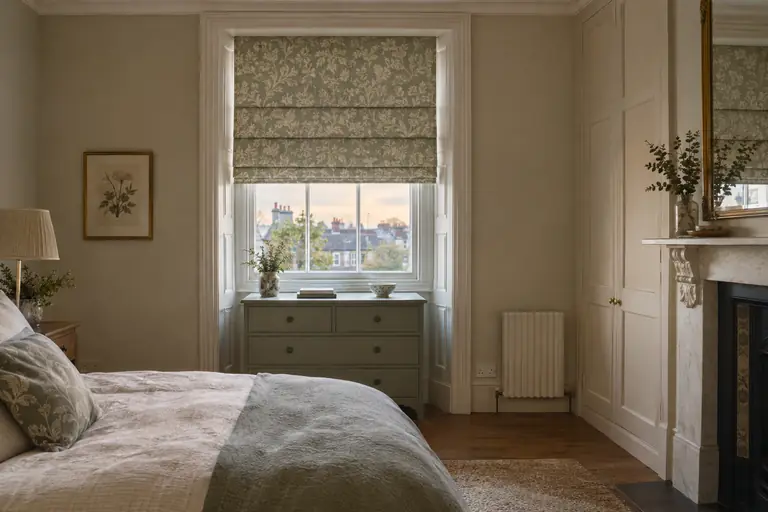
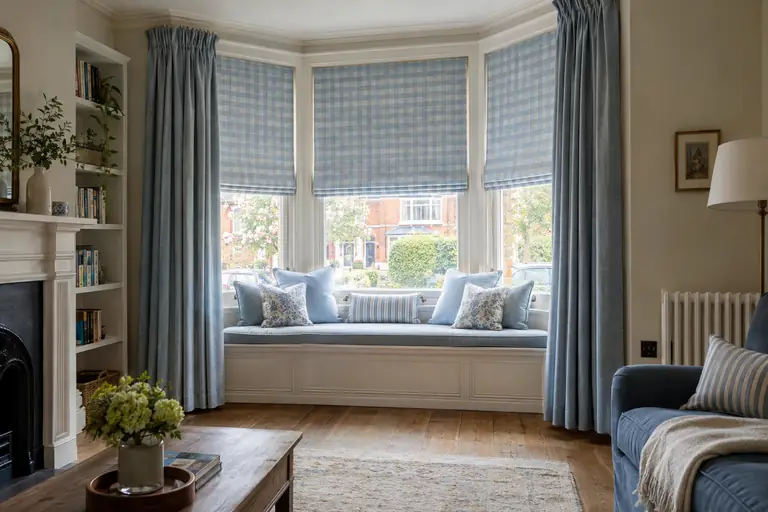
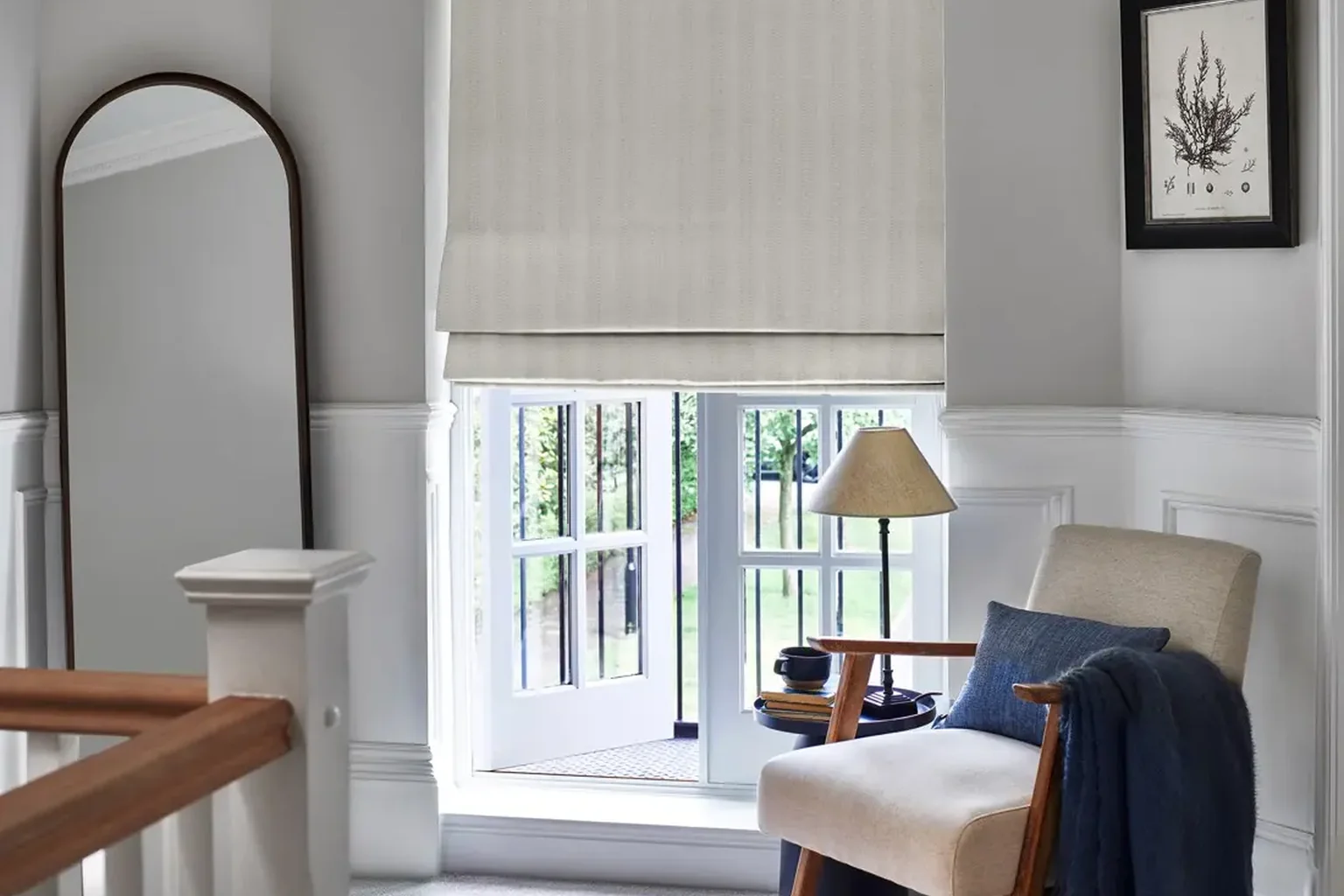
Roman blinds are a natural partner for period sashes. Fitted inside a deep reveal, they fold up neatly above the window and leave the glazing bars on show, and a lined or blackout fabric gives warmth and darkness at night.
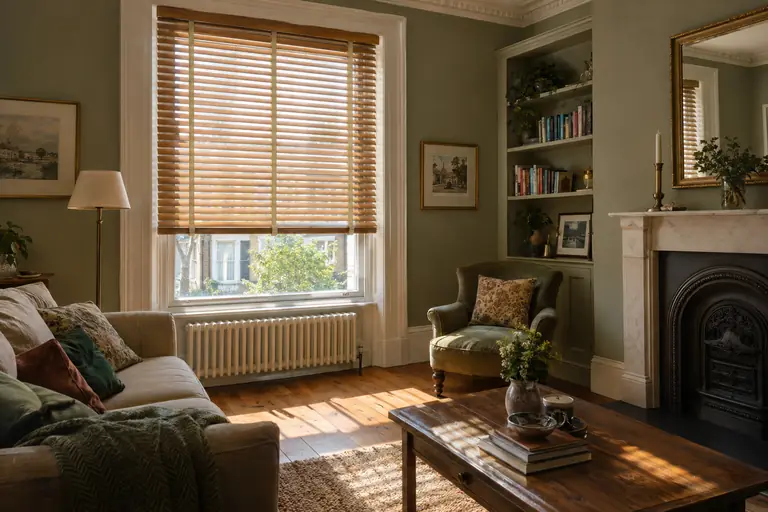
Wooden blinds suit sash windows in kitchens, studies and bay windows. The slats tilt to control light and privacy, and the timber suits original joinery. Choose a slat size that sits comfortably within the reveal depth; your advisor checks this against the catch.
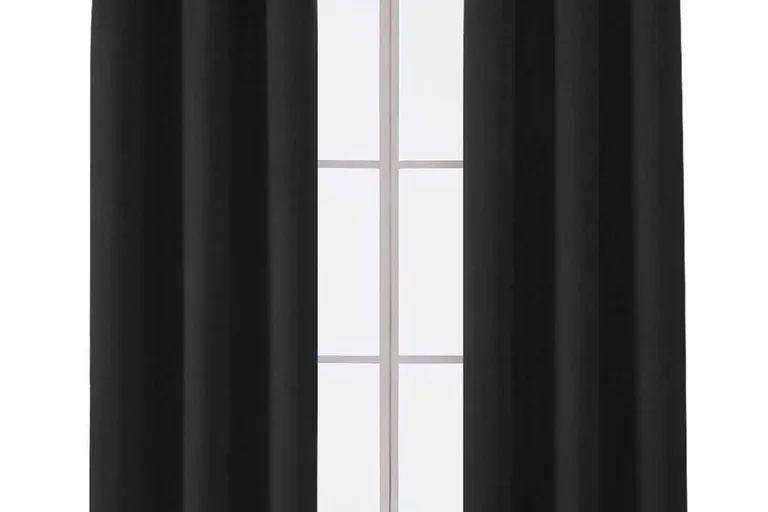
Roller blinds are the slimmest option, which makes them useful where the reveal is shallow. A blackout roller behind a sheer, or behind curtains, works well in bedrooms.
Perfect fit blinds are designed for the frames of modern uPVC windows rather than traditional timber sashes, so they are only worth considering on uPVC sash-style windows, and only if the frame suits them.
Can you still open a sash window with blinds fitted?
Yes, if the blind is chosen and fitted with that in mind. With a Roman or roller blind inside the reveal, raise the blind a little way and you can open the top sash beneath it for air. Wooden blinds can be tilted fully open and raised slightly so the top sash slides down behind them.
Shutters work differently. Fold back the top tier of a tier-on-tier shutter and you can open the top sash without touching the lower panels. With café style shutters, the top sash is always clear. Full-height shutters need to be folded open before either sash can move.
It is worth thinking about how you use each window before choosing. A bedroom window you open every night for air suits a café or tier-on-tier shutter, while a window you rarely open can take whatever looks best.
How do you keep sash windows warm?
Traditional sash windows are often single glazed and draughty, and the gaps around a sliding sash let cold air in. Brush strips fitted at the sides and meeting rail seal most of those gaps. After that, a good window dressing makes a real difference.
In lab tests on a traditional single-glazed sash window, Historic Environment Scotland found that timber shutters cut heat loss through the glass by 51%, more than any other traditional option tested. Historic England's research also found that curtains, interior shutters and blinds can significantly reduce heat loss through traditional windows, and more so with insulating curtain liners or cellular blinds.
In practice, that means shutters closed at night, Roman blinds with a thermal or blackout lining, or a honeycomb blind in the reveal. Many of the stone terraces we visit when people search for blinds Batley and the rest of West Yorkshire still have their original box sashes, and shutters are often the first thing owners choose for warmth.
What if your home is listed?
If your house is listed, the listing covers the inside of the building as well as the outside, including fittings fixed to it. Original sash windows, shutter boxes and panelled reveals are part of that.
Historic England advises owners to speak to their local planning authority's conservation officer about alterations before applying for consent. Before fixing anything new to a listed sash window, it is sensible to ask. Your advisor can show you exactly where each fixing would go, so you have something specific to discuss.
Our guide to window dressing for period and listed homes covers the rules in more detail, including original shutters and how to plan around them.
Which option suits which room?
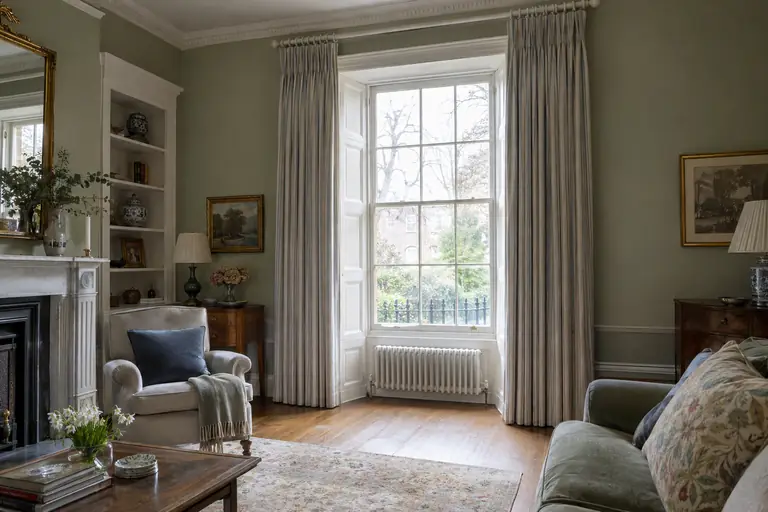
Front living rooms on a street usually need privacy without losing light, so café style or tier-on-tier shutters are the strongest choices. Bedrooms need darkness, so full-height or solid shutters, or a blackout Roman blind, work best.
Kitchens and bathrooms with sash windows need materials that cope with steam. Faux wood blinds or PVC shutters handle moisture better than real timber or fabric. Studies and home offices suit wooden blinds, which cut screen glare while letting light in.
If you are comparing the best custom blinds UK homeowners can get for sash windows, a home appointment is the simplest way to decide. Your advisor brings samples, measures every window, checks the catches and opening sashes, and leaves a written price, itemised per window, with nothing to pay on the day. Everything is made in our Batley workshop and fitted by our own team.
Checklist
- Measure the reveal depth and how far the catch and lifts stand out
- Measure width at the top, middle and bottom
- Decide which sash you open and how often
- Line up any shutter split with the meeting rail
- Choose moisture-resistant materials in kitchens and bathrooms
- Check whether the house is listed before fixing anything new
Side by side
Tier-on-tier shutters
- Light and privacy
- Each tier opens on its own
- Opening the sash
- Fold back the top tier
- Best for
- Living rooms and bays
Café style shutters
- Light and privacy
- Privacy at eye level, top left clear
- Opening the sash
- Top sash always clear
- Best for
- Street-facing front rooms
Full-height or solid shutters
- Light and privacy
- Full control, solid panels give darkness
- Opening the sash
- Fold panels open first
- Best for
- Bedrooms and tall Georgian sashes
Roman blinds
- Light and privacy
- Soft folds, lined for warmth
- Opening the sash
- Raise a little for the top sash
- Best for
- Living rooms and bedrooms with deep reveals
Wooden or faux wood blinds
- Light and privacy
- Tilting slats
- Opening the sash
- Tilt open and raise slightly
- Best for
- Kitchens, studies and bays
Roller blinds
- Light and privacy
- Sheer to blackout
- Opening the sash
- Raise a little for the top sash
- Best for
- Shallow reveals and bedrooms