The short answer
Pick real wood for dry rooms where you will see the grain up close: living rooms, bedrooms, studies and dining rooms. Pick faux wood in the same finish for bathrooms, kitchens near the sink or hob, and anywhere with heavy condensation. Choose the tone against the floor and the woodwork already in the room, and on a very wide window expect your advisor to suggest two blinds rather than one heavy one.
- Real wood belongs in dry rooms; faux wood in a matching finish takes over wherever there is steam.
- Choose the tone against your floor and doors, not against a photo on a screen.
- Wooden slats are heavy, so a very wide window is often better as two blinds.
- Wider slats suit tall period sashes; narrower slats sit better in a shallow modern reveal.
- Timber in strong sun mellows over the years, the way a floor or a table does.
Real wood and faux wood in one family
When you browse wooden blinds you are looking at two different materials made to look alike. Real wood ranges use timber slats, stained so the grain shows through or painted for a soft, even finish. Faux wood ranges use moulded slats made to look like painted or stained timber, and they are built for rooms where moisture would ruin the real thing.
The two hang and tilt in exactly the same way, and many finishes are offered in both, which is useful: you can have the same warm oak tone in a living room in timber and in the bathroom upstairs in faux wood, and the house still reads as one scheme.
It is worth checking which one a range is before you fall for it. A photograph does not tell you whether a slat is timber, and the difference matters as soon as the window is over a bath or a sink. Your advisor brings both to the appointment so you can handle them, see the grain in your own daylight, and feel the difference in weight. Our side-by-side comparison of real and faux wood goes into the detail if you are torn between them.
Choosing a tone: light, medium or dark wood
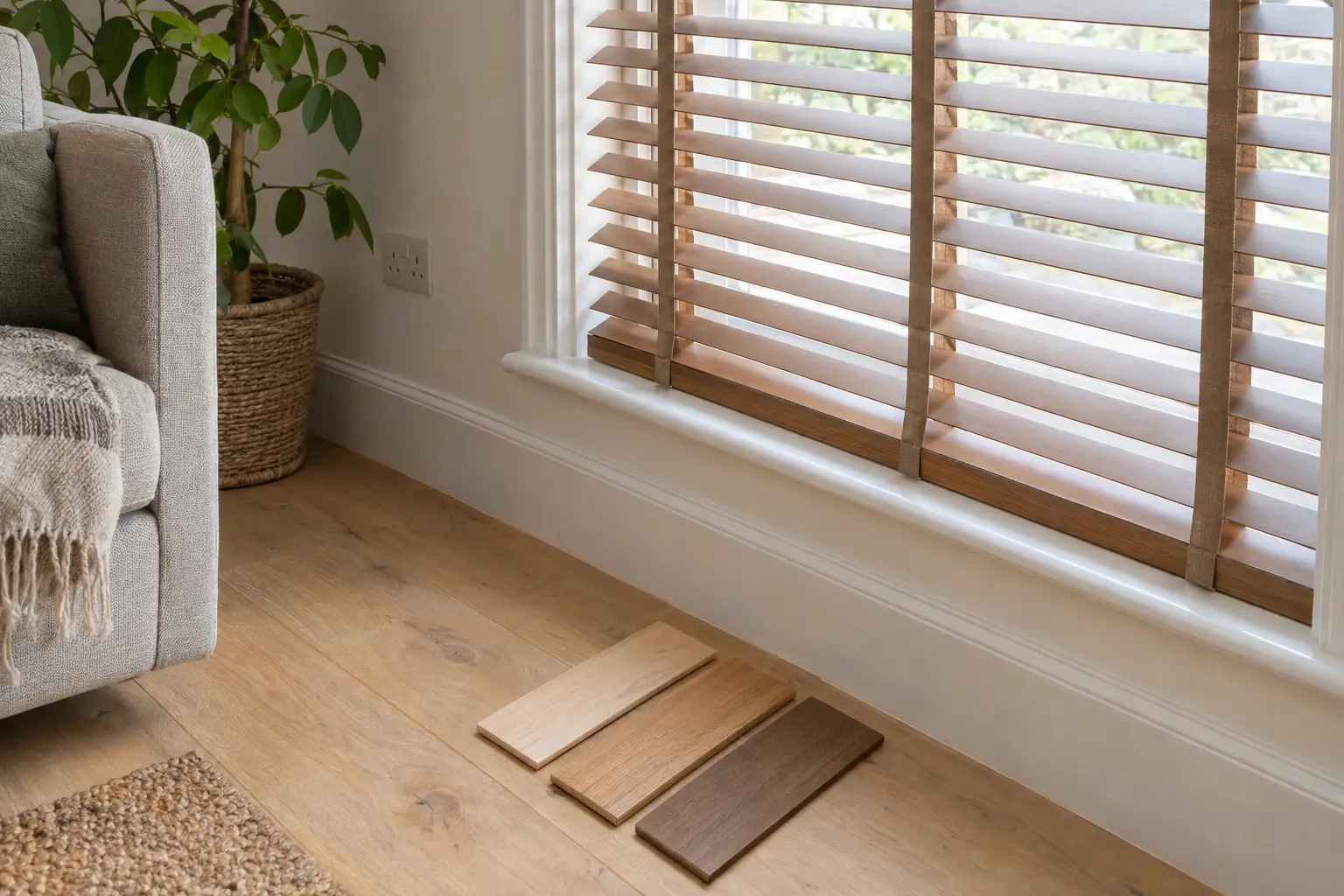
Wood tones behave differently from paint colours because they sit next to other wood. A blind that is almost, but not quite, the colour of your floorboards tends to look like a near miss. It usually works better either to match closely or to contrast on purpose.
Light wood tones keep a small room feeling open and bounce more daylight back into it. They sit easily with pale floors, white woodwork and a Scandinavian or coastal scheme, and they show dust less than dark finishes.
Medium tones, the honey and mid-oak shades, are the most forgiving. They pick up the warmth of most timber floors and furniture without needing to match them exactly, and they suit period rooms with original doors and skirting.
Dark wood gives a window real presence. Against pale walls a dark blind frames the view like a picture mount, and in a room with dark furniture it ties the scheme together. Dark finishes do show dust sooner, and a dark slat in full sun gets noticeably warm to the touch.
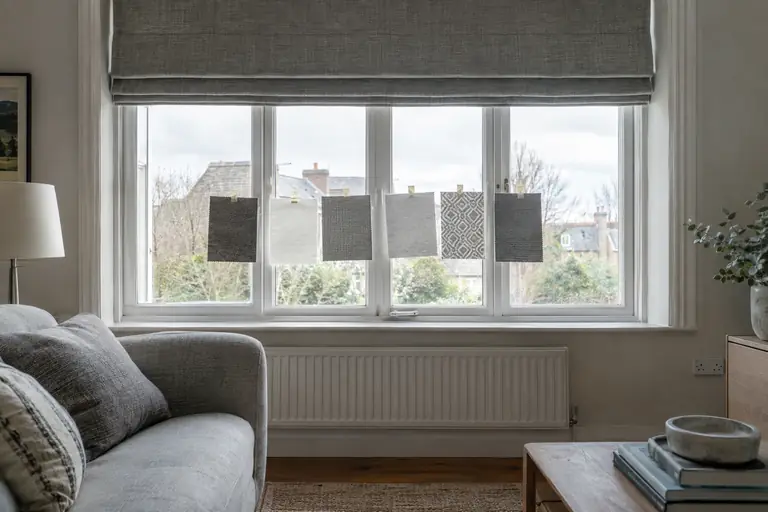
Whatever you are drawn to, judge it in the room. A tone that looks warm on a screen can look grey on a north-facing window. Order up to five free samples, or let your advisor hold the full range against the window and the floor in your own light.
Weight, width and very wide windows
Wooden slats are thicker and heavier than aluminium ones, and that weight adds up across a wide window. The wider and taller the blind, the more effort it takes to raise and the deeper the stack of slats sitting at the top when it is up. Faux wood is denser than timber, so it is heavier still.
On a wide window the usual answer is to split it: two or three blinds side by side, often breaking at a mullion or a frame division, so each one is a comfortable weight to lift and the stacks are shallower. Made to measure, they line up across the opening so the slats read as one run when the blinds are down and level. Splitting also means you can raise one section for the view and keep another lowered against the sun.
Where a single wide blind is the look you want, or the window is hard to reach, ask about motorisation. A motor takes the effort out of a heavy blind entirely and can be grouped so several blinds move together. Your advisor will tell you on the day whether a window is better as one blind or several; it depends on the size, the frame and how you use the room.
Where timber belongs, and where it doesn't
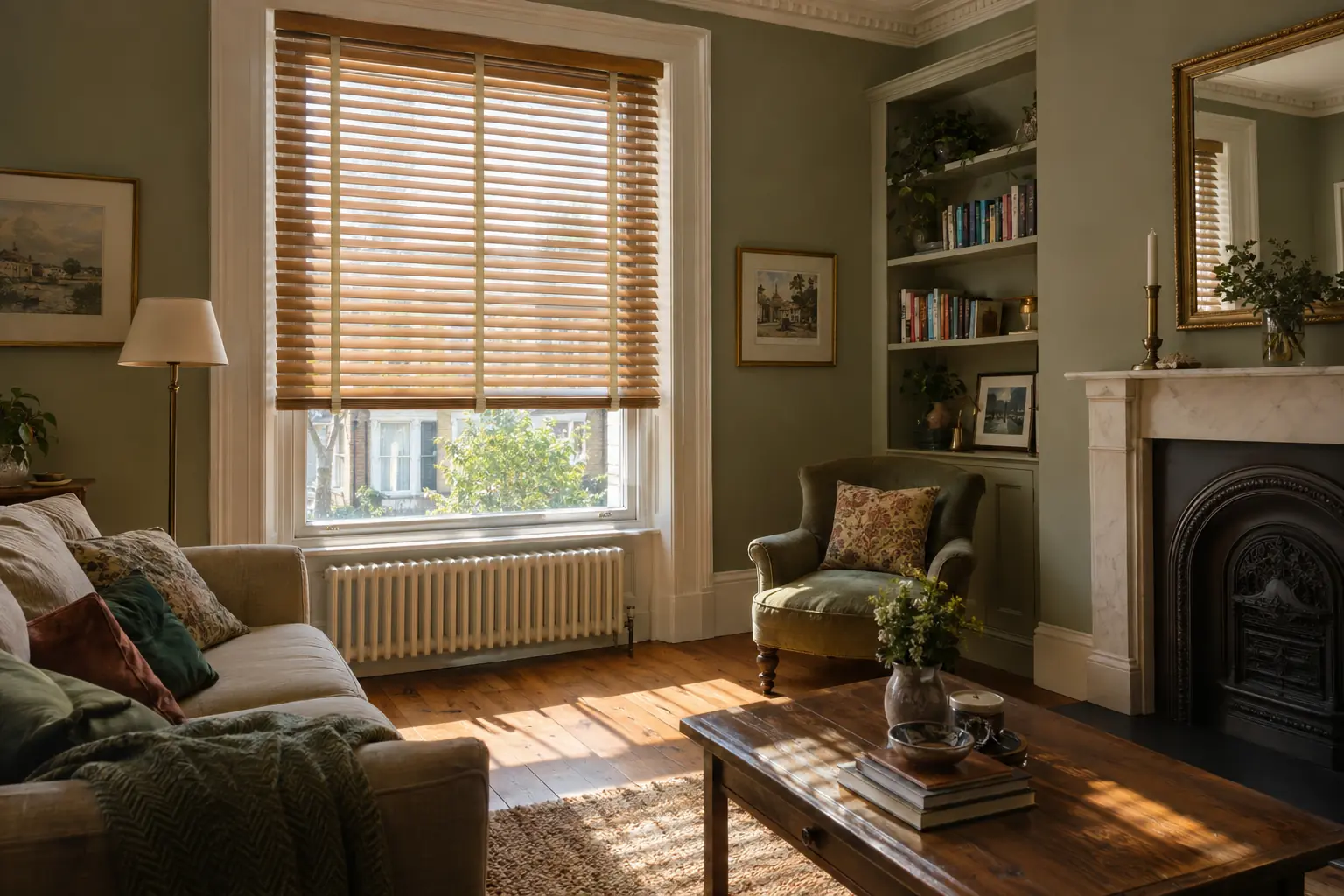
Real wood is at its best in dry, lived-in rooms: living rooms, dining rooms, bedrooms, studies and hallways. In those rooms the grain and weight of timber come into their own, and the finish mellows as it ages.
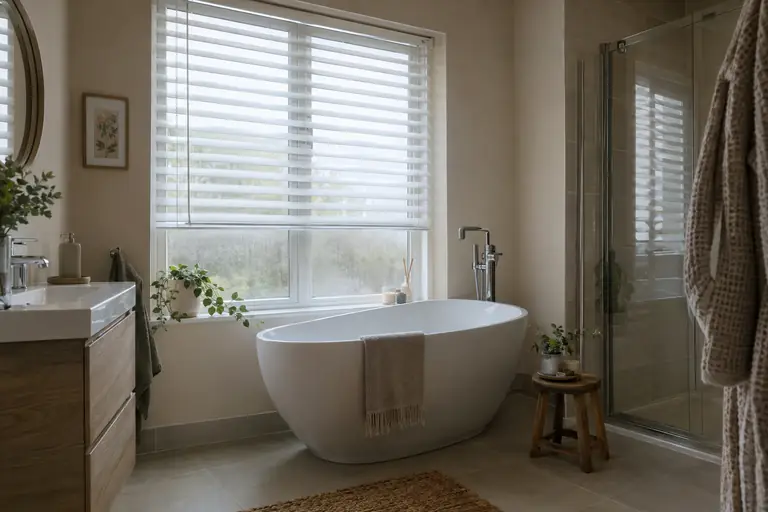
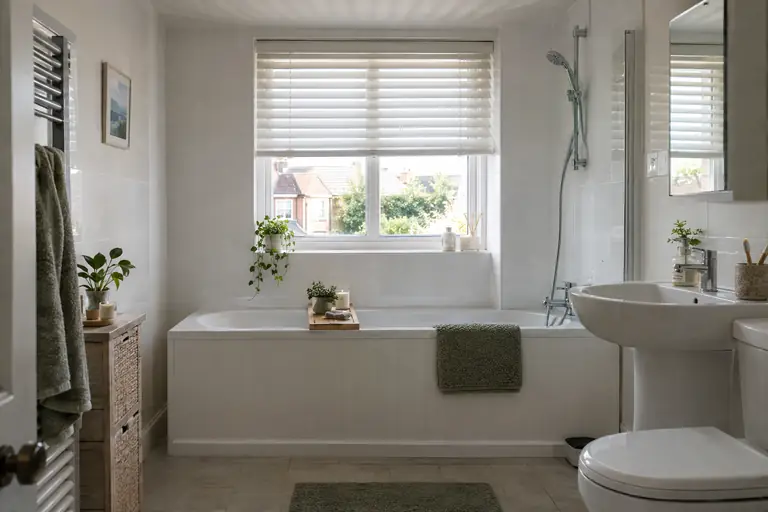
Timber and steam do not mix. Over a bath, a shower or a hob, the air fills with moisture several times a day and dries out in between, and timber slats swell and shrink with every cycle until they bow or twist for good. For those windows we recommend faux wood in the same finish rather than real timber.
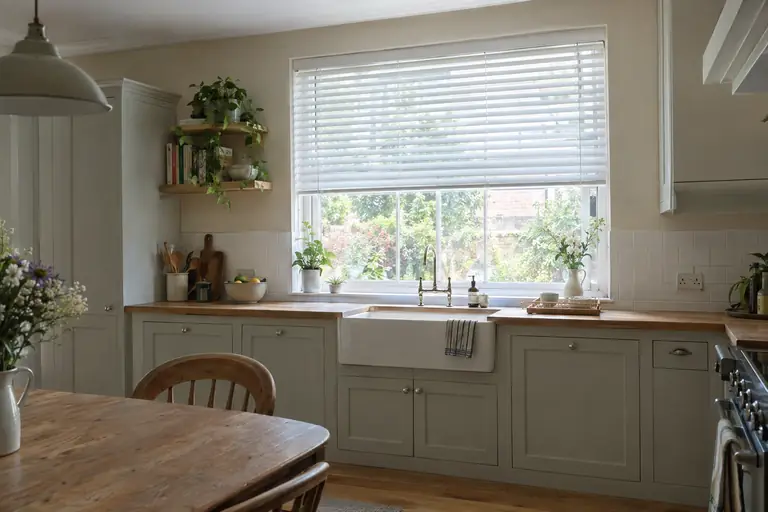
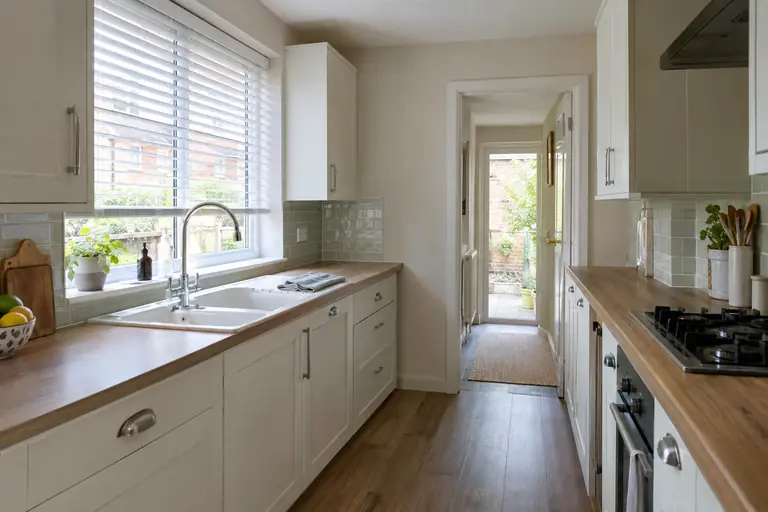
The grey areas are worth thinking about honestly. A kitchen window away from the cooker is usually fine for timber; the one over the sink is better in faux wood. A utility room with a tumble dryer, or a bedroom whose windows stream with condensation on winter mornings, is wetter than it looks. If you are not sure, tell your advisor how the room is used and they will say which material it needs.
Slat width, tapes and period windows
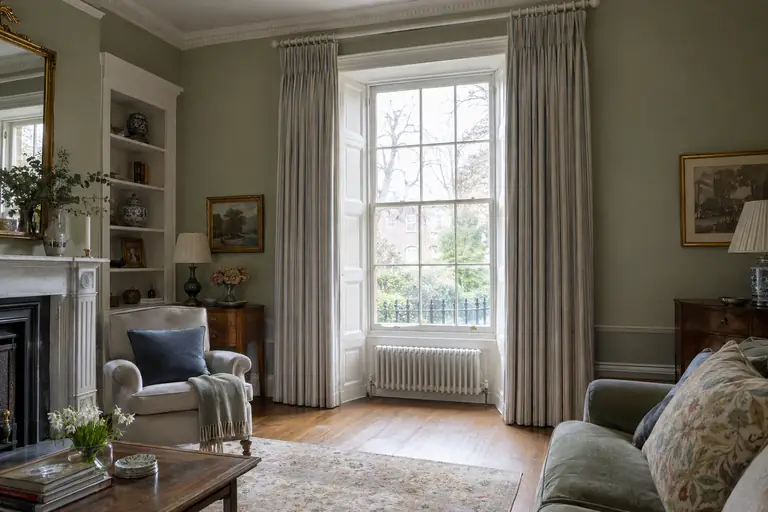
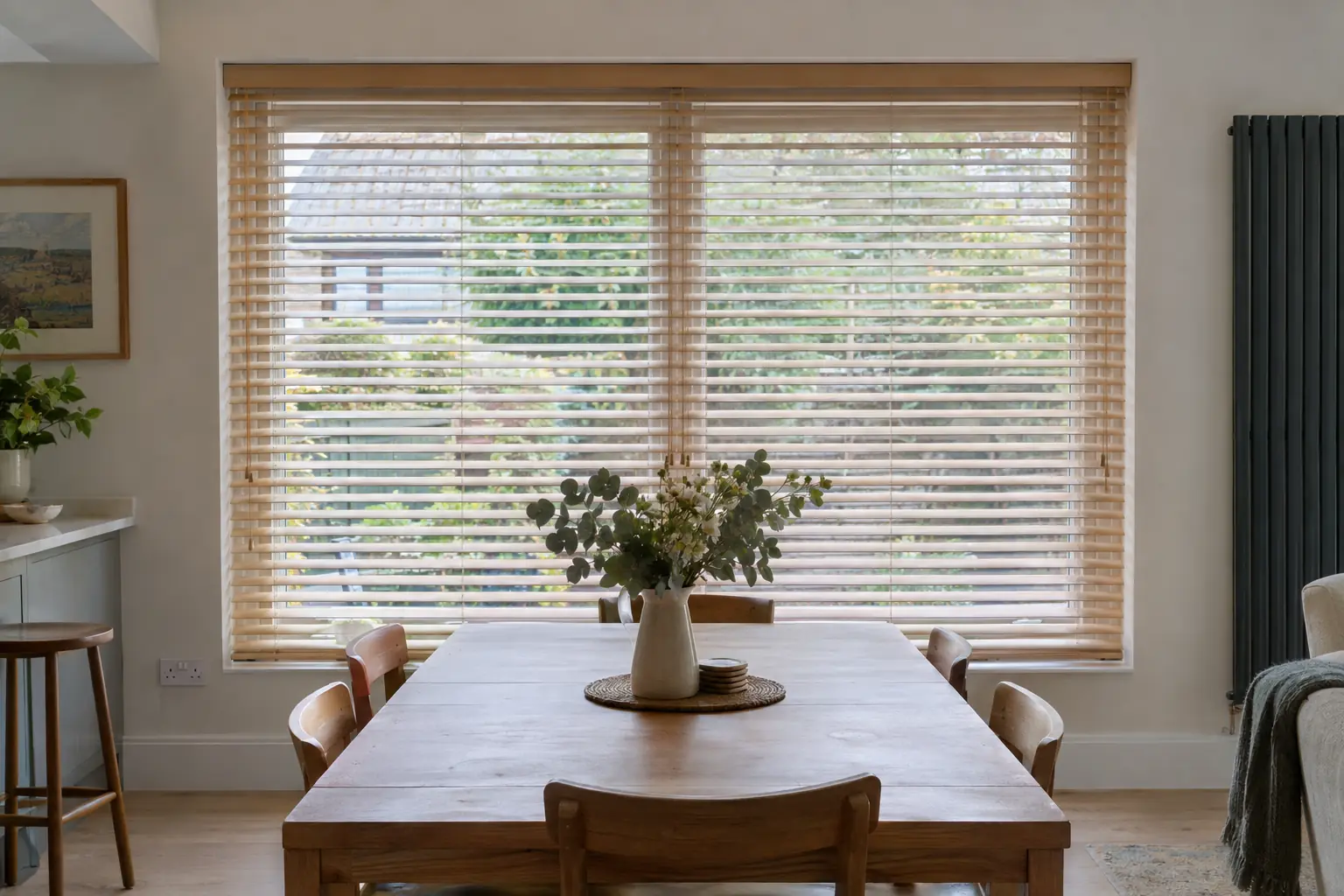
On a tall Victorian or Edwardian sash, a wide timber slat is usually the better proportion: fewer slats across a big window look calmer and, tilted open, give a clearer view of the street or the garden. A narrow slat on the same window can look busy. On a small cottage casement the logic reverses, and a narrower slat sits more comfortably. Whatever the width, a sash has catches and lifts that a tilting slat must clear, so your advisor measures the reveal with the sashes in mind.
Tapes are the other period detail. On some ranges the ladder cords can be covered with cloth tapes running down the front of the blind, and a contrasting tape against a painted slat gives a tailored, traditional finish. On a bay or a row of sashes, tapes also help the blinds read as a matched set. Our venetian blinds guide explains what tapes do to the light.
For a listed or period house, a wooden blind inside the reveal keeps the frame and the shutter boxes on show, which is often the look you want. Our guide to period and listed homes covers what to think about there.
Living with a wooden blind
Wooden blinds are easy to live with if you treat them like furniture. Dust them with a soft brush or a dry cloth, one face at a time: close the slats downwards and dust, then close them upwards and dust again. Keep water off real timber. Faux wood can take a damp cloth, which is part of why it goes in kitchens and bathrooms.
Raise and lower the blind with the slats level rather than tilted, and the stack sits squarely and the ladders wear evenly. If the blind drops unevenly, lower it fully and raise it again rather than tugging at one side.
Sunlight changes wood over time. National Trust conservators point out that daylight changes the colour of wood, and that the change builds up and cannot be undone. On a blind, that usually means a stained finish mellows and warms on a sunny window, the way a floor or a table does. It is worth knowing if you plan to add a matching blind in the same room a few years later, since the new one may look a shade fresher at first.
Our 1-year guarantee covers every wooden blind we supply and fit, and if a cord, a wand or a bracket gives out later, that part can usually be swapped without a new blind.
Pros and cons
In its favour
- Real timber grain and warmth that a print does not reproduce
- Tilting slats keep the daylight while closing the view in
- Light, medium and dark tones to sit with floors and furniture
- Faux wood versions in matching finishes for steamy rooms
- Wide slats and tapes suit period sash windows
Worth knowing
- Heavier than aluminium, so very wide windows may need splitting
- Real wood bows in steam and is kept out of bathrooms and away from hobs
- Light passes at the slat edges, so it will not black out a room
- Wider slats need a deeper reveal to tilt clear of handles
Room by room
- Living roomA great fitReal wood at its best: the grain, the tone against the floor and the tilt for low evening sun on the television.
- Study or home officeA great fitWarm to look at all day, and tilting the slats takes the glare off a screen without dimming the room.
- Dining roomWorks wellSuits the timber already in the room, and a split blind lets you raise one section for the view at dinner.
- BedroomWorks wellGood for daytime privacy and looks, but light passes at the slat edges; add lined curtains if the room must be dark.
- KitchenWorks wellReal wood away from the cooker is fine; over the sink or near the hob, choose faux wood in the same finish.
- BathroomThink twiceReal wood will bow in the steam. Choose faux wood in a matching tone and you keep the look without the twisting.