The short answer
Choose a blind by what the window needs to do. For darkness, pick a blackout roller or Roman blind; for adjustable light and privacy, a venetian, vertical or day and night blind; for warmth, a thermal roller or honeycomb blind; for bathrooms, a waterproof roller or faux-wood venetian; and for tilt-and-turn windows, a perfect fit blind. Then decide whether it sits inside or outside the recess, and make sure any corded blind has its safety devices fitted.
- Start with the job: darkness, privacy, light control, warmth or coping with steam.
- Rollers and Romans are the simplest way to dim a room; venetians, verticals and day and night blinds let you adjust light.
- Thermal fabrics and honeycomb blinds hold the most warmth at the window.
- Waterproof rollers and faux-wood or metal venetians are the safest choices for bathrooms and kitchens.
- Blinds in UK homes must meet child-safety requirements introduced in 2014; cordless and motorised blinds avoid loose cords altogether.
Start with what the window needs to do
Before looking at fabrics or colours, think about what you want from the window in that room. Most rooms come down to one or two of five jobs.
Darkness matters most in bedrooms and nurseries, and on any window that catches a streetlight. Privacy matters on ground-floor and street-facing windows, bathrooms and anywhere overlooked. Light control is about angling daylight away from a television, a desk or your eyes without shutting the room off. Warmth matters on single glazing, north-facing rooms and large areas of glass. Moisture rules out some materials in bathrooms, en-suites and kitchens.
Write down the top one or two for each window. A bedroom might be darkness first and warmth second; a front room might be privacy first and light control second; a bathroom is moisture first and privacy second. Once you know the job, the list of suitable blinds shrinks quickly, and the rest of this guide shows which types do each job best.
It also helps to note which way the window faces. A south- or west-facing window brings strong afternoon sun and heat in summer, while a north-facing one stays cooler and gets softer, steadier light all day.
Inside or outside the recess
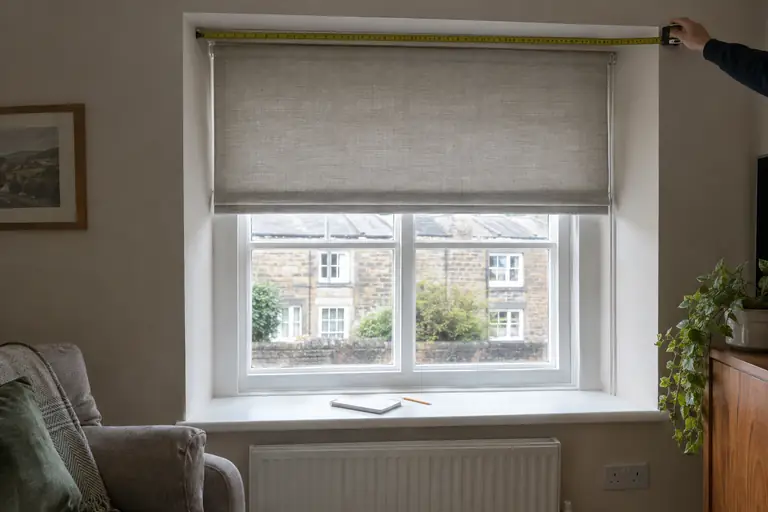
The second decision is where the blind will sit. A blind fitted inside the recess hangs between the side walls of the opening. It looks neat, shows off the depth of the wall and keeps the sill clear for plants or photos. It needs enough depth for the blind to hang without catching the window handle, and a fairly square opening, because it is made to fit the space between the walls.
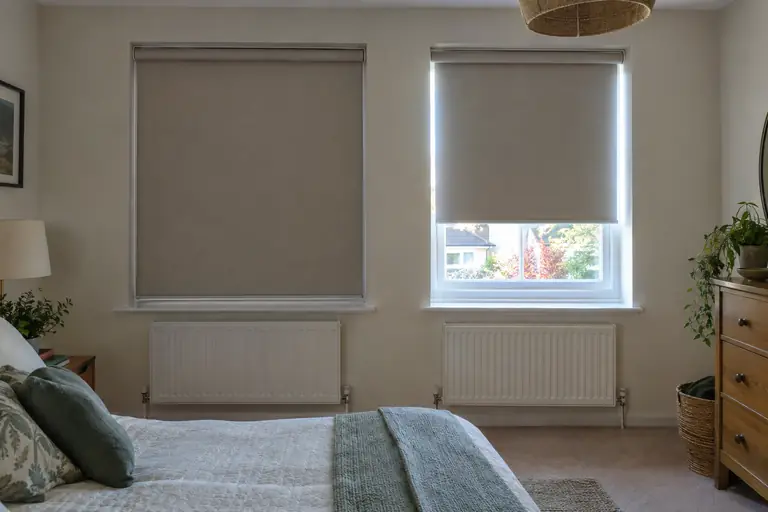
A blind fitted outside the recess, often called an exact fit or face fit, is fixed to the wall above the opening and made wider than it. Because it overlaps the opening on every side, it lets less light in round the edges, hides an out-of-square window and can make a small window look bigger. It is usually the better choice for blackout in a bedroom or on a shallow reveal.
If you want to get a feel for the sizes before anyone visits, our guide on how to measure for blinds explains how to measure a recess properly, including the depth and anything that sticks out into it.
The main types of blind
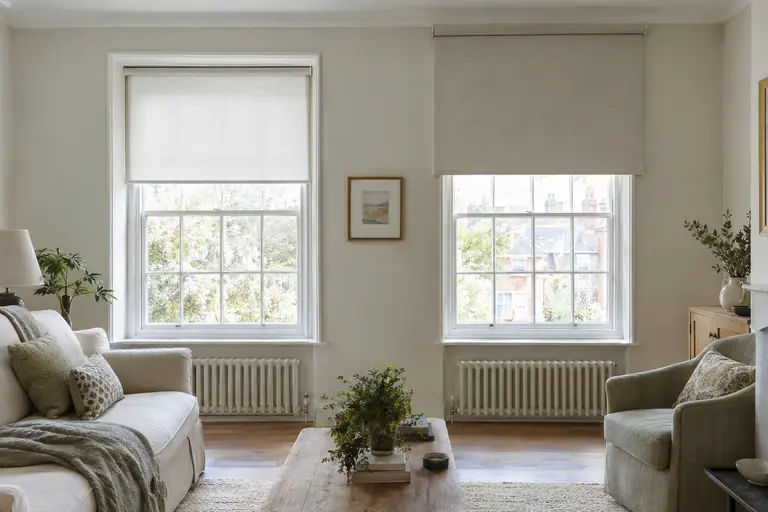
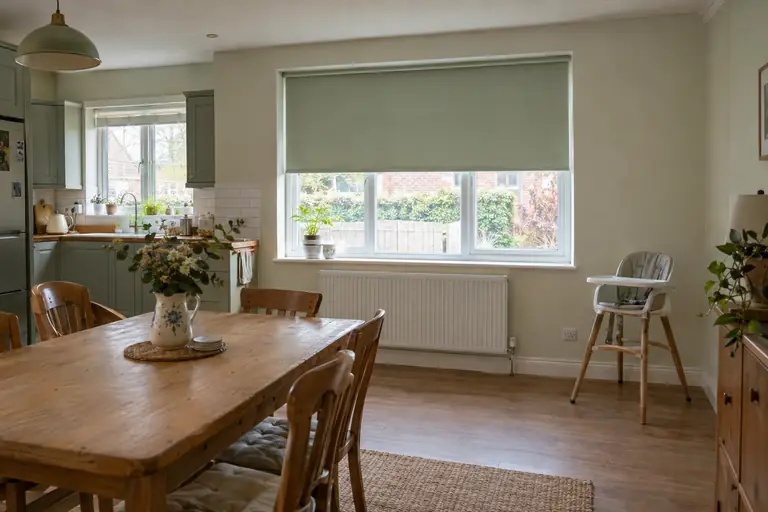
Roller blinds are a single piece of fabric that rolls up onto a tube at the top. They are the simplest and most versatile blind, come in the widest choice of fabrics, from sheer to full blackout, and suit almost every room. Waterproof versions are a good fit for bathrooms.
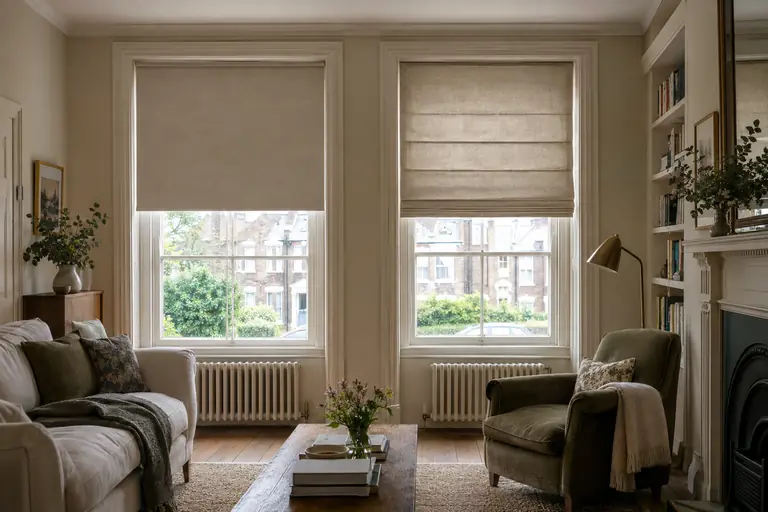
Roman blinds are fabric blinds that fold up into soft, even pleats. They bring the warmth and pattern of a curtain fabric to a window, and a blackout or thermal lining can be added behind the face fabric. They suit living rooms and bedrooms rather than steamy rooms.
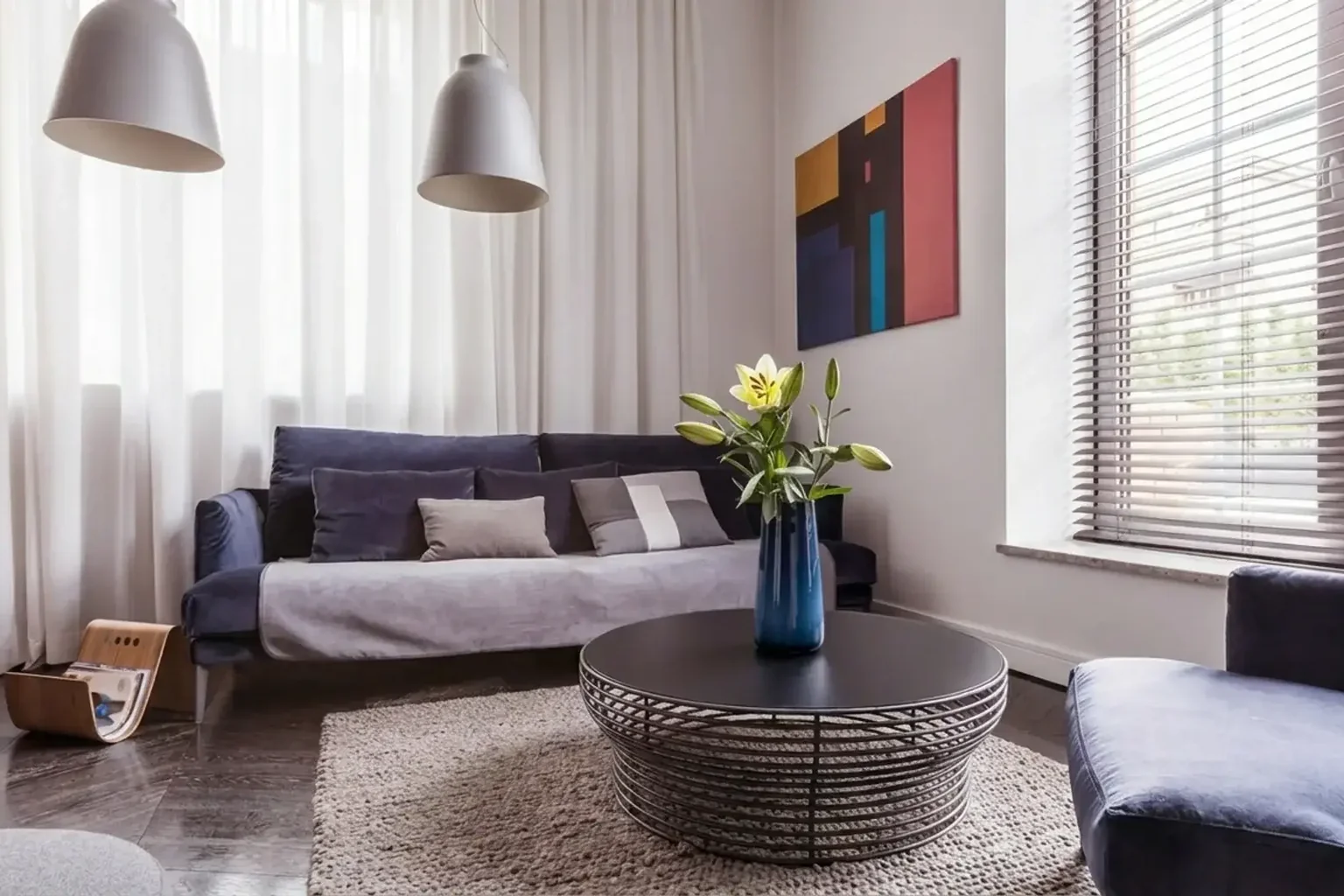
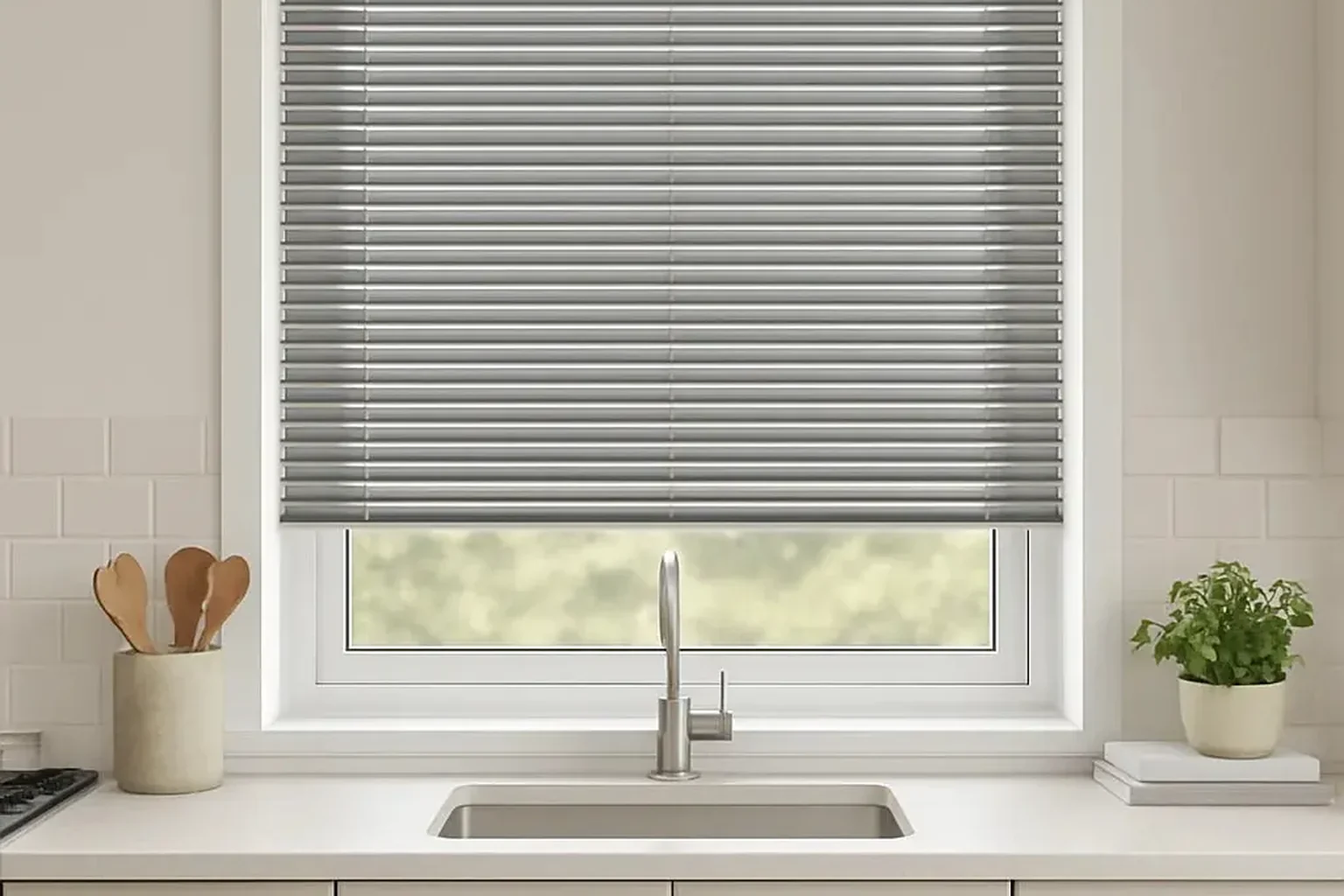
Venetian blinds have horizontal slats that tilt to angle light and privacy, then raise fully out of the way. Metal venetians are slim and practical for kitchens, bathrooms and home offices. Wooden blinds bring a natural, furniture-like look to living rooms and bedrooms, while faux wood gives the same look in a material that copes with moisture.
Vertical blinds have louvres that hang from a track, turn to control light and stack to one or both sides. They are a practical choice for wide windows, patio doors and conservatory side windows.
Pleated and honeycomb blinds are made from crisp folded fabric that stacks very small. Honeycomb blinds are built as a row of cells that trap air, which makes them the warmest blind of all. Both suit conservatories, shaped windows and tilt-and-turn windows.
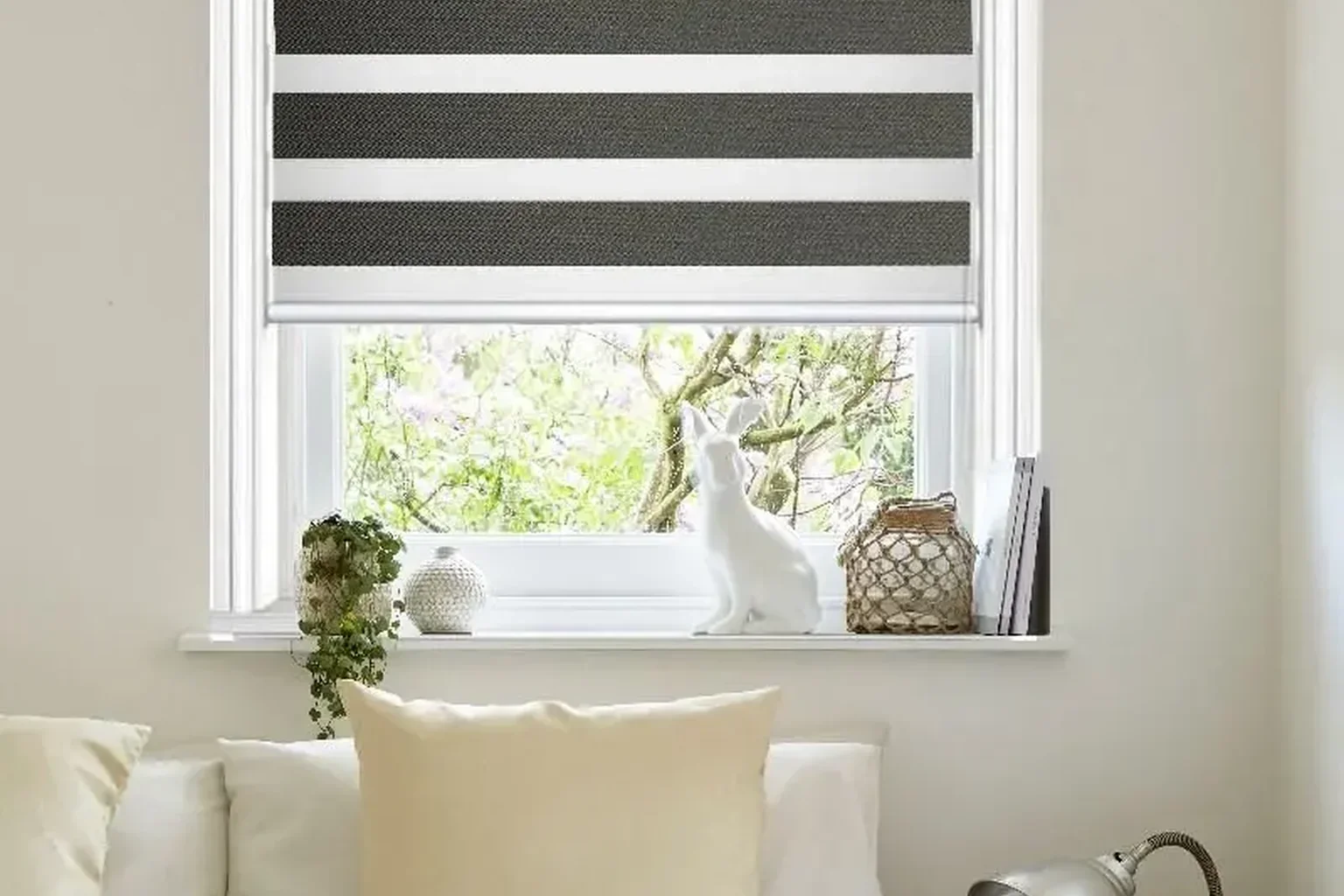
Day and night blinds, sometimes called vision blinds, have alternating bands of sheer and solid fabric on a double layer. Moving one layer against the other switches the blind between soft daylight and privacy.
Blinds for particular needs
Some blinds are defined less by how they look than by the job they do, and most can be combined with the types above.
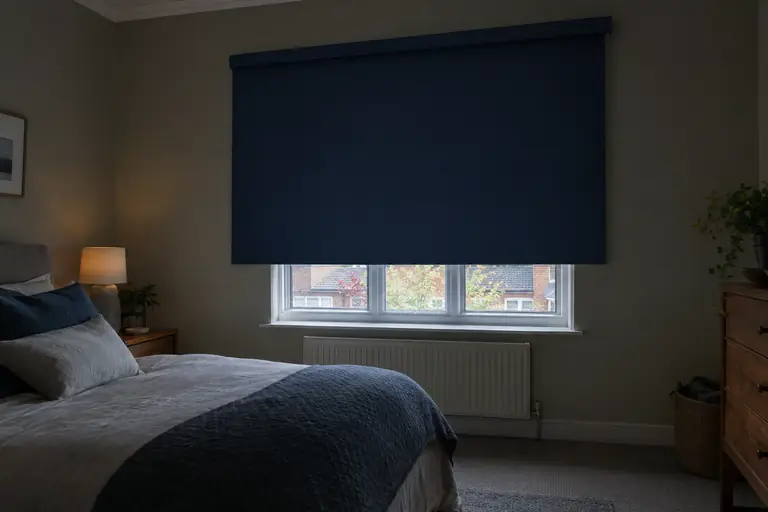
Blackout blinds use a fabric or coating that stops light passing through. They are the obvious choice for bedrooms, nurseries and shift workers. On their own they block light through the fabric, but light can still leak round the edges, which is why fitting outside the recess or adding side channels makes such a difference.
Thermal blinds use a reflective or insulating backing that slows heat moving through the glass. Closed at dusk in winter, they help a room near cold glass feel noticeably warmer. In summer, the UK Health Security Agency advises closing blinds and curtains on windows in direct sunlight during the day to keep a home cool.
Waterproof and easy-wipe blinds are made for bathrooms, kitchens and children's rooms, where steam and sticky fingers would mark an ordinary fabric.
Perfect fit blinds sit in a slim frame that clips into the glazing bead of a uPVC or aluminium window, so nothing is drilled into the frame and the blind moves with the window when you open it. They are the usual answer for tilt-and-turn windows and doors.
Electric blinds are motorised and worked by a handset, an app or a timer. They make sense for high or hard-to-reach windows such as skylights and conservatory roofs, which need their own blinds made for the shape of each pane, and for anyone who wants no cords at all.
Child safety: what to check
Looped cords and chains on blinds can be dangerous for young children, and the rules in the UK reflect that. Since 28 February 2014, internal blinds in homes, and in some public and commercial buildings where young children are likely to be present, must meet child-safety requirements.
The simplest way to remove the risk is to choose a blind that is safe by design. The British Blind and Shutter Association describes these as blinds that are cordless or have concealed or tensioned cords, such as spring-operated, push-pull, motorised or wand-operated blinds. Perfect fit blinds, which sit within their own frame on the glass, have no loose cords hanging at the window either.
If you do choose a corded blind, the safety devices are not optional extras. Under the standards, they must be fitted at least 1.5 metres from the floor, except breakaway devices, which can sit lower. A professional installer must fit them and show you how they work.
In a child's bedroom, also move cots, beds and anything a child could climb on away from the window. A cordless or motorised blackout blind is often the most practical answer for a nursery.
What moves the price
There is no single price for a blind, because each made-to-measure blind is built for one window. A handful of things move the figure more than anything else.
The first is size: a large window or a patio door needs more fabric and a stronger mechanism than a small one. The second is the fabric or material: a plain roller fabric costs less than a lined, patterned Roman, and real wood costs more than faux wood or metal. The third is how the blind works: a standard chain is the simplest, while cordless, top down bottom up and motorised options add to the cost. The fourth is the shape of the window: skylights, conservatory roofs, shaped and angled windows need blinds made specially for them.
The fairest way to compare is a written quote, itemised window by window, with fitting included. At a free home appointment, our advisor measures every window, brings samples so you can see fabrics in your own light, and leaves a written price with nothing to pay on the day.
A quick route to the right blind
If you want the short version, work through each window in four steps.
First, name the main job: darkness, privacy, light control, warmth or moisture. Second, check the window itself: how deep is the recess, does the window open inwards, is there a handle, a radiator or a tiled sill in the way? Third, pick the type that does the job best, using the table below as a guide. Fourth, choose the fabric or finish, and check that the blind is safe by design if young children are in the house.
It is normal to end up with different blinds in different rooms: a blackout roller in the bedroom, a faux-wood venetian in the bathroom, a perfect fit blind on a tilt-and-turn window and a Roman blind in the living room. What ties a house together is a consistent colour family, especially on windows that face the street.
If you would rather talk it through, whether you are looking for window blinds in Leeds or further afield, an advisor can bring samples of every type to your home. You can also browse the full range of custom blinds made in the UK before you book.
Checklist
- Name the main job for each window: darkness, privacy, light control, warmth or moisture.
- Note which way each window faces and how much sun it gets.
- Check the depth of each recess and anything in the way, such as handles or radiators.
- Decide inside or outside the recess for each window.
- Choose waterproof or wipe-clean materials for bathrooms and kitchens.
- Choose cordless, motorised or perfect fit blinds where young children live.
- Keep one colour family across street-facing windows.
- Compare written quotes itemised per window, with fitting included.
Pros and cons
In its favour
- Made-to-measure blinds fit each window exactly, so there are no gaps at the sides.
- There is a blind for almost every job: darkness, privacy, light control, warmth or steam.
- Most types raise clear of the glass when you want the full view.
- Cordless, motorised and perfect fit options remove loose cords altogether.
- A lower outlay than shutters for the same number of windows.
Worth knowing
- No single type does everything, so different rooms often need different blinds.
- Light can leak round the edges of a blind fitted inside the recess.
- Real wood and fabric Roman blinds are best kept out of steamy rooms.
- Corded blinds need their child-safety devices fitted and used every time.
Room by room
- BedroomA great fitBlackout roller or Roman blinds, ideally fitted outside the recess, for a properly dark room.
- Living roomA great fitRoman, wooden or day and night blinds for warmth, character and adjustable light.
- KitchenA great fitMetal or faux-wood venetians and wipe-clean rollers that cope with steam and grease.
- BathroomWorks wellWaterproof rollers or faux-wood venetians; keep real wood and fabric Romans for dry rooms.
- NurseryWorks wellCordless or motorised blackout blinds, with cots and furniture kept away from the window.
- ConservatoryWorks wellPleated or honeycomb blinds on the side windows; the roof needs blinds made for each pane.
- Tilt-and-turn windowsThink twiceAn ordinary blind gets in the way when the window opens inwards; choose perfect fit instead.
Side by side
Roller blinds
- Light control
- Up or down
- Darkness
- Excellent with blackout fabric
- Warmth
- Good with thermal fabric
- Bathrooms and kitchens
- Yes, in waterproof fabric
- Best for
- Almost any room
Roman blinds
- Light control
- Up or down
- Darkness
- Very good with blackout lining
- Warmth
- Very good with thermal lining
- Bathrooms and kitchens
- Not ideal
- Best for
- Living rooms and bedrooms
Metal venetian blinds
- Light control
- Tilt to angle light
- Darkness
- Dim, not dark
- Warmth
- Modest
- Bathrooms and kitchens
- Yes
- Best for
- Kitchens, bathrooms, home offices
Wooden and faux wood blinds
- Light control
- Tilt to angle light
- Darkness
- Dim, not dark
- Warmth
- Good
- Bathrooms and kitchens
- Faux wood only
- Best for
- Living rooms, bedrooms; faux wood for damp rooms
Vertical blinds
- Light control
- Turn louvres to angle light
- Darkness
- Dim to dark, depending on fabric
- Warmth
- Modest
- Bathrooms and kitchens
- Yes, in PVC or wipeable fabric
- Best for
- Wide windows and patio doors
Pleated and honeycomb blinds
- Light control
- Up or down, or top down
- Darkness
- Good with blackout fabric
- Warmth
- Honeycomb is the warmest
- Bathrooms and kitchens
- Some fabrics
- Best for
- Conservatories, shaped and tilt-and-turn windows
Day and night blinds
- Light control
- Switch between sheer and solid bands
- Darkness
- Dim, not dark
- Warmth
- Modest
- Bathrooms and kitchens
- Some fabrics
- Best for
- Living rooms and street-facing windows
Perfect fit blinds
- Light control
- Tilt (venetian) or up and down (pleated)
- Darkness
- Good with blackout pleated fabric
- Warmth
- Good, sits close to the glass
- Bathrooms and kitchens
- Yes
- Best for
- uPVC tilt-and-turn windows and doors