

The short answer
Dust curtains with a soft brush, draw them by the leading edge, and have most made-to-measure pairs dry cleaned rather than washed, because the lining shrinks at a different rate to the face fabric. Sunlight damage to textiles builds up and cannot be undone, so the lining and a blind behind the curtains earn their keep. Shutters need only a soft brush or dry cloth on the louvres, a damp cloth on waterproof ABS or vinyl, and a call to us if the louvres stop holding their angle.
- Most made-to-measure curtains should be dry cleaned: washing shrinks the lining and the face fabric at different rates.
- Light damage to fabric is cumulative and irreversible, and silk is the most vulnerable fibre.
- The lining takes the sun so the face fabric does not; a blind behind the curtains helps even more.
- Keep curtains off wet glass and damp sills: mouldy soft furnishings may be impossible to rescue.
- Dust shutter louvres with a soft brush; wipe ABS or vinyl with a damp cloth; keep hardwood dry.
Everyday care for curtains
Curtains need very little day to day, and the most useful habit is how you open and close them. Draw them by the leading edge, the inner edge that meets in the middle, rather than grabbing a handful of fabric halfway down. Pulling the middle of a curtain drags on the heading, stretches the pleats out of line and, over time, leaves grubby marks exactly where everyone reaches.
Dust settles along the top of the heading and in the folds. A gentle pass with a soft clothes brush, working from the top down, every few weeks keeps it from working into the weave. Give each curtain a light shake at the leading edge when it is closed, which loosens dust from the folds without taking anything down.
Pinch pleat curtains are hand-formed and stitched to hold their shape, and wave curtains hang from a track in a continuous S-curve. Both look their best when they are stacked back the same way each time, so the folds keep setting in the same place. When our fitter hangs a new pair, they check with you that the curtains draw and stack evenly; after that, the way you open and close them keeps the shape.
If a track is corded, treat the cord as you would a blind cord. RoSPA points out that corded curtain tracks can pose the same risks to children as corded blinds.
Why most curtains are dry cleaned
A made-to-measure curtain is at least two fabrics sewn together: the face fabric you chose and the lining behind it, sometimes with an interlining in between for weight and body. Each reacts to water in its own way. Put the curtain through a wash and the lining shrinks at a different rate to the face, so the hem puckers, the leading edge pulls and the curtain no longer hangs to the length it was made to.
That is why most curtains should be dry cleaned rather than washed. Choose a cleaner who handles curtains regularly, tell them what the lining is, and ask whether they clean pleated headings. Before you take a pair down, note which hook went in which pocket or glider, so they go back up exactly as they came down.
When they come back, rehang them and gather the pleats into their folds by hand along the full drop. Some people loosely tie the folds with soft tape for a day or two to help them set; if you do, keep it loose enough not to crease the fabric.
Between cleans, deal with a small mark by dabbing it with a barely damp cloth, never rubbing, and let it dry before you draw the curtain back. If a fabric says it can be washed, the lining still decides whether the made-up curtain can.
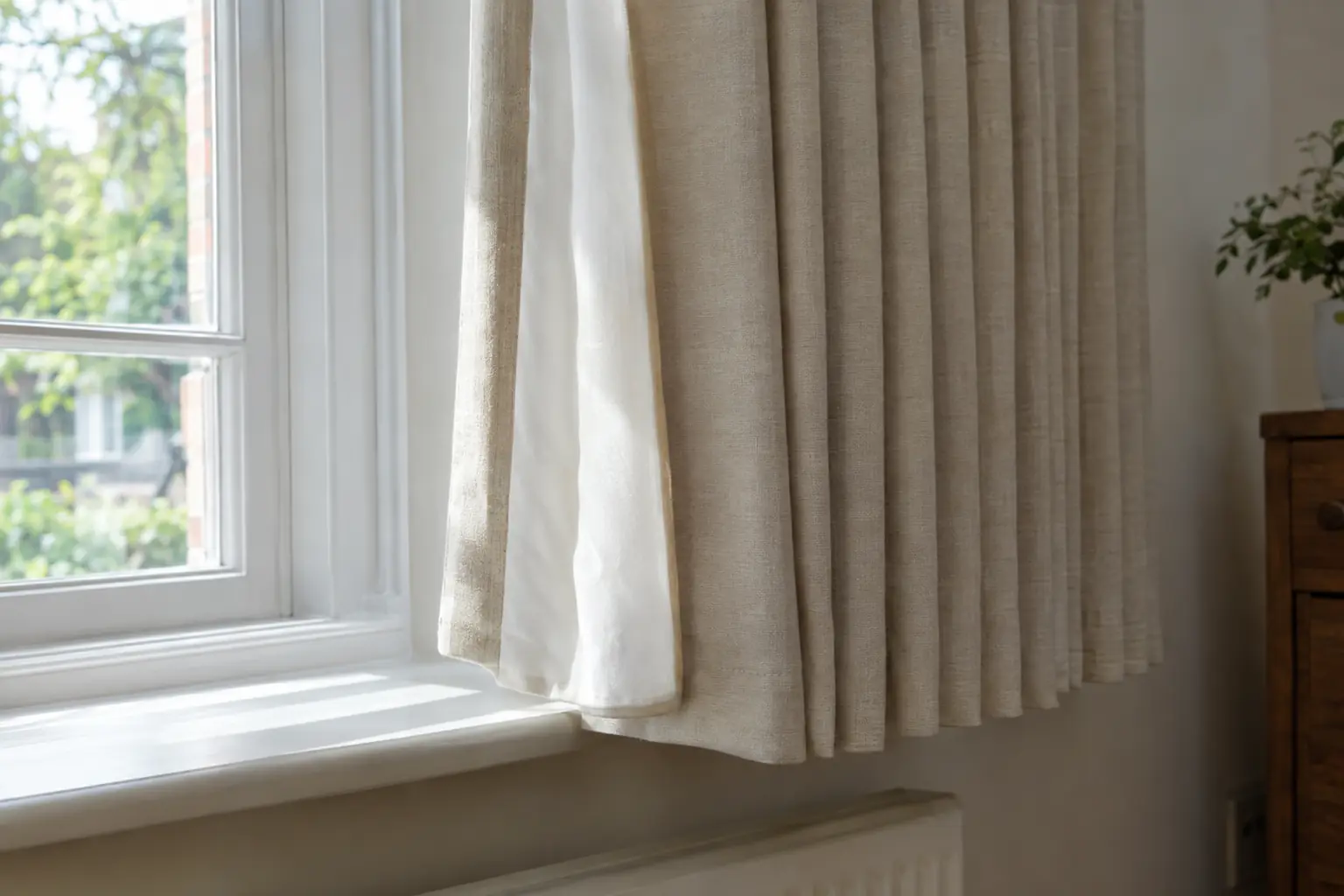
Sunlight: the slow damage
Anyone who has moved a picture after a few years has seen what daylight does. The National Trust explains that light breaks down the pigments in materials, so textiles fade and disintegrate and wood changes colour and becomes brittle, and that the damage is both cumulative and irreversible. The Institute of Conservation adds that all textiles are easily damaged by light, that silk is the most vulnerable, and that prolonged exposure causes fading, yellowing and brittleness in every fibre.
Much of that damage is done by light you cannot see. Museums Galleries Scotland notes that ultraviolet radiation, which is invisible to the human eye, causes the most damage to collections.
For curtains at home, the lining is the first line of defence: it faces the window and takes the sun, so the face fabric does not. On a sunny south- or west-facing window, a blind in the reveal behind the curtains does even more, because it can be lowered in the brightest hours while the curtains stay dressed open. When curtains are open, the leading edge is the part most often left sitting in the light, so drawing them fully back off the glass helps. If you are choosing silk or a strong, saturated colour for a bright room, say so at the appointment, and your advisor can talk you through the lining and whether a blind behind is worth it.
Condensation and damp
Curtains spend the night between a warm room and a cold window, which is exactly where condensation forms. A curtain that rests against wet glass, or pools on a damp sill, soaks up that moisture night after night. Government guidance on damp notes that it affects furnishings and belongings, curtains included, and its warning about mould is blunt: once absorbent soft furnishings go mouldy, getting the mould out completely can be difficult or impossible, and they may have to be thrown away.
A few habits prevent most of it. Hang curtains so they fall clear of the glass and finish just above the sill or the floor rather than resting on it. Open them in the morning so the window and the lining can dry, and wipe the glass and frame if they are streaming. Air the room each day, especially bedrooms, where breathing overnight adds a surprising amount of moisture to a closed room.
Check the back of the lining near the hem now and then, particularly on a cold north-facing wall or in a room with a lot of glass. Small grey or black spots are the early sign. Deal with the moisture first, and take advice before cleaning, because some marks will not come out of a lining once they have set.
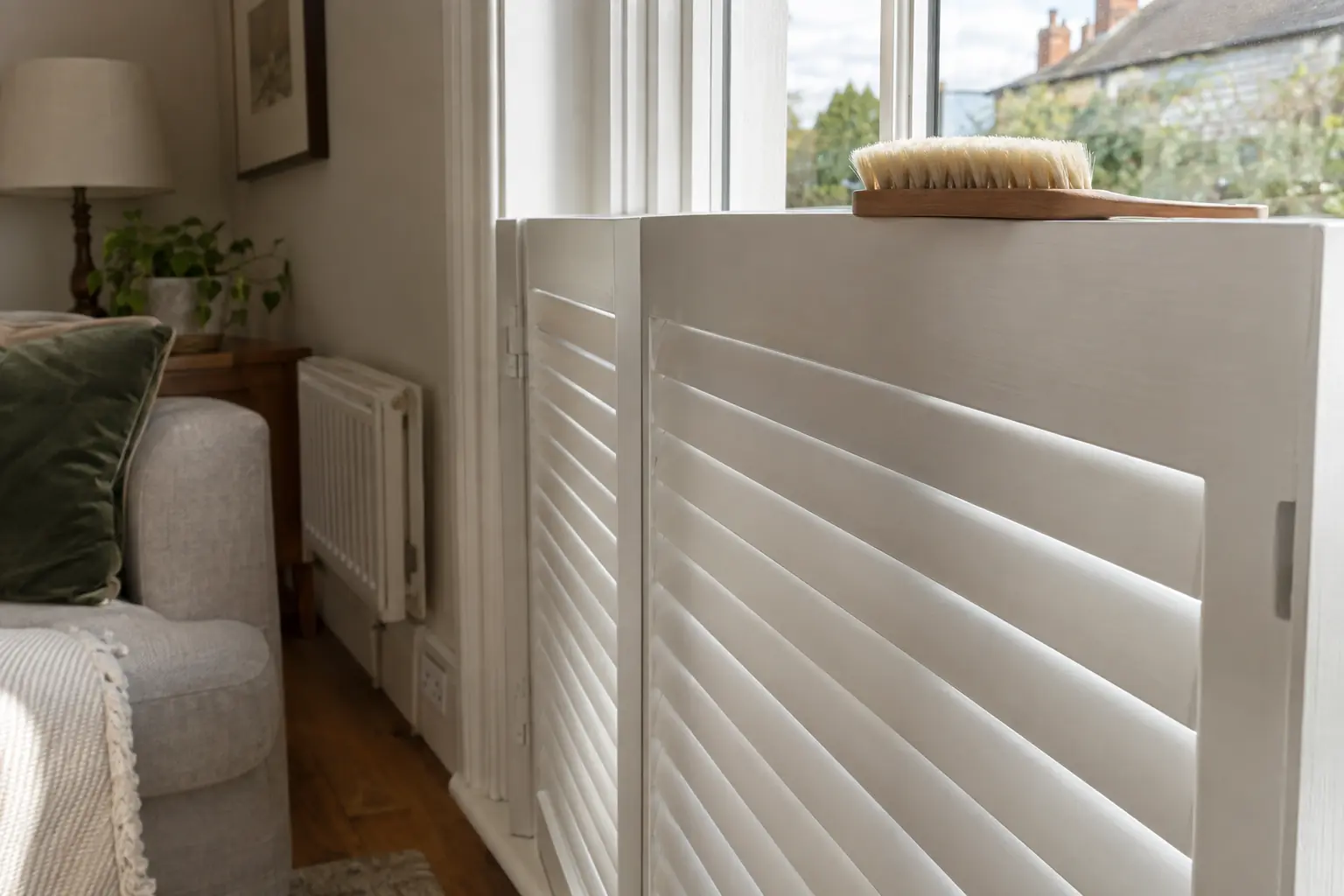
Looking after shutters
Shutters are the easiest window covering to keep clean, because there is no fabric to hold dust. Close the louvres flat and run a soft brush or dry cloth along each one, then tilt them the other way and repeat. A soft brush also gets into the corners where the louvres meet the frame.
The finish decides what comes next. Waterproof ABS or vinyl shutters, the ones made for bathrooms and wet rooms, can be wiped with a damp cloth. Hardwood and engineered wood want the lightest touch: dust them dry, and if something sticky has landed, wring a cloth out hard, wipe the spot and dry it at once. Keep sprays, polish and abrasive pads off painted finishes.
Move the louvres gently and together, by the louvres themselves rather than by forcing one blade out of line. Our fitter sets the tension when the shutters are hung so the louvres hold their angle; if they start to droop or feel loose, ring the office rather than adjusting anything yourself. Every shutter we supply and fit carries our 1-year guarantee.
Strong sun changes wood as well as fabric, so a stained timber finish on a bright window will mellow over time. On tracked shutters across a door, keep the track clear of grit so the panels slide smoothly.
Steam: matching the material to the room
Most shutter and curtain problems in kitchens and bathrooms come from choosing a material for the look and not for the room. Steam and heat move real timber over time and can lift a painted finish, which is why we recommend waterproof ABS or vinyl shutters for bathrooms, en-suites and wet rooms, and keep hardwood for living rooms, bedrooms and bays.
Curtains in a bathroom face the same problem as a lined Roman blind: two fabrics that react to steam at different rates. Most people are better served there by a wipeable roller or a faux-wood venetian, with the soft furnishing kept for rooms that stay dry.
In a kitchen, grease is the bigger issue. A shutter near a hob will need wiping more often than one in a dining room, which is another point in favour of a finish that tolerates a damp cloth. Curtains in a kitchen are best kept well away from the cooker and pulled back clear of any gas flame.
If you are planning a room from scratch, tell your advisor how it is used: showers or baths, a cooker nearby, whether the window gets opened. The right material in the first place saves more care than any cleaning routine.
Checklist
- Draw curtains by the leading edge, never by the middle of the fabric.
- Brush curtains lightly from the top down every few weeks.
- Have lined curtains dry cleaned, and note each hook position before taking them down.
- Keep curtains clear of wet glass and damp sills, and open them each morning to dry out.
- Lower a blind behind the curtains in the brightest hours on a sunny window.
- Dust shutter louvres with a soft brush and keep sprays off painted finishes.
- Ring the office if shutter louvres stop holding their angle.