The short answer
Dust little and often, with a soft brush or a dry cloth for fabric, slats and louvres. Wipe PVC, aluminium and faux-wood slats with a damp cloth. Sponge a mark on a roller blind lightly and never soak it, because the stiffening in the weave is what keeps it flat. Treat a Roman blind like a lined curtain, keep real wood dry, and let steamy rooms air so the blind dries out between uses.
- A soft brush or dry cloth does most of the work on every type of blind.
- Roller fabrics take a light sponge on a mark, never a soak: soaking is what makes them ripple.
- PVC, aluminium and faux-wood slats wipe clean with a damp cloth; real timber stays dry.
- Roman blinds are curtain fabric with a lining, so treat them gently and keep them out of steamy rooms.
- Condensation on the window is the usual start of mould on a blind, so ventilation matters as much as cleaning.
Little and often beats a big clean
Dust is the main thing a blind has to cope with, and it is easy to deal with while it is still dust. Left for months, it settles along the top of every slat and into the weave of a fabric, and in a kitchen it mixes with cooking grease into a film that no longer brushes off. A quick pass with a soft brush or a dry cloth when you clean the rest of the room keeps you out of that territory.
Lower the blind fully before you start, so you can reach the whole fabric or every slat, and work from the top down so the dust falls onto parts you have not done yet. Steady the blind with your other hand rather than pulling against the mechanism, and do not tug on the fabric or a slat to reach a corner.
When you have finished, raise the blind the normal way and put any cord or chain back into its tensioner or cleat. It is the step most often forgotten, and the one that matters most in a house with small children. Our guide to blind cord safety covers the devices in more detail.
Roller and day and night blinds
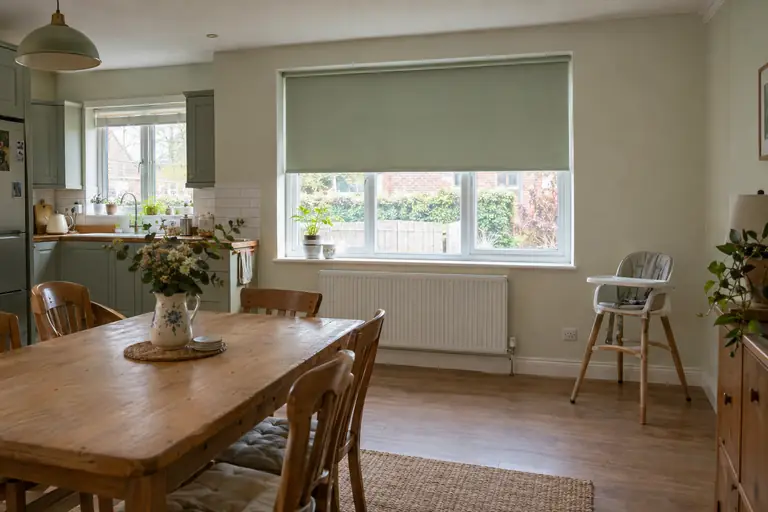
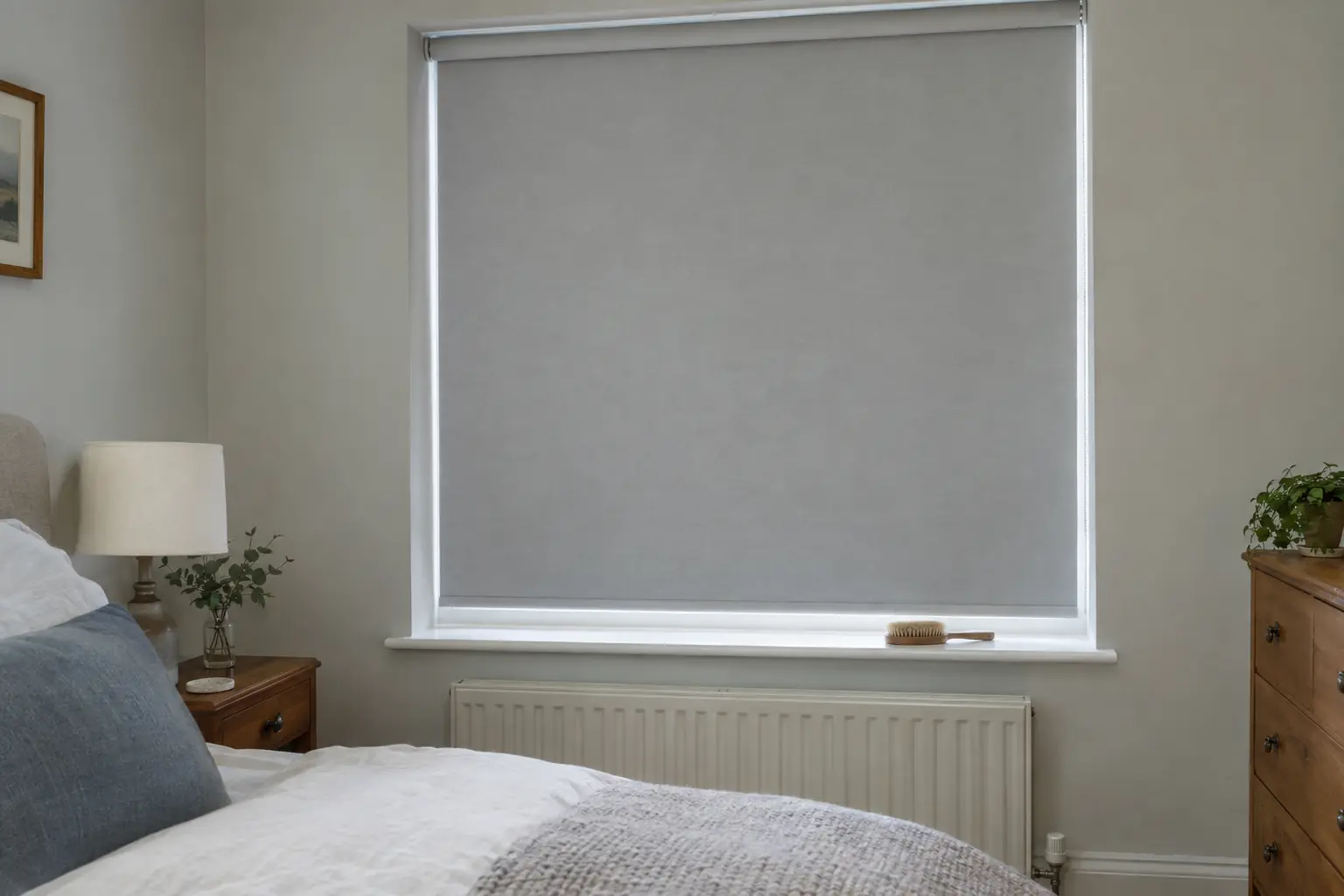
A roller blind is a single sheet of fabric that has been stiffened so it hangs flat and rolls evenly. That stiffening is the reason for the most important rule: never soak a roller blind, put it in the bath or run it through a washing machine. Once the fabric has been saturated it loses its body and starts to ripple, and it will not go back.
Dust it with a soft brush while it is rolled fully down. For a mark, use a sponge or cloth that is barely damp, dab rather than scrub, and work from the outside of the mark inwards so it does not spread into a ring. Let the blind dry completely in the down position before you roll it up again, or a damp patch can mark the layers it is rolled against.
Blackout and thermal rollers have a coating on the back, which is what stops light or reflects heat. Treat the back even more gently than the front. Day and night blinds have two banded layers running over one roller, so dust both, and check that nothing has lodged between them.
If water alone does not shift a mark, stop there and ask us before trying a stain remover, which can leave a ring bigger than the mark or lift a coating.
Venetian and wooden blinds
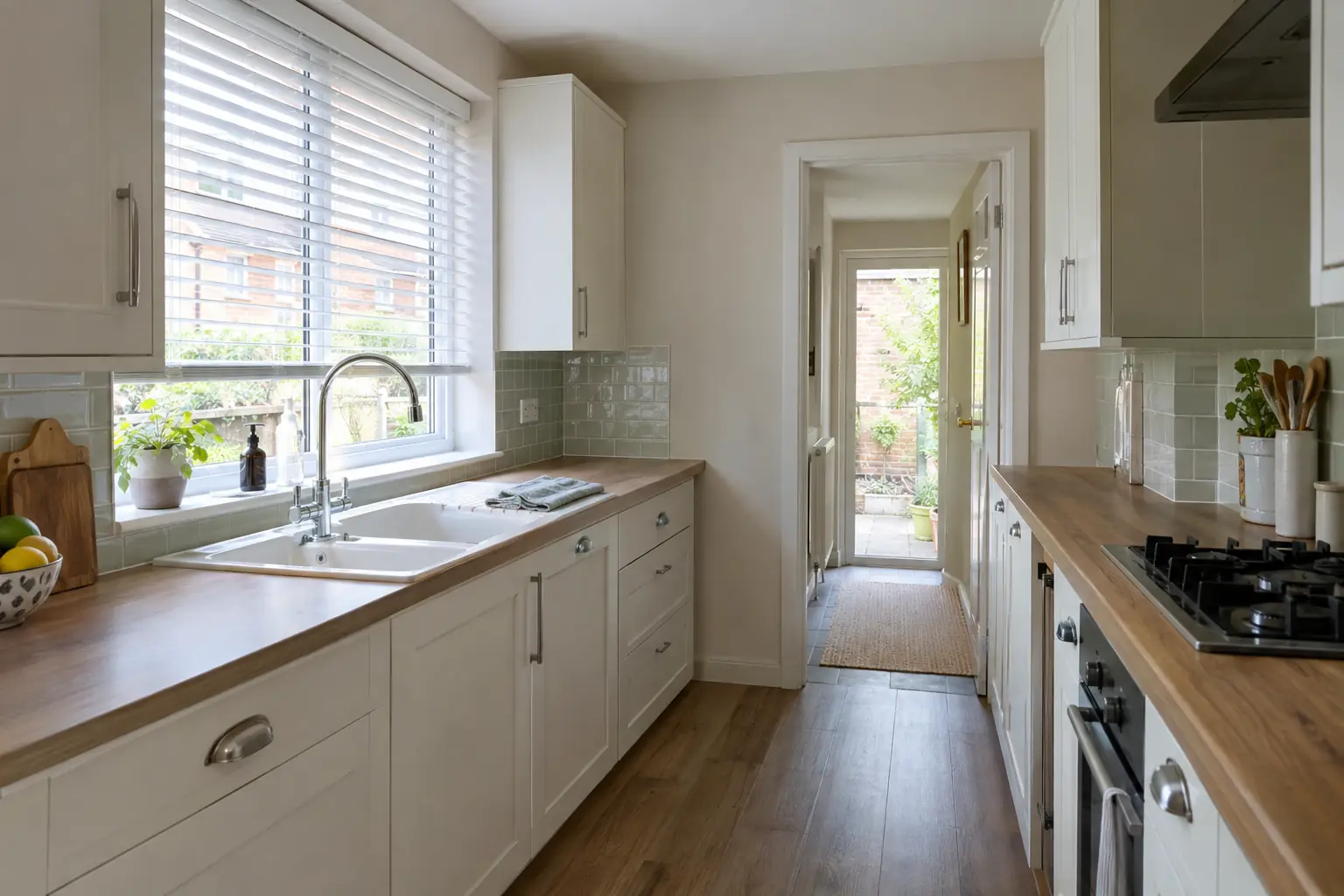
Slatted blinds collect dust on the top face of every slat, and the quickest way to deal with it is to use the slats themselves. Tilt them closed so they form a flat surface and run a duster or soft cloth across the face, then tilt them closed the other way and repeat. That cleans both sides without handling each slat on its own.
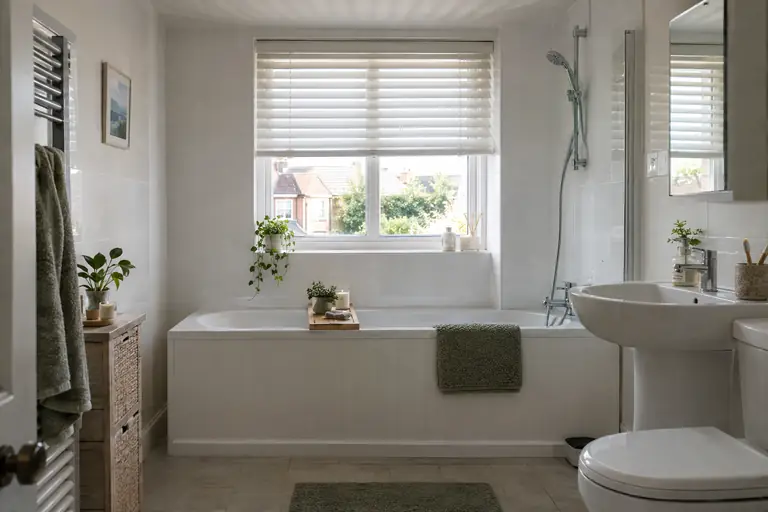
What comes next depends on the material. Aluminium, PVC and faux-wood slats take a damp cloth, which is why they are the usual choice in kitchens and bathrooms. A cloth wrung out well will lift the greasy film that builds up near a hob; wipe along the slat rather than across it, and dry it off as you go.
Real timber is different. Keep it dry: dust it, and for a sticky mark use a cloth that is only just damp, then dry the slat straight away. Water, steam and heat all move timber over time, and once a slat has twisted it will not come back, which is why we keep real wood out of bathrooms and away from hobs.
While you are there, look at the ladder tapes or cords that hold the slats. They gather dust too, and a gentle brush along each one keeps the blind looking fresh.
Vertical blinds
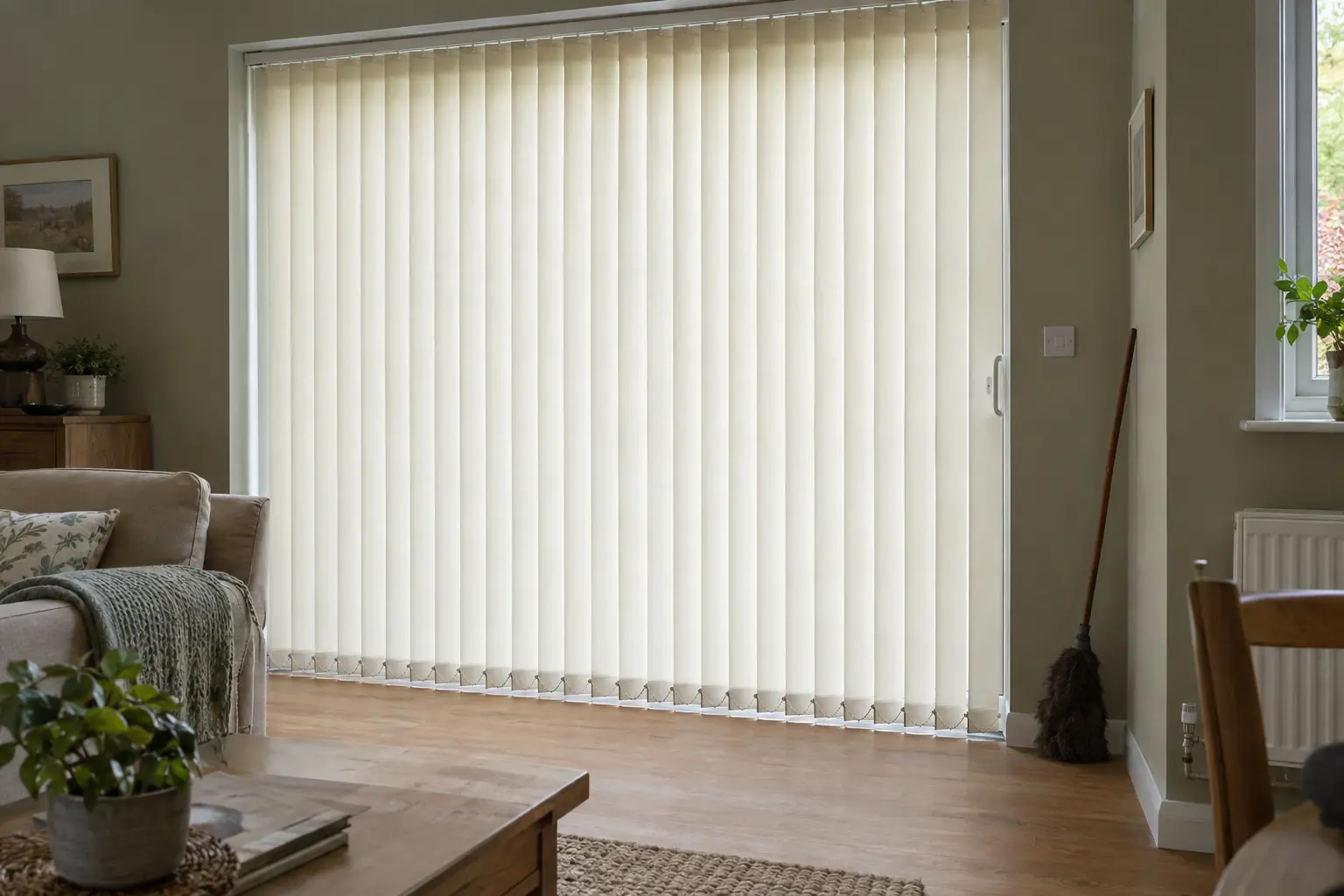
Vertical blinds hang as a row of louvres, each clipped to a carrier in the headrail and weighted at the bottom, usually with a chain linking the weights together. They are easy to clean, as long as you respect the clips.
Turn the louvres so they face you flat, then dust each one from top to bottom with a soft brush or dry cloth, holding the bottom weight lightly with your other hand so the louvre does not swing or twist off its hanger. Fabric louvres are treated like a roller fabric: dust, and dab a mark with a barely damp sponge rather than wetting the whole slat. Wipeable PVC louvres take a damp cloth.
Resist the temptation to wash a whole set by unclipping them all at once. The louvres are cut to a drop, the weights and chains have to go back in the right order, and a louvre that has been soaked can curl at the edges and never hang true again.
If one louvre is marked, torn or curled beyond saving, it does not mean a new blind. Single louvres can be replaced on their own, in the same fabric where the range is still made, and our guide to repairs and spare parts explains how to measure for one.
Roman blinds
A Roman blind is made from curtain fabric with a lining behind it, folded into a stack by rods and cords on the back. That makes it the most furnishing-like of all blinds, and it needs looking after like a lined curtain rather than like a roller.
Dust it regularly with a soft brush, working with the folds, and pay attention to the top of the stack, where dust collects when the blind is up. Lower it now and then to clean the face that is normally hidden in the folds. For a small mark, dab gently with a barely damp cloth and let it dry fully before you raise the blind, so the folds do not set in a crease or trap moisture.
Do not wash a Roman blind. The face fabric and the lining react differently to water and steam, and repeated wetting marks and shrinks the two at different rates, so the folds stop lining up. That is also why we would not usually fit a Roman blind in a bathroom. If one needs more than a spot clean, ask us before taking it to a cleaner, because the rods and cords on the back are part of how it folds.
Finally, turn the blind round now and then and look at the cords on the back and their safety connectors. They should be intact and connected.
Steam, condensation and mould
In kitchens and bathrooms, the harm to a blind usually starts with water on the glass rather than dirt in the fabric. A blind lowered against a streaming window, or rolled up damp every morning, sits in that moisture for hours, and the bottom bar and the lowest slats get the worst of it, because condensation runs down the pane and collects on the sill.
So the care routine in a steamy room is mostly about drying. After a shower or a pan on the boil, open the window or run the extractor, leave a roller down until the fabric is dry, and tilt venetian slats open so air moves between them. Wipe the sill and the bottom rail when you wipe the glass. Government damp guidance picks out kitchens and bathrooms as the rooms that most need good ventilation, and a blind that makes the window awkward to open works against you.
Watch for small dark spots near the bottom of a fabric blind. On PVC or faux wood they wipe off; on fabric they may not, and the same guidance warns that mouldy soft furnishings sometimes have to be thrown away because the mould cannot always be removed. If the spots keep coming back, the room needs more air, and a wipeable material is the better choice when the blind is replaced.
Checklist
- Lower the blind fully before dusting, so you reach every part of the fabric or every slat.
- Use a soft brush or dry cloth on fabric; keep a damp cloth for PVC, aluminium and faux wood.
- Sponge roller marks with a barely damp cloth and let the blind dry fully down before rolling it up.
- Keep water and cleaning sprays away from motor headrails and battery packs.
- Open steamy rooms up after a shower or cooking so blinds dry between uses.
- Put every cord and chain back into its tensioner or cleat before you walk away.