The short answer
Pinch pleat curtains have their fullness gathered into small groups of folds, stitched at the base, with flat fabric between each group. They look tailored, hang in straight, even columns and stack back into less wall space than other headings. They suit living rooms, dining rooms, main bedrooms and tall period windows, and look best with a good lining or interlining behind them. Because the pleats are sewn in, the finished width is fixed, so the measuring has to be right first time.
- The pleats are formed by hand and stitched at the base, so the heading holds its shape.
- Pinch pleat stacks back tighter than any other heading, leaving more of the glass clear.
- Double pleats read crisper; triple pleats hold more fabric and look fuller and more formal.
- Interlining fills the pleats out and gives the deepest, softest folds.
- The width is fixed once the pleats are sewn, which is why your advisor measures after you choose.
How a pinch pleat is made
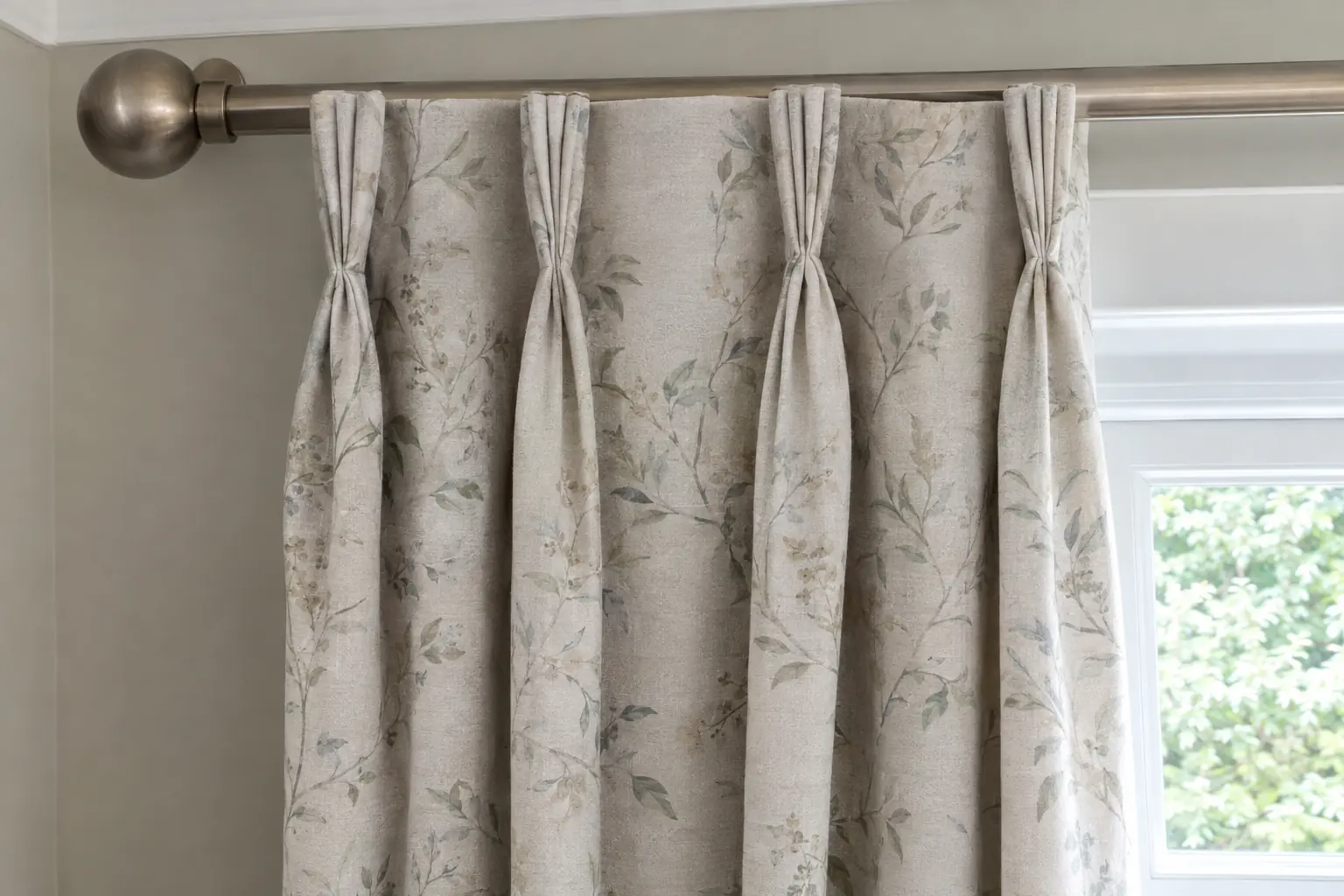
A pinch pleat heading starts as a flat band across the top of the curtain, stiffened behind so it stands upright. The fabric is then folded into small groups and stitched through at the base of each group, so the folds are held tight at the top and fan out below the stitching. Between the pleats are flat spaces of fabric, and the pleats are spaced evenly across the width, with one sitting at each edge of the curtain.
That spacing is worked out for every curtain. The finished width, the fabric taken up in each pleat and the gap between pleats all have to add up exactly, so a curtain for a narrow window has fewer pleats than one for a wide window, not smaller ones. It is careful, fiddly work, and it is why pinch pleat is the most tailored heading we make.
Our curtains are hand-finished in our West Yorkshire workshop. On a pinch pleat heading, that means the pleats are formed by hand and stitched to hold, rather than pulled up on a gathering tape.
Double or triple pleats
Pinch pleats are usually described by how many folds make up each group. A double pleat has two; a triple pleat has three.
The difference is one of character. Double pleats sit a little flatter and read as crisp and restrained, which suits a modern room, or a fabric with a strong pattern you would rather not see broken into small pieces. Triple pleats hold more fabric in each group, so the folds below them are rounder and deeper and the whole curtain looks fuller and more formal. They are the classic choice for a period drawing room with tall windows.
Which works best depends on the weight of the fabric, the lining and the width of the window. A heavy, interlined fabric can look bulky in triple pleats on a narrow window; a light linen can look thin in doubles on a wide one. Ask your advisor which suits the fabric you have fallen for, and they will tell you honestly if a different heading would show it off better.
Why the width has to be right first time
With a gathered heading such as pencil pleat, the width can be adjusted once the curtain is up, by easing the gathering cords tighter or looser. A pinch pleat has no such margin. The pleats are sewn in at fixed intervals, so the finished width of the heading is decided in the workshop and stays that way.
That puts the weight on the measurements. The length of the pole or track, the overlap where the two curtains meet in the middle, the return at each end where a curtain turns back to the wall, and the drop from the hook to the hem all need to be taken accurately before a single pleat is formed. A curtain made a little too narrow will not close properly; one made too wide will bunch against its neighbour.
This is one of the clearest arguments for having the window measured by the people who make the curtain. Your advisor measures every window at the home appointment, after you have chosen the heading and the fixing, so the fit is our responsibility rather than yours.
On a track or on a pole
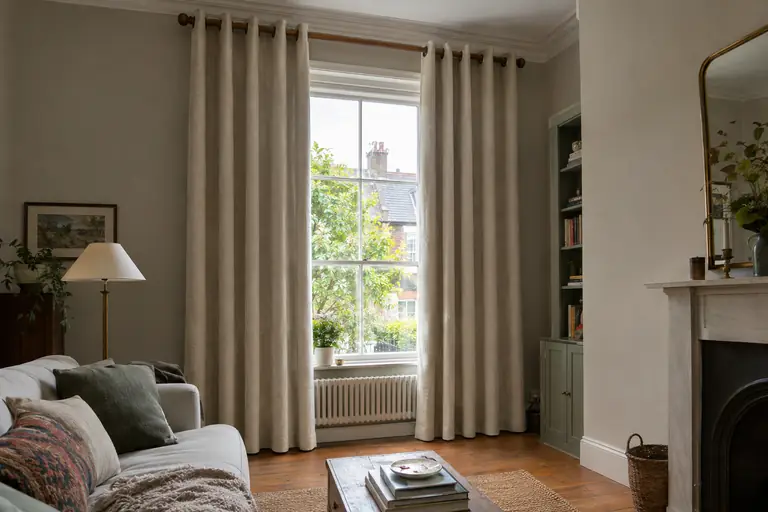
Pinch pleat curtains hang from hooks, so they can go on a track or from rings on a pole.
On a track, the hooks can be set so the top of the heading stands just above the track and hides it. From the room you see an unbroken line of pleats across the top of the window and no hardware at all, which is the more formal of the two looks. A track can also be shaped to follow a bay, so a pair of pinch pleat curtains can travel round the angles.
On a pole, the curtain hangs from rings just below it, and the pole becomes part of the look: a painted or wooden pole with finials in a traditional room, a slim metal one in a modern space. The pleats still stand up neatly, but the heading sits below the pole rather than in front of it.
Interlined pinch pleat curtains are heavy, and a long pole or track may need extra support along its length. Your advisor will tell you on the day which suits your window and fabric, and our fitters supply and put up the pole or track as part of the job.
Linings and interlining
Pinch pleats look their best with something behind them. A lined curtain holds its pleats and folds better than an unlined one, and the lining protects the face fabric from the sun.
There are four linings to choose from. A standard lining gives the curtain body and a better drape. A thermal lining helps a cold or draughty room. A blackout lining is the one for a bedroom that needs to be dark. Interlining is a soft, thick layer sewn between the face fabric and the lining, which adds weight and body.
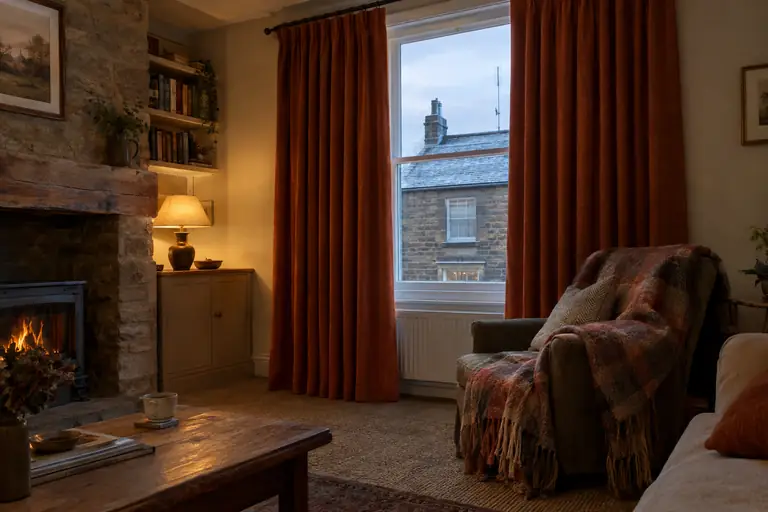
Interlining is where pinch pleat really comes into its own. It fills each pleat so it stands up full and rounded, and it makes the folds below deep and soft rather than flat. On a tall window, interlined pinch pleat curtains look generous even when they are drawn. The extra layer adds bulk, though, so the curtains stack back a little wider, and it adds to the making. For more on keeping a room warm, see our thermal curtains guide.
Rooms where pinch pleat looks right
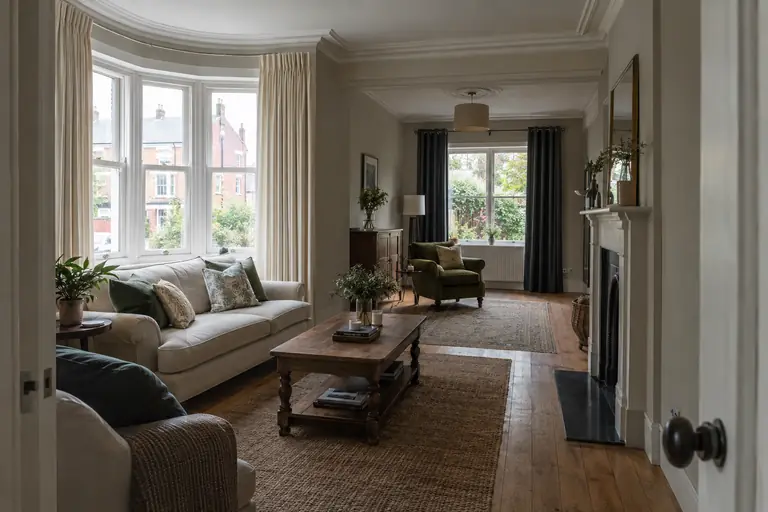
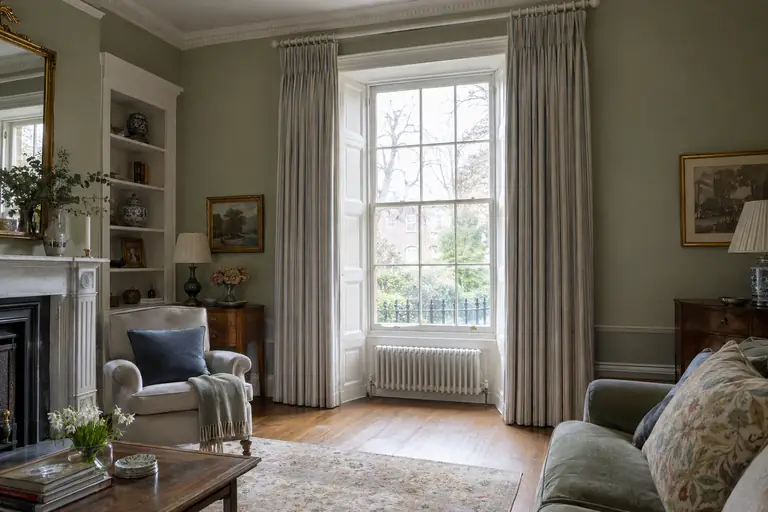
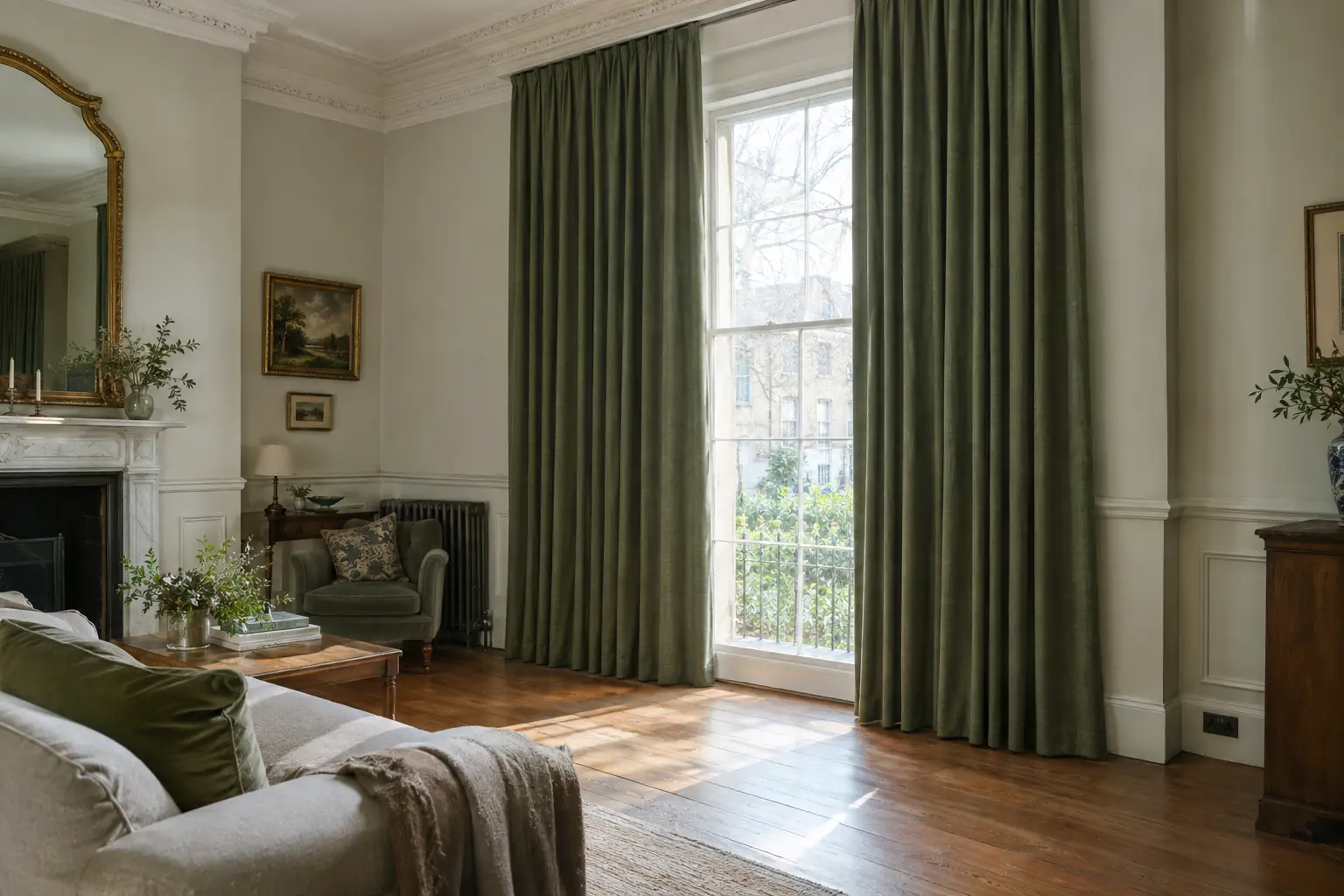
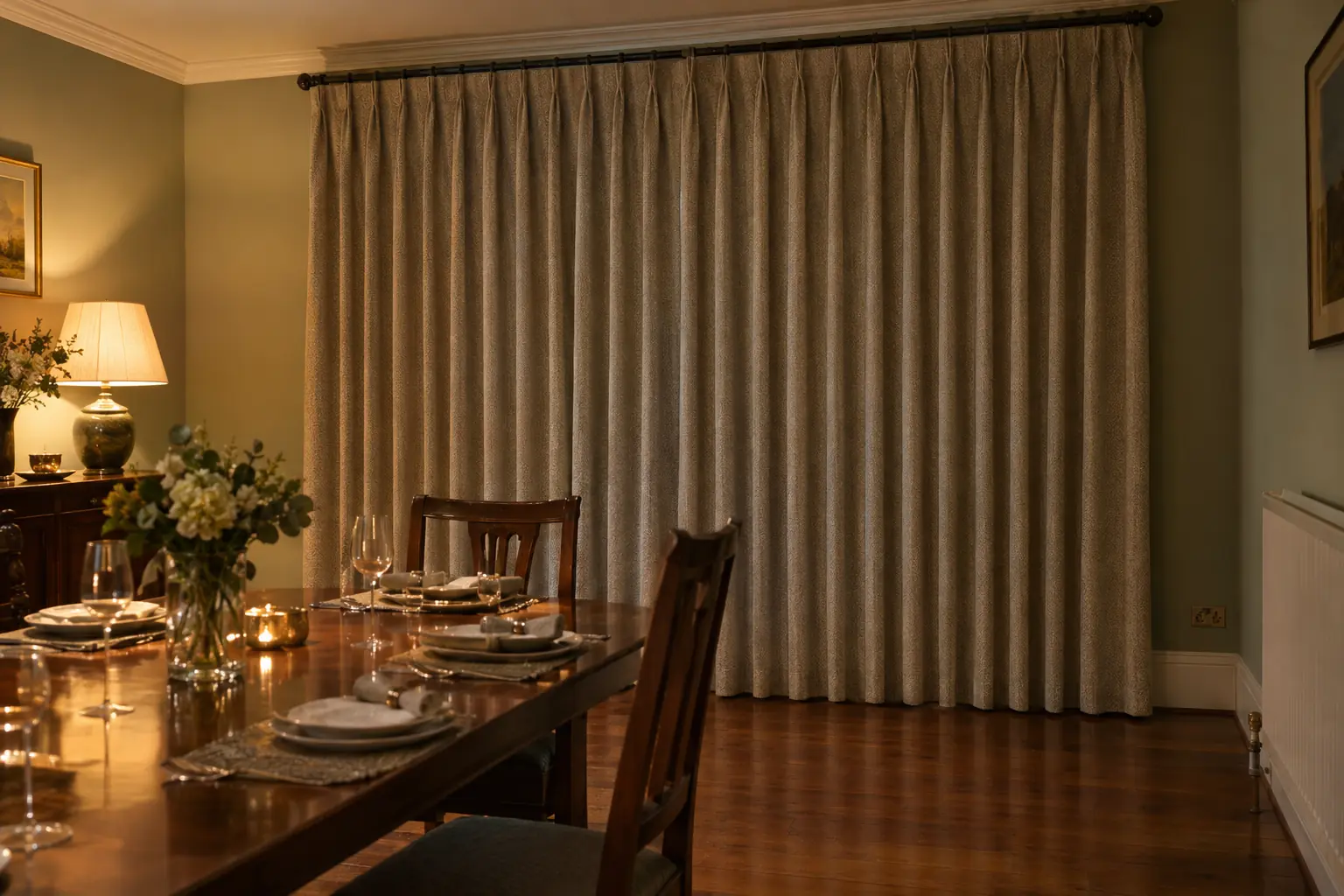
Pinch pleat belongs in rooms where the curtains are part of the architecture. A living room with tall windows, a dining room used mostly in the evening, a main bedroom with floor-length curtains either side of a wide window: these are the rooms where straight, even columns of fabric make sense.
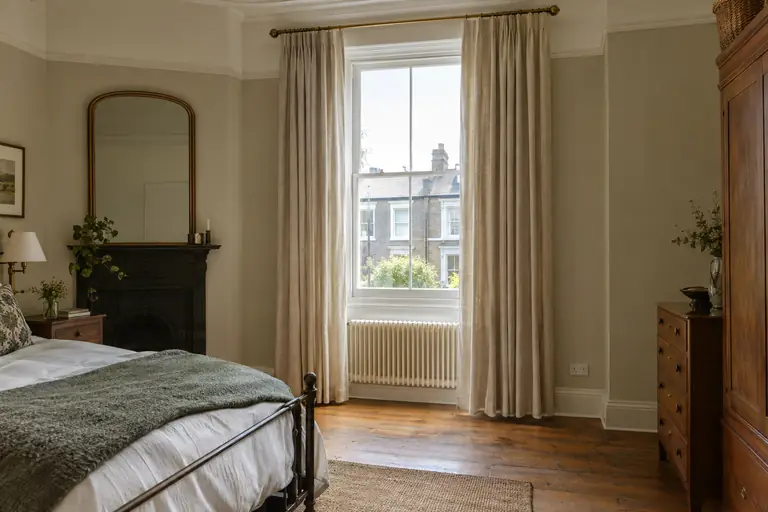
Period homes suit it particularly well. Georgian and Victorian sash windows have the height to carry a floor-length pinch pleat curtain, and because the stack is tight, the curtains can be dressed back without covering the glazing bars you may have gone to some trouble to restore. A track set close under the cornice lets the pleats run in one clean line from ceiling height to floor.
It is less at home in a small, low room, where the formality can feel heavy, and in a busy family room or a child's bedroom, where curtains are pulled open and shut several times a day. The pleats cope with it, but the tailoring is wasted. Eyelet or pencil pleat is usually the more sensible choice there; our curtain headings guide compares all four.
Living with pinch pleats
When a pair of pinch pleat curtains is first hung, the folds need a little encouragement to fall into place. Our fitters hang and dress the curtains, setting the folds by hand from each pleat down to the hem so they settle into straight columns from the first day.
After that, open and close them from the leading edge, the inside edge where the pair meets, rather than by pulling the fabric halfway down. It keeps the folds in line and saves the heading from strain. If the curtains are left open for a long time, run your hand down each fold now and then to keep the columns straight.
To keep them fresh, run a soft brush over them from time to time, working down the folds. Most lined and interlined curtains are dry cleaned rather than washed, because washing shrinks the lining at a different rate from the face fabric, and a pinch pleat heading shows an uneven shrink more than any other. If anything is not right after fitting, ring the office.
Pros and cons
In its favour
- The most tailored heading, with pleats formed by hand and stitched to hold
- Stacks back tighter than any other heading, so more of the glass stays clear
- Straight, even folds that look as good drawn as they do open
- Hangs on a track, hiding it completely, or from rings on a pole
- Takes interlining well, for full, rounded pleats and deep folds
Worth knowing
- The width is fixed once the pleats are sewn and cannot be adjusted on the window
- More making than a tape heading, which shows in the quote
- Can feel too formal for a small, low or busy room
- Interlined pairs are heavy and need well-supported fixings
Room by room
- Living roomA great fitTall windows and evening use suit the tailored columns, and the tight stack keeps daylight on the glass.
- Dining roomA great fitOften drawn in the evening and seen from the table, where formal pleats look deliberate.
- Main bedroomWorks wellAdd a blackout lining for darker mornings; the pleats stay neat when drawn twice a day from the leading edge.
- Period sitting roomA great fitTall sash windows carry floor-length pleats well, and the tight stack leaves the glazing bars on show.
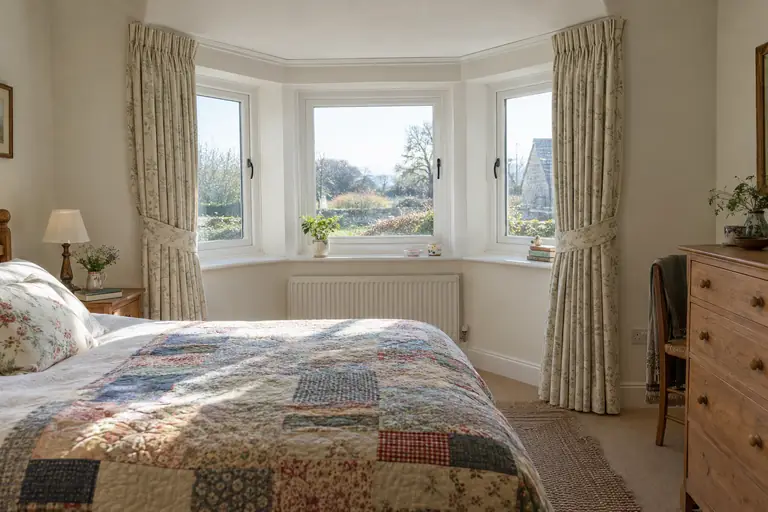
- Bay windowWorks wellHangs well on a track shaped to the bay; each section is measured on its own.
- Child's bedroomThink twiceCurtains here are pulled open and shut all day; eyelet or pencil pleat does the job with less making.
- KitchenThink twiceSteam and cooking splashes are hard on a lined, interlined fabric that has to be dry cleaned.