The short answer
For most kitchens, a roller in a wipeable or PVC-coated fabric, or a venetian in aluminium or faux wood. Both wipe clean with a damp cloth and cope with steam. Keep real wood, fabric romans and anything that moves in a draught away from the hob. Then think about how you will reach the control across the sink, and whether a tap or the worktop gets in the way of the drop.
- Wipeable rollers and aluminium or faux-wood venetians are the kitchen staples.
- Keep fabric and real wood well away from the hob.
- Check the drop: a tall tap, a worktop or a deep sill can stop a blind short.
- Venetians tilt away low sun while you keep the view of the garden.
- Save a roman blind for a kitchen window well away from the cooking and the sink.
What a kitchen does to a blind
Cooking puts three things into the air: steam, heat and fine droplets of fat. The steam condenses on the coldest surface in the room, which is usually the window. The fat settles on everything, and on a blind it forms a thin, slightly tacky film that catches dust and slowly dulls the colour. Near the sink, add splashes and wet hands.
None of that is a reason to leave a kitchen window bare, but it changes what makes a good blind. A soft furnishing fabric that is perfectly happy in a living room will mark and hold grease in a kitchen. Timber reacts to steam and heat by moving, which on a real-wood slat means twisting or bowing over time. What lasts is something that absorbs nothing and can be wiped: a coated or wipeable fabric, aluminium or faux wood.
The first defence is the window itself. The Centre for Sustainable Energy suggests opening the kitchen window so the steam from cooking leaves the building instead of settling on the glass, the walls and the blind, and government damp guidance counts kitchens among the rooms that most need good ventilation. That only happens if the blind lets you reach the handle easily, so check that before anything else.
Keep it clear of the hob
If the hob sits next to a window, or under one, the blind for that window is the one to get right first. Heat rising from pans dries and discolours fabric, and fat from frying settles most thickly nearest its source. Real wood kept close to a hob will not last, and any fabric that can move in a draught from an open window should be kept well away from a gas flame.
In practice that means choosing a blind that stays put and wipes clean, such as an aluminium or faux-wood venetian or a roller in a coated fabric, fitted so that no part of it hangs near the pans. A blind that hangs flat and raises into a compact stack is better beside a hob than loose fabric that can billow.
A roman blind can look lovely in a kitchen, but its folds and lining make it the least suitable choice near the cooking. If you want the softness of fabric, put the roman on a window at the far end of the room, over a table or a window seat, and keep the hard-wearing blind for the window by the hob. Your advisor will note where the hob sits in relation to each window when measuring.
The window over the sink
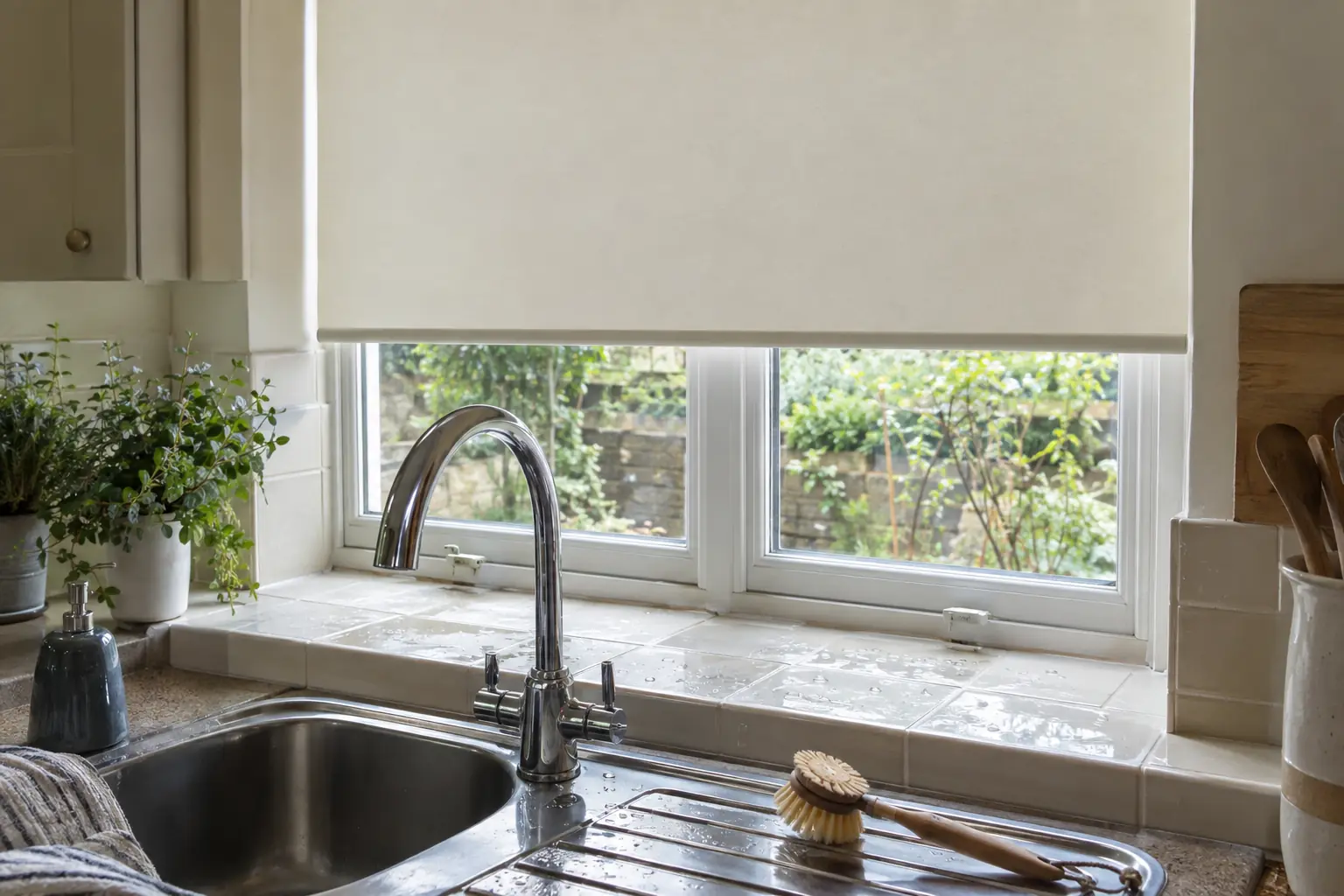
Most kitchens have their main window over the sink, and it raises three practical questions.
The first is reach. You will be leaning over a sink and a worktop to work the blind, often with wet hands, so a control on the side you can reach comfortably matters more here than anywhere else in the house. A wand on a venetian, a cordless design or a motor all save you stretching across to a chain at the far side.
The second is the drop. A blind inside the recess stops at the sill, which is usually fine. A blind fitted outside the recess has to stop above whatever is in its way: a tall mixer tap, a sill that runs out over the worktop, or tiles that step forward. Tell your advisor what sits under the window and the drop will be measured to suit.
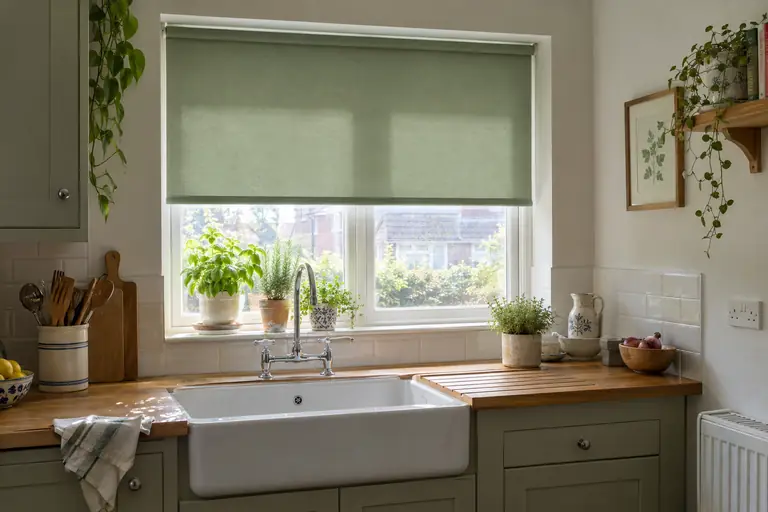
The third is splashes. The bottom of a blind over a sink is the part that gets wet, so a wipeable or PVC-coated roller fabric, or aluminium or faux-wood slats, will cope far better than a woven fabric that stains. If the window is one you open often to clear steam, make sure the blind lets you reach the handle without raising it all the way.
Venetians: tilt the light, keep the view
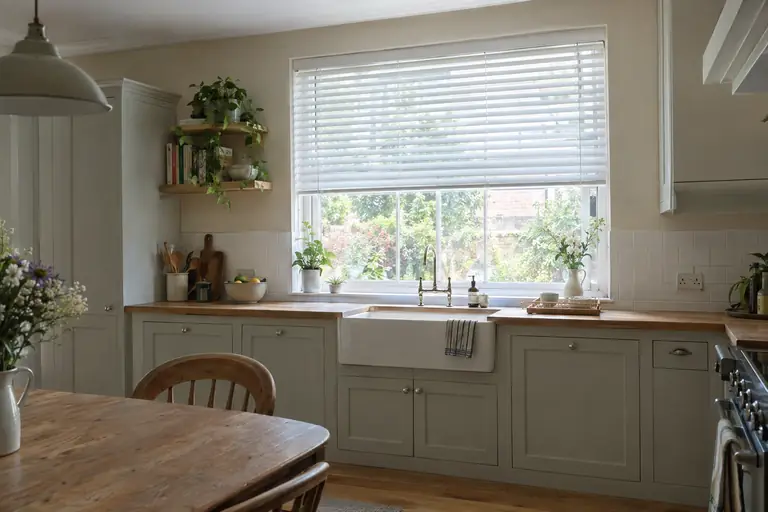
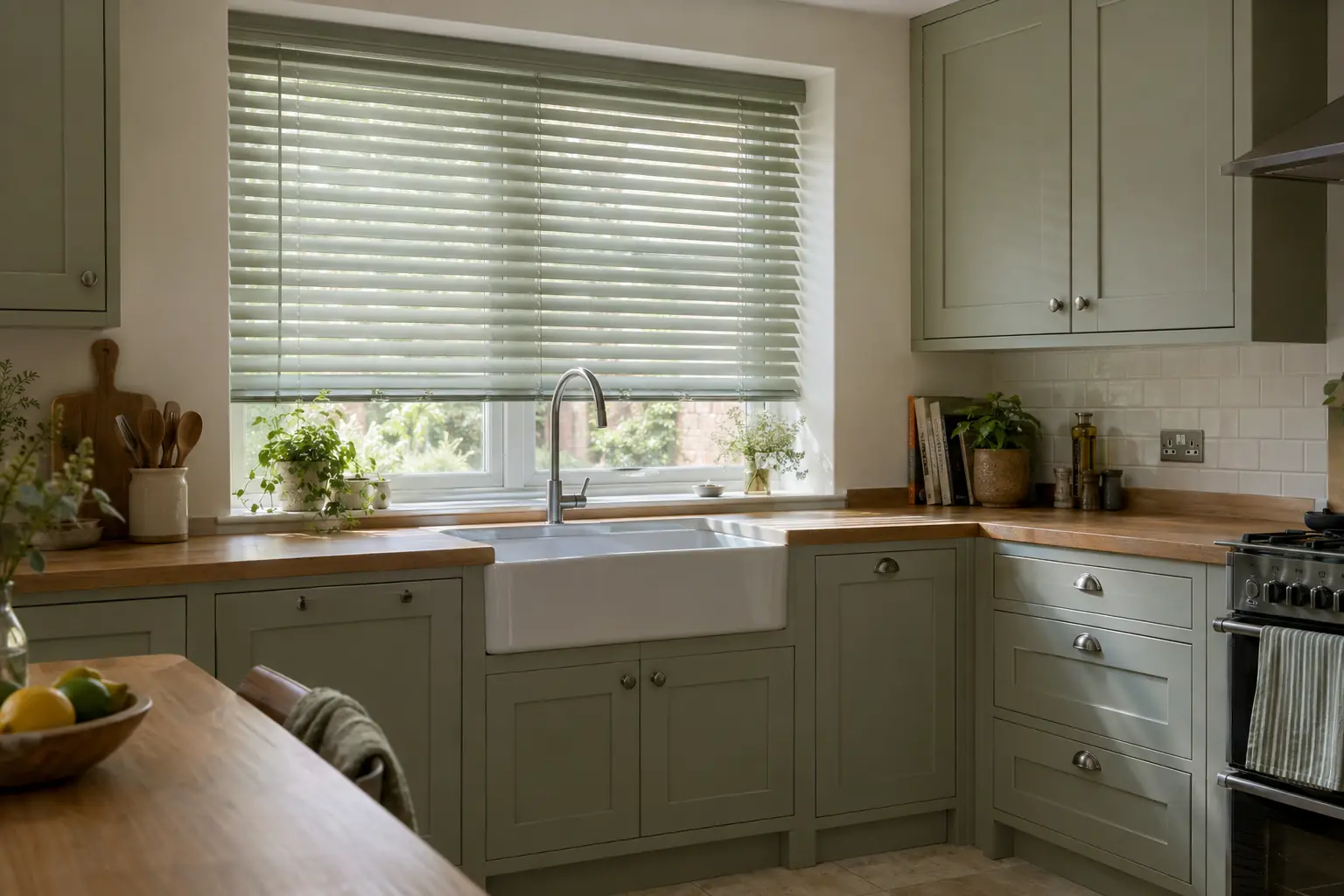
A venetian is the most precise way to control light in a kitchen. Tilt the slats a few degrees and low sun glaring across the worktop turns into soft light on the ceiling, without losing the view of the garden or of whoever is playing in it. Close them for privacy on a ground-floor window facing the street.
Aluminium slats are slim and light and wipe clean, and suit a modern kitchen or a small window. Faux wood gives you the look of painted or stained timber in a material that shrugs off steam, and it sits well with wooden worktops or a traditional painted kitchen.
The trade-off is cleaning. A venetian has more surfaces than a roller, and in a kitchen every one of them collects a little grease. The easy way is little and often: close the slats one way and run a damp cloth across them, then close them the other way and repeat. Done every week or two, it takes a few minutes. Left for a year, it is a much bigger job.
Rollers, romans and kitchen curtains
A roller blind is the most practical kitchen blind there is: one flat surface, nothing to trap grease, and fabrics made to be wiped. Coated and PVC fabrics suit the window over the sink or near the hob; a softer wipeable fabric suits a window further from the cooking. Rolled up, a roller takes very little room above the glass, which matters on a short window over a worktop.
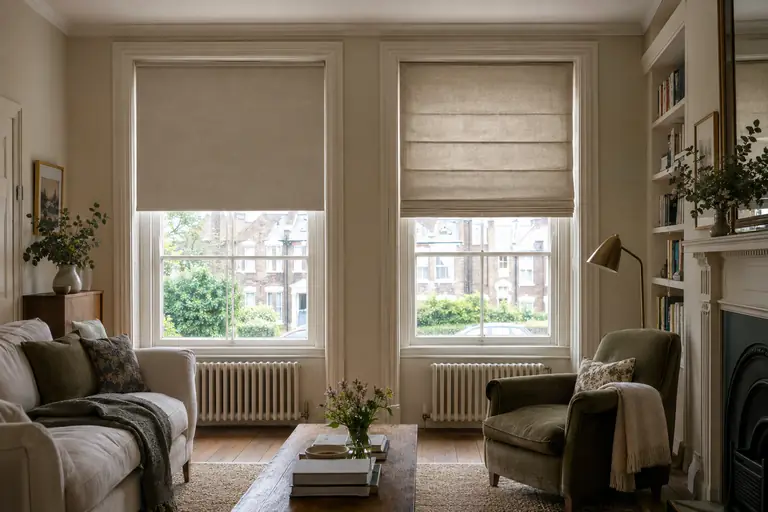
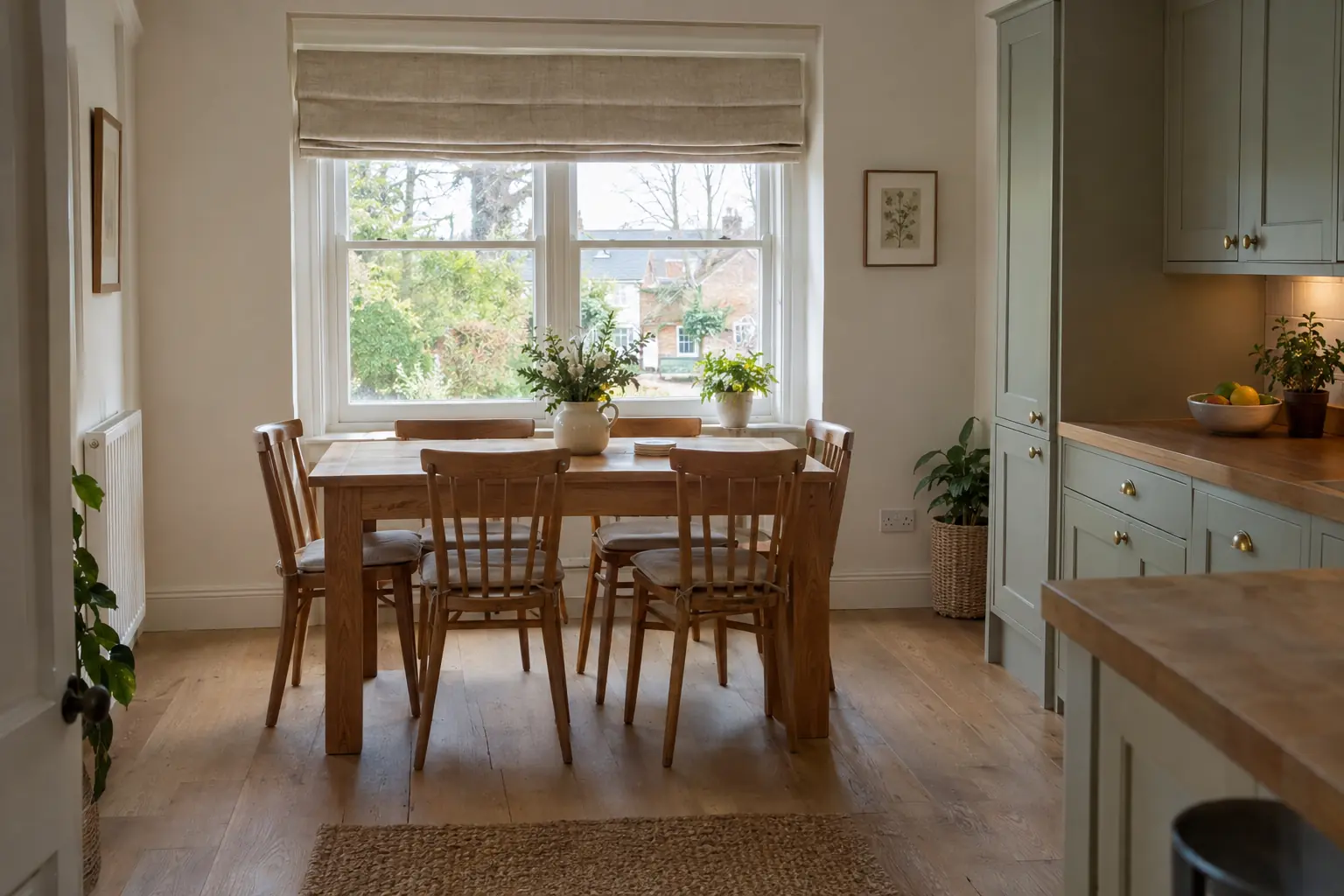
A roman blind brings the softness of curtain fabric into the kitchen and folds into a neat stack above the glass, which gives a painted kitchen a relaxed, finished look. It needs the right window, away from the hob and the sink, where the fabric will stay dry and clean. Cordless controls suit a family kitchen and keep the reveal tidy.
Kitchen curtains work on the same principle: keep them for windows away from the splash and the heat, such as a window over the table, or a glazed back door where a pair on a pole can stack well clear of the frame. Our guide to patio and French door blinds covers doors in more detail.
Kitchens that open into other rooms
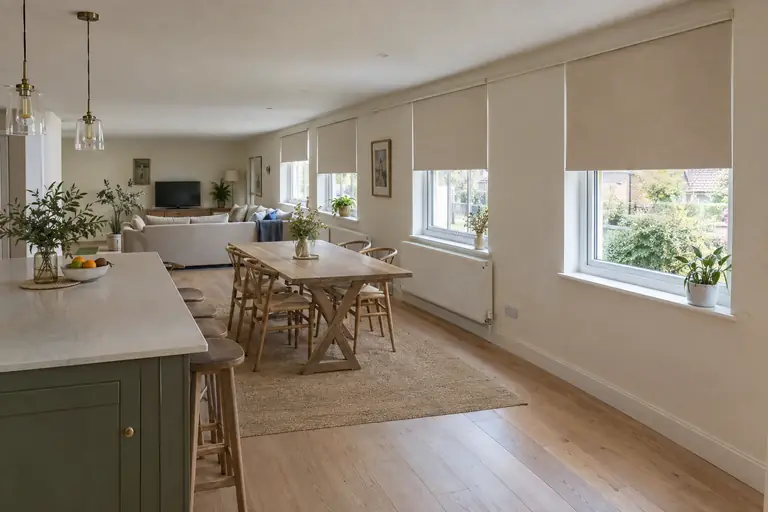
Many kitchens are now one end of a bigger room, with a table in the middle and a sofa at the far end. The kitchen window still needs a kitchen blind, but it should not look like an afterthought beside the windows at the other end. Choose it at the same time as the rest of the room, in a colour or finish that relates to the others, and keep the fit and the top line the same along the wall, so the practical choice by the sink does not look like the odd one out.
A south- or west-facing kitchen with a large window or a glazed door can get uncomfortably warm on a summer afternoon, with the oven adding its share. In hot weather the UK Health Security Agency advises shutting blinds and curtains through the day on windows that get direct sun, and a blind that is easy to reach is the one that actually gets shut. Our guide to dining rooms and open-plan spaces goes further into dressing a run of windows as one scheme.
Checklist
- Note where the hob, sink and tap sit in relation to each window.
- Choose wipeable: a coated roller fabric, aluminium or faux wood.
- Keep fabric and real wood well clear of the hob.
- Check what the drop meets: the sill, a tap or the worktop.
- Make sure you can reach the control and open the window easily.
- Save softer romans and curtains for windows away from the cooking.