The short answer
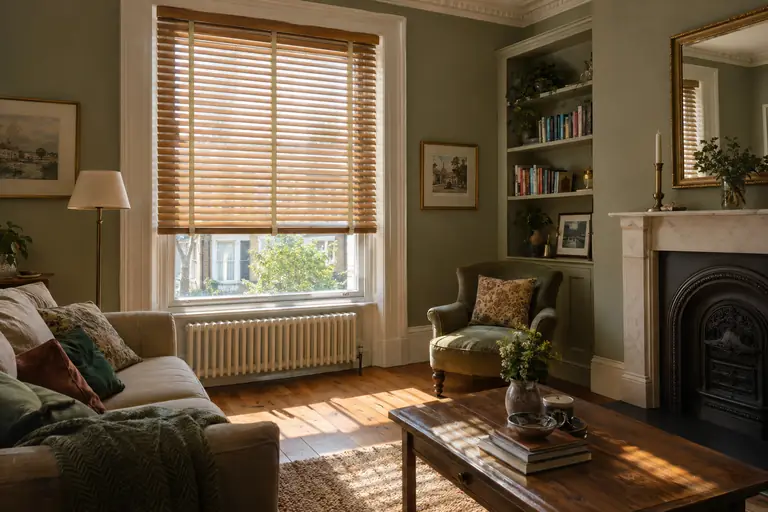
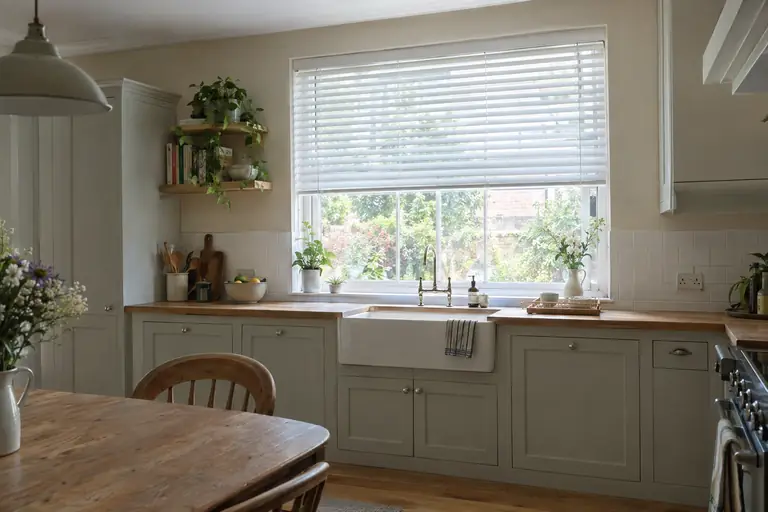
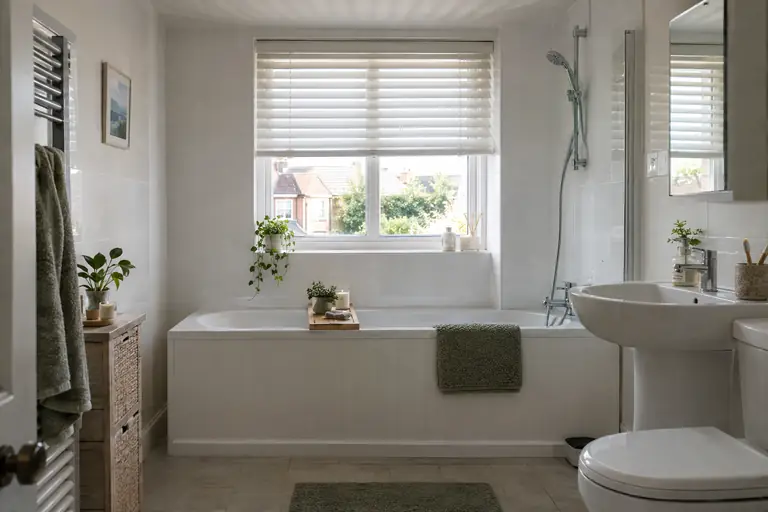
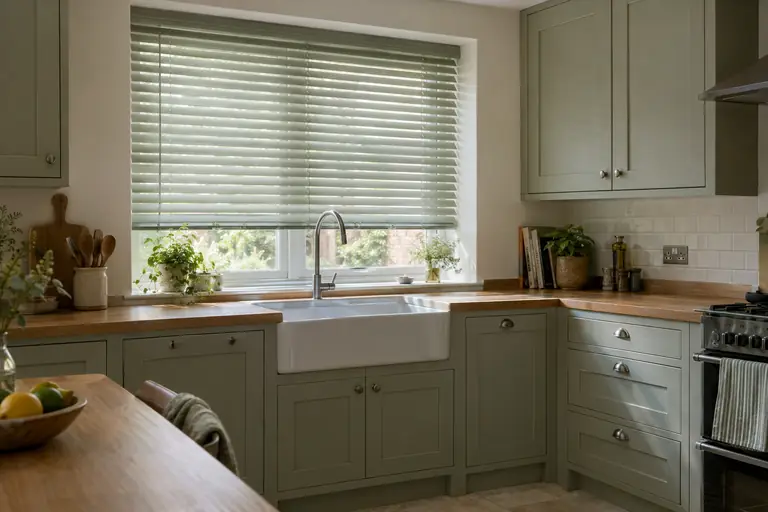
Use faux wood anywhere moisture is part of daily life: bathrooms, en-suites, kitchens near the sink or hob, utility rooms, and windows that stream with condensation. Use real wood in dry rooms where you will see and touch it: living rooms, bedrooms, studies and dining rooms. Faux wood is heavier, so very wide windows may need splitting. Matching finishes let you use both in one house without it looking mixed.
- Steam and condensation are the deciding question: faux wood ignores them, real timber bows.
- Real wood is lighter for its size; faux wood is denser and heavier to raise.
- Up close, real grain has depth that a moulded slat does not quite match.
- Faux wood keeps an even colour; real timber varies a little from slat to slat.
- Many finishes come in both, so one tone can run through dry and wet rooms.
What faux wood actually is
A faux wood slat is moulded rather than cut from a tree. It is made to look like painted or stained timber, with a wood-effect finish on the face, and it is built to stay straight and stable in conditions that would move real wood. Because it is moulded, every slat comes out the same shape and the same colour.
A real wood slat is cut from timber, shaped, and then painted or stained. Stains let the grain show through, so each slat is slightly different, the way boards in a floor are. Painted timber hides most of the grain but keeps a softness at the edges and a warmth to the touch.
Once they are hanging, the two work in exactly the same way. The slats tilt on ladder cords or tapes, raise into a stack at the top and give the same control over light and privacy. Many finishes are offered in both materials, which is the point: you choose where each belongs, not which look you are allowed.
What changes is how they react to the room, how much they weigh and how they look from a few inches away. The sections below go through each, and our wooden blinds guide covers tones, slat widths and tapes in more detail.
Steam and condensation: the question that decides it
Wood breathes: it absorbs moisture from damp air and releases it again as the air dries. In a sitting room the swings are small and slow. Next to a shower, a bath or a pan on the boil they are large and daily, and a timber slat that lives through that for long enough bows or twists. A warped slat stays warped, which is why we do not recommend real wood for bathrooms or the hob side of a kitchen.
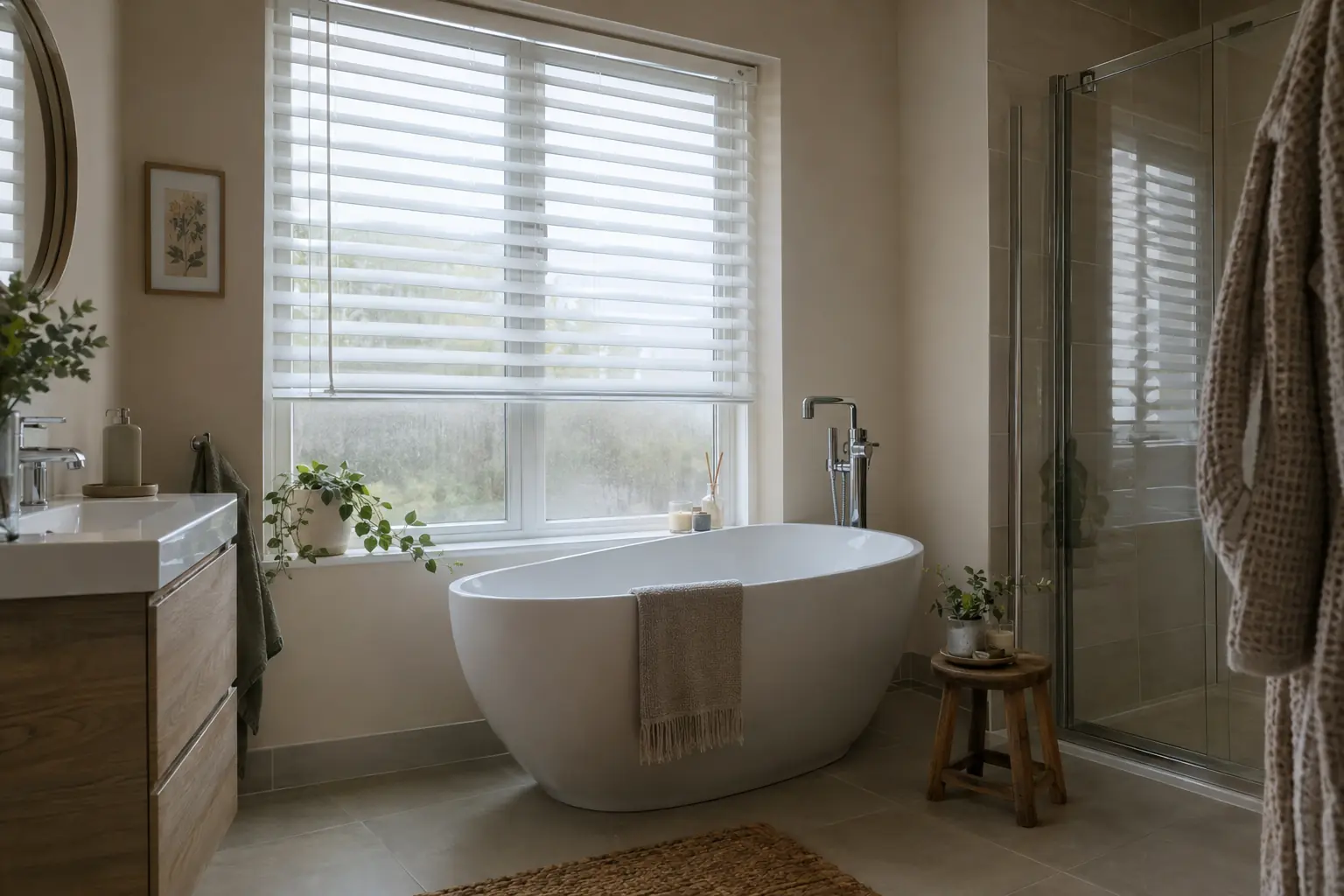
Faux wood does not take on moisture in the same way. Steam, splashes and drips wipe off with a damp cloth and the slats stay straight, which makes it the natural choice for bathrooms, en-suites, kitchens and utility rooms.
The room people forget is the one with heavy condensation. According to GOV.UK, condensation is the most common form of damp: moisture generated inside the home cools and settles on the colder parts of a building, window frames included. A bedroom whose windows run with water on winter mornings, or a single-glazed window in an older house, puts a blind in damp air for hours every day, even though nobody would call the room wet. A real wood blind hanging close to that glass is working harder than it looks.
If you are not sure how damp a window gets, describe the room and what the glass looks like on a cold morning to your advisor, and they will say which material suits it.
Weight, width and how the blind feels to use
Real wood is the lighter of the two for its size. Faux wood is denser, so the same blind in faux wood is heavier to raise and leaves a slightly deeper stack of slats at the top.
On an ordinary window you will not notice the difference. On a wide or tall one you will. A heavy blind takes more effort on the cord every time you raise it, and the bigger the window, the more that adds up. It is one of the reasons a very wide window is often made as two or three blinds side by side, lined up so the slats read as one run when they are level.
That gives real wood a quiet advantage on big windows in dry rooms, such as a wide living room window or a tall stair window: the same size of blind is lighter to lift. In a wet room, faux wood is still the right answer, and your advisor will size it or split it so it stays comfortable to use.
Where a window is both large and hard to reach, motorisation takes the weight question away entirely. Motors can be grouped so several blinds move together, and they carry the same 1-year guarantee as the blind.
Finish and grain: the close-up test
At the distance you usually see a window from, across a room, a good faux wood finish is convincing. The difference shows up close, in daylight, and in your hand.
Real stained timber has depth. Light goes into the grain and comes back warmer, and the pattern varies along each slat and from one slat to the next. Faux wood reproduces the colour and the general look of grain, but the surface is more even and a little harder and smoother to the touch. On dark stained finishes, where grain matters most, the difference is easiest to see. On painted finishes, especially whites and soft greys, the two are much closer, and many people cannot tell them apart once the blind is up.
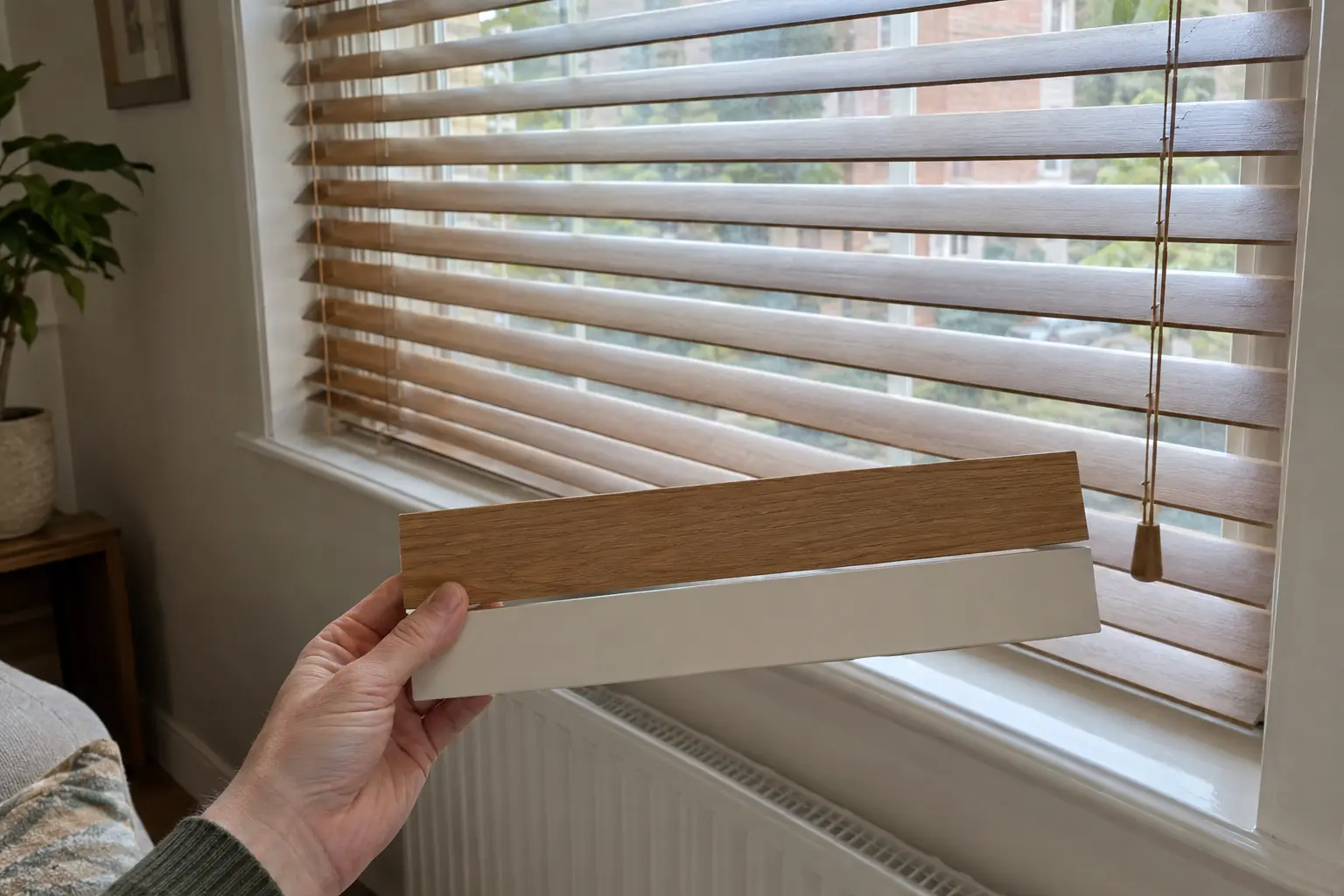
The way to decide is to look at both side by side, at the window, in your own light. Hold them where you will actually see the blind: from the sofa, from the bed, from the doorway. If the blind is in a room where you will stand beside it every day, like a study window next to the desk, the grain may matter to you. If it is over a bath you look at from across the room, it probably will not.
Your advisor brings both materials to the appointment so you can make exactly that comparison.
Matching colours across a house
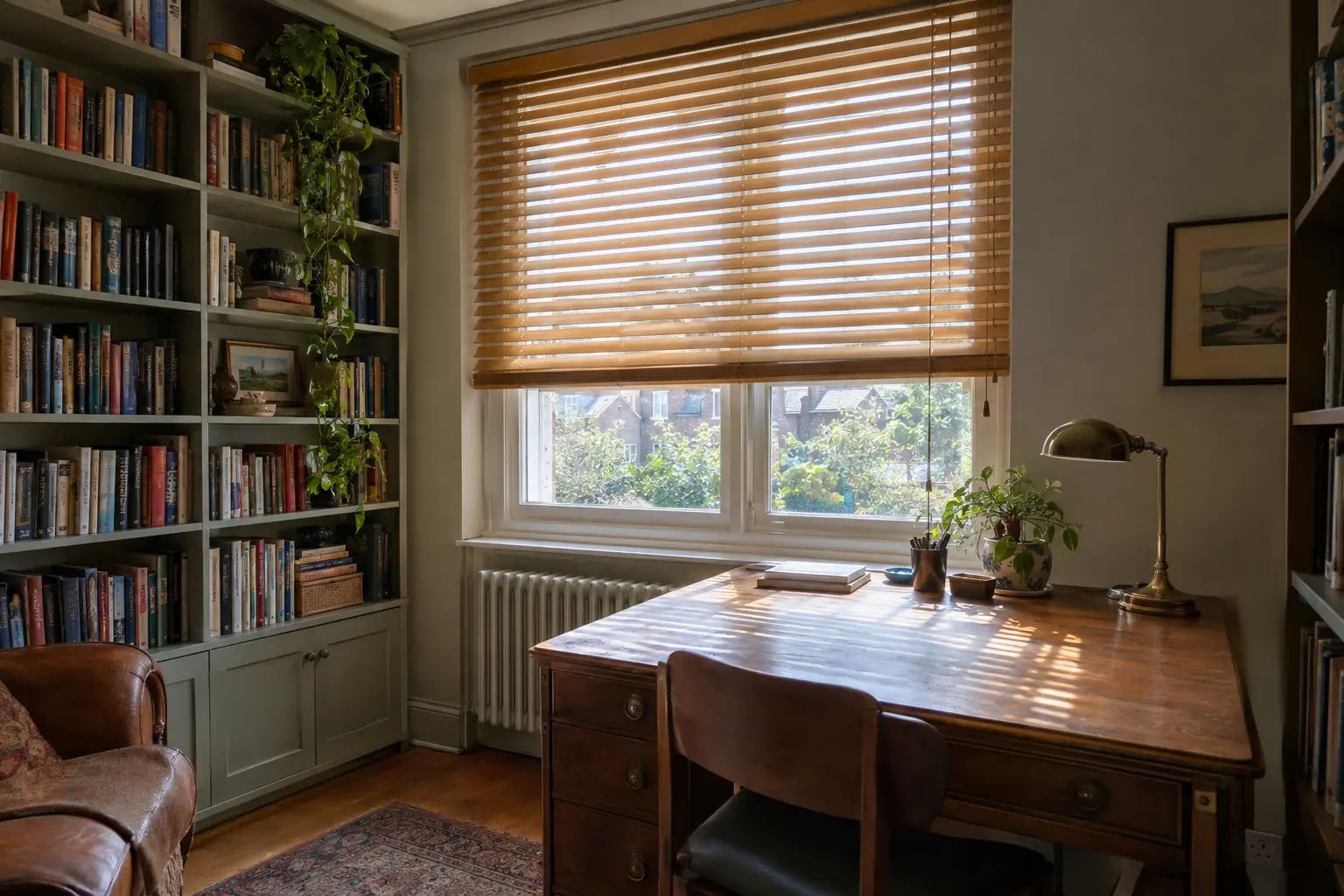
Many wooden finishes are made in both real and faux wood, which means a house can have one tone running through it: real wood in the living room and bedrooms, faux wood in the kitchen and bathroom. From room to room, that reads as one scheme.
It is worth being realistic about what matching means. A real wood finish and its faux wood counterpart are made to sit together, but timber varies slat to slat and deepens slightly with age and sunlight, while faux wood is even from one slat to the next. Side by side on the same wall, you might see the difference. In different rooms, you will not.
So the practical rule is one material per room. If a kitchen-diner has a sink window and a dining window on the same wall, use faux wood on both rather than faux at the sink and timber at the table. If a bathroom and a bedroom share a landing, it does not matter that one is faux and one is real.
Faux wood's even colour is also an advantage across a run of windows or a bay, where every blind is seen together. Timber's variation is part of its charm on a single window, and it is what makes it feel like furniture.
Order up to five free samples to see the finishes at home, or ask your advisor to bring both versions of the tone you like.
Cleaning and everyday wear
Dusting is identical for both: a soft brush or a dry cloth over the closed slats, first with them turned one way and then the other.
The difference is water. Faux wood takes a damp cloth, and a greasy kitchen film or a splash of toothpaste on a bathroom blind wipes off. Real wood should only be dusted dry. Water left on timber slats can mark the finish and, repeated often enough, starts the same movement that steam causes.
Faux wood is the more forgiving of the two in a busy room. Sticky fingerprints wipe off, and it stands up well to the everyday knocks that come with small children, pets and a kitchen worktop underneath. Real timber is strong but will dent or scratch like any wooden furniture, and a chip in a painted finish shows the wood underneath.
Both are covered by the same 1-year guarantee when we supply and fit them. Cords, wands and brackets are the usual wear parts and can normally be replaced on their own. A damaged slat is a question for the office, who will tell you plainly what fixing it involves.
Side by side
Made from
- Real wood
- Timber slats, stained or painted
- Faux wood
- Moulded slats with a wood-effect finish
Steam and condensation
- Real wood
- Bows over time; kept out of bathrooms and away from hobs
- Faux wood
- Unaffected; wipe dry and carry on
Weight
- Real wood
- Lighter for its size
- Faux wood
- Denser and heavier; wide windows may be split
Grain up close
- Real wood
- Real depth, varies slat to slat
- Faux wood
- Even finish; closest match on painted colours
Colour consistency
- Real wood
- Natural variation that deepens with age and sun
- Faux wood
- Even colour across every slat and window
Cleaning
- Real wood
- Dust dry only
- Faux wood
- Dust, or wipe with a damp cloth
Knocks and wear
- Real wood
- Can dent or scratch like furniture
- Faux wood
- Forgiving in busy family rooms; marks wipe off
Best rooms
- Real wood
- Living rooms, bedrooms, studies, dining rooms
- Faux wood
- Bathrooms, en-suites, kitchens, utility rooms