The short answer
Condensation on windows comes from moisture in the air (cooking, showers, drying washing and breathing) meeting cold glass. To stop it, ventilate where moisture is made, heat rooms evenly and wipe the glass each morning. Blinds and curtains do not cause condensation, but closed tight against the glass they let it build up, so choose moisture-resistant ones.
- What causes condensation on windows: warm, moist indoor air meeting the coldest surface in the room.
- Severe condensation is the most common form of damp in English homes (English Housing Survey 2024-25).
- How to stop it: extractor fans, trickle vents open, steady heat and less washing dried indoors.
- In damp rooms, choose waterproof roller blinds, aluminium or faux-wood venetians, or PVC shutters.
- Open blinds and curtains every morning, wipe the glass and air the room for a few minutes.
What causes condensation on windows?
Every home makes moisture. Cooking, showers, drying washing indoors and simply breathing all put water vapour into the air. Government guidance on damp describes condensation as moisture generated inside the home that cools and condenses onto colder parts of the building, and names window frames among the first places it appears.
Glass is usually the coldest surface in a room, so it is where that vapour turns back into water first. That is why condensation on windows is worst in winter, heaviest in the morning after a night with the windows shut, and most common in bedrooms, bathrooms and kitchens. Condensation on windows inside the house is a sign of moisture in the room; on the outside of modern double glazing it simply means the glass is keeping the heat in.
It is very common. The English Housing Survey found 1.4 million homes in England (5%) had a problem with damp in 2024, and the most common form was severe condensation, in 3% of homes. Damp was more than twice as common in privately rented homes (10%) as in owner-occupied homes (4%).
Is condensation on windows bad?
A little moisture that clears by mid-morning is normal. The problem is water that sits on the glass and frame day after day, because that is where black mould starts.
Government guidance on damp and mould says everyone is vulnerable to its health effects, but people with certain health conditions, children and older adults are at greater risk. It lists people with allergies, asthma or chronic obstructive pulmonary disease, people with weakened immune systems, and pregnant women among those most at risk.
Signs that condensation has gone beyond normal: water running onto the sill every day, black spots on the frame, seals or the bottom of a blind, peeling paint around the window, or a musty smell. If it is heavy every day despite good habits, the cause may be a fault such as a broken extractor fan or a leak; in a rented home, report it to the landlord.

Do blinds and curtains cause condensation?
No, they do not add moisture, but they change where it collects.
When a blind or a pair of lined curtains is closed tight across a window at night, it traps a layer of air between the fabric and the glass. Warmth from the room cannot reach the glass, so the glass gets colder and the moist air trapped behind the dressing condenses on it. In the morning you open up to a wetter window than you would have had with nothing there.
That is not a reason to take your curtains down. The same layer of trapped air keeps the room warmer and cuts heat lost through the glass, as our guide to keeping your home warm with blinds and curtains explains. The answer is to choose materials that cope with damp, fit them so some air can move, and open them in the morning.
Which blinds are best for windows with condensation?
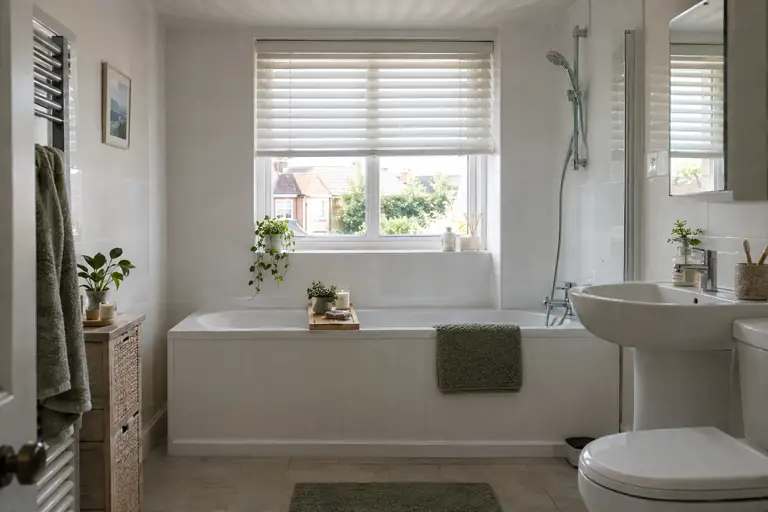
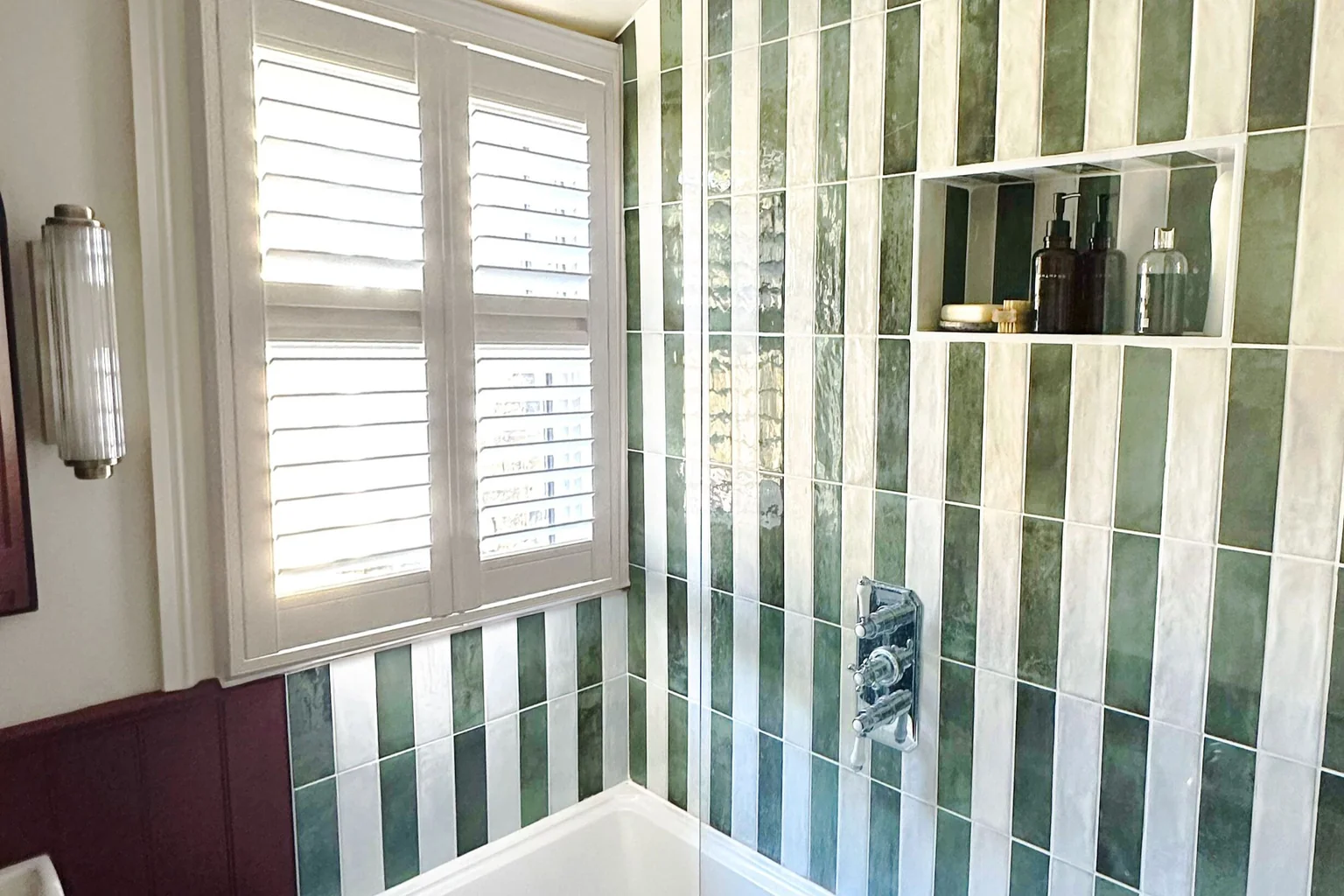
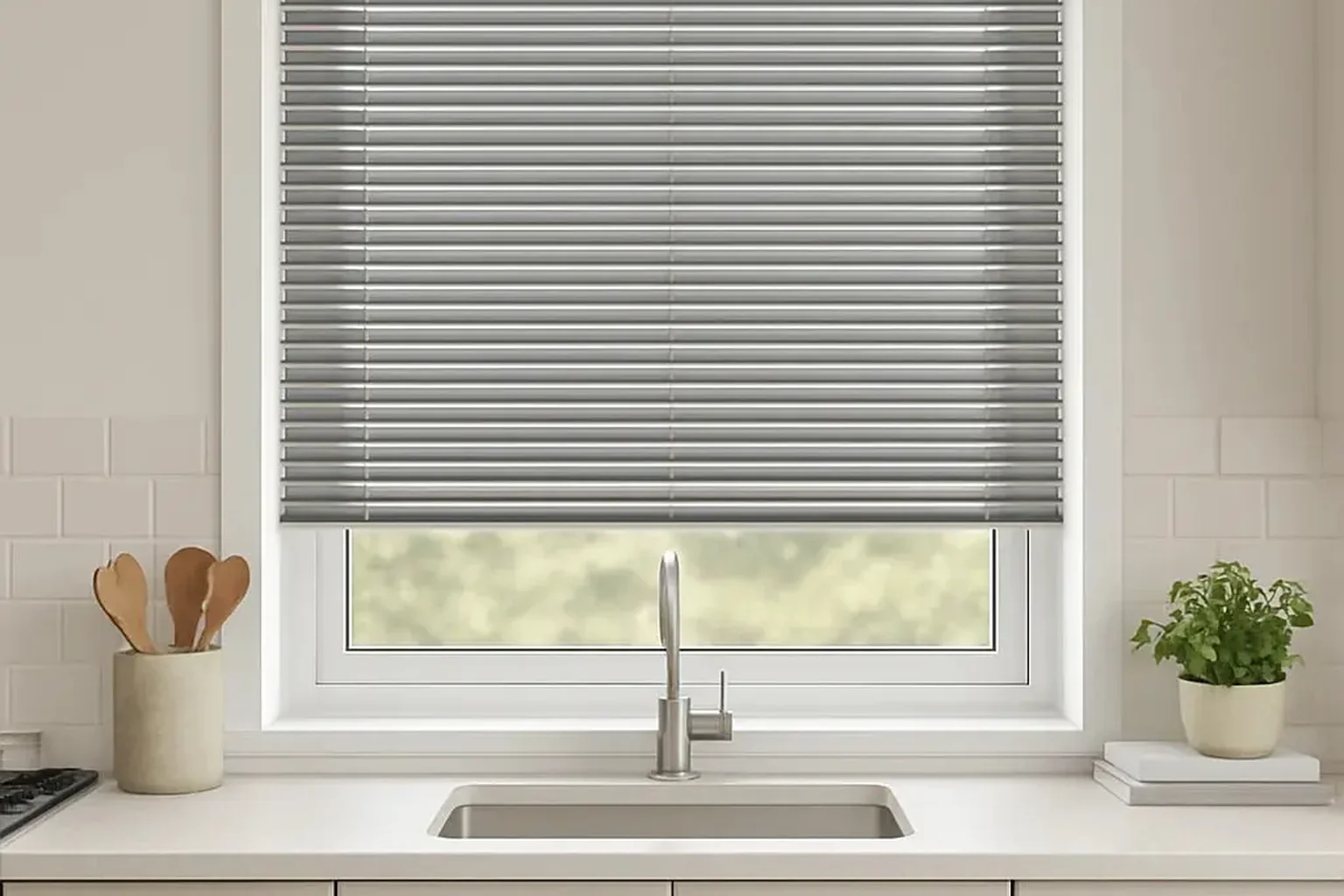
In rooms where windows run with water, choose a material that does not soak it up and can be wiped clean. Waterproof roller blinds, aluminium or faux-wood venetians and PVC shutters all cope with steam and wipe down easily, which makes them the safest choices for bathrooms, kitchens and utility rooms.
Real wood and fabric still have a place, but in drier rooms. Natural timber can move in persistent damp, and fabric that rests on wet glass can mark over time. The side-by-side table further down this guide compares each option. It is a starting point; your advisor looks at each window before suggesting anything.
How to stop condensation on windows overnight
Most condensation forms overnight, so how your window is dressed and set up for the night matters.
Leave a small gap. A blind that hangs slightly away from the glass, with space at the top and sides, lets some room air reach the window.
Keep fabric off the glass and sill. Curtains that rest on a wet sill or brush the glass soak up water. Hang them from a pole or track set slightly forward of the frame and finish them just above the sill or clear of the floor.
Keep trickle vents open. Under building regulations, replacement windows must have trickle vents, the small slots in the top of the frame. A blind, pelmet or curtain heading that covers them stops the room breathing.
Keep a little heat on. Rooms that drop very cold overnight attract the most condensation; a low, steady heat usually works better than short blasts. In bathrooms, bathroom shutters can be left with the louvres open overnight for air.
How to get rid of condensation on windows in the morning
A few small habits make a big difference, especially from November to March.
Open up first thing. Raise blinds and open curtains when you get up, wipe the glass and sill with a cloth or a window vac, and open the window for a few minutes.
Ventilate where the moisture is made. Use the extractor fan or open a window when cooking and after a bath or shower, and keep kitchen and bathroom doors closed so steam does not travel into colder bedrooms.
Dry washing outside or in a ventilated room where you can. A rack of wet clothes in a closed bedroom is one of the biggest sources of window condensation.
Clean mould promptly. If black spots appear on a frame, seal or blind, clean them as soon as you see them, following the care advice for that material.
Which rooms get the worst condensation?
Some rooms make far more moisture than others, so the right choice changes from room to room.
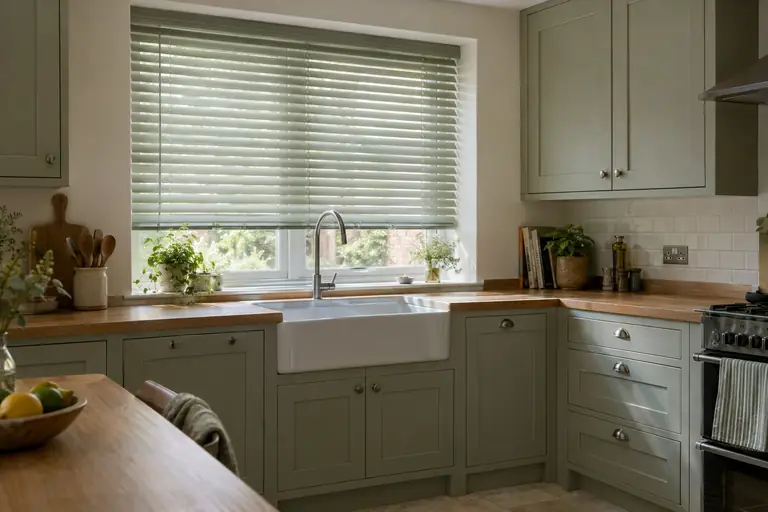
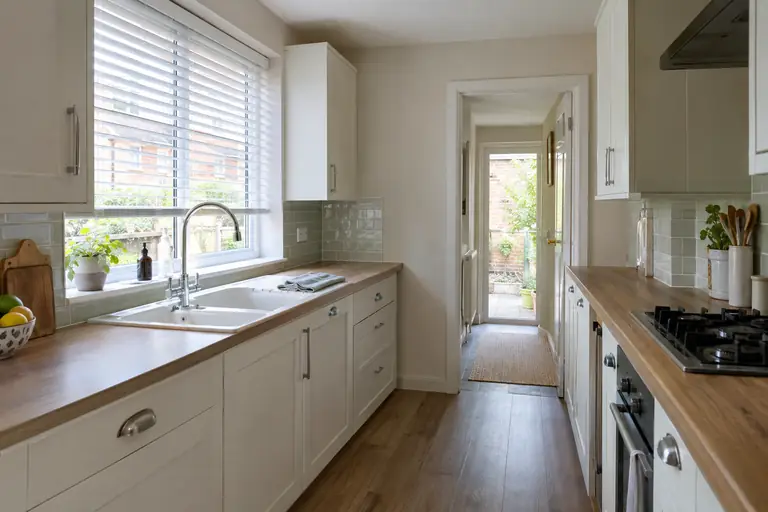
Bathrooms produce the most moisture in the shortest time. A waterproof roller blind, an aluminium or faux-wood venetian, or PVC shutters are the safest choices, and fabric Roman blinds are best kept out. Kitchens add grease to the steam, so wipe-clean finishes matter.
Bedrooms are where many people find the wettest windows, because two people breathing in a closed room overnight add a surprising amount of moisture. Blackout blinds and thermal curtains still work well here, as long as they are opened each morning and the window gets a few minutes of air. Living rooms are usually drier, so most materials, including real wood and fabric, are fine as long as curtains hang clear of the sill. In a utility room or anywhere washing is dried, stick to an aluminium venetian or a waterproof roller.
If you are not sure what suits a damp window, a free home visit is the easiest way to find out. Your advisor brings samples, measures every window and gives you a written price, itemised per window, before they leave, with nothing to pay on the day. Every blind is made in our Batley workshop and fitted by our own team.
Checklist
- Moisture-resistant blinds in bathrooms and kitchens
- A small gap between the dressing and the glass
- Curtains finished clear of the sill and the glass
- Trickle vents left uncovered
- Blinds and curtains opened every morning
- Glass wiped and the room aired for a few minutes
Side by side
Waterproof roller blind
- How it copes with condensation
- Moisture-resistant fabric that wipes clean and rolls up out of the way
- Best for
- Bathrooms, kitchens, small steamy windows
Aluminium or faux-wood venetian blind
- How it copes with condensation
- Slats do not swell or warp, and tilt open to let air reach the glass
- Best for
- Bathrooms, kitchens, utility rooms
PVC or faux-wood shutters
- How it copes with condensation
- Will not warp in steam; louvres open for air and light
- Best for
- Bathrooms and kitchens wanting a permanent finish
Easy wipe blinds
- How it copes with condensation
- Coated fabrics that wipe down if marks appear
- Best for
- Kitchens and children’s rooms
Real wood blinds or shutters
- How it copes with condensation
- Natural timber can move in persistent damp
- Best for
- Dry living rooms and bedrooms
Fabric Roman blinds and lined curtains
- How it copes with condensation
- Fabric can absorb moisture and mark if it rests on wet glass
- Best for
- Living rooms and bedrooms, hung clear of the glass