The short answer
Pencil pleat curtains have a tape across the back of the heading with cords running through it. Drawing up the cords gathers the fabric into narrow, upright folds. Hooks in the tape hang from rings on a pole or gliders on a track, so pencil pleat works on almost any window, including bays. It looks relaxed rather than tailored and suits bedrooms, cottages and family rooms. The one thing it needs is enough width of fabric, or the gathers look thin.
- A corded tape gathers the fabric into narrow folds that can be eased on the window.
- It hangs from a pole or a track, so it suits more windows than any other heading.
- On a track shaped to a bay, pencil pleat follows every angle.
- Generous fullness is what separates a good pencil pleat from a thin one.
- Set high in the tape, the hooks let the heading stand up and hide a track completely.
How pencil pleat tape works
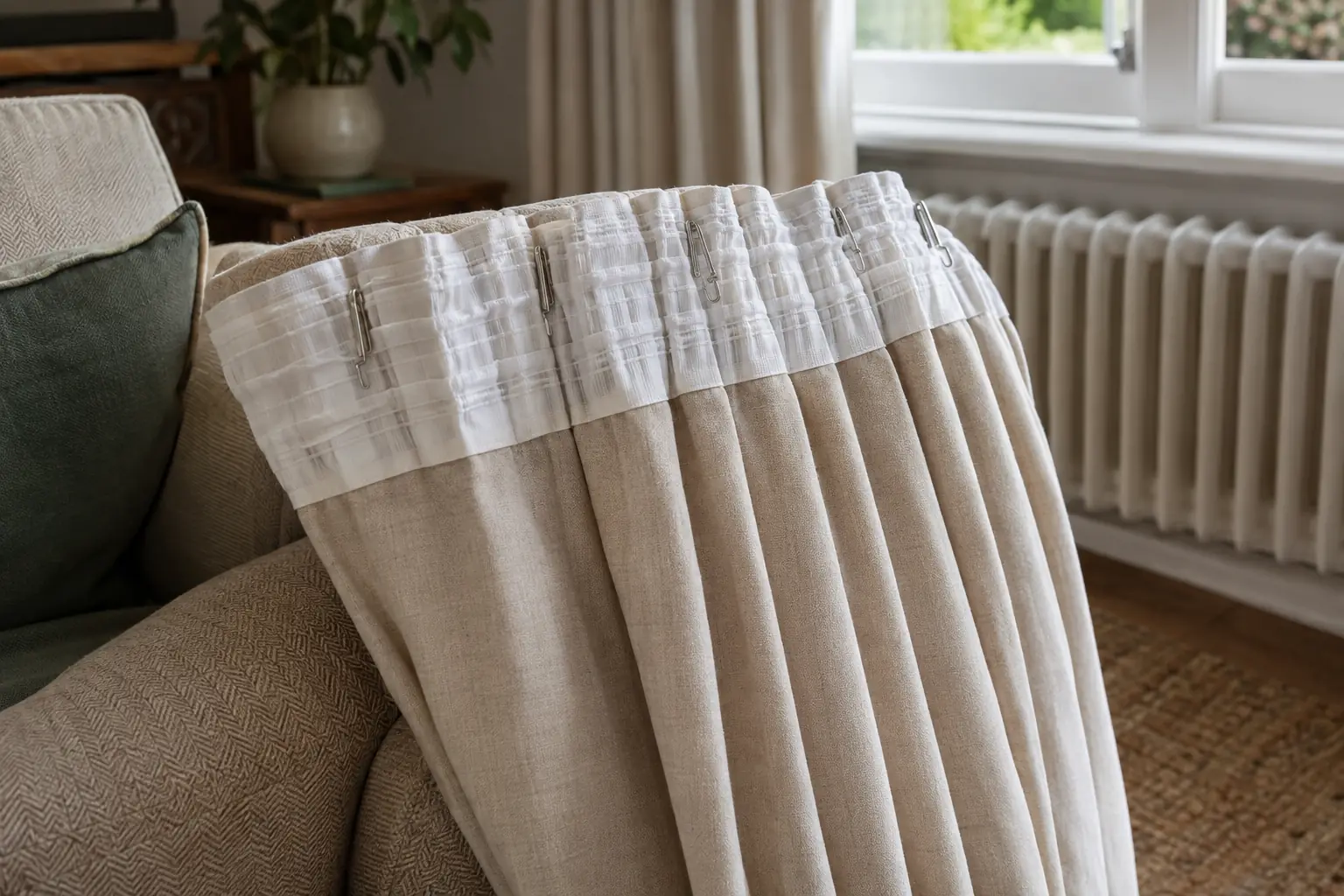
Sewn across the back of the heading is a deep woven tape with cords running through it. When the cords are drawn up, the fabric bunches into a row of narrow, upright folds, the pencil pleats that give the heading its name. The cords are then knotted and tucked away at the outer edge of the curtain.
Along the tape are rows of small pockets. Curtain hooks slot into them, and the hooks hang from the rings of a pole or the gliders of a track. Because the tape has more than one row of pockets, the hooks can be set higher or lower, which changes where the top of the curtain sits in relation to its pole or track.
Compared with a pinch pleat, where every fold is formed and stitched by hand, pencil pleat is a simpler way to make a heading. That simplicity shows in two useful ways. It is a straightforward make, and it is forgiving: the gathers can be eased along the tape once the curtain is hanging, so it can be adjusted to sit right on your window rather than a theoretical one.
Pole or track: pencil pleat works on both
Pencil pleat is the most adaptable heading we make, because it is equally at home on a pole or a track.
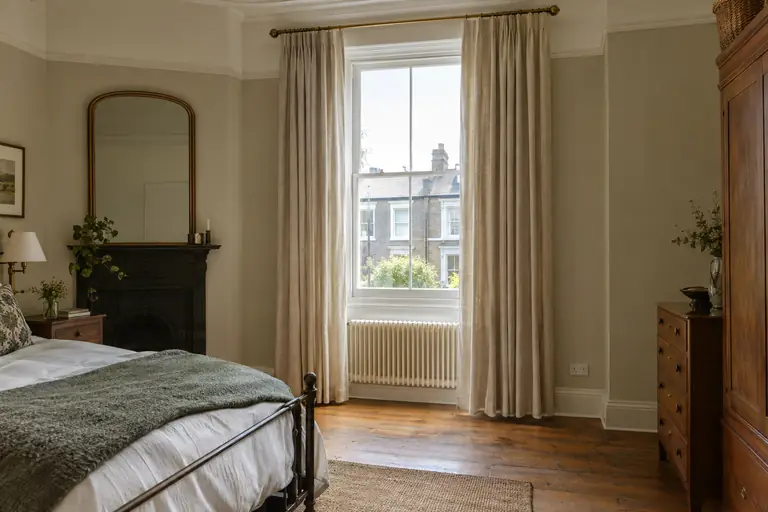
On a pole, the hooks sit low in the tape and the curtain hangs from rings just below the pole, so the pole stays on show. That suits a room where the pole is part of the look: a painted wooden pole in a cottage bedroom, or a slim metal one in a modern flat.
On a track, the hooks go higher in the tape, so the heading stands up in front of the track and hides it. From the room, you see a neat band of gathers across the top of the window rather than any hardware. That suits a window where the fixing has to go close under a low ceiling or coving, a bay where the track follows the angles, or any room where you would simply rather not see the track.
Your advisor will talk through which suits the window and the room, and our fitters supply and put up the pole or track as part of the job, with fitting included in the price.
Fullness: the difference between gathered and thin
Pencil pleat depends on fullness more than any other heading. The tape can only gather what it is given, so a curtain made with too little fabric across its width looks flat at the top and thin when drawn, with the folds stretched out and, in a pale fabric, the light showing through the thin places.
A properly made pencil pleat curtain has enough width that, even with the pair fully closed across the window, there are still deep folds in it. That fullness is worked out from the length of the pole or track and the weight of the fabric, rather than from a size chart, and it is one of the clearest differences between a made-to-measure curtain and a ready-made pair of roughly the right size.
There is such a thing as too much. Overfilled, a heavy fabric gathers into a stiff, bulky heading that is hard to draw and stacks back wide. Getting it right is part of the making, and you do not need to work it out yourself. Our curtain length and fullness guide explains the general rules.
Bay windows and awkward shapes
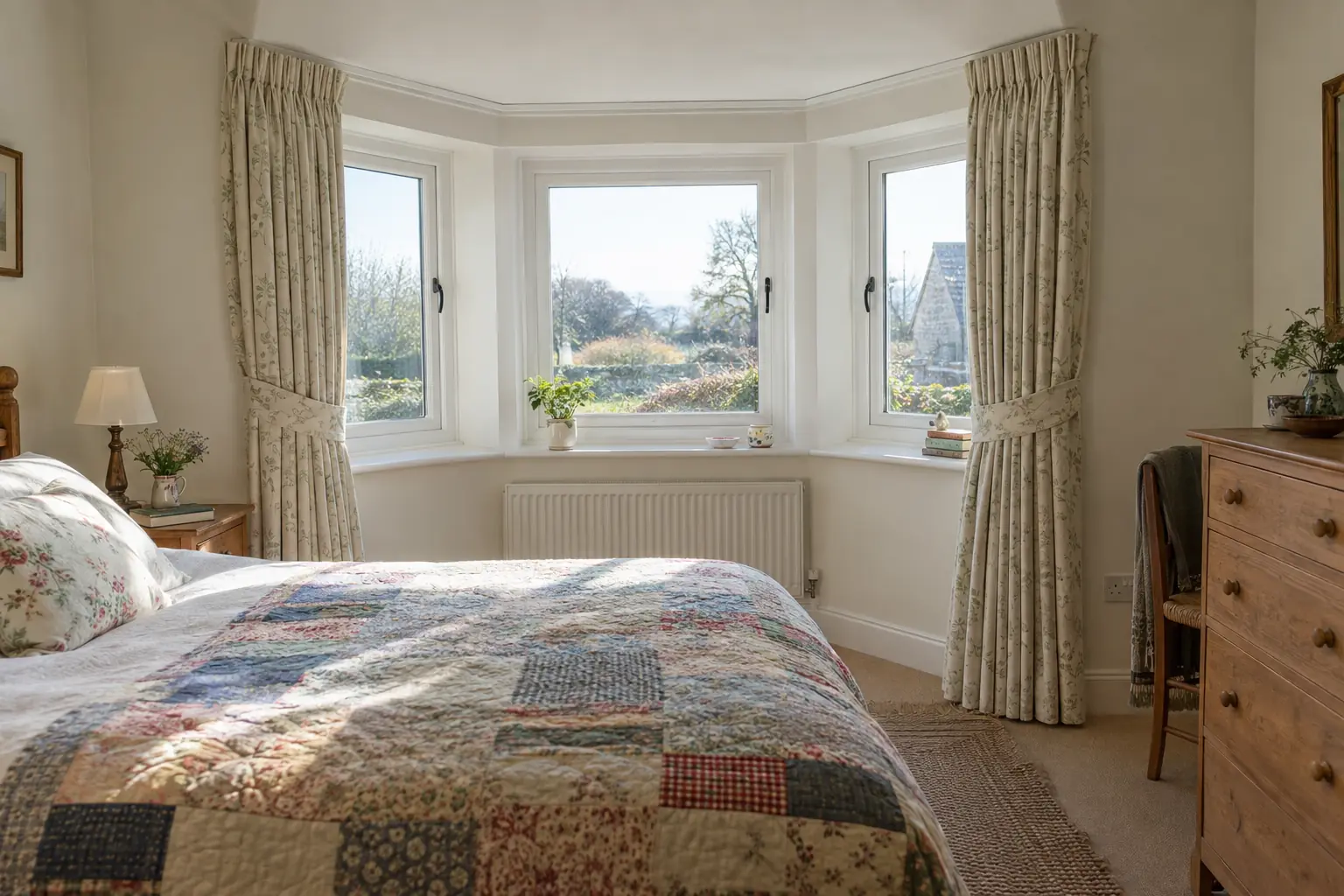
Bay windows are where pencil pleat earns its reputation. A curtain track can be shaped to follow the angles or the curve of a bay, with the gliders running round the corners, so a pencil pleat curtain can draw right round the bay in one run. Alternatively, the bay can be dressed with separate curtains at each corner, which looks fuller when the curtains are open and lets you draw one window at a time.
Because the tape gathers evenly, each curtain can be made to the exact width of its section, and the gathers eased on the window so the folds look consistent all the way round. That matters in a bay, where three or five windows are seen together and any difference between them shows.
Every section of a bay is a slightly different width, and the corners are rarely true. Your advisor measures each section on its own, and the track is shaped to the bay you actually have rather than the one on the plans. Our bay window ideas guide compares curtains, blinds and shutters in a bay.
Linings and how they change the gathers
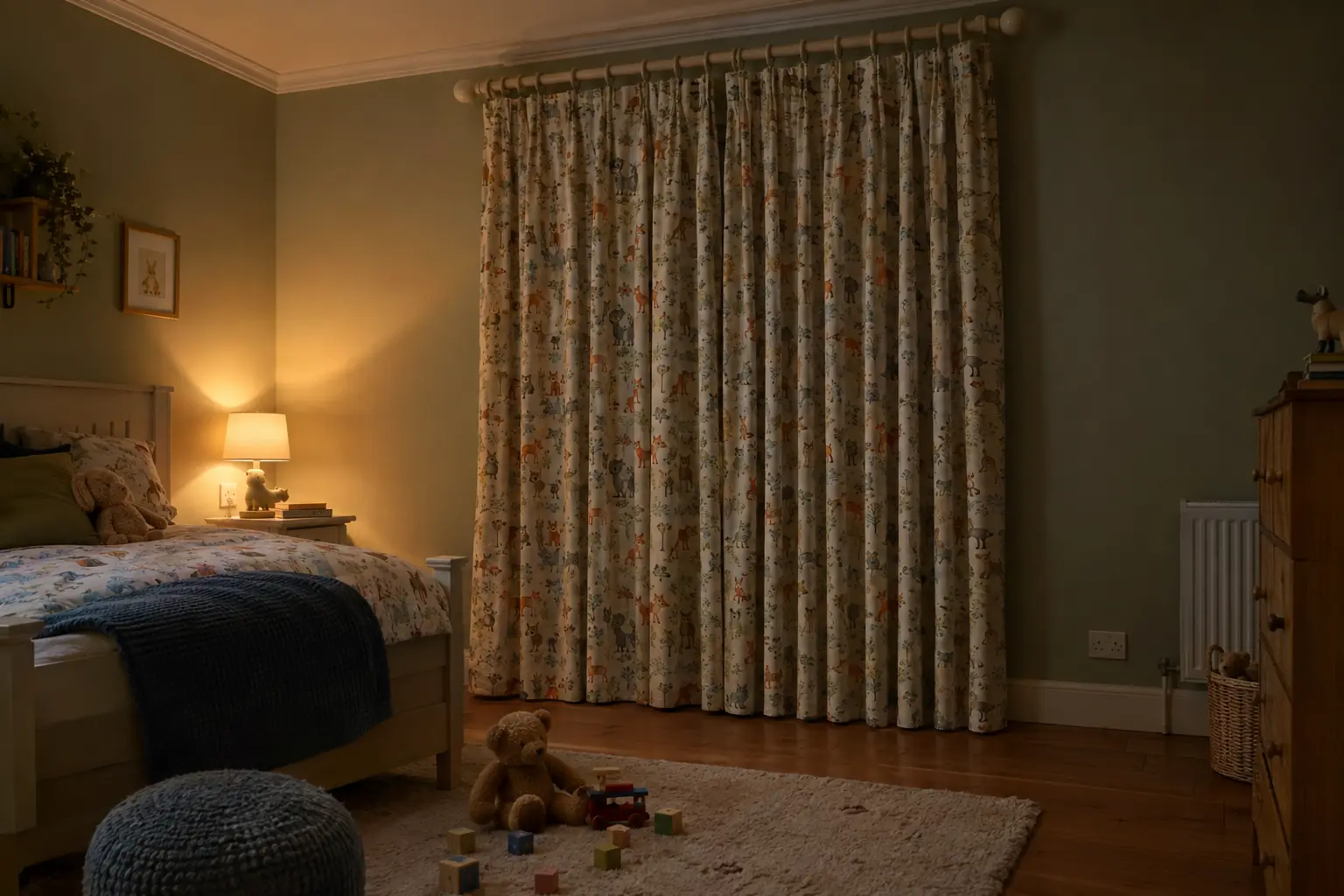
A gathered heading takes a lining well. A standard lining gives the curtain more body and protects the face fabric from the sun. A blackout lining is the usual choice for a bedroom. A thermal lining helps in a cold or draughty room, and interlining adds weight and a fuller, softer fold. Your advisor will tell you which are available with the fabric you like.
The lining changes how the gathers behave. A light cotton with a standard lining gathers into fine, crisp pencil pleats. The same fabric with interlining gathers into rounder, deeper folds and a heavier heading, and it stacks back wider when open. A blackout lining is stiffer than a standard one, so blackout pencil pleat curtains tend to hang in firmer, more structured folds.
None of this is a reason to avoid a lining; it is a reason to see the fabric and the lining together before you decide. Your advisor brings the full sample range to your home, so you can hold a lined sample against your own window, in your own light.
Rooms where pencil pleat works
Pencil pleat is the everyday heading. It suits rooms where the curtains are drawn morning and night, where a relaxed, gathered look sits more comfortably than a formal pleat, and where the window is not quite standard.
Bedrooms are the obvious fit, and with a blackout lining pencil pleat is one of the simplest ways to a darker room. Cottage sitting rooms, with small windows and low ceilings, suit the soft gathers and the option of hiding a track close under the ceiling. Children's rooms suit it too, particularly on a pole, where the curtains are drawn by hand with no pull cord at the window; just keep the gathering cords tucked well into the tape. Bays, as above, are where it is often the first choice.
It is less convincing in a large, formal room with tall windows, where the gathers can look slight against the scale of the window and pinch pleat carries the height better. And in a very modern room, the gathered heading can feel a little traditional next to the regular folds of wave or eyelet.
Looking after pencil pleat curtains
When the curtains are first hung, the fitter sets the gathers evenly along the pole or track and dresses the folds down to the hem. Over time, the gathers can drift towards the ends, especially if the curtains are drawn by pulling the fabric halfway down. Easing them back along the pole or track every so often keeps the heading even; drawing from the leading edge keeps it that way for longer.
The gathering cords are knotted at the outer edge of each curtain and should be left tucked out of sight rather than cut. They are what lets the heading be eased tighter or looser, and cutting them fixes the gathers for good. Keep the loose ends tucked into the tape, where they are out of sight and out of reach.
For dusting, a soft brush or the upholstery tool of a vacuum on a low setting keeps the folds fresh. Most lined curtains should be dry cleaned rather than washed, because the face fabric and the lining shrink at different rates. Our guide to caring for curtains and shutters has more.
Pros and cons
In its favour
- Hangs from a pole or a track, straight or shaped to a bay
- Gathers can be eased on the window once the curtain is up
- A relaxed look that suits most rooms and most homes
- Hooks set high in the tape let the heading hide a track
- Drawn by hand on a pole, with no pull cord hanging in a child's room
Worth knowing
- Needs generous fullness, or the heading looks thin
- Less tailored than pinch pleat in a formal room
- Gathers drift towards the ends and need easing back now and then
- Stacks back wider than pinch pleat when open
Room by room
- BedroomA great fitDrawn twice a day and simple to line for blackout; the gathered look is restful rather than formal.
- Bay windowA great fitRuns on a track shaped to the bay, and each section is made to its own width.
- Cottage sitting roomA great fitSmall windows and low ceilings suit a soft heading that can hide a track close under the ceiling.
- Child's bedroomWorks wellOn a pole there is no pull cord, and a blackout lining helps with light summer bedtimes.
- Formal dining roomThink twiceTall windows and evening use show off the tailoring of pinch pleat better than gathers.
- Modern open-plan roomThink twiceA gathered heading can look traditional against clean lines; wave or eyelet usually sits better.