The short answer
Wave curtains attach to carriers on a track, linked at even intervals, so the fabric folds alternately in front of and behind the track in a smooth S-curve. The folds stay the same depth whether the curtains are closed or open. They need a track rather than a pole, and a clear run of wall to stack back onto. They suit wide windows, patio and bi-fold doors and floor-to-ceiling glass in modern and open-plan rooms.
- Wave curtains hang from a track with linked carriers, never from a pole.
- The carrier spacing keeps every fold the same depth, open, closed or half drawn.
- They need a clear run of wall beside the window to stack back onto.
- Where the ceiling allows, the track can be fixed to it for a full-height fall.
- If the track is corded and young children use the room, tell your advisor.
How a wave heading works
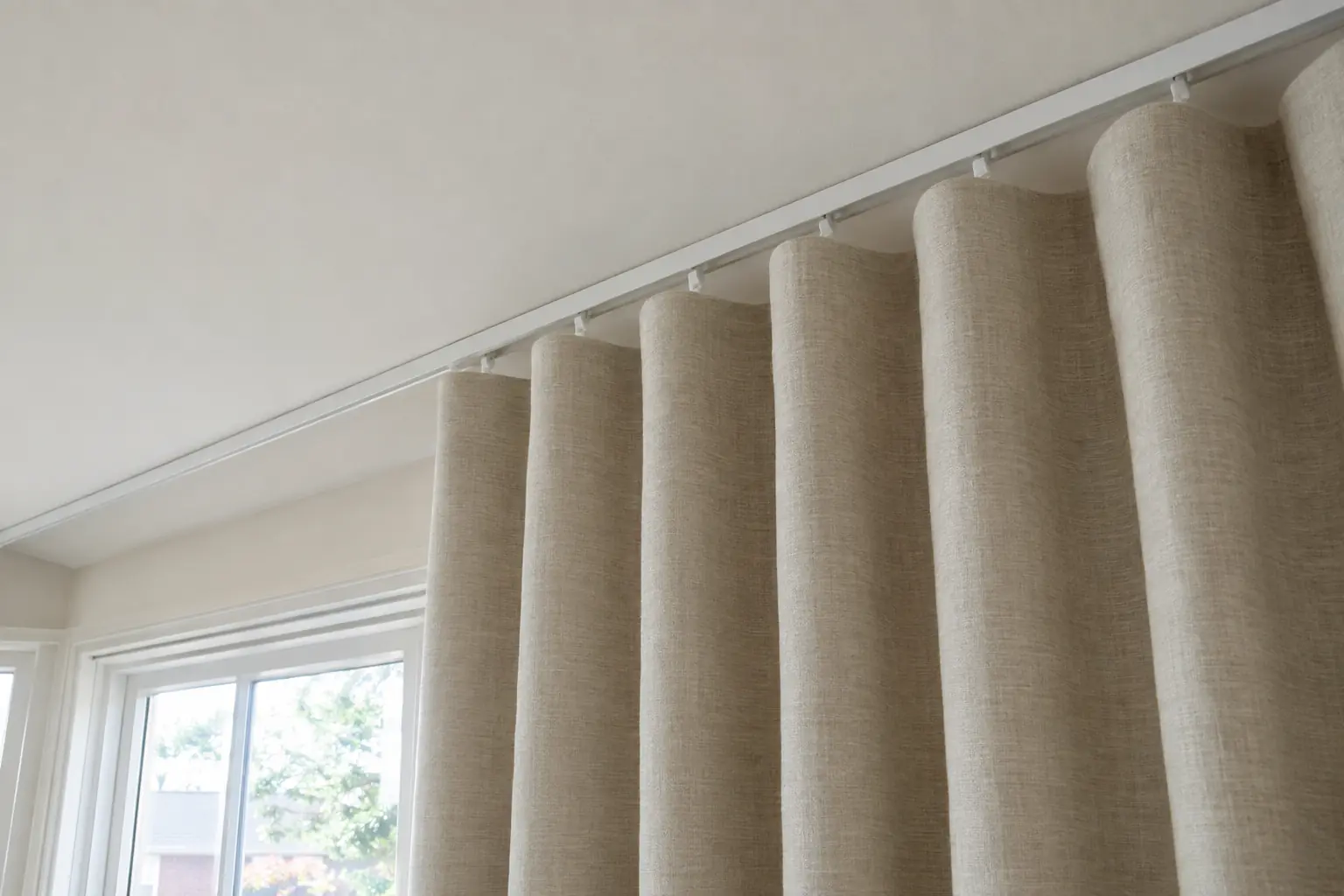
A wave curtain has a flat heading that attaches at intervals to carriers, the small runners that slide along the track. The carriers are linked to each other at a fixed spacing. Where one carrier holds the fabric forward and the next lets it fall back, the curtain forms a smooth, alternating fold, in front of the track and then behind it, all the way along.
Because the spacing between carriers is set, the folds are set too. Draw the curtains across the window and the S-curve keeps the same depth; pull them back and they close up evenly into a neat bundle, each fold lying against the next. There is none of the bunching at one end and stretching at the other that a gathered heading can suffer.
That regularity is the whole point of wave. It gives a curtain the calm, repeating rhythm that suits a modern interior, and it looks as deliberate half drawn as it does fully open or closed. The heading itself is plain, with no gathers or pleats at the top, so the eye reads the folds rather than the fixing.
The track matters as much as the curtain
A wave curtain cannot hang from a pole. It needs a track with carriers made to hold it, and the track is chosen with the curtain rather than afterwards. The spacing of the carriers sets the depth of the folds, and the length of the track sets where the curtains stack when they are open.
The track is also the part you see least. With the fabric folding in front of it, a wave track mostly disappears behind the curtain, leaving an unbroken line of folds across the top of the window. That is a large part of the clean look, and one reason wave is often chosen for rooms where a pole with finials would feel fussy.
Our fitters supply and fit the track as part of the job, set it level, attach the curtains to the carriers and check with you that the pair draws smoothly before they leave. On a wide window or a run of doors, the track can carry a single curtain drawing to one side or a pair meeting in the middle, and your advisor will talk through which suits the way you use the room.
Folds that stay even, however far you draw them
Most curtains look their best either fully open or fully closed. Half drawn, a gathered heading bunches at one point and stretches at another, and a pleated heading loses its rhythm. Wave does not, because every fold is held at the same spacing by the carriers.
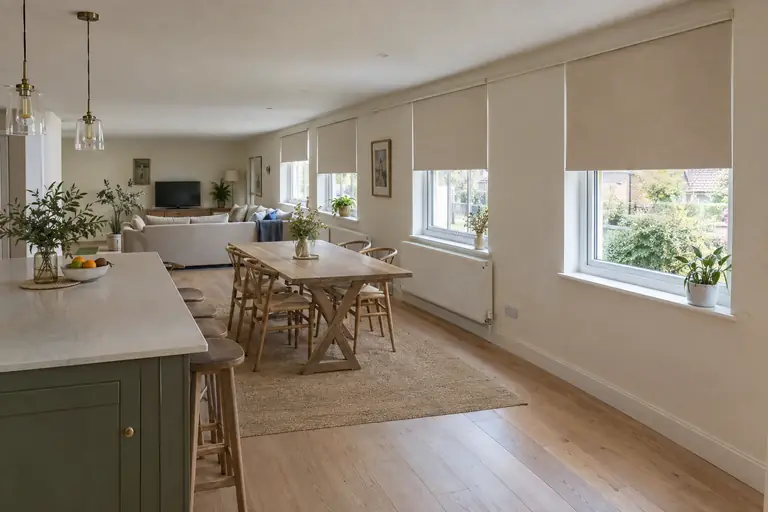
That makes a real difference on windows that spend much of the day partly covered. A south-facing room where the curtains are drawn part way to keep the sun off the sofa. A bedroom where one curtain stays across a window overlooked by the house next door. A kitchen-diner where a long run of glass is half closed in the evening. In each case, the curtain still looks finished.
The even folds also suit fabrics that benefit from a steady rhythm, such as stripes, or a plain fabric with a heavy texture, where the regular curve shows the fabric off rather than crumpling it. Very stiff fabrics can resist the curve, and very soft ones need the right lining to hold it; your advisor will point you towards fabrics that fold well.
Stack back and wide windows
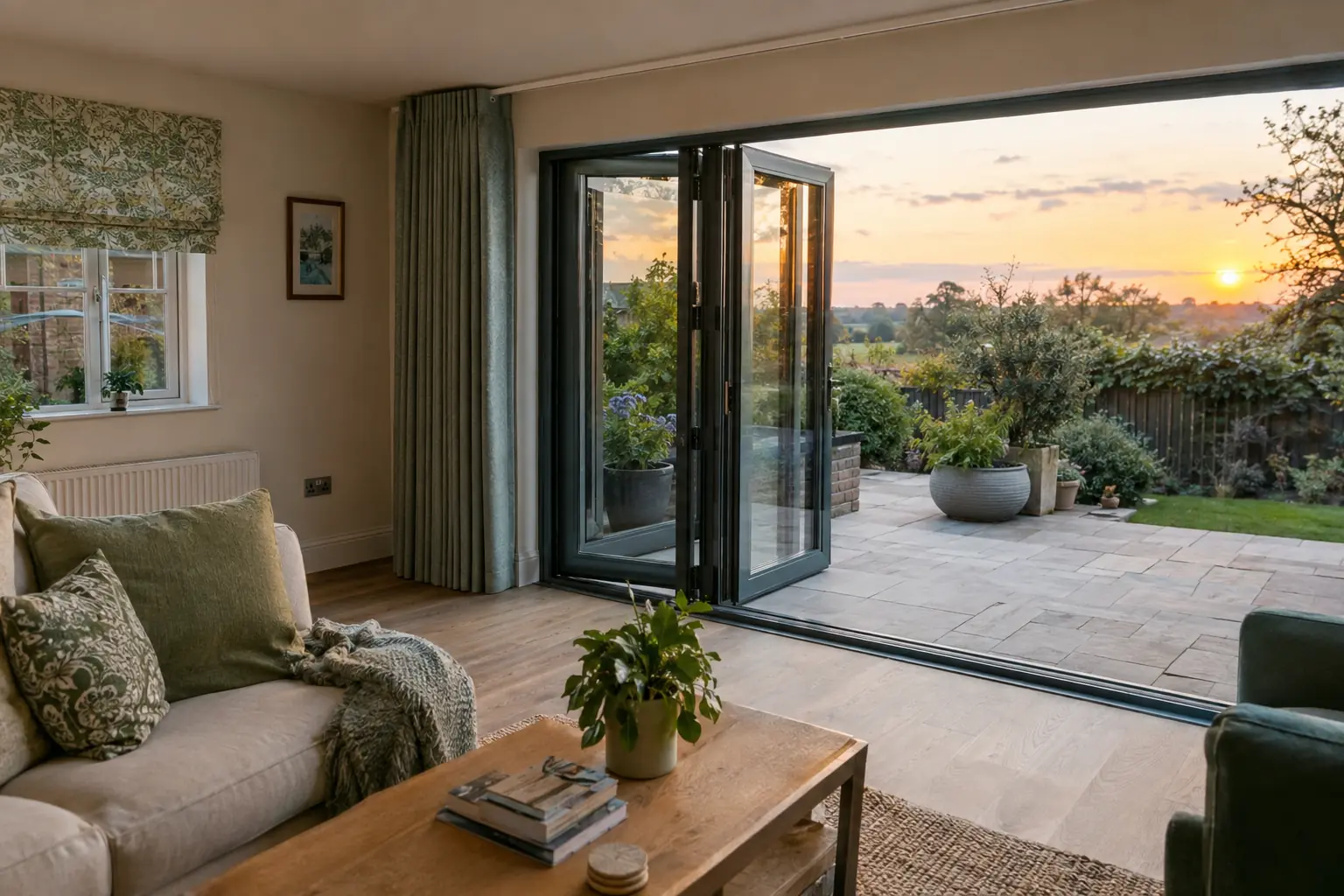
Wave curtains fold neatly when open, but they still need somewhere to go. On a wide window or a run of glazed doors, the stack is a real width of fabric, and the track has to carry on past the glass for the curtains to clear it completely.
On most wide windows that means a run of wall at one or both sides. Bi-fold and sliding doors often have it; a window set close to a corner, a kitchen unit or a chimney breast may not. Where the wall is only on one side, a single wave curtain drawing to that side can work well, and a wide expanse of glass often looks calmer with one long curtain than with a pair.
Working out the stack is part of measuring the window. Your advisor measures the wall either side as well as the opening, and tells you on the day how far the track needs to run and whether the glass will be clear when the curtains are open. For wide glazed doors in particular, our patio and bi-fold door blinds guide compares curtains with the blind options.
Ceiling fixing and full-height glass
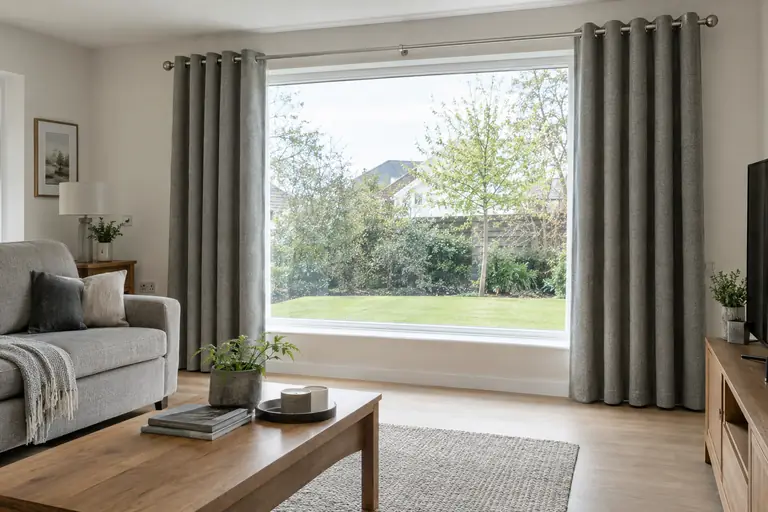
A curtain track can be fixed to the wall above the window or, where the ceiling is suitable, to the ceiling itself. Ceiling fixing is one of the things wave does best. The curtain falls from ceiling to floor in one continuous run of folds, which makes a room look taller and turns a wall of glass into a single soft surface when the curtains are drawn.
It suits modern extensions, new builds with windows that run almost to the ceiling, and any room where there is simply no wall above the window for a bracket. It also avoids the band of bare wall above a pole that can make a tall window look shorter than it is.
Whether a ceiling fixing works depends on what the ceiling is made of and what is in it or above it: joists, plasterboard, recessed lights and so on. Your advisor looks at the ceiling as well as the window and will tell you on the day what our fitters can fix to. If the track has to go on the wall, a wave curtain still looks clean; it simply starts a little lower.
Cords and young children
Some wave tracks are drawn by a cord rather than by hand, which keeps hands off the fabric and the folds even. If there are young children in the house, that cord deserves the same thought as a blind cord.
The safety standard for internal blinds, BS EN 13120, does not apply to curtains. That does not make a corded track safe: RoSPA points out that corded curtain tracks can pose the same risks as blinds, and should be part of any check on cord and chain safety. In practice that means keeping the cord out of a child's reach, keeping cots, beds and anything a child could climb away from it, or choosing curtains that are simply drawn by hand.
If young children will be in the room, tell your advisor at the appointment, so the way the curtains are drawn is part of the conversation from the start rather than an afterthought. Our guide to blind cord child safety covers cords, chains and safety devices in more detail.
Where wave curtains look right
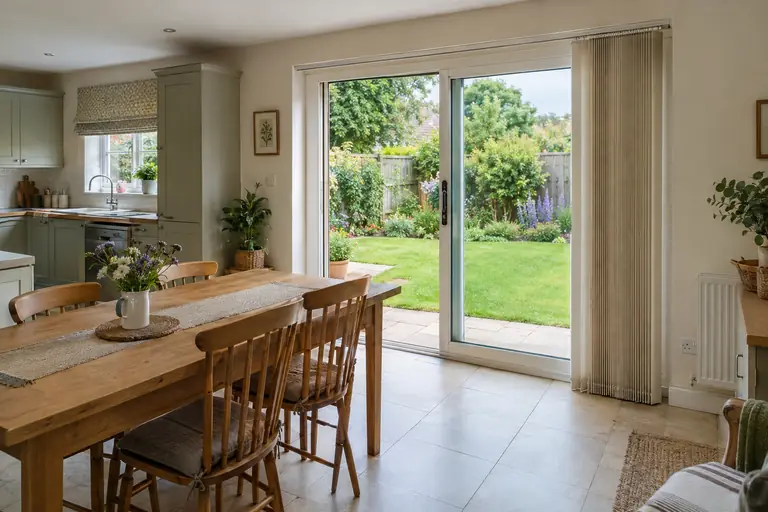
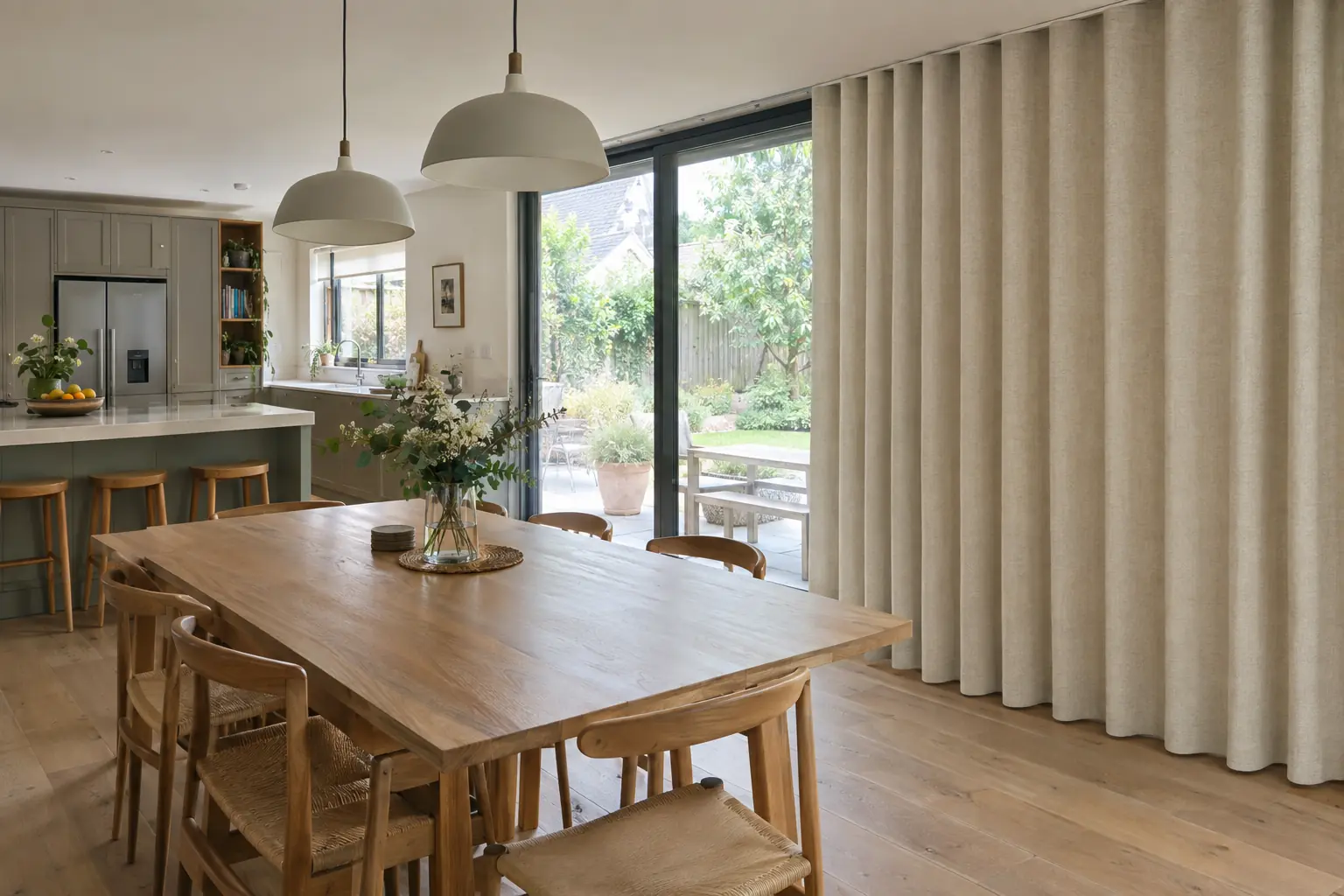
Wave belongs in modern and open-plan rooms: kitchen-diners with a wall of glass onto the garden, living rooms with bi-fold doors, new builds and extensions with wide windows and plain walls. The regular folds sit comfortably with clean lines, flat ceilings and simple furniture, and the hidden track keeps the top of the window uncluttered.
It also works well in a bedroom, particularly with a blackout lining and a track fixed close under the ceiling, which leaves less of a gap for light to escape over the top than a pole standing off the wall.
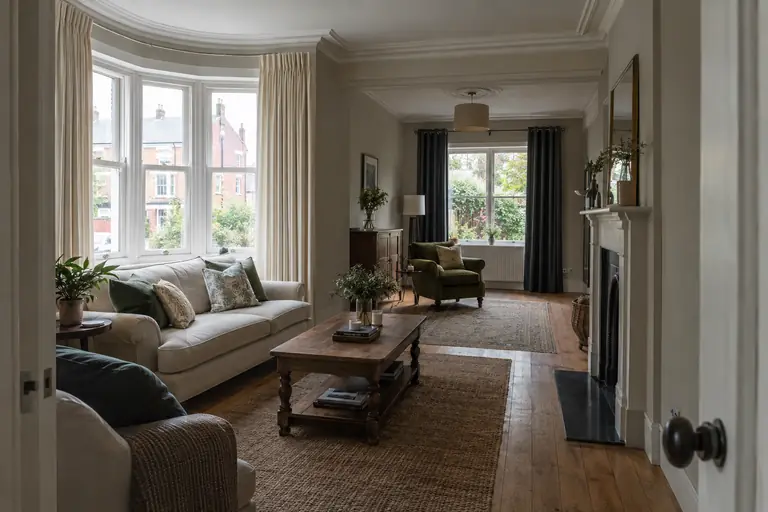
Wave is harder to love in a small, traditional room. On a narrow cottage window, with no wall to stack onto, it can look like a curtain that has wandered in from somewhere else, and in a formal period room, pinch pleat usually carries the character better. A bay is possible only where the track can follow the shape of the bay, which your advisor will confirm when they measure.
Pros and cons
In its favour
- Even S-folds that look the same drawn, half drawn or open
- A clean, contemporary look with the track mostly hidden
- Suits wide windows, bi-fold doors and full-height glass
- Can hang from the ceiling where the ceiling allows
- Glides smoothly on its carriers along the track
Worth knowing
- Needs a track; wave curtains cannot hang from a pole
- Needs a clear run of wall to stack back onto
- Can look out of place in a small, traditional room
- A corded track needs thought in a home with young children
- Bays only where the track can follow the shape
Room by room
- Open-plan kitchen-dinerA great fitLong runs of glass suit the even folds, and the curtains clear the doors when stacked back.
- Living room with bi-fold doorsA great fitOne long curtain on a track running past the doors leaves the whole opening clear.
- BedroomWorks wellWith a blackout lining and a track close under the ceiling, less light escapes over the top.
- Modern extensionA great fitA ceiling-fixed track gives a full-height fall of folds against plain walls and wide glazing.
- Period drawing roomThink twiceFormal rooms with tall sash windows usually suit the tailoring of pinch pleat better.
- Small cottage windowThink twiceRegular modern folds can look out of scale on a narrow window with little wall to stack onto.