The short answer
Shade the roof first if heat and glare are the problem: tensioned roof blinds made to each pane's shape, ideally motorised. Dress the side windows for privacy and low sun, with pleated blinds for slim stacks or perfect fit blinds where you want to open windows and vents with the blinds down. Gable ends and roof lanterns need shaped blinds. The fixing points decide what is possible, so a conservatory is always surveyed before it is quoted.
- The roof causes most of the heat and glare; the walls cause most of the privacy problems.
- Roof blinds are made pane by pane and held tight to the glass under tension.
- Pleated and perfect fit blinds suit side windows; perfect fit lets vents open with the blind down.
- Gable ends and roof lanterns need shaped blinds and a proper look at the frame.
- Out-of-reach roof blinds are usually motorised, or they end up left in one position.
Start with the problem, not the product
Most people start by asking which conservatory blinds to buy. It is more useful to ask what the room is doing wrong, because different problems come through different bits of glass.
Heat and glare mostly come through the roof. In summer the sun climbs high, and from late morning to mid-afternoon a glass or polycarbonate roof faces it more squarely than any wall does. A room that is lovely at ten in the morning can be too hot to sit in by two.
Privacy and low sun mostly come through the walls. Neighbours see in through the side glass, and in the late afternoon the sun comes in low and straight into your eyes. The gable end, if there is one, often faces the garden and catches the evening sun.
Cold is a whole-room problem in winter. On a clear January night, a room made of glass loses warmth quickly and feels chilly long before the thermostat says so.
Spend a sunny day and a cold evening noting which of these bothers you, at what time and through which panes. That list, more than any brochure, will tell you whether you need roof blinds, wall blinds or both, and it gives your advisor exactly what they need at the appointment.
Roof blinds: shade before the heat gets in
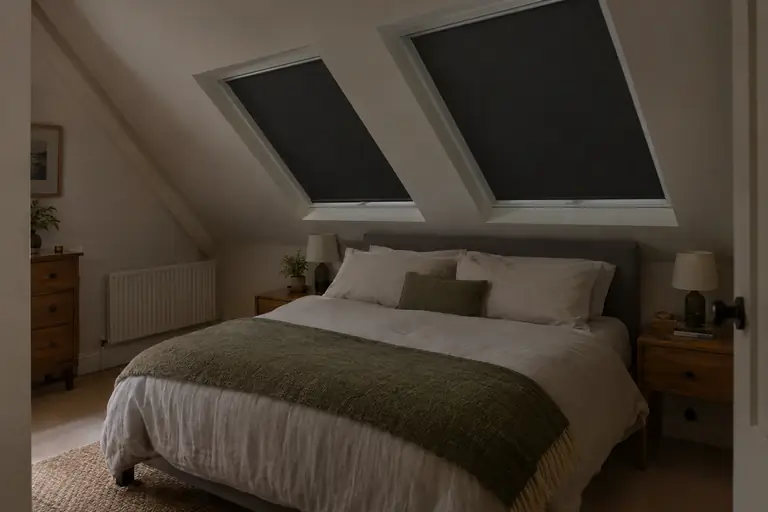
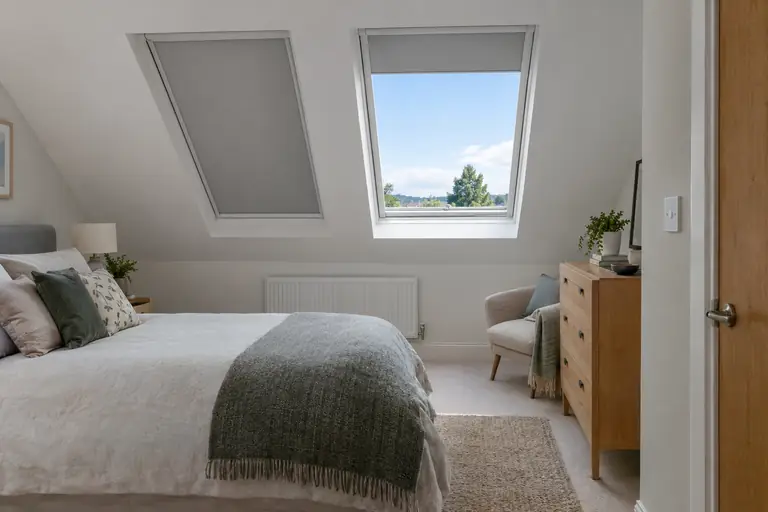
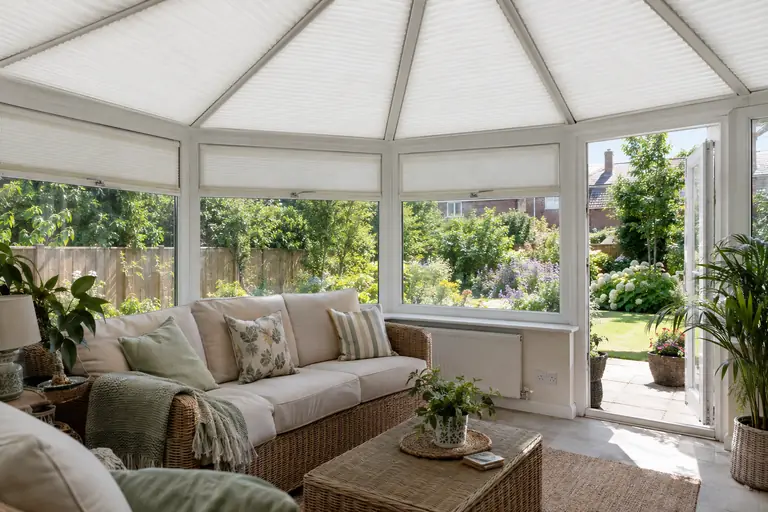
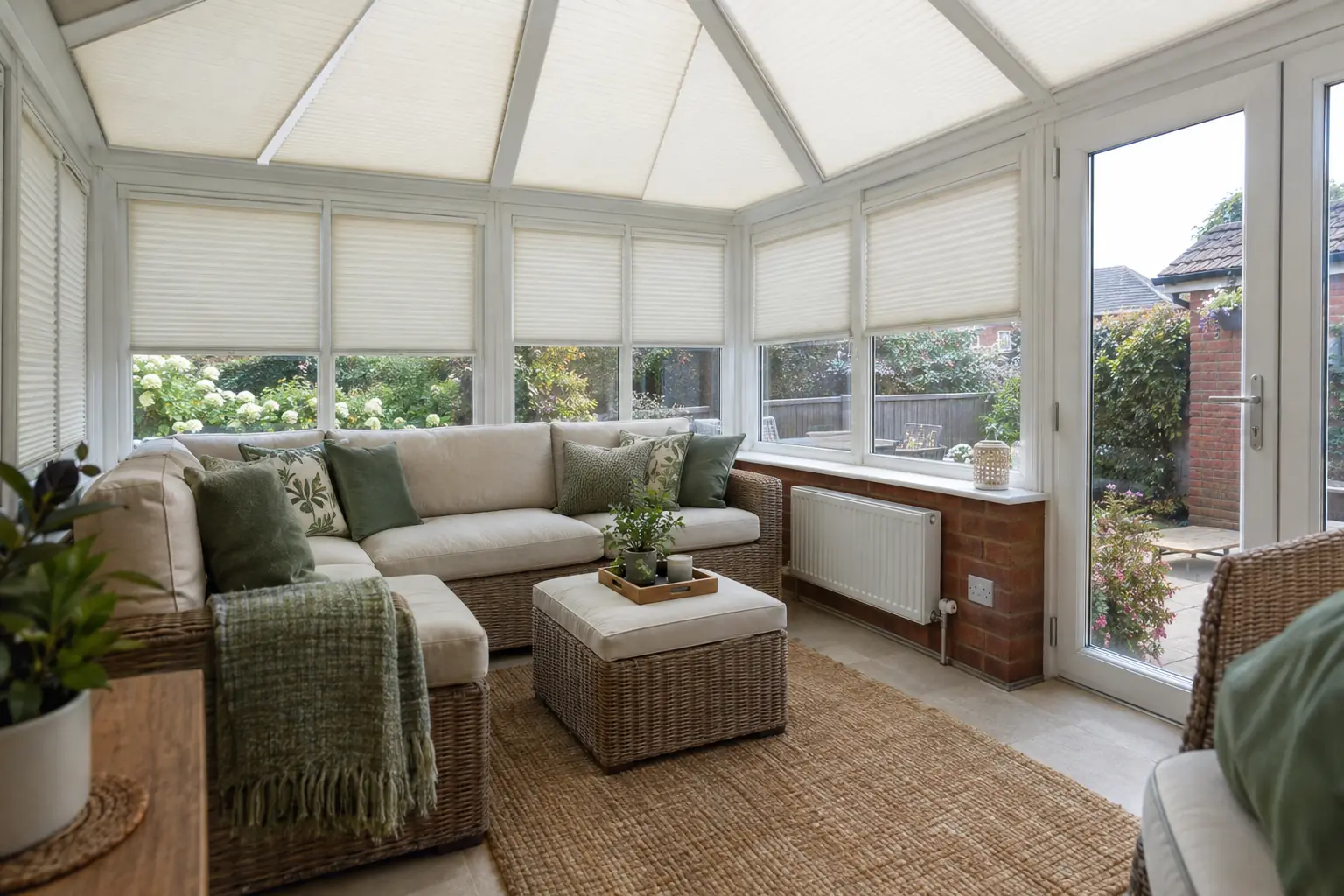
Each roof blind is made to the shape of its own pane and tensioned so the fabric lies close to the glass instead of sagging into the room. Pleated roof blinds fold into a slim stack at one end of the pane when they are open, and reflective backings are available that turn some of the sun back out through the roof.
The principle is simple: shade the glass before the heat builds up. It is much easier to stop sunshine becoming heat inside the room than to cool the air afterwards. Among the things that make a home more likely to overheat, the UK Health Security Agency includes large east-, west- or south-facing windows with no shade from the sun, and a conservatory roof is exactly that kind of glass.
Be realistic about the result. Roof blinds take the peak off the temperature and the glare, and they make the room usable for more of a summer's day. Even with every roof blind closed, a conservatory in a July heatwave is going to be the warmest room you have.
Roof panes are almost always out of reach, so most people motorise roof blinds. A handset, an app or a timer is the difference between blinds you adjust as the sun moves and blinds you close in May and leave closed all summer. Several roof blinds can be grouped to move together.
Side windows and doors: pleated, perfect fit and more
The side windows are where you sit next to the glass, so the blinds there are about privacy, low sun and how the room looks from the garden.
Pleated blinds are the usual choice. Their headrails are slim, they fold down to a very small stack so almost nothing sits across the view when they are up, and they can match the roof blinds so the room reads as one scheme. Reflective backings help on a sunny wall as well as the roof.
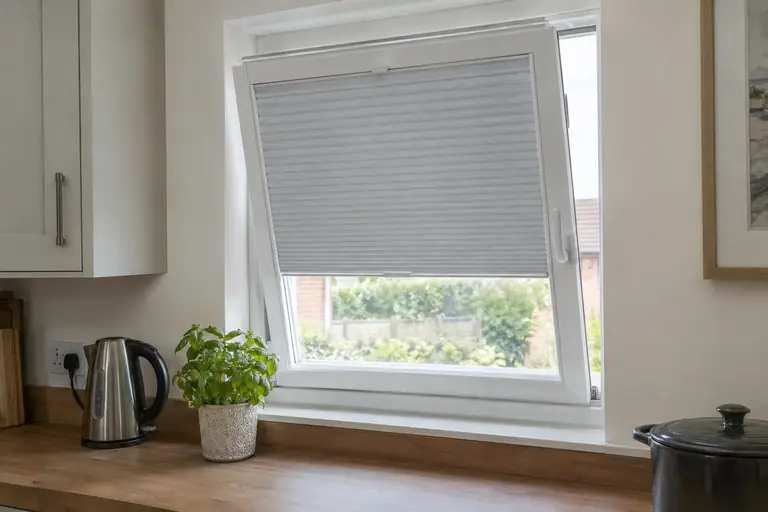
Perfect fit blinds are the answer if you open the windows. They are held in a slim frame by the rubber seal around the glass of a uPVC window, so nothing is drilled into the frame, and they travel with the sash. That means a window or a top vent can open with the blind down, which matters in a conservatory where you want air in and sun out at the same time. They need the right kind of frame, uPVC or aluminium with a deep enough rubber seal, and your advisor checks that on the day.
Other blinds work too. Venetians give tilt control on a side window, and vertical blinds suit wide runs of glass and the doors out to the garden. Whatever you choose, keep one colour family across the roof and the walls, or the room looks pieced together.
Gable ends and roof lanterns
Gable ends and roof lanterns are the parts of a glazed room most often left bare, because they are hard to dress. Both can be done, but both need a closer look.
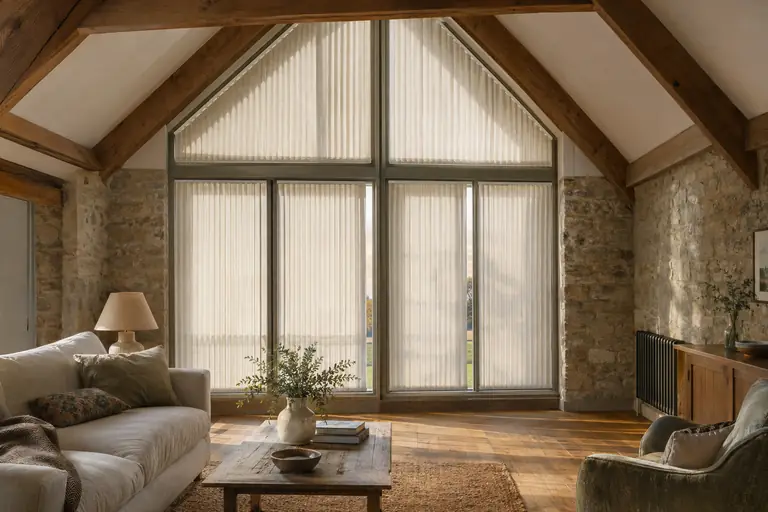
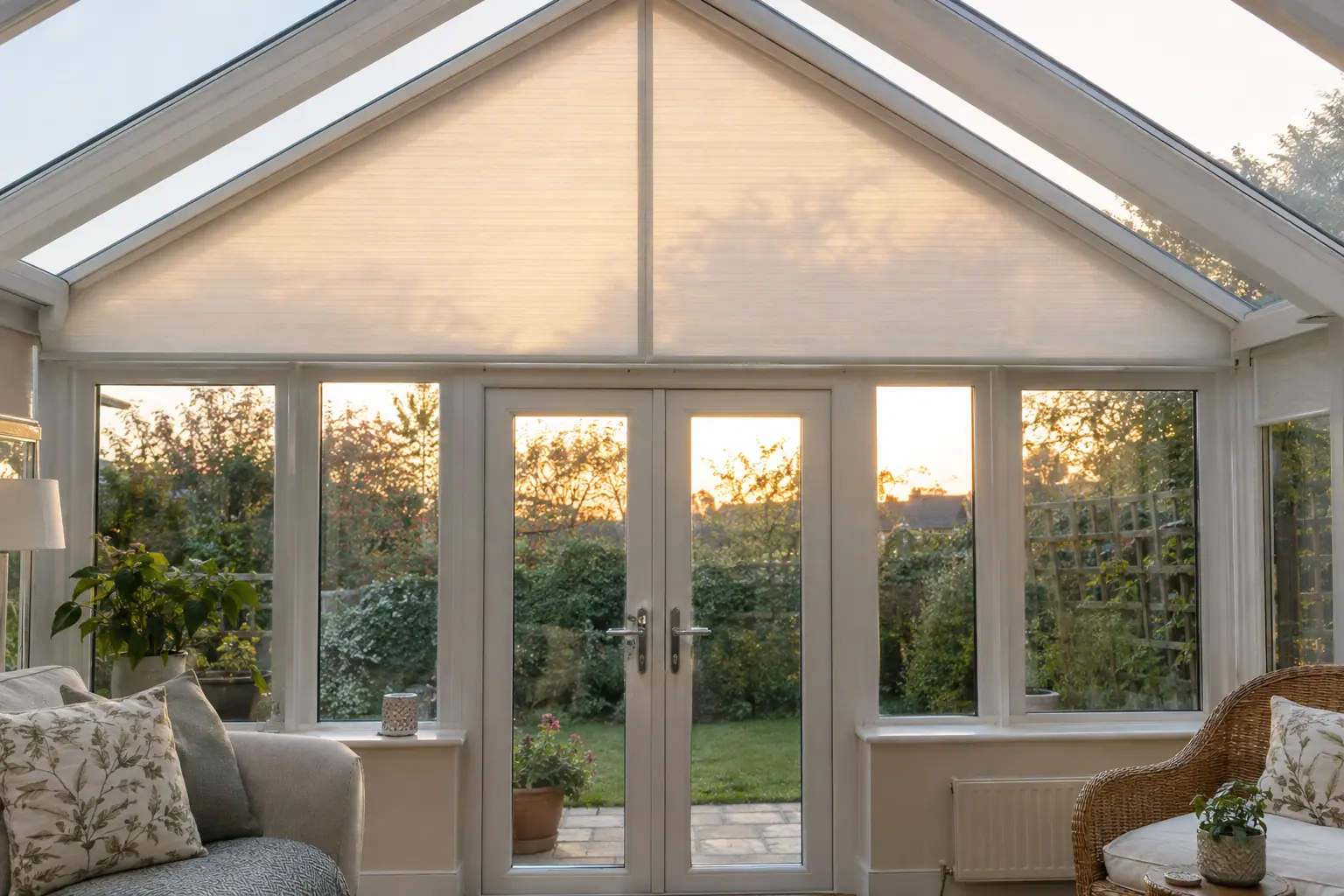
A gable end is the triangular panel of glass at the end of a pitched conservatory roof, above the doors or the end windows. A blind that stops at the top of the rectangular windows leaves that triangle uncovered, and it is often the pane that catches the evening sun. Gable end blinds are shaped to follow the slope of the glass, so the triangle can be shaded to match the rest of the room.
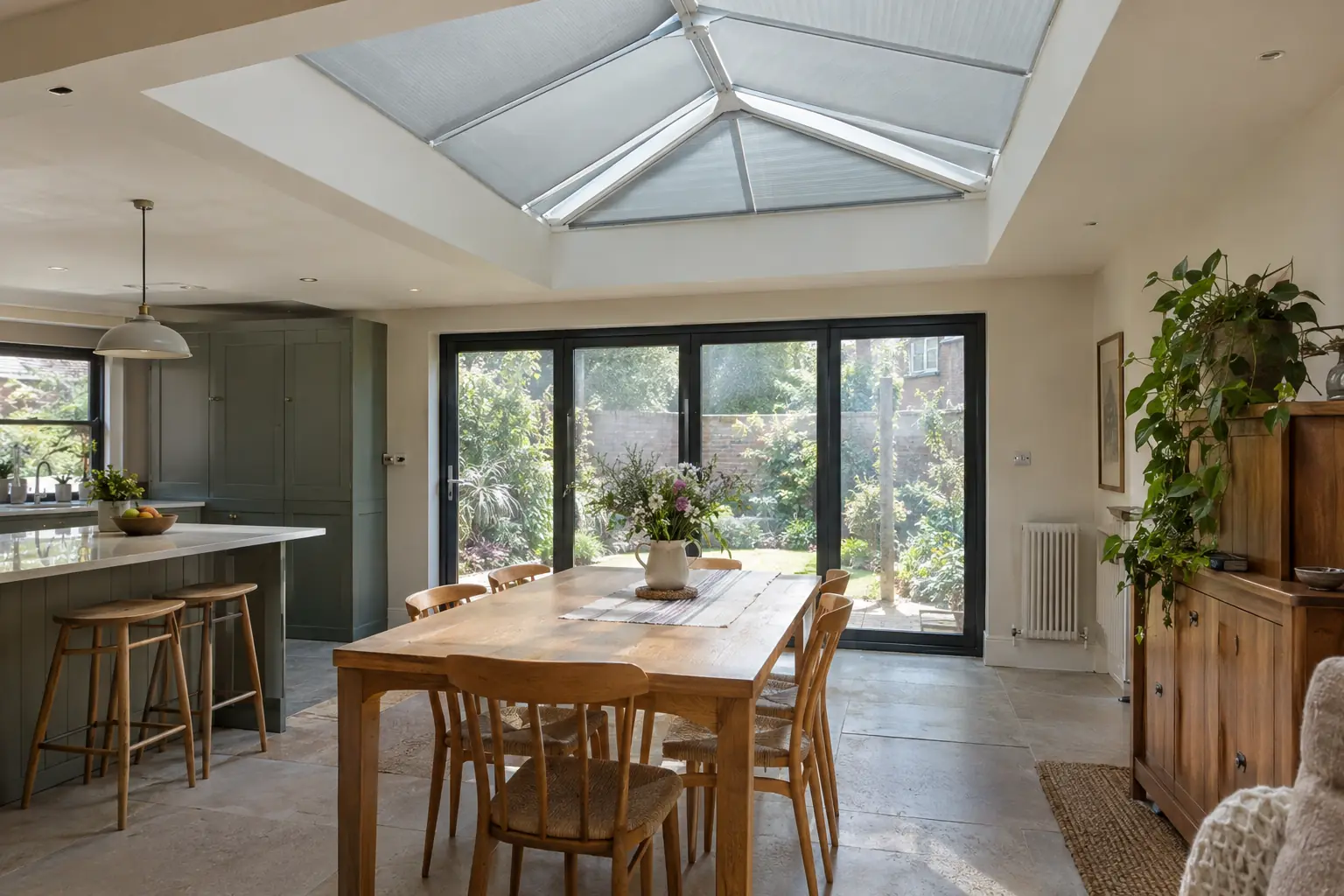
A roof lantern is the raised, pitched glass structure set into a flat roof, often over a kitchen or a dining extension. It floods the room with daylight, and in summer it floods it with heat. Each glass panel is a different shape, the panels meet at a ridge, and the whole thing sits well above head height, which makes it one of the hardest pieces of glass in a house to dress. Blinds are made panel by panel and are usually motorised.
Both depend on the frame: where brackets can fix, how deep the glazing bars are, and how the panels meet. They are quoted after your advisor has seen them.
Winter: cold glass and condensation
In winter a conservatory gives its warmth away through the glass, and the chill you feel sitting near a window is largely cold air sliding down off it. Closing the blinds at dusk slows that cold air coming off the glass and makes the room feel noticeably more comfortable in the evening. What it cannot do is cure a draught from a badly fitting frame or a failed seal; that needs the window looking at, not a blind.
Cold glass also attracts condensation. GOV.UK's guidance on damp puts condensation first: it is the most common form, and it appears where moisture from inside the home meets colder surfaces such as window frames. A conservatory full of cold glass, plants and perhaps washing drying on an airer is a likely place for it.
A few habits help the blinds and the room. Open the blinds and a vent for a while on damp mornings so the glass can dry. Do not leave a blind pressed against streaming glass for days on end. Wipe the frames and gaskets dry when the condensation is heavy.
If you want the room to hold heat better, ask your advisor about thermal and honeycomb options for the side windows, which are built to slow heat moving through the glass.
Fading and glare on what is inside
A conservatory puts your furniture in more daylight than any other room in the house, and daylight fades things. National Trust conservators point out that photographs facing a window fade quickly, that textiles fade and wood changes colour, and that the damage builds up and cannot be reversed. A sofa, a rug or a wicker chair in a south-facing conservatory goes through the same process, and in a room made of glass it has nowhere to hide.
Shading the roof and the sunniest walls through the brightest part of the day cuts the amount of light reaching the furniture, which is the most practical way to slow fading in a room made of glass. Closing blinds on the sunny side while you are out is a good habit.
Glare is the everyday version of the same problem. A television, a laptop or a tablet is hard to see in a room lit from above and all sides. Roof blinds do most of the work, because the overhead light is the brightest; side blinds on the wall behind the screen do the rest.
The colour of the blinds matters too. Pale fabrics keep the room light when they are closed; darker ones cut glare harder but make the room feel dimmer. Your advisor brings both so you can see the difference in your own light.
Fixing points: why a conservatory is surveyed first
A conservatory roof is not a flat ceiling you can screw into anywhere. Blinds fix to the glazing bars and frames, and those differ from one conservatory to the next: the profile of the bars, how deep they are, where the ridge and eaves sit, and how each pane is shaped. The fixing points decide what can be fitted and how tight to the glass it can sit.
That is why we do not quote a conservatory from photographs. Your advisor measures the roof pane by pane on site, checks the fixing points, and looks at the side frames and gaskets if perfect fit blinds are an option. It is also how the blinds end up lining through across the roof, with each one sitting neatly beside the next, rather than a set of near sizes that look slightly different from pane to pane.
If roof blinds are motorised, your advisor will talk through how they are powered. Most motorised blinds are battery-powered and recharge from a lead. If a mains motor would need a new supply run to it, a registered electrician does that part before our fitters arrive.
The quote you are left with is written and itemised, covering the blinds, the fitting and the 1-year guarantee. There is nothing to pay on the day and no obligation to go ahead.
Checklist
- Note which panes get direct sun, and at what time of day, on a sunny day before the appointment.
- Decide whether heat, glare, cold or privacy is the main problem, and tell your advisor.
- Check which windows, top vents and doors you open, so the blinds can work around them.
- Count the roof panes and note any gable end or roof lantern you want dressed.
- Think about how you will reach roof blinds; motorised is usually the answer.
- Clear a path to the side windows and move anything fragile from under the roof panes.
- Keep a cushion or a sample of the flooring to hand so fabrics can be judged against it.