The short answer
Glare is an angle problem, so choose a blind that tilts. Venetians are the usual home office answer: angle the slats upward and daylight goes to the ceiling instead of onto the screen. Verticals do the same for low side sun on wide windows. Day and night or dimout rollers soften a whole window at once. Put the desk side-on to the window if you can, and avoid sitting with your back to it.
- Glare comes from the angle of the light, so redirect it rather than block it.
- A window behind you reflects in the screen and turns you into a silhouette on camera.
- Venetians angled upward send daylight to the ceiling and keep the room bright.
- Small south- and west-facing offices heat up in the afternoon; shade them early.
- If the window is behind the desk, put the control within reach or use a motor.
Glare is about angle, not brightness
Most people's first instinct with a screen that is hard to read is to shut out the light. Drop a roller and the reflection goes, but so does the daylight, and by mid-afternoon you are working under the ceiling light in a room with a perfectly good window. That is tiring, and faintly absurd.
The reflection on a screen comes from light arriving at a particular angle, usually from a bright sky or a sunlit wall behind or beside you. Change the angle and the reflection disappears, even though the room is just as bright. That is why the most useful home office blinds are the ones that can redirect light rather than only block it.
It also explains why the same blind can be perfect in one office and useless in another. What matters is where the window is, where the desk is and which way the sun moves across the working day. Sort those out first and the choice of blind becomes much simpler.
Where the desk sits against the window
There are three basic layouts, and each has its own problem.
With the window behind you, the sky lands squarely on the screen, and on a video call you appear as a dark shape against a bright rectangle. This is the hardest position to fix with a blind alone. If the desk can move, move it.
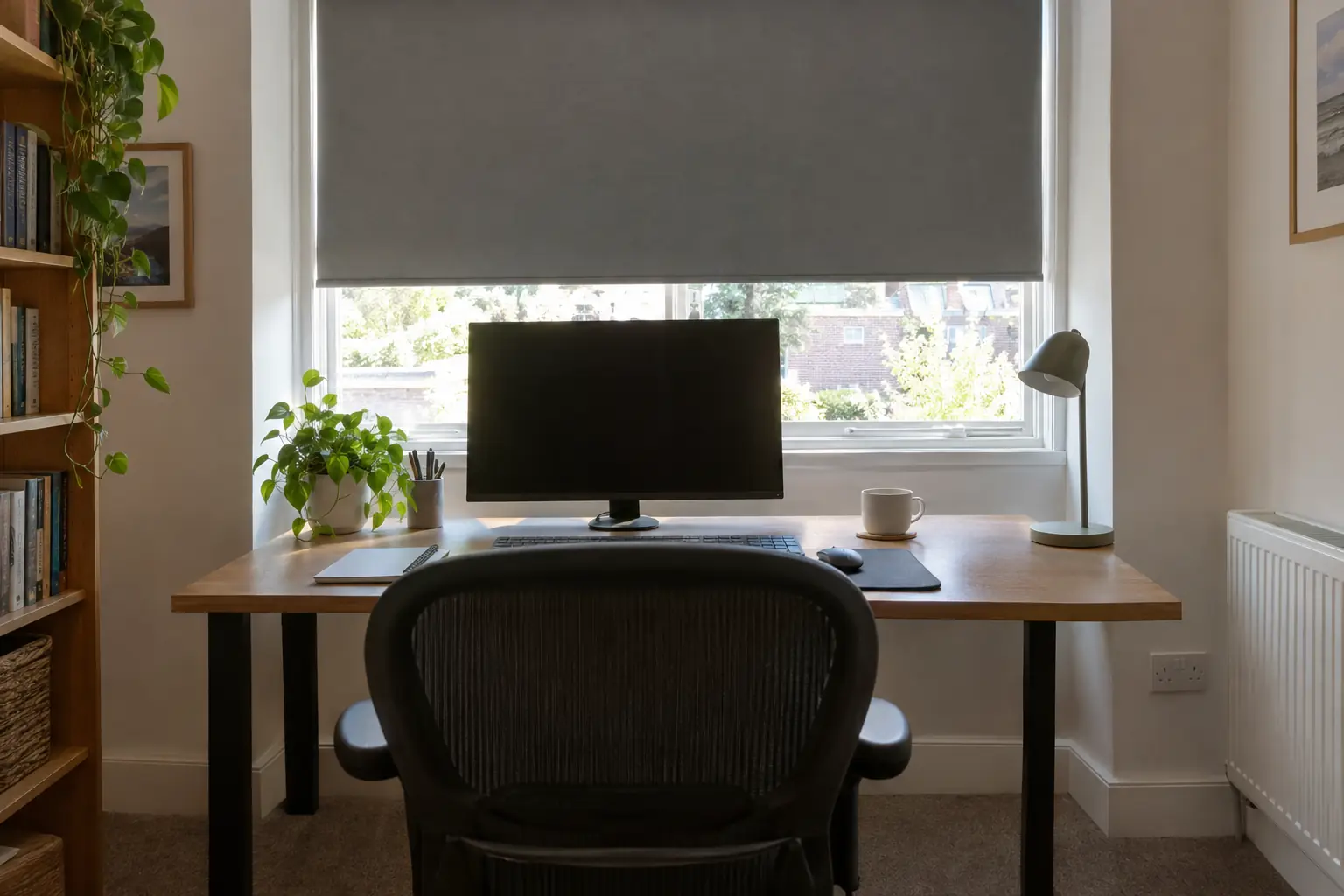
With the window in front of you, behind the monitor, the screen is clear but you are looking at a bright background all day, and your eyes keep adjusting between the two. On a call, though, the light falls on your face, which is flattering. A sheer or dimout blind that softens the window without darkening the room helps a lot.
With the window to one side, you get daylight without reflections for most of the day, and on camera you are lit from the side, which looks natural. This is the layout to aim for. The blind's job is then mainly to deal with low sun at one end of the day, which a tilting blind handles well.
In a small box room there may be only one place the desk fits. If so, choose the blind for that layout, not the one you wish you had.
Venetians: the home office default
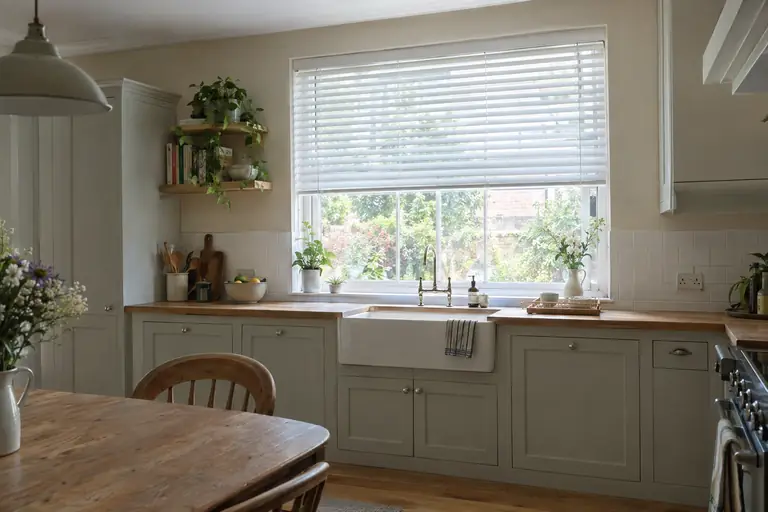
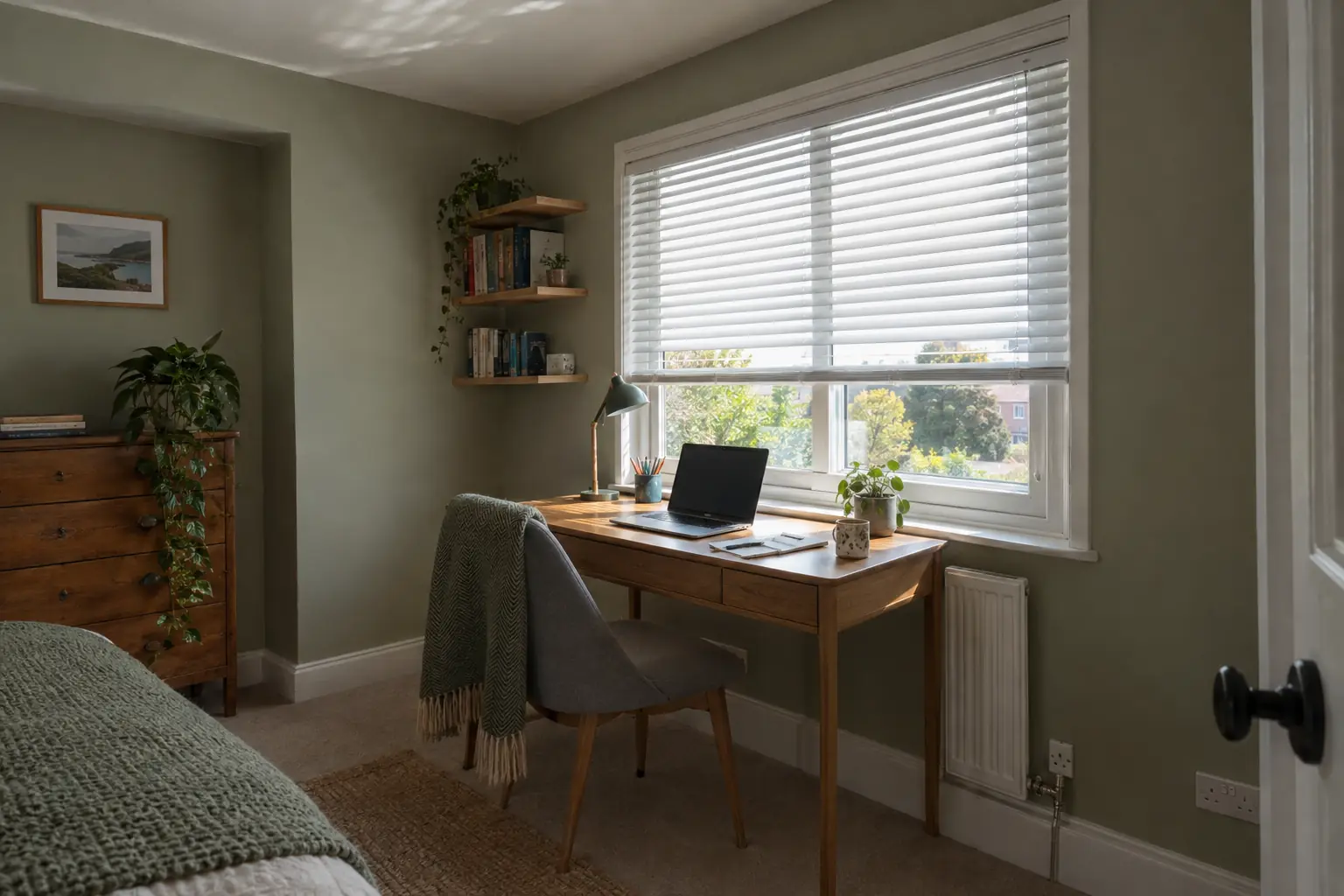
Venetians end up in more home offices than any other blind for a simple reason: they are the most precise light control in our range. Tilt the slats a few degrees upward and the daylight bounces off them onto the ceiling, where it spreads softly across the room, while the direct light that was hitting the screen is cut. Tilt them further and you have privacy from the street without losing the light.
Aluminium slats are slim and light and give fine angle control, which suits a small room where the window is close to the desk. A matt finish avoids adding reflections of its own. Faux wood and real wood give a warmer look in a room that also has to feel like home, such as a study lined with books or a spare bedroom.
Narrower slats give finer control and a smaller stack at the top; wider slats let more light through when fully open. Your advisor can hold both against the window. And if the office faces a street, a venetian closed at dusk keeps the desk and screens out of view from the pavement, which is worth thinking about if you keep equipment there.
Vertical blinds for wide windows and side sun
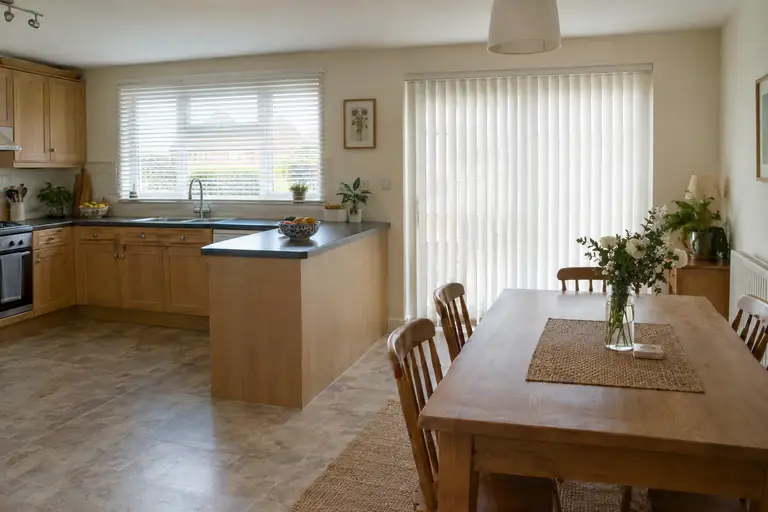
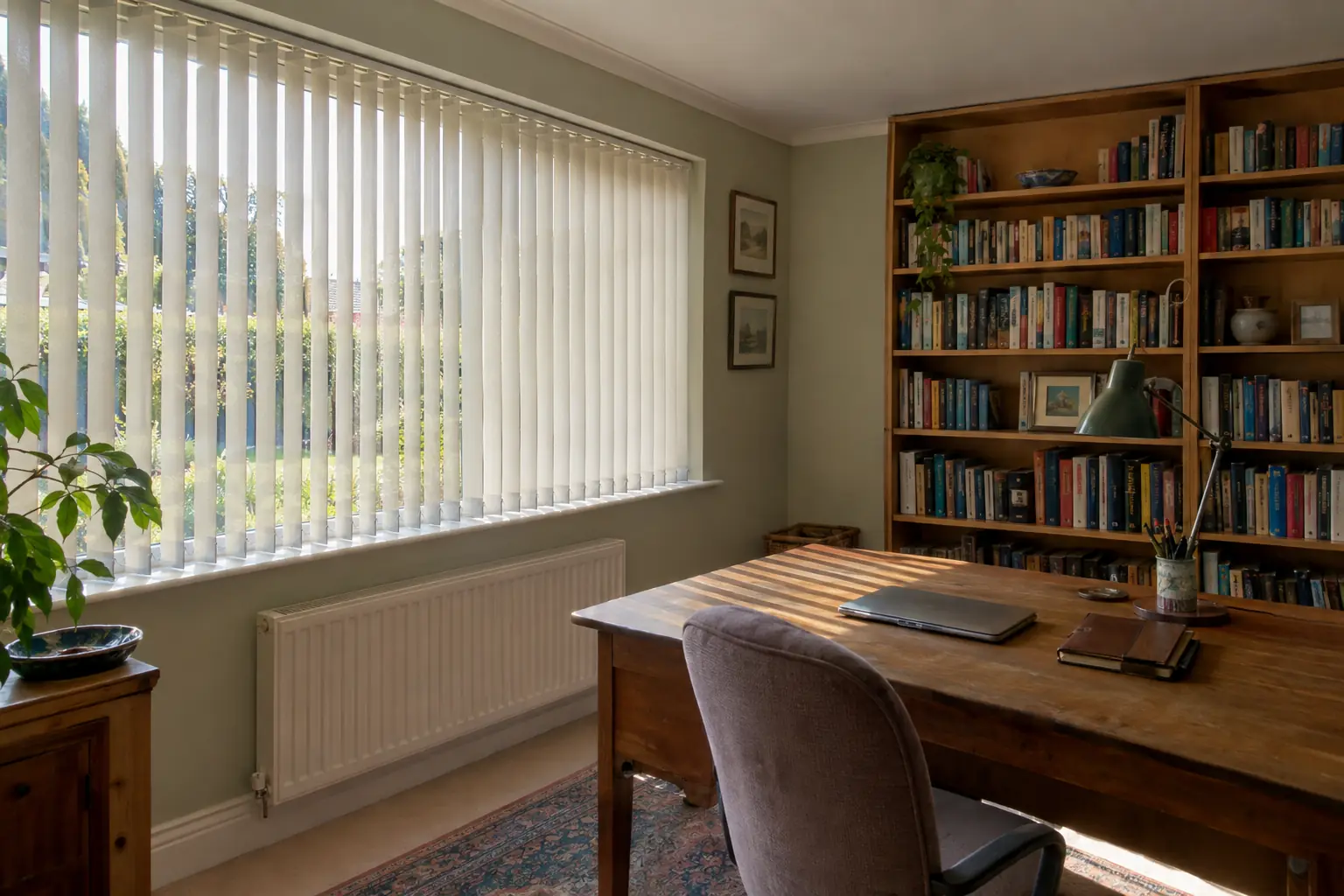
Vertical blinds are usually thought of as a patio door product, but they suit a home office with a wide window, or one where the sun comes across the room from one side. The louvres turn on their own axis, so they can be angled to block low sun from the east in the morning or the west in the afternoon while the rest of the window stays open to the view.
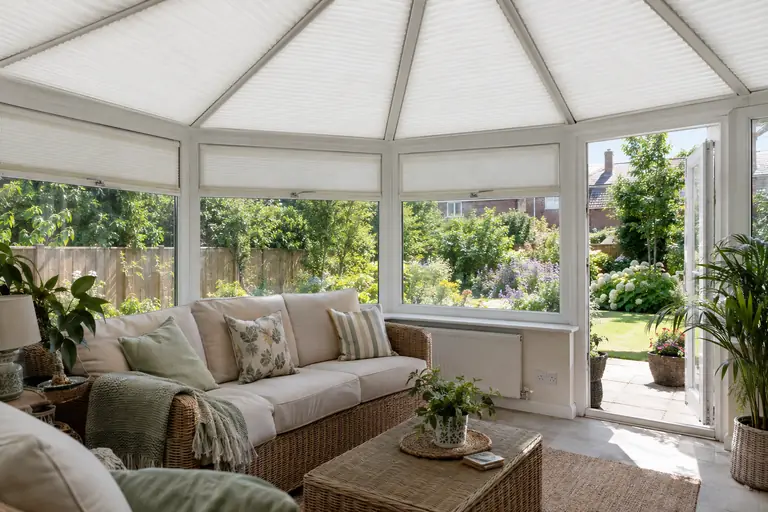
They also draw right back to one side, leaving the glass completely clear when you do not need them. In a garden room, or an office with a glazed door, that makes them easier to live with than a blind that has to be raised out of the way every time you step outside.
Fabric louvres give a softer look in a room that doubles as somewhere to relax; PVC louvres wipe clean. If you are weighing the two main tilting blinds against each other, our venetian vs vertical blinds guide compares them side by side.
Softer options: day and night, sheer and dimout
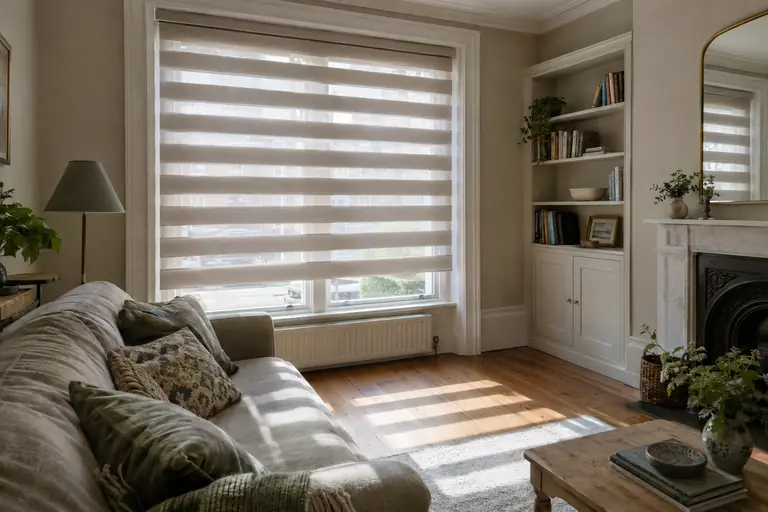
Not every office needs slats. A day and night blind has alternating sheer and solid bands in two layers. Line the sheer bands up for soft, filtered light with the view still there; offset them and the window closes, with a short movement of the blind rather than raising it out of the way. In a room used for work by day and for relaxing or sleeping at night, it covers a lot of ground.
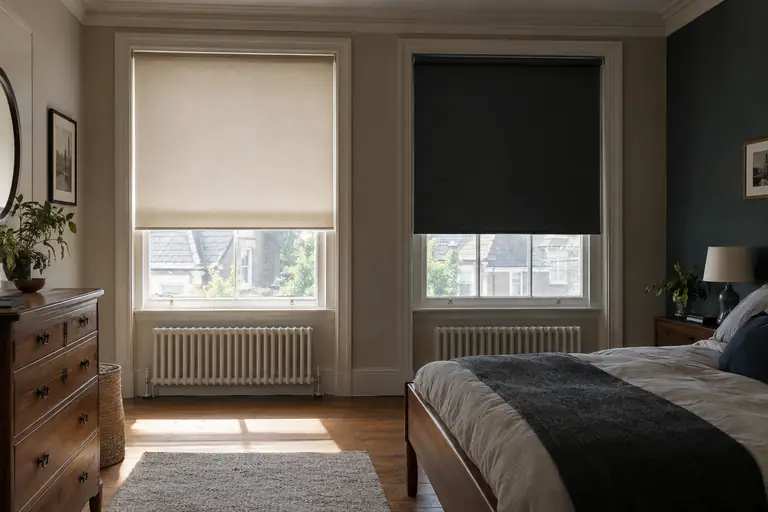
A sheer or light-filtering roller takes the edge off a bright window without darkening the room, which suits the window-in-front layout. A dimout roller goes further: useful for an afternoon of detailed screen work in a south-facing room, or a presentation where the screen has to be at its clearest.
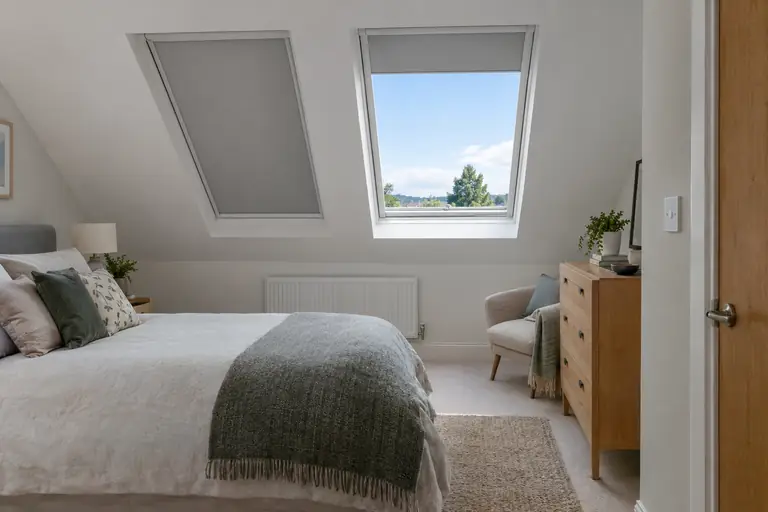
If the office is also the guest bedroom, the requirements change. A guest wants a dark room, and a day and night blind is not blackout. A blackout roller or roman will do it, or keep a venetian for the working day and add blackout-lined curtains for the night. Our blackout, thermal and dimout guide explains what each label means.
Looking right on a video call
A camera exposes for the brightest thing in the picture. If that is a window behind you, it turns you into a silhouette, however good the camera. The fix is to get the bright window out of the frame or turn it down: move the desk if you can, and if you cannot, lower a dimout roller or close the venetian behind you during calls.
Light on your face is what you want. A window in front of you or to one side, softened by a sheer, a day and night blind or venetian slats tilted upward, gives even, natural light that a desk lamp struggles to match. Direct sun on your face is too much, which is another reason to choose a blind you can adjust rather than one that is either up or down.
Think too about what the camera sees behind you. A neatly hung blind in a plain colour reads as calm on screen; a half-lowered, skewed blind or a loose chain is surprisingly noticeable. Cordless or motorised controls keep that background tidy.
Heat, reach and the small back bedroom
Many home offices are the smallest bedroom in the house, with a relatively large window and equipment giving off heat all day. On a sunny afternoon they warm up fast. The UK Health Security Agency lists homes with large east-, west- or south-facing windows that have no shading as more likely to overheat, and recommends closing blinds and curtains by day on windows facing direct sun. In an office, that means shading the window before the sun reaches it, not after the room is already warm. Thermal fabrics, which reflect heat rather than absorbing it, help most on the sunny side.
Reach is the other practical point. A desk usually goes under or in front of the window, which puts the blind's control on the far side of the desk. Ask for the control to go on the side you can reach from your chair, or think about a motor. Battery or mains powered and worked from a remote or an app, a motorised blind lets you adjust the light without getting up, which you will find yourself doing several times a day as the sun moves round.
Checklist
- Sketch where the desk, screen and window sit, and where the sun is through the working day.
- Avoid working with your back to the window.
- Choose a blind that tilts or softens light, not one that only blocks it.
- Check what the camera sees behind you on a call.
- Put the control where you can reach it from the chair, or use a motor.
- Shade south- and west-facing windows before the afternoon sun arrives.