The short answer
Choose a venetian when you want to control the angle of the light, not just the amount: glare on a screen, privacy from the street with the room still bright, or a kitchen blind you can wipe down. Aluminium is slim and light and happy in wet rooms. Faux wood gives the look of timber and shrugs off steam. Real wood looks warmest but belongs in dry rooms.
- Venetians tilt, so a room can stay bright while you lose the glare or the view in from the street.
- Aluminium and faux wood cope with steam and wipe clean; real wood belongs in dry rooms.
- Wider slats give a clearer view when open; narrower slats stack smaller and suit shallow reveals.
- No slatted blind is a blackout blind: light always passes at the slat edges.
- Your advisor brings all three materials to your window so you can compare them in your own light.
How a venetian actually works
A venetian blind has three working parts you can see: a headrail at the top, the slats, and the ladder cords or tapes that hold each slat at an even spacing. Turn the tilt control and the ladders shift, so every slat rotates together. Pull the lift cord and the bottom rail rises, gathering the slats into a stack under the headrail.
That tilt is the thing no roller, roman or pleated blind can do. With the slats flat you look straight through them. Tip them a little and the view narrows while daylight still bounces in off the top of each slat. Close them and you have a solid face of slats.
Which way you tilt matters more than people expect. With the edge nearest the room tipped up, the slats throw daylight at the ceiling, where it spreads softly round the room, and anyone outside at ground level looking in finds their view angled up at your ceiling rather than into the room. Tipped the other way, the slats let the sun straight through onto the floor and open the view down into the room from any window above street level. Most people settle on the first for living rooms, bathrooms and offices, and close the slats fully once the lights go on in the evening.
Aluminium: slim, light and at home in wet rooms
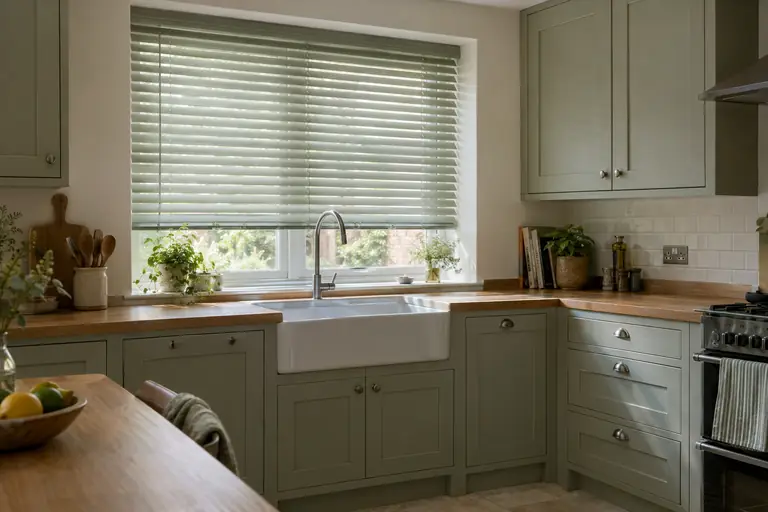
Aluminium slats are thin and light, which is most of their appeal. A lot of them fit into a small stack, so a raised blind takes up little of the glass, and a wide aluminium blind is still easy to lift. The slats take a damp cloth and are not bothered by steam, which is why they are the standard choice over a kitchen sink, in a bathroom and in a home office.
The finishes run well beyond office white: soft plains, brushed and metallic effects, and gloss colours that can pick up a tile or a splashback. A slim aluminium blind in a colour close to the wall or the frame all but disappears when it is open, which suits a room where you want the window, not the blind, to be what people notice.
The trade-offs are honest ones. A thin metal slat can crease if it is grabbed or knocked, so a blind at child height or behind a sink that gets leaned over takes more wear. In a breeze from an open window the slats can tap against each other. Neither is a reason to avoid aluminium, but both are worth knowing before you choose it for a busy family room.
Faux wood: the timber look where timber would suffer
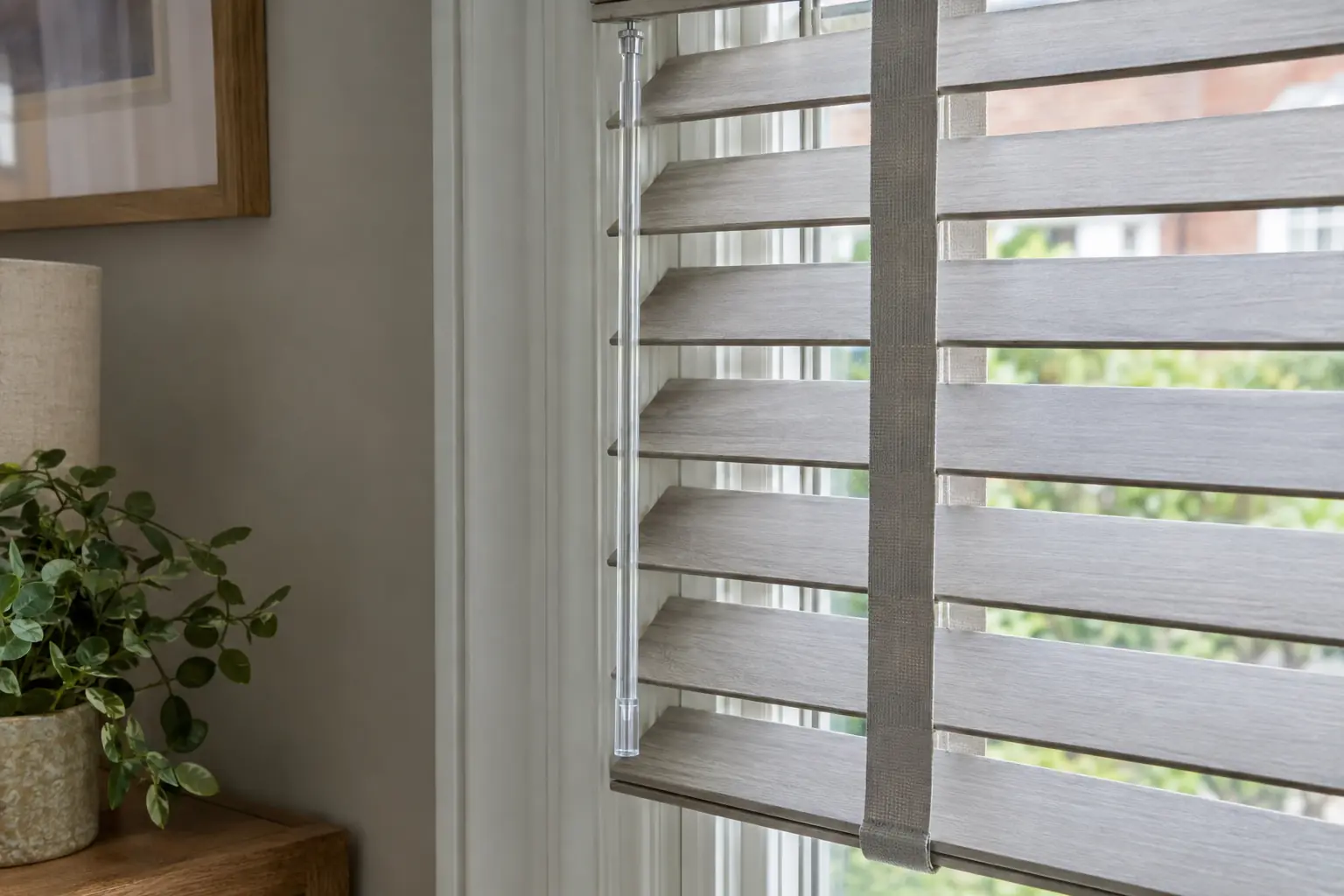
Faux wood slats are moulded to look like painted or stained timber, but they are not affected by moisture the way wood is. Steam from a bath or a kettle, splashes at a sink and the condensation that runs down a cold window on a winter morning all wipe off with a damp cloth, and the slats stay straight.
That makes faux wood the answer when you want the weight and warmth of a wooden blind in a room where real wood would twist: bathrooms, en-suites, kitchens and utility rooms. The slats are thicker than aluminium, so the blind looks more like a piece of furniture and less like a fitting, and it sits comfortably in a living room too.
The cost of that sturdiness is weight. Faux wood is denser than timber, so a wide faux wood blind is heavier to raise than the same blind in real wood and leaves a deeper stack at the top. On a very wide window your advisor may suggest two blinds side by side rather than one. From across the room the finishes are convincing; up close, real timber grain is still easier to spot. Our comparison of the two goes into the detail.
Real wood: warmth and grain for dry rooms
Real wood venetians have a depth that a moulded slat does not quite match. Stained finishes let the grain show through, so no two slats are exactly alike, and painted timber has a softness that reads well against period plaster. They are lighter than faux wood for their size, which helps on a tall window.
The condition is a dry room: a living room, a bedroom, a study or a dining room. Steam from a bath or a hob moves timber, so for those windows we suggest faux wood in the same finish instead.
Of the three materials, real wood is the one that most changes the feel of a room, because it puts a natural material at the window rather than a finish that imitates one. Our wooden blinds guide covers tones and weight on wide windows, and our comparison of real and faux wood goes into steam, condensation and grain in detail.
Slat size, tapes and the view
Slat size changes how a venetian looks and behaves, even before material comes into it. Wider slats mean fewer of them, so when the blind is open you see more window and less blind, and the look is calmer and more architectural. They suit tall sash windows and big rooms. Narrower slats give finer control of the angle, stack smaller at the top and sit better in a shallow modern reveal or on a small window.
There is a practical side too. A slat has to swing through its full width when you tilt it, so a wide slat needs a deeper reveal to tilt without catching a handle or a window stay. Your advisor measures the depth and checks for anything that projects before recommending a slat size.
Some wood and faux wood ranges can be made with tapes: cloth strips that run down the front of the blind over the ladder cords. They hide the small holes the lift cords pass through, which trims the pinpricks of light that come through them, and they add a vertical stripe of colour that gives a blind a more traditional, tailored look. Ask your advisor which ranges offer them.
Light, privacy and the limits of slats
A venetian is brilliant at managing daylight and honest about what it cannot do. Tilted, it keeps a room bright while taking the reflection off a television or a monitor. Half-closed, it gives daytime privacy on a street-facing window without leaving the room dim. Museums use the same idea: conservation guidance for collections lists venetian blinds among the ways to reduce daylight in a room. Worth remembering for a sunny room with a good rug or a piece of timber furniture in it.
What a venetian will not do is black a room out. However tightly the slats close, light gets through where each slat meets the next and round the ends of the blind. In a bedroom that has to be dark at five in the morning in June, pair the venetian with lined curtains, or choose a blackout roller or roman for that room and keep the venetians for the rooms where tilt earns its keep.
At night with the lights on, close the slats fully rather than leaving them tilted. A lit room seen from a dark street shows more through part-open slats than it does in daylight.
Cords, controls and keeping it clean
Most venetians are raised with a cord and tilted with a wand or a second cord. Any venetian we supply with a cord leaves with the child-safety devices that UK regulations require, and your fitter puts them up and shows you how each one works. If the blind is going in a child's room, or near a cot, bed or sofa a small child could climb on, ask your advisor about cordless and motorised options instead. Motorisation is also worth pricing for a venetian behind a desk or a kitchen worktop that you cannot comfortably reach across.
Cleaning is less of a chore than its reputation. Tilt the slats closed, run a soft brush or a dry cloth down the face of the blind, then tilt them the other way and do the same. Aluminium and faux wood also take a damp cloth for greasy marks in a kitchen. Real wood gets a dry cloth only.
If something wears out, the parts that usually fail, such as wands, cords and brackets, can normally be replaced without remaking the blind. Every blind we supply and fit carries our 1-year guarantee.
Pros and cons
In its favour
- Tilting slats control the angle of the light, not just how much comes in
- Keeps a room bright while taking glare off a screen or television
- Daytime privacy on a street-facing window without closing out the daylight
- Aluminium and faux wood cope with steam and wipe clean
- Three materials, so one style can run from the kitchen to the living room
Worth knowing
- Not a blackout blind: light passes at every slat edge
- More surfaces to dust than a roller or a roman
- Real wood cannot go over a bath or next to a hob
- A tall venetian leaves a deep stack of slats at the top of the window
Room by room
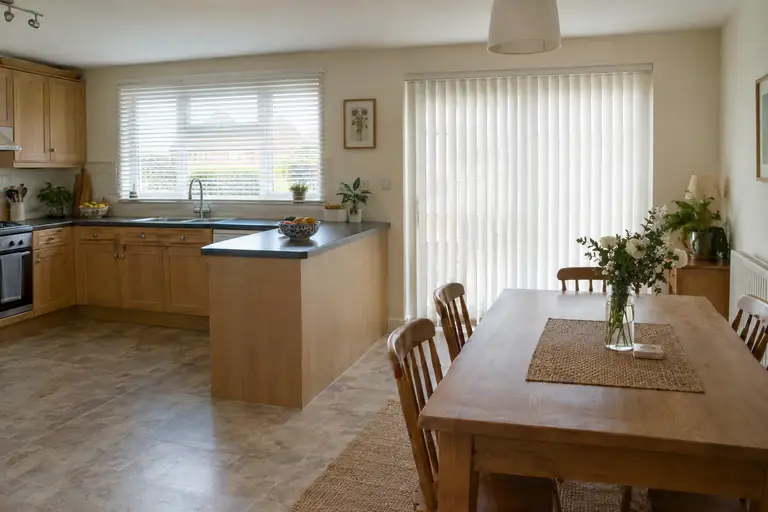
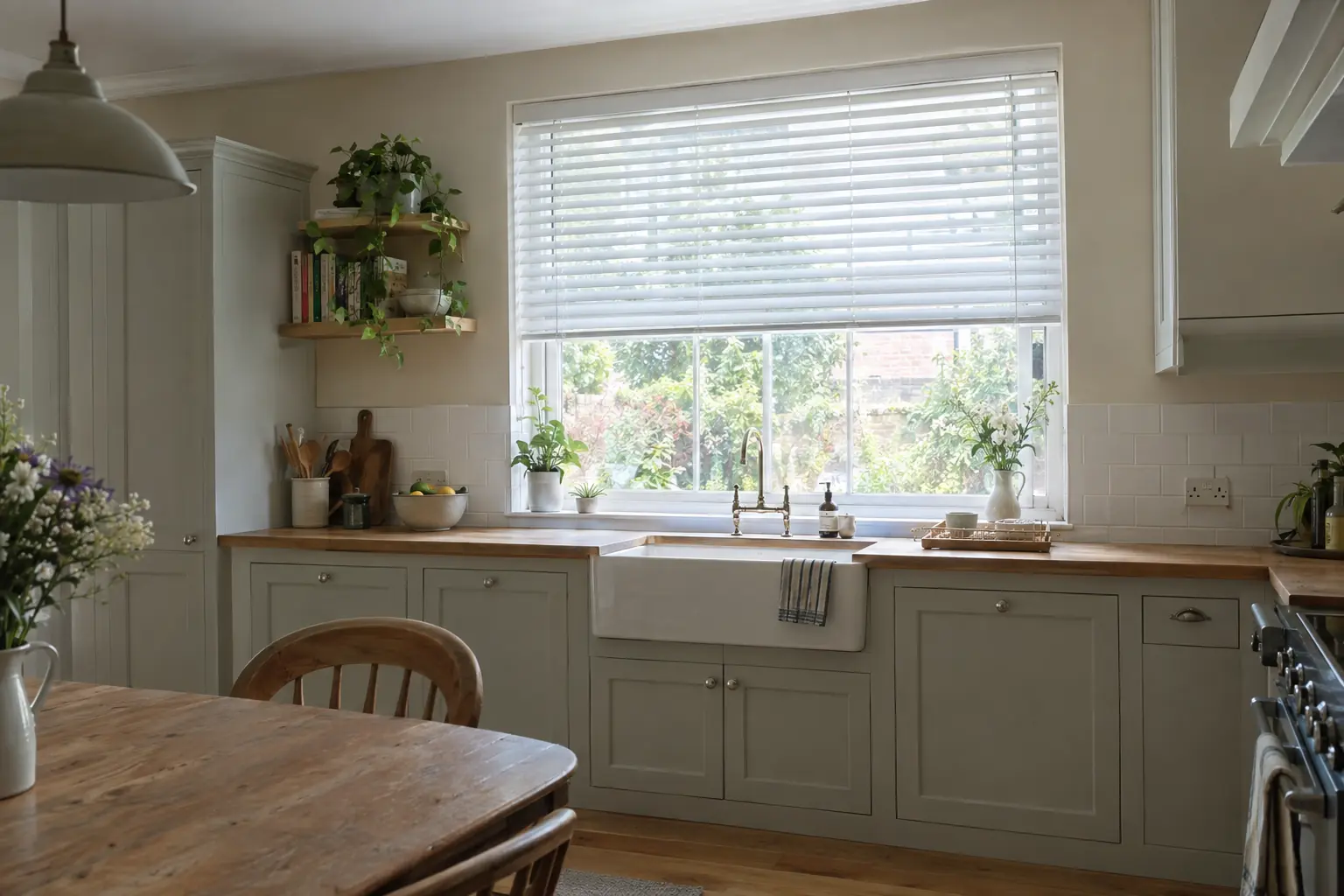
- KitchenA great fitAluminium or faux wood wipes clean and ignores steam, and tilting the slats hides the sink from the street while you still see out.
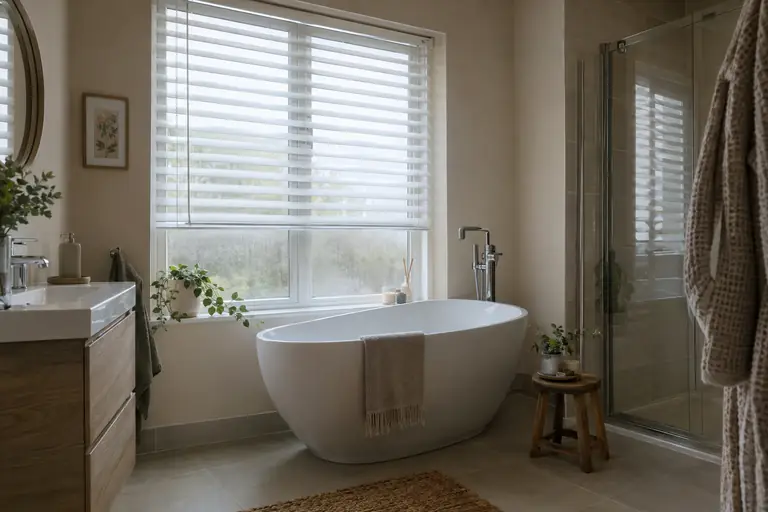
- BathroomA great fitAluminium or faux wood only. With the room-side edge tipped up, the slats keep the daylight and close the view in from below.
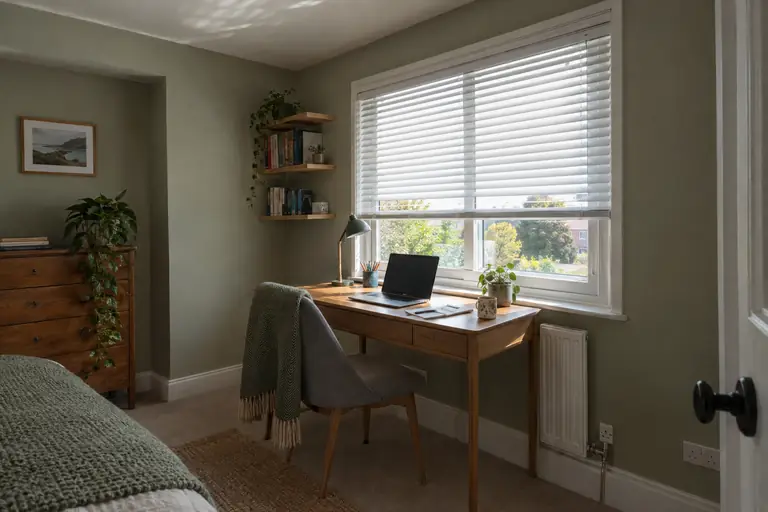
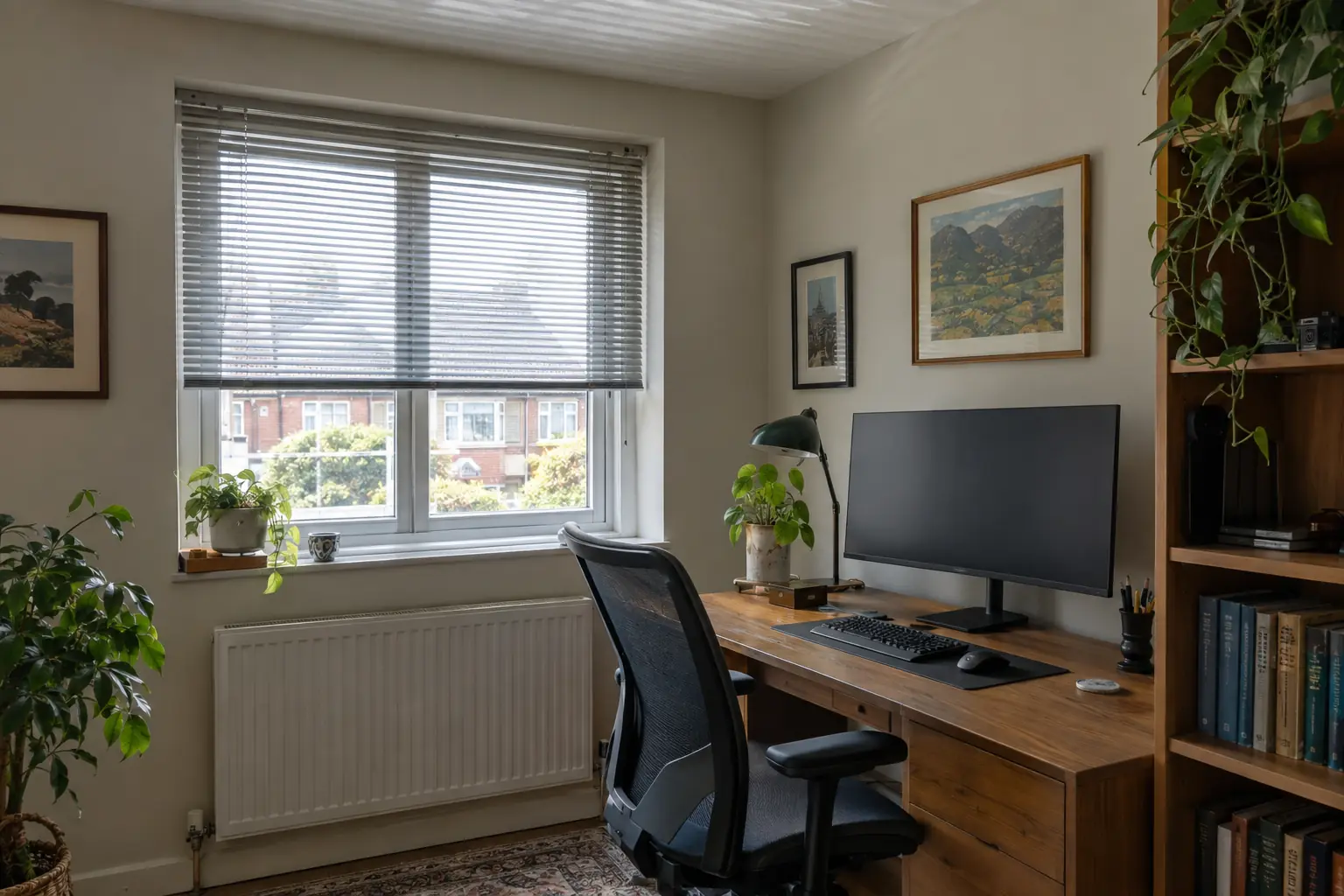
- Home officeA great fitTilted slats send daylight to the ceiling instead of across your monitor, so the room stays bright without the reflection.
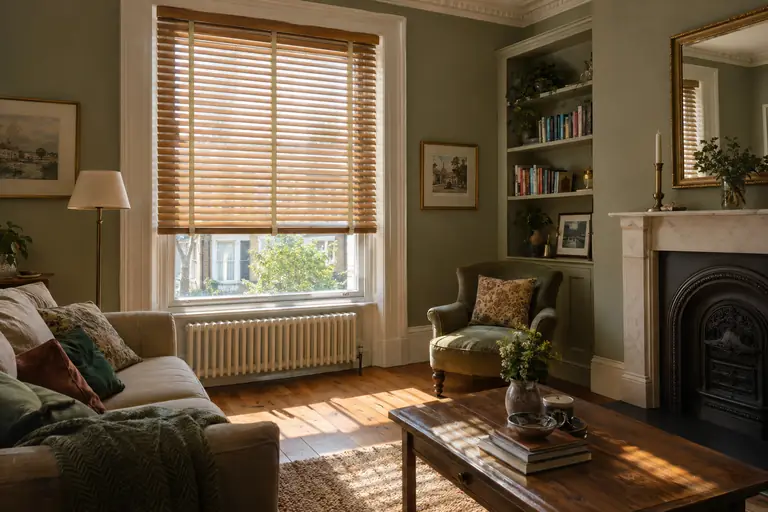
- Living roomWorks wellFaux wood or real wood brings warmth, and the tilt deals with low sun on the television in the evening.
- BedroomThink twiceLight gets through at the slat edges. Add lined curtains, or choose a blackout roller or roman if the room has to be dark.
- NurseryThink twiceKeep cords well away from cots and beds. Ask your advisor about cordless or motorised options for a child's room.