The short answer
Close blinds and curtains on windows in direct sun during the day, following the sun round the house: east in the morning, south around midday, west in the afternoon. A pale or reflective back sends more of the sun's heat back out through the glass than a dark one. Conservatory roofs need roof blinds held close to the glass, bedrooms benefit from blackout, and in the evening you open up to let cooler air in.
- Official heat advice is to close blinds and curtains on windows in direct sunlight during the day.
- Homes with large east, west or south-facing windows and no shading are more likely to overheat.
- Close coverings before the sun reaches the glass; heat that is already in the room is slow to leave.
- Pale and reflective backs turn heat away at the window; dark fabrics absorb it and warm the room.
- Conservatory roof blinds take the peak off the heat, and a motor makes them easy to use every day.
Stop the heat before it gets in
Sunlight passing through glass turns to heat when it lands on the floor, the furniture and the walls, and that heat is then trapped in the room. Once a room has warmed up, it takes hours to cool down again. Shading the window before the sun reaches it is far more effective than trying to cool the room afterwards.
The government's hot-weather advice from the UK Health Security Agency says the same thing plainly: close blinds and curtains on windows that are exposed to direct sunlight during the day. Its checklist of homes more likely to overheat includes those with large east, west or south-facing windows that have no shade from the sun, whether that is external shutters or internal curtains and blinds.
The same checklist suggests internal blinds or curtains when preparing a home for hot weather, and says external shutters, roller blinds or awnings are also very effective. External shading stops the sun before it reaches the glass, so it keeps out more heat than anything inside can. Inside the window, the aim is to catch as much of the sun as possible and send it back out before it warms the room.
None of this needs to leave you sitting in the dark. The trick is to shade the windows that are in the sun and leave the others open to daylight.
Follow the sun round the house
Which windows to close, and when, depends on the way they face. East-facing rooms take the low morning sun, which pours straight in under any overhang. South-facing rooms get the strongest sun around the middle of the day, though it is high in summer and a deep reveal or a roof overhang shades part of it. West-facing rooms are often the worst of all: they take the full afternoon sun just as the house has already warmed up, and it keeps coming in low until the evening. North-facing rooms rarely see direct sun and can usually stay open for light.
That gives a simple routine on a hot day. Close the east side first thing, the south side by late morning, and the west side from early afternoon, and open each again once the sun has moved round. A bedroom that faces west can be shaded from lunchtime so it is not holding the afternoon's heat at bedtime.
The routine is easy to forget on a busy day, which is where a motorised blind helps. Blinds can be grouped so a whole run of windows moves on one command, and with a timer the sun-facing side of the house can close itself before you get home.
Which coverings work best in heat
Colour and backing matter more in summer than the type of blind. A covering with a pale or reflective back facing the glass sends a good part of the sun's energy back out through the window. A dark fabric absorbs it, warms up, and gives that warmth back into the room, which is why a dark blind can feel warm to the touch on a sunny afternoon.
Blackout fabric helps, because its coating reflects rather than absorbs, but heat is a different problem from light. Thermal fabrics are made for it: they are woven or backed to reflect heat, which keeps warmth in through winter and keeps a south-facing room cooler in summer. A honeycomb blind traps air in its sealed cells, and the same still air that slows heat leaving the room in winter slows heat moving through it in summer.
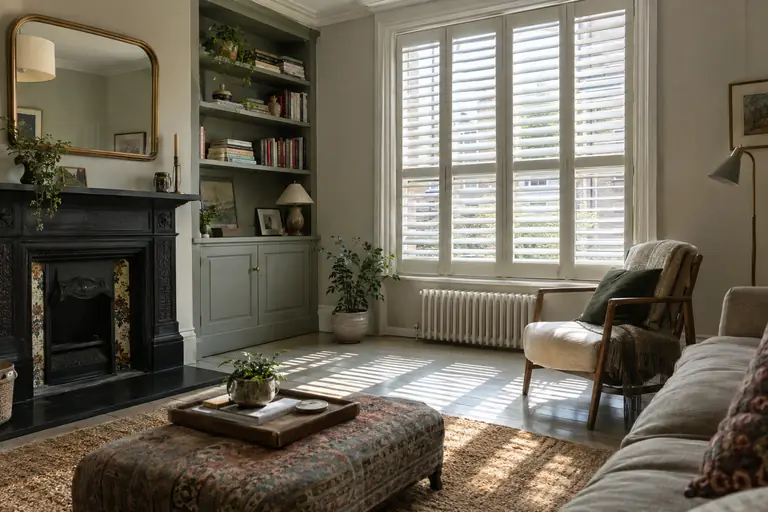
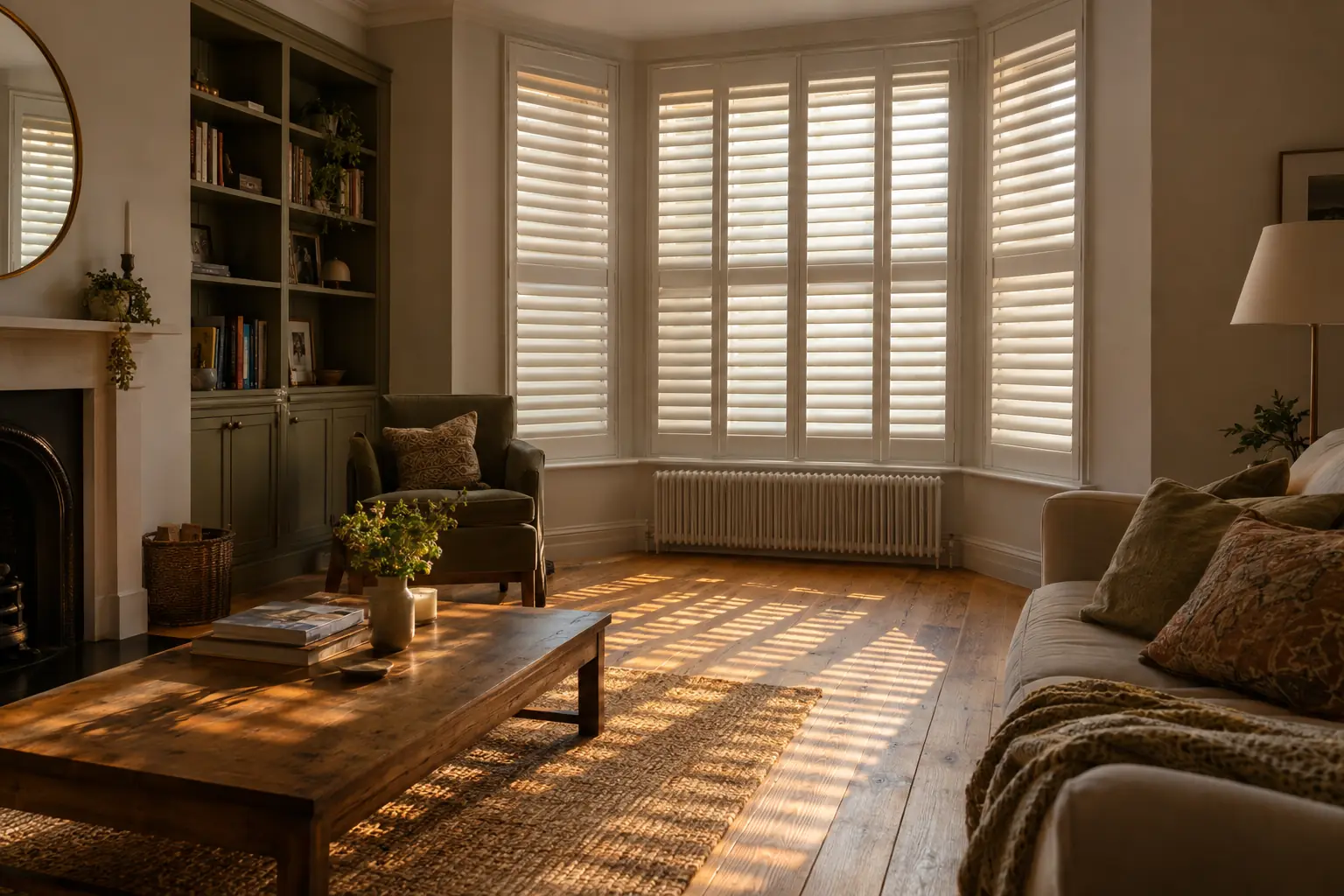
Shutters and slatted blinds work differently. Tilt the louvres or slats to block the direct sun and you keep some daylight and let air move through an open window. Venetians are particularly good at this, because a few degrees of tilt throws the light at the ceiling instead of across the room.
If you are choosing for a hot room, ask to see thermal and blackout samples against your own window at the appointment, so you can compare how each back faces the sun.
Conservatories and roof glass
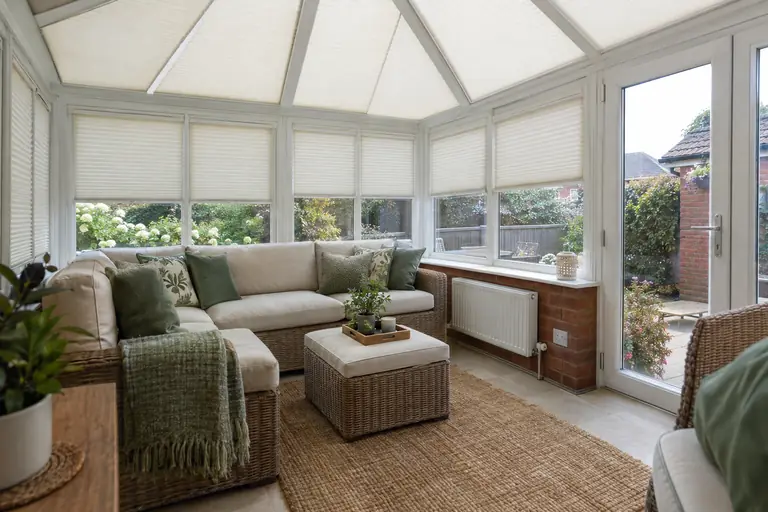
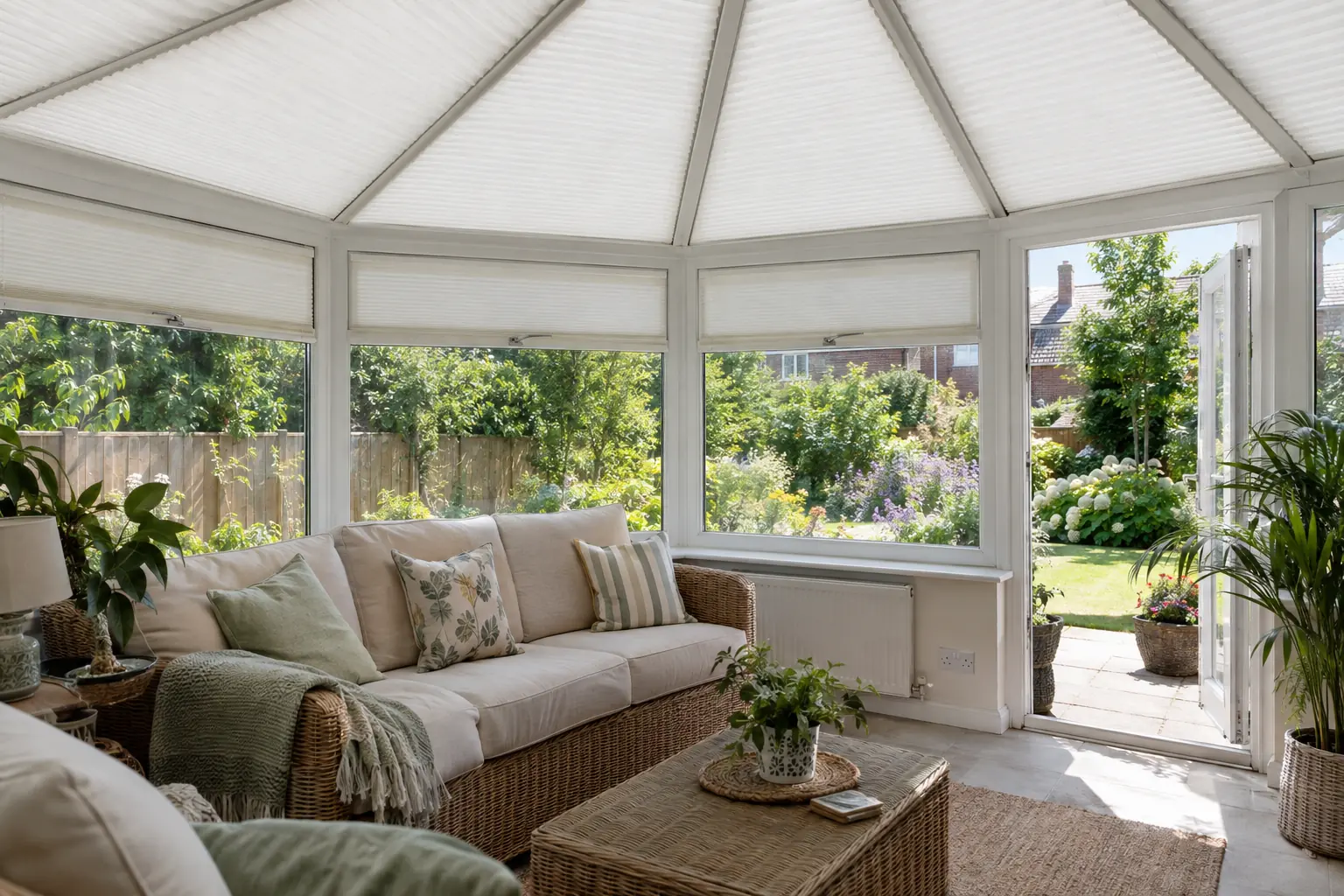
A conservatory roof is a heat problem before it is a privacy problem. Glass overhead takes the sun at its strongest and for most of the day, and without shading the room can be unusable on a summer afternoon and cold in January.
Conservatory roof blinds are made to the exact shape of each pane and held under tension, so they sit close to the glass rather than hanging into the room. That closeness is what makes them work: the blind catches the sun right at the glass, and a reflective-backed fabric sends much of it back out before it becomes heat in the room. They take the peak off the temperature and cut the glare. Be realistic, though. A conservatory in full July sun will still be the warmest room in the house.
Roof panes are out of reach, which is why we almost always suggest motorising roof blinds. A handset or a timer is the difference between blinds you use every day and blinds you leave closed all summer, and the motor carries the same 1-year guarantee as the blind.
Every conservatory roof is measured pane by pane on site, because the fixing points and the exact pane shapes decide what can be fitted and cannot be judged from a photograph.
Bedrooms and nurseries on hot nights
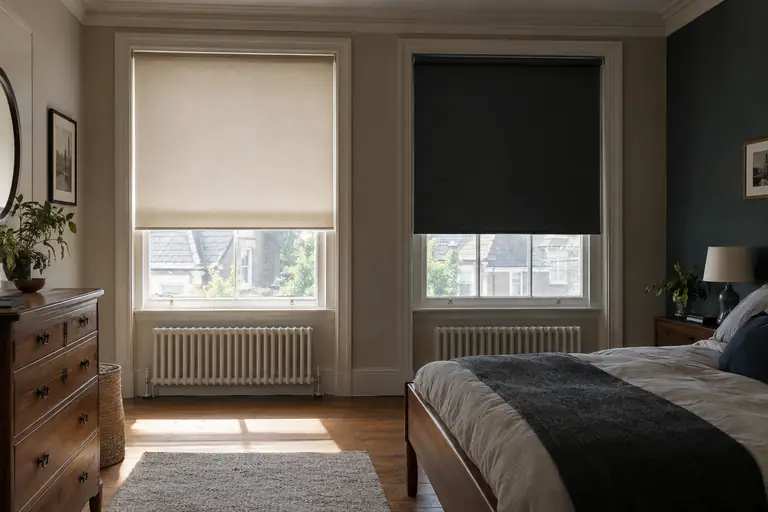
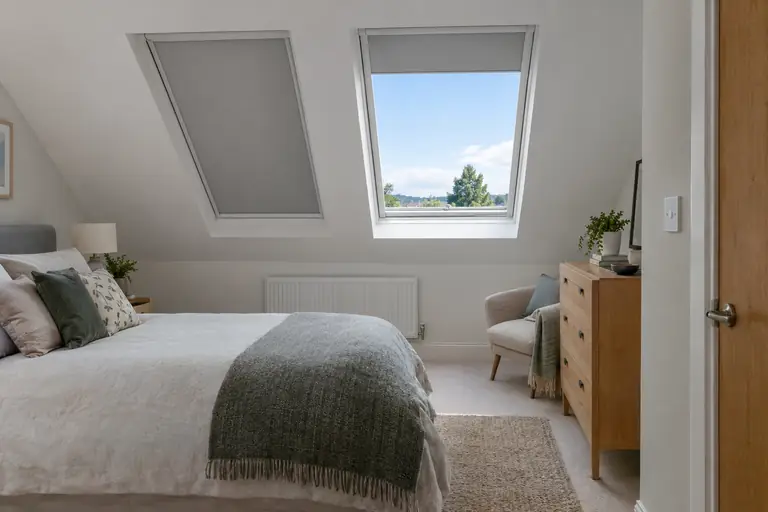
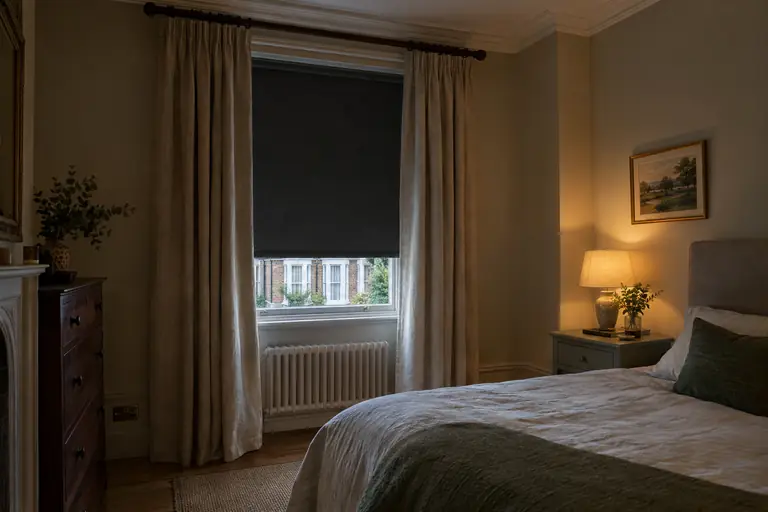
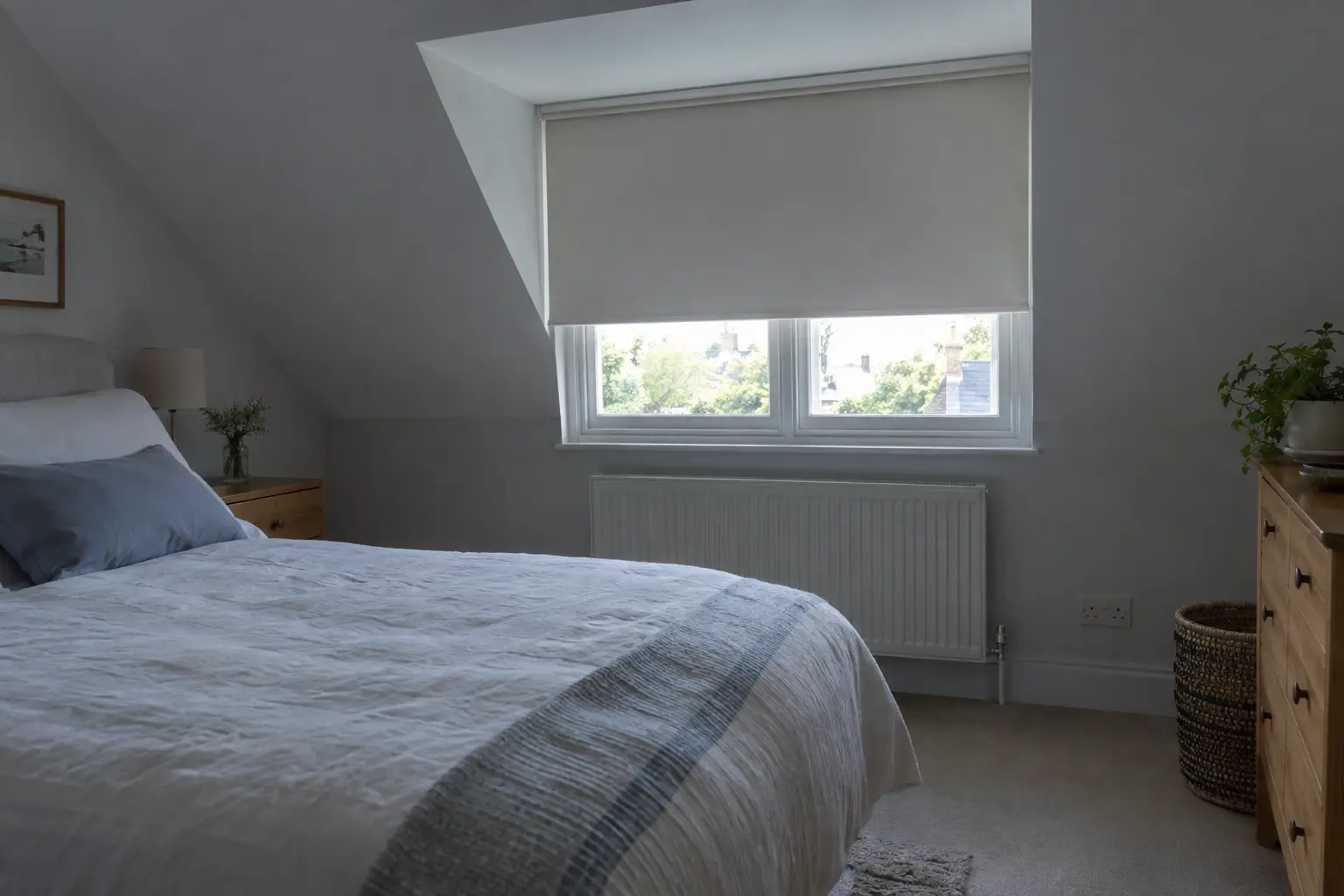
Summer is hardest on bedrooms, because the light arrives early and the heat of the day lingers. NHS advice is that you may find it easier to sleep in a room that is quiet, dark and cool. A blackout blind or blackout-lined curtains do the dark part, and closing them during the day on a sun-facing bedroom does a lot of the cool part before you even go to bed.
For babies, NHS advice is to keep the room between 16C and 20C to lower the risk of sudden infant death. The NHS does not link that to blinds, but on a nursery window that takes the afternoon sun, keeping the blind closed through the hottest hours is one of the simplest ways to stop the room climbing. Choose a cordless or motorised blind for a nursery, so there is no cord within reach of the cot.
There is one trade-off to manage. On a hot night you will want the window open, and a blackout blind lowered over an open window can billow and knock in a breeze. A perfect fit blind that sits in the frame of a uPVC window and moves with it, a top window opened rather than the whole sash, or shutters with the louvres angled can let air in while keeping the room reasonably dark. Your advisor can talk through the options for your window.
Evenings: letting the heat out
Shading keeps heat out, but a house still warms up over a run of hot days, and the other half of the routine is getting that heat out again. Once the air outside is cooler than the air inside, usually in the evening, open the windows and the coverings on the shaded side of the house to let the cooler air through. Opening windows on opposite sides lets a breeze carry the warm air away.
Overnight, bedroom windows can stay open if it is safe to do so, with the blind lowered for darkness. First thing in the morning, before the sun comes round, close the windows and the coverings again on the sunny side, so the cool air you have gathered stays in for as long as possible.
Shutters are especially useful here. With the louvres angled, a shuttered window can be open for air without being open to view, which suits a ground-floor room on a warm evening.
In a conservatory, open the vents and doors in the evening and leave the roof blinds open, so the heat stored in the glass and the floor can escape. Close them again in the morning before the sun climbs. A motorised timer takes care of both ends of the day.
Checklist
- Note which windows get direct sun, and at what time of day.
- Close coverings on those windows before the sun reaches them, not after the room heats up.
- Choose pale or reflective backs for sun-facing windows.
- Keep conservatory roof blinds closed through the hottest part of the day.
- Open windows and coverings on the shaded side in the evening once outside air is cooler.
- Close a sun-facing bedroom or nursery during the day so it is cool by bedtime.