The short answer
Choose a venetian for windows that are taller than they are wide, or standard windows where you want to tilt light up and away from a screen or keep the view in from the street closed. Choose a vertical for doors and for windows much wider than they are tall, where the louvres can draw aside and turn against low sun from the side. In a room with both a window and a patio door, you can use one of each in the same colour.
- Venetians raise to the top; verticals draw to the side. That decides which suits a door.
- Tall windows suit horizontal slats; wide windows and doors suit vertical louvres.
- Venetians tilt light up or down; verticals angle it sideways against low sun.
- Venetians come in aluminium, faux wood and wood; verticals mostly in fabric or wipeable louvres.
- Vertical louvres can be replaced one by one; a venetian slat is threaded onto the cords with all the rest.
Start with the shape of the window
The simplest guide is the proportion of the opening.
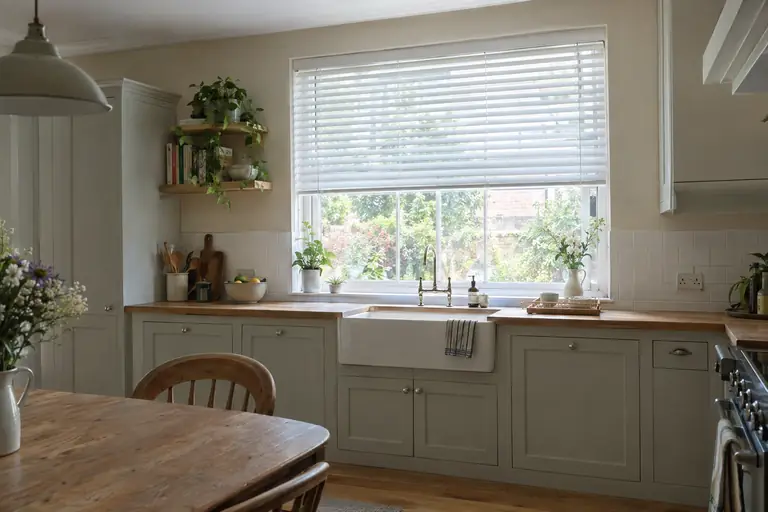
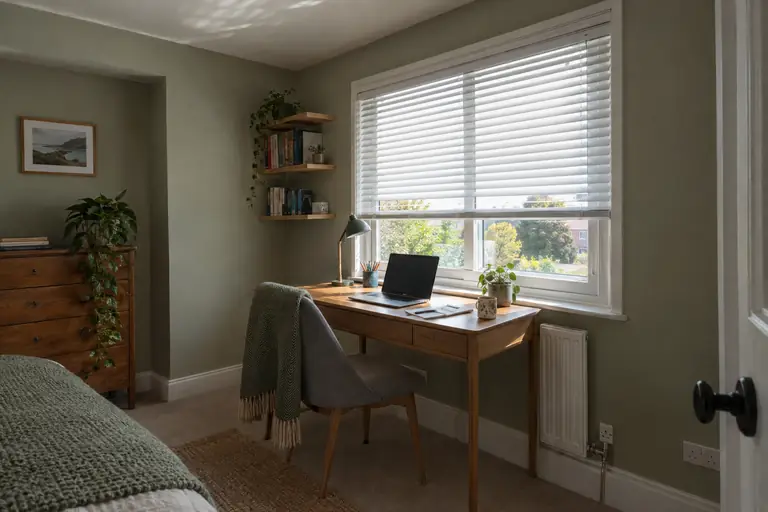
On a window that is taller than it is wide, or roughly square, horizontal slats look natural and work well. A venetian raises into a stack at the top, which on a tall window leaves most of the glass clear. Its slats run across the narrow dimension, so each one is short, light and stiff, and the blind is easy to raise.
On a window that is much wider than it is tall, the picture changes. A single venetian across a very wide span has long, heavy slats and a lot of weight to lift, and the usual answer is to split it into two or three blinds. A vertical blind runs happily across a wide opening on one headrail, with each louvre hanging down the short height of the window, so the width costs you nothing in effort.
The other way round is also true. A vertical blind on a narrow window has only a few louvres, and the stack at the side takes a large share of the glass when it is open. On a small cottage window or a narrow landing window, verticals look heavy and a venetian sits much more neatly.
Most homes end up with both: venetians on the windows and verticals on the wide glass and doors.
Doors: the deciding factor
If the glass is a door, the choice usually makes itself.
Hang a venetian on a patio door and it can only get out of the way by going up. Every trip into the garden means hauling the full blind to the top, and on a wide door that is real weight and a thick band of slats parked across the head of the frame. People tend to leave it up all the time, or leave it down and stop using the door.
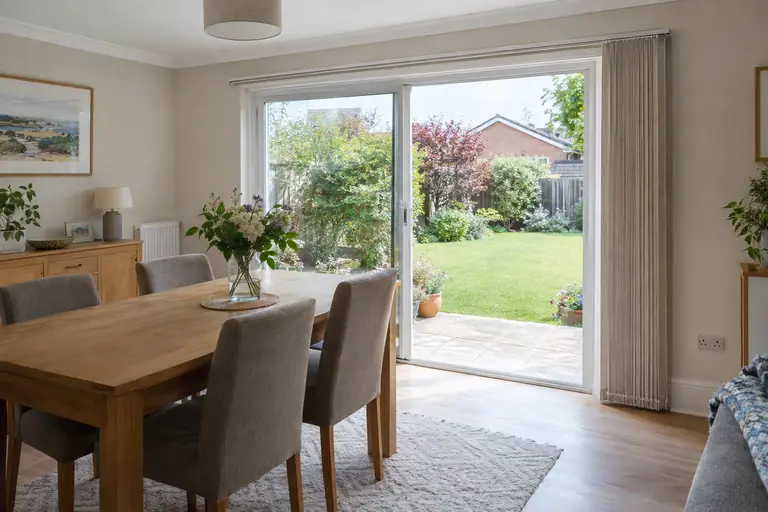
A vertical blind moves sideways instead, gathering its louvres at one end of the headrail. Draw it back from the sliding half of the door and you walk straight out without touching it, while the fixed half can stay shaded. That is why verticals remain the default for patio doors, sliding doors and bi-folds, and our vertical blinds guide goes into choosing which end they stack to.
French doors and single back doors are the exception. There, a blind fitted to each door leaf, for example a perfect fit blind clipped into the door's own uPVC frame, often works better than either a venetian or a vertical across the whole opening. The blind stays with the door as it opens, and the handle stays clear. Your advisor will look at how your doors open before suggesting one.
Which way your light comes from
Both blinds let you steer the light, but in different planes, and the direction your window faces makes one or the other the better tool.
A venetian tilts light up or down. Turn the slats so the edge nearest the room points up and daylight bounces onto the ceiling, where it spreads softly round the room, while the view in from below is closed. That makes venetians the best tool for glare on a screen or a television from high, bright sky, and for privacy on a ground-floor window that people walk past.
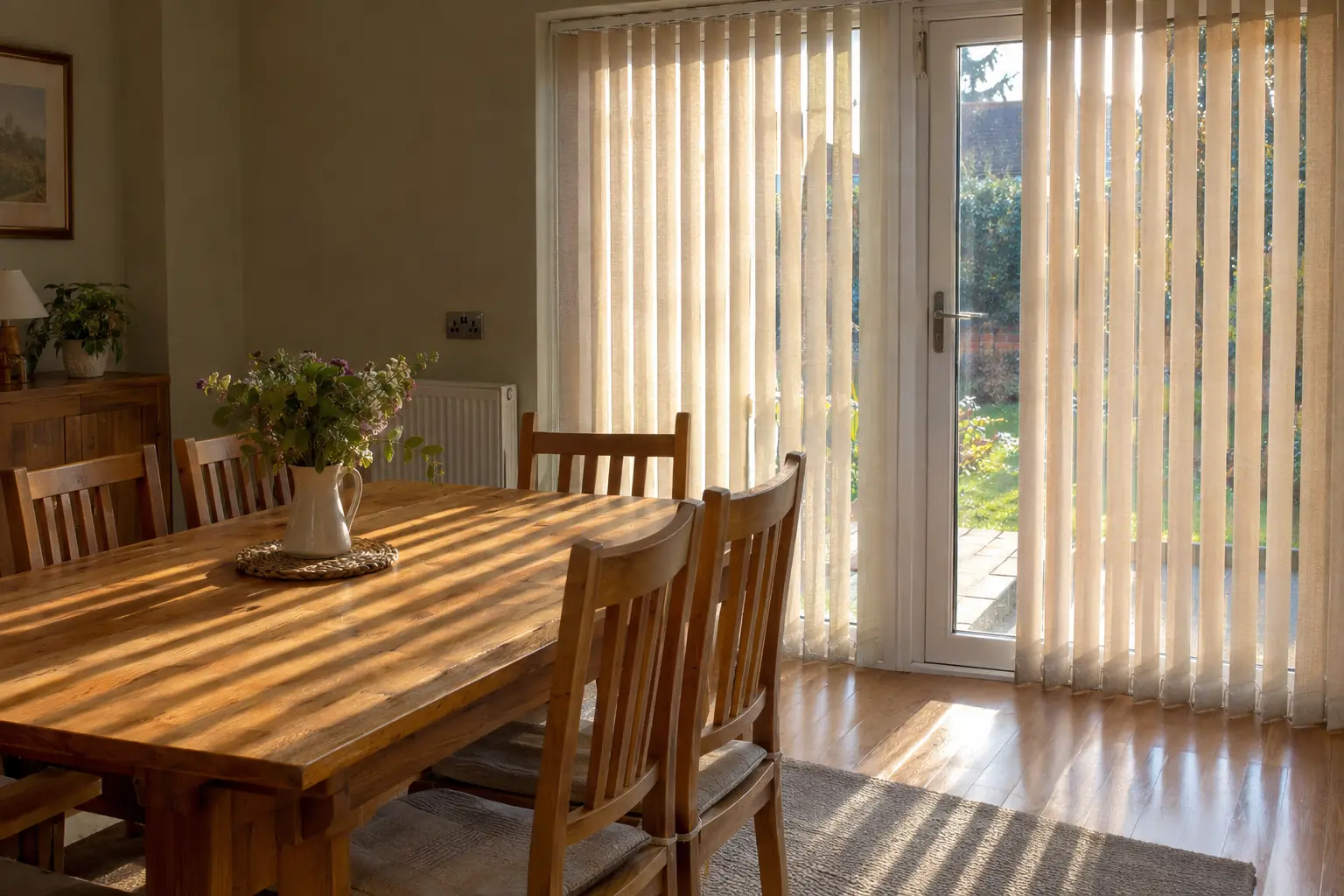
A vertical angles light sideways. Angle the louvres into a low sun from the east or the west and they shut it out, yet the view directly ahead stays open between them. On a west-facing garden door on a summer evening, or an east-facing kitchen at breakfast, that is exactly what you want.
So for a south-facing window with a screen in front of it, lean towards a venetian. For a west-facing wall of glass with low evening sun raking across the room, lean towards a vertical.
Privacy by day and after dark
By day, both blinds give privacy without shutting out the daylight, just in different ways.
A venetian with its slats tilted up hides the room from people at ground level while keeping it bright. A vertical with its louvres half turned blocks the view from one side, which is useful on a patio door overlooked by a neighbour's garden at an angle, but gives a straight-on passer-by glimpses between the louvres unless they are turned further.
After dark, with the lights on inside, the rules change. A lit room seen from a dark garden or street shows through any gap, so close either blind fully in the evening rather than leaving it tilted.
Neither is a blackout blind. Light passes where venetian slats meet and round their ends, and where vertical louvres overlap and at their edges. Blackout vertical louvres cut the light through the louvre itself, which makes a real difference in a bedroom, but the room will still be dim rather than dark. If a room needs to be properly dark, a blackout roller or roman, or lined curtains, is the better answer for that window, and you can keep the venetians or verticals for the rooms where steering the light is what matters.
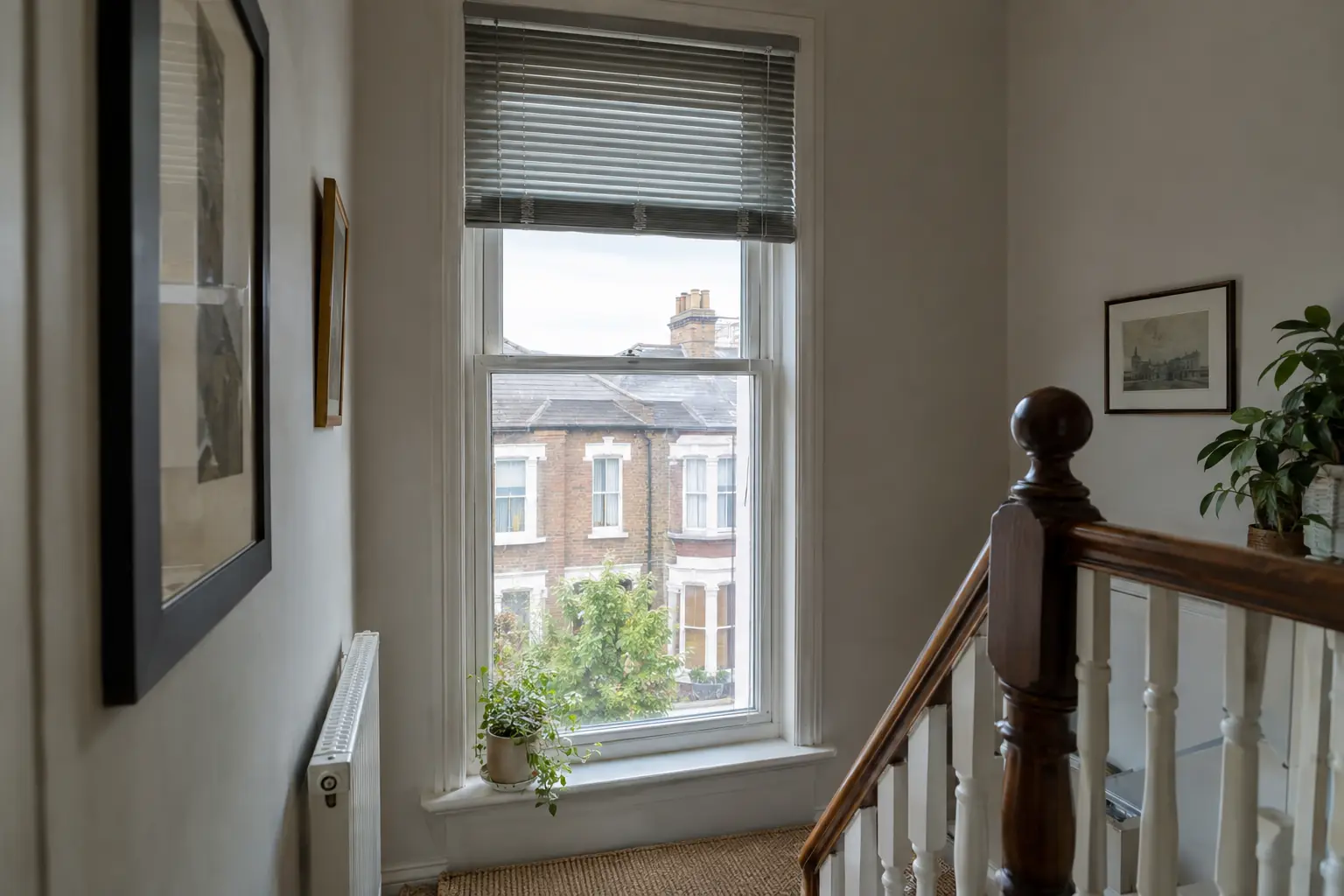
Materials and the look they give a room
The two blinds come from different families of materials, and that shapes how they look.
Venetians come in aluminium, faux wood and real wood. Aluminium is slim, light and wipes clean, with finishes from plain white to brushed metal and gloss colours. Faux wood gives the look of painted or stained timber and ignores steam. Real wood brings grain and warmth for dry rooms. A wood or faux wood venetian reads almost like a piece of furniture in the window.
Verticals are mostly fabric: stiffened louvres in plain weaves, linen looks and textured patterns that soften a large area of glass. There are wipeable and PVC louvres for the kitchen and the back door, and blackout louvres for bedrooms and media rooms.
Verticals have an office reputation from years of plain grey louvres in workplaces. Modern textured and patterned fabrics look very different, and on a wide garden door in a family home they can look soft and calm. Still, in a period living room with sash windows, a wood or faux wood venetian usually suits the architecture better.
Whichever you lean towards, look at samples against the window in daylight. Your advisor brings both ranges to the appointment.
Cleaning, wear and repairs
Horizontal slats are shelves for dust. Every venetian slat has a flat upper face that collects it, so a venetian in a kitchen or on a busy road needs dusting more often; closing the slats and dusting each face in turn is the quickest way. Aluminium and faux wood take a damp cloth for greasy marks; real wood gets a dry cloth only.
Vertical louvres hang on edge, so far less dust settles on them. A dust with a soft brush from the top down every so often keeps them clean. Wipeable louvres take a damp cloth; fabric louvres want no more than a damp dab on a mark, because water softens the stiffening that keeps them hanging straight.
Wear is different too. A venetian slat that has been creased or snapped is threaded onto the ladder cords with all the others, so it is not a simple swap; ring the office and we will say whether it is worth repairing. A vertical louvre is a separate part: if one is damaged, it can be replaced on its own, along with hanger clips, bottom weights and chains, matched to the fabric already hanging. For venetians, the working parts that wear, such as the wand and the cords, are usually replaceable too.
Either blind is covered by our 1-year guarantee when we supply and fit it.
Using both in the same room
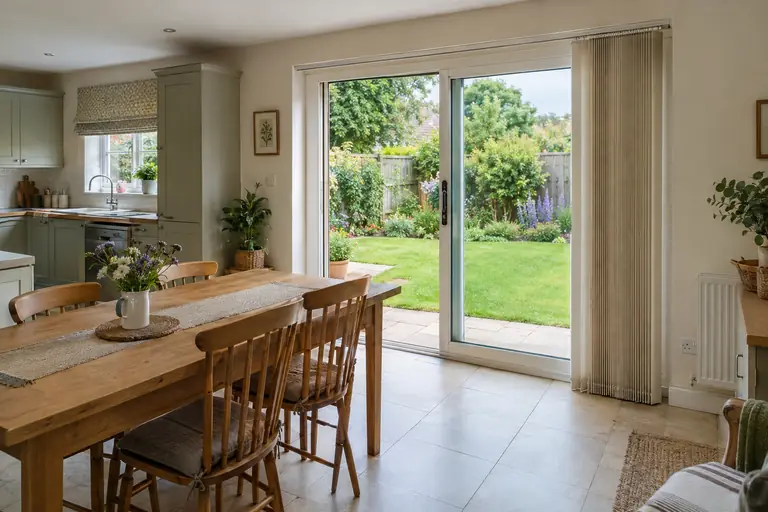
Open-plan kitchens, diners and living rooms often have both kinds of glass: ordinary windows on one wall and a patio door or a set of bi-folds on another. You do not have to choose one blind for the whole room.
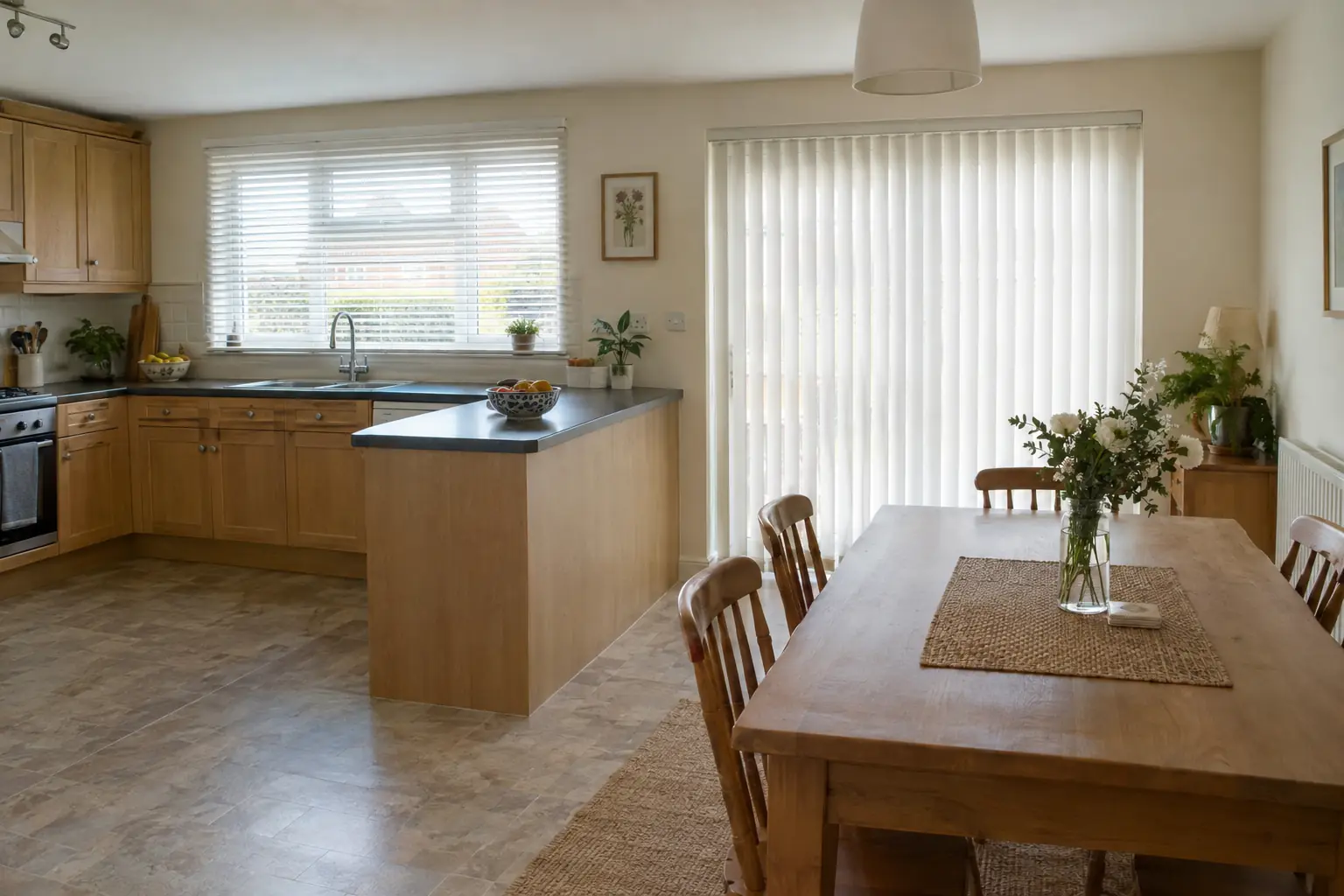
A venetian over the sink window and a vertical across the garden door is a common and sensible pairing. The venetian tilts to hide the sink from the street and wipes clean; the vertical draws clear of the door and angles against the evening sun. Choose them in the same colour, or in colours from the same family, and the room reads as one scheme even though the slats run in different directions.
A few details help them sit together. Keep the headrails at a similar height where the windows allow, so the top line of the blinds is consistent across the room. Choose matt finishes for both, or gloss for both, rather than mixing. If the venetian is faux wood, pick a vertical fabric with a warm, natural tone rather than a cool grey so the materials do not fight.
Your advisor measures every opening on its own and can hold samples of both against the window and the door on the same visit, so you see how they look together before you order.
Side by side
Slats
- Venetian blind
- Horizontal slats on ladder cords
- Vertical blind
- Vertical louvres hanging from a headrail
How it opens
- Venetian blind
- Raises to a stack at the top
- Vertical blind
- Draws to a stack at the side
Best window shape
- Venetian blind
- Taller than wide, or roughly square
- Vertical blind
- Much wider than tall, and doors
Doors
- Venetian blind
- Must be raised to use the door
- Vertical blind
- Draws clear so you walk straight through
Light control
- Venetian blind
- Tilts light up or down; strong against glare and street views
- Vertical blind
- Angles light sideways; strong against low sun from the side
Materials
- Venetian blind
- Aluminium, faux wood, real wood
- Vertical blind
- Fabric, wipeable and PVC louvres, blackout louvres
Wet rooms
- Venetian blind
- Aluminium and faux wood cope with steam
- Vertical blind
- Wipeable and PVC louvres suit kitchens
Dust
- Venetian blind
- Settles on every slat; dust regularly
- Vertical blind
- Much less settles on hanging louvres
Repairs
- Venetian blind
- Wands, cords and brackets replaced as parts
- Vertical blind
- Single louvres, clips, weights and chains replaced as parts