The short answer
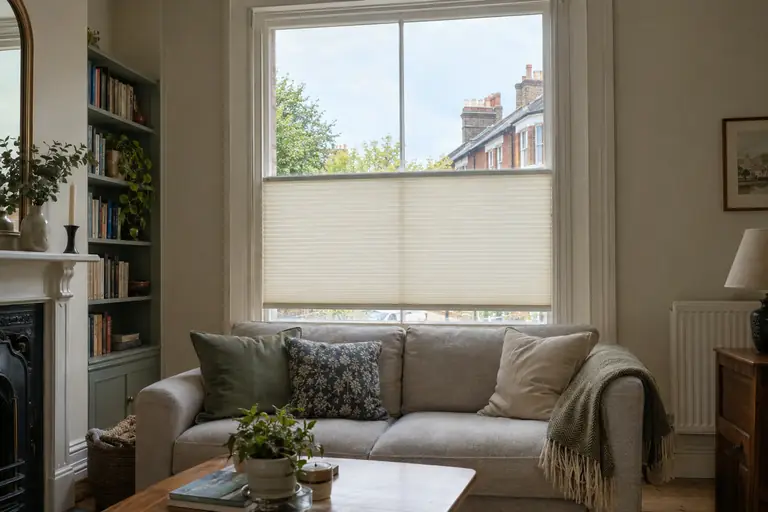
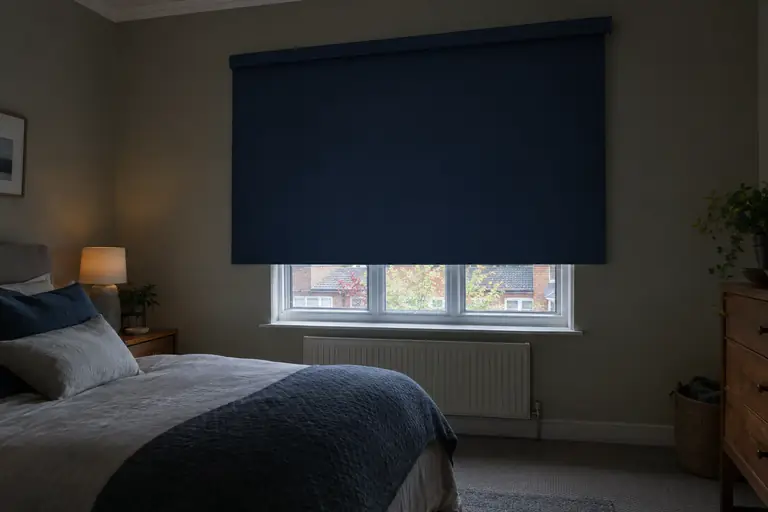
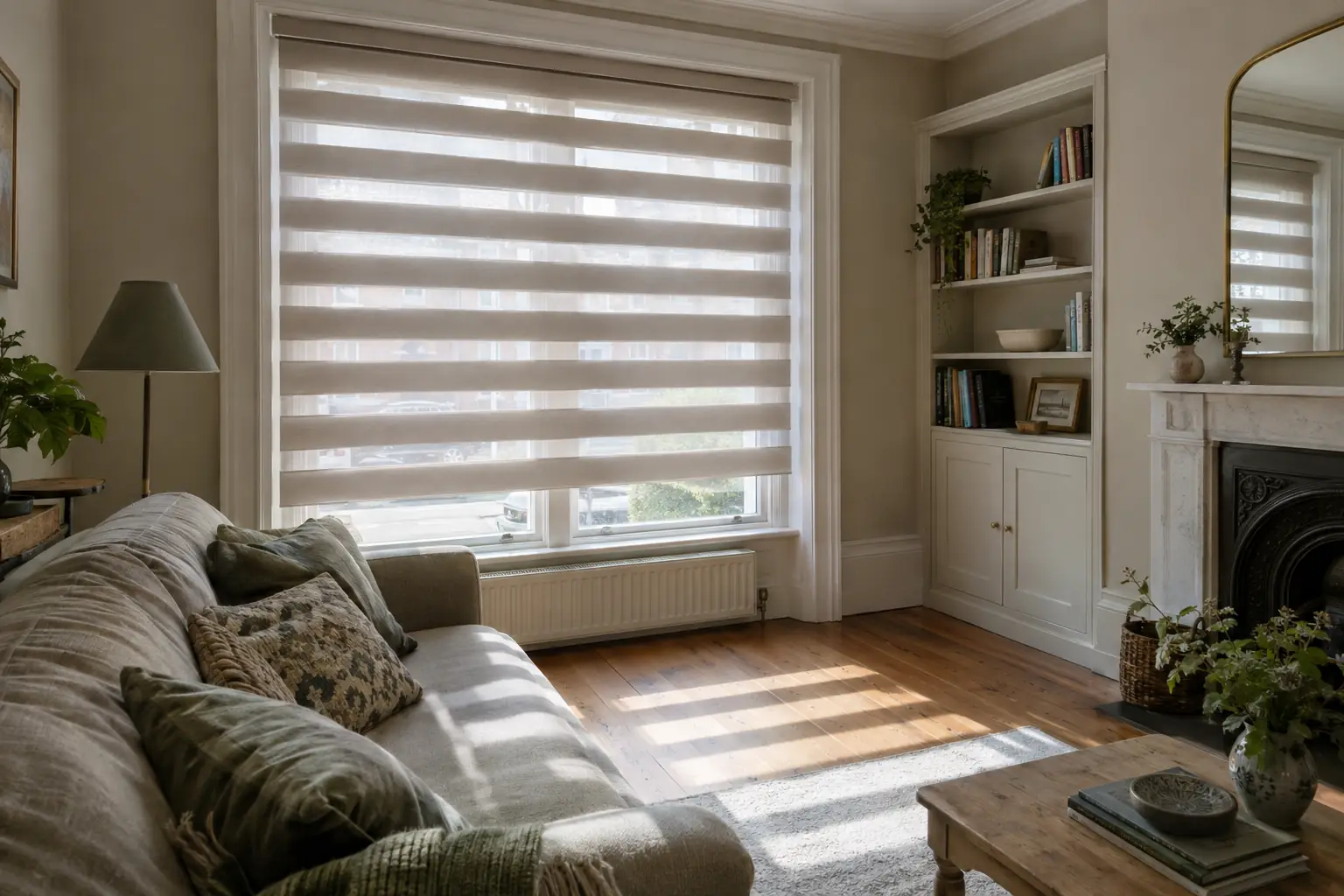
Day and night blinds, also sold as vision, zebra or transition blinds, run two layers of fabric with alternating sheer and solid bands over a single roller. Line up the sheer bands and you get filtered daylight and the view; offset them and the solid bands close the window. They suit front rooms, home offices and street-facing windows used by day and in the evening. They are not blackout, so a bedroom that needs darkness wants a blackout roller or roman.
- Two layers of banded fabric slide past each other: aligned for light and a view, offset for cover.
- A short movement of the control takes the blind from open to closed without raising it.
- With lamps on inside, aligned sheer bands show movement, so close the bands at dusk.
- Not blackout: light reads through where the bands meet, even on darker fabrics.
- A tidier alternative to a roller and a voile, fitted in one headrail.
How the bands line up
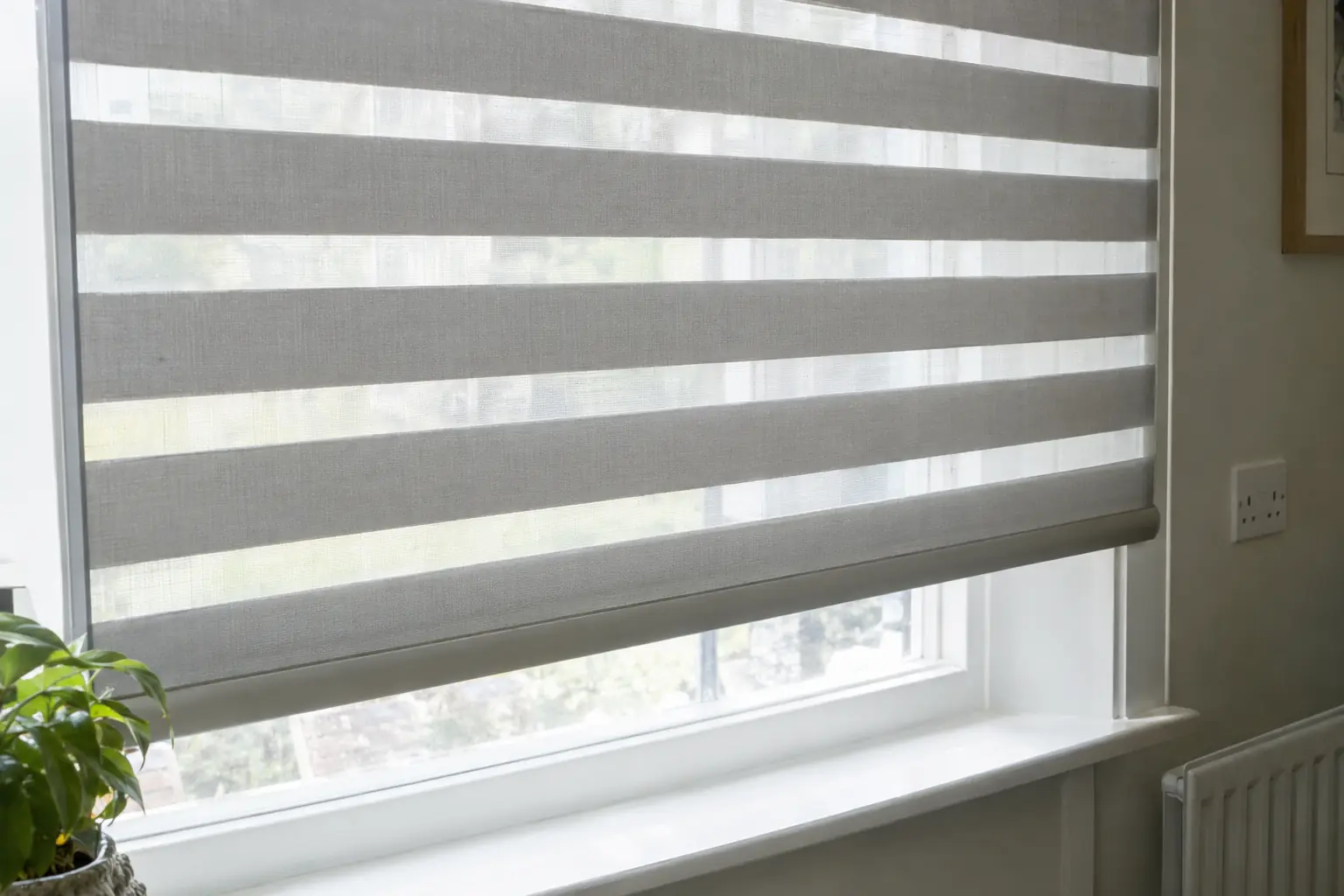
A day and night blind looks like a roller from across the room, but the fabric is made differently. It is one continuous loop of material that runs down the front of the blind, round the bottom bar and back up behind, so there are always two layers in front of the glass. Across that fabric run alternating horizontal bands: a sheer band you can see through, then a solid band you cannot, repeated from top to bottom.
When you move the control, the front layer travels one way and the back layer the other, so the bands slide past each other. Line up sheer over sheer and solid over solid, and the window shows as stripes of view and stripes of fabric: open, but softened. Move a little further and each solid band covers the sheer band behind it, and the blind reads as closed. Keep going and the whole blind rolls up like an ordinary roller.
The useful part is the in-between. With the bands partly offset, you get a finer screen that takes the glare and most of the sightline while still letting daylight into the room. Because the change from open to closed is a short movement, it is quick to adjust through the day, which is the whole point of the blind.
What you see, and what the street sees
By day, with the sheer bands aligned, you look out through stripes of fine fabric and the room behind the glass stays fairly private. Outside is brighter than inside, so passers-by see mostly the blind. Offset the bands a little and privacy increases while the light stays soft.
After dark the balance flips. With the lamps on inside, the room is the bright side, and the sheer bands show shapes and movement to anyone on the pavement, in the way any sheer fabric does. That is why the evening habit with a day and night blind is to close the bands when the lights go on. Closed, the solid bands overlap the sheer ones and the room is covered.
Even closed, a day and night blind is not a sealed panel. Thin lines of light read through where the bands meet, which is fine for privacy but worth knowing if you are hoping for a dark room.
The striped light is part of the look. On a sunny day, partly offset bands throw soft horizontal lines across the floor and walls. Some people love it; some find it busy in a small room. Seeing a sample against your own window on a bright afternoon is the best way to find out which you are.
Not a blackout blind, and what darker versions do
The most common mistake with day and night blinds is buying one for a bedroom and expecting it to be dark. Even with the solid bands closed, light passes where the bands meet, so the room is dimmed rather than darkened.
Some day and night ranges use a blackout fabric for the solid bands. Closed, they are noticeably darker than a standard version and good for a room you want dim in the evening, such as a snug or a room with a television. They still let light through along the joins between bands, so they are not a substitute for a blackout roller in a bedroom that needs to be properly dark.
If you like the idea of a day and night blind in a bedroom for daytime privacy, the answer is usually to pair it with lined curtains that you draw at night, or to choose a blackout roller or roman instead and accept that it is either up or down. Your advisor will be straight with you about which will actually give you the room you want, and can hold samples of both against the window.
Day and night blind or a roller with a voile
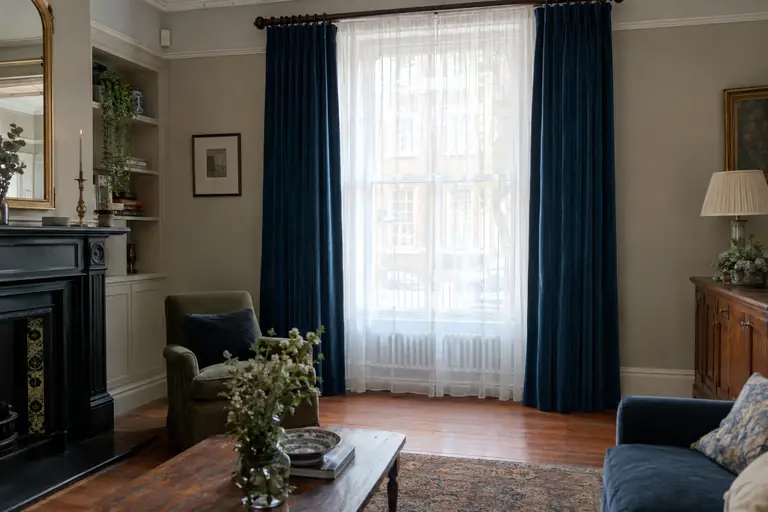
The traditional way to get daytime privacy with a view, and full cover at night, is two layers: a voile or sheer curtain for the day, and a roller, roman or lined curtains for the evening. A day and night blind puts both jobs into one headrail. Which is better depends on the room.
A voile is softer. It hangs in loose folds, moves in a breeze and gives a gentle, even haze across the whole window, with no stripes. It needs a pole or track and space either side of the window, and it has to come down for cleaning now and then. Paired with a blackout roller, it can give you a genuinely dark room at night, which a day and night blind cannot.
A day and night blind is tidier. It sits in the recess or on the wall like a roller, there is nothing to draw across and nothing hanging to the floor, and switching between open and closed is a small movement rather than drawing one layer and lowering another. It suits modern rooms, bay windows with little space for curtains, and windows behind furniture.
If you cannot decide, ask your advisor to bring samples of both, and look at them at dusk rather than in the middle of the day.
Rooms and windows that suit them
Day and night blinds are at their best in rooms used through the whole day, facing a street or a neighbour.
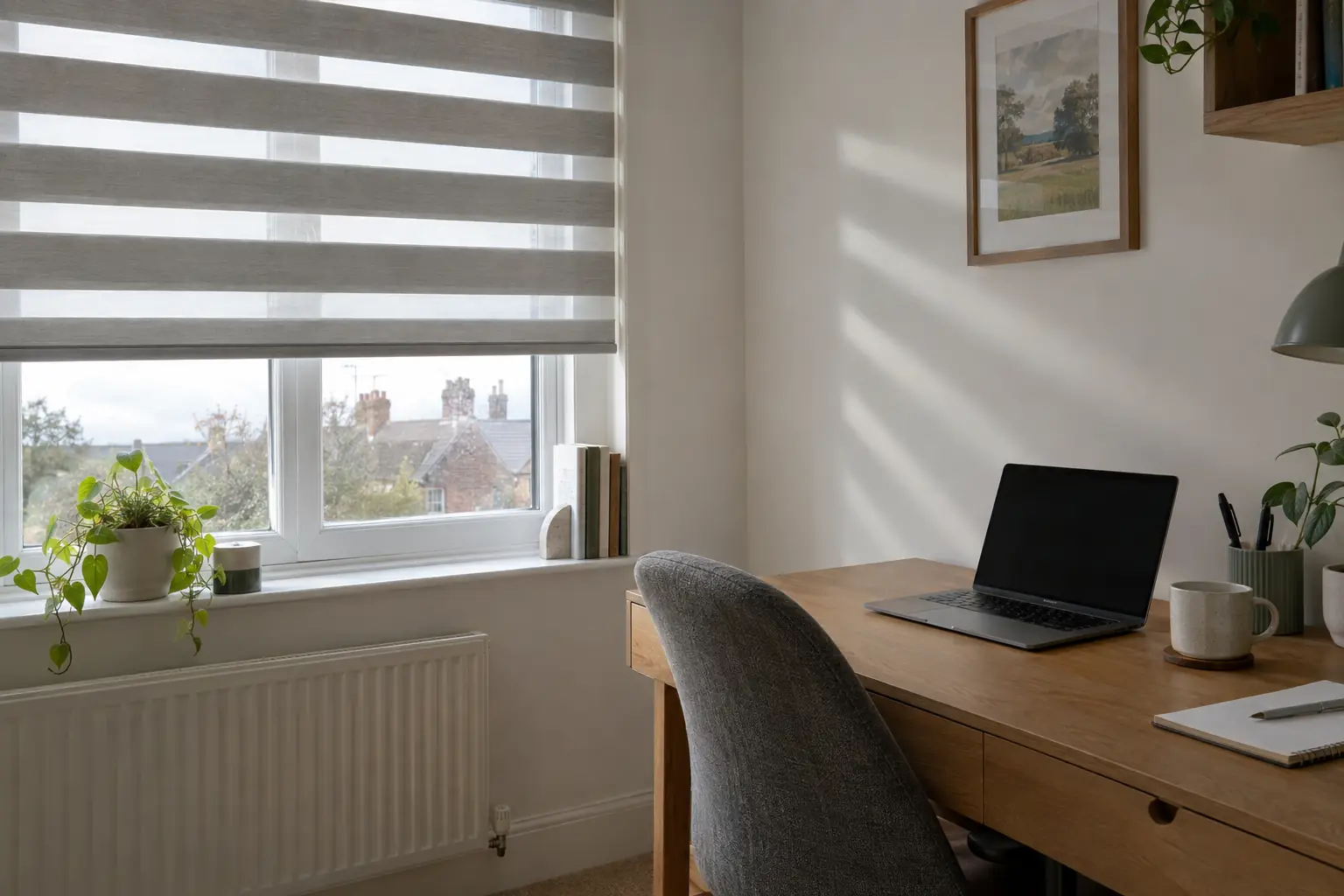
A front living room is the classic case: bright and open by day, closed at dusk before the lamps go on. A home office is another, because partly offset bands take the glare off a screen without shutting out the daylight, and closing them fully is quick when the sun comes round. Dining rooms and kitchen-diners that look onto a garden shared with neighbours suit them too.
Bay windows need a little thought. Each window in the bay has its own blind, and the look depends on the bands lining up across all of them. If you raise and lower them by hand, they will often sit at slightly different positions. Some day and night ranges come in motorised versions, and blinds can be grouped so a bay moves together, which helps them finish level.
They are less suited to bedrooms that need darkness, for the reasons above, and to doors you walk through, where any blind that has to be raised fully to get out is a nuisance.
Controls, safety and cleaning
Most manual day and night blinds are worked with a looped chain at one side, the same as a roller. Every chained blind we supply comes with the child-safety devices required by UK regulations, and our fitter puts them in and shows you how they work. In a child's room we would usually point you towards a cordless or motorised option instead.
Motorised versions are worth considering for a bay, a high window, or a room where the blind moves several times a day. The motor carries the same 1-year guarantee as the blind.
Cleaning is simple, because the fabric is flat. Lower the blind and dust both faces gently with a soft brush or a dry cloth. Sponge a mark lightly with a barely damp cloth and let it dry fully before rolling the blind up. Never soak it, and do not try to separate the two layers to clean between them.
Fitting is the same as a roller: inside the recess for a built-in look, or on the wall over it to cover the frame. The blind needs a little more depth than a plain roller, because of the loop of fabric, so your advisor will check the reveal and the handles when measuring.
Pros and cons
In its favour
- One blind covers daytime privacy with a view and proper cover in the evening
- A short movement of the control takes it from open to closed
- Tidy and modern, sitting in the recess like a roller
- Rolls up out of the way when you want the window clear
- Some ranges come in motorised versions
Worth knowing
- Not blackout, even with the solid bands closed
- Thin lines of light show where the bands meet
- The striped look and striped light can feel busy in a small or period room
- Chain-operated versions need a child-safety device fitted and used
Room by room
- Front living roomA great fitSheer bands by day keep the view and the privacy; close them at dusk before the lamps go on.
- Home officeA great fitPartly offset bands take glare off a screen without shutting out the daylight.
- Ground-floor flat facing the streetA great fitPrivacy from passers-by without living behind a closed blind all day.
- Dining room or kitchen-dinerWorks wellSoft filtered light for daytime and full cover for evening meals.
- Bay windowWorks wellEach window gets its own blind; motorised versions grouped together help them finish level.
- BedroomThink twiceLight passes where the bands meet, so choose blackout or add lined curtains for sleep.