The short answer
Choose honeycomb when warmth is the priority: the air trapped in each cell makes it warmer than a single-layer pleat or a thermal roller, and the difference shows most on single glazing, north-facing rooms and large areas of glass. Choose pleated when you want the slimmest, crispest blind, often a wider choice of fabrics, or reflective backings for sunny conservatory glass. Both stack small and suit shaped and awkward windows. Your advisor can hold both against the window.
- Pleated is a single folded layer; honeycomb is two layers joined into air-filled cells.
- Honeycomb is the warmer of the two, most noticeably on single glazing and cold rooms.
- Pleated is slimmer and crisper, with reflective backings for sunny glass.
- On a honeycomb, the cords run hidden inside the cells; on a pleated blind they show through the pleats.
- Both stack small and suit awkward windows; pleated blinds also come in perfect fit versions for uPVC windows.
One layer or two: what is actually different
Look at a pleated blind edge on and you see a single sheet of fabric folded into a zigzag, like a paper fan. Each crease is set into the fabric, so the blind folds back into the same pleats every time it is raised. Cords run from the headrail down through small holes in the pleats to the bottom rail, and pulling them gathers the fabric into a neat stack.
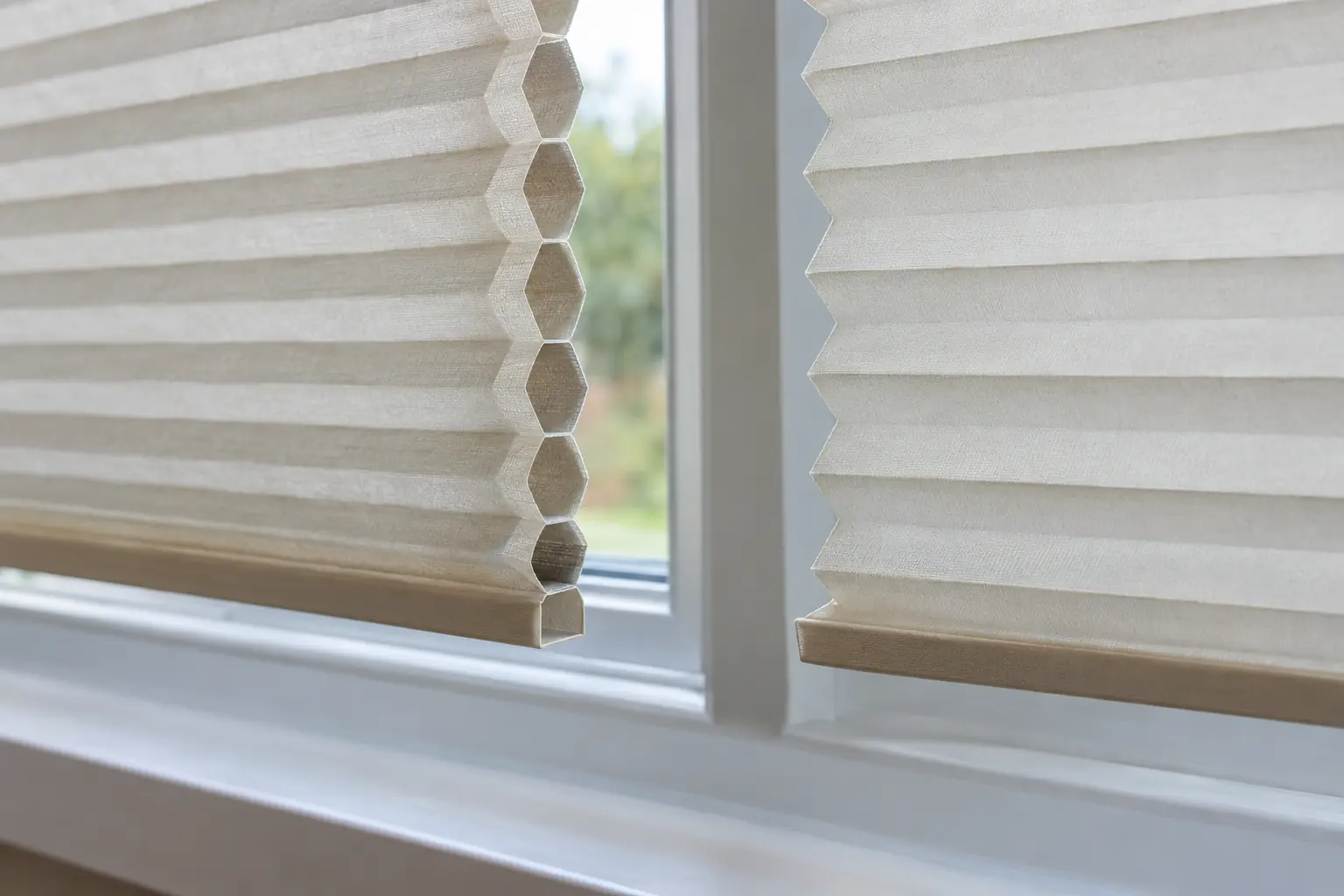
Look at a honeycomb blind edge on and you see something different: a row of closed cells, each one a flattened hexagon, made by joining two layers of pleated fabric together. From the room it looks like a pleated blind with a smoother, fuller face. The cells are where the difference lies, because each one traps a pocket of air between the room and the glass.
That single change affects most of what follows. It makes a honeycomb warmer, a little thicker and smoother to look at, and it lets the cords run inside the cells rather than through the face of the fabric. A pleated blind, meanwhile, stays the slimmer and crisper of the two, with a sharper, more tailored fold.
From across the room, most visitors will not know which you chose. You will, on the first cold evening.
Warmth: why the cells matter
Air that cannot move is a good insulator, and that is all a honeycomb cell is: a pocket of still air held in fabric. When the blind is down, a row of those pockets sits between the room and the window, and heat has to work its way through them. A single-layer pleat has no pocket of its own, so it relies on the air trapped between the blind and the glass.
When Historic England looked at heat loss through traditional windows, it found that curtains, interior shutters and blinds all made a significant difference, and that fitting cellular blinds helped even more. Cellular is simply another name for honeycomb.
Where you feel the difference depends on the window. On single glazing, in a north-facing bedroom, in a cold stone cottage or in a room with a lot of glass, a honeycomb blind is noticeably warmer to sit beside. On modern double glazing the difference is smaller, and on triple glazing you will feel much less. Either blind only helps when it is down, so the habit of closing it at dusk in winter matters as much as the choice.
A pleated blind can still help with heat in a different way: some pleated fabrics have a reflective backing, which turns back summer sun on a south- or west-facing window or a conservatory wall.
Light, privacy and darkness
Both types come in fabrics that range from light-filtering to dimout and blackout, so you can have either in most rooms. The way they handle light is slightly different, though.
A light-filtering pleated blind is a single layer, so it glows evenly and lets a soft light through, and some weaves let you see shapes outside. A honeycomb in a similar fabric passes the light through two layers with air between them, which diffuses it further and tends to give a softer, more even glow with more privacy after dark.
For darkness, neither is quite as dark as a blackout roller fitted over the recess. On a pleated blind the cords pass through small holes in each pleat; on a honeycomb they pass through the cells. With blackout fabric, those holes show as small points of light in a dark room. Blackout honeycomb fabrics still dim a room very well, and some people never notice the pinpricks, but if the room is a nursery or a shift worker's bedroom, it is worth seeing both against the window before you decide.
As with any blind fitted inside a recess, a little light will also come round the edges. Your advisor will tell you on the day what the window allows.
Looks and the stack
The pleated blind is the crisper of the two. Its sharp folds catch the light and give a fine horizontal texture across the window, and the slim profile suits modern rooms and shallow reveals. The cords are visible as thin vertical lines running through the pleats, which most people stop noticing but some dislike on a plain fabric.
The honeycomb is smoother. From the room you see a row of soft, rounded pleats with no cord holes on the face, because the cords run inside the cells. It looks fuller and slightly more substantial, closer to a fabric blind than a paper-crisp one, and it suits bedrooms and period rooms where a softer look sits better.
Both stack down to very little when raised. A pleated blind folds into a slim bundle under a small headrail, and a honeycomb is only a touch deeper. Either keeps more of the glass clear than a roman, and neither has the visible roll of a roller. That small stack is one of the main reasons people choose them for windows where there is not much room above the glass.
If you have several windows in one room, you can use both: honeycomb on the cold north side, pleated on the sunny south side, in colours that match.
Conservatories, doors and awkward windows
Awkward windows are where both blinds earn their place, but they do not reach them equally, and that is often what settles the choice.
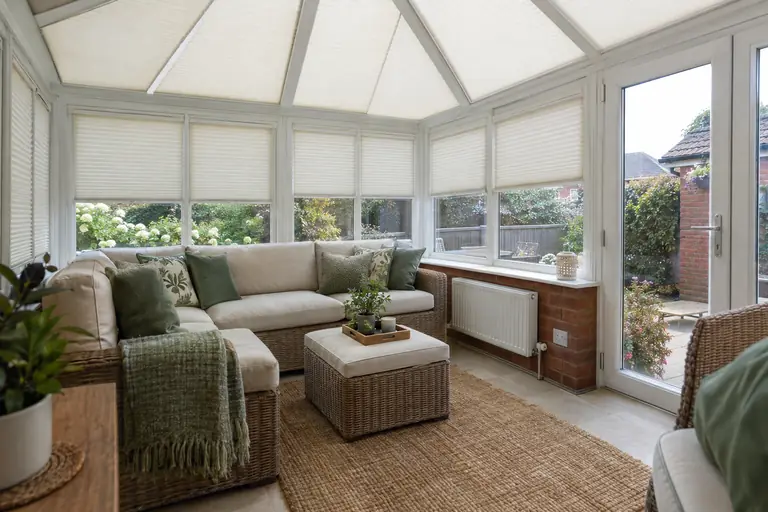
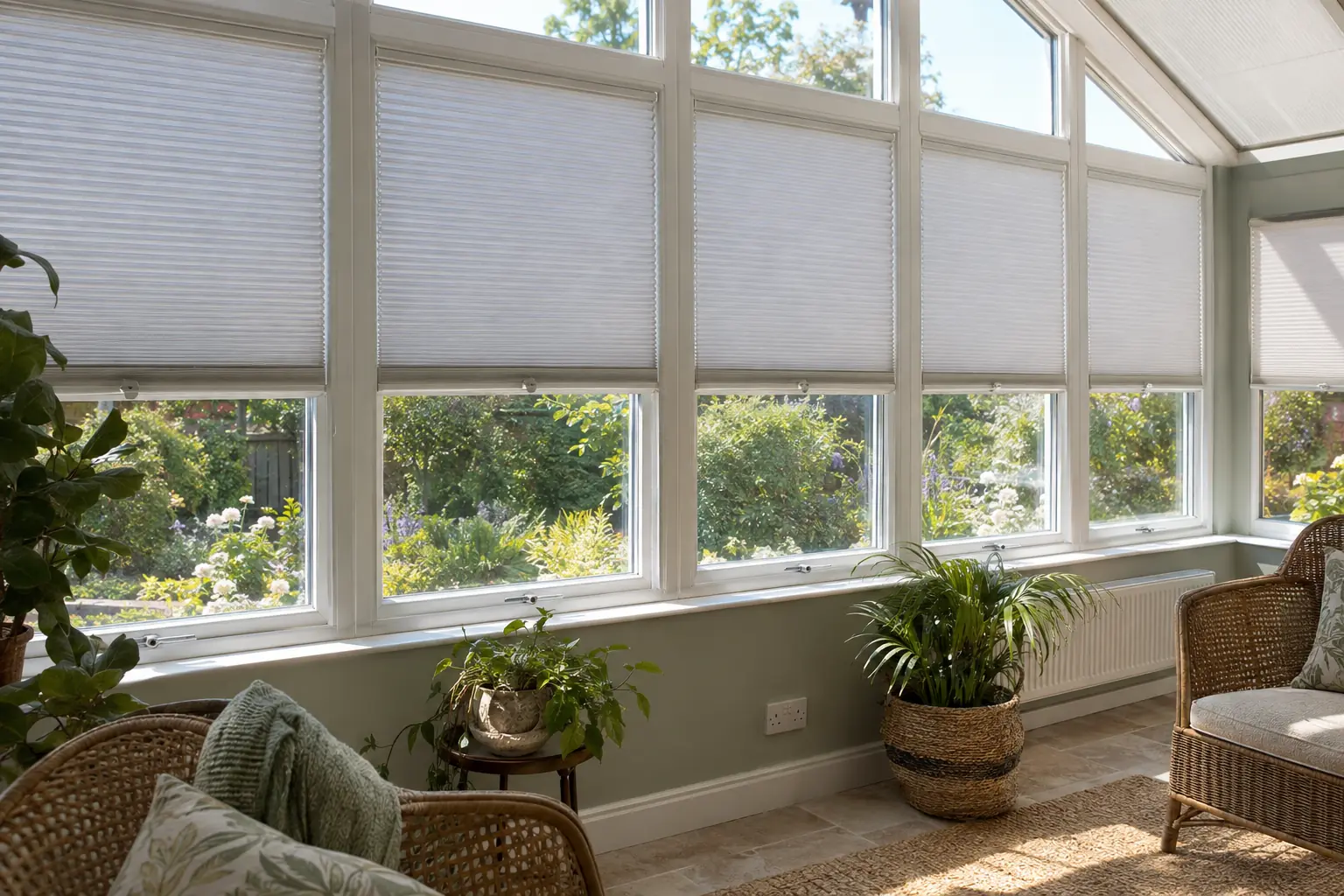
Conservatory side windows usually go to pleated. A wall of glass in full sun wants a fabric that turns the heat back, which is what reflective pleated backings are made for. The exception is a conservatory you use through the winter, or a cold end wall facing north, where honeycomb's trapped air is worth the slightly deeper stack.
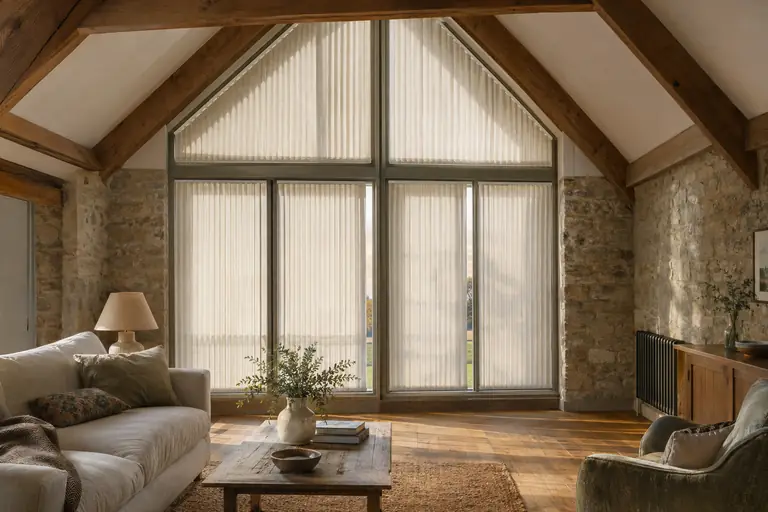
Shaped windows lean the same way. Angled, arched and triangular pleated blinds are an established answer, while honeycomb is possible on some shapes only, so if a gable window is also a cold one, ask your advisor what can be made before you settle on a fabric.
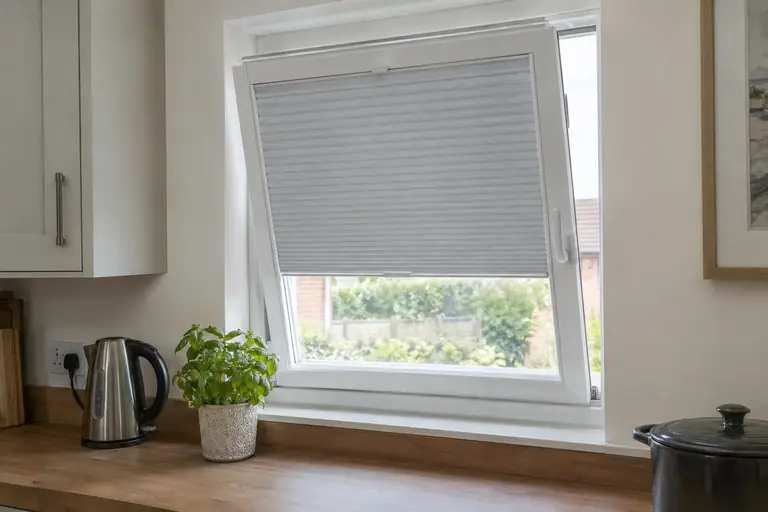
On doors and tilt and turn windows the two are level. Both can be held taut between rails so they move with the glass, and both keep the stack small on a door you use every day.
Our buying guide to pleated and honeycomb blinds covers the fitting options, including perfect fit frames, in more detail.
How to decide
If you are still torn, four questions usually settle it.
Is the room cold? If you notice the window on a winter evening, if it is single glazed, north-facing or a large area of glass, honeycomb is worth it. If the room is warm enough already, the extra warmth matters less.
Is the window hot rather than cold? For a south- or west-facing conservatory wall or a sunny landing, a pleated blind with a reflective backing is made for the job.
Is the window an awkward shape? Angled, arched or triangular windows are more likely to be possible in pleated, so start there and ask about honeycomb.
What do you want to see? If you prefer a crisp, slim, tailored look, pleated; if you prefer a smoother, softer face with no cord holes showing, honeycomb.
The simplest way to answer the last question is to see both at the window itself. Order up to five free samples, tape a pleated and a honeycomb one side by side on the glass of the room you are dressing, and look at them from your usual chair at dusk, when the difference in glow is easiest to judge. Or book a free home appointment, where your advisor holds both against every window in the room, measures each one and leaves a written quote, itemised per window, with fitting included.
Side by side
How it is made
- Pleated
- A single sheet of fabric set into crisp folds
- Honeycomb
- Two layers joined into cells that trap a pocket of air
Warmth
- Pleated
- Some help from backed or reflective fabrics
- Honeycomb
- Warmer than a single-layer pleat, thanks to the trapped air
Summer sun
- Pleated
- Reflective backings turn back heat on sunny glass
- Honeycomb
- The cells slow heat coming in as well as going out
Look
- Pleated
- Crisp, slim and tailored
- Honeycomb
- Smoother and fuller, a little thicker
Cords
- Pleated
- Visible through small holes in the pleats
- Honeycomb
- Hidden inside the cells
Darkness with blackout fabric
- Pleated
- Dim, with pinpricks of light at the cord holes
- Honeycomb
- Dim, with pinpricks where the cords pass through
Stack when raised
- Pleated
- Very slim
- Honeycomb
- Slim, a touch deeper than pleated
Shaped windows
- Pleated
- Angled, arched and triangular windows are possible
- Honeycomb
- Ask your advisor what can be made for your shape
Best for
- Pleated
- Conservatory side glass, shaped windows, shallow reveals
- Honeycomb
- Cold rooms, single glazing, north-facing bedrooms