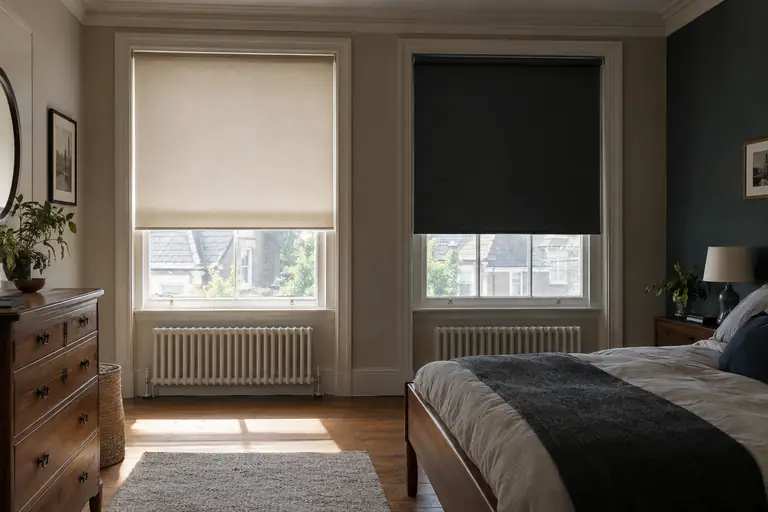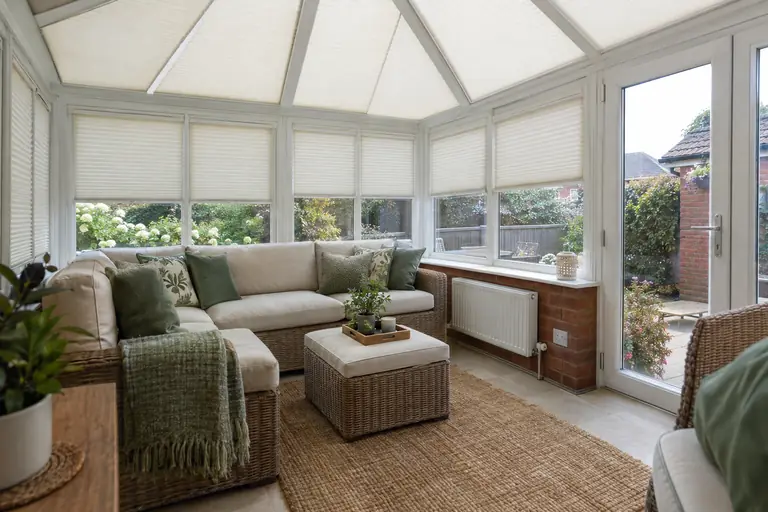
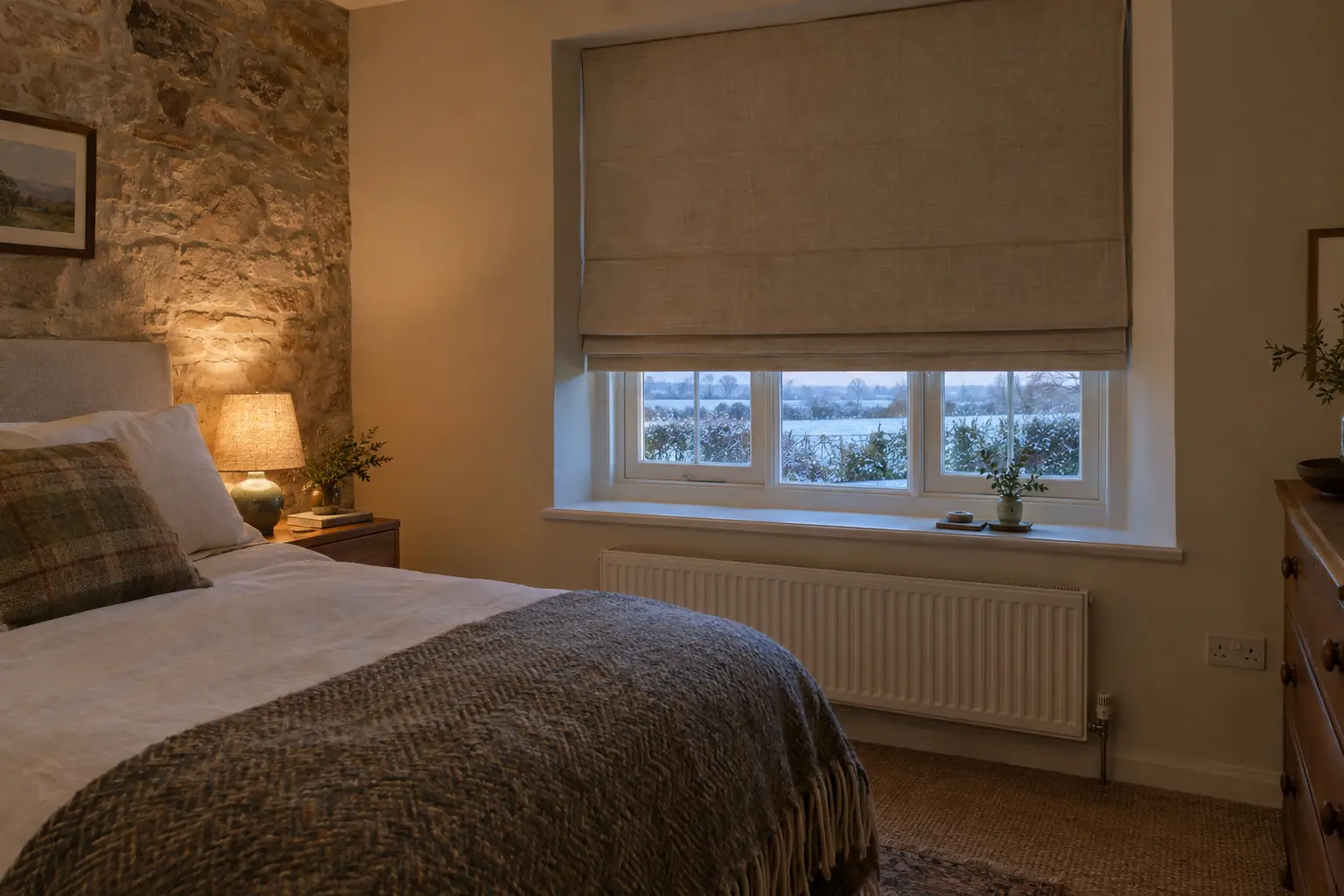
The short answer
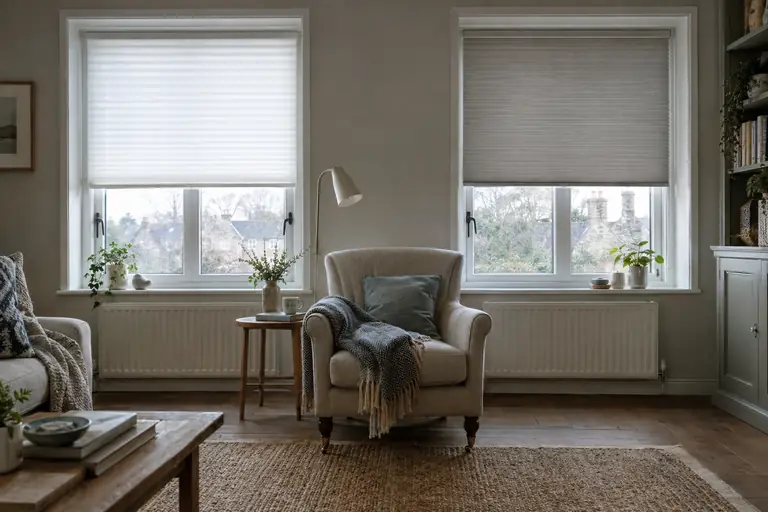
A thermal blind uses a fabric woven or backed to reflect heat rather than absorb it, or, in a honeycomb blind, cells that trap a layer of air. Closed at dusk in winter, it slows the chill coming off the glass; closed on sunny windows by day in summer, it keeps some of the heat out. How closely it covers the glass matters as much as the fabric, and it will not fix a draughty frame. Your advisor can show you both kinds.
- Thermal means a reflective or insulating backing, or the trapped air of a honeycomb blind.
- In winter, close it at dusk; on a sunny winter day, open it and let the sun in.
- In summer, close it on sunny windows before the room heats up, not after.
- The closer it sits to the glass and the better it covers the edges, the more it helps.
- It slows heat through the glass but cannot seal a gap in the frame.
What makes a blind thermal
A thermal blind is one made to slow heat moving through the window, in either direction. There are two ways of doing it.
The first is the fabric. Thermal roller, roman and pleated fabrics are woven or backed with a layer that reflects heat rather than absorbing it. In winter, that extra layer slows the room's warmth on its way to the cold glass. In summer, it turns some of the sun's heat back through the window before it warms the room. On a roman blind, a thermal lining behind the face fabric does the same job.
The second is construction. A honeycomb blind is folded so that each pleat forms a sealed cell, and the air trapped in those cells slows heat passing through it. That is why honeycomb is warmer than a single-layer pleated blind. Our comparison of pleated and honeycomb blinds goes into the difference in detail.
What thermal does not mean is insulation in the sense of a wall, or a seal. A thermal blind is still a blind: it helps a great deal with the feel of a room near the window, but it is not a substitute for better glazing or for fixing a frame that lets the wind in.
Winter: where the warmth goes
On a cold evening you can often feel a window from across the room. The warm air touches the cold glass, cools, sinks and rolls across the floor, so the part of the room nearest the window feels chilly even when the radiator is on. The glass is also simply cold to be near, and you notice it most when you sit beside it.
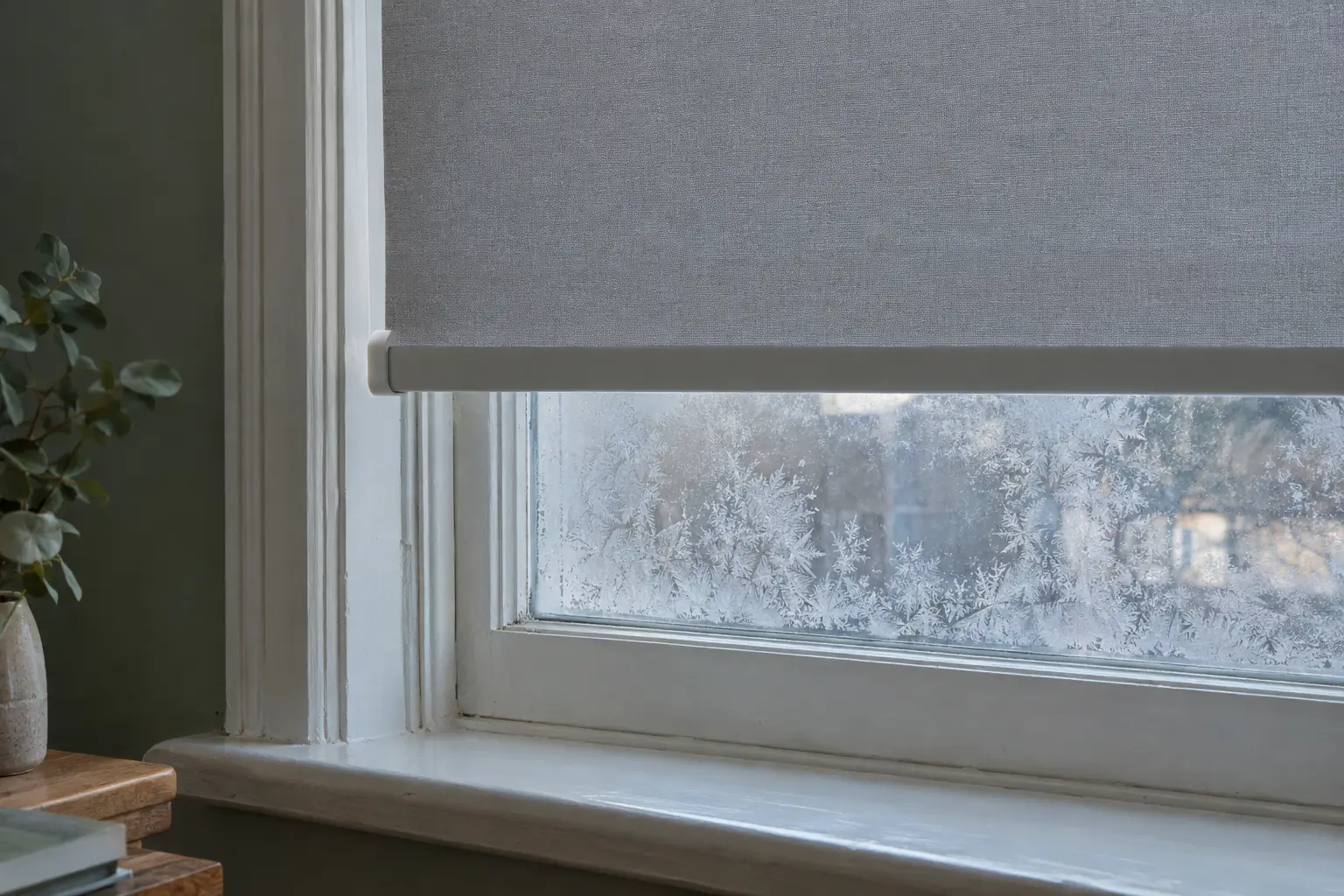
A closed blind puts a layer between the room and that cold surface. It holds a pocket of still air against the glass and slows the cold draught of air running off it. A thermal backing or a honeycomb's cells slow the heat further. The effect is largest on the coldest windows: single glazing, older frames, north-facing rooms and large areas of glass.
Historic England has studied how traditional windows lose heat, and its research found that curtains, interior shutters and blinds can reduce that loss significantly, with cellular blinds helping even more. The Energy Saving Trust puts heavy thermal curtains on its list of ways to reduce heat lost through windows. Neither gives a figure you could apply to your own house or bills, and we will not invent one.
The habit that matters most is timing. Close thermal blinds at dusk, when the glass starts to cool, rather than at bedtime.
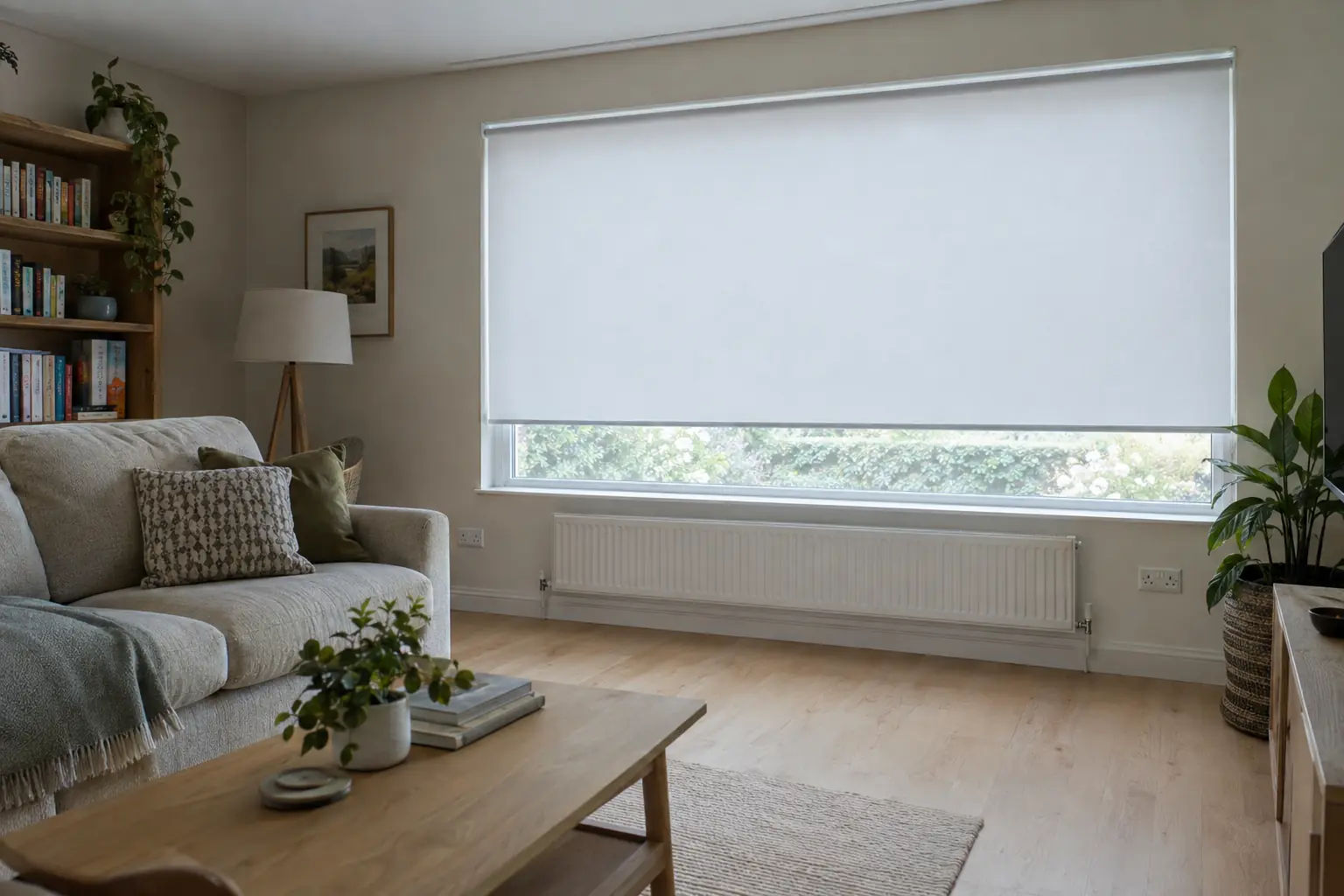
Summer: keeping the sun out
In summer the problem runs the other way. Sun coming through glass warms whatever it lands on, the floor, the sofa, the bed, and that heat stays in the room. Once it is in, a blind cannot take it out again, so the trick is to stop as much as possible getting in.
The UK Health Security Agency's advice for hot weather is to close blinds and curtains on windows exposed to direct sunlight during the day, and it lists large east-, west- or south-facing windows without shading, such as internal curtains and blinds, among the things that make a home more likely to overheat.
A thermal fabric with a reflective back is made for this: it turns some of the heat back through the glass instead of absorbing it and warming the room. Close it before the sun reaches the window rather than when the room is already hot. East-facing rooms need it in the morning, west-facing rooms in the afternoon and evening, and south-facing rooms through the middle of the day.
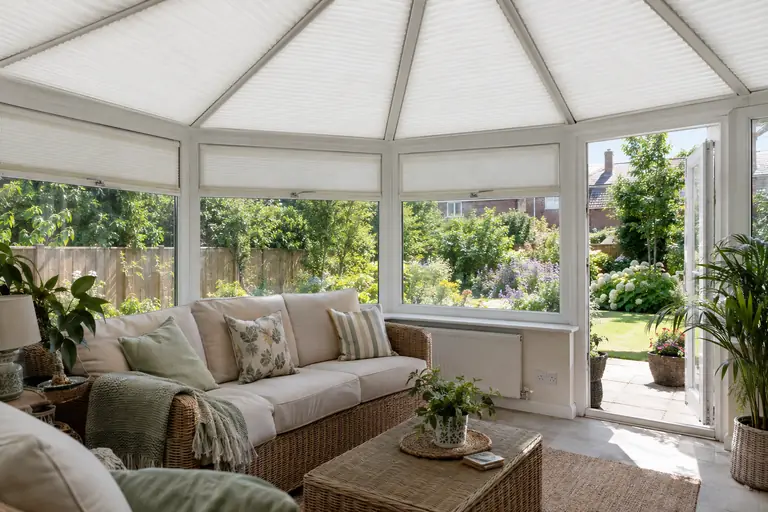
A blackout coating reflects some of the sun as well, which is why a blackout blind helps a hot bedroom, but a fabric made to handle heat will do more. On a conservatory roof, where the heat problem is at its worst, the blinds are a separate job, and our conservatory guide covers them.
Fit matters as much as fabric
A thermal blind works by holding a layer of still air against the glass. The more that air can circulate round the edges, the less it does. So the same fabric can perform quite differently depending on how it is fitted.
A blind inside the recess sits close to the glass, which is good, but it has a small gap down each side and over the top where air moves past it. A blind fixed on the wall over the recess covers the whole opening and the reveal, which cuts that movement at the sides. Perfect fit blinds, which sit in their own frame on the glass of a uPVC window, hold the fabric closest of all. Your advisor will look at each window and tell you which fit suits it.
Watch the radiator. Many British windows have one directly underneath. A blind or curtain that stops at the sill lets the radiator's heat rise into the room. One that hangs down in front of the radiator traps the warm air behind it and sends it up against the cold glass, which is the opposite of what you want. On a window with a radiator below, a blind that finishes at the sill is usually the better choice, leaving the heat to come into the room.
Which thermal blind to choose
Several types of blind can be thermal, and the right one depends on the room as much as the numbers.
A thermal roller is the simplest: one flat sheet with a backing, easy to live with and easy to fit over the recess for the best coverage. It suits bedrooms, living rooms and any room you heat regularly and want to keep that way.
A roman with a thermal lining gives you the look of a curtain fabric, with pattern and texture on the room side, and the lining doing the work behind it. It suits living rooms and bedrooms where a flat roller would feel too plain.
Pleated blinds come with reflective backings made for sunny glass, which is why they are the usual choice for conservatory side windows. They stack small and suit shaped windows too.
Honeycomb is warmer again, thanks to the air in its cells. It earns its place on single glazing, in a north-facing bedroom, a cold stone cottage or a room with a lot of glass. On modern triple glazing you will notice much less difference.
Thermal fabrics cost a little more than the plain equivalent, so they make most sense on the rooms you actually heat, or the ones that overheat.
What a thermal blind won't do
It is worth being clear about the limits, because a blind sold as the answer to the wrong problem is a disappointment.
A thermal blind will not stop a draught from a gap in the frame. It slows the cold air coming off the glass, which is what most people feel, but if air is getting in round a sash, under a door or through a failed seal, that is a job for the window, not the blind, and a blind bought to cure it would only disappoint.
It will not work while it is open. A thermal blind only helps when it is down, so it pays to use it deliberately: closed at dusk in winter, and closed on the sunny side of the house before the heat builds in summer. On a bright winter day, the opposite is true. Low winter sun through a south-facing window warms a room for nothing, so open the blinds and let it in.
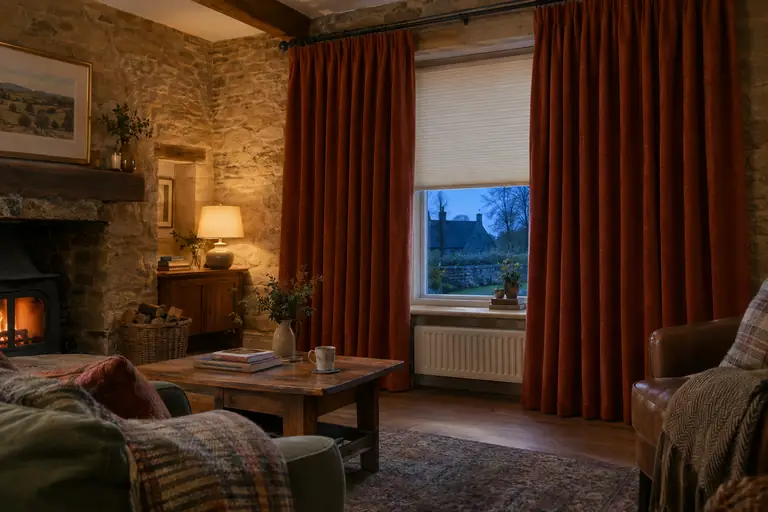
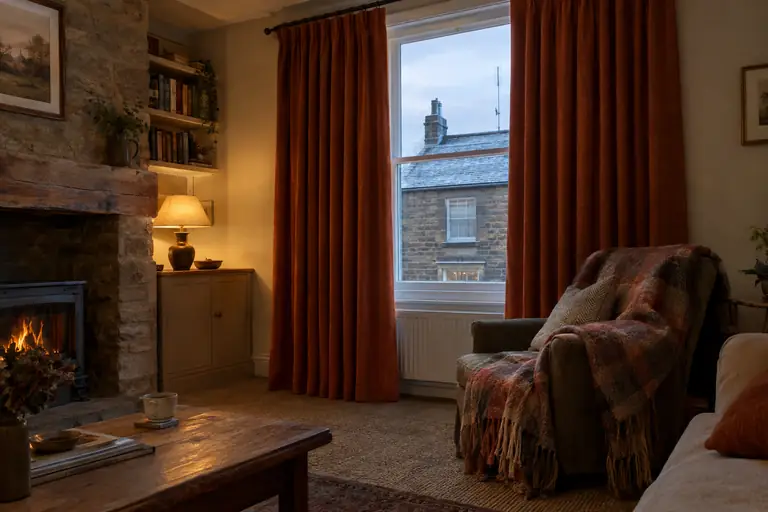
And it will not replace a layer you could add. A thermal blind in the recess with lined or interlined curtains outside it is warmer than either on its own, and it closes the edge gaps as well. Our guides to thermal curtains and to keeping a home warm cover that side of it.
Pros and cons
In its favour
- Slows the chill coming off cold glass on winter evenings
- Reflective backings turn back some summer sun on south- and west-facing windows
- Available on rollers, romans and pleated blinds, with honeycomb warmer again
- Makes the seat by the window a place you actually want to sit
- Works well layered with lined or interlined curtains
Worth knowing
- Will not seal a draughty frame or stand in for better glazing
- Only helps when it is closed, so it needs using at the right times
- The backing faces the glass, so the street sees the backing rather than your chosen colour
- Costs a little more than a plain equivalent
Room by room
- North-facing bedroomA great fitThe coldest glass in the house; a thermal or honeycomb blind closed at dusk makes the biggest difference.
- South- or west-facing living roomA great fitA reflective backing closed before the afternoon sun arrives takes the peak off a hot room.
- Room with single-glazed windowsA great fitSingle glazing loses the most heat, so a closely fitted thermal blind earns its keep there.
- Conservatory side windowsWorks wellPleated blinds with reflective backings suit side glass; the roof is a separate job.
- KitchenThink twiceCooking already warms the room; a wipeable fabric usually matters more than a thermal backing.
- Triple-glazed new buildThink twiceModern glazing already does much of the work, so you will notice far less difference.