The short answer
Choose vertical blinds for patio doors, sliding doors, bi-folds and windows much wider than they are tall. The louvres draw back to one side so nothing hangs in front of the handle, and they rotate to cut low sun from the east or west while keeping the view. Decide which end the stack sits on by how you use the door, choose fabric or wipeable louvres for the room, and remember a single damaged louvre is a part, not a new blind.
- Louvres draw sideways off the glass, so a door stays clear to walk through.
- Decide which end the stack sits at by watching how you use the door.
- Turning the louvres cuts low sun from the side while keeping the view straight out.
- Wipeable louvres suit kitchens and busy doors; blackout fabrics dim but do not seal a room.
- A damaged louvre can be replaced on its own, matched to the fabric already hanging.
Why verticals suit doors and wide glass
Every blind has to go somewhere when it is open. A roller or a venetian goes up, which is fine on a window you look through and awkward on a door you walk through: to step outside, you raise the whole blind, and on a wide door that is a lot of fabric or slats sitting across the top of the glass.
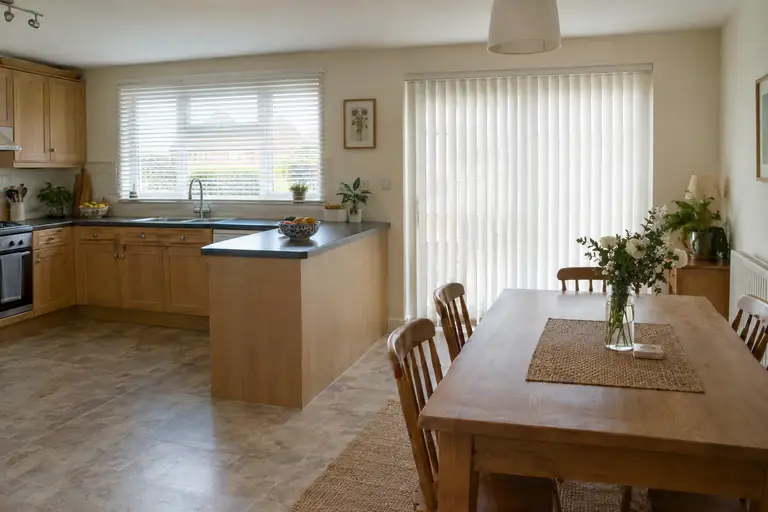
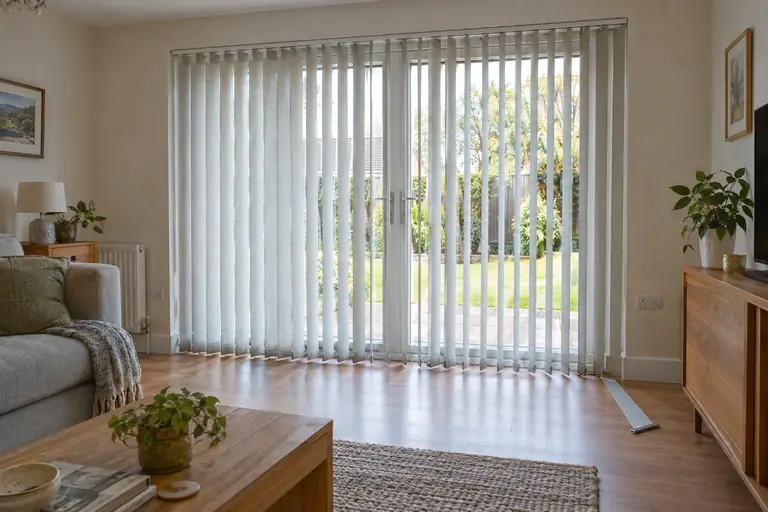
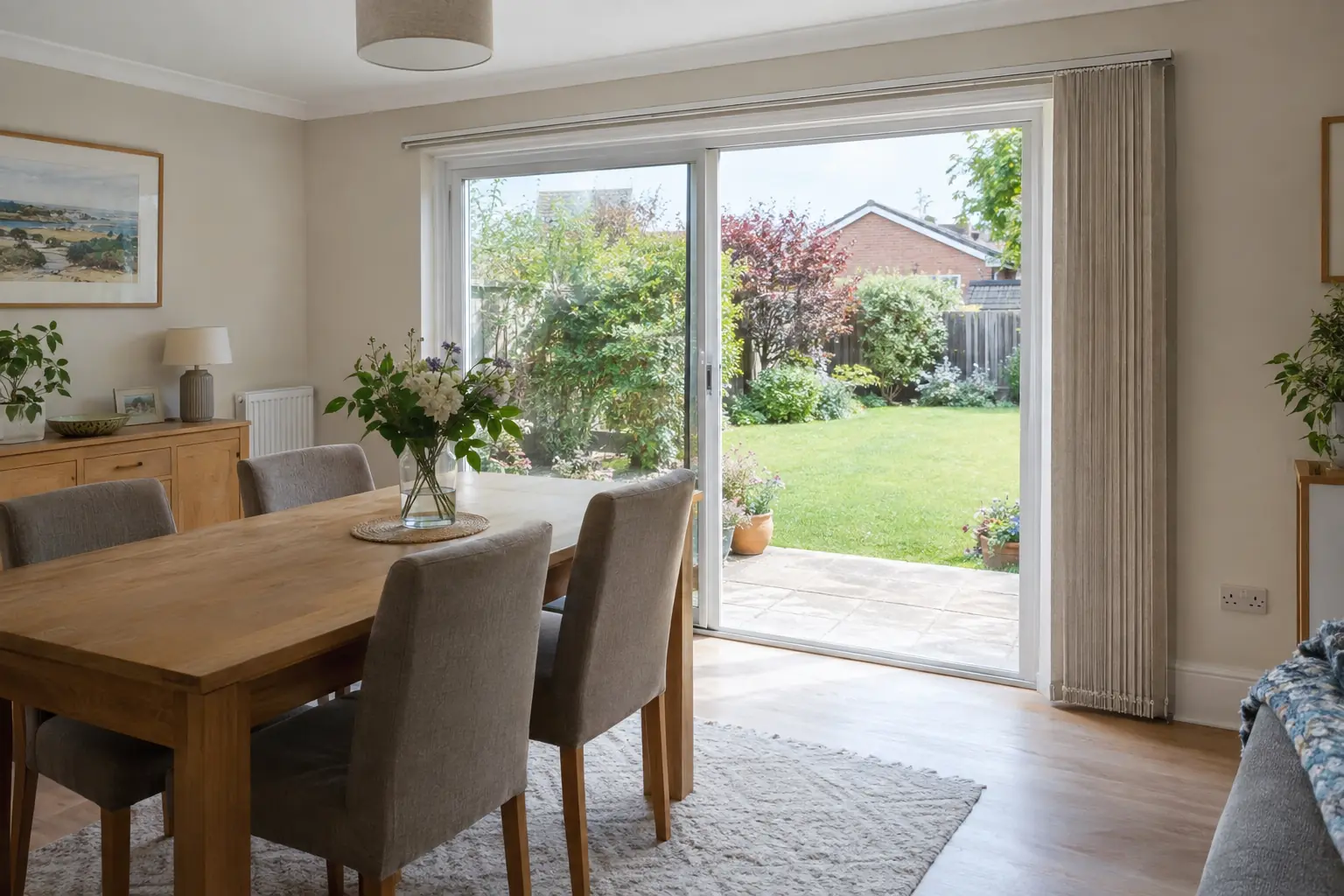
A vertical blind goes sideways. The louvres hang from a headrail and draw along it into a stack at one end, or at both ends, leaving the rest of the opening clear. On a patio or sliding door, the half you open can be completely clear while the other half still shades the room. Nobody has to duck under a raised blind, and nothing hangs in front of the handle.
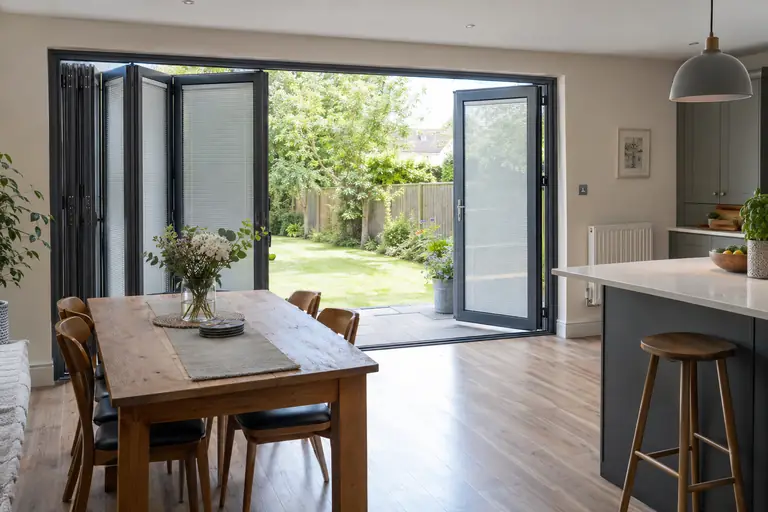
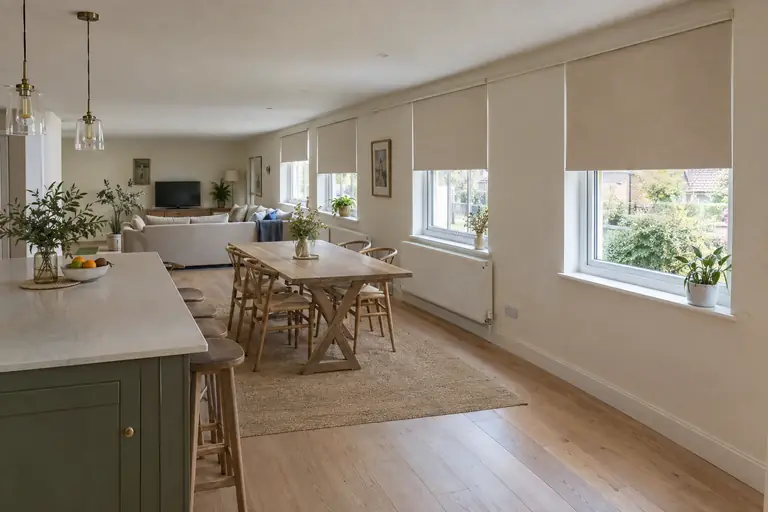
The same logic applies to a wide picture window or a run of glass across the back of an extension. One headrail can span a width that would need several rollers side by side, and the louvres give a continuous, even face across it. On a tall window, the vertical lines also make the glass look taller.
Where verticals are a weaker choice is a small, conventional window. There, a roller or a roman usually looks tidier and takes up less of the glass when it is open.
Stack direction: decide by how you use the door
When a vertical blind is open, the louvres gather into a stack, and that stack takes up some width of its own. Where it sits makes a real difference to how the blind lives with you.
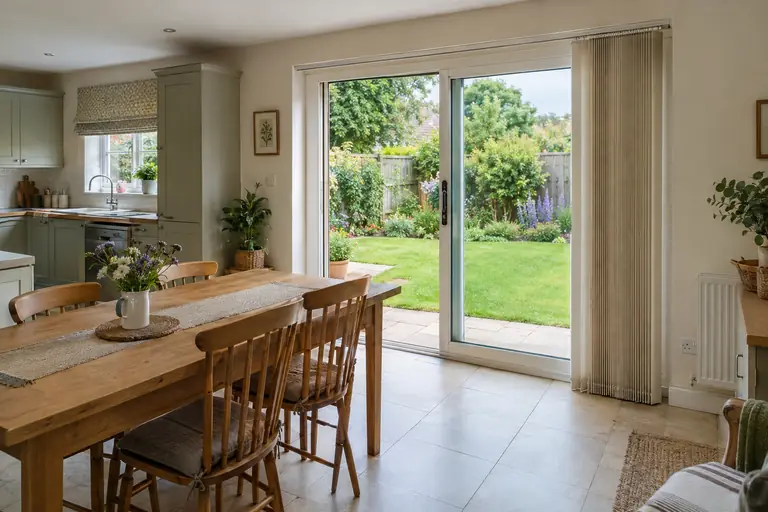
On a sliding patio door, the usual answer is to stack the louvres to the side of the fixed pane, so the pane that slides is completely clear. On a door that opens at one end, stack away from the handle. On a wide window with a view you care about, splitting the stack so the louvres part in the middle and gather at both ends keeps the centre of the view open. Your advisor will confirm on the day what the system allows for your window.
The headrail length matters as much as the direction. A headrail that runs a little past the frame lets the louvres gather on the wall beside the opening, so the open blind covers little or no glass and stays clear of the handle and any trickle vent. That depends on the space either side of the opening, which is one of the things the advisor measures.
Think about furniture too. A sofa or a dresser tight to one side of the door can decide the stack for you. Watch how you actually walk through the room for a day before you settle on it.
Louvre fabrics: soft, wipeable and blackout
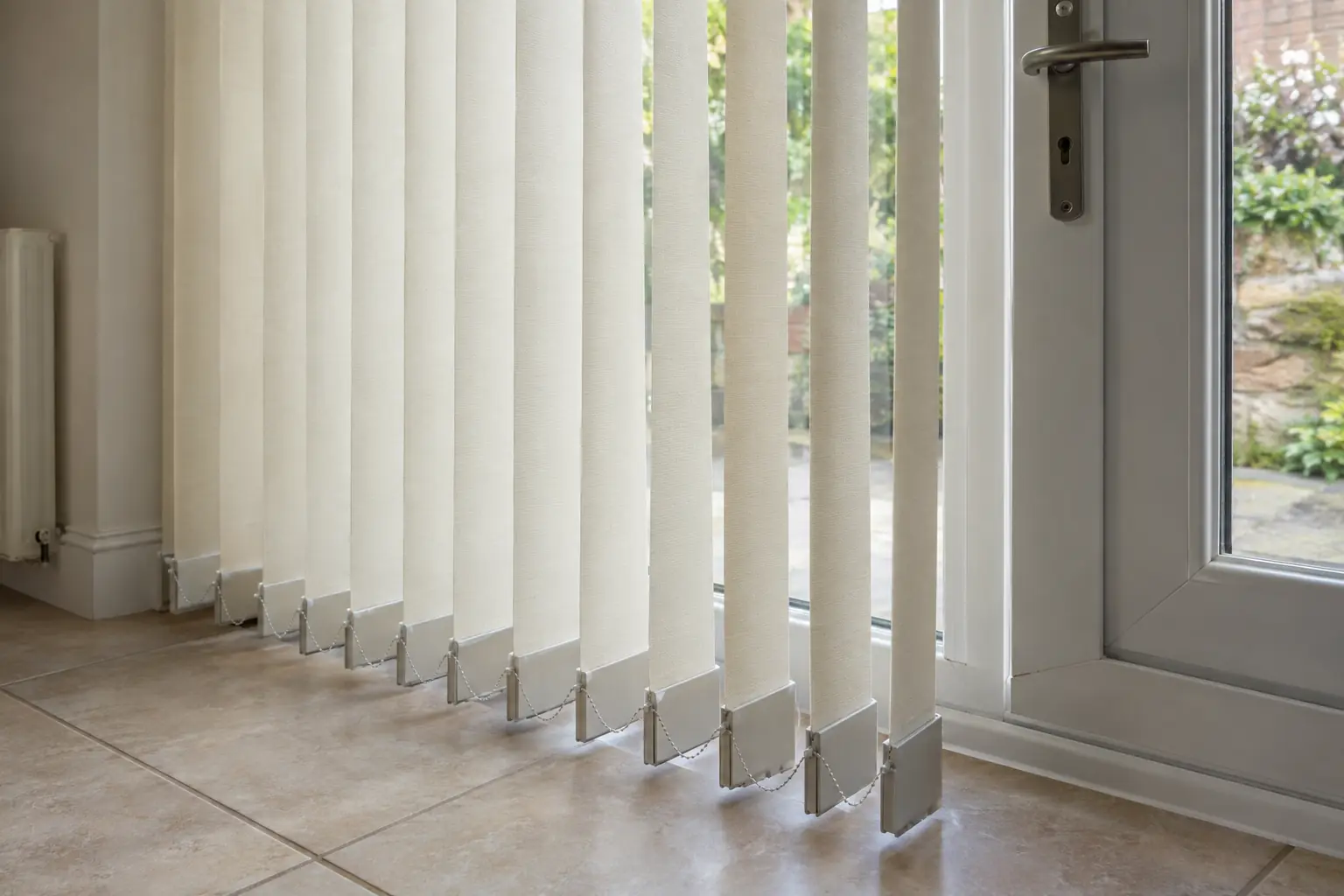
Most vertical louvres are fabric: stiffened so each louvre hangs flat and turns cleanly, and woven in anything from plain, tight weaves to linen looks and textured patterns. Fabric louvres soften a large area of glass, which matters in a big open-plan room full of hard floors and worktops.
Wipeable and PVC louvres are made for kitchens, utility rooms and doors that see muddy paws and sticky hands. They take a damp cloth where a fabric louvre would only take a light sponge, and they are the sensible choice for a kitchen-diner where the blind is across the door beside the sink.
Blackout louvres cut the light that comes through the louvre itself, which makes a bedroom or a media room much darker. What they cannot stop is the light that gets in where the louvres overlap and round the edges of the blind, so they dim a room rather than seal it. If full darkness matters, a blackout roller on the window or lined curtains across the door are the better answer, and your advisor will say so.
Wider louvres have fewer joins across a big span and look calmer; narrower ones suit a smaller window and a more traditional look. Your advisor holds both against your door so you can see which suits the room.
Low sun, heat and light from the side
Verticals handle a particular kind of light better than anything else: low sun coming in from the side. A west-facing room on a summer evening, or an east-facing kitchen at breakfast, gets sun that arrives at a shallow angle and straight into your eyes. Turn the louvres towards it and they block that sun while you still look straight out through the gaps.
A horizontal blind can do something similar, but only by tilting the slats towards the sun, which usually means losing the view along with the glare. Being able to angle the light sideways is why a vertical blind keeps a west-facing living room or a garden-facing dining table usable through a summer evening.
The same habit helps with heat. In hot spells, the UK Health Security Agency recommends closing blinds and curtains on windows exposed to direct sunlight during the day. With verticals across a big south or west-facing door, that means turning or drawing the louvres across the glass while the sun is on it, and opening them again once it moves round. A louvre blind will not turn a sun trap into a cool room, but it takes the edge off the afternoon.
In winter, drawing the blind at dusk also saves you sitting beside a wide black expanse of glass all evening.
Weights, chains, cords and children
At the bottom of each louvre sits a small weight that keeps it hanging straight, and on most verticals a linking chain runs through the bottom of the louvres to keep them evenly spaced as they turn. The chain is also what stops the louvres swinging about when a door is open on a breezy day. A bottom chain that has come unhooked is a common reason a vertical looks untidy, and it clips back in.
The louvres are turned and drawn with a control cord and chain at one end of the headrail. Any vertical we fit with a cord and chain has the child-safety devices that UK regulations require, installed by your fitter, who shows you how they work before leaving. Patio doors are where children run in and out, so think about which end the controls sit at as well as which end the stack does, and keep beds, sofas and anything climbable away from the control side.
If you have small children or a cot nearby, ask your advisor about cordless or motorised options. Motorisation is also worth pricing on a very wide or very tall span, where a handset or a timer makes a big blind something you actually use through the day.
Built to be mended, one louvre at a time
On a patio door, louvres live a harder life than slats on a window. They get caught as the door slides, brushed by shopping bags, nosed aside by dogs and pulled by small hands on the way into the garden. Sooner or later one creases or splits.
That is where a vertical blind earns its keep. Each louvre hangs from its own clip and carries its own weight, so a damaged one unclips from the headrail and a new one goes in its place, with the rest of the blind left as it is. Louvres, hanger clips, bottom weights and chains are all supplied on their own, and louvres are listed against the fabric they belong to so the new one matches its neighbours.
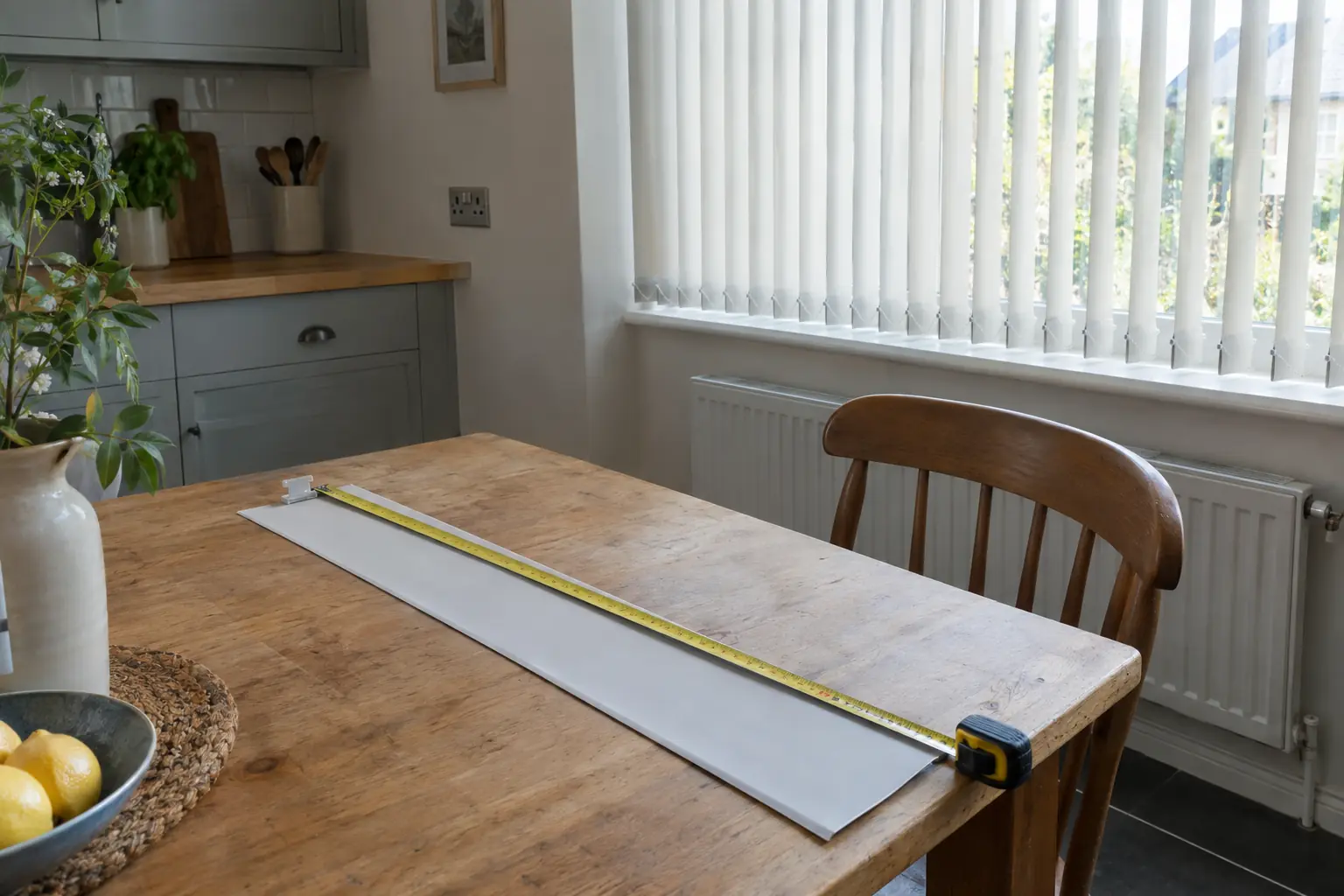
Getting the right one comes down to two measurements, across the face and from the hook to the bottom of the weight pocket, plus the fabric. Our guide to repairs, spare parts and replacement slats walks through exactly how to take them.
Two honest caveats. A fresh louvre in a set that has had years of sun can look a shade brighter at first, and if the fabric is no longer made, we will be upfront about it instead of sending a louvre that almost matches. And once several louvres have gone, or the headrail itself is bowed or failing, a new blind is usually the better use of your money. Ask at a home appointment and your advisor will tell you which it is.
Pros and cons
In its favour
- Draws fully to the side, clear of the door handle
- One headrail can span a very wide window or door
- Louvres turn to cut low sun from the side while keeping the view
- Wipeable louvres for kitchens and busy family doors
- Damaged louvres can be replaced one at a time
Worth knowing
- The stack takes up some width, even when fully open
- Light gets in where the louvres overlap, so not a true blackout
- Can look plain on a small, conventional window
- Loose bottom chains or weights make the blind look untidy until clipped back
Room by room
- Dining room with patio doorsA great fitThe louvres stack clear of the sliding pane, so the door is used every day without fighting the blind.
- Kitchen-dinerA great fitWipeable louvres across the garden door cope with splashes and busy traffic, and angle away the morning sun.
- Living room with a wide windowWorks wellOne headrail spans the glass, and the louvres turn against low evening sun on a west-facing room.
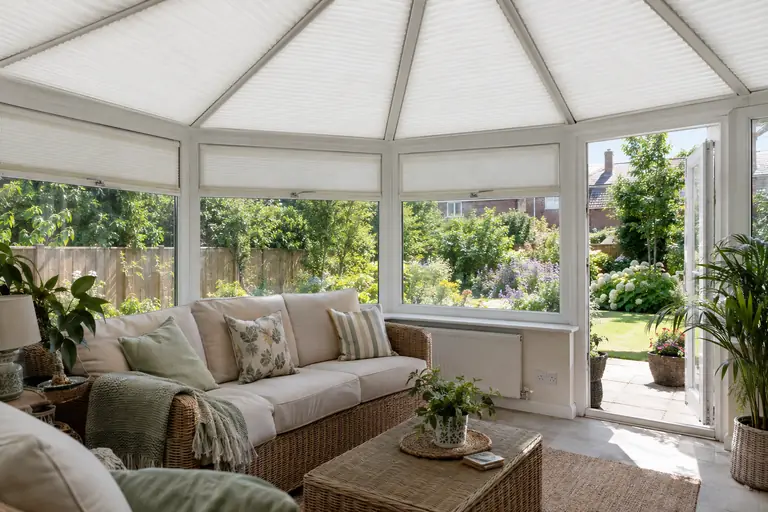
- Conservatory side glassWorks wellHandy on the wide runs of glass and doors, though roof panes need their own blinds.
- BedroomThink twiceEven blackout louvres leak light where they overlap. A blackout roller or lined curtains will give a darker room.
- Small cottage windowThink twiceThe stack and headrail look heavy on a small opening; a roller or roman sits more neatly.