The short answer
Treat the room as one scheme. Order the blinds together so the fabric is made at the same time, line up the tops across windows of different heights, and keep the fit the same along each wall. Different zones can have different blind types, as long as they share a colour or finish. For a long run of windows, grouped motors let them all move together from one remote or on a timer.
- Order the whole room together: dye lots vary, and two windows in one eyeline show it.
- Line up the tops of blinds across windows of different heights.
- Different blind types can share a room if they share a colour or finish.
- Grouped motors move a whole run of windows on one command or a timer.
- Big glazed rooms overheat and fade, so plan shading for the sunny side.
Plan the room, not the window
In a room with one window, the blind only has to suit that window. In a kitchen-diner, a through lounge or a dining room with windows on two walls, each blind is seen alongside the others, and small differences add up. A roller here, a roman there and a venetian on the door can each be the right answer and still look like three separate shopping trips.
Start by standing in the room and looking at the windows together, from the places you usually sit. Which ones do you see at the same time? Which share a wall? Which are doors rather than windows? Decide what the room as a whole should look like, and then fit each window's practical needs into that.
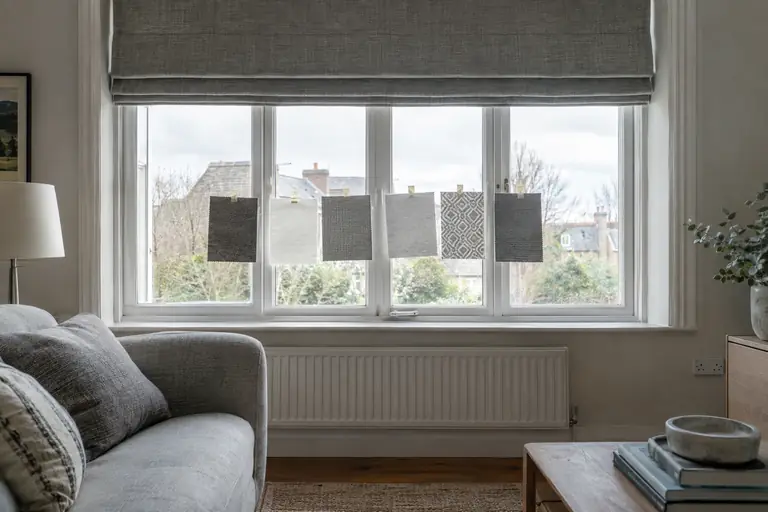
This is where a home appointment earns its keep. The advisor can hold samples against each window in turn, see how the light changes from one end of the room to the other, and measure every opening in one visit, so the whole set is planned and priced together, itemised window by window, rather than piecemeal.
Matching: same batch, same fit, same heights
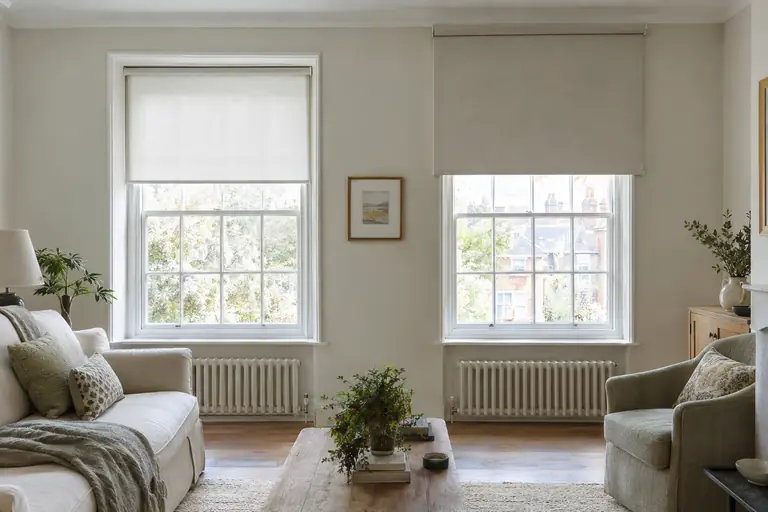
Fabrics shift slightly from one dye lot to the next. On a single window you would never know. On two windows in the same eyeline, a blind made from a different batch months later can look just a shade out, and once you have noticed it you keep noticing it. Linen, for example, shifts subtly between dye lots. Ordering everything for the room at the same time, so it is made together, is the simplest way to avoid that.
Fit is the second thing to keep consistent. On one wall, a recess fit next to an exact fit looks unplanned. Where a handle or a shallow reveal forces one window into an exact fit, the windows beside it usually look better fitted to match. Our recess or exact fit guide goes into the detail.
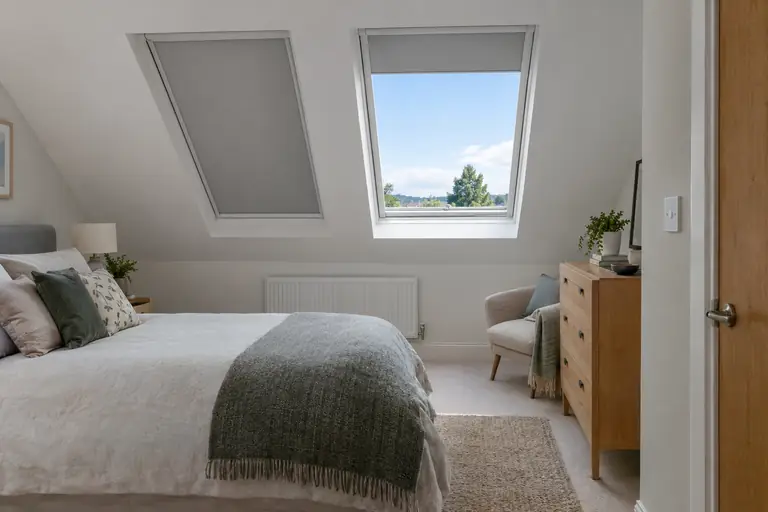
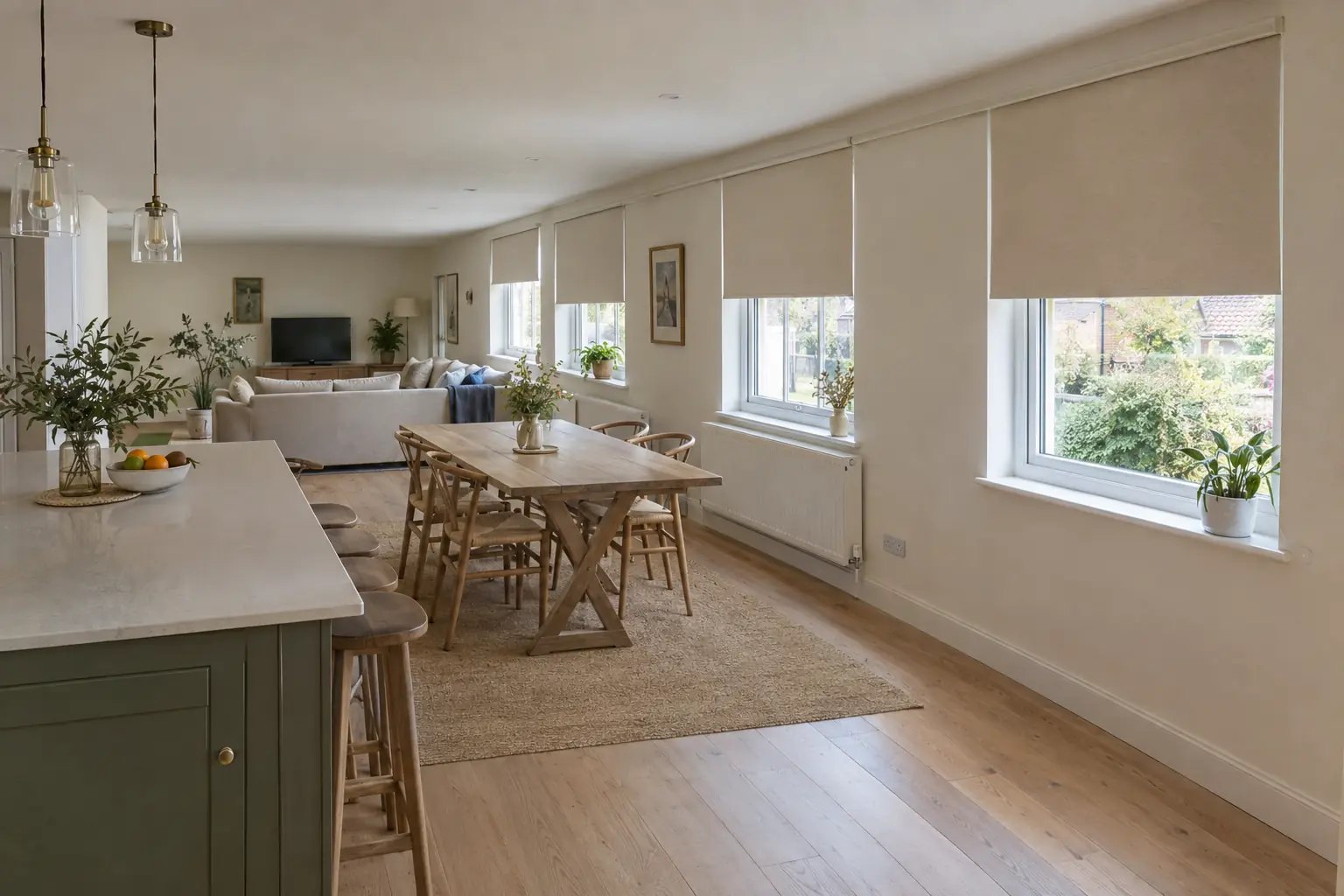
Heights are the third. Windows in a run are often different heights, especially where a newer extension meets an older house. With blinds fitted outside the recess, setting the headrails at a common line across the wall makes the run read as one, even when the drops differ. Your advisor will suggest where that line should sit.
Different jobs, one look
An open-plan room often has three jobs in it: cooking at one end, eating in the middle and sitting at the other. The windows at each end have different needs, and it is fine for them to have different blinds, as long as they look related.
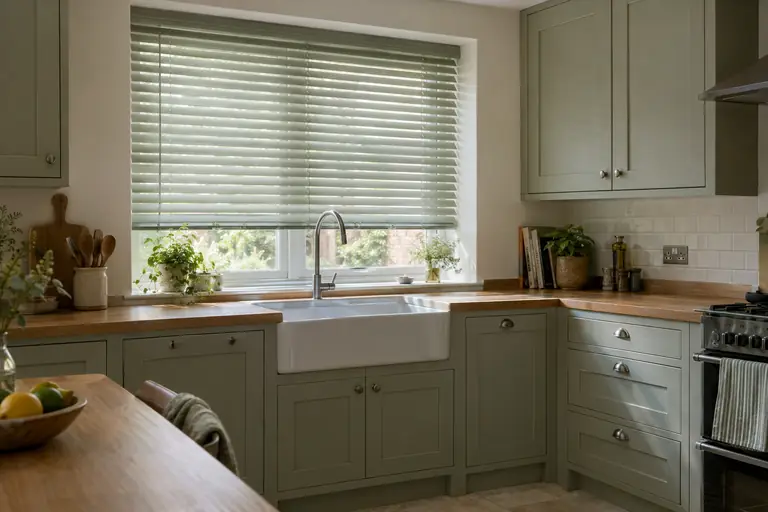
The kitchen end needs something wipeable that copes with steam: a roller in a coated fabric, or an aluminium or faux-wood venetian. The sitting end can take softer fabrics, romans or curtains. The link between them is colour and finish. Because faux wood is made in the same finishes as real timber, faux-wood venetians at the kitchen end and wooden ones by the sofa read as a pair. With rollers and romans, ask your advisor to find fabrics close in colour across the wipeable and softer ranges.
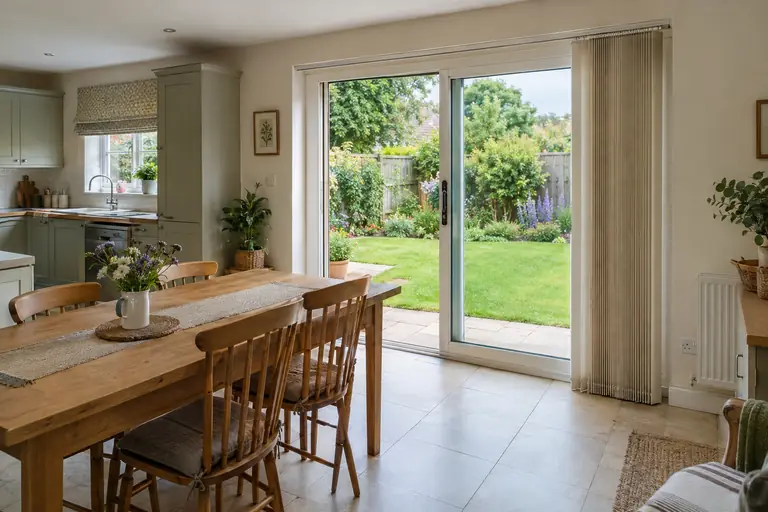
Doors complicate the run. A patio door in the middle of a wall of windows often needs verticals or a blind on each pane, while the windows either side have rollers. Keep the colour the same and the tops aligned, and the mix looks intentional. Our guide to patio, French and bi-fold door blinds covers the doors themselves.
Grouped motorisation for a run of windows
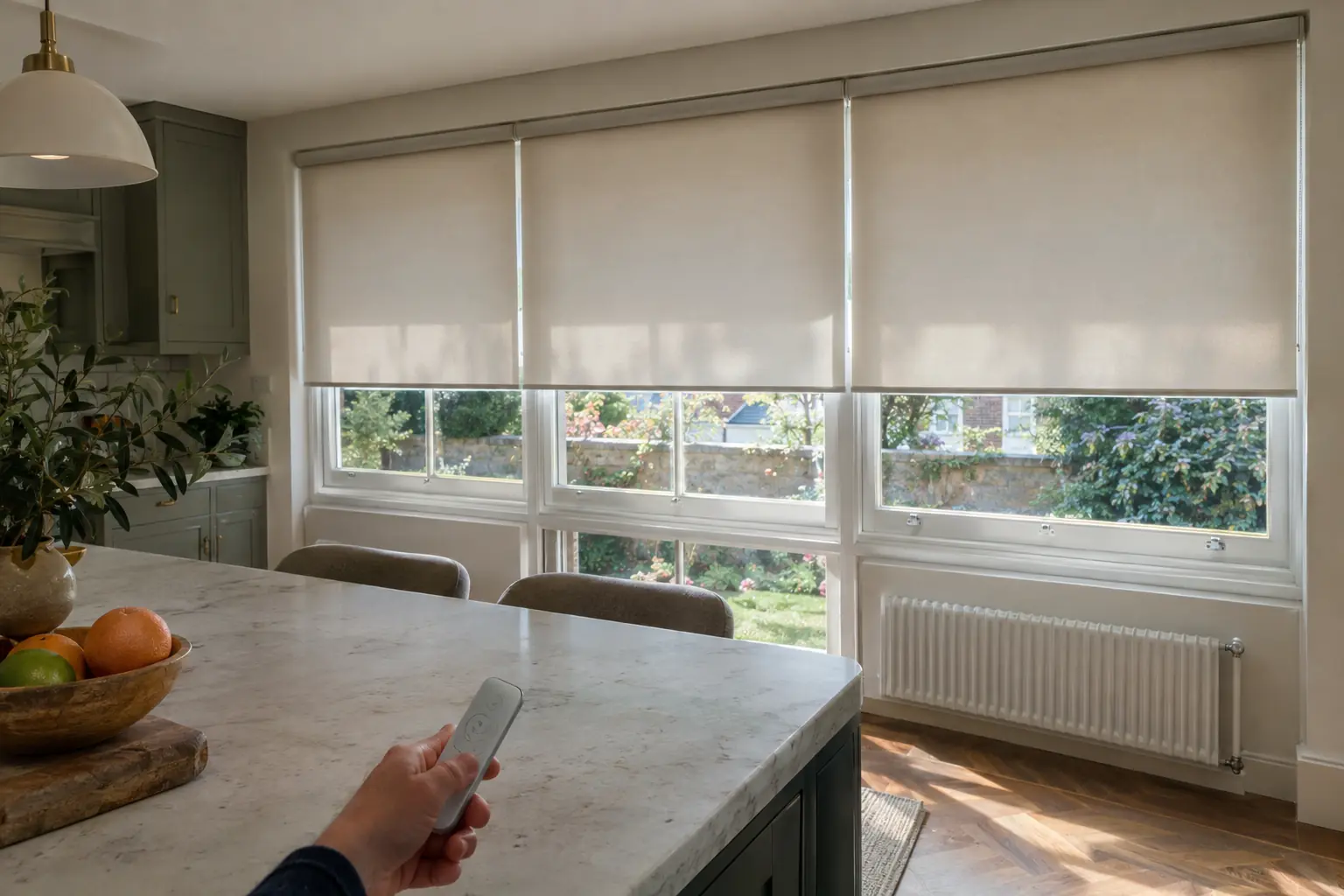
A long run of windows is where motorisation stops being a luxury. Closing six blinds one at a time at dusk is a chore; pressing one button is not. Motorised blinds can be grouped, so a run of windows moves together from a remote or an app, or on a timer. Groups can follow the zones of the room: the dining windows on one, the kitchen on another, everything together on a third.
Timers are particularly useful in a big glazed room. Blinds set to close on the sunny side before the afternoon sun arrives keep the room cooler, and blinds set to close in the early evening give privacy even on the days nobody remembers.
There are two ways to power them. Battery motors need no wiring and are recharged with a lead every so often; mains power suits a blind that moves constantly or is awkward to reach for charging. Any new mains supply for a motor is a job for a registered electrician, so raise it early if an extension is still being built. The groups are set up with you when the blinds are fitted, and the motors carry the same 1-year guarantee as the blinds.
Sun, heat and fading
Open-plan extensions often have far more glass than the rooms they replaced, and much of it faces the garden, often towards the sun. The UK Health Security Agency counts large windows facing east, west or south with no shade from the sun among the things that make a home more likely to overheat. Its advice is to close blinds and curtains through the day wherever the sun hits the glass directly.
Sunlight also fades. The National Trust describes window light fading textiles and changing the colour of wood, and stresses that the damage builds up and cannot be reversed. In a dining room that means the table top, the chair seats and the floor nearest the window, and you tend to notice it only when you move a rug or a sideboard and see the difference underneath.
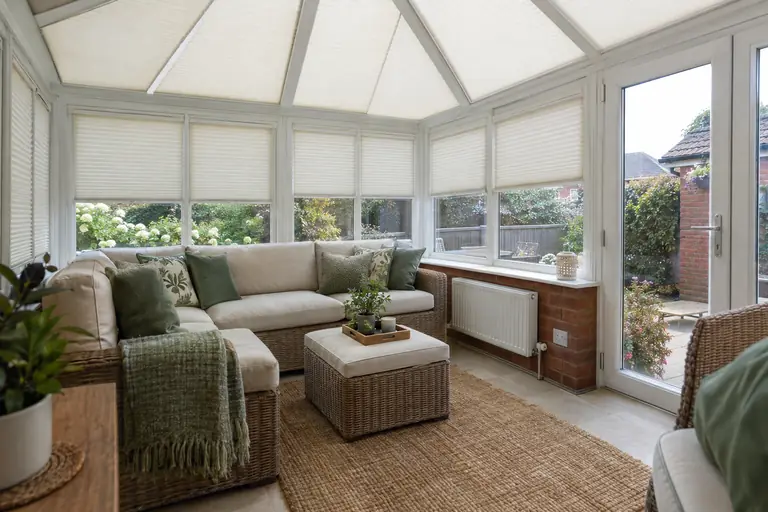
Shading the sunny side through the brightest hours protects both the room and the people in it. Venetians and verticals cut direct sun while keeping the view; dimout and thermal fabrics take the brightness and heat down further. Roof lanterns and glazed roofs need their own blinds, which our conservatory blinds guide covers.
Dining rooms at night
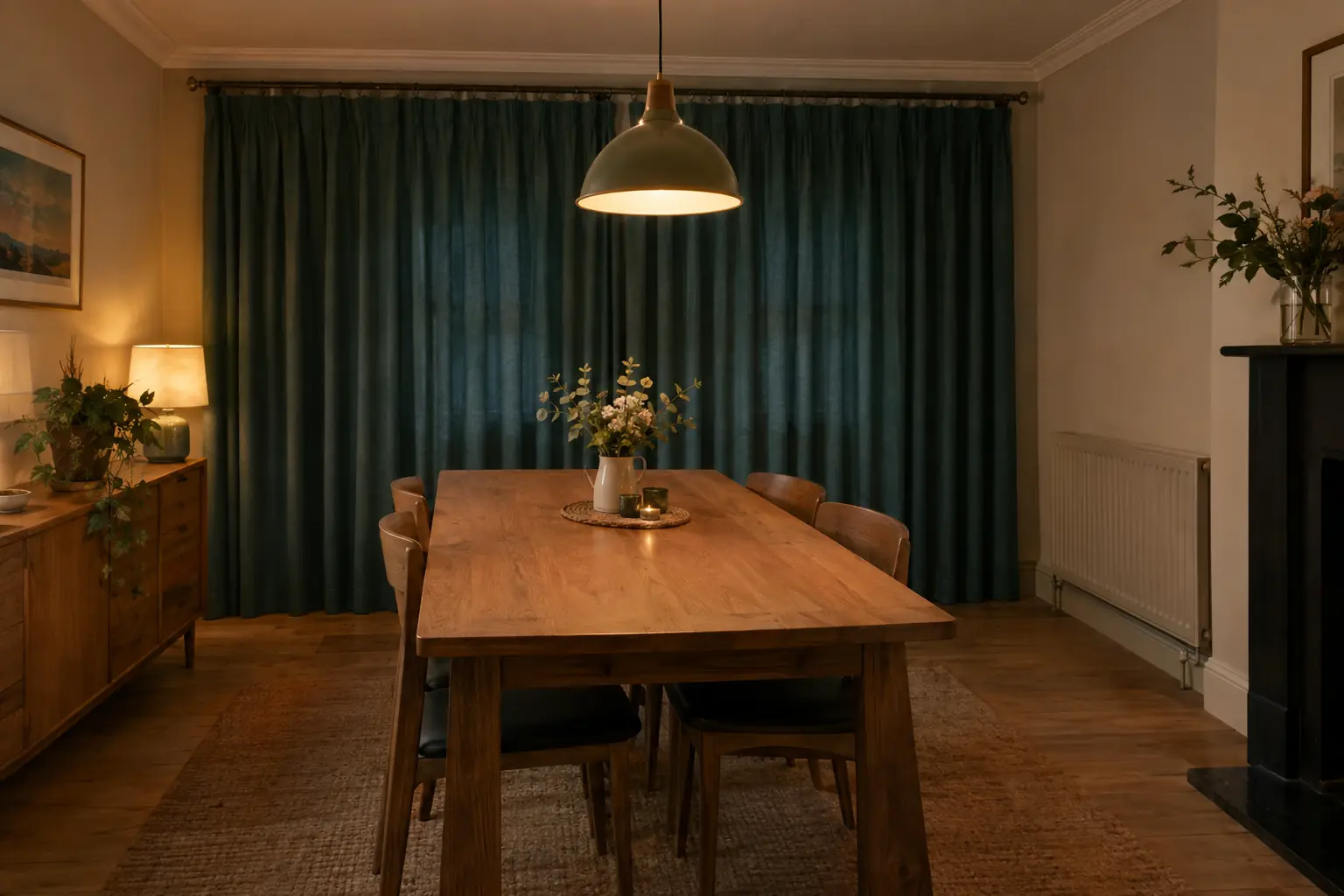
A dining room is used most in the evening, and that changes what its windows need to do. With the lights on and the blinds up, the glass turns into a black mirror, and anyone passing can see straight onto the table. Blinds or curtains that close fully give the room privacy and a sense of enclosure that makes it more comfortable to sit in for a long meal.
Curtains do something else in a dining room: they soften it. A room with a hard floor, a table and not much upholstery can sound echoey, and fabric at the windows takes some of the edge off. Lined curtains on a pole, hung wide so they stack clear of the glass by day, suit a traditional dining room. In an open-plan space, a roman blind in the same fabric as the living-area curtains ties the zones together.
Mind the table. If it sits in front of a window, a blind or curtain that stops at the sill stays clear of the chair backs, while floor-length curtains behind the table will be caught by them every time someone sits down.
Checklist
- Stand where you usually sit and list the windows you see together.
- Order every blind for the room at the same time.
- Keep the same fit along each wall and align the tops.
- Match colour or finish across different blind types.
- Group motorised blinds by zone.
- Shade the sunny side before the afternoon sun arrives.