The short answer
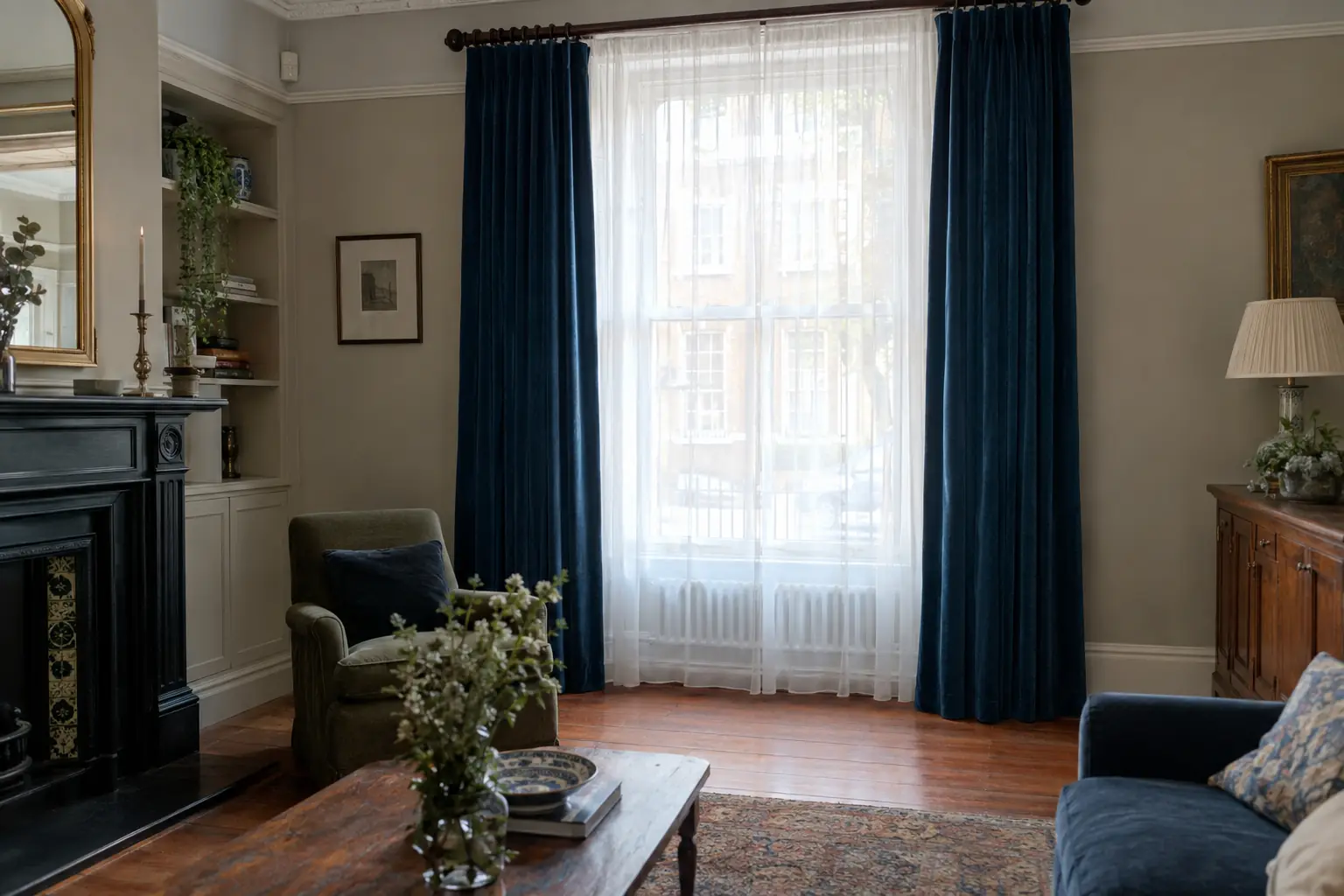
Velvet is a heavy fabric with a soft pile that catches the light, hangs in deep folds and makes a room feel warm and enclosed. It suits living rooms, bedrooms and period rooms, and wants a lining and sturdy fixings. Voile is a sheer, lightweight fabric that filters daylight and gives privacy by day without shutting the room in, but not after dark with the lights on. Hung together, the voile gives daytime privacy and the velvet closes the room in the evening.
- Velvet's pile catches the light, so its colour shifts as the folds turn.
- Velvet is heavy: plan the lining, the heading and the fixing together.
- Voile hides the room from the street by day, but not at night with the lights on.
- Layering voile and velvet needs two places to hang: two rails, or a voile blind in the recess.
- All textiles fade in strong light, and deep velvet colours show it soonest.
Velvet: what the pile does
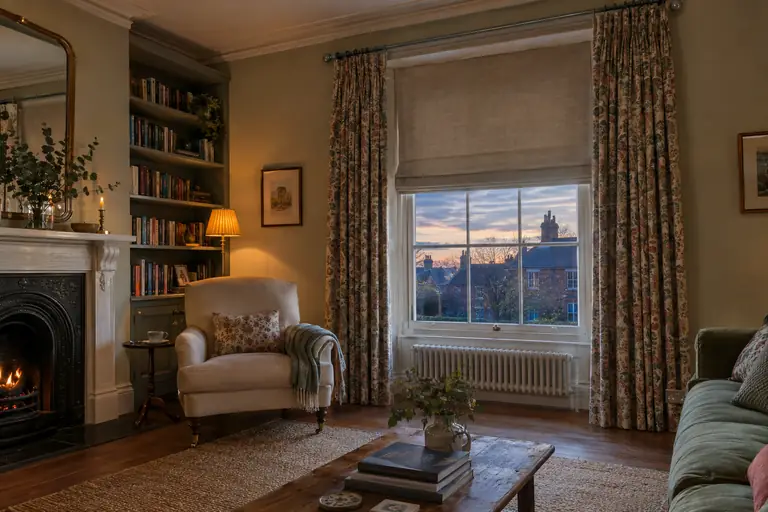
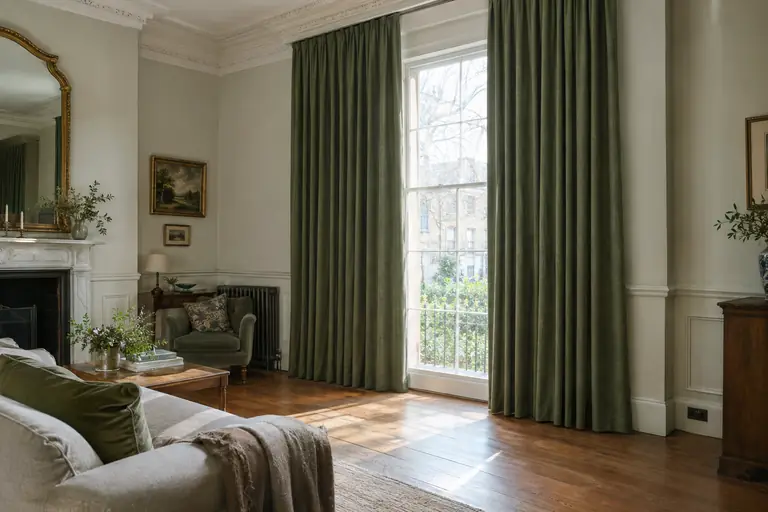
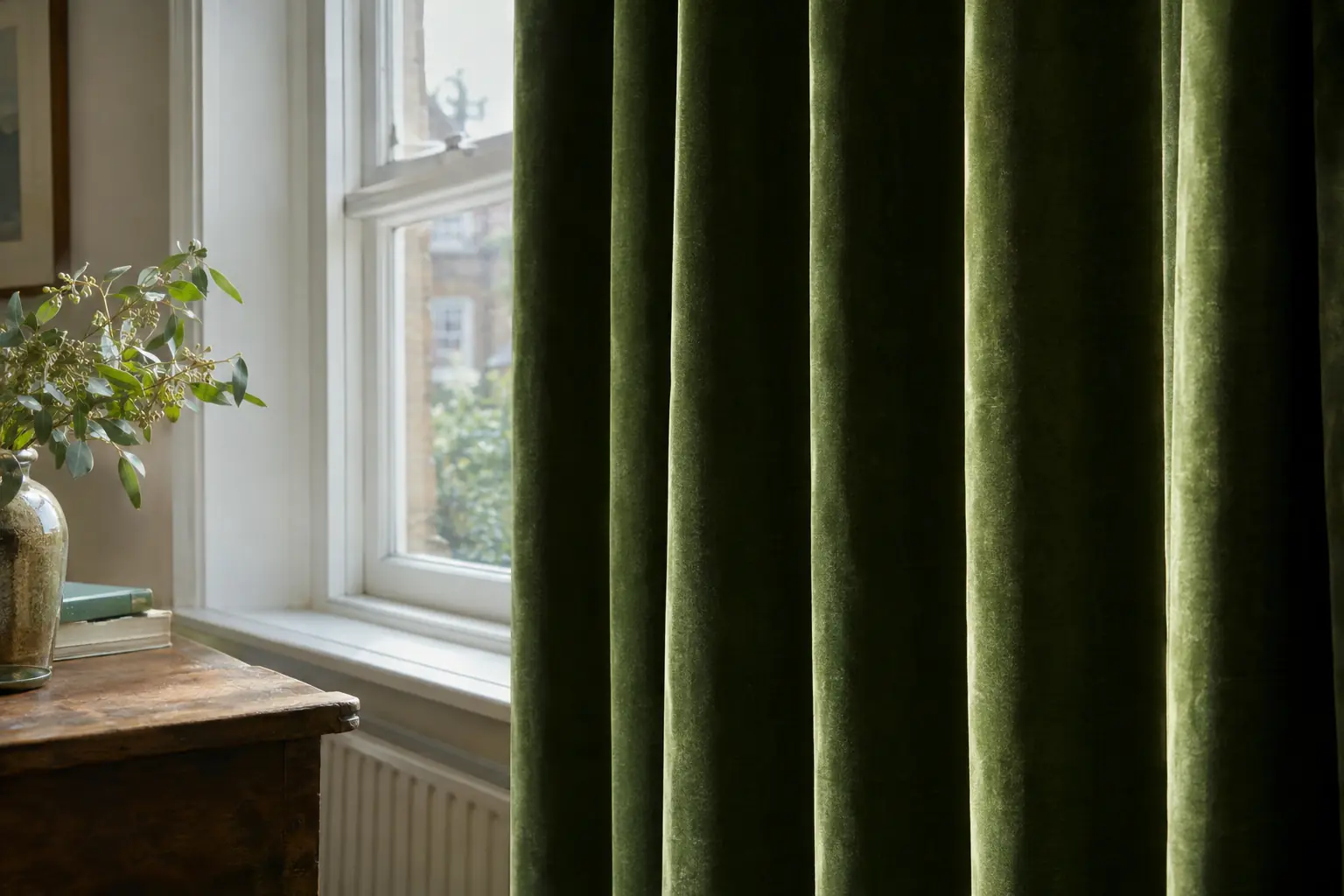
Velvet is woven with a short, dense pile standing up from its surface, a little like a very fine carpet. That pile gives velvet its character. It soaks up light where you look straight into it and reflects it where the fabric turns away, so the same colour looks deep and dark in one fold and bright, almost silvery, along the next.
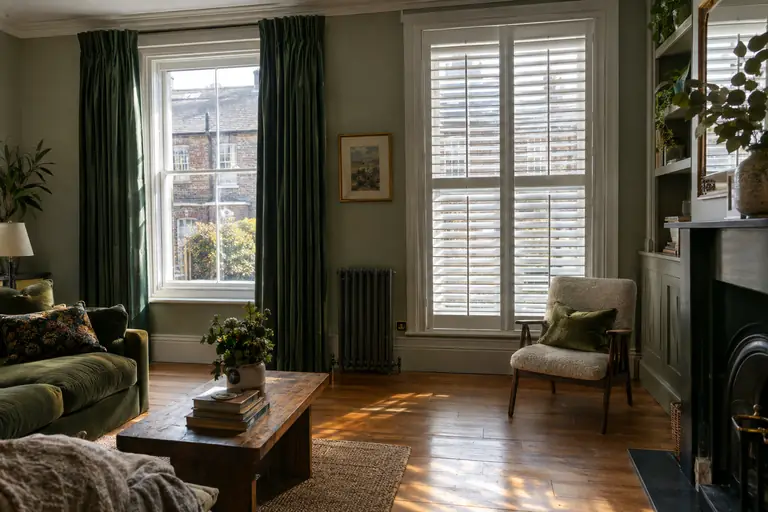
On a window, that play of light is the point. A velvet curtain drawn in the evening and lit by lamps has a depth that no flat weave can match, and the colour looks slightly different from every seat in the room. Rich colours, such as deep greens, blues and rusts, show it off most, but a pale velvet has the same quality in a quieter way.
The pile has a direction, too. Stroked one way it lies smooth and looks lighter; stroked the other way it roughs up and looks darker. Every drop of a velvet curtain has to be cut with the pile running the same way, which matters on a pair: two curtains with the pile running in opposite directions look like two different colours side by side.
Velvet's weight: linings, headings and fixings
Velvet is heavy, and that weight is both its strength and its demand. It falls in deep, generous folds that stay where they are put, and it closes a room in against a winter evening in a way lighter fabrics cannot. It also puts a real load on the pole or track and its brackets, particularly on a wide window with long curtains.
That is why velvet curtains are best planned as a whole: the fabric, the lining, the heading and the fixing together. A lining protects the back of the velvet from sunlight and gives it a clean, even finish seen from outside. A thermal or blackout lining adds warmth or darkness. Interlining makes velvet heavier still, which is lovely in a big room and can be too much in a small one.
Headings that hold weight neatly suit velvet best. Pinch pleat on a track gives the most tailored result; pencil pleat and eyelets both work, though a heavy velvet in eyelets makes a wide stack when open. Our fitters put up poles and tracks to carry the curtains that hang on them, and your advisor will tell you on the day what suits your window and wall.
Velvet, sunlight and fading
Every curtain fabric fades in sunlight, but a deep velvet shows it sooner, because the change from rich to dull is so visible. The Institute of Conservation notes that all textiles are easily damaged by exposure to light, with silk the most vulnerable, and that prolonged exposure causes fading, yellowing and brittleness in all fibres.
A south- or west-facing window is where this matters most. When the curtains are closed, the lining takes the sun, which is one of the best reasons to line velvet at all. When they are open, the outer edge of each stack faces the window, and any part of the fabric left across the glass takes the full force of the light. Running the pole or track past the window, so the curtains stack on the wall rather than the glass, keeps more of the velvet out of direct sun.
In a very sunny room, a blind in the recess, lowered through the brightest part of the day, protects a velvet curtain better than any lining can. It protects the furniture and the floor as well.
Voile: light, privacy and what it cannot do
Voile is a sheer, lightweight fabric, a fine and open weave that lets daylight through while softening it. From inside, the room stays bright and the view is visible but hazy. From outside in daylight, the voile catches the light and the room behind it is hard to see, which is why voile is the classic answer for a front window on a busy street or a room overlooked by the house opposite.
It has limits worth knowing before you buy. Voile gives privacy by day because it is brighter outside than in. After dark, with the lights on, that reverses, and the room can be seen through the voile from the street. It does not block light or keep warmth in, and because it is unlined, it hangs in soft, light folds rather than the structured drape of a heavier curtain.
So voile is usually half of an answer. It does the daytime job well, and something heavier, a lined curtain or a blind, does the evening one. Generous fullness helps a voile too: the more folds there are, the softer the light and the harder it is to see in.
Voile curtains or a voile roman blind
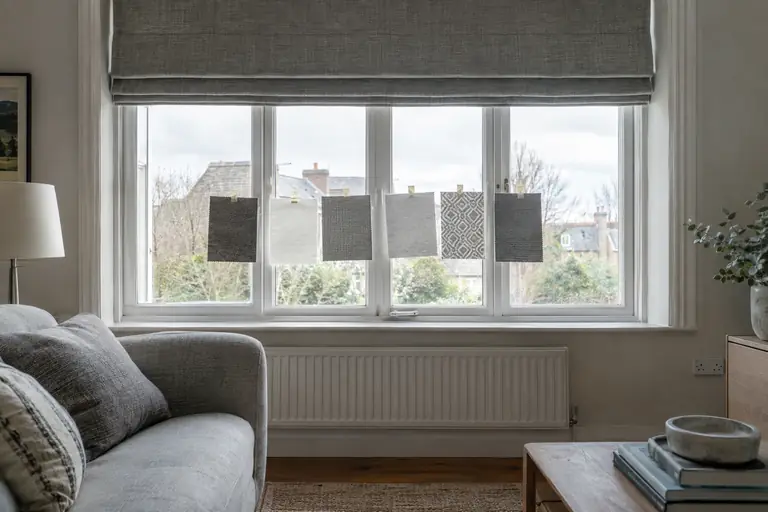
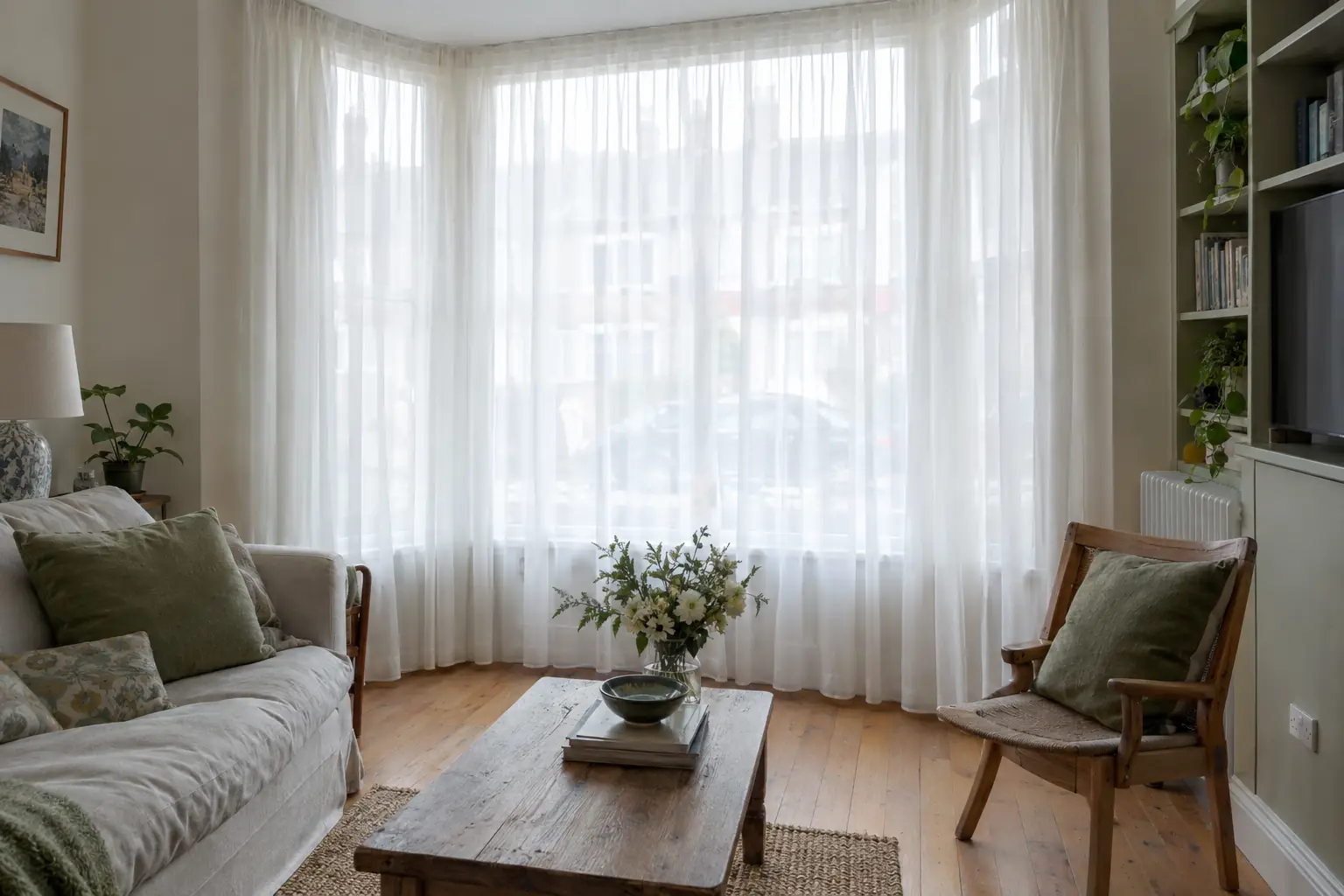
There are two ways to bring voile to a window. Voile curtains hang from their own pole or track, usually left closed across the glass through the day, and give a soft, full veil across the whole window. A voile roman blind does the same job from inside the recess, and can be raised into neat folds when you want the full view.
The curtain gives more fabric and more softness, and suits a large window, a bay or a pair of French doors where a voile blind would have to be very wide. The blind is tidier, takes up no wall space and leaves the wall outside the recess clear for a pair of heavier curtains.
That second arrangement is one of the neatest ways to use voile: a voile roman blind inside the reveal for daytime privacy, and curtains fitted outside it, dressed open by day and drawn in the evening. You can leave the curtains dressed and still not be on show to the street. Your advisor will check the reveal is deep enough for the blind and the curtains to work together. Our layering blinds and curtains guide covers more combinations.
Layering voile with velvet
Velvet and voile on the same window is a classic pairing, and it works because each covers the other's weakness. The voile gives privacy and soft light by day; the velvet closes the room at night, keeps it warmer and stops the view in when the lamps are on.
Two layers of curtain need two places to hang. The voile goes closest to the glass and the velvet in front, and each needs its own pole or track so they can be drawn independently. That takes a little more depth in front of the window, and a little more width either side, because the velvet has to stack clear of the voile as well as the glass. Where the wall above the window is limited, a voile roman blind in the recess with velvet curtains outside it avoids the second rail altogether.
Plan the two layers together rather than one after the other. A voile that is too full behind a heavy velvet bunches when the velvet is drawn over it; one that is too short shows below the velvet hem. Your advisor measures for both layers at the same appointment and will tell you on the day what the window and wall will take.
Looking after velvet and voile
The two fabrics need opposite kinds of care. Velvet gathers dust in its pile. A soft brush, or the upholstery tool of a vacuum on a low setting, worked gently in the direction of the pile, keeps it fresh. Avoid rubbing at a mark, which crushes the pile and leaves a shiny patch. Like most lined curtains, velvet curtains are usually dry cleaned rather than washed.
Voile shows dust and street grime as a greyish tinge, particularly on a front window facing a road. Because it is fine and unlined, its care depends very much on the fabric, so follow the care label, and ring the office if you are unsure before anything goes in a machine.
Both fabrics are happiest away from steam and cooking splashes. A voile near a hob is a poor idea in particular, as a light fabric moving in a draught can drift towards the heat. For kitchens and bathrooms, a wipeable blind is the more practical choice, and our kitchen blinds guide explains the options. Our guide to caring for curtains and shutters covers cleaning in more detail.
Pros and cons
In its favour
- Velvet hangs in deep, heavy folds that stay where they are put
- Velvet's pile gives colour a depth that flat weaves do not have
- Voile keeps a room bright while hiding it from the street by day
- The two layer well: voile by day, velvet by night
- A voile roman blind brings sheer privacy to the recess and leaves the wall clear
Worth knowing
- Velvet is heavy and needs solid fixings and room to stack
- Deep velvet colours show sun fading
- Voile gives no privacy after dark with the lights on
- Two layers need two places to hang
- Neither suits steam, splashes or a spot near the hob
Room by room
- Living roomA great fitVoile for daytime privacy with velvet drawn over it in the evening covers both halves of the day.
- Street-facing front roomA great fitVoile hides the room from passers-by in daylight without losing the light.
- Period drawing roomA great fitTall windows and high ceilings carry the weight and depth of floor-length velvet.
- Main bedroomWorks wellVelvet with a blackout lining is dark and warm; voile alone will not do the night-time job.
- Small, low roomThink twiceHeavy velvet can crowd a small window; a lighter weave or voile keeps it feeling airy.
- KitchenThink twiceSteam and splashes mark both fabrics, and a light voile should never drift near a hob.