The short answer
Six things decide what a made-to-measure blind costs: the size of the window, the type of blind, the fabric or material, how you work it, extras such as a blackout or thermal backing, and the shape of the window. A roller is usually the best value and shutters the largest outlay. Every quote is written and itemised per window, with measuring, fitting and our 1-year guarantee included, and the appointment to get one is free.
- Size moves the price most: a bigger window needs more fabric, a longer headrail and a stronger mechanism.
- Rollers are the simplest blind we make and usually the best value; romans, real wood and shutters cost more.
- Blackout, thermal and lined fabrics add to the price, and so does a cordless control or a motor.
- Bays, skylights, conservatory roofs and shaped windows need blinds made specially for them.
- Every quote is written and itemised per window, with fitting and the 1-year guarantee included.
Why is there no price list for made-to-measure blinds?
A ready-made blind comes in a few standard sizes, so it can carry a price tag. A made-to-measure blind cannot, because it does not exist until your window has been measured. The same roller fabric can go on a small cloakroom window or across a patio door, and those are two very different blinds to make.
On top of size, every blind is a set of choices: the type, the fabric, the control, the fit and any extras such as a blackout backing or a motor. Each one moves the figure a little, and together they decide it. A price list that tried to cover every combination would either run to pages or quote a figure that only fits one window.
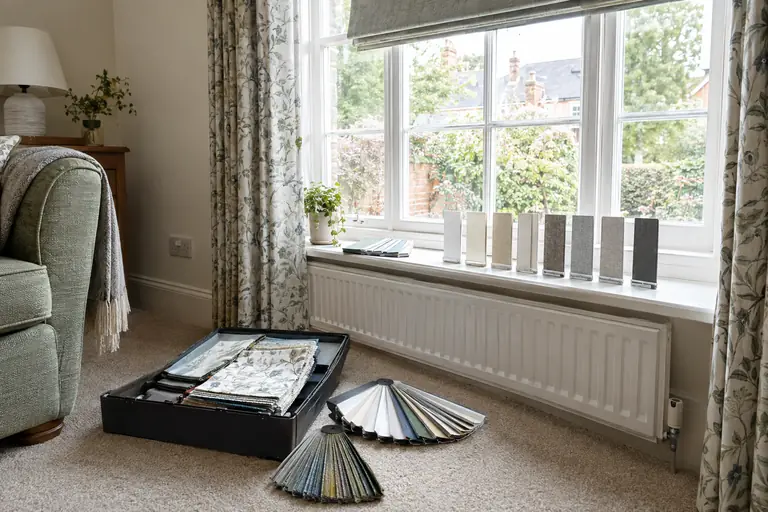
That is why we price window by window at a home appointment. The advisor measures every opening, brings the range so you can see fabrics in your own light, and suggests what suits each window and the way you use the room. Your blinds are then made to those measurements, hand-finished in our West Yorkshire workshop and fitted by our own team. The written price, itemised per window, covers all of it. Itemising it means you can see exactly where the money goes, and change one window without redoing the rest. The rest of this guide explains what makes one window's line on that quote bigger than another's.
How does the size of the window change the cost?
Size is the biggest single factor. A wider blind needs a longer tube or headrail and more fabric, and a taller one needs more fabric again. On a large blind the mechanism has to be stronger as well, to lift the extra weight smoothly and keep it level.
Very large windows and patio doors raise a further question: one blind or several. A single wide blind is the cleanest look, but it is heavy to raise, and on slatted blinds the stack at the top gets deep. Splitting the window into two or three blinds, often at a mullion or frame division, keeps each one a comfortable weight and lets you raise one section while the others stay down. That changes the quote, because you are paying for two or three mechanisms instead of one, but it can be the better blind to live with.
Small windows work the other way. A blind half the width of another does not cost half as much, because every blind needs its own brackets, control and fitting whatever its size. A cloakroom or landing window is still a whole blind.
Fitting over the recess rather than inside it makes the blind a little larger, because it overlaps the opening on every side. That is usually a small difference, and in a bedroom it buys a darker room. Our guide to recess and exact fit explains the trade-off.
Which types of blind cost more?
The type of blind sets the starting point, because some are simply more to make.
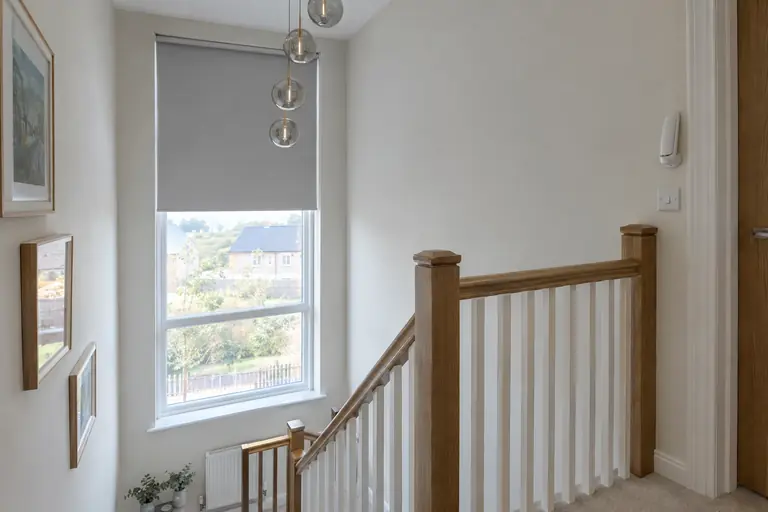
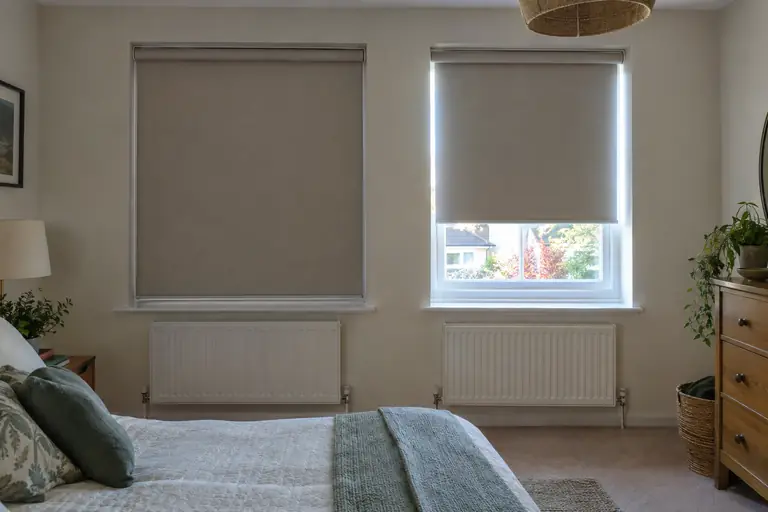
A roller is the simplest blind we make: a tube, a single sheet of fabric, a bottom bar and a control. That is why rollers are usually the best value, especially across several windows.
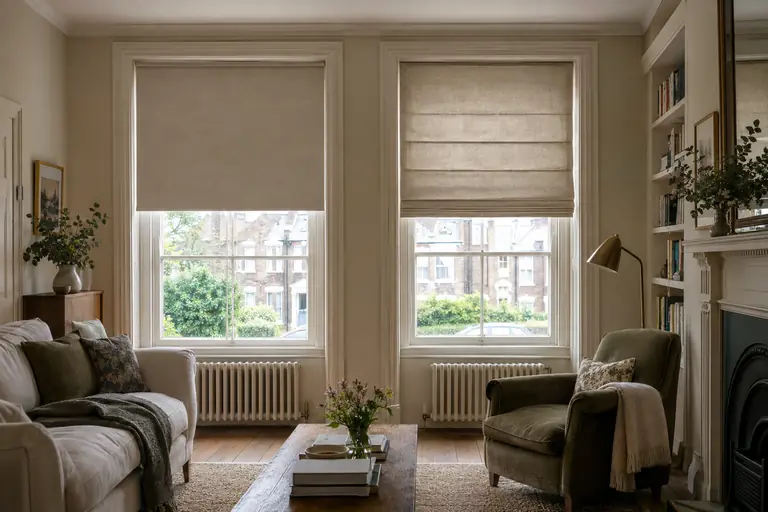
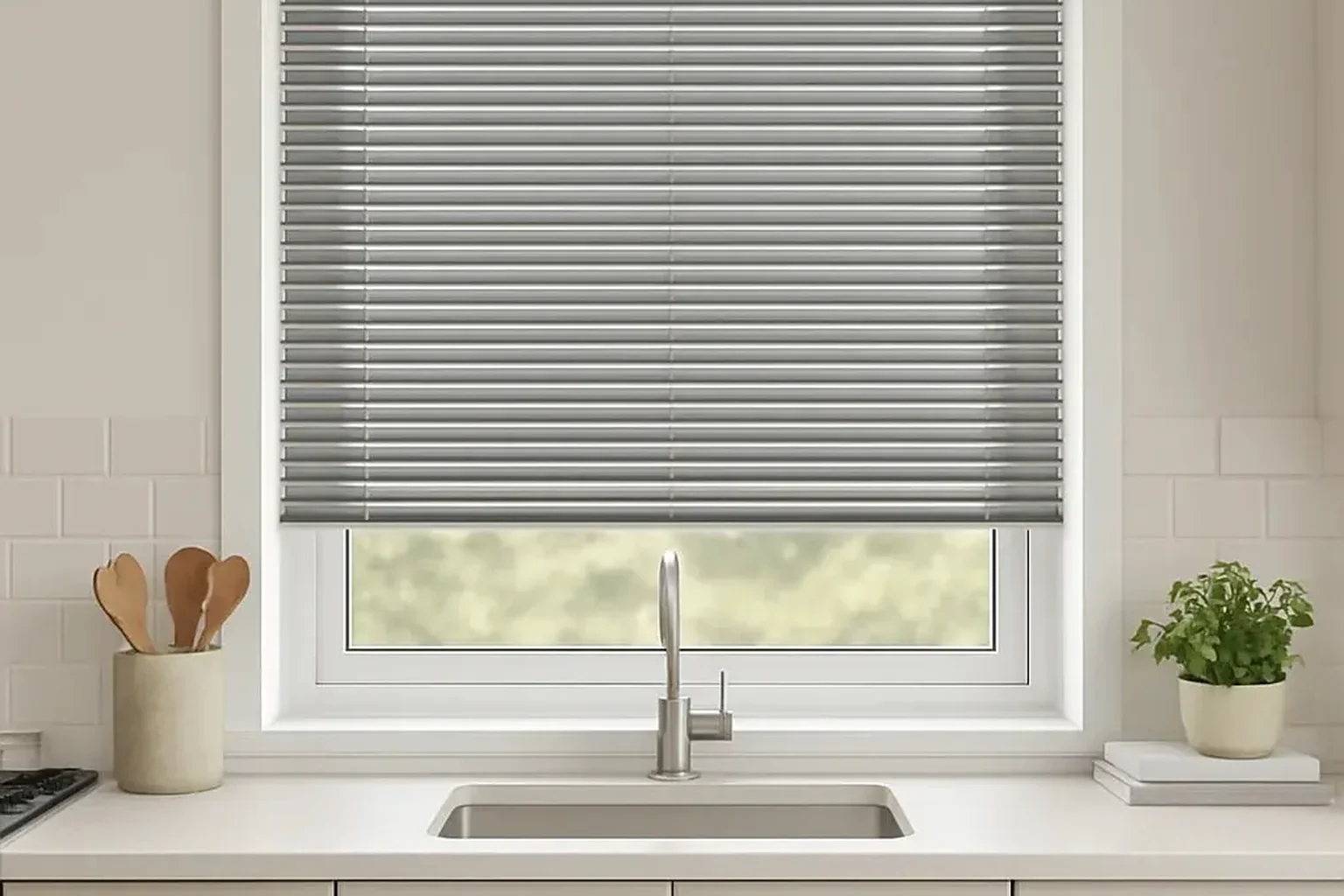
A roman takes more fabric, because the folds need extra length, plus a lining, rods and more hand-finishing to make the folds hang level. The same window will usually cost more in a roman than in a roller, and our roller and roman comparison goes into why. With slatted blinds, the material matters: real wood costs more than faux wood or metal.
Pleated, honeycomb and perfect fit blinds are made for particular jobs, such as tilt and turn windows, doors and conservatory glass, and the frames and rails that let them do those jobs are part of what you pay for.
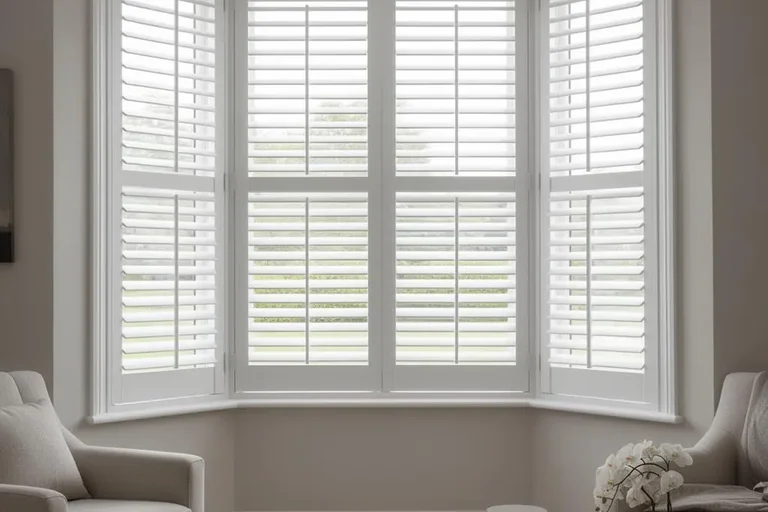
Shutters are a different kind of purchase altogether. Each one is a frame and a set of panels built for one opening, then fixed and levelled to it on fitting day, so shutters are the largest outlay per window. They are also fixed, so they stay with the house, and they have no cords at all. Our guide to whether plantation shutters are worth it weighs that up honestly.
Does the fabric or material change the price?
Within any one type of blind, the fabric is the next biggest choice. Ranges run from plain everyday fabrics to textured weaves, prints and premium designs, and the face fabric you choose makes a real difference, especially on a roman, where there is more of it.
Performance adds to the price as well as looks. A blackout fabric is coated or backed so no light passes through the weave, and a thermal fabric has a backing that slows heat moving through the window. Thermal fabrics cost a little more than the plain equivalent, so they make most sense on the rooms you actually heat, or the ones that overheat. Wipeable and PVC fabrics are made to take a damp cloth and cope with steam, and they are worth having over a sink or beside a shower, where a soft fabric would mark.
On a roman, the lining is part of the choice too: a standard, thermal or blackout lining, each doing a different job behind the same face fabric.
On shutters, the material moves the figure more than anything else. Engineered wood is the more accessible of the timber options; hardwood costs more, and repays it in finish and panel size. Waterproof ABS or vinyl is the answer for bathrooms and wet rooms, where steam would move real timber.
How much do controls and motors add?
The standard control on most blinds is a chain or cord at one side, and it is the simplest way to work a blind. Every corded blind we fit comes with the child-safety devices UK regulations require, and our fitter installs them.
Cordless blinds, which you raise and lower by hand at the blind itself, cost more than a chain, and so do top down bottom up blinds, which have two moving rails instead of one. In a child's room either is well worth it, because there is no looped cord at all.
A motor adds more again. There is no single figure for the difference, because it depends on the blind and its size, so the simplest way to see it is to ask your advisor to price the same blind both ways. Most of our motorised blinds run on a rechargeable battery, so no wiring is needed. A mains motor never needs charging, but it needs a power supply at the window, and that electrical work is done by an electrician rather than by us, so it is a separate cost.
Motors earn their place on windows you cannot comfortably reach, on very wide or heavy blinds, on roof glass and on runs of windows you want to move together. On an ordinary window within reach, a chain or a cordless blind does the same job for less. Our guide to motorised and manual blinds covers the upkeep as well.
Do awkward windows cost more?
A square window in an ordinary recess is the simplest to dress. The further a window strays from that, the more of the blind has to be made specially for it.
A bay is measured and made as a set, so the blinds line up across the angles and meet neatly in the corners. Skylights and roof windows need blinds that run in side channels, because gravity pulls an ordinary blind away from sloping glass. Conservatory roofs need a blind made to the shape of each pane and tensioned so the fabric lies close to the glass, and the fixing points are surveyed before anything is quoted. Arched, angled and gable-end windows need shaped blinds or shutters, templated on site.
Doors and inward-opening windows bring their own costs. A tilt and turn window or a French door often needs a blind fixed to the moving part, such as a perfect fit blind in its own frame, rather than one hung from the wall above.
On shutters, the way the panels open matters too. Full-height panels are the simplest build. Tier-on-tier doubles the number of hinged panels, and a tracked run adds a track and carriers, so both cost more than a full-height shutter of the same size.
None of this is a reason to avoid an awkward window. It is the reason an advisor looks at every opening before pricing it.
What is included in the price?
The written price your advisor leaves covers more than the blind. Measuring is done by the advisor at the appointment, so you are not relying on your own tape measure. Fitting is done by our own team and is included: the fitter hangs everything, checks it works with you and takes the packaging away. Every blind, shutter and motor we supply and fit carries a 1-year guarantee.
The appointment itself is free and carries no obligation. Nothing is paid on the day, and you can take the quote away and think it over.
Two more things are worth knowing. Our price promise is that if you find the identical blind, measured and fitted in the same way, for less elsewhere, we will match the price. And seasonal offers run through the year; your advisor applies whatever is running when they price your job. On larger orders there are finance options, and the advisor will talk you through them.
When you compare quotes from different companies, check what each one includes. A lower figure that leaves out measuring, fitting or a guarantee is not the same price. Our guide to made-to-measure and ready-made covers the other differences.
How can you keep the cost down?
The best way to spend well is to be clear about what each window needs to do, and to spend where it makes a difference.
Put blackout in the rooms that need to be dark, such as bedrooms and nurseries. A living room rarely needs it, and a dimout or light-filtering fabric does the job. Choose thermal fabrics for the rooms you heat or the ones that overheat, rather than every window in the house.
Keep motors for windows that are hard to reach, heavy or high. In a child's room, a cordless blind is as safe a route as a motor.
Use a roller where a roller does the job. A roman looks softer, but in a kitchen or bathroom a wipeable roller is both the better blind and the better value.
Ask your advisor to price alternatives side by side: the same window as a roller and as a roman, or with and without a motor. The quote is itemised per window, so you can mix and match room by room.
And do the rooms that matter most first. Each window is priced on its own, so you can start with the bedrooms and come back for the rest. If windows sit side by side, order them together, because fabric can shift slightly from one dye lot to the next.
Side by side
Size
- Usually costs less
- Smaller windows
- Usually costs more
- Large windows and patio doors
Type of blind
- Usually costs less
- Roller blinds
- Usually costs more
- Roman blinds, real wood blinds and shutters
Fabric
- Usually costs less
- Plain light-filtering fabrics
- Usually costs more
- Blackout, thermal and lined fabrics
Control
- Usually costs less
- A chain or cord
- Usually costs more
- Cordless, top down bottom up or a motor
Power for a motor
- Usually costs less
- Battery, with no wiring
- Usually costs more
- Mains, which needs an electrician as well
Window shape
- Usually costs less
- A square window in an ordinary recess
- Usually costs more
- Bays, skylights, conservatory roofs and shaped windows
Shutter material
- Usually costs less
- Engineered wood
- Usually costs more
- Hardwood
How shutters open
- Usually costs less
- Full-height panels
- Usually costs more
- Tier-on-tier and tracked panels