The short answer
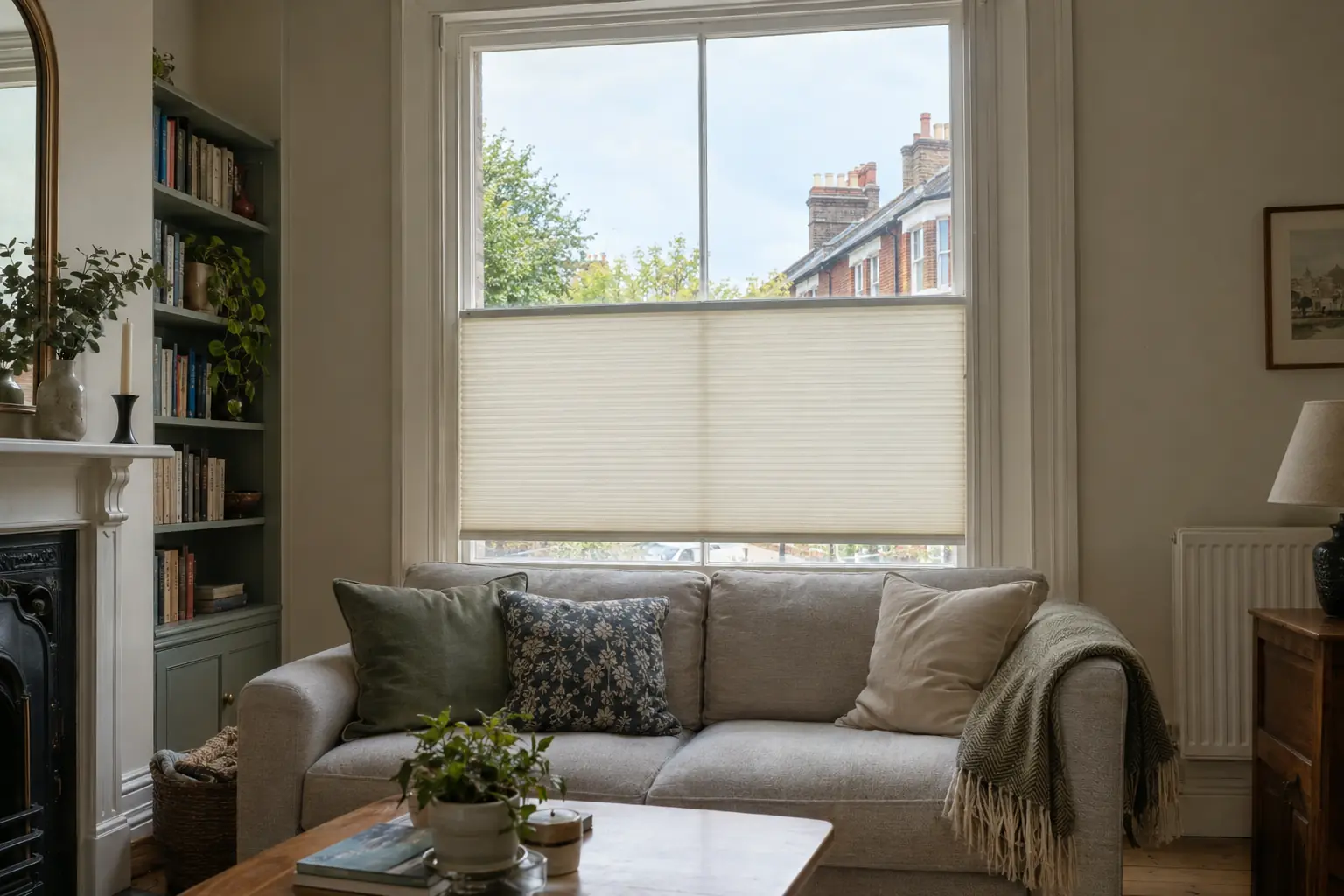
A top down bottom up blind has two moving rails, so the fabric can be lowered from the top, raised from the bottom, or set as a band anywhere in between. Lower the top rail and you get sky and daylight over a covered lower half, the same idea as café shutters. They suit ground-floor rooms facing a street, bathrooms, bays and bedrooms overlooked by neighbours. The style is usually made in pleated and honeycomb fabrics, which fold into a slim stack.
- Two moving rails let you cover the bottom, the top or any band in between.
- Daylight through the top of a window reaches further into the room than light through the bottom.
- Ideal where the sightline is at street level: front rooms, bathrooms, overlooked bedrooms.
- Usually made in pleated and honeycomb fabrics, which stack small at either end.
- Corded versions come with child-safety devices; ask about cordless versions for children's rooms.
How the two rails work
An ordinary blind has one moving part: the bottom edge, which you raise or lower. A top down bottom up blind has two. The headrail stays fixed at the top of the window, and below it there are two rails that both move: one at the top edge of the fabric and one at the bottom.
Lower the top rail and the fabric folds down from the top, uncovering the upper part of the window while the bottom stays covered. Raise the bottom rail and the blind behaves like any other, opening from below. Do both and you get a band of fabric across the middle of the window, with glass above and below it. Bring both rails together at the top and the window is completely clear.
The fabric between the rails folds into pleats as it closes, which is why the style is usually made in pleated and honeycomb fabrics. Both fold into a slim stack against whichever rail they gather at, so opening from the top costs you very little of the glass.
The rails are worked with cords or, on some versions, moved by hand. Your advisor will show you how the blinds in the range you like are operated, and which suit a child's room.
Why opening from the top works so well
There are two reasons a top down blind feels different from an ordinary one, and both come down to where the light and the sightlines are.
The first is privacy. Someone walking past a ground-floor window, or looking across from the house opposite, sees into the room through the lower part of the glass. The top of the window mostly shows them the ceiling. Cover the bottom half and leave the top open, and the room is private while the window still does its job.
The second is light. Daylight from the top of a window comes from the sky rather than the street, and because it comes in higher it travels further into the room before it reaches the floor. A room with the top third of the window open often feels brighter than one with the bottom third open, even though the same area of glass is uncovered. Raising an ordinary blind halfway gives you the opposite: the street's view in, and a darker room.
That is why top down bottom up blinds are so often chosen for terraced houses where the pavement is a step from the front window, and for any room where you want to keep daylight without feeling watched.
Street-facing and overlooked rooms
The front room of a terraced house is where most people first want a top down bottom up blind. The pavement runs a few feet from the glass, and without some cover the room is on show all day. With the lower part of the window covered to just above head height for someone walking past, you keep the sky, the light and the tops of the trees, and lose the faces.
The right height varies from house to house. A raised ground floor, a front garden or a basement flat all change where the sightline sits, so it is worth standing outside and looking back at the window before the appointment. The blind can be set at any height, so you can move it as the light changes through the day.
The same applies upstairs where houses face each other across a narrow street, and in new-build estates where windows look straight into the neighbours'. A bedroom blind lowered from the top lets you open the curtains in the morning without feeling on display.
After dark, with the lights on inside, the uncovered top of the window shows only the ceiling to anyone at street level. For a room you want fully closed at night, bring the top rail up and the blind covers the whole window.
Bathrooms
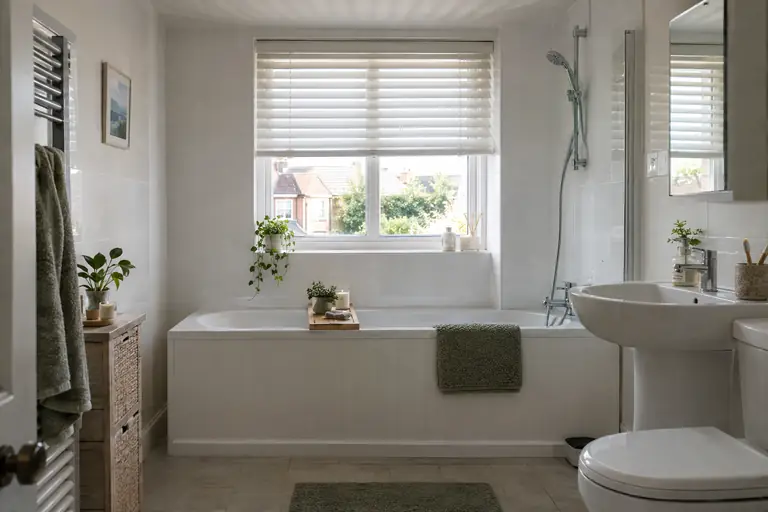
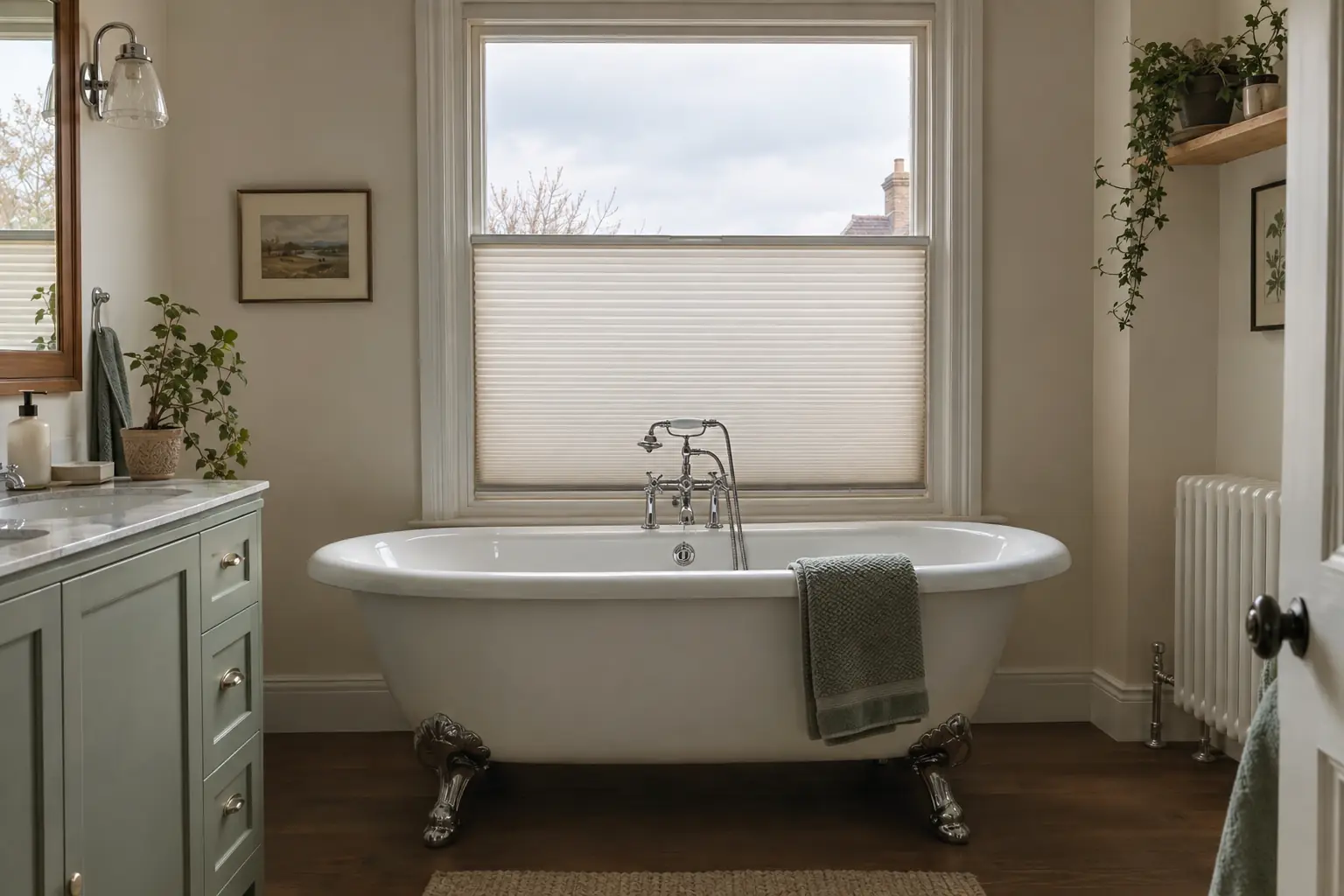
A bathroom is the other room where the sightline is at the bottom of the window and the useful light is at the top. A top down bottom up blind covers the glass at bath and shower height while the sky comes in above, which is often nicer than a permanently frosted window or a blind that stays down all day.
Think about moisture before you choose the fabric. Bathrooms produce a lot of steam, and GOV.UK guidance on damp stresses that kitchens and bathrooms in particular need adequate ventilation. A blind that sits close to glass that runs with condensation every morning needs a fabric that can cope with it, and pleated fabrics vary. Ask your advisor which of the fabrics in the range suit a steamy room, and open the window or run the extractor after a shower whatever you choose.
If the bathroom is very wet, with a shower right beside the window, a wipeable roller or a faux-wood venetian is often the more practical choice, and café shutters in waterproof ABS or vinyl give the same cover-the-bottom idea in a material made for wet rooms. Our bathroom guide covers the options side by side.
Bay windows
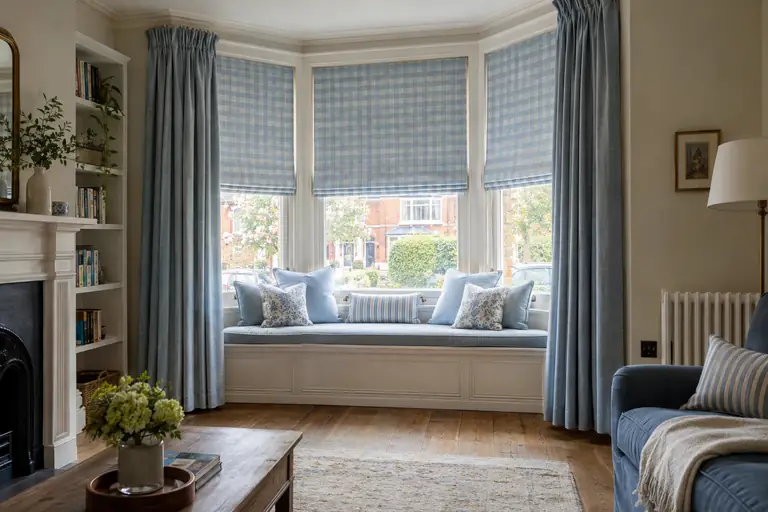
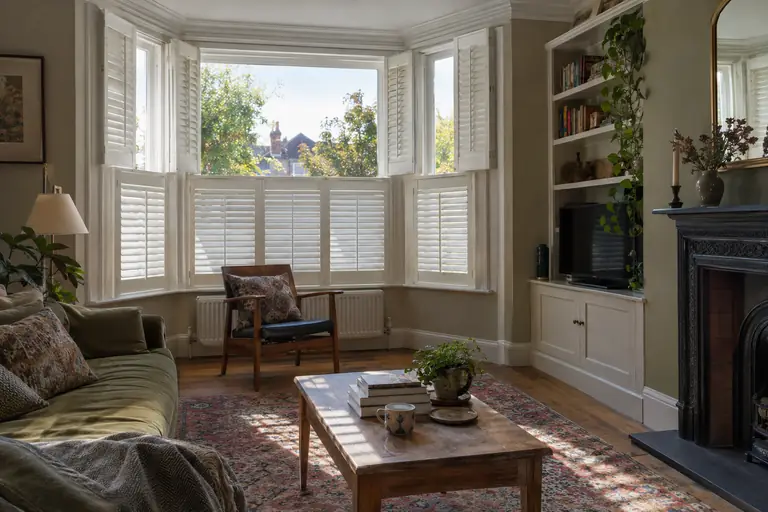
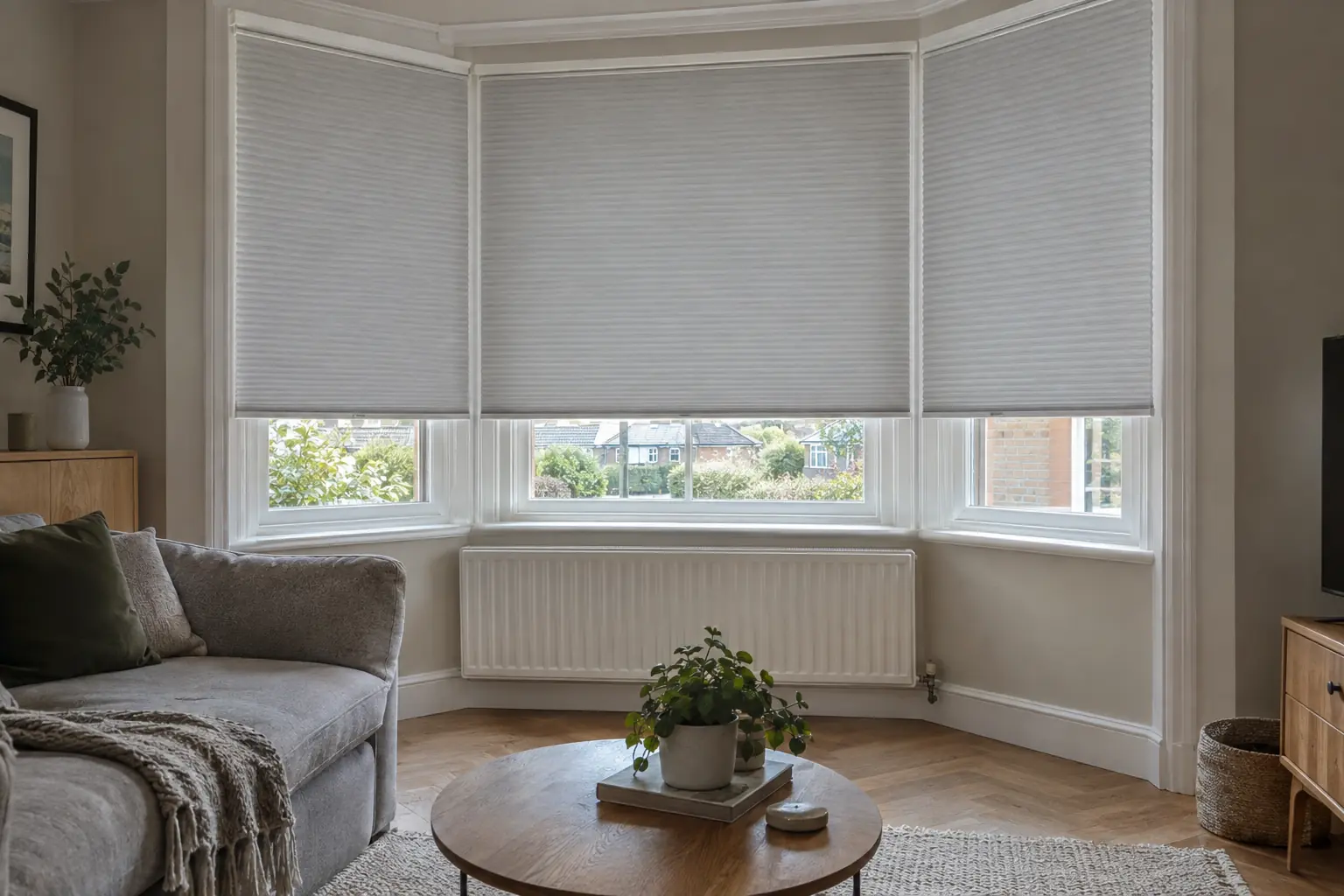
Bays suit top down bottom up blinds well, for the same reason they suit shutters. A bay is usually the most overlooked window in the house, projecting towards the street, and it is often the room's main source of light. Covering the lower part of each window while leaving the tops open keeps both.
Each window in the bay gets its own blind, measured on its own, because the openings in a bay are rarely identical and the angles between them are rarely square. The slim headrail and small stack of a pleated blind suit a bay, where there is often little room between the windows for anything bulkier.
The look depends on lining the blinds up. Lower every top rail to the same height and the bay reads as one piece, with a straight line of fabric running round it; set them at different heights and it looks untidy from outside. It is worth agreeing a height you like and returning to it.
If the bay is also where you sit in the evening, remember that pleated fabrics range from light-filtering to blackout. Your advisor will bring samples so you can see how each looks against the glass, and can measure the whole bay in one visit.
Compared with café shutters, nets and day and night blinds
Top down bottom up blinds are one of several ways to cover the lower part of a window and keep the top open. Knowing the others helps you choose.
Café-style shutters cover the bottom half only and are fixed at that height. They are solid, durable, wipeable in ABS or vinyl, add insulation and need no cords. The line is set when they are made, though, and the top half is always glass unless you add a blind or curtains above them.
Net curtains or voiles give daytime privacy across the whole window and soften the light, but they hang over the glass all the time, including the top, and need taking down to clean.
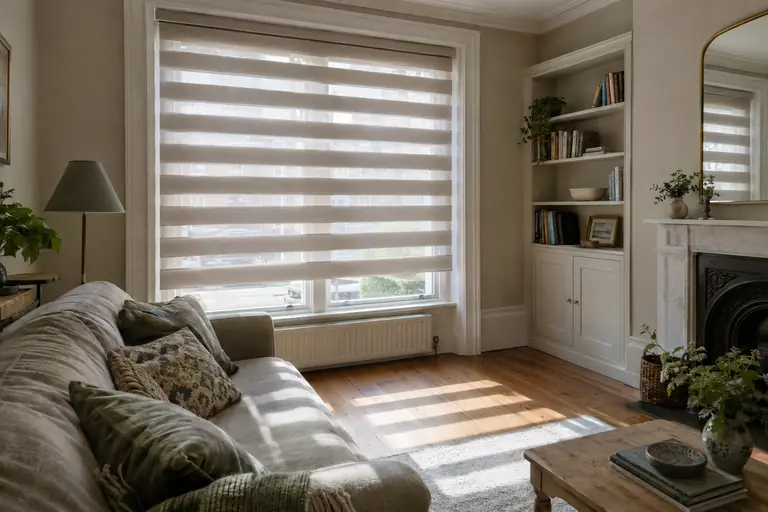
A day and night blind covers the whole window with alternating sheer and solid bands. It gives privacy with a view, but it treats the top of the window the same as the bottom.
A top down bottom up blind is the flexible one: the covered band can be any height and moved through the day, and the whole blind folds away when you want it to. The trade-off is that it is a soft fabric blind rather than a piece of joinery, with cords or rails to operate.
Pros and cons
In its favour
- Covers the lower part of the window while daylight comes in above
- Light from the top of the window reaches further into the room
- Any band of the window can be covered, and moved through the day
- Folds into a slim stack, so little glass is lost when it is open
- Works as an ordinary bottom-up blind when you want it to
Worth knowing
- Two moving rails mean two controls to get used to
- Corded versions need child-safety devices fitted and used
- Pleated fabrics vary in how well they cope with steam, so bathrooms need the right one
- Light still gets round the edges of a blind fitted inside the recess
Room by room
- Ground-floor front roomA great fitCover the lower half against the pavement and keep the sky and the daylight above.
- Bay windowA great fitEach window gets its own blind, and top rails lowered to the same height read as one line.
- Overlooked bedroomWorks wellDaylight in from the top while you dress; choose a blackout fabric if you need it dark at night.
- BathroomWorks wellPrivacy at bath height with the top of the window clear; ask which fabrics suit steam.
- Home office facing a streetWorks wellScreens off passers-by at desk height while keeping light on the work.
- Patio or French doorsThink twiceA door needs the blind right off the glass to walk through; verticals or perfect fit usually suit better.