

Blinds
Transition blinds
Every transition blinds range below is made to the measurements we take at your window, then fitted by our own installer — no DIY, no cutting down on site. Order free samples to see the fabrics in your own light, or have an advisor bring the full range to you and price the job on the spot.
Buying guide: Blackout blinds: how dark is dark, and how to get there · 9 min read
4.82,192 Google reviews- Price promise
- Same product, same service — find it cheaper and we'll match it.
- Measuring & fitting included
- Our own fitter measures and installs. No DIY, no surprise charges.

Transition blinds
Showing 24 of 33 ranges


Not sure which is right?
Get an advisor round with the full range in hand. Free, no obligation.


Explained
Transition blinds, explained
Transition blinds, as shown on this page, are almost entirely pleated fabrics: a honeycomb or concertina weave that folds flat rather than rolling or stacking in slats. You will see the same handful of plain, softly textured colourways repeated across warm neutrals, cool greys and the odd sage or pink, usually offered as a conservatory roof blind, an electric blind, a Top Down Bottom Up blind or a straightforward pleated blind for a standard window. A few ranges bring in a light pattern or a roller option alongside the pleat, so it is worth checking each fabric's own detail page rather than assuming every result behaves the same way.
Suits pared-back, contemporary interiors and conservatories where a soft honeycomb texture is preferred over a flat printed fabric or hard slat.
Best for
- Conservatory roofs and glazed extensions where fabric needs to fold flat into a tight stack
- Awkward shapes such as apex windows, skylights and doors, where a honeycomb or concertina fold sits neatly
- Bay windows and French doors needing a soft, diffused light rather than hard slats
- Bedrooms and kitchens wanting a plain, textured look instead of a printed pattern
Worth knowing
- Almost every fabric here is pleated (honeycomb or concertina), not a mix of blind types, so choose on colour and texture rather than mechanism
- A couple of ranges (Ravenna, Newton) list a second type such as roller or a geometric pattern, so check the actual swatch before assuming plain pleats
How to choose
- 1
Start with the window shape
Pleated fabrics fold flat, which suits conservatory roofs, apex glazing and skylights better than fabrics that bulk up when raised. For a standard flat window, a plain roller or roman may suit just as well.
- 2
Pick warmth or coolness of tone
Most of these ranges come in a warm neutral (cream, taupe, oatmeal) and a cooler grey or slate. Bring a sample against your own wall and window light before deciding.
- 3
Think about how it is raised
Top Down Bottom Up lets you shade the top of a window while keeping the view below; electric operation suits anything out of reach, such as a roof or high door. Ask your advisor which options apply to the fabric you like.
Transition blinds: questions people ask
What does a pleated or honeycomb fabric actually do differently to a roller blind?
Instead of rolling around a tube, the fabric concertinas into itself, so it sits in neat folds when raised. This makes it well suited to shaped windows such as conservatory apexes, and it gives a softer, more textured look than a flat roller fabric when lowered.
Can these be fitted to a sloped conservatory roof?
Several of the ranges shown here are offered as conservatory roof blinds, and pleated fabric is a common choice for sloped glazing because it folds flat rather than bulking up. Your advisor will confirm which fabrics and fittings suit your particular roof on the day.
What is Top Down Bottom Up and is it worth it?
It lets the blind be lowered from the top as well as raised from the bottom, so you can shade the upper part of a window for privacy while keeping the lower half clear for light and view. It is offered on most of the pleated ranges shown here; ask your advisor whether it suits your window.
Why do some of these fabrics look patterned rather than plain?
Most ranges on this page are plain, textured weaves, but a small number, such as the trellis-style geometric shown on one range, bring in a light pattern instead. If you want a strictly plain finish, check the fabric photo before ordering a sample.
Are these fabrics suitable for a bedroom as well as a conservatory?
Yes, the same pleated ranges are commonly listed for bedrooms, bay windows and French doors as well as conservatory roofs. The main difference is usually the operation, such as electric control for a hard-to-reach roof, rather than the fabric itself.
How it's made
How a pleated blind works
Tap a number to see what each part does, and what you'll be choosing at your appointment.
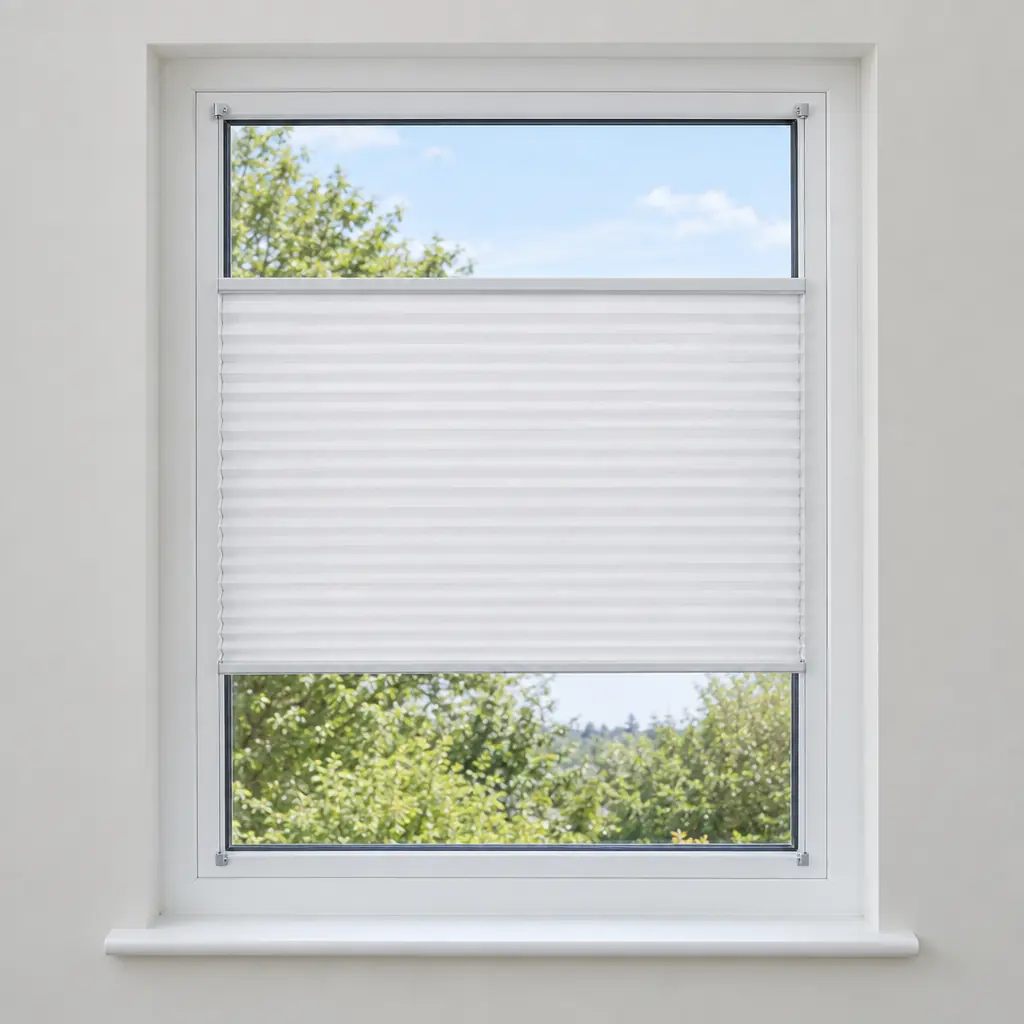
1. Top rail that moves
On a top-down, bottom-up blind both rails move, so you can cover the lower panes for privacy and keep the sky.
Your advisor brings samples of every option to your window, so you can see and feel them before you choose.
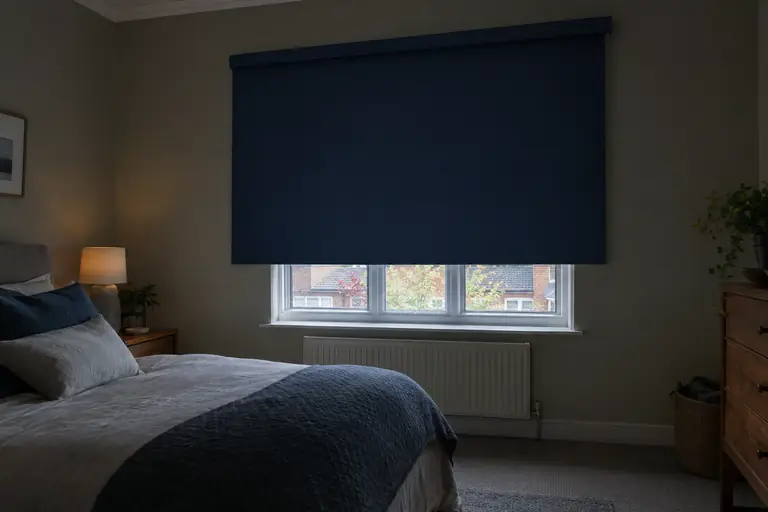

Halloween · Saturday 31 October
Trick or treat your windows
The clocks go back on Sunday 25 October, and the dark evenings arrive with them. Blackout blinds and lined curtains keep the glow in and the street out.
Reviews
What customers say about their transition blinds
What reviewers mention most
- Outstanding service and quality consistently praised by customers.
- Quick installation and friendly, respectful staff enhance the customer experience.
- Wide range of materials available at competitive prices.
An automated summary of our Google reviews.
What reviewers mention most
- Outstanding service and quality consistently praised by customers.
- Quick installation and friendly, respectful staff enhance the customer experience.
- Wide range of materials available at competitive prices.
An automated summary of our Google reviews.
Why our transition blinds service is right for you
01
Cut to your window, not trimmed to fit
We measure each recess on site and allow for handles, tiles, sills and tilt-and-turn frames before anything is made.
02
Samples seen in your own light
A fabric that looks warm under showroom lighting can read grey at home. Your advisor brings the range to your rooms so you judge it against your walls.
03
Fitted by the people who sold it
Our own fitter installs, squares up and takes the packaging away. Nothing is subcontracted out and there is no surprise charge at the end.
04
One year of cover
Fabric, mechanism and fitting are covered by our 1-year guarantee. If a chain or a bracket fails, we come back out and put it right.
Finance options available. We offer flexible ways to pay so a whole-house refresh doesn't have to land in one go. Your advisor will talk you through what's available at your appointment.
Ask an advisorHow our service works
Three steps, and we handle all of them
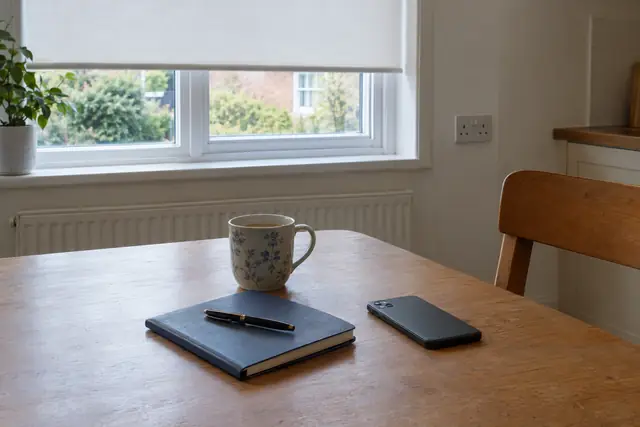 01
Book an appointment
Pick a day that suits you. It takes a minute, costs nothing, and there's never any pressure to buy.
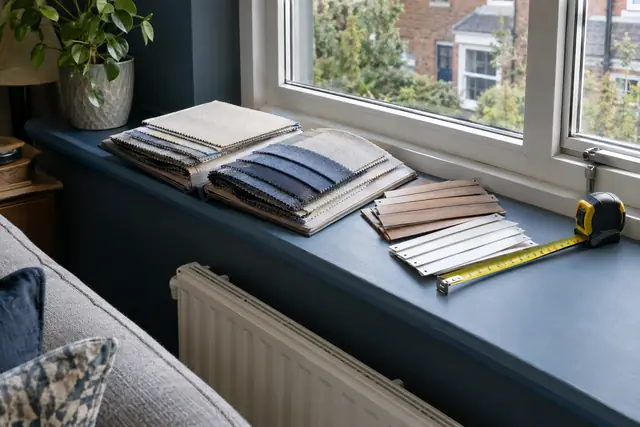 02
We come to you
Your advisor brings the full range, helps you choose for each window, measures precisely and quotes on the spot.
 03
We fit it for you
Once your order is made, our own fitter installs it, squares it up and takes the packaging away.
Book a free home appointment
An advisor comes to you with the full range, measures precisely and prices the job on the spot. It costs nothing and there's no pressure to buy.
Narrow it down
Shop by colour
Transition blinds: your questions answered
How this type behaves in a real room, plus how measuring, fitting and the guarantee work.
Is fitting included in the price?
Yes. The quote you are given covers the product, the fitting and the guarantee. Your fitter hangs everything, checks the operation with you and takes the packaging away.
Who measures the windows?
Your advisor does, on the appointment. That matters for more than convenience: because we take the measurements, the fit is our responsibility rather than yours. Every opening is measured on its own — we never size one window off the one next to it.
What guarantee do I get?
A 1-year guarantee on every blind, shutter and motor we supply and fit. If something goes wrong inside that period, ring the office and we come back out.
Which type of blind suits which room?
Rollers are the simplest and best value and take blackout or dimout fabrics for bedrooms. Romans give a soft, curtain-like fold in living rooms. Venetians and wooden slats let you tilt light rather than just block it, which suits kitchens and studies. Verticals handle wide spans and patio doors. Day & night blinds have alternating stripes so you can trade privacy against light through the day.
More answers in our full FAQ, or book a free measure and ask an advisor.
Where we fit blinds
Measuring and fitting are included everywhere we visit. Each county page lists its towns and the days our advisors are in the area.
Where to next
- All blindsEvery type and range in one place.
- CurtainsWarmth and dressing, on their own or over a blind.
- ShuttersFitted panels for period and street-facing windows.
- Measuring guideRecess or face fit, explained with photos.
- Free samplesSee the fabrics in your own light first.
- Areas we coverVisiting days by county and town.
Ideas for your windows, now and then
Style guides, new fabric arrivals and first word on seasonal offers. A couple of emails a month at most — unsubscribe whenever you like.