The short answer
The best privacy blinds that let light in are day and night blinds, top down bottom up blinds, venetians with the slats tilted upwards, and sheer or light-filtering fabrics. Day and night blinds switch between soft daylight and privacy; top down bottom up blinds cover only the lower part of the window; and tilted venetians bounce light onto the ceiling while blocking the view in. Remember that most sheer fabrics become see-through at night once your lights are on.
- Top down bottom up blinds cover the lower half of a window and leave the sky clear above.
- Day and night blinds switch between soft daylight and privacy with one pull of the chain.
- Venetian slats tilted upwards let light reach the ceiling while people outside see only the blades.
- Sheer and voile fabrics give daytime privacy but become see-through at night with the lights on.
- For privacy after dark as well, pair a sheer layer with a solid blind or choose a dual-layer blind.
Why privacy and daylight pull against each other
A window works both ways. In daytime the street is brighter than your room, so people outside see mostly reflections and you see out clearly. After dark it reverses: your lit room becomes a stage, and anyone outside can see straight in. That is why a fabric that feels private at noon can feel exposed at 6pm in winter.
The usual answer, a solid blind pulled down, fixes the privacy but loses the light. Net curtains solve part of the problem but look dated to many people and gather dust. The privacy blinds in this guide take a different approach: they either cover only the part of the window people can see into, filter the light rather than block it, or let you angle it.
Before choosing, stand outside and look back at the window, once by day and once at dusk. Note where people actually pass, whether that is a pavement, a neighbour's window or a path, and how high their eye line is. That tells you which part of the glass needs covering and which can stay clear.
Top down bottom up blinds: cover only what you need
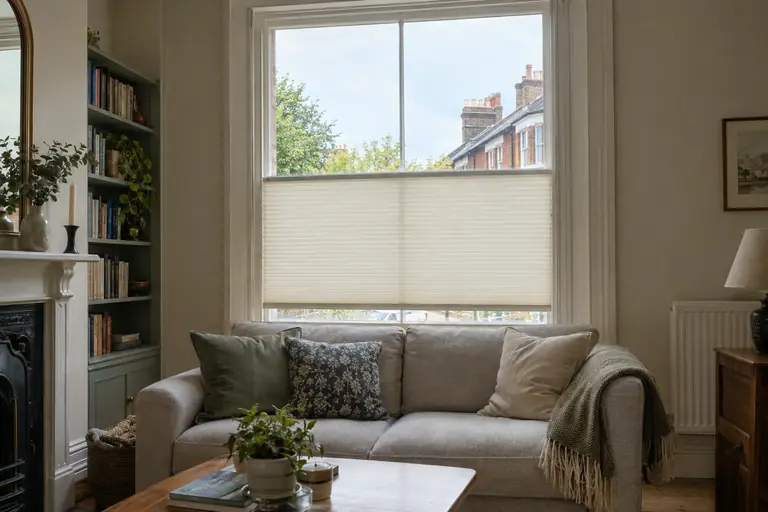
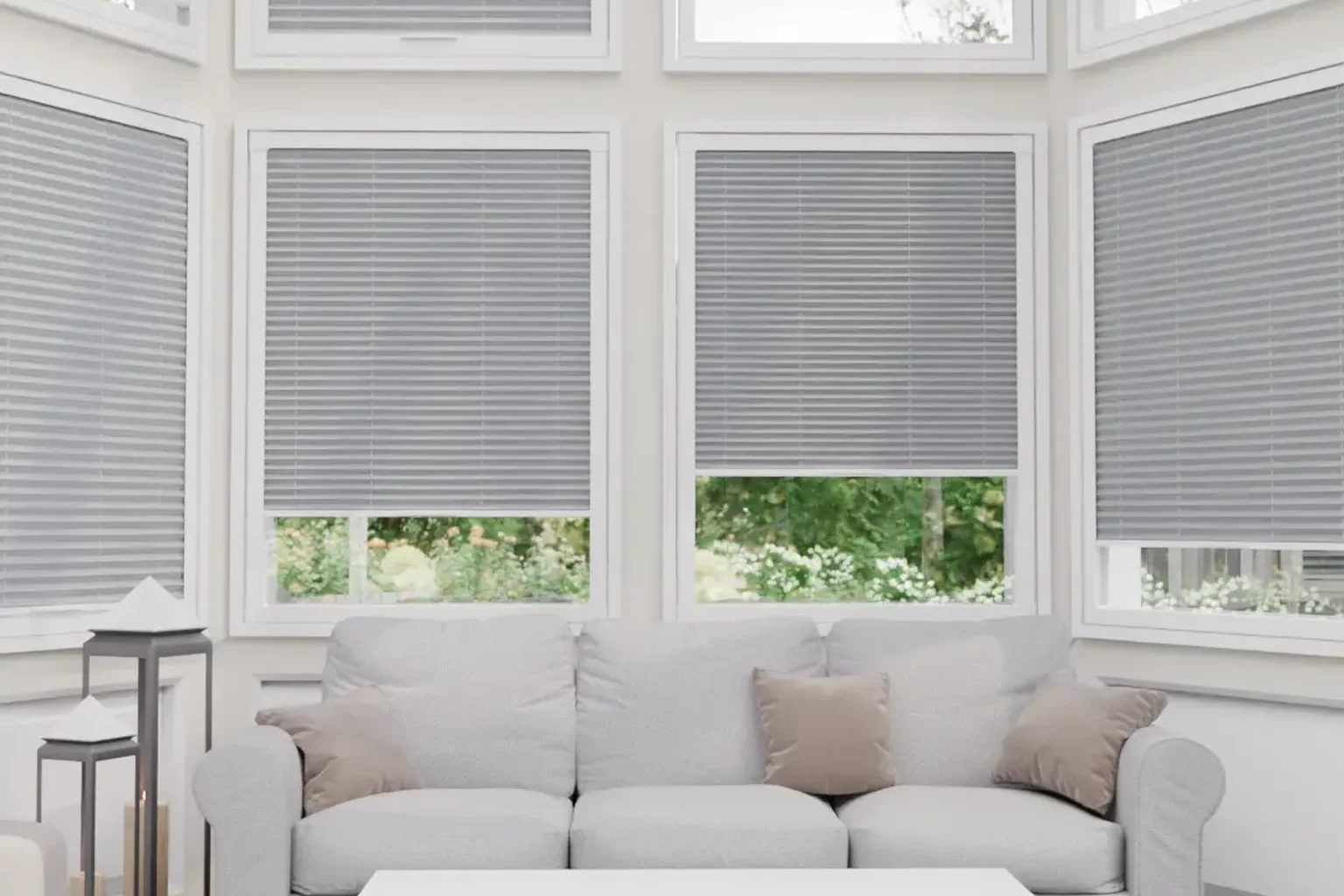
A top down bottom up blind can be lowered from the top as well as raised from the bottom. Drop the top rail a little and the blind covers the lower part of the window, at the height where people look in, while the upper part stays open to the sky. Light pours in over the top and the room stays private.
They are made in pleated, honeycomb and some Roman styles, and they suit ground-floor front rooms, bathrooms overlooked by neighbours and bedrooms facing a street. Top down bottom up blinds are also a good choice for bay windows, where each face can be set to a different height depending on which way it looks.
Because the fabric itself can be anything from light-filtering to blackout, the same blind can give daytime privacy with light, then be raised fully at night to close the room off completely. In a bathroom, choose a moisture-resistant pleated fabric.
Day and night blinds: switch with one pull
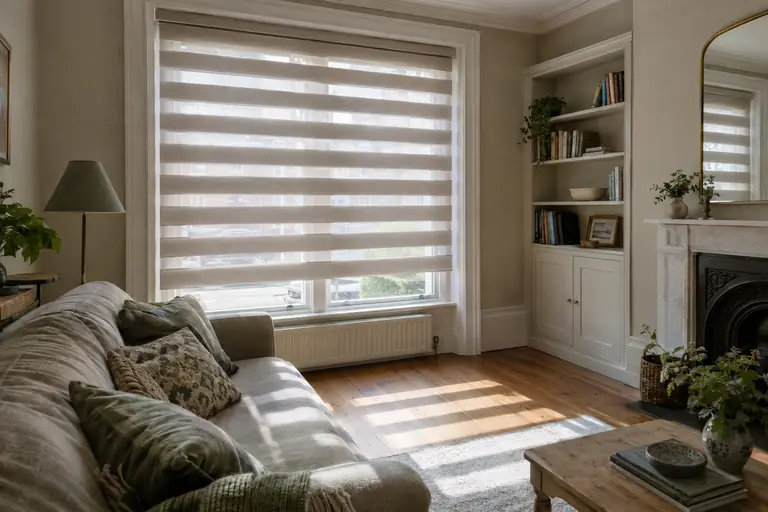
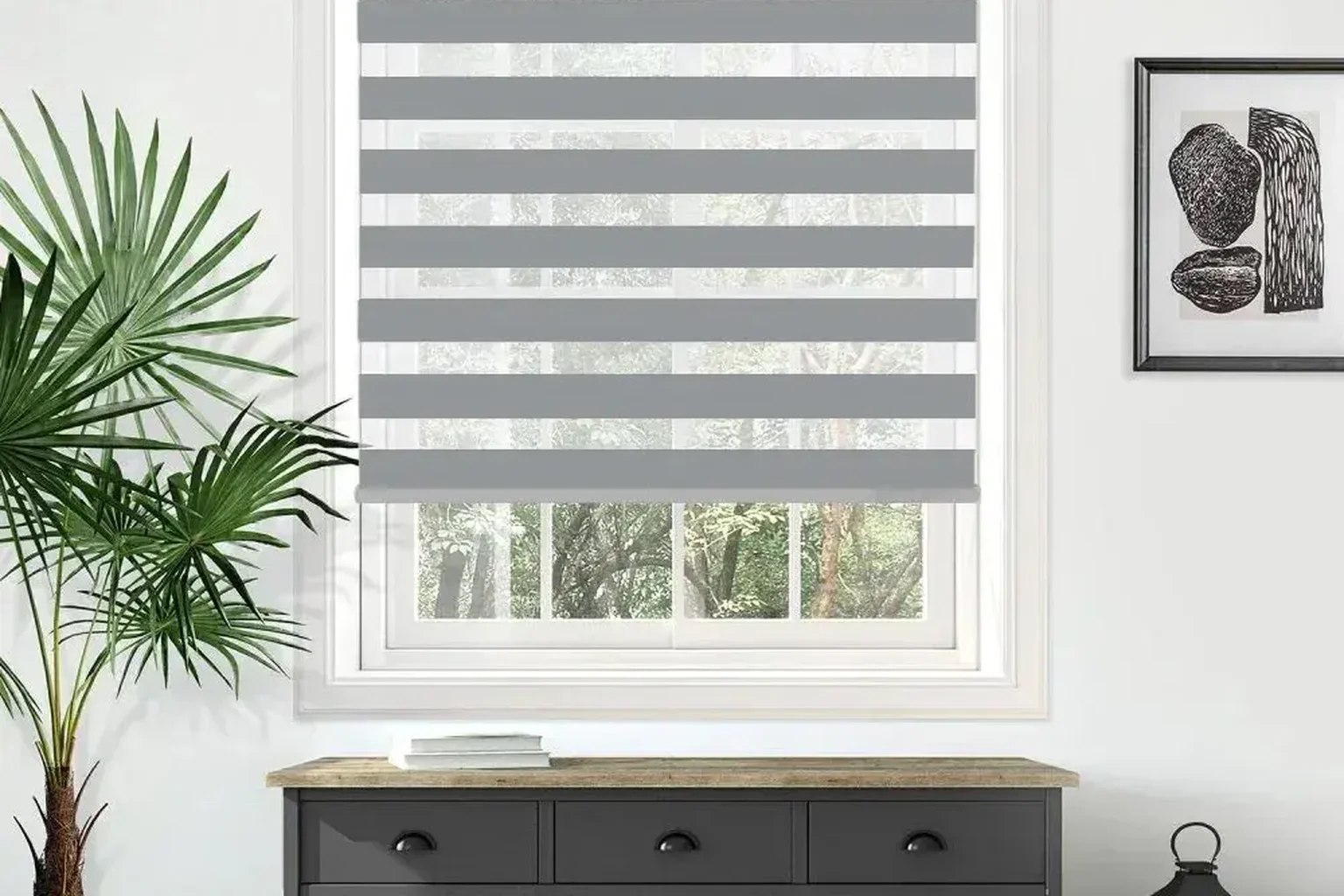
A day and night blind, sometimes called a vision or zebra blind, has two layers of fabric with alternating sheer and solid bands. When the sheer bands line up, light comes through the stripes; move one layer so the solid bands overlap the sheer ones, and the blind closes into a solid panel.
That makes them one of the most flexible privacy blinds that let light in. During the day you can run them part-open for soft, filtered light and privacy from the street. At night you close the bands for full privacy, without needing a second blind or a curtain.
Day and night blinds suit living rooms, home offices and kitchens, and the solid bands come in light-filtering and dim-out fabrics. Wider bands give a bolder, more graphic look and a clearer view out when open; narrower bands look softer and more like a traditional blind.
They work best inside the recess on a fairly square window, where the two layers can run smoothly. If you want to know more about how they are made, how to choose the band width and which fabrics work in which rooms, our day and night blinds guide goes into the detail.
Venetian blinds: angle the view away
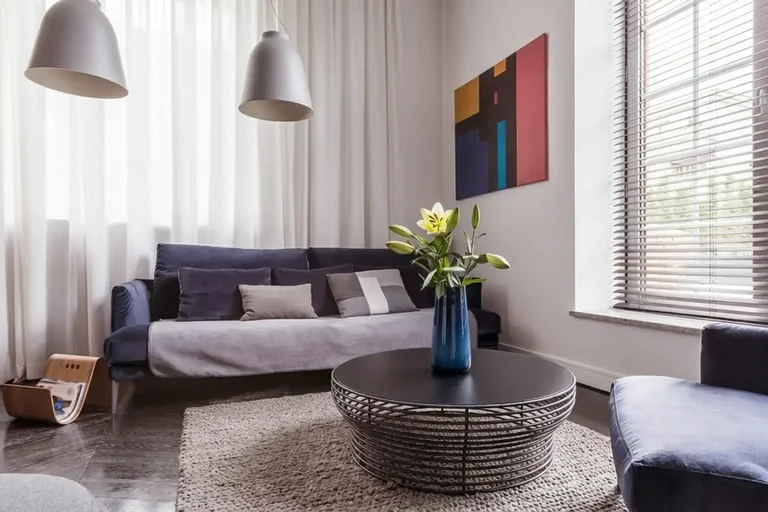
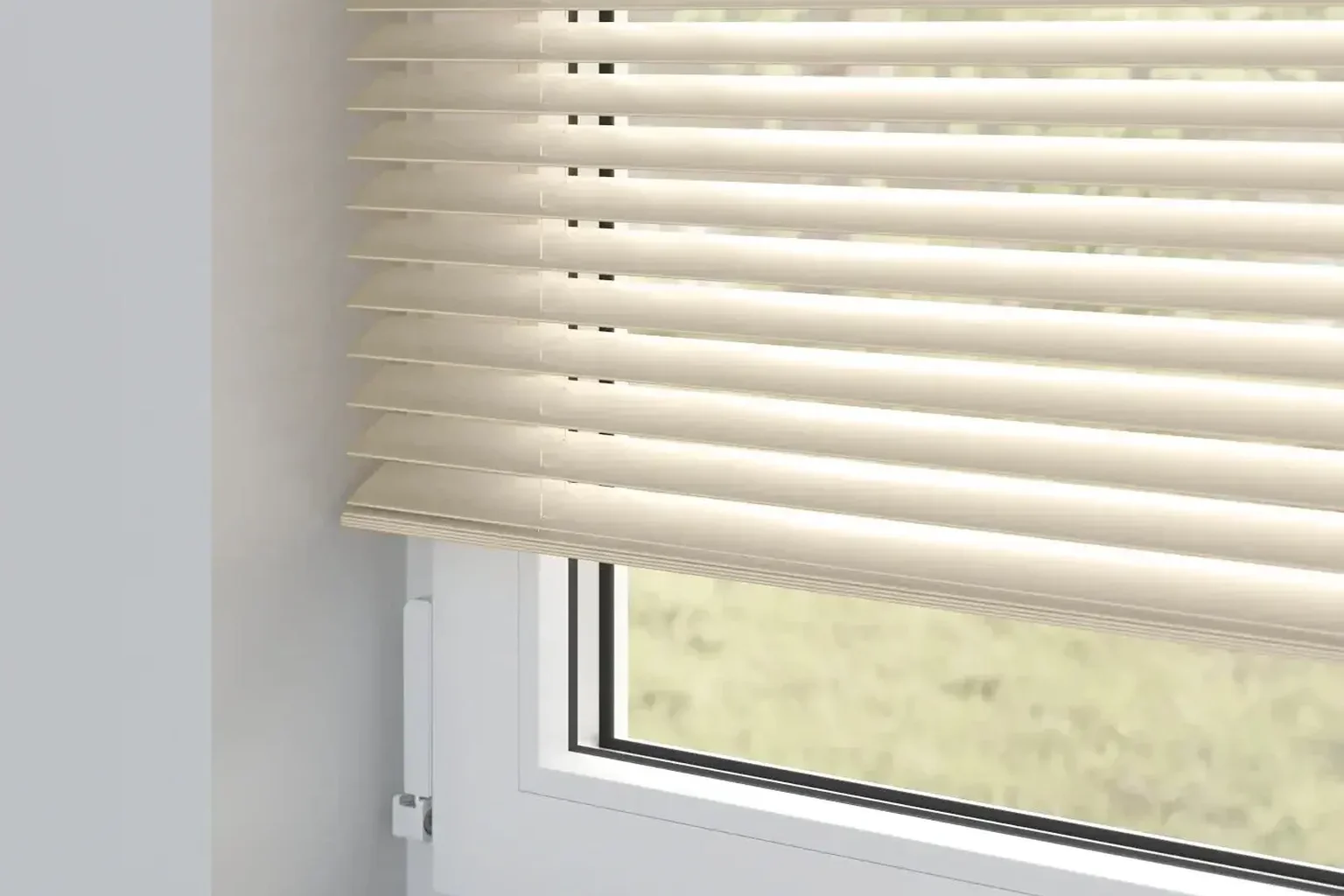
Venetian blinds give privacy through angle rather than fabric. Tilt the slats so the inner edge points up and the outer edge points down, and people outside see only the faces of the slats, while daylight bounces off them onto your ceiling. The room stays bright and the view in is blocked.
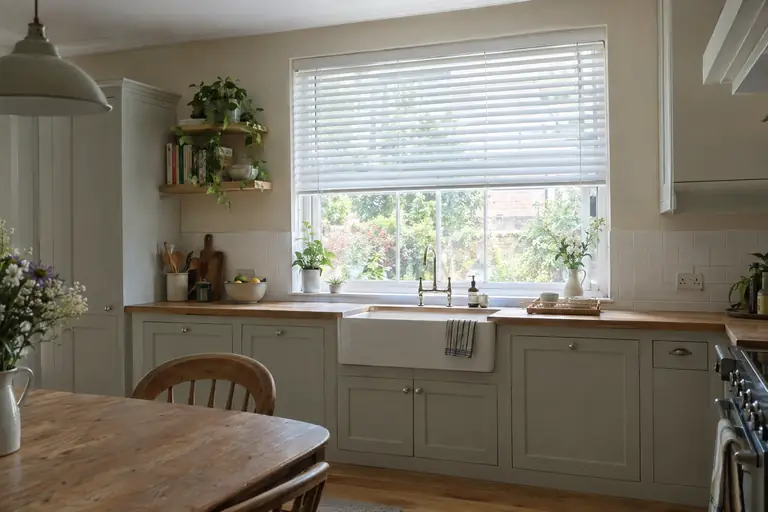
This works with metal, wooden and faux-wood venetians. Wider slats give a clearer view out when open; narrower ones close more tightly. In a kitchen or bathroom, choose metal or faux wood, which cope with steam.
The limit is darkness and night-time privacy at the edges. Closed slats still let a little light and visibility through the cord holes and between the blades, so on a street-facing bedroom it is worth pairing a venetian with a curtain or choosing a blind that closes solid.
Sheer, voile and light-filtering fabrics
Sheer roller blinds and voile Roman blinds are the modern replacement for net curtains. They soften daylight, blur the view in from the street and keep a room feeling open. A light-filtering roller does the same with a slightly denser fabric, so the room is brighter than with a blackout blind but more private than with a sheer.
The catch is night-time. With the lights on inside and darkness outside, most sheers become see-through, so they work best as a daytime layer. The common answer is a double blind, with a sheer at the front and a solid blind behind, or a sheer layer with curtains that close at dusk.
White and pale sheers reflect more light back into the room and are harder to see through from outside. Darker sheers let you see out more clearly by day but are easier to see into. If privacy matters most, choose a paler shade.
Shutters, layering and other options
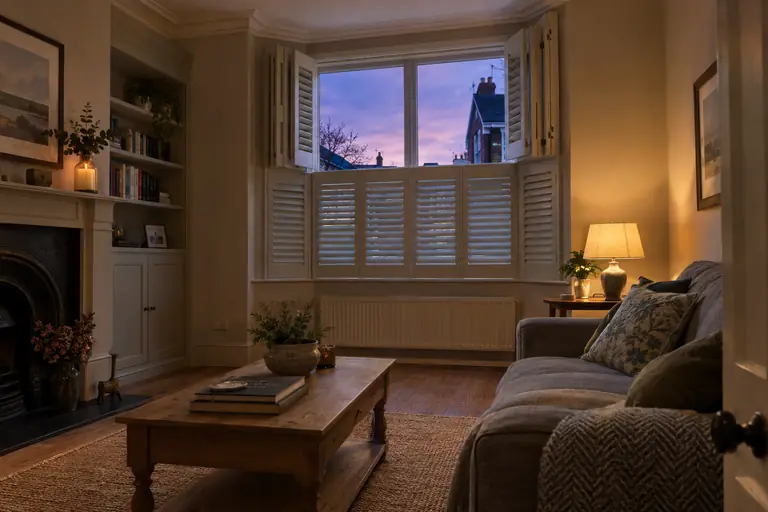
Blinds are not the only way to get privacy with light. Café style shutters cover the lower half of a window with tilting louvres and leave the top half clear, which is why they are so popular on terraced streets where the pavement runs close to the glass. Like a top down bottom up blind, they put the screening exactly where people look in.
Layering is the other answer. A sheer roller or voile Roman blind at the front of the recess gives daytime privacy and soft light, while a solid roller or curtains behind or in front take over at night. It costs a little more than a single blind, but it gives you the most control through the whole day.
Perfect fit pleated blinds are worth knowing about on uPVC windows. Because they sit within a slim frame on the glass, they leave no gaps at the sides, and the top down bottom up versions can screen the lower half of a tilt-and-turn window while it is open for air.
Whichever you choose, think about consistency from the street. Several different blinds on one front elevation can look busy from outside, so it often pays to choose one style and colour for all the street-facing windows and save the variety for the back of the house.
Choosing by room
Front living rooms usually need daytime privacy from the pavement without losing light, so day and night blinds, top down bottom up blinds or tilted venetians are the strongest options. Add a solid layer or close the day and night bands after dark.
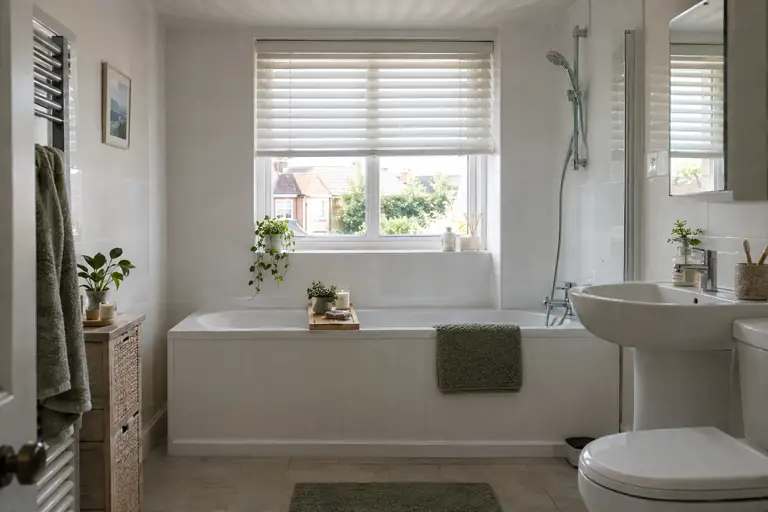
Bathrooms need privacy at all hours but still want daylight. A top down bottom up pleated blind in a moisture-resistant fabric, or faux-wood venetians tilted upwards, keep the light coming in and the view out. Frosted glass helps, but it is often clearer than people think when the light is on behind it.
Bedrooms on a street need daytime privacy and night-time darkness. A day and night blind with dim-out bands, or a sheer layer with a blackout blind behind, covers both. Home offices often face the street too, and day and night blinds or venetians let you cut screen glare and keep privacy at once.
The same principles apply across the country, whether you are looking for window blinds in Oxford for a terraced street or blinds for a detached house set back from the road. Our advisor will look at each window, where people pass, and how you use the room.
If you are comparing the best custom blinds UK suppliers offer for privacy, you can browse the full range before you book a home appointment.
Checklist
- Look at each window from outside, by day and at dusk.
- Note the eye line of passers-by and neighbours.
- Decide whether you need privacy after dark as well as by day.
- Choose pale sheers if privacy matters more than a clear view out.
- Use moisture-resistant fabrics or faux wood in bathrooms.
- Consider a double blind where a sheer alone is not enough at night.
Pros and cons
In its favour
- Daylight and privacy at the same time, without net curtains.
- Top down bottom up and day and night blinds adjust through the day.
- Tilted venetians keep the view out while lighting the ceiling.
- Pale sheers make a room feel open and bright.
- Most options come in moisture-resistant fabrics for bathrooms.
Worth knowing
- Most sheers become see-through at night with the lights on.
- Venetians leave small gaps between slats and at the cord holes.
- Top down bottom up blinds leave the upper glass open to anyone looking down from above.
- Day and night blinds are not fully dark unless the bands are dim-out.
Room by room
- Front living roomA great fitDay and night or top down bottom up blinds keep the pavement out and the light in.
- BathroomA great fitA moisture-resistant top down bottom up pleated blind or faux-wood venetian tilted upwards.
- Street-facing bedroomWorks wellDay and night blinds with dim-out bands, or a sheer layer with a blackout blind behind.
- Home officeWorks wellDay and night blinds or venetians cut screen glare and keep passers-by from looking in.
- Overlooked from aboveThink twiceTop down bottom up leaves the top open; choose a day and night blind or a light-filtering roller instead.
Side by side
Top down bottom up blinds
- Daytime light
- Excellent over the top
- Daytime privacy
- Very good at eye level
- Night-time privacy
- Full when raised to close
- Best for
- Front rooms, bathrooms, bays
Day and night blinds
- Daytime light
- Good through sheer bands
- Daytime privacy
- Good
- Night-time privacy
- Full when bands are closed
- Best for
- Living rooms, home offices, bedrooms
Venetian blinds (slats tilted up)
- Daytime light
- Good, bounced off the ceiling
- Daytime privacy
- Very good
- Night-time privacy
- Good, small gaps at slats
- Best for
- Kitchens, bathrooms, home offices
Sheer or voile blinds
- Daytime light
- Excellent
- Daytime privacy
- Good
- Night-time privacy
- Poor once lights are on
- Best for
- Living rooms with a second layer
Light-filtering roller blinds
- Daytime light
- Good
- Daytime privacy
- Very good
- Night-time privacy
- Good
- Best for
- Bedrooms and living rooms
Café style shutters
- Daytime light
- Excellent above the panels
- Daytime privacy
- Very good at eye level
- Night-time privacy
- Good on the lower half only
- Best for
- Terraced front rooms and kitchens